A Visit To The Temple Institute Museum
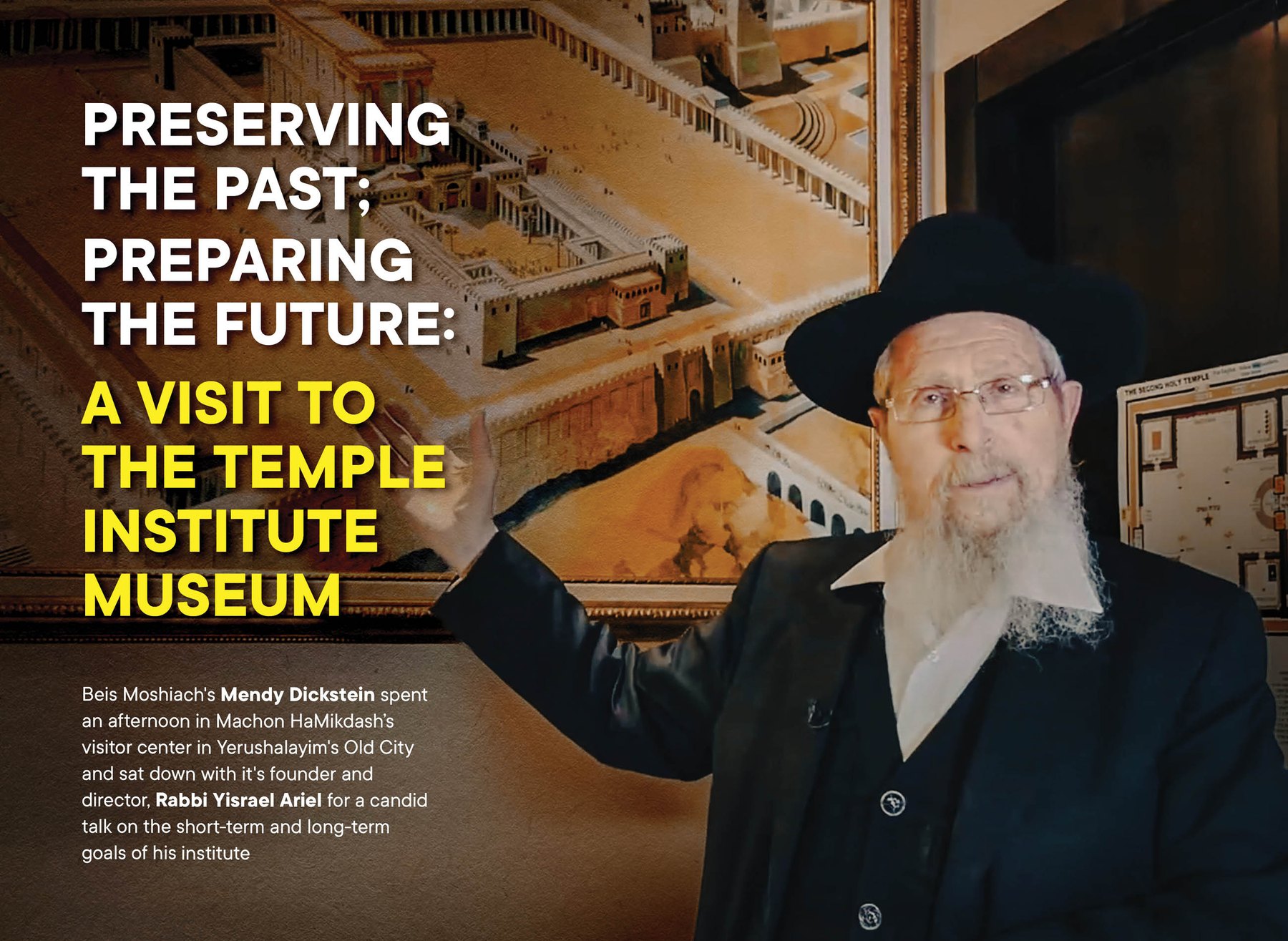
Preserving The Past; Preparing The Future
Beis Moshiach’s Mendy Dickstein spent an afternoon in Machon HaMikdash’s visitor center in Yerushalayim’s Old City and sat down with its founder and director, Rabbi Yisrael Ariel for a candid talk on the short-term and long-term goals of his institute
On a particularly hot day, after an uplifting Mincha at the Kosel plaza, the remnant of our Beis HaMikdash, I climbed the Rabbi Yehuda HaLevi steps and after a short walk I arrived at the place which best represents the era of 2000 years ago, Machon HaMikdash – the Temple Institute (the full name is: HaMachon L’Limud Mechkar U’Binyan HaMikdash). The Machon is located at the end of the steps going up from the Kosel, and is a special experience for anyone who wants to get a feel for life here in the past and the life that, G-d willing, will be here soon.
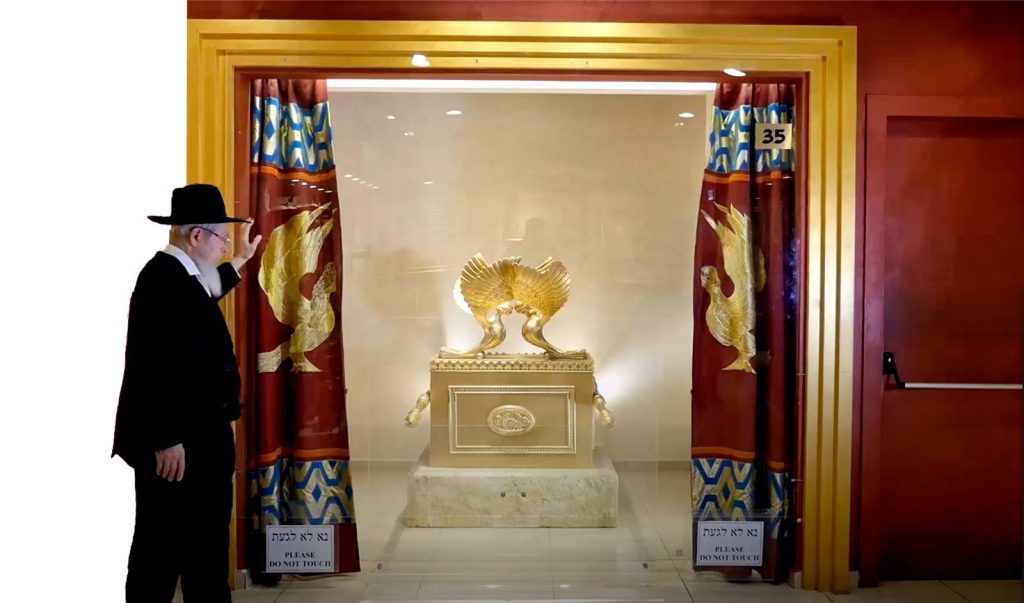
The tour of the Machon HaMikdash is fascinating. Entire tractates of the Mishna and Gemara: Tamid, Middos, Yoma, Zevachim and Menachos are there, before your very eyes, in a live and experiential way. Descriptions of the materials and the priestly garments in the parshiyos of Teruma and Tetzave take on an entirely new meaning when you see them; the unique weave and the outstanding final results, the Mikdash vessels in their exact dimensions stand mutely as though waiting for the moment when they will leave the Machon and go up to the Beis HaMikdash and be put into service.
The atmosphere is uplifting and awe-inspiring and accompanies every Jewish visitor and, l’havdil, goyim too. I wasn’t surprised to see that most of the visitors are non-Jews; maybe it’s by way of preparing for the prophecy, “For My house will be called a house of prayer by all the nations.”
At the end of the tour (there are tours in over ten languages), I spoke with the founder and director of the Machon, Rabbi Yisrael Ariel. He is 84 and still full of energy; his day is packed. Along with directing the Machon, he does research on the Mikdash and gives lectures throughout the country to raise awareness and the longing for the building of the Beis HaMikdash.
When was the Machon founded?
The Machon was founded over forty years ago but the spark of the idea was ignited fifty-seven years ago, on 28 Iyar 5727 (1967), the day Yerushalayim was liberated. That was during the Six Day War when I served in the paratroopers unit that liberated the Kosel and the Har HaBayis.
By divine providence, after the cessation of hostilities, I was assigned to guard the area of the Holy of Holies, on top of the Dome of the Rock. When you are in such a holy place, especially after 2000 years, and you spend hours standing there with a rifle in your hand, you have time to think and feel that the Kohen Gadol was right here, and here is where he entered on the holiest day of the year and lit the incense. Those were sublime moments which remain in my soul my whole life… At the time, I thought that we need a continuation to the great moment of the liberation of Yerushalayim and the return to the place of the Mikdash, and that is the construction of the Beis HaMikdash.
Some time after the war, I entered the rabbinate. I served as district rav of the Jezreel Valley, rav of the moshav Sdei Yaakov, and rav of Yamit and head of the yeshiva there. Because of these involvements, I couldn’t act on my yearning for the subject of the Mikdash.
The First 500 Shekels
After the expulsion from Sinai in 5782, I returned to Yerushalayim and that’s when the idea of the Machon was born.
What was the inspiration that led to opening a place like this?
I got the idea from a dear Jew and distinguished talmid chacham who is no longer living, R’ Dovid Tevel Elbaum a’h. He was a Holocaust survivor who after the Holocaust came to Eretz Yisrael on an illegal boat. The British nearly caught him but he managed to enter the land and joined the Satmar yeshiva in Yerushalayim. He devoted most of his time to learning Seder Kodshim although these are mesechtos that were usually not learned in yeshivos then. He was imbued with the belief that the Beis HaMikdash will imminently be built and therefore, we need to be ready to do the work of the Mikdash.
After the Six Day War, when the site of the Mikdash was liberated, he decided to do something for the Mikdash. He was a practical person and he began creating models of the Mikdash vessels with the means at his disposal. His first creation, that he made with his own hands, was a menorah in its accurate dimensions as described in the Torah but of silver, not gold. Then he bought a weaving loom and began learning how to weave from scratch. Then, he made some of the priestly garments. R’ Dovid had a vision and this was his greatness, that he didn’t suffice with words and looking forward to the Geula but decided to take action.
How did the two of you connect which led to the founding of the Machon?
After I moved to Yerushalayim, he came to me one day with a big silver goblet and told me, with utter simplicity, that he wants to make a mizrak out of the cup (a vessel to receive and sprinkle book of the korbanos on the altar). He told me that he had already started doing the work but he got stuck and he asked me to help him.
At the time, I was a young man who was living in constrained circumstances. I remember going to a gemach and taking a loan of 500 (old) shekels and with this money we fashioned the first vessel, which later developed into the “vessels of Machon HaMikdash,” the mizrak out of that silver cup that R’ Dovid bought.
This activity galvanized us. You could say that when making the mizrak I decided to devote my life to the Beis HaMikdash and its vessels.
Very quickly, the craving grew and we didn’t suffice with what we did. We wanted to keep it going. So, we started fashioning the priestly garments, drawing and sketching the vessels of the Mikdash and, over time, we have an exhibit of various vessels.
The Challenge Of Connecting People To The Beis HaMikdash
The vessels of the Mikdash began to take form, and became more real, to the amazement of people who flocked to see them. Everyone wanted to handle and get a sense of the Mikdash but that wasn’t enough. All that didn’t convey the intense and uplifting feeling of the service in the Mikdash, how the Heichal looked during the avoda, how they brought the offerings, how the Leviyim stood as they served, the ‘order of service’ of the regalim, of the holiest day of the year…
At that time, the gates of the Soviet Union opened and immigrants began to arrive in Eretz Yisrael. Among the new immigrants were skilled artisans, including artists with a quick grasp and the talent to bring things to life.
The people at Machon HaMikdash contacted some of them (see sidebar) and with the help of translators they explained exactly what they wanted – to convey the service in the Mikdash through artistic renderings.
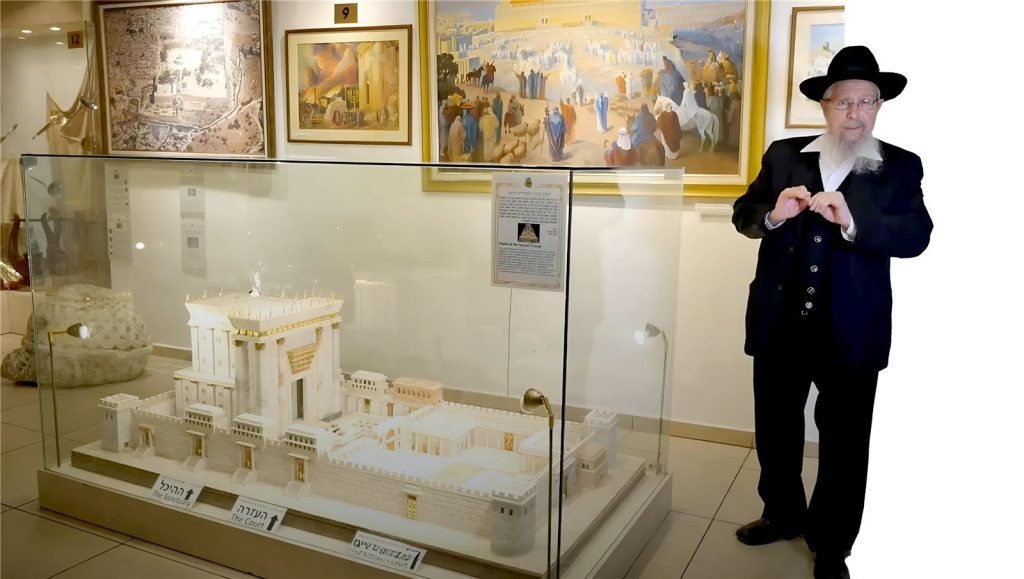
“It wasn’t at all easy, because they first had to be drawn into the world of the Mikdash, into the complexities of the service and the nuances of every detail so it matched what’s written in halacha. Nevertheless, we slowly made progress and thanks to their artistic skill they were able to present the Mikdash from various perspectives whether it was the avodas ha’tamid, the regalim, and everything that pertains to the halachos of the Mikdash.
“These artistic works, some of which you saw during the tour, are very labor intensive and very expensive; each piece cost thousands of shekels but, boruch Hashem, we were able to overcome the obstacles and bring to the world the atmosphere of the Beis HaMikdash.”
Do you feel the fact that Machon HaMikdash is next to the actual site of the Mikdash, adds a special element?
“The Machon wasn’t always here. Originally, it was in the Old City but it moved several times until the present location. The first location was in the Moslem quarter, and only later did it move to the Jewish quarter. We hope that we will soon move to the permanent location in the courtyard of the Beis HaMikdash.
Aside from the vessels of the Mikdash and the priestly garments, and aside from the artistic renderings that bring to life the service in the Mikdash, what other ways does the Machon use to instill knowledge of the Mikdash?
On Chanuka 5775, we created for the first time pure clay pitchers and pure oil that fits the halachic definition of “pure olive oil,” that can be used to light the menorah.
Later that year, on 25 Tammuz, we decided to set up a center to raise a flock of red heifers for purifying from contact with the dead. I can tell you that before we made this decision, we spent thirty years searching for the possibility of raising a red heifer in Eretz Yisrael but our attempts did not work out. Then there were some Jews who took the initiative and brought red heifers from abroad and they are being raised where the Mishkan in Shilo used to be. We at the Machon are thinking about how to have this flock be an ongoing project, meaning, raising a herd of red heifers in Eretz Yisrael while preserving their purity from impurity from the dead. After extensive research we wrote a number of books on the subject. It’s a very complicated subject from a halachic standpoint.
What is the main difficulty?
Finding a pure kohen nowadays. It’s almost impossible since all kohanim nowadays are considered impure from the dead. It’s also hard to find a person who never walked in a cemetery. The fact that he was born in a hospital means he’s already considered impure from the dead, because in hospitals they also have morgues so that a newborn baby is already impure from being under the same ‘tent’ as a dead body.
After lengthy research we found a child kohen who was born at home and his parents are particular about his not going into cemeteries and the like. This boy, who was raised in holiness and purity, began learning how to prepare the ashes of the red heifer and together with him we plan on doing the first practice runs so we don’t get it wrong. It’s a sensitive and serious subject because all it takes is one small detail that we don’t get right for all our work to go down the drain. I hope that we will slowly get to the point where we are able to fulfill this mitzva together with the other mitzvos of the Mikdash, b’ezras Hashem.
I’d like to point out that it’s my son, Rabbi Azarya Ariel, who is running the red heifer project, a project that every Jew in the world will need as soon as Moshiach comes. He has devoted his life to this.
We also instill the idea of the Mikdash, awareness and yearning, by publishing books like an encyclopedia of the Beis HaMikdash which includes a visual review of the Mikdash, its vessels and the avodos. We are also aided by siddurim and machzorim for Rosh Hashana, Yom Kippur, Sukkos, Pesach and Shavuos in various nuschaos. In these machzorim we also have articles about the special avoda of that holiday in the Beis HaMikdash. We did the same with the Haggadah which describes how the Korban Pesach was brought.
We also have a Torah research kollel called Beis HaBechira where talmidei chachamim sit and research topics having to do with the Mikdash: the priestly garments, the vessels of the Mikdash, identifying the location of the Mikdash, red heifer, laws of the offerings, and looking for a solution to various problems having to do with renewing the avoda nowadays.
When An Ethiopian Jew Heard The Bayis Was Destroyed
I inquired of R’ Ariel if he encounters opposition to his work:
It’s no secret that there are big battles concerning the topic of the Mikdash with some for and some against. I’m just happy that the topic is being discussed. I remember how, in the beginning, we were regarded as crazies. I remember that when some top leadership people heard about the idea of the Machon where the vessels of the Mikdash would be displayed, they reacted very harshly, “Are you crazy? Do you want to bomb the Dome of the Rock?” “Do you want to incite a billion Muslims?”
The public also didn’t quite understand the reason for founding the Machon. We got cool reactions in the best cases, including from the religious public not to mention those far from Torah and mitzvos.
Over the years, the matter has penetrated the national consciousness and interest is very great. The exhibit you just visited is seen every year by tens of thousands of people from all over the world: the US, South America, South Indonesia, Jews and non-Jews. There are millions of gentiles in the world for whom the Bible/Tanach is dear to their heart. With some of them, sadly, their knowledge of Tanach is greater than that of the average Israeli. They come with Bible in hand and are excited to see things that are described in the Bible thousands of years ago, right before their eyes.
How far is the reach of your work outside these walls?
It took some time but it slowly made its way into schools. Aside from organized visits of people who come here from all over the world nearly every day, we published Mishnayos for children from Seder Moed and Seder Kodshim, with pictures that illustrate the text. The Mikdash editions with our pictures made these topics accessible to many schools that hadn’t dealt with them before because of their difficulty and lack of clarity. Today, one can learn Mishnayos Yoma, Sukka, Pesachim, Tamid, Middos, etc. in a high quality, understandable way. I can testify that thanks to the pictures in our Mishnayos, there are children who know more about the Mikdash than their teachers.
In addition, we gave a lot of thought to creating a traveling exhibit that would be seen all over the country and in 5748 we created the “Midrasha L’Yeda HaMikdash” (in 5765 it became an independent entity), which operates all over the country from Metulla to Eilat. They have a model of the Mikdash that is three meters (over nine feet) big which is built by the students themselves. They build the Azara, Heichal and lishkos. You can picture their excitement when their Mikdash is complete.
Do the visitors view the exhibits as something historic in a museum or does it awaken in them a longing to see the Beis HaMikdash rebuilt?
At the exit from the Machon we have a Visitor’s Book in which visitors write their impressions of their visit. Every so often I look at it and see the great enthusiasm with which people write about their feelings after a tour. Some don’t just write but come over to say how the vessels of the Mikdash opened their eyes, broadened their knowledge and stirred their feelings.
There’s no doubt that the exhibit of the Beis HaMikdash and its vessels arouses one’s desire for what we pray for three times a day, “May our eyes behold when You return to Tziyon with mercy,” and “Return the service to Your Sanctuary.” Of course, there are people with criticism, which is the way of the world, but most people who come, leave with very positive impressions, boruch Hashem.
After so many years, is there a story about visitors that stands out?
There are many visitors who cry when they see the vessels or the priestly garments. They take an interest in it like in a matter of life and death, asking questions and wanting to understand everything.
We are sometimes asked by the Bible-lovers of the world: Why don’t you build the Temple? Why are the vessels and clothes here and not on the Temple Mount?
As to your question, I have many stories. Since there isn’t much time, I’ll tell you one special one, but it’s one of many.
Thirty years ago, an Ethiopian Jew came to the Machon with a big bag full of coins. He was looking for the director. When I arrived and asked him what he wanted, he said he had been to the Kosel and met the rabbi of the Kosel, Rabbi Meir Yehuda Getz [d.1995]. He told R’ Getz that he came from Ethiopia. “We walked about a thousand kilometers (621 miles) through the desert of Sudan. Some of my family died on the way and were buried in the desert. At that time, I made a vow that if I reach Jerusalem in peace, I would bring an offering in the Temple.”
The Jews of Ethiopia did not hear about the churban and all their lives they waited and looked forward to seeing the Beis HaMikdash. When this Jew arrived in Eretz Yisrael, the Jewish Agency put him in Holon where he found work as an assistant electrician, hard labor that pays little, and yet, each time he received his salary, he would set aside money to bring an offering.
Now, after months in Eretz Yisrael, when he thought the money he saved was enough to buy a korbon, he came to Yerushalayim for the first time in his life in order to meet with the Kohen Gadol. The Kosel guards referred him to R’ Getz and he told R’ Getz he wanted to bring a thanksgiving offering for having arrived in Eretz Yisrael in peace.
R’ Getz asked him, don’t you know the temple was destroyed? When this registered, the man began to cry bitterly as though the Mikdash had just been destroyed. When he calmed down, he asked what to do with the money and the vow he made. The Rav sent him to us. After some discussion and thought, we decided to make hataras nedarim on the basis of the fact that he didn’t know there is no Mikdash. We promised him that with the money he saved up we would make a temple vessel so he would have a part in the Mikdash. And that’s what we did.
From Shas And The Rambam To Today
The tour of the vessels, the altar, lechem ha’panim, menoros, shovels and rakes, trumpets and all the rest, really stirs the emotions. Behind every vessel, there are hundreds of hours of research and work to understand the details according to a broad range of commentaries. At times, there are disputes about how to understand the words of the Sages and it’s necessary to make a determination.
There are vessels whose measurements appear in the Torah. Still, what’s the way to do the work most accurately? What is the process you go through before planning the construction of a vessel or the weaving of a priestly garment?
First of all, we don’t just make stuff; it’s all sourced in Chazal and halacha. When we turn our focus on a certain vessel, the first thing we do is learn about it in depth in all existing Torah literature and we write up the research. As I mentioned, with the red heifer, for example, based on the research my son wrote a 500-page book, which became the “Shulchan Aruch” for the red heifer.
We also have a research book on the menorah and other vessels. B’ezras Hashem, we are going to print a book which sums up the research on the priestly garments.
The sources we rely on are first and foremost Shas Bavli and Yerushalmi and, of course, the Rambam’s Hilchos Beis HaBechira. There are also various medrashim which illuminate certain aspects that don’t appear in sifrei halacha. With certain details, we were helped with the testimony of Yosef ben Matisyahu. Although we don’t accept every word he wrote and it has no kedusha, there are many things that you compare to what Chazal say and sometimes, what he says helps us understand what Chazal meant.
Sometimes, we are aided by archaeological finds. The bottom line is that every item the Machon produces has an entire research project behind it. Only afterward do we make the actual vessels, mainly according to the Rambam and sources in Chazal.
I know that for Lubavitchers there’s a sensitive point when they come to the Machon, and that is the shape of the menorah. I say that despite all the research and construction of vessels, we have no exclusive say on what was and what will be in the third Beis HaMikdash. We really do not say ‘this is the way it has to be,’ and anyone who can come and do better, boruch haba!
The main idea for which the Machon was founded, is to bring down the ideas written in the Torah, Shas and Rambam to the reality of our days. This is why I always mention R’ Dovid Elbaum. Although he had meager means, he was the Nachshon of the idea. His work and the vessels he prepared have a pioneering character, partisan-like and not organized. Machon HaMikdash continued his work in a more established and organized way, inspired by his pioneer spirit.
What message do you want to convey to the many readers of Beis Moshiach?
I have a simple, even obvious message. Until the founding of the Machon, the subject of the Mikdash and its vessels was abstract. There was a reason why, for many generations of exile, many did not learn Seder Kodshim. If there is no construction and we don’t see the walls, or the vessels or priestly garments, it’s hard to learn; you just don’t understand what happened there.
The moment that the pictures and vessels became more tangible, it opened hearts and minds of visitors, and people began relating to the subject. This is precisely the goal of the Machon and our mission; if only we merit to see its construction…
I must add another message that pertains to the current situation. The other side fighting us over the land, doesn’t hide its phony connection to the Temple Mount and the place of the Mikdash. The war we are in today is an ‘Al-Aqsa’ war. They decided to turn the entire mountain into Al-Aqsa. Our soldiers who enter houses in Gaza or Rafah, see pictures of Al-Aqsa in every house from children’s notebooks to pictures on the walls of a house and even on their Coca-Cola bottles. They imbibe Al-Aqsa from babyhood.
I consider this a not-very-subtle hint from heaven: the time has come that you should also long for the Beis HaMikdash. Even if we can’t build it just yet, each of us, of all ages, is obligated to at least sit and learn the subjects, preparing for the moment the Mikdash will be built. When it will be built, we will all know what the vessels are, what the table is, the priestly garments, the menorah, what it was like on Yom Kippur at the Mikdash, what Pesach was like. We need to learn it! This is a call to us from heaven!
Chazal say, “I am asleep but my heart is awake” – “I am asleep to the Beis HaMikdash, [but] my heart is awake to the shuls and battei medrashos.” So, yes, there are shuls all over the world with nice benches and a beautiful Aron Kodesh. There are battei medrash with roshei yeshivos, but I am asleep to the Beis HaMikdash. The main thing is missing!
If only we merit to turn these days into days of great transformation of return to Hashem and correcting our ways, and thus merit to see the Beis HaMikdash rebuilt in all its glory.
MOVING ARTWORKS
Rabbi Yisrael Ariel relates:
During the big aliya from the Soviet Union thirty years ago, we took some of the artists among them to draw and bring to life the avoda in the Beis HaMikdash. I found one of them, by divine providence, when I was walking on the Midrachov in Yerushalayim. I suddenly saw him sitting and painting people’s pictures for twenty shekels. I watched him work for a while and saw that he drew people’s faces quickly and accurately. I went over to him with someone who speaks Russian and said to him, “Why are you sitting here on the street? You have good hands and I have good work for you.”
That’s how he came to us at the Machon to draw pictures of the Mikdash, and he truly proved his skill here. Most of the pictures that you saw at the exhibit and the drawings in the books we published are his.
How did he know what to draw when he had no religious background?
I would make a very simple sketch of the Beis HaMikdash and mark, here stands a kohen holding a vessel, and here is this vessel and that one. With the help of a translator he would write in Russian next to each image what it did and how it should look, this one standing, that one waving his hands, this one doing the priestly blessing, and so on. Then we needed to critique it. Sometimes he had to fix the picture.
One day, I asked him to draw some paintings for the avoda of Yom Kippur. As usual, I explained the background of the service on Yom Kippur and then we got to the goat that is sent away. I told him that on the holy day, there was a man who took a goat to the desert and they sent the goal to azazel. When it was thrown from the cliff, it broke apart into scattered limbs before it reached halfway down the mountain.
This man, who was used to the standard avoda in the Beis HaMikdash, couldn’t understand what this should look like and asked for explanations. I gave him Rambam’s explanation that the reason we throw the goat off the mountain for its limbs to be smashed is so that people will be aroused to teshuva and this is an auspicious time for teshuva. This man, with no religious background, banged strongly on his heart and began to cry.
I asked him what happened and he said, “This is just what I need. I have so many things weighing on my heart and I need to arouse myself to do teshuva and come close to G-d.”
I saw a Jew who seemingly had ‘dried up’ completely during seventy years of communism and suddenly, with one explanation of Torah, the Jewish spark that burned beneath the surface came to the fore.
But what amazed me is what he said next. He said that that subject of Yom Kippur and the goat touched him so, that he decided to draw an entire book just on the goat that is sent away with all the details, how the red string is tied on its horns, how it is taken, all the stops along the way, etc.
That’s basically your Yom Kippur machzor.
Yes, in the Yom Kippur Machzor that we published, are the pictures that he drew from his own, personal teshuva.
Beis Moshiach #1424 • pp. 10-19
© 2026 Beis Moshiach Magazine. All rights reserved.
This article originally appeared in Beis Moshiach #1424. You are welcome to share it with friends and family by email or in print, provided that you do not change, add to or omit any part of it, you credit the author and Beis Moshiach, and you include a link to archive.bmoshiach.org (written out in full in printed copies).
To republish this article in a newspaper, magazine, book or website, please request permission in advance at [email protected].