A Day in the Life of Who the Rebbe Called “My Mara D’Asra”
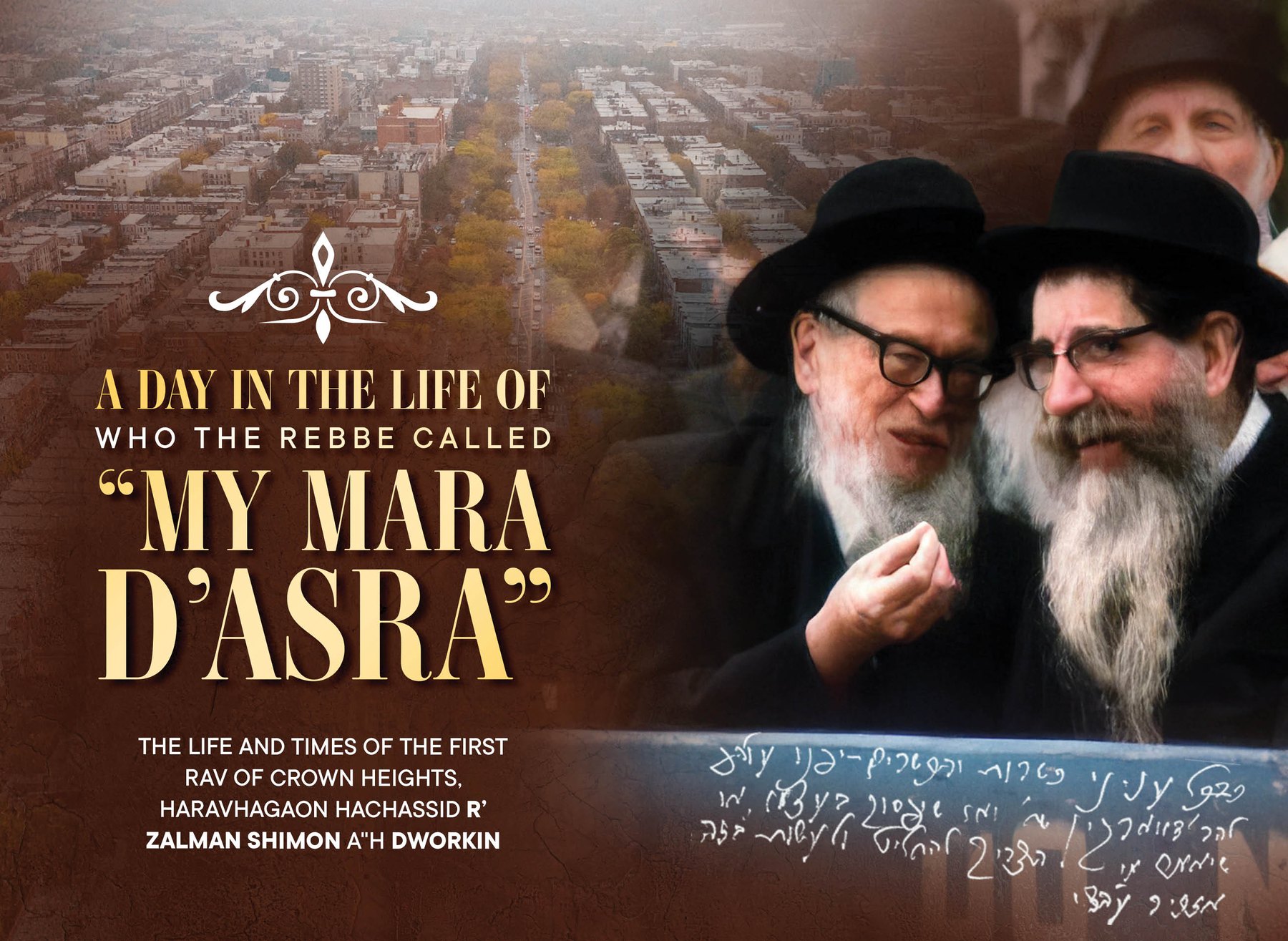
The life and times of the first Rav of Crown Heights, HaRav HaGaon HaChassid R’ Zalman Shimon a”h Dworkin
Crown Heights, 5 a.m. Rabbi Zalman Shimon Dworkin had barely finished washing his hands when the phone rang, shattering the deep morning silence. On the line was a rabbi from Manchester, England. Did he know exactly when Rabbi Dworkin wakes up each morning? Not necessarily. He simply hadn’t calculated the time difference between England and New York properly.
He had a very urgent question, a matter of pikuach nefesh, so how could he pay attention to the time? He did Rabbi Dworkin a “favor” by allowing him time to say the morning brachos. Afterward, Rabbi Dworkin answered the question. Finally, he added with a smile, “And this is what you call pikuach nefesh?”
The Rav sat in his kitchen with his early morning study schedule, immersed in a sefer, but not for long. The doorbell rang. The Rav looked up: “Ah, yes, the shochet!” The door opened. The shochet carefully pulled out a large chalaf (shechita knife), then another, and a third. The rabbi examined them, smiled, and said, “Good!”
While the door was briefly open, a yeshiva bachur pushed his way inside. He stood in a humble posture and waited.
“Well, what do you want?” the rabbi asked.
The bachur explained: He was on his way back from the mikva and had apparently exchanged his tallis katan (tzitzis) with someone else’s. The issue: there was a question about the tzitzis on the exchanged garment. “Well, you’re a bachur a chevraman. Show me the tzitzis…”
These stories offer just a glimpse into the overflowing daily schedule of the Chassidic rav, Rabbi Zalman Shimon Dworkin a’h, who merited to serve as the Rav of Crown Heights. His recent yahrtzeit on the 17th of Adar, marked forty years since his passing.
The following lines aim to sketch the portrait of Rabbi Dworkin – an exemplary rav, a rav from an earlier generation, blessed with immense Torah knowledge, sharp intelligence, and a wealth of life experience, particularly when ruling on complex real-life situations, what he referred to as the “Fifth Shulchan Aruch” (issues requiring special sensitivity and wisdom beyond the written law).
Five Hours Of ‘Talking In Learning’ With The Gaon Of Rogatchov
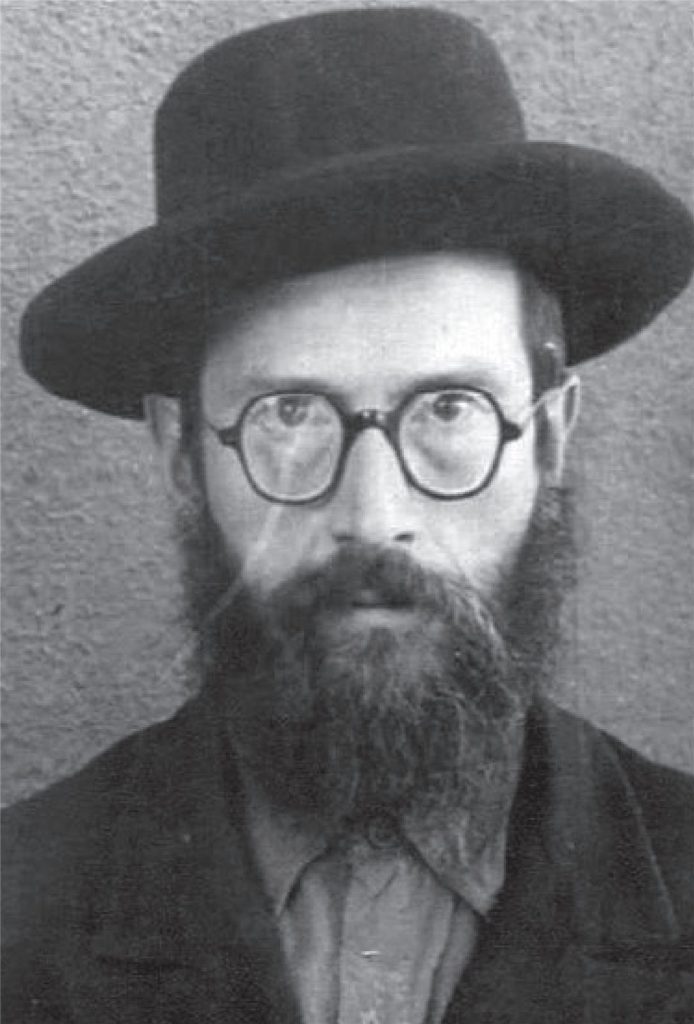
Rabbi Zalman Shimon Dworkin was born in 1900 in the city of Rogatchov. Already in his youth, his father recognized his son’s blessed talents and decided that he could only reach his proper purpose and destiny when studying in a yeshiva.
Indeed, when he was only eleven years old, at the beginning of 1912, his father brought him to “Tomchei Tmimim” in Lubavitch, which had already developed into a respected institution as a formative breeding ground for great students. In the yeshiva, he was soon counted among the outstanding students and studied there for thirteen years, during which he absorbed from the mashpiim, mashgichim, and other Chassidim, Chassidic wealth that was beyond measure, including the Chassidic gaon Rabbi Yehuda Eber, and others.
While in the yeshiva, he excelled in his pure heart, in the quality of his Chassidic conduct, with a genuine and inner Chassidic spirit, and even more so – in his modesty and humility. It was said of him that he was a “pnimi b’etzem mahuso” (internal in his very essence) to the point where he actually loathed any prominence and expressions of chitzoniyus, self-importance, and the like. It was not for nothing that he merited kiruv pnimi and also expressions of praise from the Rebbe Rashab.
About that period in Lubavitch, he later recounted: “In Lubavitch there were two types of students. There were those who studied in Lubavitch for a long time, and there were those who came for a short time. Specifically those who came for a short period entered the yeshiva with a feeling that it mattered to them for life – they wanted to learn as much as possible and gain something from their stay in Lubavitch.”
He concluded that “students need to be like the second type.”
R’ Dworkin was a giant in Torah on an enormous scale. This is evidenced by the fact that already in his youth, he merited to talk in learning with the remarkable genius, the Rogatchover, for more than five hours!
All this did not contradict the fact that he was a true Chassid, connected and devoted to our Rebbeim. Like water reflects a face – he himself merited to receive wonderful kiruvim from the Rebbe Rashab and the Rebbe Rayatz.
Years Of War And Escape
During World War II, he suffered greatly when he was forced to flee deep into Soviet Russia, to the city of Samarkand, where he was later appointed as a rosh yeshiva. He did this with self-sacrifice, despite the fear of the Communist secret police.
In 1946, as part of the famous escape of Chabad Chassidim from Russia, R’ Dworkin managed to flee Russia and after a turbulent journey, arrived in Paris.
He himself was a member of the ‘Rescue Committee’ that organized the great escape of the Chassidim, something that could have cost him his life. However, helping his fellow Chassidim was at the forefront of his concerns.
Mission In Ireland
In Paris, a new chapter opened in his life: he was appointed to rabbinical and teaching positions, dedicating his time to studying with the young flock, most of them refugees from behind the Iron Curtain. He devoted himself to them with all his heart and soul.
Later, he moved to live in Ireland, as part of a group of shochtim who went there to perform kosher shechita according to the highest standards. While there, he served as the head of the shochtim.
In fact, already at the age of 22, he studied shechita under the guidance of the Rebbe Rayatz. He studied with Rabbi Yehoshua Nimotin, “who was a great expert in these dinim. At the time,” R’ Dworkin recounted, “I did not understand what the Rebbe’s intention was for me to study shechita u’bedika specifically with Rabbi Nimotin.”
Only years later was the depth of the Rebbe’s vision revealed. “After the Holocaust,” related R’ Dworkin, “when I was sent with the blessing of the Rebbe Rayatz to Ireland, I understood what the purpose of the study was, since many questions arose about the lungs, and they needed a great expert to discuss the law of adhesions. Thanks to what I learned from Rabbi Nimotin, I managed to handle all these difficult questions.”
What was the story behind the delegation to Ireland where Rabbi Dworkin was sent?
This is the story in brief: In the first years after the establishment of the State of Israel, there was a severe food shortage in Israel. The Irish government, in a friendly gesture, donated one million cans of meat preserves for the residents of Israel. To ensure that the meat would be kosher, the Joint organization approached Rabbi Binyamin Gorodetzky, who organized a group of Chabad Chassidim to manage the project, which included shochtim, deveining experts, and mashgichim.
The group, led by Reb Peretz Mochkin, included about 25 families, and stayed in Ireland from the beginning of Elul 1948 until the middle of winter 1949. The project was successfully completed, and also improved the economic situation of the participants.
Even after the project was completed, several small groups of shochtim traveled to Ireland to continue the shechita. The groups stayed there until the end of winter 1951, and were under the spiritual leadership of R’ Zalman Shimon Dworkin. He was the head of the shochtim, the menahel ruchni, and the rav and posek, all in one.
How was he appointed to this?
In late Kislev, while already in Paris, the group’s menahel, R’ Peretz Mochkin, wrote to the Rebbe Rayatz: “I have been asked to inform the Rebbe that at a meeting of the rabbis, shochtim and deveining experts who were in Ireland, it was unanimously decided that the great rabbi and rav and shochet, R’ Zalman Shimon Dworkin, should also be among the travelers and, G-d willing, will bring benefit to the matter, and according to the request of R’ Zalman Shimon, with the agreement of R’ N. Nemanov that I propose this to the Rebbe, I am writing this letter.”
The Rebbe Rayatz responded affirmatively to R’ Peretz: “It is correct that the rav and shochet R’ Zalman Shimon Dworkin should participate in the trip to Ireland, and may Hashem grant success to all of you in a good journey and successful work materially and spiritually.”
He wrote the same to R’ Zalman Shimon: “In response to your letter, it is correct that you should participate in the trip of the shochtim to Ireland, and strive to bring benefit to the talmidim to learn well the craft of shechita, and may Hashem help you materially and spiritually, blessing you materially and spiritually.”
In late Tishrei 1951, eight months after the passing of the Rebbe Rayatz, before the formal acceptance of leadership, R’ Dworkin asked the Rebbe whether to continue in his position in Ireland. To this, the Rebbe replied in a long letter, adding and noting guidance: “I have already written to many of the Chassidim and those who are mekusharim that they can find answers to their doubts that arise now if they look at the letters of my father-in-law, the Rebbe, that he wrote to them back then.”
The Rebbe concludes with a fundamental insight: “In general, you and your travel companions should look at the trip to Ireland not only as a matter of material livelihood, but as a means to spread the teachings of Chassidus also in that country and its surroundings and also in the places where the meat made kosher by them will reach. And the ability for this is in their hands and if only their heart be whole to also make their will directed to this purpose, which then will also be directed to the inner desire of their divine soul. With regards to all your group, awaiting good news.”
An Exhaustively Busy Daily Schedule
In the early 1950s, when he arrived in the United States, he settled with his wife, the Rebbetzin, in the city of Pittsburgh, where he was appointed as a teacher in the highest class that was then added to the “Achei Tmimim” yeshiva in the city. In those years, several dozen young men from various circles became close to him, thanks to the shiurim he established with them in both Nigleh and Chassidus. Due to his warm relationships with each of them, he brought them close and drew them close with his pleasant ways and friendliness.
These were years of new beginnings, of building Jewish life anew after the great destruction of the terrible Holocaust years. Everywhere he went, R’ Dworkin left a deep imprint of Torah and Chassidus, an educator and guide for a new generation of yerei shomayim and lomdei Torah.
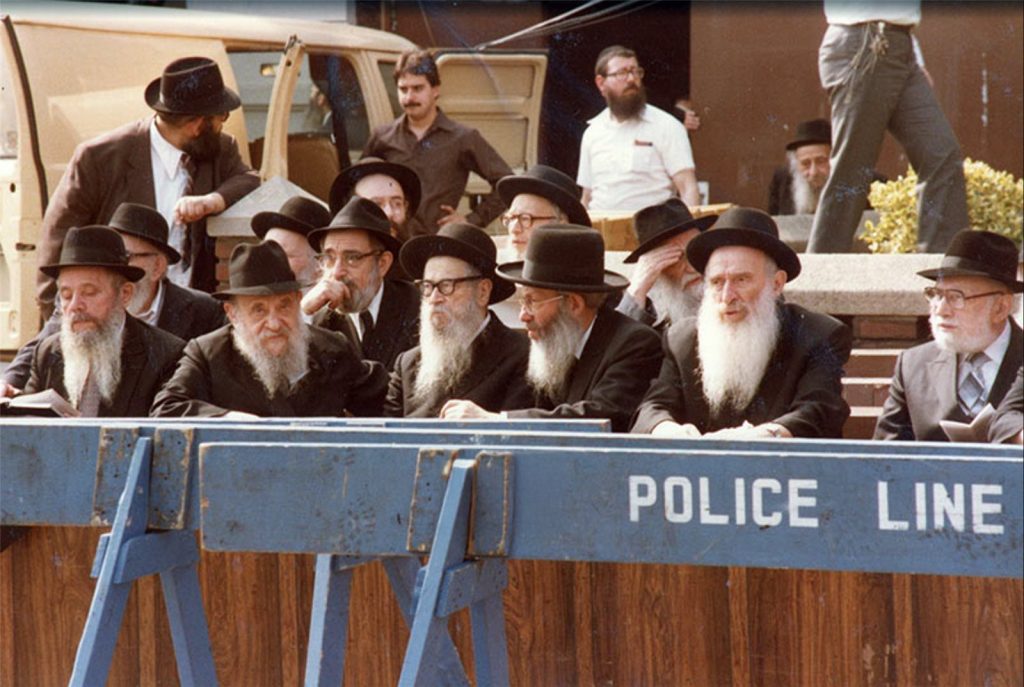
In 1960, he was brought to the Crown Heights neighborhood to serve as the Rav of the large Chabad community in Crown Heights. He was also accepted as the rabbi of “770”, and his name preceded him as one of the great halachic authorities.
During that period, a large crowd of Chabad Chassidim gathered around 770, which grew from year to year. Alongside this, schools for boys and girls were established and expanded; public institutions for chinuch, kashrus, and tahara were established alongside central organizations for the spread of Yiddishkeit that sprang up and flourished under the Rebbe’s direction. Lubavitch grew and expanded far beyond the boundaries of the neighborhood, and reached throughout America, as the entire congregation of Anash became part of the great growth of Lubavitch in Brooklyn.
Thus, there was an urgent need to appoint a Rav and halachic authority of stature in Torah and halacha, with yiras shomayim and wisdom, with extensive experience in matters of kashrus, mikvaos, with the ability to respond to complicated questions as well as solve family problems.
In addition to all the involvement in these issues, the many needs and various problems of the large community, and apart from all his activities in special needs cases and in solving the complicated and new problems of the young people, young men and married couples from among those who were brought close to Torah, Yiddishkeit and Chassidus – in addition to all this work locally, he made his way to near and far places, to centers and Chabad houses of the shluchim of the Rebbe, and came to their aid in building mikvaos, in matters of kashrus, and more.
Many turned to him from all over the world, with various and complicated questions that arose on the agenda of world Orthodox Jewry. It is not surprising, therefore, that over time he was appointed as the head of the “Vaad Rabbanei Lubavitch,” alongside being the Rosh Kollel in the Crown Heights kollel.
His rabbinate in Crown Heights was not like a rabbinate in a regular neighborhood – being that it is the neighborhood of the “king.”
“R’ Dworkin was completely immersed in spreading Torah and teaching halacha, responding to questioners with a cheerful countenance and endless patience, dedicating time to every Jew who needed his advice,” says Rabbi Levi Garelik.
He labored greatly on the many needs and various problems of the developing Chabad community. He initiated a variety of activities in dealing with special needs cases as well as in solving complicated problems that arise as the generation becomes more modern. He gave himself over to guide young married men as well as older Chassidim, couples who had just come closer to a life of Torah, Judaism and Chassidus, all with good cheer.
First Bell Of The Morning
We began the article with a description of a routine day in the Rav’s life, one morning in his busy life. But that morning was not exceptional – this is how every day looked in the life of the Rav of Crown Heights. While many other rabbanim set orderly reception hours, R’ Dworkin’s door was open at all hours of the day to anyone in need.
A special perspective on R’ Dworkin’s packed daily schedule was provided by his nephew, Rabbi Yehoshua Dubrowsky, in his uniquely colorful prose (translated from Yiddish):
The small tea kettle in the kitchen had already boiled and cooled. A regular occurrence. The Rav puts it back on the stove and returns to open the sefer with longing eyes. When the kettle made its whistling signal, the telephone “answered it,” and the doorbell “joined in” with its hoarse voice. This too was a regular occurrence.
In the front room sat two Jews waiting. They surely saw the notice on the door with the regular reception hours, but each of them apologized. The Rabbi must forgive, it’s urgent, there’s no choice. The young man, a shliach of the Rebbe from afar, must travel back immediately. It concerns the lives of a large and extended family – and the Rebbe instructed him to ask the Rav, R’ Dworkin. The matter is confidential – and the Rav went with the young man into the kitchen. They stayed there for an extended time. When he came out with a happy face, the shliach parted from the Rav, thanked him very much and… couldn’t control himself: he hugged the Rav tightly, who remarked with a smile – “They say you’re a baal mochin…”
The second, an elderly Jew, a Poilishe Chassid, said: “Rav, don’t be angry with me for bothering you now, in the early morning. I have no one else to turn to for help. Only you can help me.”
The Rav invited this man into the kitchen too. Maybe he would still manage to grab a cup of hot tea. The man told a long story: they want to evict him and his sick daughter from the apartment. Why? For months they haven’t paid rent. They don’t have enough. Lately, there hasn’t been any income. And what they receive from Social Security is barely enough for food. “I want to ask the Rav: is it permissible according to Jewish law to evict me from the apartment when I hope that Hashem will help me and I will be able to pay?”
The Rav answered: “Of course Hashem will help you. Now I won’t delve into the law, but rent must be paid, not delayed too much. Something must be given.” The Rav turned to his ‘tzedaka pocket’ (one of the inner pockets of his outer garment was reserved for tzedaka money. Or perhaps two?). And he began to count money from there: “How much do you pay in rent per month?” And the Rav gave him enough for several months. The Jew didn’t move. “No, I cannot take it!” The Rav ordered him to take it in a tone that combined kindness and a kind of anger: “Let this be a long-term interest-free loan. Go in peace and pay for the apartment.”
The Rav opened the holy Zohar again with enthusiasm. He held his head, as was his custom, between both hands – and the telephone rattled again. This time he picked up the receiver, answered quickly and left the receiver hanging. The silence that settled allowed the Rav to get into his learning with a pleasant and juicy soft niggun.
The Rav had already taken his tallis and tefillin to go daven in shul, opened the door, and then the two Jews who had arrived called out: “Oy, Rav Dworkin, we apologize, just two words.”
“What, for example?”
“We have a big dispute between us.”
“Are you interested in a din Torah?”
“No, we trust your opinion, we accept upon ourselves to do as the Rav decides.”
“Nu, call around twelve o’clock.”
“But one of us is traveling immediately, in an hour, abroad.”
“Nu, come to me when he returns.”
“Yes, but the trip depends on your psak.”
“If so, how will it be? What do you want from me?”
“Advice…”
“After hearing your ‘few words,’ my advice is that you allow me to go daven. And when you decide what you can do, I’ll see what I can do about the issue.”
‘I Have One Question. Actually Two…’
The distance from the Rav’s house to 770 is “two steps,” but it took quite some time until he entered the shul because he had a number of “escorts” who delayed him.
One: “Forgive me, Rav, just a very short question – actually two…” Someone else pushed a large package into the Rav’s hand, “R’ C. from California sent me with the plans for the mikva he is building. He urgently needs the Rav’s instruction.” The third, a religious professor, takes out a man’s wig from his inner pocket. He wants to know if it can be used as a head covering when giving a lecture at a distant university with strange customs. And several more Jews stopped the Rav on his way from the entrance to the shul to his seat.
After the davening, while folding his tefillin, a circle of men had already gathered – and those who had discreet questions waited on the street, near his house.
When the Rav approached the house, around ten o’clock, the nephew (who came to assist the Rav) sat by the phone and was already recording many urgent telephone questions; several community activists-gabbaim were waiting for a meeting with the Rav on an urgent matter (scheduled for ten o’clock); a young rabbi and a tall youth were waiting regarding conversion, and in the corner stood an old Jew with a package under his arm.
The Rav surveyed all those standing with a quick glance and with a special smile turned to the old Jew: “Ah, R’ Yonasan, how are you?!” and took the package: “You are first in line for me…”
After the Rav examined the slaughtered chicken in the package and the Jew went on his way, the Rav explained why this Jew had such importance in his eyes: “He is practically a simple man. Not a big ben Torah, who has lived in America for about fifty years. He has never tasted any meat from any shechita – he eats only poultry that he himself brings to the shechita and which he himself kashers. Every time there is a question about a chicken, he himself brings the question to the rabbi – a two-hour round trip… Well, how many Jews like that do we have?…”
This was the Rav’s daily schedule that continued until late at night. Throughout the long day, from early morning until late at night, R’ Dworkin would receive everyone. He was a living example of the essence of a rabbi among the Jewish people – not just a halachic authority, but also someone who understands the human soul well, recognizing that behind every halachic question stands a human being in need of a real solution.
R’ Dworkin was also the rabbi of many shluchim around the world who found in him a rav with whom they could discuss and solve the complex halachic problems that trouble every shliach. R’ Dworkin – as a Chassidishe rav – showed tremendous genius and halachic creativity in order to solve their problems. For example, he established the ‘letter of authorization’ from rabbi to rabbi in the sale of chometz, since the bachurim and shluchim were not always well-versed in the laws of selling chometz. He devised many other halachic solutions that are too numerous to detail.
Sole Authority In Matters Of Halacha
Rabbi Zalman Shimon Dworkin merited special appreciation from the Rebbe. For several years, the Rebbe sold his chometz through him and referred various halachic questions to him. R’ Dworkin, for his part, was the Rebbe’s trusted figure in matters of halacha, with the Rebbe relying on the Rav’s halachic opinion. Once the Rebbe even referred to him as: “My Mara d’Asra.”
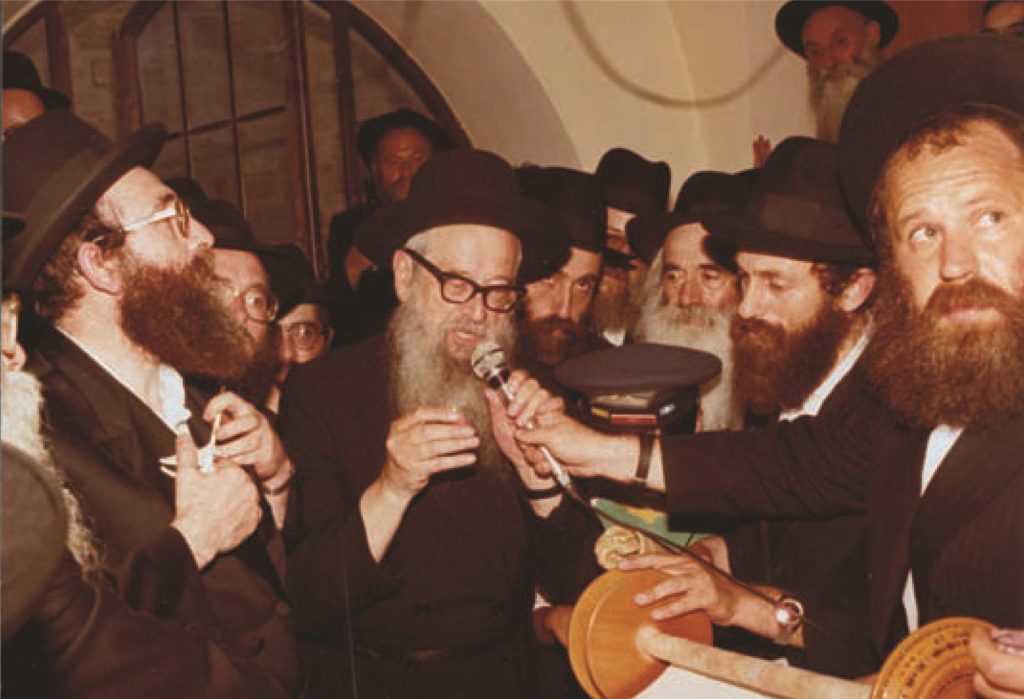
One of the special opportunities was when the Rebbe sent R’ Dworkin to personally represent him at the ceremony of the Sefer Torah shel Yaldei Yisrael that took place in 1981 in Yerushalayim inside the Old City. His arrival aroused great excitement among Anash.
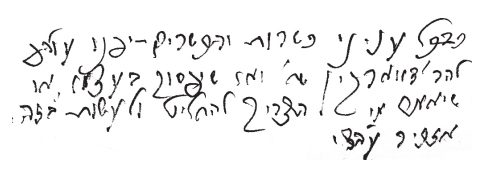
The fact that the Rebbe relied on R’ Dworkin in all matters relating to halacha can be seen in the note before us (see copy): “As in all matters of kashrus and kosher certifications – they should once again approach R’ Dworkin, and either he will rule himself or he will say who needs to decide and act on this. I will mention it at the tziyun.”
In one letter, we can see how the Rebbe directs the secretariat to respond and obey according to Rabbi Dworkin’s instruction: “Call… in my name: that he should do in all of the above according to all of R’ Dworkin’s instructions, and it is understood that I take upon myself the responsibility in this – and it is explicit in the Torah ‘do not deviate (from the rav’s ruling) right or left’ – that is, also not to be stringent when the rav says it is forbidden to be stringent. And it is easy to understand. And I expect that he will bring good news that he is doing all this. And thanks for doing so at the earliest possible time.”
There are many more such examples, on a wide range of topics – with the common denominator of all of them: listening to the Rav, and obeying according to his methods of ruling.
Special Visit Of The Rebbe At His Kever
His nephew Rabbi Yehoshua Dubrowsky said: “From my uncle Rav Dworkin, I never heard the word ‘geshmak’ regarding food, even if it was required in the context of the conversation.”
In 1976 (5736), his wife Rebbetzin Tzivia passed away. Despite remaining alone in his home in his old age (they were childless), he did everything in his power – and beyond – to avoid burdening anyone to come help him. Despite his fragile health, not only did his strength not diminish nor his energetic work slow down, but on the contrary, he continued to devote himself with all his soul, day and night, for the Chassidic community, and especially for the Rebbe’s inyanim, as he was a pnimi who was mekushar and devoted with the depths of his soul to the Rebbe.
“His life in America was not a bed of roses, especially after his wife the Rebbetzin passed away,” was written after his passing in the Torah journal HaPardes. “He was childless and was known to have illnesses and pains, yet he never left the tent of Torah and Chassidus until his last day.”
Among his few sayings while on his sickbed in his final days, he said: “However it was and will be, I can say that ‘with all my strength I worked… by day it consumed me… and by night…’”
A remarkable story occurred a week before his passing, when he was in Mount Sinai Hospital. His nephew visited him and found him in a semi-conscious state due to his worsening illness. Suddenly, R’ Dworkin awoke and said to him in an emotional voice: “There were ‘those on the right’ and ‘those on the left’; those on the left didn’t give him any time, but those on the right gave another seven days… and they won…”
The nephew who heard these words was alarmed. He thought the illness had affected his mind…
Seven more days passed, and he returned his soul to his Creator. Only then did everyone understand the meaning of his words.
* * *
On motzoei Shabbos, the 17th of Adar 5745 (1985), after a prolonged illness, Rabbi Dworkin passed away.
The news of the passing of the Mara d’Asra shocked all residents of Crown Heights. The Rebbe gave instructions for the funeral arrangements, and groups of bachurim went out to post notices throughout the neighborhoods of Boro Park and Flatbush.
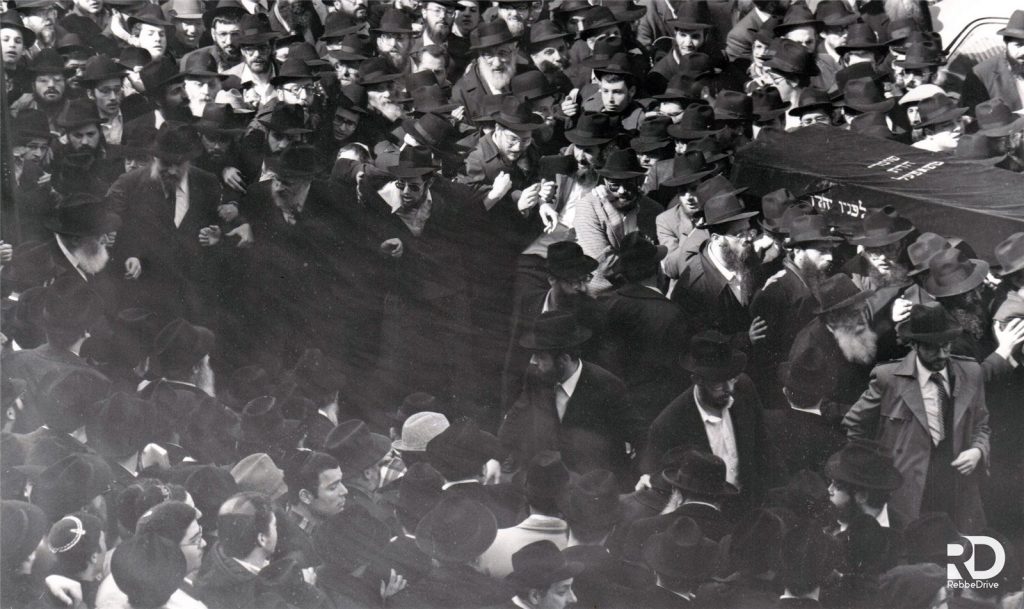
The funeral was held the next day, Sunday. A crowd of about five thousand people, including Chabad Chassidim, hundreds of rabbis and roshei yeshiva, yeshiva students, and led by the Rebbe, accompanied the aron that departed from the Kollel on Union Street. Everyone had praise, appreciation, and admiration for the qualities the Rav excelled in.
The members of the Chevra Kadisha received precise instructions from the Rebbe regarding the funeral route: departing from the kollel via Kingston Avenue to the middle of Eastern Parkway, and from there returning via 770. Throughout the funeral, the Rebbe’s face was unusually serious. Afterward, the Rebbe returned to 770.
In the afternoon of that day, the Rebbe traveled to the Ohel of the Rebbe Rayatz, and afterward went especially to see R’ Dworkin’s grave. R’ Dworkin was honorably laid to rest near the holy Ohel.
In the Torah journal HaPardes, they wrote: “With his passing, a wonderful personality went to the next world, a personality of Torah, wisdom, noble character trait, Chassidus and mesirus nefesh for those who cherish the Torah and its learners.”
R’ Dworkin left behind a rich legacy of Torah and instruction, of Chassidus and yiras shomayim, and mainly—a living example of a rabbi and leader in Israel, combining genius in Torah with deep human sensitivity, and bittul to the Nasi HaDor.
ENCOUNTER WITH THE REBBE IN ROSTOV
Rabbi Dworkin met the Rebbe MH”M for the first time when he was in Rostov. He recounted:
“He [i.e. the Rebbe] was in the home of the Rebbe [Rayatz] at the time and it apparently had to do with a shidduch. There was a time he wanted to test the talmidei ha’yeshiva but he ended up avoiding it. He was always “closed off,” and did not circulate that much in the zal with the bachurim, but was simply removed.
A RARE TREASURY OF MEMORIES
Rabbi Dworkin was gifted with a superlative memory. Of course, he had vast knowledge of all areas of Torah. His memory also served him well when it came to stories of Chassidim of earlier generations. He was a repository of oral accounts and over the years, he heard many stories from earlier Chassidim and he made an effort to relate them and pass them on to the younger generations.
This is why, in one of the letters that the Rebbe sent him (at the end of Tishrei 5711), the Rebbe added a handwritten note: “What is happening with the notes of his memories from the years 5680 and on?”
This question was in response to R’ Dworkin’s letter to the Rebbe in the summer of 5710 in which he announced the writing of his memoirs, to which the Rebbe responded:
“I was pleased to read in your letter that you plan on writing your memories from 5680-5686 when you were in Rostov. Surely you will write in detail and as my father-in-law, the Rebbe said, “When you give over a story, you need to give it over with all the surrounding details, the time and place and the atmosphere, as is brought in the sichos of my father-in-law whose father [the Rebbe Rashab] would regularly ask him, ‘What do you remember?’ so that everything he saw and heard would be fixed in his memory. At a time when forgetfulness is more prevalent in the world, it is very important that every story be written down with all its details. Like the first Luchos and the second Luchos themselves were entirely front-facing.”
After sending his memoirs to the Rebbe, the Rebbe wrote (28 Mar Cheshvan 5712): “I received your letter along with the notes from your memoirs from the first years of my father-in-law, the Rebbe’s nesius, and many thanks for the past and a great request to continue with this, because although the stories you inscribed are plentiful in quality they are few in quantity and indubitably there are many more inscribed in your memory.”
Many of the stories that he recalled were printed in Shemuos V’Sippurim, Otzar Sippurei Chabad and other places.
Beis Moshiach #1461 • pp. 10-21
© 2026 Beis Moshiach Magazine. All rights reserved.
This article originally appeared in Beis Moshiach #1461. You are welcome to share it with friends and family by email or in print, provided that you do not change, add to or omit any part of it, you credit the author and Beis Moshiach, and you include a link to archive.bmoshiach.org (written out in full in printed copies).
To republish this article in a newspaper, magazine, book or website, please request permission in advance at [email protected].