The Happy Partizan
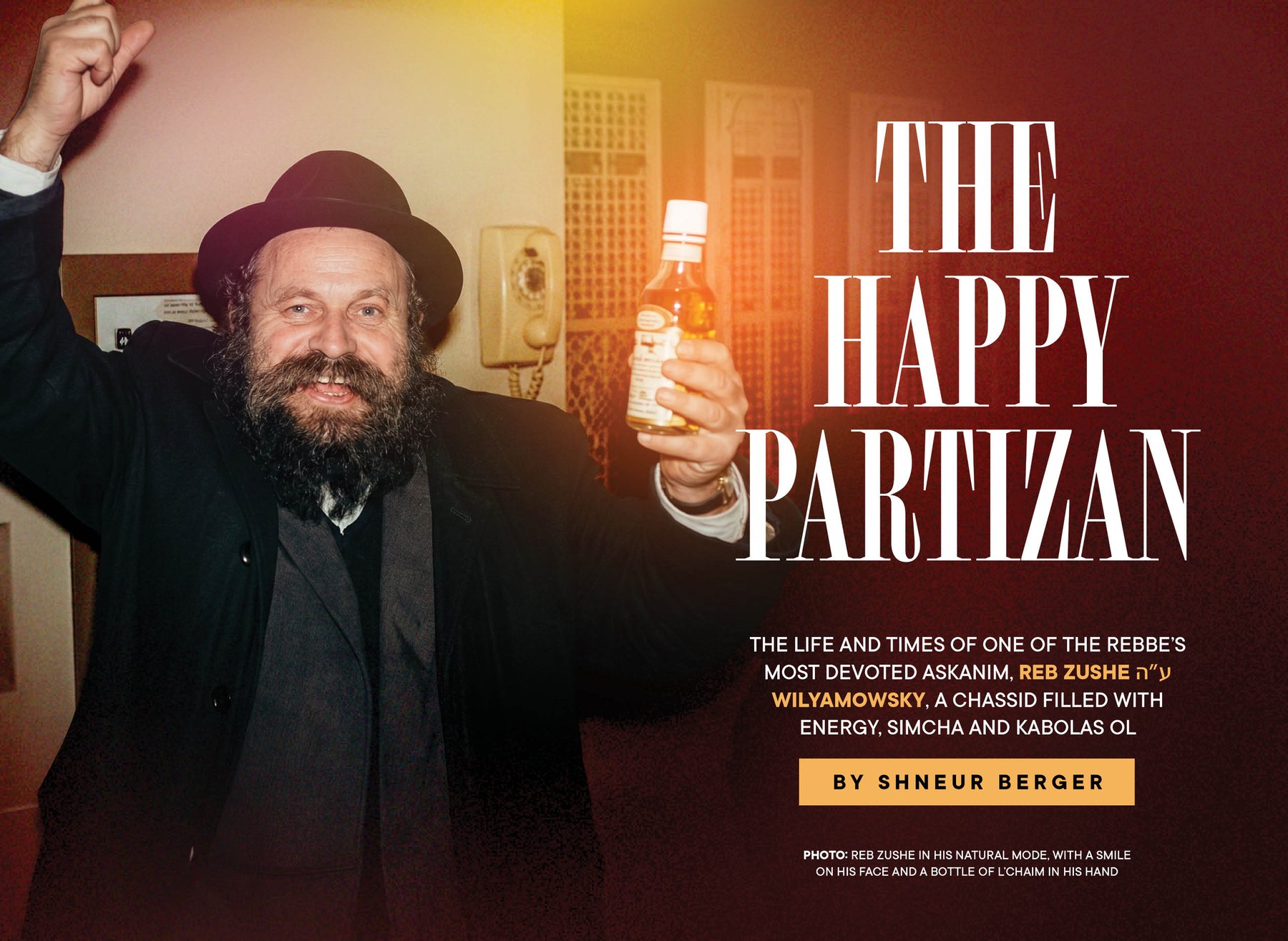
The life and times of one of the Rebbe’s most devoted askanim, Reb Zushe ע”ה Wilyamowsky, a Chassid filled with energy, simcha and kabolas ol
For the Partisan, the well-known Chassidic askan Reb Zushe Wilyamowsky, simcha was part of his DNA – every day, all day, all year round. Wherever the Partisan arrived, Jews experienced light and Chassidic joy, along with a ‘l’chaim’ from the bottle of mashke he had received from the Rebbe at their last meeting.
Everyone wants to increase in joy, but it isn’t always easy – all the more so if you grew up in difficult circumstances, fled from enemies, and fought for your life in the forests alongside partisans. Even when life didn’t shine its face upon you and your health wasn’t great… joy then becomes a real challenge.
Such was the character of R’ Zushe the Partisan, as will be told below. A man of constant joy, even when he had every reason in the world to sink into the grayness of daily life.
R’ Zushe Wilmowsky was called by the Rebbe “mein partizan” – my partisan. The nickname had a double meaning: he was a partisan fighter against the murderous Germans and he was a fighter-activist who strove all his life for achievements and successes on the front of Chabad work in accordance with the Rebbe’s holy directives. He carried out his activities in the most creative – and partisan – manner. He was never deterred by any obstacle or challenge.
R’ Zushe was known as a captivating Chassidic personality, a symbol and example of a Chassid of the seventh generation: dedicated to every one of the Rebbe’s directives, combined with limitless determination. He reached out to every Jew, knowing how to break through locked doors in the most varied ways, melting walls of ice with a broad smile and burning faith.
R’ Zushe also operated like a partisan. He never had an organized budget, no staff under his command, not even a proper office. Yet without any of these, he was one of those who developed Chabad institutions in Eretz Yisrael during the seventh generation. Throughout the years he worked with great energy, with a glowing face, with joy and warmth. Wherever he was needed, he was present even without being called – and all of it with simplicity and never taking credit.
In several letters from the Rebbe to R’ Zushe, the Rebbe emphasizes the importance of avoda with simcha. For example, in a letter from 1961, the Rebbe added in his holy handwriting: “To good tidings in matters of the community and the individual, increasing and going onwards with light – with simcha and zerizus.”
A review of R’ Zushe’s archive shows that in his own letters to the Rebbe, he consistently noted that all his work was done with joy and deep personal fulfillment.
Joy, Trust, and Faith — Even When Facing the Murderers
Simcha, zerizus and optimism were part of R’ Zushe’s life – even when facing complex challenges. He continued working for the community with a radiant face, with bursting energy, trusting in the Creator of the world.
So too during the tribulations of the Holocaust, when he joined Tuvia Bielski’s partisan unit somewhere in the forests of Russia, as the Nazis – may their names be erased – periodically bombarded the partisan group in attempts to capture them. But R’ Zushe never knew despair; he always placed his trust in Hashem.
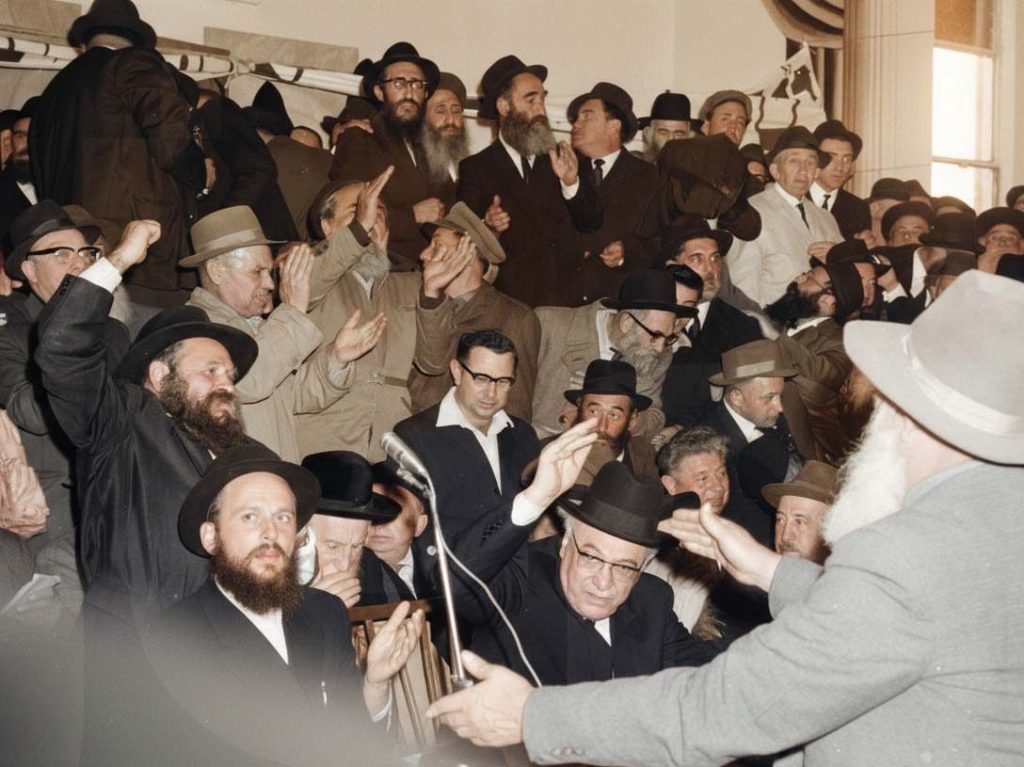
While working on his biography The Partisan, I spoke face to face with Mr. Moshe Beirach, who in his youth served in the partisans alongside R’ Zushe, and later became a researcher of the history of the Bielski partisan unit. Mr. Beirach recalled that amid the terrible situation surrounding them, R’ Zushe was always the one who breathed encouragement and joy into his comrades: “I don’t know where he always drew his strength from – how a young man had the courage to always say with complete confidence, ‘We will defeat them.’ Throughout the marches and missions there were often moments of despair, but Zushe never despaired. On the contrary, he instilled in all of us a good spirit of hope and faith.”
The war ended, the partisans dispersed, each to their own lives – and years later the circle closed. One day, Mr. Beirach encountered R’ Zushe on a Tel Aviv street and found that his friend remained as joyful as he had been in his youth:
“I was walking on Allenby Street,” he told me, “and when I reached the corner of King George, I suddenly saw Zushe coming toward me. He embraced me with his eternal radiant expression and we were both moved. I invited him to visit my home, and shortly afterward he honored me with a visit.
“It was the beginning of a renewed connection. Zushe, for his part, invited me to the ‘hakafot shniyot’ in Kfar Chabad. I accepted, and several times I was present at those celebrations together with other friends from our partisan days. I brought them along to see the true joy of Chassidim. We especially loved watching how at the very heart of the great celebration stood our friend Zushe the Partisan – a warm smile on his face, a bottle of mashke in hand, offering and urging: ‘Say l’chaim.’”
The “Inspector” with the Smiling Face
R’ Zushe was a multifaceted askan – a pioneer and highly creative. Already in his youth he founded the Tomchei Tmimim yeshiva in Lod. Following the Rebbe’s directive, he was also among the founders of Reshet Oholei Yosef Yitzchok Lubavitch and the organization N’shei Chabad. For decades he was one of the leading Chabad activists in Eretz Yisrael, working across many diverse areas for the development of Chabad institutions and organizations in Israel.
In 1977, he was officially appointed by the Chabad Rabbinical Court as “Inspector” (mevaker) of Chabad institutions in Israel. From then on he began traveling throughout the country, from one end to the other. Although the role of “Inspector” doesn’t always suit someone joyful and optimistic by nature, R’ Zushe fulfilled his role to the fullest. He didn’t arrive as a stern supervisor looking for criticism, but as a father with a sensitive soul. R’ Zushe went everywhere, near and far, to visit, encourage, motivate, and forge connections – all from a place of joy that was contagious to everyone around him.
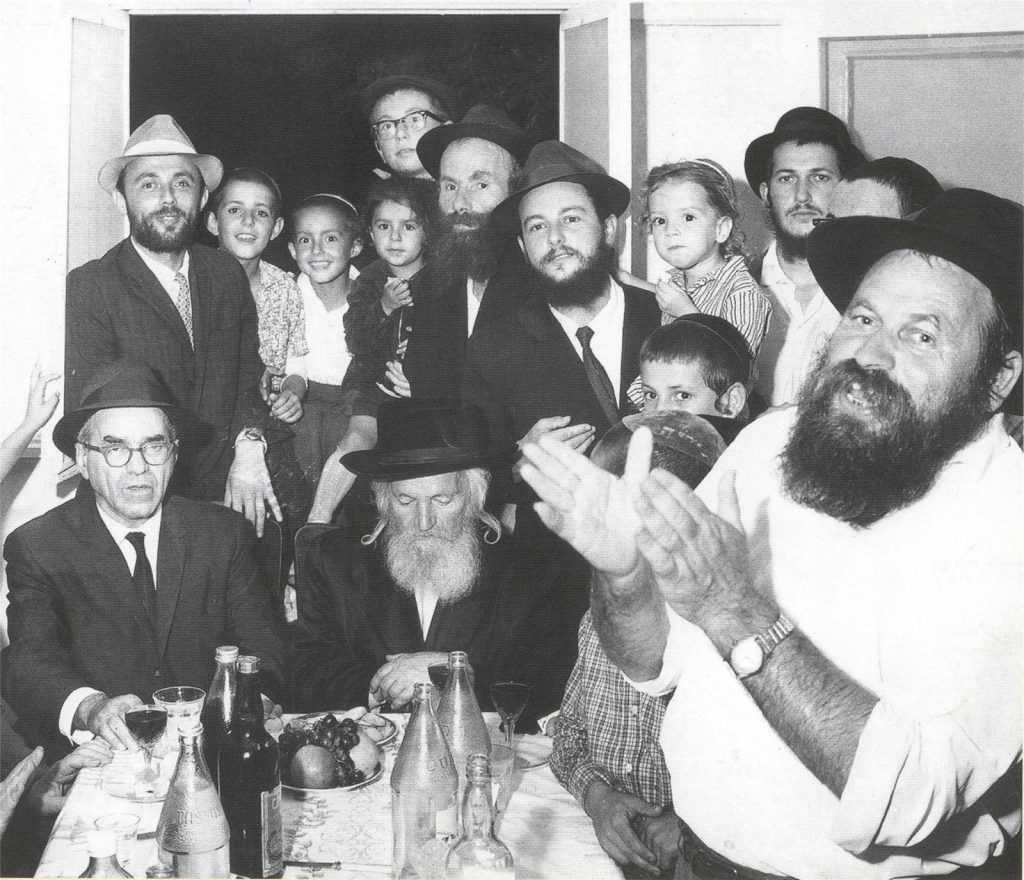
R’ Kalman Druk, a director of Chabad schools in Beer Sheva, recalls: “For many years I worked as a teacher in a Reshet school in the settlement of ‘Brosh’ in the south of the country. R’ Zushe would come regularly to Brosh to visit us. When he arrived, the entire atmosphere changed immediately. He brought joy and chayus to the work and created a positive atmosphere among everyone. He helped with whatever he could and always gave off warmth. Many times we felt pressured because of complex problems at the school and beyond – and suddenly R’ Zushe would appear like an angel from heaven and calm us all down.”
His son R’ Levi relates that the “joyful image” of his father that he recalls from childhood is of Friday night: “Father would pray at the ‘Beis Menachem’ shul, while the renowned Chassid, Reb Berke Chen davened at the ‘Central’ shul. On their way home they would usually meet at the intersection near our house. They would meet and begin to dance – a dance of genuine Chassidic joy. The dancing ended with a ‘Gut Shabbos,’ both of them smiling from the heart.”
The shliach, R’ Yosef Yitzchok Gourevitch, mashpia at Tomchei Tmimim in Migdal HaEmek, relates: “At weddings, R’ Zushe danced like a young man. He danced at my wedding too, and every time I watch the video from the wedding, his dancing fills me with awe – how an older man dances with such great energy just to bring joy to others.”
Rabbi Menachem Mendel Gluckowsky, Rav of the Chabad community in Rechovot and one of the shluchim close to R’ Zushe, explains the meaning behind his joy: “The Rebbe says that the gematria of ‘shliach’ equals ‘sameiach’ [joyful]. He is joyful that he merited to be a shliach. R’ Zushe was always joyful, and that joy stemmed from knowing he was connected to the Rebbe and was carrying out the Rebbe’s shlichus. That is why we always met R’ Zushe with a smile on his face.”
The Minhag of Accompanying the Rebbe with Song
R’ Zushe in Eretz Yisrael was different than R’ Zushe in the Rebbe’s court. Many Chassidim remember him from Tishrei with the Rebbe.
R’ Zushe received several roles from the Rebbe for which he was responsible: he was appointed to organize shiurim for guests; at the conclusion of the davening he would break into song; and at farbrengens he would stand behind the Rebbe and encourage the singing of thousands of Chassidim. His presence was impossible to miss.
The custom of “accompanying” the Rebbe with singing upon his entry and exit from shul is credited to him. It began in 1972. R’ Zushe came to 770 for the Rebbe’s 70th birthday on the 11th of Nissan. When he entered for yechidus, the Rebbe wondered: “What’s happening? Sha shtil [quiet].” R’ Zushe explained that the previous night they had farbrenged for many long hours. The Rebbe responded: “I didn’t hear anything from the farbrengen – not upstairs, not downstairs.”
Afterward, R’ Zushe told the Chassidim what the Rebbe had said and declared: “I have therefore decided that it should at least be joyful down here.” He told his son R’ Levi: “From tomorrow morning I’m climbing on a bench, and when the Rebbe enters and exits from davening, I’ll start singing – and I don’t care what people say about me.”
From then on, at the conclusion of every tefilla he would stand near the Rebbe’s place and begin a joyful niggun. The Rebbe would encourage it with a wave of his hand, and the entire crowd would join in the singing – which over time became an established custom. He continued this practice every time he was at Beis Chayeinu.
Once, R’ Zushe was not standing near the Rebbe, and the Rebbe looked for him, as recorded in a diary from those days:
“Hoshana Raba night – after the sicha and distribution of dollars to tankistim, before departing, the Rebbe searched with his gaze for R’ Zushe Wilyamowsky who usually begins to sing at the conclusion of tefillos and sichos, but this time, due to a change in the seder caused by the distribution of dollars for tzedaka, he was not at his usual spot. After the Rebbe found him, he [R’ Zushe] began ‘V’somachta,’ and the Rebbe exited the shul waving his hand to amplify the singing.”
The Rebbe Places R’ Zushe as Encourager of the Niggunim
From Tishrei 5737 onward, R’ Zushe began encouraging the singing at the Rebbe’s farbrengens as well, filling the role of Chassid, R’ Hendel Lieberman, who had passed away about half a year earlier.
He took on this role following a hint from the Rebbe: most Chassidim sat (or stood) facing the Rebbe, while only the elder Chassidim found their place behind the Rebbe, on the farbrengen platform. At one farbrengen in Tishrei 5737, the Rebbe told R’ Zushe to stand behind him at a specific spot. R’ Zushe stood as instructed and understood that the Rebbe intended this to be his permanent place going forward.
At the next farbrengen he took the spot again, but one of the secretaries told him to move away, thinking the Rebbe’s instruction had been a one-time thing. R’ Zushe decided to return to his longtime usual spot and let the Rebbe do as He wished. When the Rebbe arrived, he nodded to R’ Zushe to return to his new place…
R’ Zushe concluded that the Rebbe was hinting to him to fill R’ Hendel’s role. From then on, Chassidim grew accustomed to R’ Zushe being “part of the scenery” at farbrengens – standing in an elevated position on the farbrengen platform, slightly to the right behind the Rebbe’s spot, encouraging and electrifying the crowd with his hand movements.
During hakafos as well, R’ Zushe encouraged the singing with great vigor. On Simchas Torah 5741, the Rebbe signaled to him to repeat one of his characteristic gestures several times.
Rabbi Ben-Zion Yaroslavsky shares a memory from Beis Chayeinu: “This was in 5745. I was by the Rebbe for Tishrei and was staying in the apartment of my grandfather, R’ Moshe Yaroslavsky (director of the ‘Hachnasas Orchim’ organization). R’ Zushe was staying in one of the rooms.
“One day I heard him singing to himself ‘Vayehi B’Yeshurun Melech’ – a niggun that had only recently begun to be sung by the Rebbe. It was a new and somewhat complex niggun, and he kept singing it aloud for a long time. I became curious. His door was slightly open, and I peeked through the narrow gap. What did I see? R’ Zushe wrote several lines on a sheet of paper and threw it in the trash, then took another blank sheet, wrote several lines and threw it away – over and over again. Suddenly he noticed me peeking and asked me ‘not to look.’ I went to my room, baffled.
“When the bachur who shared his room arrived, I asked him to take the papers out of the trash. Written on them were portions of the song ‘Vayehi B’Yeshurun Melech.’ On one sheet the first section was written twice, on another three times, and so on. I then understood: he was figuring out how to fit the tune to the words – thinking through how many times the first section should be repeated, the second section, and so forth.”
The Man Who “Lifted” Simchas Beis HaShoeiva
R’ Zushe’s Chassidishe simcha is fondly remembered by many from ‘Simchas Beis HaShoeiva’ in Crown Heights, where R’ Zushe would stand on a barrel or on the stage and play the flute.
In fact, the entire Simchas Beis HaShoeiva celebration on the streets of Crown Heights – in the large, impressive format known today – began thanks to R’ Zushe on Sukkos 5741. As a Chassid for whom joy characterized his entire being, he “lifted” the celebration from its very first year. After the Rebbe called for joy, he was the first to go out to the street, with a row of Chassidim following him, until he reached the heart of Kingston Avenue and began to sing, dance, and encourage.
Even after the celebration became institutionalized, he would stand on a barrel – or sometimes on the orchestra stage – and play his flute with all his might. Periodically he would set down the flute and begin waving his hands vigorously to encourage the singing.
Rabbi Shaul Moshe Elituv relates: “Once I asked R’ Zushe: ‘How do you manage to encourage the crowd with your hand for so long without getting tired? After all, even Moshe tired of raising his hands during the battle against Amalek, and needed Aaron and Chur to support him.’ R’ Zushe replied with his characteristic cleverness: ‘If someone told you to open and close your mouth repeatedly, how long could you do it – five minutes would already be a lot. But what happens when you’re chewing gum? You can chew for hours straight. How is that possible? Because when there is pleasure, you can repeat the same motion many times without tiring – and when there is no pleasure, you tire quickly.’”
Few people knew that during those years when he was dancing and bringing joy to others, R’ Zushe suffered from serious health problems, including hospitalizations and prolonged treatments. Despite this, he continued to bring joy with full energy as was his way.
After Tishrei 5745, R’ Zushe wrote to the Rebbe: “Regarding my health – boruch Hashem, the very joy I brought about b’chatzros Hashem brought me soul-satisfaction; it is what gave and gives me the strength, the courage, and the health for everything.”
The Rebbe Encourages Toward the Permanent Spot
The man who was entirely simcha, whose entire life was simcha – ended his life in the midst of simcha. His sudden passing occurred in the middle of Simchas Beis HaShoeiva…
Thousands of Chassidim were dancing at the celebration at the intersection of Kingston and Montgomery. That evening R’ Zushe arrived late. Upon arriving he began to encourage the singing, but uncharacteristically decided to leave early rather than stay until the dancing ended near dawn. The one who accompanied him was Rabbi Ben-Zion Yaroslavsky:
“’Let’s go,’ he said to me. ‘Are you tired?’ I asked. He didn’t respond. We walked together along Kingston until we reached the intersection of Kingston and Union. He stopped near the building where my grandfather R’ Moshe a’h, lived. I suggested he go up to his room to rest. He deliberated with himself and then said decisively: ‘Let’s go to 770.’ I accompanied him a little further, he went inside, and I continued on my way.”
Shortly afterward, R’ Zushe came out of 770 and entered the large sukka in the courtyard. Suddenly he felt unwell. Several Chassidim who were there helped him remove his kapote and hat and lie down on the bench – but R’ Zushe immediately got up, put his kapote back on, put his hat back on, straightened his clothing, and lay back down that way… A few moments passed, and from his expression, those around him understood that he had returned his neshama to its Maker.
The sad news spread through Crown Heights like wildfire. Thousands of Chassidim, residents, and guests struggled to believe that the man who just an hour earlier had been encouraging the singing at Simchas Beis HaShoeiva had suddenly passed away. The figure who had made joy his symbol and had encouraged thousands was gone. It is hard to describe the shock and grief felt by his family, friends, and acquaintances throughout all of Chabad.
After his passing, Chassidim recalled his words at a farbrengen on Motzoei Yom Kippur held in the small zal. One of those present had mentioned the virtue of R’ Shmarya Gurary, who had passed away two years earlier on the night of Kol Nidrei, at the moment he opened the Aron Kodesh in the big Beis Medrash at 770. R’ Zushe had responded at the time: “I’m not as pampered as he was – I’ll make do with the royal courtyard.” And so it was.
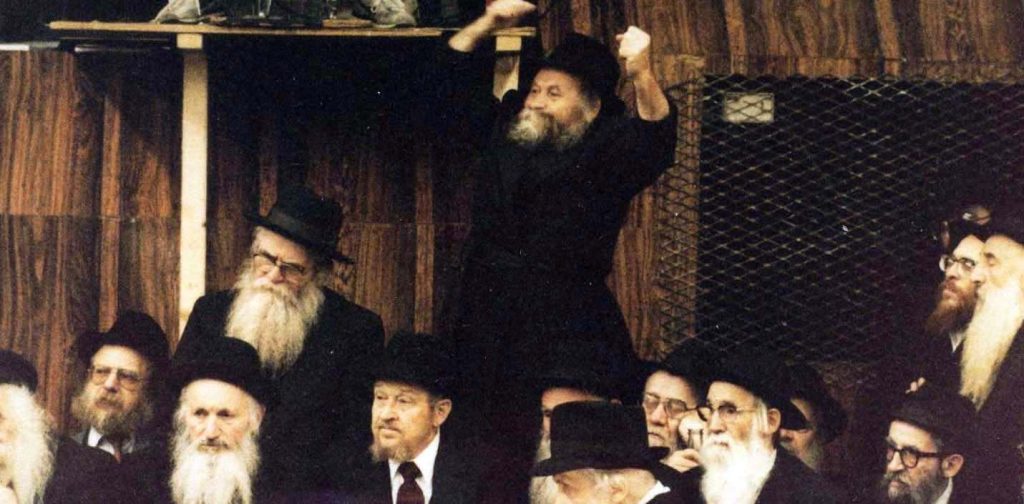
In the first days after his passing, at the conclusion of every tefilla, the Rebbe encouraged the singing in the direction of the spot where R’ Zushe regularly used to stand.
Sources: The Partisan; Diaries of Beis Chayeinu; Teshuros of the Wilyamowsky family; HaKfar Shel HaRebbi; Panim el Panim; and others.
Zushe, We Must Be Joyful!
R’ Yechiel of Lod, who served as an inspector in the Reshet and spent many long hours and days with the Partisan, recounts: “Joy was an inseparable part of his very essence. Even when the situation was very difficult, R’ Zushe radiated optimism. Only once – a single time – did I see him with tears choking his throat.
“It was in the year 5739, at the start of the school year. We were traveling between schools. Along the way he said to me, ‘Come, let’s drive to Zarnoga.’ That was a transit camp near Rechovot where the school had operated for many years and had saved thousands of boys and girls. Sadly, the school had closed a few months earlier.
“When we arrived, we found an abandoned place. The building was ruined and dirty, and animals were wandering in the yard. It was a painful sight to see the school closed. The place that had been bustling with life, filled with the voices of children from end to end for nearly thirty years, had become desolate. R’ Zushe, who had been among the founders of the school, walked among the ruins and wept like a small child…
“But after a few minutes he caught himself and said, as if to himself: ‘Zushe! Despite everything, we must be b’simcha.’ And as he spoke, he pulled a bottle of mashke from his pocket and we said ‘l’chaim’…”
‘L’Chaim’ in the Captain’s Name
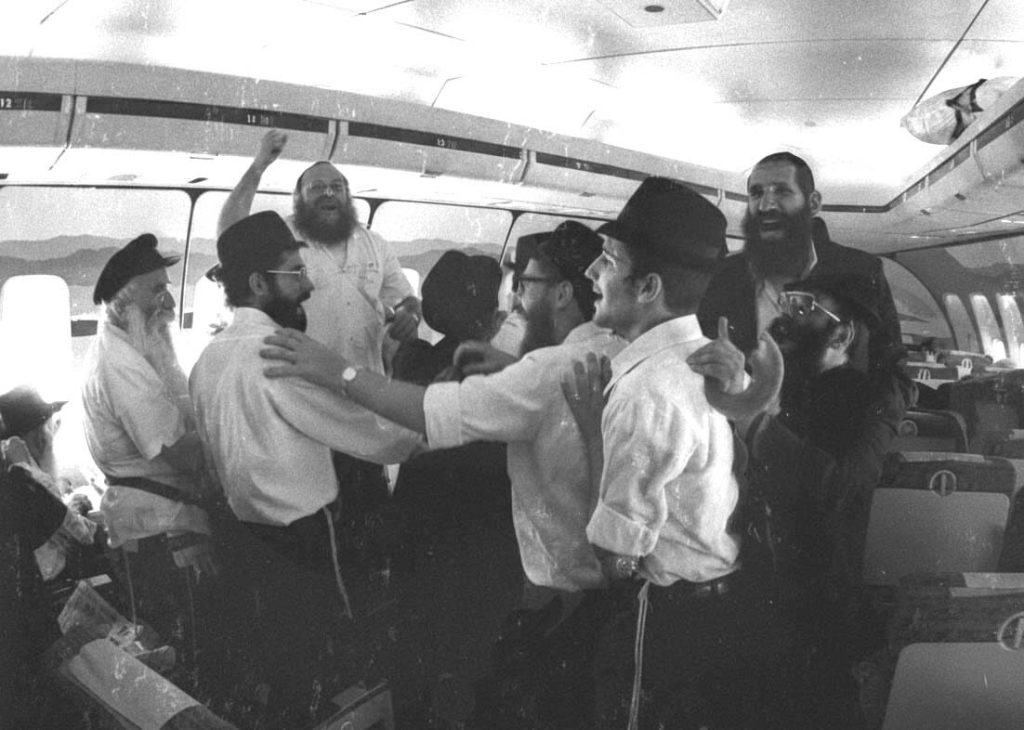
The journalist Shmuel Avidor described Mivtza Tefillin and the great joy during the flight to the Rebbe, ahead of Yud Shvat 5730, in the newspaper Panim el Panim:
[Rabbi Chanzin had put on tefillin with the captain:] “The moment the captain removed the tefillin, the Chassid R’ Zushe rushed toward him. He introduced himself: ‘My name is Zushe the Partisan. I am from Kfar Chabad. During World War II I was a partisan in the forests of Russia. But, dear brother, all of that is trivial. The entire world is vanity of vanities. If there is something of true substance, it is when a Jew puts on tefillin. Everything else? Nothing, and nothing again. And now, dear brother, since you have put on tefillin, you absolutely deserve a little glass of mashke.’
“From the bottle in his hand – which he does not set down for even a moment throughout the entire journey – R’ Zushe pours a glass of l’chaim for the captain. The captain apologizes, explaining that by regulation he is forbidden to taste alcohol while on duty. R’ Zushe tries to convince him that this is not alcohol but mashke. ‘A little glass like this cannot cause any harm’ – it can only bring blessing. But the captain is not persuaded. He says ‘l’chaim’ and asks that R’ Zushe drink the glass on his behalf…”
R’ Zushe’s joy was also an inseparable part of the journey to the Rebbe itself, as his son R’ Levi recounts:
“After Tishrei 5738 I returned home with my father. Before we boarded the plane I said to him, ‘I don’t want to sit next to you. On every flight you get up and start singing and embarrass me’… He looked at me and promised, ‘This time I won’t sing on the flight.’
“We sat next to each other. The flight departed at midnight, and after a short while the lights were dimmed to allow the passengers to sleep. Suddenly my father stood up from his seat. ‘You promised me you wouldn’t start singing!’ I tried to stop him. ‘I’m just going to the galley for a moment,’ he answered.
“A few moments later I suddenly hear his voice cutting through the silence of the plane: ‘Dear Jews, we must be b’simcha. The Lubavitcher Rebbe – in good health!’ And he began to sing Yismechu HaShamayim, and within moments many joined in his singing…”
Beis Moshiach #1501 • pp. 12-21
© 2026 Beis Moshiach Magazine. All rights reserved.
This article originally appeared in Beis Moshiach #1501. You are welcome to share it with friends and family by email or in print, provided that you do not change, add to or omit any part of it, you credit the author and Beis Moshiach, and you include a link to archive.bmoshiach.org (written out in full in printed copies).
To republish this article in a newspaper, magazine, book or website, please request permission in advance at [email protected].