The Menucha Rochel Shul
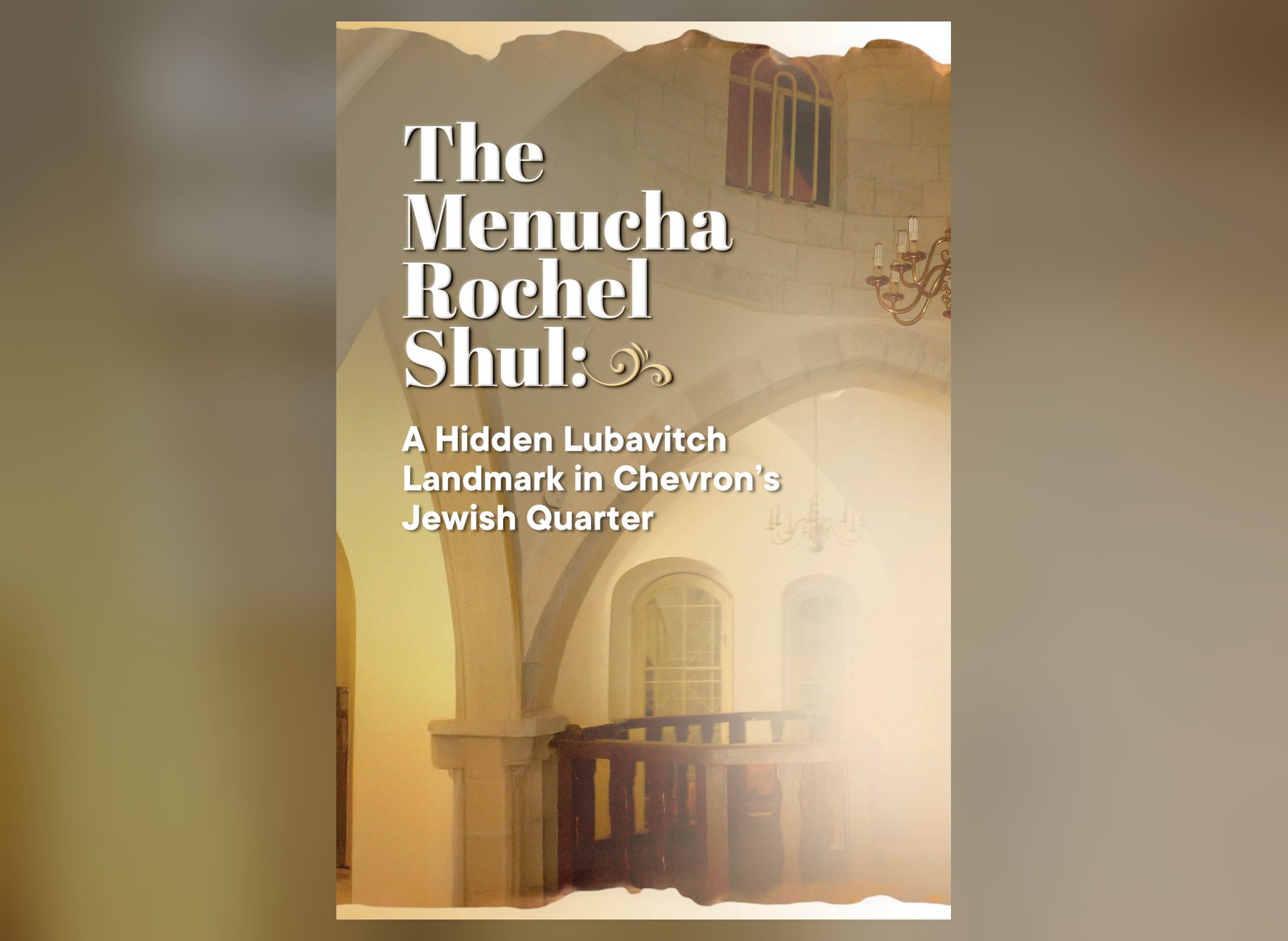
From destruction to rebirth: how the Ashkenazi wing of the historic Chevron “Avrohom Avinu” shul, purchased by the Mitteler Rebbe, was restored to functionality through the hands of the same artisan who restored the Mitteler Rebbe’s resting place in faraway Niezhin in Ukraine a decade before
In the center of the Avrohom Avinu neighborhood in Chevron, a magnificent shul was established less than six hundred years ago by a group of Spanish Jewish exiles who arrived in Chevron under the leadership of Rabbi Malkiel Ashkenazi. It later became known as the “Avrohom Avinu shul.”
Why was it given this name? The day of our story, was erev Yom Kippur, that one day of the year when worshipers in white kittels and talleisim began to gather to daven, in light of the holiness of the day. Unfortunately, only nine Jews arrived at the shul.
The number of Jewish residents in Chevron was small, and Jews living in the surrounding villages would come to complete a minyan, but that year many had traveled to Yerushalayim, leaving only nine Jews in Chevron.
The sun had almost set behind the Chevron mountains, and the tenth person was nowhere in sight. Great concern filled the hearts of those gathered.
In the final moments, the door opened and an unknown Jew hurriedly entered the shul. No one knew him, nor was there time to get acquainted, as they needed to begin “Kol Nidrei.” A sigh of relief escaped from the men. After the davening, the man remained in the shul, immersed in his machzor, and stayed for the next day’s tefillos as well.
At the end of Yom Kippur, each of the men wished to host the Jew for the fast-breaking meal. Finally, a lottery was held and the winner was the chazan, who was known as an amazing interpreter of dreams and night visions.
The chazan walked home with the guest following him. When they approached the house, the chazan turned around and the guest had disappeared. The chazan tried to find him but without success.
That night, the elderly man appeared to the chazan in a dream and told him that he was Avrohom Avinu, alav ha’shalom, who had come to complete the minyan after seeing their great distress over not being able to daven with a minyan.
Following this legend, which appears in the Kabbalistic work Emek HaMelech, the shul in Chevron was named after Avrohom Avinu.
Many years later, a small Chabad community was established in Chevron, consisting of Chabad settlers. They came mainly from the city of Tzfas. They didn’t know where to establish a shul for their growing Chassidic minyan.
In 1823, the Mitteler Rebbe sought to purchase property in the City of the Avos. The Rebbe alluded to what was written (in the name of the Radvaz), that anyone who owns property in the holy city of Chevron would be saved from chibut ha’kever (lit. the pounding of the grave, a form of heavenly judgment administered upon burial), and therefore the Rebbe wished to acquire a portion and inheritance in the holy city.
After negotiations, the Rebbe purchased a wing within the ancient shul from the Sephardic community, and an additional minyan was started there.
Not long after, the Rebbe’s daughter, Rebbetzin Menucha Rochel, and her husband Rabbi Yaakov-Kuli Slonim, came to settle in Chevron, along with a respected group of Chabad Chassidim. The Chabad minyan began davening in the wing that was purchased for a hefty price, and they opened a Chassidic minyan there. Thus, the two minyanim operated side by side, until they eventually became known as ‘Avrohom Avinu HaSephardi’ and ‘Avrohom Avinu HaAshkenazi.’
Rabbi Shimon Menashe Chaikin, the rabbi of Chevron, saw with his own eyes the purchase document of the Mitteler Rebbe, and later wrote about it:
“I testify to what I saw with my own eyes, the holy handwritten letter that the Mitteler Rebbe wrote to our community in the holy city [Chevron] in 1823, when the settlement of our community was established in Chevron. He wrote in these words: It is brought in the name of the Radvaz that anyone who has property in the holy city of Chevron will be saved from chibut ha’kever. And the Admor himself bought here in the holy city the small shul in his name, so that he would have property in the holy city of Chevron.”
In the following years, more Chabad Chassidim continued to arrive in Chevron, many of them immigrating from distant Russia, and joined the developing community in the city.
‘Avrohom Avinu HaAshkenazi’
As mentioned, initially the shul was just a room within the main shul. Over the years, a mikva with two immersion pools was also built there. This shul was called ‘The Avrohom Avinu Ashkenazi shul’ or ‘The Mitteler Rebbe’s shul.’
In 1885, Rabbi Suleiman Mani, later the rabbi of Chevron, published a fascinating review in the HaTzvi newspaper about the Jewish community in Chevron. Among other things, he reported that Chevron had only two shuls, Avrohom Avinu HaSephardi and Avrohom Avinu HaAshkenazi: “The Sephardim gave them a small shul, which until now remains under their control.”
Rabbi Mani adds that in the following period, the Ashkenazim – Chabad Chassidim – built themselves another large shul thanks to a donation from a Baghdad Jew. The Sephardic shul also expanded in 1860 thanks to another donation from Baghdad.
One of the special events that took place in the Chabad shul was the visit of the renowned philanthropist, Sir Moses Montefiore, in 1839. He davened Mincha on Shabbos in the Mitteler Rebbe’s shul. Afterward, the Chabad leaders in Chevron sent him a thank-you letter for his participation in the tefilla and bequeathed to him, as an eternal gift, the spot where he stood and davened.
Hardships And Transformations
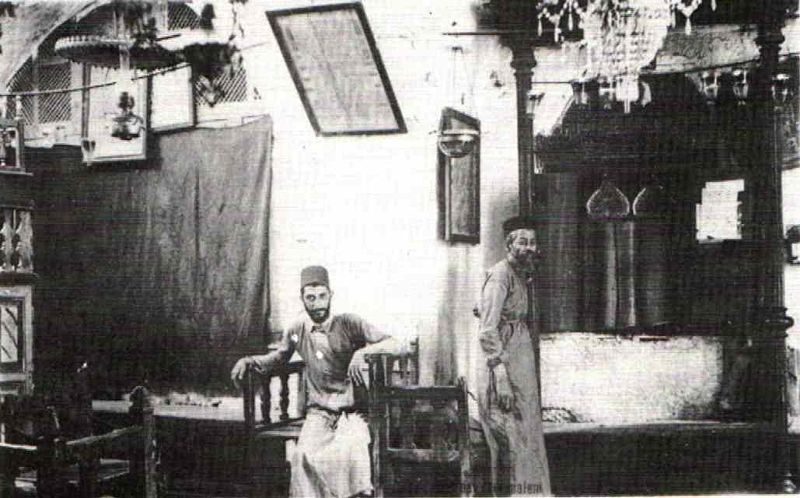
The shul endured many hardships, which parallel the tribulations of the entire Jewish settlement in Chevron.
At one dramatic milestone in 1898, one of the Arab neighbors opened an entrance from his house into the shul courtyard. One of the people davening there, Rabbi Zev Dov Slonim, demanded that the neighbor close the entrance, but the Arab beat him severely and wounded him. Despite his injury and the pain he suffered, R’ Slonim insisted on joining a delegation from the Ashkenazi community in Chevron that went to Yerushalayim to complain about the Arab’s actions to the Turkish authorities and demand they stop the construction within the Avrohom Avinu shul complex.
In Yerushalayim, the injury overcame Rabbi Slonim and he fell ill. Shortly after, he passed away, Hy’d.
It is not known what came of the appeals made in those days, including an appeal to the Rishon L’Zion Rabbi Yaakov Shaul Elishar. The latter intervened with the Pasha (the ruler in Eretz Yisrael on behalf of Turkey). However, the Arab terror directed against the shul caused the number of worshipers to dwindle, until tefillos in the Avrohom Avinu shul ceased after hundreds of years.
In the summer of 1911, the Rebbe Rashab was preparing to establish the Toras Emes yeshiva in Chevron. During that period, there was also a hisorerus in renewing tefillos at the Avrohom Avinu shul. The renewal operation was led by Rabbi Yitzchok Chein, a resident of Chevron, who was also involved in establishing the Chabad yeshiva in the city. Two gabbaim were appointed to the renewed shul: R’ Yitzchok and Rabbi Mordechai DovBer Slonim (son of Rebbetzin Menucha Rochel).
It seems that maintaining a daily minyan was challenging. This is evident from a letter sent by Rabbi Shlomo Yehuda Leib Eliezerov, the rabbi of Chevron. During that period, he was staying in distant Lubavitch from where he sent a letter to the two gabbaim telling them that there was a donor from Anash who agreed to support thirteen members of our community who would establish their prayers in the shul, three times a day, morning, afternoon and evening, throughout the year. In his letter, he details the donor’s requirements, which were approved by the Rebbe Rashab and his son, the Rayatz.
The letter arrived in Chevron on Wednesday, the 8th of Menachem Av 5671/1911. By the following Shabbos, tefillos were held in the shul, and from then on they were conducted regularly three times a day. With the minyanim came Torah classes – a Mishnayos class after Shacharis, and a Likkutei Torah class between Mincha and Maariv.
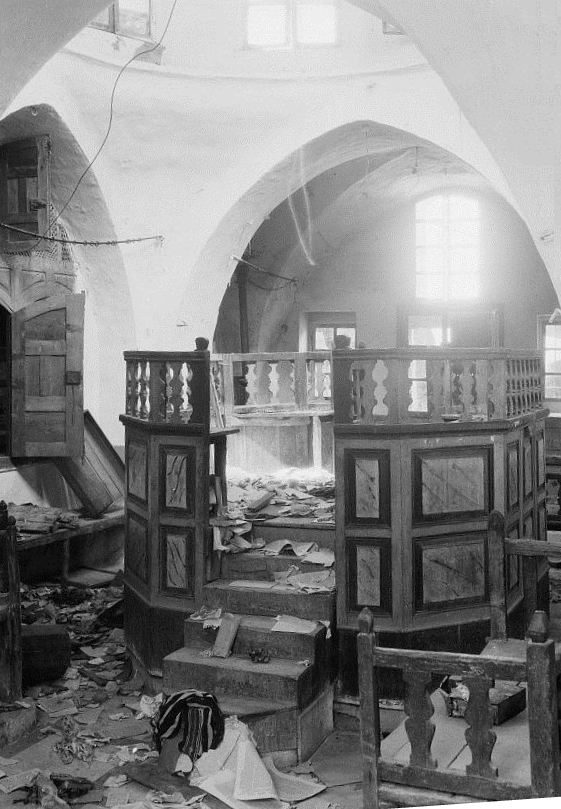
The minyan lasted for three years, until the summer of 1914, when World War I broke out. Most of Chevron’s Chabad Chassidim, who were Russian subjects and suspected as enemies of the Turkish state, were deported to Egypt, and the minyan was discontinued. Even when the war ended, most of the Chabad community did not return to Chevron, and only a few Chassidim remained.
In 1927, another attempt was made to restore tefillos in the shul and bring back the sound of prayer and Torah study. No further details are known about whether these attempts succeeded.
In August 1929, the 1929 riots broke out. Local Arabs slaughtered and attacked many Jews. Dozens of Chevron’s Jews were brutally murdered, and the Jewish community left the city; the shul was left desolate. During the War of Independence, Chevron was captured by the Jordanian army, and from then began the systematic destruction of Jewish homes, shuls, and Jewish institutional buildings. The Avrohom Avinu shul was also destroyed, with only parts of walls remaining as silent witness to the glorious past of both the Sephardic and Chabad shuls.
The Shul Under The Goat Pen
With the conquest of Chevron in the Six-Day War in 1967, the city returned to Jewish hands, but in actuality – several more years passed until Jews were allowed to settle again, not in Chevron itself, but nearby, in Kiryat Arba which was established in those days.
In the following period, difficult struggles took place to allow Jews to settle in the city of Chevron.
Rabbi Danny Cohen, the Rebbe’s shliach in Chevron, recounts how the location of the Avrohom Avinu shul was discovered:
“After the Six-Day War, the entire Jewish area was revealed as ruins; nothing remained of the glorious Jewish past. Jews who formerly lived in Chevron, or those who visited frequently, came to Chevron to locate and identify the location of shuls and other important buildings. That’s how the location of the Avrohom Avinu shul was found. They say that Rabbi Shlomo Zalman Auerbach z’l, visited Chevron during that period, and they showed him the Avrohom Avinu shul. He immediately asked ‘Where’s the Ashkenazi one?’ After investigation, he pointed precisely to the location of the Ashkenazi shul.”
Time passed, but all attempts to rebuild Jewish Chevron were futile. The government did not approve it, until by hashgacha pratis, a specific struggle began around the establishment and renewal of the Avrohom Avinu shul.
It was in 1975, eight years after the Six-Day War. Professor Ben-Zion Tavger, a renowned physicist and new immigrant from Russia, received the position of guardian of the Jewish cemetery in Chevron.
During one of the tours he participated in, in Chevron, the group passed by a ruined site that had become a goat pen and public restroom. They told him that this had been an ancient shul of the Jewish community in the city, and he couldn’t understand how it could remain like that. Initially, he acted through conventional channels, sending letters to various authorities. After several months when he saw this wasn’t helping, he understood that as a Jew he needed to act independently, and began cleaning the cemetery and the Avrohom Avinu shul on his own.
In the following days, the distinguished physics professor abandoned his pursuits, took tools, and began clearing the waste from where the Avrohom Avinu shul had stood. Gradually, others joined him, yeshiva bachurim and college students, including Noam Arnon, who later became the spokesman for the Jewish settlement in Chevron.
The military government in Chevron didn’t like the professor’s cleaning activities. Tavger was arrested dozens of times for trespassing, and was issued an order barring him from the ‘Avrohom Avinu’ neighborhood area.
“People weren’t used to a Jew being in Chevron, which was still entirely an Arab city without Jewish settlement. No one wanted to change the status quo in the city,” his son recounts. “The great absurdity was that the one who leased the shul to the Arab, who operated a goat pen in the shul, was the Civil Administration.”
After several months of excavations, cleanings, arrests, and so on, the government gave up. The order was to arrest anyone caught digging in the shul, except for the professor himself… “Even the police treated him with reverence, after all he was already an older man, a new immigrant with broken Hebrew. He had both a sense of humor and the wisdom to drive them crazy, and on the other hand, he would give them a lot of explanations.”
After a period of ups and downs on the issue, the Rabin and Peres government at the end of 1976 approved returning the shul to Jewish hands. Tavger continued the work of restoring the shul in detail according to historical photographs of it.
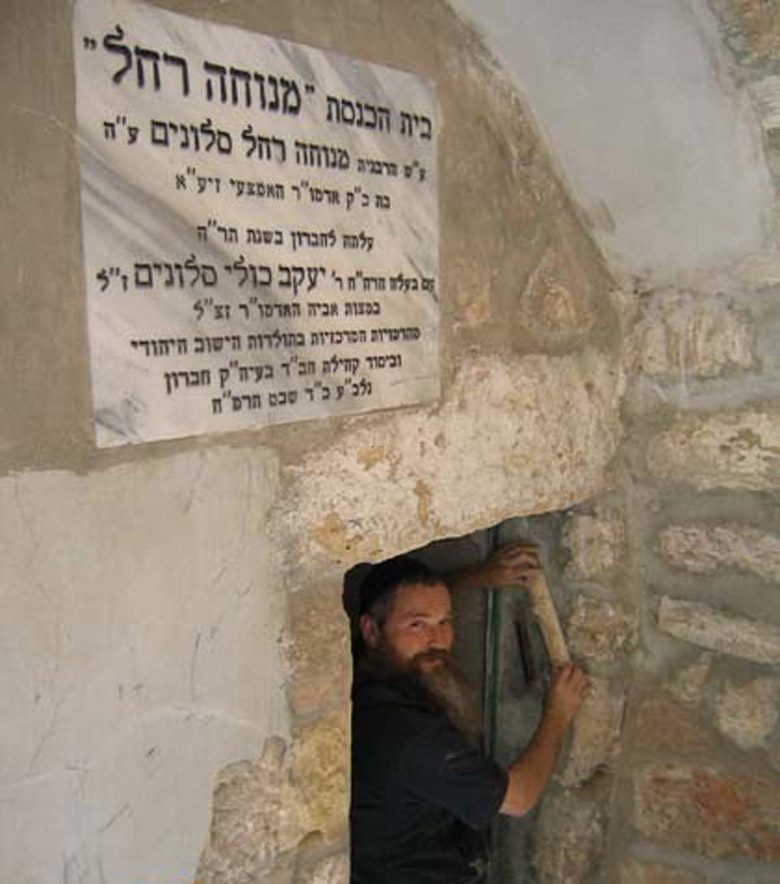
On Rosh Hashana 1977, the first tefilla was held on the ruins of the shul. On the following Shabbos, the army received orders from above to expel the worshipers. The people of Chevron, including the professor, would come to pray at the site while the army expelled them from the place, to the joy of the Arabs of Chevron who even demonstrated their happiness at the expulsion of the Jews.
In the midst of the struggle over the shul complex, the Rebbe expressed pain on the subject. This was during the Yud Kislev farbrengen – the day marking the Geula of the Mitteler Rebbe in 1979. The Rebbe explained that the Mitteler Rebbe collected money from poor Jews in Russia under Czarist rule just to purchase properties in Chevron, and how is it that the government doesn’t understand that the Jewish people have an explicit ‘contract’ in the Torah that Chevron belongs to the Jewish people.
On Friday night, 17th of Iyar 5740, the terrible attack occurred at Beit Hadassah in Chevron, in which six yeshiva bachurim were killed. In the period following the attack, the Israeli government permitted Jewish settlement in Chevron in an organized manner. This opened the door for the construction of the Avrohom Avinu shul.
Rabbi Moshe Levinger a’h, one of the pillars of settlement in Kiryat Arba and Chevron, traveled to New York and raised funds for the rebuilding of the shul, which was built with splendor and glory. Several years later, the ancient Sifrei Torah that had wandered from Chevron to Yerushalayim during the 1929 riots were returned with honor…
During the construction of the shul under the direction of Noam Arnon, the Chabad portion of the shul was also renewed.
A decade later, the sound of Torah and Chassidus returned to the shul when Rabbi Yitzchok Ginsburgh from Kfar Chabad established a kollel for studying Chassidus in the shul. Since then, for many years, Chassidus was studied within its walls, fulfilling the aspirations of the founder, the Mitteler Rebbe.
“The name of the shul ‘Menucha Rochel’ – was chosen by the Rebbe,” Rabbi Ginsburgh recounted – “and this is how it happened:
“When we opened the kollel in the Mitteler Rebbe’s shul in Chevron, we presented three suggestions to the Rebbe for naming the shul: ‘The Mitteler Rebbe’s shul’ (as Chabad Chassidim had called it throughout the years), ‘The Ashkenazi Avrohom Avinu shul’ (as Chevron’s Jewish residents called it), or ‘Menucha Rochel’ – named after Rebbetzin Menucha Rochel who immigrated from Lubavitch and settled in Chevron. Among the three suggestions, the Rebbe chose the name Menucha Rochel.’”
The Shul Renewed
About twenty years ago, R’ Danny Cohen, then a relatively new shliach in Chevron, began renovating and renewing the shul, and this is what he related while attending this year’s global Kinus HaShluchim:
“When we arrived in Chevron as the Rebbe’s shluchim, Baruch Marzel, of Chevron, found an apartment for us across from the Avrohom Avinu shul, and thus I became well-connected to everything concerning the Mitteler Rebbe’s property in Chevron.
“To tell the truth, I was very embarrassed by the state of the Chabad shul, which was abandoned. When Chabad visitors came to the city, I tried not to bring them to the place out of shame for its deplorable condition. On the other hand, the activities in Chevron were non-stop, and there wasn’t enough time to dedicate to organizing budgets and investing time and effort in renovating the shul.
“Everything that happened afterward occurred with amazing hashgacha pratis.
“One day, while I was davening at Rebbetzin Menucha Rochel’s kever, I met a young Chabad Chassid who introduced himself as Joseph Davidson from the United States. We were chatting when suddenly, without any particular thought, I asked if he wanted to see an interesting place, and he agreed of course. I took him to the Avrohom Avinu shul and brought him to visit the Menucha Rochel shul. I apologized for the unappealing appearance and added that I had a dream to renew the place through a general renovation. I didn’t know that the man before me was wealthy. Heaven simply put the words in my mouth…
“He didn’t think for a moment and immediately asked how much I estimated it would cost. Since I had already inquired here and there about the costs, I told him the estimated amount. The unbelievable happened, and Joseph Davidson committed to donating the full amount! It was truly a fundraising miracle!”
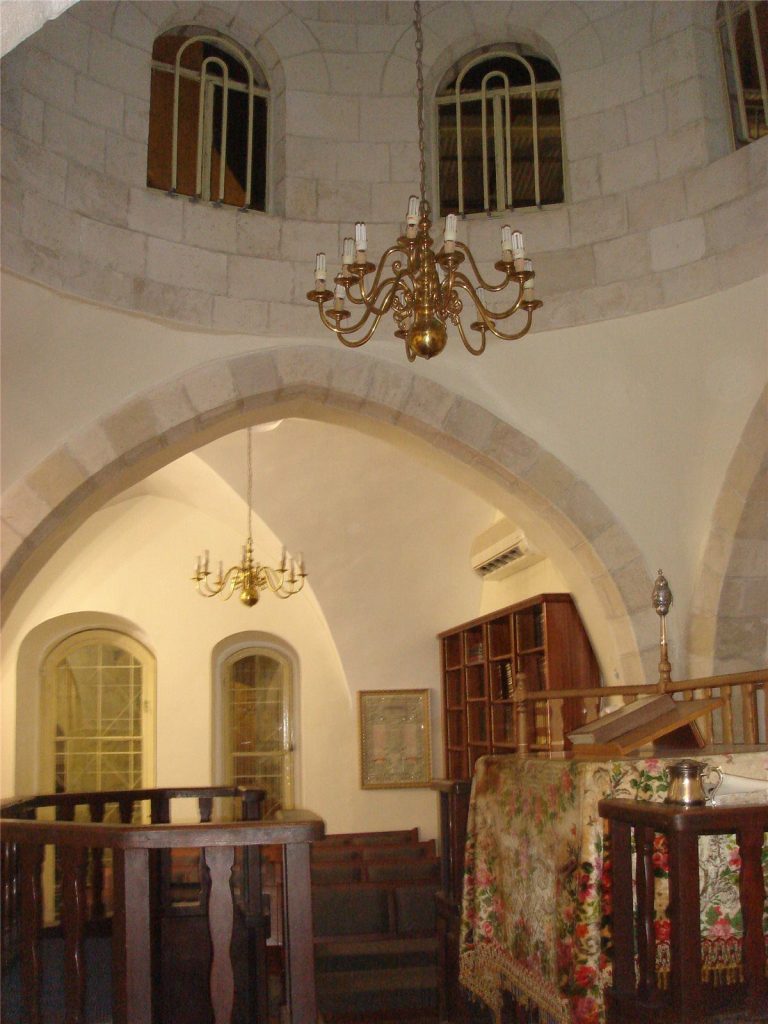
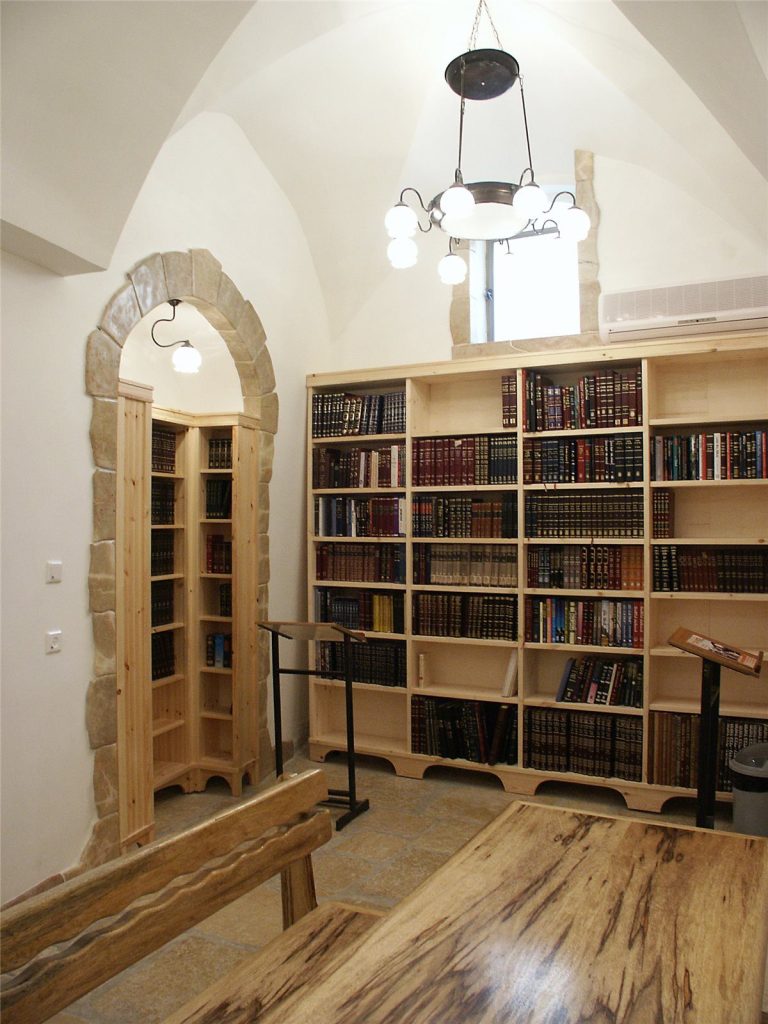
The shul is small, ancient, the property of the Mitteler Rebbe. The goal of restoring it was a serious challenge. On one hand, it was important to preserve the ancient style, on the other hand – Rabbi Cohen wanted to turn the place into something beautiful and well-maintained, suitable for visitors of our generation.
After much searching, he located the stone craftsman who had become close to Chabad, R’ Eliyahu Idinov: “By hashgacha pratis, I discovered that during the period when he lived in Russia, before he became a Chassid, he had the zechus to work on renovating and restoring the Mitteler Rebbe’s tziyun in Niezhin. And now, he had come an amazing full circle, when he was hired to do the work to renovate the Mitteler Rebbe’s property.”
R’ Eliyahu invested his soul in every detail; every corner of the shul received a refreshing renovation with an old-world flavor. In continuous work that lasted more than a year, the artist took rough stones and turned them into gleaming stones. Signs and memorial plaques related to the shul and the Chabad community in Chevron were placed throughout the shul.
It should be noted that the shluchim to Kiryat Arba and Chevron greatly assisted in the success of the shul renovation. The shluchim Rabbi Victor Attia and Rabbi Yossi Nachshon helped from the beginning while the newer shluchim, Rabbi Itzik Neimark and Rabbi Mordechai Hellinger, provided help later in maintaining the place.
The shul became a true work of art in the hands of the expert in antique restoration, with the high cost shouldered by the philanthropist Yossi Davidson.
Besides renovating the building, R’ Danny Cohen worked to turn the shul into a place where every visitor could learn about the history of the shul and the Chabad community in Chevron. The walls were adorned with signs. One tells the story of the shul, and another displays a copy of the Mitteler Rebbe’s letter regarding Chevron, alongside additional signs relating to the community’s leaders and members throughout the years.
Alongside siddurim, Chumashim, and books of Jewish law, many sets of Chabad Chassidus sefarim were purchased, especially the Mitteler Rebbe’s maamarim, and of course, the Rebbe’s teachings.
The shul’s dedication was held with great pomp on Thursday, 24 Shevat 5765, the yahrtzeit of Rebbetzin Menucha Rochel a’h.
At the beginning of the event, hundreds of guests who arrived in arranged buses from all over the country ascended to the Rebbetzin’s grave in the old Ashkenazi cemetery in Chevron. Afterward, the guests walked toward the renovated shul in the heart of the ‘Avrohom Avinu’ neighborhood. The sight of the renovated shul aroused great admiration among the guests.
The guests participated in a shiur on a Chassidic maamar of the Mitteler Rebbe delivered by Rabbi Shalom Dov Ber Wolpo, a descendant of Rebbetzin Menucha Rochel. Later, the crowd proceeded to a festive meal held at the ‘Gutnick Center.’
At the celebration meal, Rabbi Zev Dov Slonim a’h, grandson of Rabbi Zev Dov Slonim who was martyred fighting for the honor of the Avrohom Avinu shul, spoke. Rabbi Shmuel Elazar Halperin, a descendant of Rebbetzin Menucha Rochel and chairman of the Association of Alter Rebbe’s Descendants, also spoke.
Since the shul’s renovation, it has been open from morning to night. Many visitors frequent the place, davening, studying, impressed by the shul that is part of the Mitteler Rebbe’s property, from which the Chabad community in Chevron grew in previous generations.
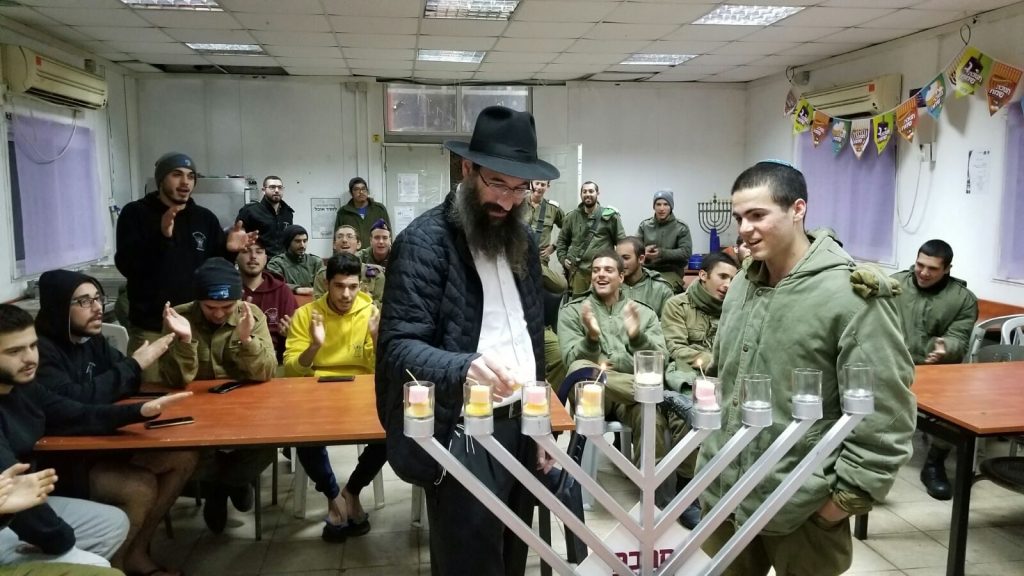
“The shul currently serves mainly for Torah classes and farbrengens,” says R’ Danny Cohen. “In my estimation, most Chabad Chassidim in Israel and worldwide haven’t yet visited this shul – and the Mitteler Rebbe’s day of Geula is an opportune time to make a good hachlata and visit the place. We, the shluchim in the City of the Avos, will be happy to host and guide you.”
Sources: Sichos Kodesh, Igros Kodesh, History of Chabad in the Holy Land, Migdal Oz, Lubavitch Library. Thanks to the Rebbe’s shluchim in Chevron, R’ Danny Cohen and R’ Mordechai Hellinger.
Beis Moshiach #1444 • pp. 20-29
© 2026 Beis Moshiach Magazine. All rights reserved.
This article originally appeared in Beis Moshiach #1444. You are welcome to share it with friends and family by email or in print, provided that you do not change, add to or omit any part of it, you credit the author and Beis Moshiach, and you include a link to archive.bmoshiach.org (written out in full in printed copies).
To republish this article in a newspaper, magazine, book or website, please request permission in advance at [email protected].