Lessons From a War Refugee’s Journey
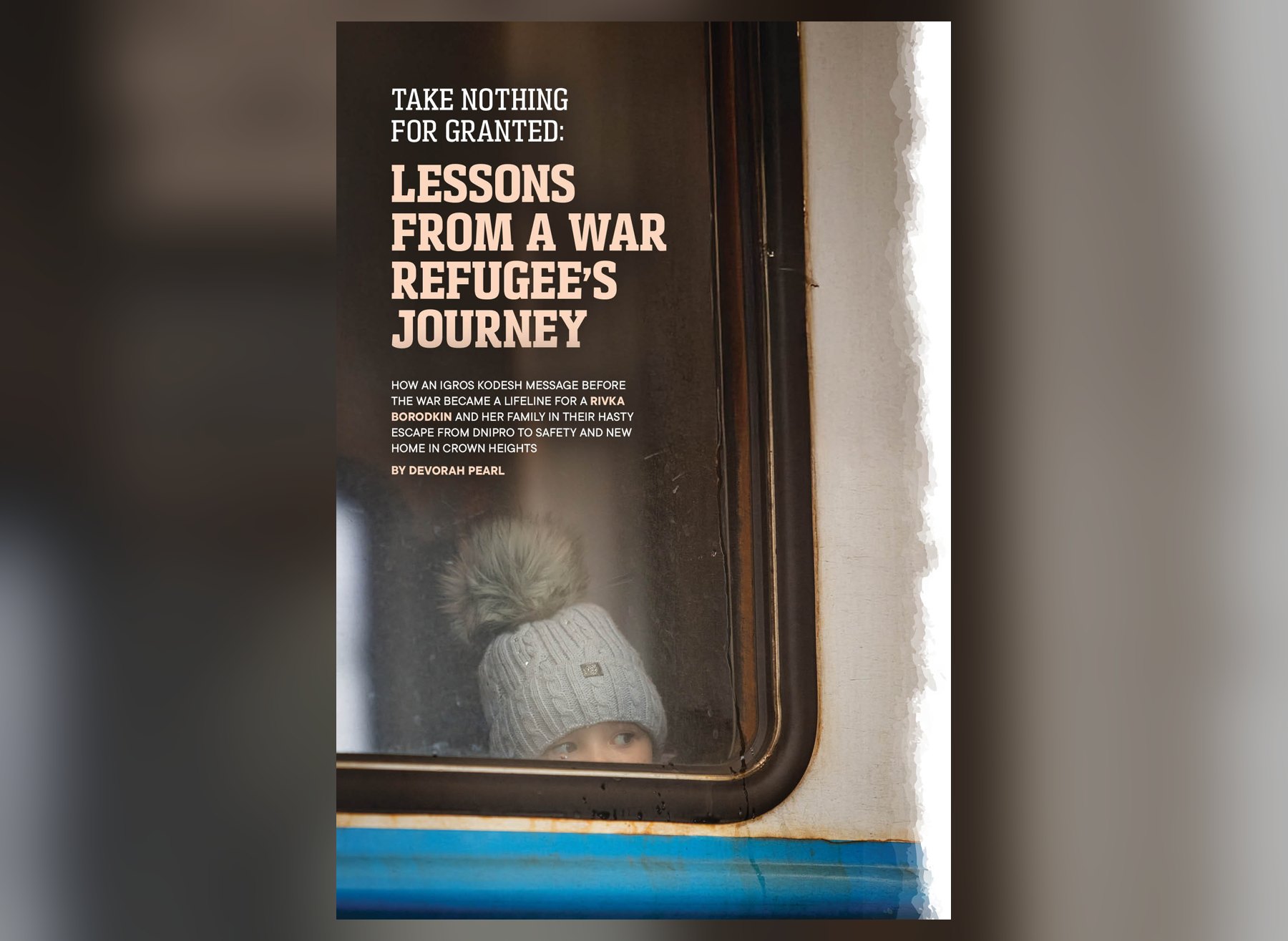
How an Igros Kodesh message before the war became a lifeline for Rivka Borodkin and her family in their hasty escape from Dnipro to safety and new home in Crown Heights
23rd of Adar I, 5782/2022
The Russian invasion of Kyiv, the capital of Ukraine, marked the beginning of the war. The heavy bombings ravaged the city. Millions of refugees fled in panic, on unmarked paths and in freezing cold, making their way from Ukraine to the Moldovan border, and from there continuing across Europe, with some continuing on to Eretz Yisrael.
The reality in which families are forced to leave their entire lives behind and flee with only a few belongings is not a piece of history. The story of refugees who survived, arrived penniless at a safe harbor, and began new lives is a story of courage, miracles, and a source of inspiration.
A Holy Letter Holding the Future
I met Rivka in Crown Heights. At first glance, Rivka Borodkin seems like any warm hostess and talented teacher. But behind the smile and pleasant demeanor hides an epic story of transition and new beginnings. Rivka, who fled Ukraine at the start of the war, shares her escape saga, describing profound change and how she rebuilt her life.
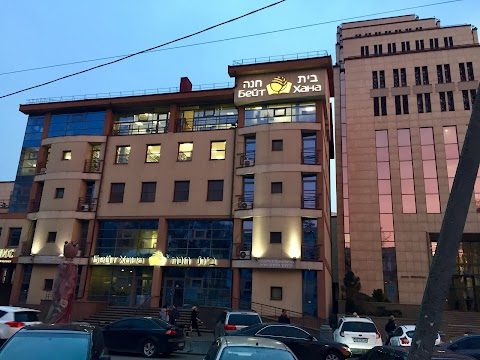
“I was born and raised in the city of Dnipro, Ukraine, in the Chupin family, a home dedicated to educational shlichus. My father ran a yeshiva, and my mother ran a girls’ school. After we got married, we had the privilege of living in Tzfas for a year before returning to Dnipro to serve at the ‘Beis Chana’ girls’ boarding school, managed by Rabbi Meir and Sarah Stambler. The seminary included girls from both religious and secular homes. Some only studied there, while others also lived there. We lived on the top floor of the school. On the lower floors were classrooms, a kitchen, and dorm rooms. I loved the girls; they were more than just students. We held Shabbos and holiday meals, evening activities, and were like family to them.
At the beginning of the year 5782, I wrote to the Rebbe in the Igros Kodesh and requested a bracha for parnassa. By that time, we already had two children, and we were looking for more stable work for my husband. My job was stable and secure, but my husband was still doing occasional shechita, with no steady work.
The Rebbe’s reply surprised me. He wrote that Hashem can provide parnassa anywhere and that it would be good to live in a place with many opportunities, like the United States. A woman follows her husband, and as I work in education, I would find a similar job elsewhere as well. “Me? To the United States?” I was astonished. My brother, who lives in Crown Heights, heard about the letter and said, “That’s great, you’re going to live near us!” I replied, “Wait, I have a job here… I need to speak with the seminary, and I really don’t want to leave!”
We decided to speak with the administration about a salary raise, and if they approved it, our livelihood would be secure, and we would consider moving only the following year. Indeed, we received a salary increase, and my husband took on more shechita work and even organized a winter camp, so we forgot about the letter.
Unexpected War
The month of Adar arrived, along with rumors of an impending war. We continued our lives as usual, despite the rumors. We didn’t think it would really happen. Our institution had a staff of teachers sent on shlichus by the Israeli Ministry of Education. The members of the Israeli team, who were an integral part of our community, were forced to leave due to clear instructions from the Ministry of Education in Israel. We naively thought we would meet again in two weeks. The war seemed like a distant event, happening in other places, not to us.
I realized that I needed to organize Purim alone, so I began ordering costumes and thinking about ideas for the party.
Thursday, 23rd of Adar I
I woke up early to fit in a driving lesson before work. I turned on my phone and discovered that the reality had completely changed. A terrified student messaged me, describing the heavy bombardment in their area, the destruction, and the fear. I realized that the distant rumors of war had become a harsh reality closing in from all sides.
I was alone. My husband was not at home. He had gone for shechita and was supposed to return that day by way of Kyiv, a seven- to eight-hour drive. I called him in panic and updated him that Kyiv was being bombed. When my husband arrived in Kyiv to board a train to Dnipro, he found that all the trains had been canceled. The city was in a state of emergency, unprepared for war. Nobody knew anything. It was complete chaos. He was stuck in bombed-out Kyiv, and I was alone in Dnipro, overwhelmed with worry and fear.
That morning, two missiles fell in Dnipro, in two different locations. There were no air raid sirens…
The realization that a real war was happening began to sink in. People rushed to gas stations, knowing that fuel would soon run out. Long lines formed in stores as people stocked up on food and anything they thought would be essential for survival.
The director said to me, “If you want, you can go to your parents. There is no work today, of course.” My parents lived nearby, but I chose to stay. I didn’t want to leave the girls in the boarding school. Some of the girls managed to go to their parents, but others no longer had that option.
In cities like Kharkiv and Kyiv, the bombings were devastating. I saw things I regret having seen, and the trauma from that remains. (I learned my lesson, and after the Simchas Torah events, I made sure not to look at images and news videos. Protect your eyes and your soul. The consequences are severe.)
At that time, we were in complete shock, simply not believing it was happening. Though the Ministry of Education had taken the teachers, and there were ongoing talks of war, no one had prepared for it. The country wasn’t ready. There was no siren system, and certainly no bomb shelters.
During the time I lived in Eretz Yisrael, I learned that if there’s an air raid siren and there’s no shelter, you enter an interior room without windows. In our apartment, we had a hallway, so we removed a large mirror from it and brought in mattresses. That’s where we took shelter. We received updates on missile strikes via the phone. It was a substitute for the sirens…
Meanwhile, my husband was in Kyiv, desperately searching for a way out, but there was no way out. There was no transportation, no nothing. By hashgacha pratis, we learned of a family intending to flee Kyiv for Dnipro, which was relatively safer, and my husband joined them. Normally, a taxi would cost 4,000 hryvnias (local currency), but now it was 11,000… But in such a situation, that wasn’t a concern. I actually danced with joy when I heard he was on his way.
As I mentioned, it was Thursday, a day when preparations for Shabbos are typically underway. The fact that the cooks couldn’t come left us with the task of preparing everything ourselves. We went to the store, our hearts full of concern. We quickly finished the shopping. While standing by the pots, the girls laughed, saying, “You’re making Shabbos like nothing’s happening!” I told them, “Maybe this will really be the last Shabbos I’m making for you…”
On the Run!
Friday night. I couldn’t fall asleep. I opened the Igros Kodesh. There was a very clear blessing for success in traveling, for documents, and again a blessing for the journey. On motzoei Shabbos, I called my mother and said, “I don’t understand the letter, no one is traveling, there’s nowhere to go, no way to go— the airport is bombed, the trains are canceled, there’s no fuel to travel.” But my mother said, “Let’s wait and see.”
We received instructions for preparing in such times. We were told to buy non-perishable food, such as canned goods, legumes, flour, and more, and to pack an emergency suitcase with important documents and warm clothing, as the Ukrainian winter was at its peak, with unbearable cold outside. Boruch Hashem, we had not lost electricity, and our home had heating. There was also a certain hour in which it was forbidden to go outside, and it was forbidden to turn on the lights inside the house.
When compared to Eretz Yisrael, one can clearly see that Israel is truly the land where “the eyes of the L-rd, your G-d, are always upon it.” I was once in Israel during a war. While I didn’t experience sirens, I did hear interceptions at times. But that was it, life continued as usual. But here, a real and terrifying war was unfolding with no Iron Dome or anything similar. Moreover, in Israel, you’re on the strong side, but here, you’re not… There were even rumors of a nuclear bomb, which intensified the fear.
The first few days of the war were incredibly difficult. On Tuesday, we were told that an emergency train was being organized, and we would be able to escape on it. Until the very last moment, we didn’t know if it would actually happen. The instructions were to take non-perishable food and energy-giving food such as chocolate, lightweight items we could carry ourselves if needed, essential documents, and warm clothing for the extreme cold at this time. All the girls said they wanted to join; they had nowhere else to go. Two girls had no documents at all. We were told this was an emergency situation, and at the Moldovan border, they could help them with documents for onward travel.
I found myself packing one outfit for each of my children. Half a suitcase of diapers for the youngest, and a box of formula for extra security. I didn’t take a stroller because I was afraid I’d be stuck with it.
We boarded the train. The feeling was, “The most important thing is to get out of here as quickly as possible.” We traveled without knowing where we would continue from there. The journey took about sixteen hours. We had beds on the train. (It turned out we were lucky. The next day, the trains were completely full. There were three people in each bed, and people were throwing suitcases out the windows to make room…) Occasionally, the train stopped for half an hour due to sirens and missile alerts.
We arrived in Odessa and went from the train to a bus and it didn’t move. We ordered another bus… In the meantime, the first bus began working and we left, miraculously, because a short while later a missile landed right there!
A Race Against Time
We traveled for nine hours to Moldova. When we arrived at the border, we met people who had been waiting in line for several days in the freezing cold and snow! I couldn’t have endured it. B’chasdei Hashem, we were allowed to bypass the line thanks to the efforts of the community. As mentioned, we were traveling with two girls who didn’t have passports, and we needed to go to the consulate to get their passports arranged.
From the Moldovan border, we traveled two hours to Chișinău (Kishinev). We arrived at the synagogue, where we were given food, hot soup, and more. The plan was to continue by flight to Israel, but some of the girls had problems with their documents, so we gave up our flight to wait until they were sorted out, so we could all fly together.
That night we stayed at a vacation home… just to remind you, it was European winter, and the vacation home was meant for the summer. There was no heating, everything was damp, it was terrible. We slept in our coats, trying to warm up, but it didn’t help much.
My husband tried to sort out the documents for the last girl who still hadn’t gotten hers. To do so, he stayed at the shul in Moldova. Boruch Hashem, everything was arranged in a miraculous way, and it was yet another miracle in our chain of miracles, because there was a family with seven children who had been waiting for a week at the consulate, and he managed to get documents for this girl within a day.
Wednesday found us at the vacation home—exhausted, freezing, and hungry. Once a day, we received a small box of kosher food. The situation was unbearable. The plan was to buy flight tickets for Sunday. I felt like I couldn’t stay there another moment. I couldn’t handle it. We pressured our leadership to arrange a flight before Shabbos.
Boruch Hashem, they arranged a flight for us from Romania to Israel on Friday morning. The landing was scheduled for two in the afternoon on a winter Friday… I called a friend from Kfar Chabad and asked her to arrange food and lodging for the entire group, as we would be arriving right before Shabbos.
And so, Thursday night began the race against time. We left by bus for a 12-hour journey from Moldova to Romania, passing through two borders filled with refugees and long lines. Everyone told us we were traveling in vain, that it was a waste of effort because there was no chance we would make the flight. I told the girls to say Tehillim. We arrived at the border, and in front of us were buses, but we bypassed them. We handed over all the passports for inspection, and everything went smoothly.
We arrived in Romania, got off our bus, and had to travel by local public transport to the airport. Boruch Hashem, a bus arrived fairly quickly. We got off at the airport and literally ran and ran, and we made it at the last second, just in time to board the flight!
Reaching Safe Harbor
We landed safely in Israel on Friday afternoon. The smell of freedom was already in the air, but at the Israeli border control, we were made to understand that if we left the airport before Shabbos, it would be a miracle. They delayed us for a long time. For us personally, it wasn’t a problem because we had American and Israeli passports. The delay was due to some of the girls having Ukrainian passports. One of the officials said to us: “I see that you personally are fine, but you’re so dedicated to the girls, so I decided to help.” They involved a member of the Knesset, and he made sure we were released.
We were in Israel, having finished all the bureaucracy.
Only one small problem remained: we were stuck at the airport, unsure how to get to Kfar Chabad. There were no more taxis, and Shabbos was almost here. At the last moment, a tzaddik from Kfar Chabad arrived in his private car and picked us all up (the girls with no problems with their paperwork had already traveled earlier). We arrived at the Kfar within the 18 minutes between candle lighting and the start of Shabbos… we ran, put our belongings down, and lit the candles.
I will never forget the tears that burst forth from me after lighting the candles. For a long time, I just broke down and couldn’t calm down. All the overwhelming tension of that dreadful week poured out at once.
We stayed with the Marozov family. Our hosts were tremendously giving and caring and took care of every detail. I remember the hostess telling me that she would arrange clothes for the children, and I said, “No, I don’t need them,” but then I thought, “Of course I need them.” I had left with only one outfit for each of us and with winter boots meant for Ukraine; I wasn’t prepared at all.
It was very hard for me to accept. I had always been on the giving end. This feeling of having nothing of your own and having to receive was difficult.
We were sure that we would stay in Israel only for two weeks and that by Pesach, we’d be back… Slowly, we understood that it wasn’t going to happen. We had a nice Pesach in Israel, and they arranged a special place for refugees in Tzfas. We integrated into the kitchen management and helped organize programs and trips.
The Letter Arrives Again
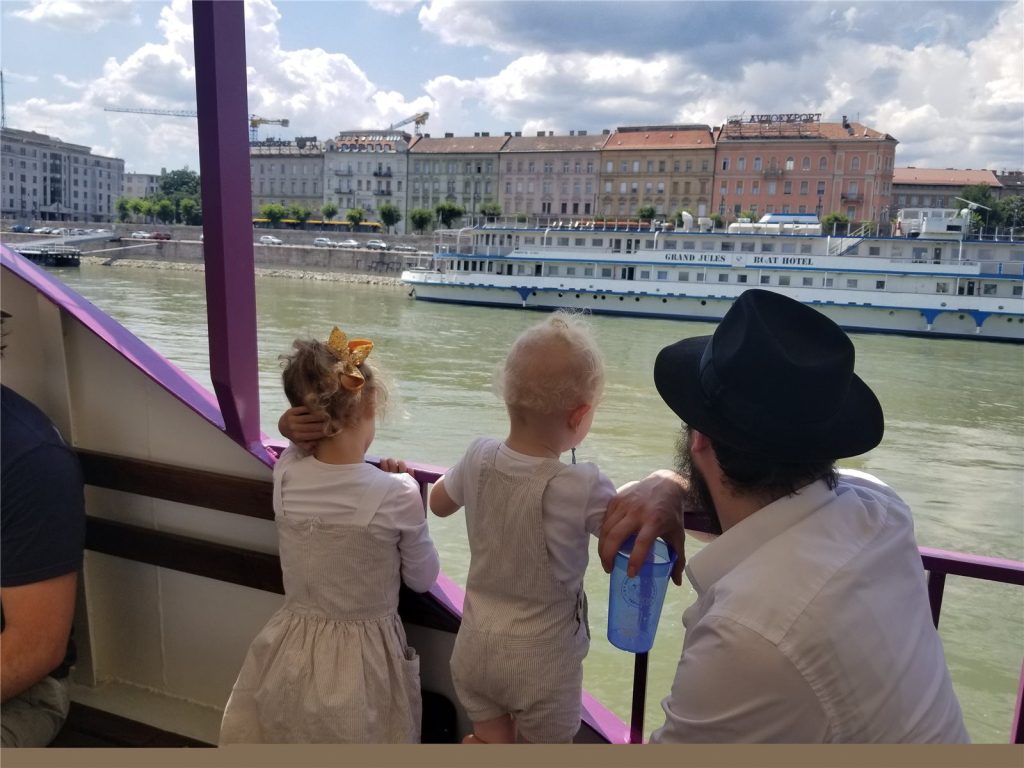
After three months, we had to decide where we were heading. We moved with the girls to a refugee camp in Hungary, thinking the war would end soon. And so the summer passed. In the end, we faced a significant crossroads. There was a thought to continue our seminary, “Beis Chana,” in Israel, or to reopen it in Ukraine, but we didn’t have enough girls to reopen. I didn’t want to stay in Europe because I saw a lot of anti-Semitism there.
One day, my mother-in-law sent my husband a letter from the Rebbe. We asked her: “Why did you send this?” and she said: “I don’t know, I just saw it and decided to send it to you.” Guess what letter it was out of thousands of letters? The same letter we opened to from the Rebbe at the start of the year about parnassa in the United States…
The decision was clear—we were moving to Crown Heights, Brooklyn, New York, to the Rebbe’s shechuna.
We made sure the girls who stayed behind were sent to the right places. Some of them integrated into mosdos, while others returned to their parents in Ukraine despite the difficult situation. Today, they are already prepared for war, every home has a generator, and there are instructions and rules. Some people have no other place and live like this in a state of constant war.
We had nothing more to do there. The boarding school closed, unfortunately, and our shlichus there came to an end.
And so, we found ourselves in Crown Heights.
I started taking a teaching course via Zoom and simultaneously tried to find some work. My mother-in-law suggested I work at “Beis Chaya Mushka,” a local girls’ school al taharas ha’kodesh. I went for the interview nervously, they hired me, and boruch Hashem, it’s been successful. I’ve been there ever since.
Lessons From the Journey
To conclude, I had a good life, and it’s definitely painful that it was interrupted this way. I enjoyed working with the girls; it gave me a lot of fulfillment, and here I teach little girls, which is a big change. Also, materially, I had very good conditions in Ukraine, and here I have to learn life all over again and adapt to the change in location, society, language, and everything, really.
I look at myself and see two different women: Rivka after and Rivka before. I think today my outlook on life is different and much more mature.
What insights or lessons have you taken with you from this journey?
“First, nothing is taken for granted, and no one owes me anything. There were refugees who enjoyed being miserable and only waited to receive. I don’t judge, but I didn’t like being in that state of mind. For me, I had everything; it was just technical details that were left behind. Furthermore, thank G-d, I had never needed to receive; I was always on the giving end. For what I received, I said ‘thank you.’ People truly gave from the heart, even giving me money to buy a stroller for the baby and shoes for my daughter. When we arrived here, I said I wanted to work and take care of what I needed myself. I didn’t want to be a taker anymore.
Second, live in the present. There are many situations in life where we go through significant changes, each with her own experience. I think it’s better to live with what’s here and now, without comparing it to the past, which will never return.
I know we won’t return there. Ukraine is no longer the Ukraine it once was. It was an important chapter in my life, a good chapter that I miss, but it’s over. If I don’t make this separation, I will remain stuck in the past without moving forward.
Finally, gashmiyus is not everything. You can live in less than perfect conditions. When I packed my emergency suitcase, I told myself, ‘This is a must, and this is a must.’… but nothing is really a must. Not everything has to be the best of the best. The most important thing is that everyone is alive and well, and that I have a family and children. Thank G-d.
Beis Moshiach #1450 • pp. 40-46
© 2026 Beis Moshiach Magazine. All rights reserved.
This article originally appeared in Beis Moshiach #1450. You are welcome to share it with friends and family by email or in print, provided that you do not change, add to or omit any part of it, you credit the author and Beis Moshiach, and you include a link to archive.bmoshiach.org (written out in full in printed copies).
To republish this article in a newspaper, magazine, book or website, please request permission in advance at [email protected].