What If We Regarded Yeshivos as Hospitals?
Yitzchok Gross discusses the sad phenomenon of yeshivos closing for summer vacation
If you ran a hospital, would you close the doors to the emergency room if things were trickling down during the summer months? Would you, in good conscience, send all the staff for a prolonged vacation and leave no one on emergency duty?
Those who know what’s going on, know that today’s Yeshivos are more than an emergency room in a hospital in many ways. Is it right to treat them differently?
A bachur should be allowed to leave his Yeshiva every so often to have a break.
A bachur should never be forced to leave his Yeshiva and be forced to have a break.
* * *
As I promised in my last article (Suffocation from Vacation, Issue #1460), I’d like to discuss with Hashem’s help the different claims and excuses given to explain away the unfortunate unhealthy situation of our Yeshivos, Talmud Torahs, schools etc. closing their doors for a few months (or even for a few weeks as is the common practice in Eretz Yisrael) every year for the summer vacation as well as throughout the year for a periodic “Shabbos off.”
Sometimes, talking about this with people makes me believe that some of us are a little bit oblivious and do not realize what our yeshivos are and their importance in our day and age.
In the olden days, yeshivos were not for everyone. Those that were extra bright went to yeshiva to become rabbanim, roshei yeshivos, shochtim, etc. and the rest joined the workforce from a young age in one capacity or another. They married and built fine Jewish homes.
In more modern times, especially today, the Yeshiva serves an entirely different purpose. It is literally the lifeline for the younger generation. The Yeshivos and schools are Noach’s Teivah for our children and youth (especially bachurim). For too many bachurim, Yeshiva is – and I write this in pain because I know this only too well – the only safe and healthy dalet amos (space) that they know in the world.
Multitudes of today’s children and teens are going through such tremendous crises and challenges that the older generation have no clue about.
If you, dear reader, think that I’m exaggerating, please thank Hashem for your family, and realize that you are very lucky. (I also assume that you are not involved in chinuch…)
Dear Menahel, if you ran a hospital, would you also close the doors to the emergency room if things were trickling during summer months with not too many patients coming?
We know the truth. The Yeshiva is more crucial than the hospital. If you don’t take my word for it, ask the mashpiim in your own Yeshiva who know the students from up close, they will tell you. Especially in Chabad where every bachur’s background is so different.
We have been born into this crazy situation where it’s normal to warm up the shivering bones of the bachurim that arrive at our “hospitals,” to bring them next to the fireplace, to slowly wrap them up in warm blankets with love and care… Farbrengen after farbrengen, shiur after shiur …. And then, just like that, to send them straight back out into the cold (with a care-package if they’re lucky…)
Yes, a bachur should be allowed to leave the Yeshiva and to have a break. But a bachur should not be forced to leave the Yeshiva and to have a break.
Especially not in today’s day and age.
In today’s world, especially, when a bachur knocks on his Yeshiva door, any day of the week, 24/7, he shouldn’t find a locked door.
I would like to emphasize that this is particularly relevant to Yeshivos that are geared towards more so-called “open-minded” bachurim, who are struggling more with outside influences. We know that the Rebbe encouraged the vocational school in Kfar Chabad to be open the entire year with the rabbis filling in for each other (if breaks are necessary) and allowing boys to take individual breaks (See Igros Kodesh Vol. 11 p. 292).
The “Yeshivas Kayitz” Model
I’m not writing this just to complain. I wish to raise awareness so this can be fixed. I therefore wish to acknowledge and give credit where credit is due to those mosdos that have taken the Rebbe’s call to heart and implemented systems and solutions for this painful issue.
One very useful system that addresses is the “Yeshivas Kayitz” model:
The entire yeshiva (students and staff) relocates to a summer location and operates with the same learning schedule, or perhaps even more time for learning in a rejuvenating environment. Sometimes also giving more emphasis on “healthy body” activities that ensure a “healthy soul.” This model ensures the material and spiritual safety of the students and at the same time allows both the students and staff to refresh themselves and get their well-deserved rest.
[It’s important to note that such a model is not considered closing the Yeshiva. See Sicha of 12th Tammuz 5724.]
From year to year, Boruch Hashem, we can see more and more Yeshiva managements that bend themselves backwards, at the expense of their own vacations, to make this happen. While in the beginning, some had to fight tooth and nail with their parent body who didn’t appreciate moving around their summer-vacation practices, by now it has been normalized, and many parents see how this is only for the good and benefit of their own children!
In a similar vein, many schools operate day camps in their facilities and there is certainly value in each school operating its own day camp demonstrating that we don’t need, nor want, vacation from learning Torah.
If Good Is Good, Is Better Not Better?
Yet, if good is good, is better not better?
Most of these Mosdos still close usually for a week or so, before and after the Yeshivas Kayitz or day camp session.
My humble suggestion is to take a healthy example from two very important and holy mosdos in Lubavitch that operate year-round literally:
1) The Central Yeshivas Tomchei Temimim at 770: While for the past 80+ years, 770 bachurim have been using their summers for Merkos Shlichus, traveling around towns and cities to spread Yiddishkeit and Chassidus. Traditionally also, 770 bachurim staff the many Camp Gan Yisroels around the world.
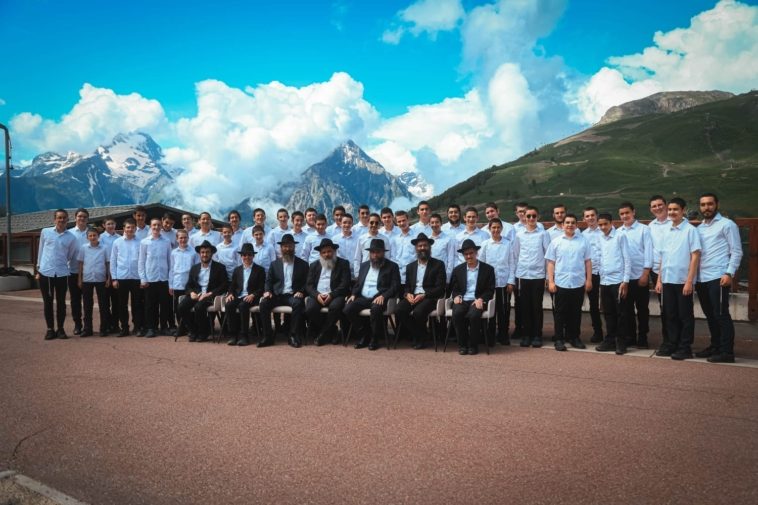
Nevertheless, the 770 yeshiva never closes. The mashpiim and magidei shiurim are sitting at their places (even if in a different set-up than usual), the kitchen provides meals, etc. Every bachur chooses which three weeks he would like to leave on Merkos Shlichus, but the Yeshiva maintains enough bachurim to keep it open. True, it is quieter and more relaxed, but for the most part, it’s business as usual.
2) The Kollel under the Auspices of the Rebbe’s Mazkirus: The Kollel, as I was told by Rabbi Yosef Heller, doesn’t close ever. If a yungerman, of his own volition, wishes to join his family in the country and the like, he is allowed absence for one week in the summer. Since everyone chooses another week, the Kollel is never empty.
Yeshivos Don’t Go On Vacation!
As I discussed in the previous article, we should strive to transform the ‘Mosad-vacation’ into allowing individual personal vacations while not forcing the mossad itself — with the Torah it represents — to go on “vacation” chas v’shalom.
If we could somehow brainstorm how to adopt this model for our Zals and Mesivtas, I am certain this will cause tremendous nachas to the Rebbe that his dream was finally fulfilled.
Dear Chassidim, let’s brainstorm together. I acknowledge that operational costs are not cheap and perhaps, at least as a backup plan, in a city with a few Yeshivos (like Crown Heights), the Yeshiva managements could work together to make a plan that if less bachurim are staying, Yeshivos could be merged and the expenses of staffing and food could be shared to work together to fulfill the Rebbe’s dream.
Beis Moshiach #1464 • pp. 28-30
© 2026 Beis Moshiach Magazine. All rights reserved.
This article originally appeared in Beis Moshiach #1464. You are welcome to share it with friends and family by email or in print, provided that you do not change, add to or omit any part of it, you credit the author and Beis Moshiach, and you include a link to archive.bmoshiach.org (written out in full in printed copies).
To republish this article in a newspaper, magazine, book or website, please request permission in advance at [email protected].