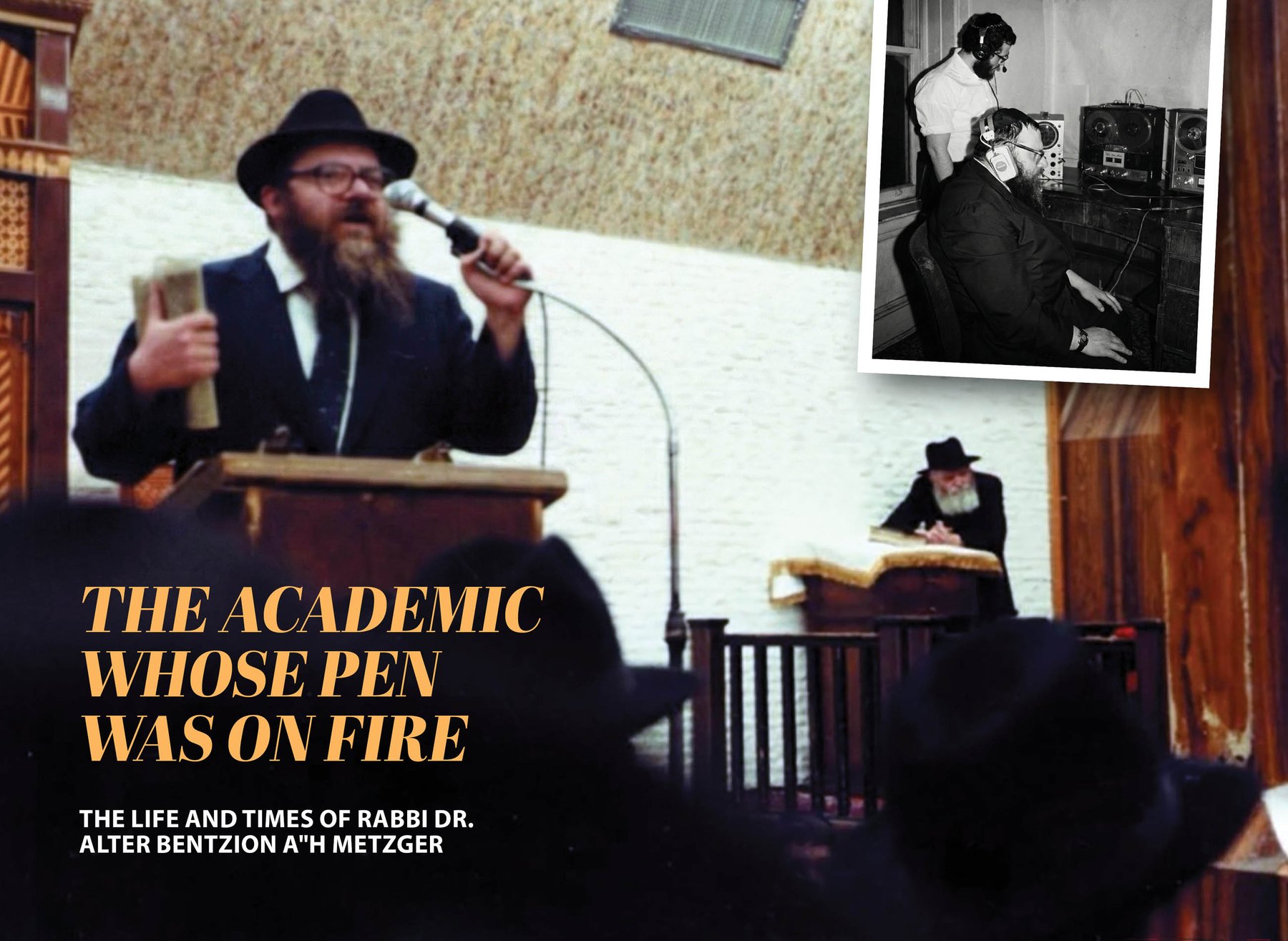
The Academic Whose Pen Was on Fire
At the Great Synagogue in Moscow, in the year 5747 (1987), in the waning days of Communist rule – several Chassidim who had arrived from the United States under the guise of tourists entered for the Shabbos morning davening. Among them was a man of distinguished appearance and a Chassidic beard, Rabbi Dr. Alter Metzger, who had come to Russia on behalf of the Chabad organization “Ezras Achim.”
The atmosphere was tense. Twenty or thirty elderly Jewish men prayed in silence. Everything appeared fine on the surface – a carefully staged performance for the Western visitors. The Aron Kodesh was opened, and the chazan began chanting the ancient prayer “Brich Shemei.” The melody was quiet, measured, until it reached one word in Aramaic.
“Keshot!”
Suddenly, the chazan’s voice changed. He was no longer praying – he was screaming. His face flushed, and he cried the word again and again toward the guests: “Keshot! Keshot! Keshot!” [Aramaic for ‘truth’].
The visitors shifted uncomfortably. They didn’t understand what the chazan was trying to express. But Rabbi Metzger – a man who had lived his life reading between the lines, between languages, between worlds – sharpened his keen listening. His brilliant mind, the same mind that had translated the depths of Chabad thought into academic English, decoded the cipher in an instant.
This was not a tefilla. It was a cry. “Don’t believe this performance!” the chazan screamed wordlessly. “You see ‘religious freedom’ here? A lie! It’s all a show for the Communists! The truth – ‘Keshot’ – is that we are persecuted, that the young people are expelled from here, that some of us are forced to inform against our will. You want to know what’s really happening here? Seek the Keshot!”
The davening ended. The guests began shaking hands and politely wishing “Gut Shabbos.” When Rabbi Metzger’s turn came to stand before the old chazan, he didn’t say “Gut Shabbos.” He took the elderly Jew’s warm hand, looked directly into his tearful eyes, and whispered one word only: “Keshot.”
A smile of immense relief spread across the chazan’s face. Tears stood in his eyes as he murmured: “At least one person understood me.”
This story, which R’ Metzger recounted on several occasions, is a reflection of his life – dedicated to a constant search for the “keshot,” the inner truth hidden beneath the external surface. In the halls of Stern College, he searched for the Jewish spark in the soul of a modern student; in the small translation room at 770, he struggled to find the precise English word to express the “divrei Elokim chaim”; and behind the Iron Curtain, he knew how to hear the silenced cry.
He was a “bridge builder” in the deepest sense; a respected university professor who in the evenings would shed his academic gown and become a Chassid who surrendered himself before the Rebbe; a man of books and spirit who knew how to be a simple “soldier” in spreading the wellsprings.
Rabbi Metzger passed away on Chof-Beis Shevat – the yahrtzeit of the righteous Rebbetzin. In the following lines, we journey through the stations of his life – from his childhood on the Lower East Side, through the transformation of Yud Shevat, to the days when he merited becoming the Rebbe’s “voice” for English speakers throughout the world.
Touches of Chassidus
Rabbi Alter B.Z. Metzger was born in New York in the 1930s on the Lower East Side, a neighborhood that was a bustling melting pot of Jewish immigrants from all walks of life. His father, Reb Chaim Yitzchok Moshe, was a talmid chacham who came from Belgrade in Galicia, steeped in the atmosphere of a traditional Jewish shtetl. His mother, a native of Ukraine, had immigrated to America in 1906. Young Alter was American from birth. English was his mother tongue, and American culture was the natural landscape of his childhood.
He was sent to study at Yeshiva Rabbi Yaakov Yosef (RJJ), a bastion of Litvish-Orthodox education in New York at the time. But Divine Providence, which had planned a completely different future for him, planted a hint right under his nose. “Right next to my yeshiva,” R’ Metzger recalled in later years, “stood the ‘Tzemach Tzedek’ shul where several neighborhood Chabad Chassidim davened.”
Sometimes he would enter the Tzemach Tzedek shul after Rabbi Dovid Raskin began giving a Chassidus class there. Many years later he still remembered how Rabbi Raskin once marveled at the greatness of Jewish souls, saying: “Vi hoich Torah iz, neshamos Yisroel zeinen hecher” [= However great Torah is, Jewish souls are even higher], and everyone was beside themselves with enthusiasm.
Even in the summer, when he went to Camp Mesivta, hashgacha continued to knock on his heart’s door. In the camp there was a group of Chabad Chassidim, including Rabbi Yehuda Kalman Marlow a’h, later to become the rav of Crown Heights and Rabbi Yosef Goldstein, known by the affectionate nickname “Uncle Yossi.” A Lubavitcher bachur named Rabbi Lazar recognized the potential in the talented boy and began pressing him: “Alter, come with us! Come for a yechidus with the Rebbe (Rayatz)!”
But Alter refused. “I never went,” he said with regret many years later. He had a long journey ahead before discovering that all roads lead ultimately to the one singular truth found at 770. But for that, one pivotal moment had to occur – one night in the winter of 5711 (1951).
From ‘Observer’ to ‘Chassid’
The year 5710 was a year of devastation and anticipation in Chabad. With the passing of the Rebbe Rayatz, the Chabad world held its breath. But in Washington Heights, on the campus of Yeshiva University (YU), life continued as usual – or at least so it seemed on the surface.
Young Alter Metzger had finished high school and entered the prestigious yeshiva. On campus, a group of bachurim talked heatedly about what was happening in Brooklyn. They spoke about the Rayatz’s son-in-law, the Ramash, and the persistent rumor that he was about to accept the leadership. Alter, who had never met the Rayatz, felt growing curiosity to meet the one who was supposed to succeed him.
Then came the historic night; the night following Yud Shevat 5711.
About two weeks earlier, a notice had been published in the Jewish press announcing that Chabad Chassidim had presented the Rebbe with a letter of hiskashrus and that at the Yud Shevat 5711 farbrengen there would be the official “kabbolas ha’nesius.”
Alter and his friends – Rabbi Yeshaya Seif and Rabbi Yisrael Wohlgelenter – saw the notice and decided they had to be present at the special event. As he pressed into the small, crowded hall at 770, he stood out in the setting – an American bachur, dressed in modern style, standing among older Chassidim, refugees from Russia and Poland, whose faces were etched with lines of mesirus nefesh and whose eyes burned with anticipation.
“I went to the farbrengen and stayed until the end,” R’ Metzger recounted in later years, the excitement in his voice undiminished even after decades. “I heard the first maamar ‘Basi L’Gani’… and I still remember how the Rebbe told the stories about each of the Rebbeim.”
That night, something in Alter Metzger changed forever. He heard a new language. He heard about the “seventh generation,” about the task of bringing the Shechina down to this lower world. The Rebbe wasn’t speaking only to the elderly Chassidim; he was speaking to him – the student living in the lower world of material America.
In later years, when asked to summarize in a few words what drew him to Chabad and to the Rebbe, he said it was the Rebbe’s yiras shomayim, and the constant work that Chassidus demands day and night – simply working on oneself at every moment. And that is truly the entire purpose of our creation, and especially in the seventh generation: actual practical work to bring Moshiach in our time.
From that day on, “the double life” began. On weekdays – a university student; but on Chassidic occasions, Yomim Tovim and special days – a Chassid at 770. The distance between his home on the Lower East Side and Crown Heights didn’t deter him, even when he had to cover it on foot on Shabbos and Yom Tov. He was not the only bachur who came from afar to participate in the Rebbe’s farbrengens; afterward they would eat the Shabbos meal at the home of a widow whom Shlomo Carlebach paid to prepare food for those bachurim.
On one Acharon Shel Pesach, Alter set out on a walk of many hours – just to merit being in the Rebbe’s presence. He arrived at 770 exhausted and joined the farbrengen and the Moshiach Seudah. When he returned home after Yom Tov, his mother looked at him in astonishment. The elegant suit she had labored to iron and prepare in honor of Yom Tov was a wet rag – soaked with sweat, wrinkled and shapeless. “Alter!” she cried, “Is that the same suit you were wearing this morning?!” He smiled. The suit had been ruined with “the sweat of a mitzva,” and the neshama had received a new levush.
On Acharon Shel Pesach 5712, after the farbrengen, the Rebbe left his room on his way home, but suddenly stopped at the entrance of 770 and began speaking about the virtue of mesirus nefesh, and asked to sing the niggun “V’Harikosi Lochem Bracha,” saying this niggun was attributed to the Alter Rebbe. The Rebbe himself began the niggun, dancing, with the Chassidim joining him. R’ Alter Metzger, at that point in his early stages of drawing close, stood to the side watching the scene. Suddenly he felt someone grabbing him by the collar and “shaking” him… At first he couldn’t see who was pulling at his collar, and then he turned around and saw – it was the Rebbe.
The Chassidic Underground in Room 232
“Headquarters” was established in the student dormitories in room number 232. It was not an official Chabad branch, but a spontaneous underground organization. At night, after official studies ended, bachurim from 770 would sneak into the room – the first unofficial “shluchim”: Reb Mordechai Altein, Reb Avraham Korf, Reb Yosef Reitzes, and others.
They opened the Tanya. The ancient words about the “G-dly soul” and the “animal soul” took on electrifying meaning. Alter and his roommate, Chaim Meir Hellin, were from the core group. Word spread. On Yud-Tes Kislev and Lag B’Omer, room 232 became a farbrengen table. The “mashke” flowed, niggunim burst through the walls, and hearts opened.
But not everyone approved. One of the important yeshiva staff members, who regarded the Baal HaTanya only as the author of the Shulchan Aruch, viewed the study of Chassidus within the yeshiva as a “rebellion,” and tried to take action against the Tanya class. One of the regular participants, a young man named Yisroel Wohlgelenter, ran agitatedly to the office of the Rosh Yeshiva, Rabbi Yosef Dov (Ber) HaLevi Soloveitchik, and asked for his opinion on the matter.
The Rav’s response was short, sharp, and resounding: “Altz meg men lernen un dos nisht?!” (= One may study everything, but not this?!) In one sentence, Rabbi Soloveitchik gave approval to the class specifically and to Chabad activity on campus in general.
Rabbi Metzger grasped that this permission rested on something deeper. He recalled how the Rav (as Rabbi JB Soloveitchik was known) would wistfully reminisce about his childhood in Khaslavich, where his Chassidishe melamed taught him Tanya instead of Gemara – until his father, Rabbi Moshe Soloveitchik, caught wind of it.
That Chassidic spark, planted in the Litvishe Gaon’s childhood, along with the memories he shared of Rosh Hashana nights in a Chassidic shteibel and the discussions about [the true significance of the day being] ‘kabbolas ha’malchus,’ accepting the kingship of Hashem – suddenly awakened and defended the Tanya class and the group in room 232.
“Things Resembling the Splitting of the Sea…”
When Reb Alter reached marriageable age, he found himself in a complex situation. On one hand, he was a brilliant and yerei shomayim yeshiva bachur; on the other, an academic student with plans for a scientific career. In the world of shidduchim of those days, this “shaatnez” was not always readily accepted. Years passed, he was approaching thirty, and felt that the path to the chuppa was blocked – that the sea was closing in on him.
As a Chassid whose mind was sharpened by learning Gemara, he decided to approach the Rebbe in the language of the Talmud. On Erev Pesach he entered 770, waited for an auspicious moment, and when he stood before the Rebbe, he requested a bracha for a shidduch. But he didn’t ask for just any bracha.
“I am requesting a bracha for inyanei Yam Suf,” he said, alluding to the well-known maamar Chazal (Sota 2a): “Pairing a person in marriage is as difficult as the splitting of the Sea of Reeds.” The message was clear: Rebbe, my situation is so complicated that only a miracle on the order of the splitting of the sea can help me.
The Rebbe was not moved by the “difficulty” the bachur described. In a quick, sharp response – like a father teaching his son to see the world correctly – the Rebbe replied: “Dvarim hadomim l’Yam Suf…” (“Things that resemble the Sea of Reeds…”)
In those few words, Reb Alter felt, the Rebbe had changed the tone: it doesn’t have to be “difficult.” It will be “resembling” the Sea of Reeds – meaning it will be a miracle, it will be wondrous, it will be beyond nature – but it will come with kindness, not with difficulty.
And indeed, shortly afterward, a shidduch was suggested with Miss Yehudis Hershberg. The prospective kalla was the daughter of the Gaon Rabbi Avrohom Mordechai Hershberg a’h, who served as Chief Rabbi of Mexico and President of Agudas HaRabbanim HaOlamis. Rabbi Hershberg was a gadol b’Torah with deep bonds of friendship with Chabad Rebbeim (as described in the book Shemen Sasson Mei’chaverecha).
This shidduch not only established a bayis neeman b’Yisrael, but connected R’ Metzger even more closely to the Rebbe – this time through the extensive connections of his distinguished father-in-law.
R’ Metzger’s closeness to the Rebbe deepened over time. One of the unforgettable moments of his life occurred at the Purim farbrengen of 5718. The farbrengen was in full swing, wine flowed freely, and the Rebbe was in a state of profound revelations. Suddenly, the Rebbe surveyed the enormous crowd, his holy eyes searching among the faces, until they stopped on Alter Metzger’s face.
Before the entire crowd, the Rebbe called out loudly: “Alter Metzger, zog l’chaim v’livracha!” (= Alter Metzger, say l’chaim v’livracha!). Such a direct, named, and public request from the Rebbe was no small matter.
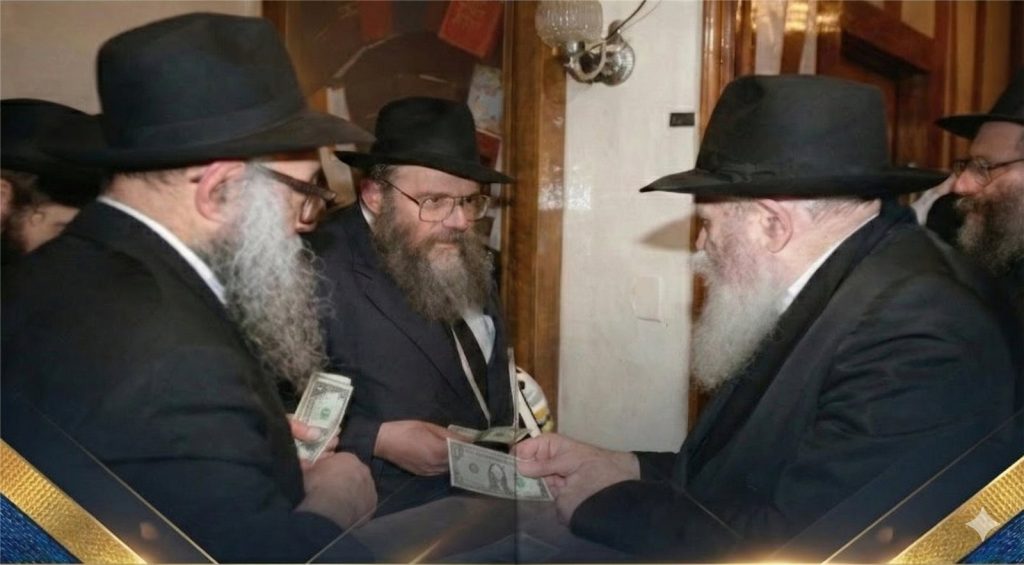
Over the years he merited entering for yechidus many times. Several times over the years the Rebbe asked if he was keeping up with the daily Chitas studies. Once he asked the Rebbe for a “segula” to rid himself of extraneous thoughts. The Rebbe replied that he should hold a holy book in his hand.
One year on Erev Yom Kippur, while passing before the Rebbe to receive honey cake (lekach), he requested lekach for family members and close friends as well. He left with his hands full and overflowing with pieces of honey cake. The following year, when he passed to receive lekach – the Rebbe immediately transferred three pieces into his hand.
Once, when the Metzger’s still lived in the Kew Garden Hills neighborhood of Queens, they had two options of which yeshiva to send their four-year old son. One was around the corner, and the other was in Forest Hills and the young child would have to travel on a school bus to get there. At a yechidus, the Rebbe said they should choose the yeshiva which has more yiras shamayaim.
On another occasion he recounted that he once passed by the Rebbe and asked a question whose content he no longer remembered, but the Rebbe’s reply he remembered well: “Korbanos are the Torah that is within tefilla; Tehillim are the tefilla that is within Torah.”
After his marriage he lived in Kew Gardens in Queens. On Shabbos and Yomim Tovim, the young couple would come to stay with relatives in Crown Heights so they could participate in the Rebbe’s farbrengens. However, when the great flight from Crown Heights began, due to demographic changes in the neighborhood, their relatives also left. Several housing options came up, and finally, a home became available on President Street near the yeshiva building at 1414. The Rebbe gave a beautiful bracha and they moved in and have lived there ever since.
Those who knew him saw beneath the academic exterior the Chassidic fire and yiras shomayim that were embedded in him. For example, his son R’ Shmuel relates that on Motzoei Yom Kippur, his father was always the last to leave 770. After the fast he was in no hurry to transition to everyday mundane life. He simply savored the atmosphere of Yom Kippur, and tried to extend it through the slow folding of his tallis and the recitation of Kiddush Levana with zest… Only an hour and a half after the fast ended would he return home to make Havdala.
The Voice Behind the Curtain
The 1970s brought a new wave to 770. “Baalei teshuva,” students, and English-speaking seekers began filling the Beis Medrash. They wanted to hear the Rebbe, to see the light – but the language barrier, the Rebbe’s Yiddish, stood in their way.
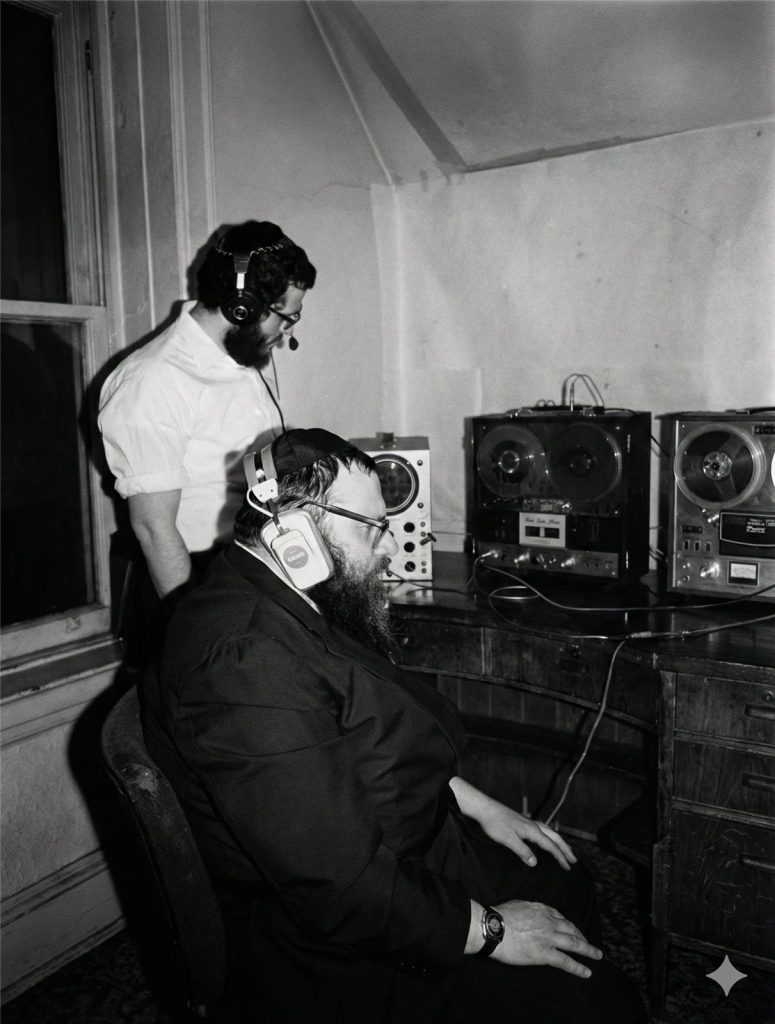
Thus was born a revolution: the Simultaneous Translation System (STS). In the broadcast room sat the translators, their eyes fixed on the Rebbe and their ears attuned to every syllable. The task was stressful beyond description: the Rebbe spoke fluently, weaving profound Chassidic concepts, quoting Talmud and Medrash by heart – and the translator had to grasp, process, and deliver an exact English rendering within a split second, live to thousands of listeners through small headsets. One mistake, one inaccuracy, and the listener could misunderstand the entire intent.
On the translation team were Rabbi Levi Wineberg, Rabbi Aharon Chitrik, and Rabbi Yosef Yitzchak Rivkin. They said that Rabbi Dr. Alter Metzger had a unique role. While his colleagues translated the sichos, Rabbi Metzger was entrusted with translating the maamarim.
To understand the weight of this: when the Rebbe delivered a maamar, it was considered “divrei Elokim chaim,” often composed of the most abstract Kabbalistic concepts – “Ohr Ein Sof,” “Tzimtzum,” “Reshimu,” “Atzmus u’Mehus.” How does one translate “bittul ha’yesh” into English? What word in the American lexicon can contain the idea of a “dira ba’tachtonim”?
Here R’ Metzger’s rare synthesis shone. His academic knowledge provided him with a rich and precise vocabulary; his Chassidic soul gave him the hergesh. He did not merely translate words – he translated the “niggun.” He knew how to bring abstract concepts into the keilim of the English language so that both a professor from New York and a student from California could understand that this was Divine truth.
For eighteen years, at the big farbrengens, thousands wore headsets and heard the Rebbe’s words through R’ Metzger’s voice. He was the “mouth” of the king to the nations of the world.
A Generation of the “Golden Chain”
If in translation R’ Metzger was the “voice,” at his writing desk he was the “heart.” At a time when Chabad literature in English was sparse and elementary, he understood that the American intellectual would not be satisfied with dry literal translation. He needed soul, drama, depth.
The crown jewel of his literary life’s work was undoubtedly The Heroic Struggle. The book, describing the imprisonment and liberation of the Rebbe Rayatz in 1927, is no ordinary history book. R’ Metzger took the Previous Rebbe’s brief, sometimes allusive notes and transformed them into a gripping narrative.
He succeeded in “entering” the prison cell in Leningrad. His descriptions of the chilling interrogations with Nachmanson and Lulov (of the Yevsektzia) of the Rebbe’s steadfast stance before a drawn gun (“This toy frightens only one who has one world and many gods…”), and of the miraculous moments of release were written in rich, vivid, sweeping language. Thousands of American teenagers felt their hearts pound as if they too were there, fighting for their Judaism. He did not merely translate words; he translated the feeling of mesirus nefesh.
In parallel, he maintained a unique project: the column “The Golden Chain,” which appeared regularly for over twenty-five years in the Chabad women’s magazine Di Yiddishe Heim. The name was deliberate. R’ Metzger saw himself as a link. He understood that the women and mothers reading the magazine would shape the Jewish home in America. In these columns, he wove stories of early Chassidim with modern psychological insight, presented the Rebbe’s sichos in a refined and accessible style, and proved that the “golden chain” of Chassidus had not been severed in America – it had simply gained new luster.
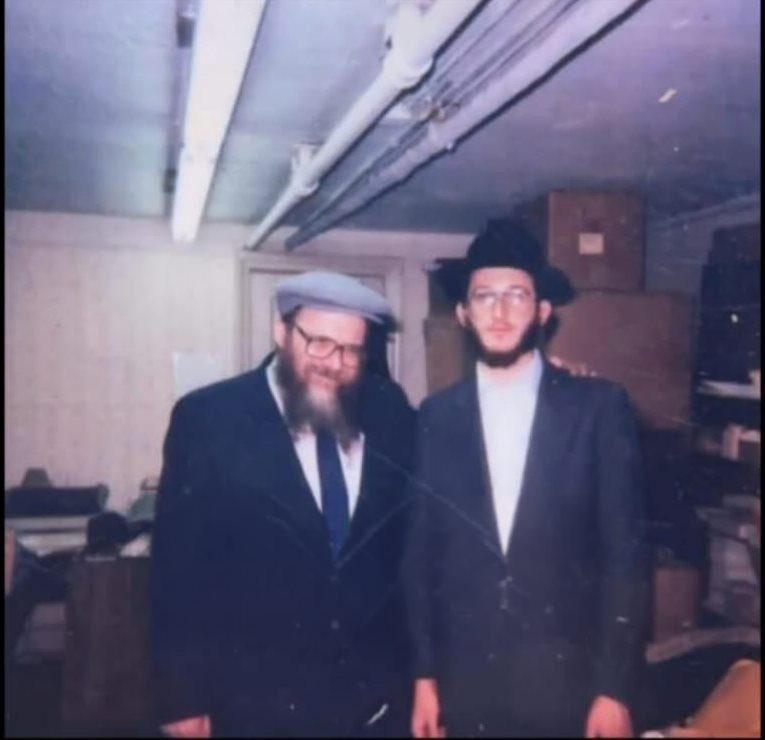
Because the Rebbe personally edited material published in Di Yiddishe Heim, R’ Metzger merited having his writings reviewed by the Rebbe. Often, when receiving his article back, he would notice pencil corrections in the Rebbe’s holy handwriting.
In one instance, he translated the phrase “He will repay him doubly” in its literal sense – “twice as much.” The Rebbe crossed out the word and replaced it with “very, very much.” The message was clear: with Hashem, reward is not mathematical 1+1; it is infinite abundance.
On another occasion, he translated the famous story of Rabbi Aharon of Karlin reciting Shir HaShirim so powerfully that he was told to stop because he was “shaking worlds” and the Maggid wished to sleep. When Chassidim related this, they would praise Reb Aharon’s greatness for shaking worlds, and even more so the Maggid’s exalted level for his sleep was more precious than Reb Aharon’s Shir HaShirim. The Rebbe drew a long line across the page and commented: “Tzaddikim, even during their sleep, fulfill ‘In all your ways know Him.’”
Another of his works was Chassidic Perspectives, in which he compiled the Rebbe’s sichos and maamarim on the Jewish festivals and arranged them as thoughtful essays. At a time when most translations were heavy and cumbersome, R’ Metzger distilled Chassidic ideas into clear, flowing, intellectual language suitable for the modern student. He demonstrated how the Rebbe’s teachings address contemporary existential questions. The book became an essential resource for campus shluchim and lecturers.
Private Audiences With Students
Today, when nearly every campus has its own Chabad House, it is hard to imagine the pioneering days of the 1950s and 60s. Long before “Chabad on Campus” was founded, R’ Alter Metzger already served as a “roving shliach” in academic corridors. He did not merely bring students – he brought Chabad discourse into respected halls of learning.
He consulted the Rebbe on every step. On one occasion, he initiated a series of university symposia on the Baal Shem Tov, the Maggid of Mezeritch, and the Alter Rebbe. The Rebbe was involved in the details before and after the events. R’ Metzger understood that to reach the American student, varemkeit alone was insufficient; Chassidus had to be presented as a systematic, profound, and relevant philosophy.
He accompanied a brilliant yet skeptical medical student to a yechidus. The student, used to other Chassidic courts where the Chassidus is concentrated in one sefer, like Noam Elimelech or Kedushas Levi, was amazed by the vast library. He asked, “Rebbe, why does Chabad have so many books? Shelves upon shelves of maamarim and sichos – can’t one suffice with the essentials?”
The Rebbe answered in the student’s own language – medicine. When antibiotics were first developed, he explained, they discovered that a small dose sufficed. But over time, bacteria developed resistance. When the illness strengthens, the doctor can’t continue using the old dosage. He must prescribe a “massive dose.”
“So too,” the Rebbe concluded, “ for our spiritual state. We are at the end of exile. The spiritual darkness, concealment, cynicism and heresy have grown stronger than in previous generations. What once sufficed to arouse a Jew, a nice story or short vort, is no longer enough to pierce through the kelipos of the world in our generation. In our generation, the generation of ikvesa d’meshicha, we need Chabad Chassidus. It’s not merely another approach. It is the massive dose of G-dly light capable of healing the great darkness before the Geula.”
During shiva, one of the women who came to offer condolences related that her journey of drawing closer to Judaism began when R’ Metzger brought her and several other friends for a private audience with the Rebbe. The timing was especially sensitive – at the height of the Six-Day War. The encounter was electrifying. The Rebbe spoke to them about their role as Jewish women, about their power to change the world. Some of those students later became Chabad Chassidim, and some even went out on the Rebbe’s shlichus around the world.
His son, R’ Shmuel, shares another story he heard during the shiva:
In another yechidus, a student who studied 19th century English literature who tried finding a bridge between his academic world and Judaism, asked whether there was any connection between the holy Baal Shem Tov and the English poet Lord Byron. Although the question sounds ridiculous, rather than dismiss the question, the Rebbe used it to explain joy.
“You could compare them by contrasting them,” he said in English.
Byron had wealth, talent, fame – every reason to be happy – yet his poetry is filled with melancholy. The Baal Shem Tov was orphaned and impoverished, with every excuse for despair – yet he embodied joy and founded a movement centered on serving G-d with joy. He took the darkness of exile and turned it into a melody.
“The conclusion,” said the Rebbe to the astonished student, “is that joy is not dependent on external circumstances, but on connection to the inner soul. The Baal Shem Tov brought joy to all of Jewish Europe which was broken, and until today he continues to bring joy to the entire world.”
For R’ Metzger, such encounters fueled his writing and teaching. They proved again and again that no question lacks an answer in Chabad thought, and no darkness – academic or cultural – that the Rebbe’s light cannot illuminate, if only given the proper “dosage.”
The Professor Who Taught Students to Shout “L’chatchila Ariber!”
Rabbi Metzger held a respected position as Professor of Jewish Studies at Stern College for Women of Yeshiva University, seemingly a place that is distant from a Chassidishe koch. Yet he turned the classroom into a Chabad House. Over nearly fifty years, some 10,000 students studied under him, each exposed in some measure to Chabad teachings.
He wasn’t an ordinary teacher. The students, most from modern homes or on their way toward Judaism, were captivated by this bearded Chassid with Shakespearean English. He could speak to their intellect but aimed straight for the heart.
His educational motto, repeated often, was: “Struggle is significant.” In that brief sentence he encapsulated the Tanya for the Western soul. He taught that Judaism does not demand instant perfection; it demands struggle. Inner conflict, doubts, falling and rising, are what man is about (i.e. the avoda of the beinoni) For American students raised on ideals of immediate success and perfectionism, this message gave meaning to difficulty.
In the summer programs for students through Ivy League Special Torah Program (ILSTP) under the auspices of the NCFJE directed by Rabbi Yaakov Yehuda Hecht,, he used unconventional methods. Despite his vast scholarship, he focused intensely on key phrases, even asking adult students to chant classic expressions repeatedly-“L’chatchila Ariber,” “Shomea K’oneh” – implanting them before they fully grasped their meaning.
When the Rebbe Raised His Hand
Anyone familiar with the special event, the children’s rallies in 770, knows that before the Rebbe’s sicha, the camp directors would address the children in the Rebbe’s presence.
For many years, R’ Metzger served as the rabbi of the girls’ camp “Camp Emunah.” When the moment came, he would step up to the podium, stand just a few yards from the Rebbe, and speak to the children. He talked about the camp’s annual theme, the “color war,” and the Chassidic messages they had learned.
The Rebbe would listen and on several occasions the camp directors were privileged to have the Rebbe refer to their words in the sicha he delivered afterward. R’ Metzger was privileged on several occasions when the Rebbe began his sicha as if continuing directly from his line of thought.
A striking example of this – which found its way into footnote number 2 in Likkutei Sichos in one of the edited sichos – occurred at the end-of-summer rally of 5739. R’ Metzger spoke about the theme of “Ahavas Yisrael” and passionately told the children stories about the Ahavas Yisrael of our Rebbeim and leaders, as the Rebbe himself had related in the first maamar of “Basi L’Gani.”
Five minutes later, the Rebbe began to speak. He took the “simple” stories R’ Metzger had told and transformed them into the foundation of a conceptual structure. The Rebbe asked: “How can we, ordinary people, learn from stories about such great Jewish leaders?” – and from that question he built an entire discourse about the power within every Jew.
On another occasion, as R’ Metzger stood at the podium speaking before the Rebbe and the crowd, his heart was overflowing with gratitude and admiration. He spoke with great energy about how the Rebbe was preparing the world for the coming of Moshiach, and began to describe the Rebbe’s mesirus nefesh in vivid terms, the tremendous revolution he had wrought in the world, and his personal concern for every single Jew. The words flowed, and the audience was captivated.
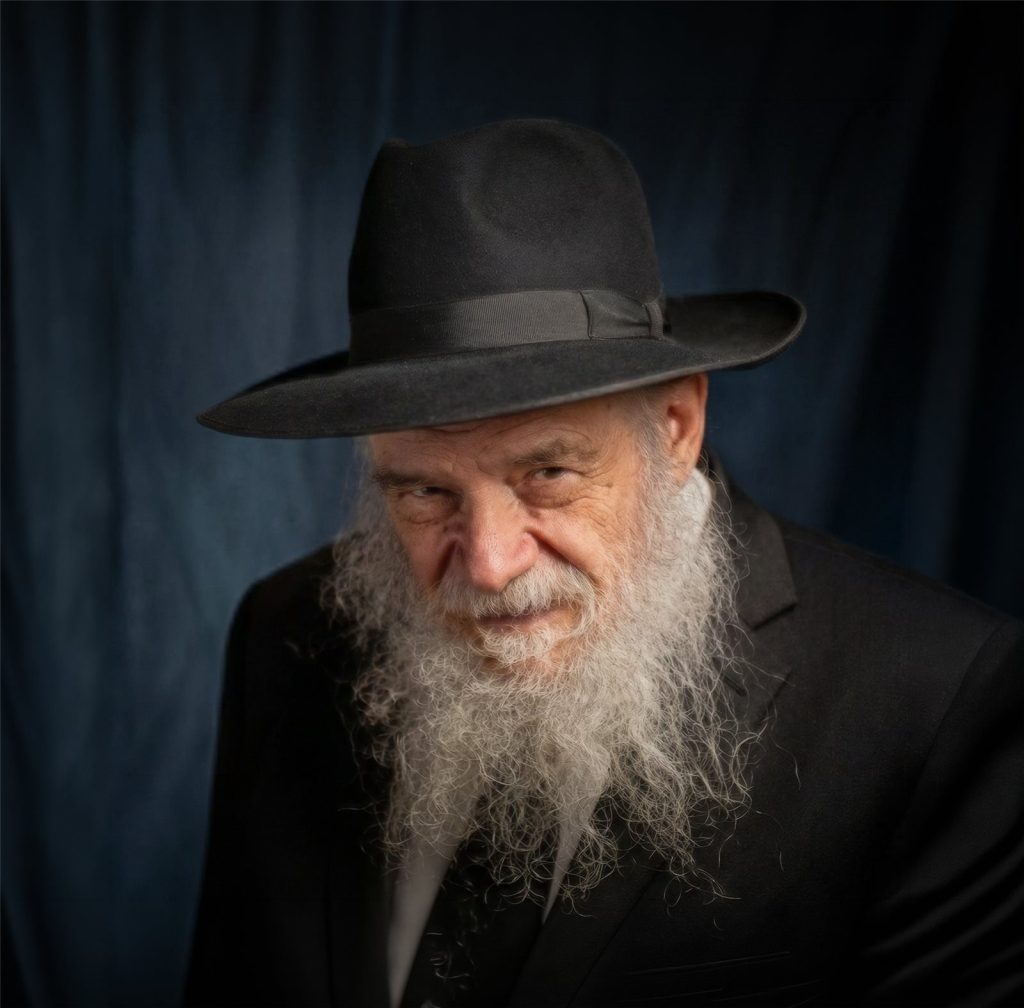
Suddenly, the Rebbe raised his holy hand in a gesture of dismissal, as if to say: “Enough! Stop…” R’ Metzger fell silent. The message, as he understood it, was clear: the Rebbe was not looking for praise. In the Rebbe’s eyes, this entire great enterprise was not “his” – it was a shlichus that had to be carried out, and we still had not done enough.
Genius with Simplicity
Those who knew Rabbi Metzger closely knew that he was first and foremost a mentsch with a warm Chassidic heart. In fact, he combined genius with simplicity in his personality. He could sit with scholars and discuss the loftiest matters, and immediately afterward converse with an ordinary Jew on an equal footing. He always had a ready milsa d’bedichusa (a touch of humor) to enliven his words and open hearts.
In his classes and speeches, he took the cold, analytical logic of academia and fused into it the burning enthusiasm of Chassidus, creating words that go out from the heart and enter the heart.
He was pleasant in his ways, kind to all people. His eye was trained to seek – and find – only the good and the beautiful in others. His students tell of an episode that encapsulates his educational and human approach:
One day, he found himself in a charged situation. Two students were arguing heatedly, and the argument escalated to the point of violence – one striking the other. R’ Metzger looked at them, raised his voice, and called out to the one who had struck: “Tzaddik! Why do you strike your fellow?!”
Living the Geula — “Open Your Eyes”
In the nun’s (90s) when the world was abuzz with the Dvar Malchus talks and the call to publicize the identity of the Goel, Rabbi Dr. Metzger – the man with the tie and the academic degree – did not hesitate. He added his signature to the psak din declaring that the Rebbe is Melech HaMoshiach. For a man of his standing, embedded in high society and intellectual circles, this was a declaration of courage. He was not afraid of “what people would say.” He knew it was the truth, and the truth must be spoken.
Even after Gimmel Tammuz 5754, when many were overcome by confusion, R’ Metzger remained steadfast in his faith. He continued to appear at Geula and Moshiach gatherings, including the massive, historic gathering at Lincoln Center in Manhattan in 5755, which united the Chabad Chassidic community in strengthening their emuna.
But his unique contribution was in “translating” the Geula. In his classes and writings, he explained to students and intellectuals that “the Yemos HaMoshiach” are not a mystical fantasy disconnected from reality. “We are living in a world of Geula,” he would explain to them in his rich language. He showed them how technological progress, political shifts, and the fall of the Iron Curtain were all part of one great process of preparing the world. He taught them to “open their eyes” and see the divine reality concealed within nature and history.
The Golden Chain That Was Not Broken
On Monday, Chof-Beis Shevat 5786, the celestial angels prevailed over the earthly ones. The great heart of Rabbi Alter Ben-Zion Metzger fell silent. But his melody continues to play.
It plays through his personal “golden chain” – his sons and daughters, all of whom are engaged in shlichus and communal service faithfully, from Manhattan to Mexico, from Milwaukee to Toronto. It plays every time a Jew opens the book The Heroic Struggle and is moved to tears by the story of the Rebbe Rayatz’s courage. It plays every time a student at Stern College decides to light Shabbos candles because she heard that “struggle is significant.” And it plays in the ears of thousands of veteran Chassidim, who can still hear in their memory his calm and precise voice coming through the headphones at 770, translating the Rebbe’s words: “Un dos iz di hora’ah…” (And this is the lesson).
Rabbi Metzger was the “bridge” that connected past to future, intellect to emotion. In the story with which we opened this article, he whispered to the Russian cantor the word “keshot” (truth). Today, as we bid him farewell, we can say that very same word about him. He was a man of truth. He did not let externalities deceive him. He knew that beneath the modern suit, beneath the professor’s title, and beneath the concealment of this world – there is only one true reality: Ein od milvado, and the Rebbe is the Nasi HaDor, Moshiach Tzidkeinu.
Beis Moshiach #1497 • pp. 12-25
© 2026 Beis Moshiach Magazine. All rights reserved.
This article originally appeared in Beis Moshiach #1497. You are welcome to share it with friends and family by email or in print, provided that you do not change, add to or omit any part of it, you credit the author and Beis Moshiach, and you include a link to archive.bmoshiach.org (written out in full in printed copies).
To republish this article in a newspaper, magazine, book or website, please request permission in advance at [email protected].