Lost & Found
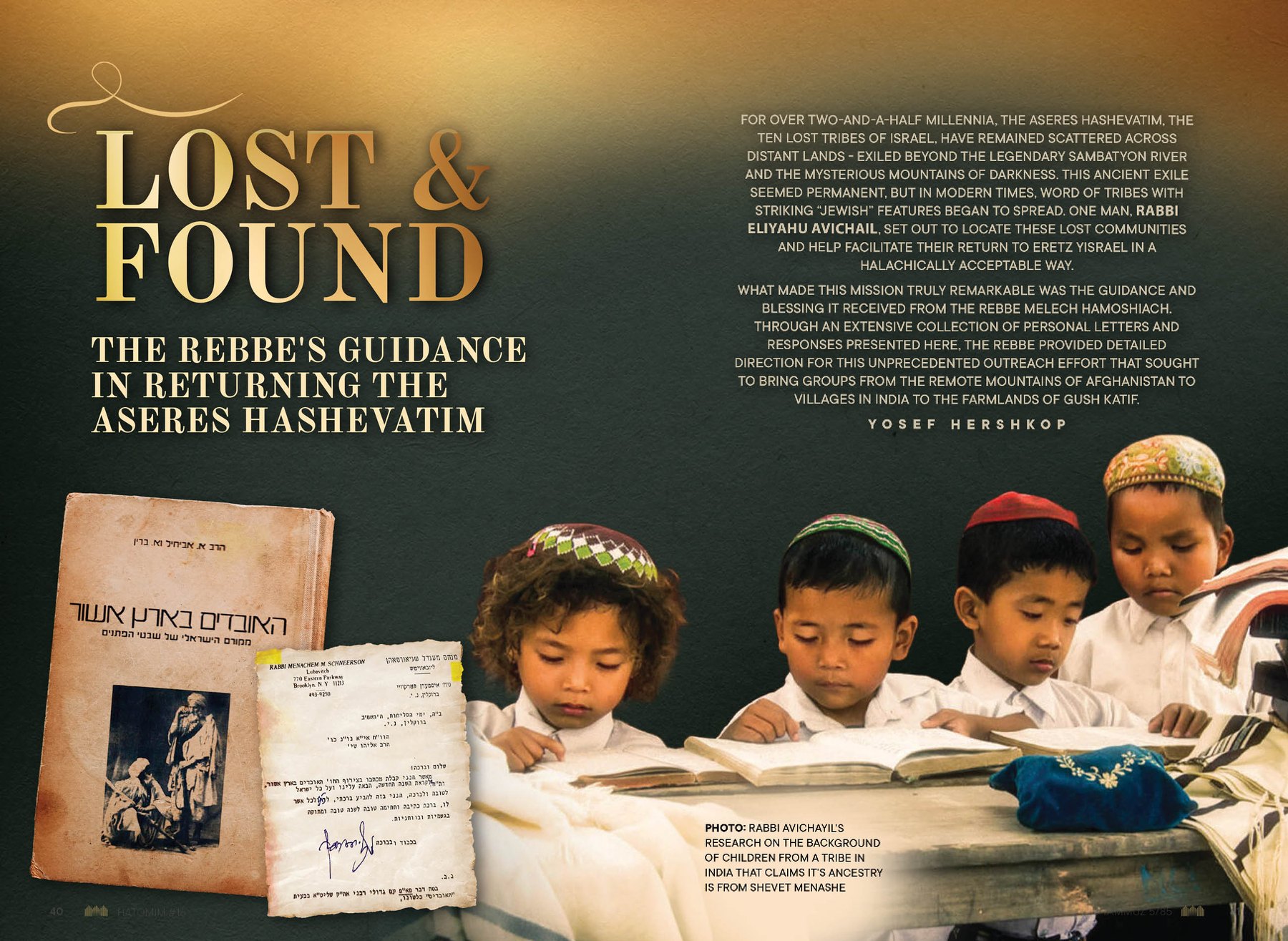
For over two-and-a-half millennia, the Aseres HaShevatim, the Ten Lost Tribes of Israel, have remained scattered across distant lands – exiled beyond the legendary Sambatyon river and the mysterious mountains of darkness. This ancient exile seemed permanent, but in modern times, word of tribes with striking “Jewish” features began to spread. One man, Rabbi Eliyahu Avichail, set out to locate these lost communities and help facilitate their return to Eretz Yisrael in a halachically acceptable way. What made this mission truly remarkable was the guidance and blessing it received from the Rebbe Melech HaMoshiach. Through an extensive collection of personal letters and responses presented here, the Rebbe provided detailed direction for this unprecedented outreach effort that sought to bring groups from the remote mountains of Afghanistan to villages in India to the farmlands of Gush Katif.
The Ten Lost Tribes and the Amishav Organization
Historical Background
During the reign of Hoshea ben Elah, king of Yisrael (the Aseres HaShevatim), approximately one hundred and thirty years before the destruction of Bayis Rishon, Shalmaneser king of Ashur exiled the ten tribes of the kingdom of Yisrael, except for the tribes of Yehuda and Binyamin who were concentrated in Yerushalayim and its surroundings under the kingdom of Chizkiyahu king of Yehuda.
After the king of Ashur exiled Israel to Ashur, the tribes were settled “in Chalach and Chavor by the river of Gozan and in the cities of Modai” (Kings II, 17:6). In the Gemara we find a dispute about the exact location of their exile: “Mar Zutra said, to Africa, Rabbi Chanina said, to the mountains of Salug” (Sanhedrin 94a). Also in the Talmud Yerushalmi we find several places to which the tribes were said to have been exiled: “Israel was exiled to three exiles, one beyond the river Sambatyon and one to the flanks of Antioch and one upon whom the cloud descended and covered them. Just as they were exiled to three exiles, so were the tribe of Reuven and Gad and half the tribe of Menashe exiled to three exiles” (Talmud Yerushalmi Sanhedrin 10:4). The location of the tribes beyond the river Sambatyon is also mentioned in Bereishis Rabba and other Medrashim.
Part of the ten tribes returned during the time of the first Bayis, when in the eighteenth year of the reign of Yoshiyahu, Yirmiyahu HaNavi went to bring back the ten tribes from their exile, and indeed it is told in the Gemara that at that time the Yovel was observed in the land (Megillah 14b). This was about fifty years before the churban and the members of the tribes were then under the rule of Yoshiyahu king of Yehuda. However, Rashi in Sanhedrin (110b) explains that “what we say in the Gemara that Yirmiyahu brought them back, does not mean he brought them all back but he only brought back some of them.”
“In You Shall the Poor of My People Take Refuge”
Regarding the future return of the ten tribes, we find a dispute among the Tannaim: “The ten tribes will not return in the future, as it is said ‘and He cast them into another land as of this day,’ just as the day goes and does not return, so too, they go and do not return – these are the words of Rabbi Akiva. Rabbi Eliezer says ‘as of this day’ – just as the day darkens and brightens, so the ten tribes for whom it is dark, so in the future it will brighten for them” (Sanhedrin 110b).
But in the Talmud Yerushalmi on the other hand, it is explicitly stated that the ten tribes will return: “Israel was exiled to three exiles… and when they return they return from three exiles, those who were exiled beyond the river Sambatyon, those upon whom the cloud descended and covered them, and those who were exiled to the flanks of Antioch” (Talmud Yerushalmi ibid.).
The Maharal explains that the dispute is not whether the ten tribes will return at all (“G-d forbid to say that any tribe of Israel will be missing”), since there were already those who returned – in the days of Yirmiyahu. Rather, the dispute of the Tannaim is only regarding those who did not come up then, whether they are still part of the people of Israel or perhaps they have already assimilated and been lost (Netzach Yisrael chapter 34). Rabbeinu Dovid, student of the Rambam, holds that one cannot say that a decree was decreed upon them “that they should be lost from the service of G-d, for certainly they had offspring, whether few or many who knew G-d… and they are the outcasts of Israel whom G-d will gather… and about them Yirmiyahu prophesied ‘and I will take you one from a city and two from a family’” (quoted in Margaliot HaYam to Sanhedrin, ibid.).
“What shall the messengers of the nation answer? For G-d has founded Zion and in her shall the poor of His people take refuge” – “Even from the ten tribes they come there, as is explicit (Divrei HaYamim II, 30) that Chizkiyahu sent messengers throughout all the territory of Israel to return to the Holy One, blessed be He” (Yeshaya 14:32 and in Rashi’s commentary).
Amishav Organization – For the Outcasts of Israel
Throughout all the generations, many tried to trace the footsteps of the ten lost tribes. Eldad HaDani [the Danite] – a wanderer from the tribe of Dan, wandered in his journeys among his brothers the members of the tribes throughout the world and documented them in a book.
During the last ninety years, Jews from Eastern countries began to immigrate to Eretz Yisrael – from India, Afghanistan, Persia and others, and brought with them wonderful stories about tribes in their countries of origin who are separate from the rest of the population, practice prominent customs resembling Jewish customs, and there is much evidence that they are from the ten lost tribes.
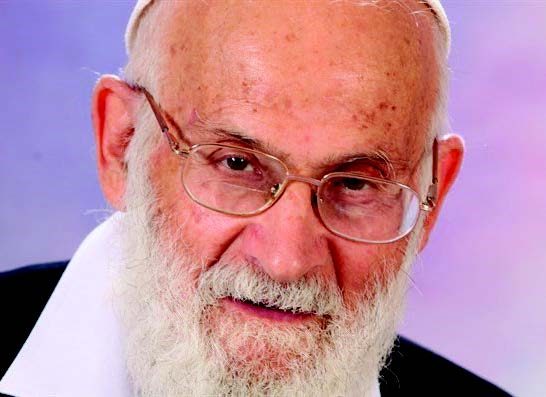
Starting in 1960, a Jew named Rabbi Eliyahu Avichail a’h began to engage in researching the ten lost tribes in eastern countries, and began collecting testimonies and material on the subject. In 1975 he established the “Amishav – L’maan Nidchei Yisrael (For the Outcasts of Israel)” organization with the encouragement of many rabbis, so that he could expand the investigation of the lost tribes issue. The purpose of the Amishav organization was to bring about the discovery of more members of the lost tribes, to facilitate proper conversion according to halacha of people from the various groups that were found and to bring them to Eretz Yisrael, as well as to provide assistance to righteous converts living in communities and as individuals. In those years, the Amishav organization also worked on publicizing in Eretz Yisrael and in the world about the possibility of finding the lost tribes, in order to bring about action and awareness of the issue among Jews throughout the world.
R’ Avichail’s activities included clarifying the true origin of the members of the tribes in question, raising the necessary resources to bring them to Eretz Yisrael, actual immigration, and their conversion in a Beis Din (The need for their conversion despite the seemingly proven evidence of their Jewishness, is due to their possible assimilation with members of other peoples and their conversion to Islam or Christianity – by force or willingly – over the years, by missionaries. In practice, all descendants of the tribes who were brought up by R’ Avichail underwent halachic conversion).
On these matters and more, R’ Eliyahu Avichail consulted, asked and requested the blessing of the Rebbe, for every step in the activities of the Amishav organization.
The Pashtuns Research
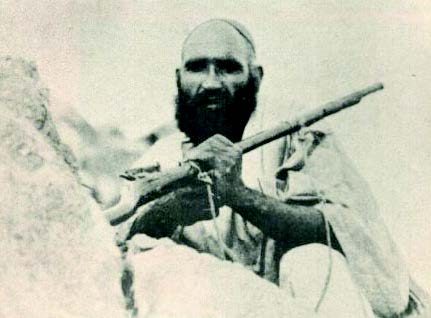
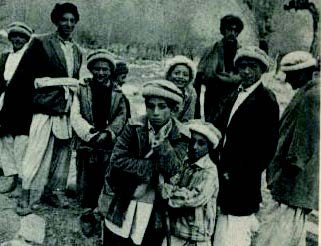
One of the main activities of the ‘Amishav’ organization was research on the origins of the “Pashtuns” – tribes found throughout Pakistan and Afghanistan who call themselves “Bani Israel” and have practices very similar to many mitzvos, such as circumcision on the eighth day, tying fringes on the corners of garments, having Shabbos as the day of rest, growing the peyos and beard, tribal elders lighting candles in honor of Shabbos and more. These customs have been preserved among them despite their conversion to Islam willingly and by force throughout the generations.
The names of the tribes are also very prominent as having some relation to the ten tribes: the Rabbani (Reuven), the Shinwari (Shimon), the Levani (Levi), Ashuri (Asher), Yusuf Sai (sons of Joseph) and others. Among the Pashtuns there are also those with Jewish names that are not common at all among Muslims, such as Yisrael or Shmuel.
Besides the Jewish names and customs, members of these tribes also have an external appearance different from the rest of the people of the region – they are tall and fair-skinned and among them are also those with light colored eyes. All this and more caused R’ Avichail to set out to research about the possible belonging of these tribes to the Jewish people.
The results of Amishav’s research revealed that the place of settlement of the Pashtuns appears to be the area to which the Jewish people were exiled in the Galus Ashur or (in the later exile to) Bavel, and their family origin indeed turned out to be quite likely as descendants of the ten tribes.
“Regarding Afghanistan, Surely Experts Are Being Consulted”
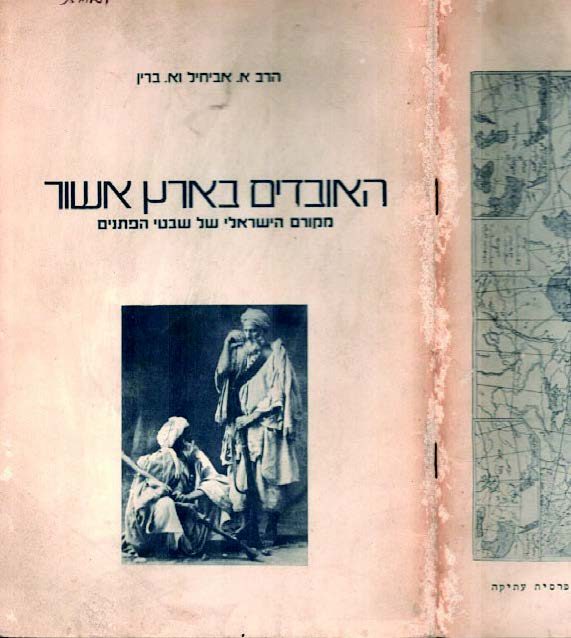
R’ Avichail compiled the research conclusions, together with testimonies from many Jews who lived in the area of the Pashtuns, in a booklet called HaOvdim b’Eretz Ashur which he used to promote the Amishav organization and to obtain public support for its activities. It turns out, among other things, that R’ Avichail also sent the results of his research to the Rebbe.
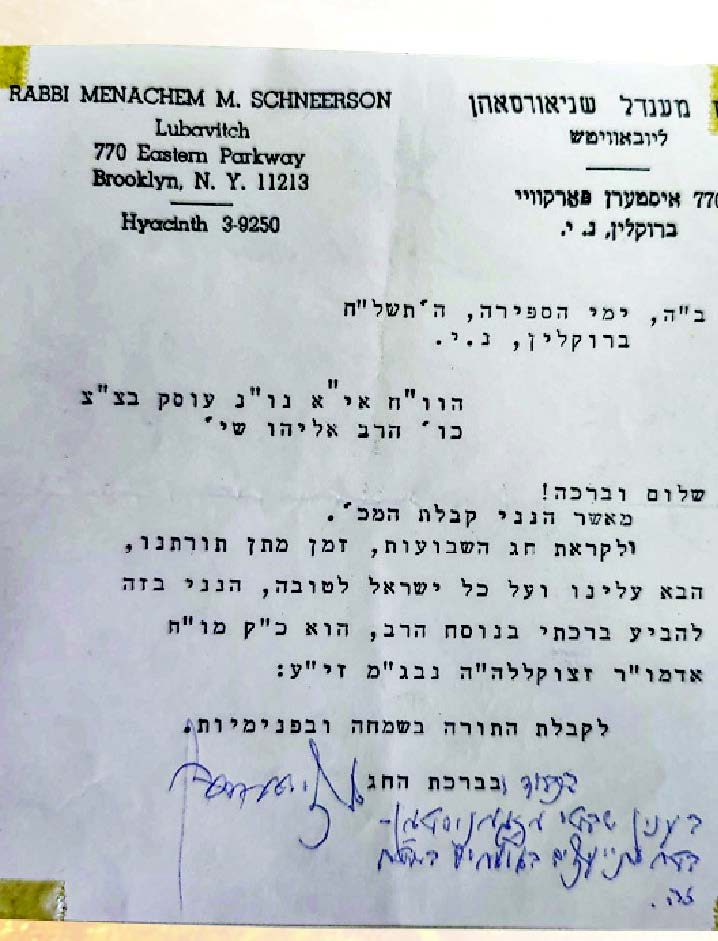
In a letter that R’ Avichail received before Shavuos 5738, the Rebbe referred to the Pashtun tribes with a special handwritten addition:
B”H, Days of Sefira, 5738
Brooklyn, N.Y.
The honorable, etc., engaged in public works, etc., Rabbi Eliyahu sheyichyeh
Peace and blessing! I hereby confirm receipt of the letter.
And towards the holiday of Shavuos, the time of the giving of our Torah, which comes upon us and upon all Israel for good, I hereby express my blessing in the language of the Rav, Kevod Kedushas my father-in-law, the Rebbe: kabbolas ha’Torah b’simcha u’b’pnimiyus (to receive the Torah with joy and inwardness).
With respect and birkas ha’chag (signed)
Regarding the tribes of Afghanistan – surely experts in this field are being consulted.
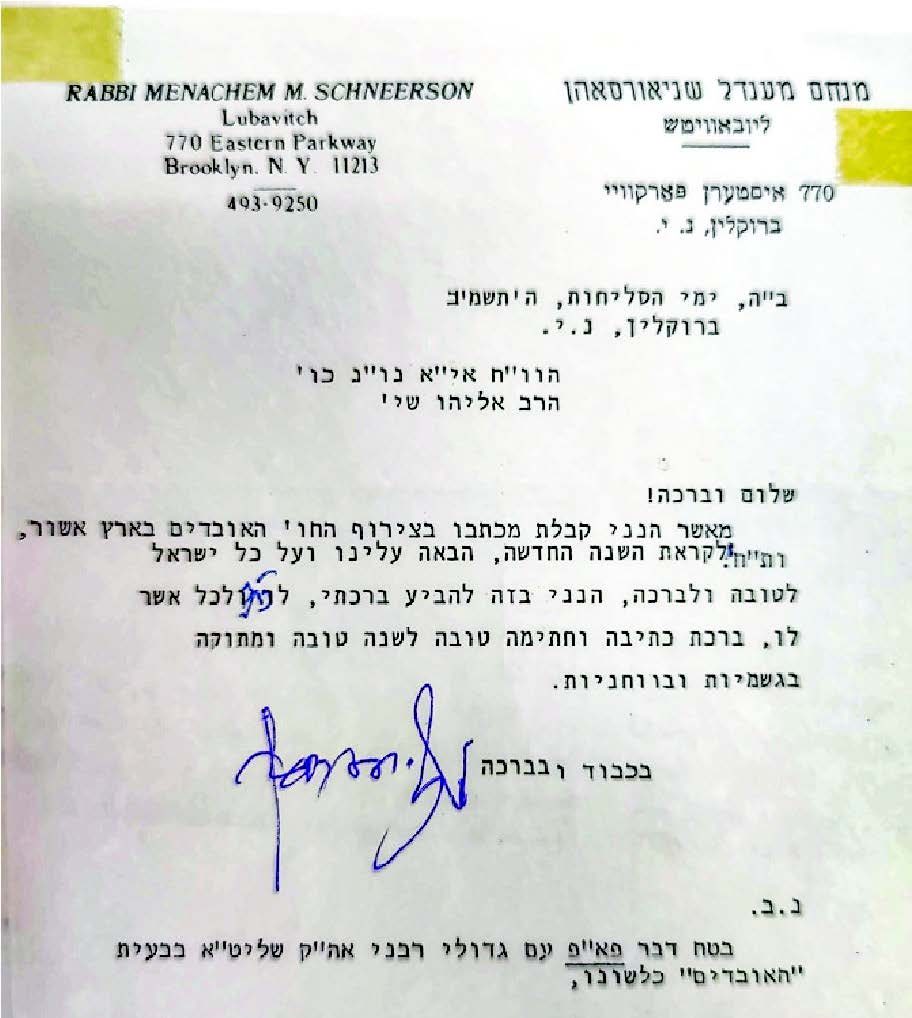
After a period, R’ Avichail sent the Rebbe the booklet itself with an accompanying letter on the subject, and this too merited a special response:
B”H, Days of Selichos, 5742
Brooklyn, N.Y.
The honorable, etc. Rabbi Eliyahu sheyichyeh
Peace and blessing!
I hereby confirm receipt of his letter with the accompanying booklet HaOvdim b’Eretz Ashur, and thank you.
And towards the new year, which comes upon us and upon all Israel for good and blessing, I hereby express my blessing, to his honor and all that is his, birkas kesiva v’chasima tova, l’shana tova u’mesuka, b’gashmiyus u’b’ruchniyus.
With respect and blessing (signed)
P.S. Surely he spoke face to face with the leading rabbis of Eretz HaKodesh shlita about the problem of “the lost ones” as he puts it,
For surely to one like him there is no need to explain how complicated the whole matter is, a most serious halachic matter, and requires knowledge of all the details, etc.
Appeal to the Rebbe
R’ Avichail responded to these two letters over the following years, as emerges from the following letters in which he reported on fulfilling the instruction of the Rebbe to the fullest:
Erev Rosh Hashana 5744, Yerushalayim Ir HaKodesh
To the honor of the Rabam shel Yisrael the Admor Rabbi Menachem Schneerson shlita,
Brooklyn, New York.
Peace and blessing and all the pleasantness of G-d, blessing of a shana tova v’kesiva v’chasima tova.
I received your letter from the days of Selichos 5742 regarding the problem of our lost brothers in northeast India.
According to your suggestion we turned to the gedolei Yisrael in the Land regarding the matter.
The Gaon Rabbi Elyashiv shlita: His response was that this is a public matter and no private rabbi can deal with it; one must turn to the Chief Rabbis. When asked what he would do if he were Chief Rabbi, perhaps he would have sent a Beis Din to India to convert them there, if this is possible. The Gaon Rabbi Kanievsky shlita responded: This is not a matter for me, I am not a rav, one must turn to great rabbanim who have dealt with the matter of India.
We turned to many more great rabbanim and were not answered.
The Chief Rabbis, after about a year of discussions on the subject, decided to turn to the Jewish Agency according to the attached letter.
We decided to direct our letter to those who wish to attach their names – gedolei Yisrael – to support the subject.
We hereby request your honor to sign the attached letter with the Chief Rabbi of Yerushalayim – or to write a special letter on the matter.
With blessing for a shana tova and chag someach,
Rabbi Eliyahu Avichail, Chairman of the Amishav Organization.
Despite his appeal to many rabbanim in Eretz Yisrael, as instructed by the Rebbe, not even one of them responded to help, and in his distress Rabbi Avichail turned to the Rebbe again:
B”H, Erev Yom Kippur 5747.
To the honor of Rabbeinu, the Great Rav and Gaon, Tzaddik Yesod Olam,
Kevod Kedushas Shalom Toraso, Rosh Gulas Ariel, the Admor Rabbi Menachem Mendel Schneerson shlita, New York.
I renew greetings with great respect as befits his great honor may he live, and blessing of gemar chasima tova and moadim l’simcha. Your precious letters reached me regarding my activity for the outcasts of Israel and foremost those who relate to the ten tribes.
As emerges from the Talmud Yerushalmi and also from the Bavli, the main ten tribes live as gentiles and were made to be like gentiles, and if they come they are righteous converts in the future to come.
There is today one tribe that relates to the tribe of Menashe, about which it is said in the Medrashim that it will be the first to be redeemed from the ten tribes in the merit of burying the bones of King Shaul, who come and plead to help them return to the Torah of Israel, his people and his land, and are willingly ready to accept upon themselves conversion. They live on both sides of the border of India and Burma. Out of four times that I was in India I tried to help them in various ways and without real success. The government of India does not allow reaching the area of their residence because of the political situation, and on the other hand, l’havdil, the interior ministers of the State of Israel also do not allow even youth groups from among them to enter the Land, in order to study and convert, and to return to teach their brothers.
In accordance with words of your honor I turned to the Chief Rabbis many times, and also I turned to the Gaon Rabbi… may he live and also to the Gaon Rabbi… of blessed memory and here are their responses: Rabbi… (was surprised at the appeal to him and said:) “This is not a matter for rav ploni, they will not answer you, you must turn to the Chief Rabbinate.” When asked how he would have acted if he were Chief Rabbi? He replied, “One should send a Beis Din to India to investigate, or convert there” (this was on 11 Iyar 5743).
Rabbi… of blessed memory: “One must act according to very great and important rabbanim, there was once such a rabbi, but he already resigned. I am not a rabbi, I cannot help with this, one must turn to great and important rabbanim” (his words on 7 Sivan 5743).
Rabbi Ovadia Yosef may he live, and after him also the Chief Rabbi, the Rishon L’Tziyon, shlita, Rabbi Mordechai Eliyahu, both suggested bringing the matter before the council of the Chief Rabbinate. But the Ashkenazi Chief Rabbis opposed this and the matter is not progressing…
Last year I tried to convert them (referring to thirty young people as mentioned above) with the Chief Rabbi of Netanya Rabbi Shalosh shlita, and for reasons that are difficult for me to detail the matter did not succeed, despite his accepting seven of them for conversion.
This tribe cries out for our help and has no savior, and I do not see which of the geonei gedolei doreinu could stand to help except your holy honor may he live whose eyes and heart are for all matters of the general public…
There are more tribes and large groups that it seems to me we have an obligation to help return to their source, like a group of about thirty thousand descendants of the forced converts living on the island of Majorca, who have not yet assimilated through intermarriage. And others who also seek our help in one way or another…
The Amishav Organization appeals to the Rabban shel Yisrael in anticipation of his response, in great hope that he will fulfill its request.
He who dwells in Zion, gatherer of the outcasts of Israel, may He renew upon your holy honor and upon all those attached to you and upon all the people of G-d on the holy mountain and in exile a year of blessing and salvation and Geula shleima, and may your prayer also be sweet for me and for my household.
Your admirer, honorer and respecter, Eliyahu Avichail,
Chairman of Amishav Organization – L’maan Nidchei Yisrael.
“According to the Counsel of the Chief Rabbis”
Throughout R’ Avichail’s work on this matter, he faced the challenge of financing the extensive activities. As part of the efforts to absorb members of the tribes emigrating to Eretz Yisrael, he needed to receive assistance from government ministries and the [Jewish] Agency, but they did not extend their hand to help. One of the suggestions for this was to send a special Beis Din for conversion to the places of the tribes interested in emigrating to Israel, and after the Beis Din would examine each potential convert individually and perform a proper and authentic conversion, the authorities in Eretz Yisrael would agree to assist on their part in absorbing the converts.
This approach was not in line with the opinion of some of the rabbanim of Eretz Yisrael. While the Chief Rabbis, Rabbi Shlomo Goren, Rabbi Yitzchok Nissim and others approved and encouraged this, there were other rabbanim who were opposed, among them the Chief Rabbi, Rabbi Eliyahu Bakshi-Doron and Rabbi Ovadia Yosef. Although at first he supported R’ Avichail in his research regarding the Pashtuns, ultimately he maintained that there was no basis for viewing them as Jews.
R’ Avichail approached many rabbis on this matter, and several times also wrote about it to the Rebbe. R’ Avichail’s letter to him that received the final response did not reach us – but it’s possible that it too was about the same matter, which must be discussed “face to face with the great rabbis of the Holy Land, shlita.”
To obtain the Agency’s support, R’ Avichail prepared a document calling for extending a helping hand to the “Amishav” association, which was supposed to be signed by the city rabbis in Israel. R’ Avichail visited the city of Eilat several times, where he met with the city rabbi, Rabbi Yosef Hecht, and urged him to add his signature to the document.
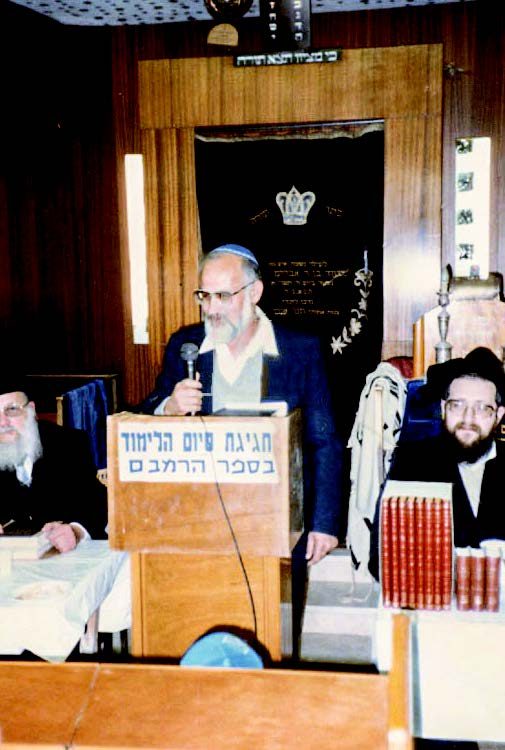
“On one of those occasions,” Rabbi Hecht related, “R’ Avichail showed me the two letters he received from the Rebbe, in which there was reference to the ‘complicated’ matter about which ‘they surely consult with experts’ – from which it was understood that the entire matter was complex and not at all simple.”
R’ Hecht sent the Rebbe his question whether to support the aforementioned actions by signing the document, and he received this response:
“He should act according to the actions of the Chief Rabbis in the Holy Land,” when, as mentioned, among the Chief Rabbis there were those who opposed the move and at that time approval had not yet been given for it.
Settlement of the Bnei Menashe in Gush Katif
During his search for descendants of the lost tribes, R’ Avichail found in northeastern India a tribe called ‘Shinlung’, and similar to the Pashtun tribes in Afghanistan, they too had many customs similar to Jewish customs and mitzvos. It appeared from the findings and testimonies that they were descendants of the tribe of Menashe.
Indeed, after the confirmation of the Shinlung tribe members as descendants of the tribe of Menashe, R’ Avichail began working on their conversion and immigration to the Land. The first immigrants to the Land arrived in the early 1980s, and the solution proposed then for their settlement was Gush Katif.
[Rabbi Avichail raised the reasons and advantages for settling them specifically in the settlements of Gush Katif in a letter he wrote to an influential friend, in which he also mentioned the instructions of the Rebbe to him on the matter:
“…In light of the difficult situation in Gush Katif, when our brothers are being slaughtered by their Arab workers, I thought that our association should go beyond its boundaries and purposes regarding those relating to the tribe of Menashe, and bring a quantity of people that would cover the needs of the farmers in Gush, from the tribe members… In this case I thought we should convert about a thousand souls, in groups and at different times, to fill the shortage of workers, reduce the need for Arab labor and strengthen the settlement in Gush. It was difficult for me to make such a decision without consulting the gedolei Yisrael. Since I could not speak on the matter, despite my request, with the new Chief Rabbis, I turned by fax to the Admor of Lubavitch, who as is known I am not one of his Chassidim at all, but I appreciate his greatness and especially his devotion to all of Israel, and I asked him the questions attached in the accompanying letter. Within three days I received a response by fax, a positive response – as per the attached response.
In the past, the Admor sent me to the gedolei rabbanim of the Land and to the Chief Rabbinate. Rabbi… shlita, may he live, also after I directed a written question to him about the conversion of thirty members of this tribe years ago, and spoke with him, he directed me to the Chief Rabbinate, saying that this is not a matter for a private rabbi… In light of this, I approached the council of Gush Katif and proposed to them to bring groups of 40 young men and women to Gush, at different times, so that they would convert in Gush while studying and working – day by day. I thought that the most suitable places for converts are… This also opens an important door to good conversion institutions in the Land, which would replace those that exist today and are inadequate in many respects, lacking an atmosphere of Torah and fear of Heaven… I am therefore turning to you to recommend in writing to the two aforementioned settlements… to see this as a positive national action that will also add material and spiritual strength to Gush Katif, and will open a door to conversion arrangements in an atmosphere of Torah and fear of Heaven also for other righteous converts knocking on our gates…”].
At that time, the Rebbe’s shliach to Gush Katif, Rabbi Yigal Kirshnzaft, came to live in the developing settlement of Neve Dekalim, immediately after his wedding in the summer of 5742. A short time later, R’ Avichail met with him, together with one of the tribal leaders in Gush Katif, and asked for his help in arranging the material and spiritual affairs of the Bnei Menashe in the Gush settlements. R’ Avichail showed the letters he received from the Rebbe, and said that “the Rebbe wrote us a letter and you are the Rebbe’s shliach – you must help…” (The assistance for their arrangement in Gush Katif did not end then, and even today after the expulsion from Gush Katif, the Chabad House works with the Bnei Menashe community).
R’ Avichail wrote to the Rebbe several times about this. This is one of the times when R’ Avichail asked about the subject, in Nissan 5753:
B”H, Motzoei Shabbos, Shemini 5753.
To the honor of the Admor, leader of the generation, my teacher and rabbi, the Gaon Rabbi Menachem Schneerson, shlita. Brooklyn, NY
Peace and blessing and all pleasantness of G-d,
As you may recall, I am engaged in returning the exiles of Israel to their people and their land.
A. Because of the difficult situation in Gush Katif, I was asked to examine the possibility of bringing up families from the tribe that relates to the tribe of Menashe, who live on the India-Burma border. The tribe numbers about a million souls and generally it seems they would all want to emigrate to Israel.
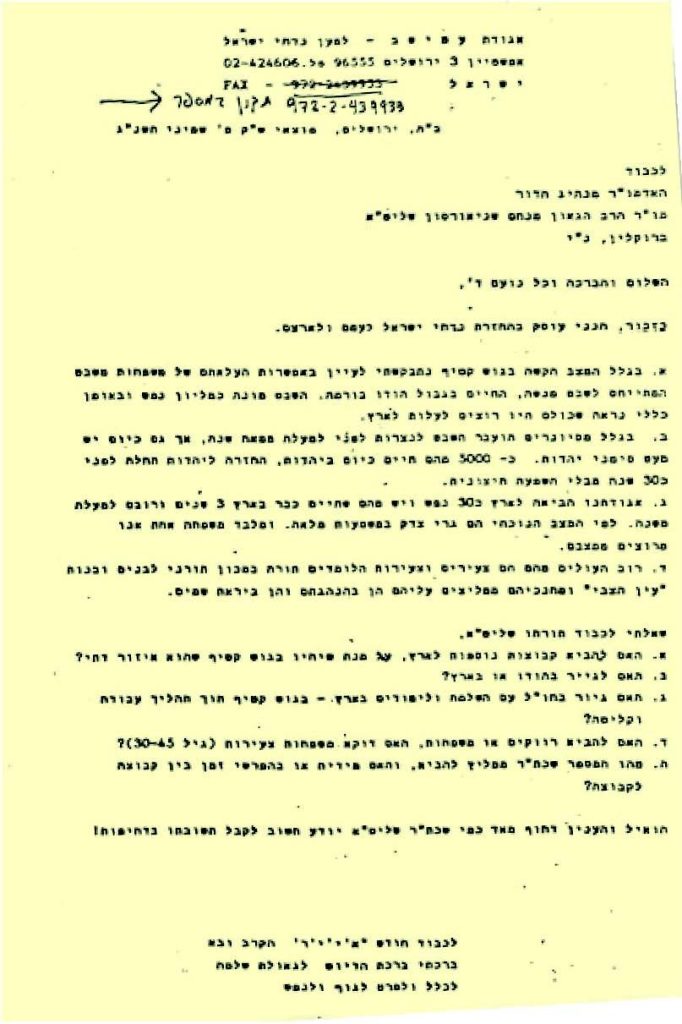
B. Because of missionaries, they were converted to Christianity over a hundred years ago, but the tribe even today has a few signs of Judaism. About 5,000 of them live today as Jews. The return to Judaism began about thirty years ago without external influence.
C. Our association brought to the Land about thirty souls and some of them have been living in the Land for three years, and most for over a year. According to the current situation, they are righteous converts in the full sense, and except for one family we are satisfied with their condition.
D. Most of those who immigrated from them are young men and women studying Torah in the Torah institute for boys and girls “Ein HaTzvi” and their educators recommend them both in their conduct and in their fear of Heaven.
My questions to the honor of your Torah, shlita,
A. Should we bring additional groups to the Land, so that they will live in Gush Katif which is a religious area?
B. Should we convert in India or in the Land?
C. Should we convert abroad with follow-up and studies in the Land – in Gush Katif, during a process of work and absorption?
D. Should we bring singles or families, should we specifically bring young families (age 30-45)?
E. What number does your honor recommend to bring, and should it be immediate or with time intervals between group to group?
Since the matter is very urgent as your honor knows, it is important to receive your response urgently!
For the honor of the coming month of Iyar and my blessing, the blessing of a layman for the Geula shleima, for the general and the particular, for body and soul.
With respect and blessing,
Eliyahu Avichail, Chairman.
[Rabbi Avichail transmitted the letter through Rabbi Yehoshua Rabinowitz – rabbi of the Kiryat HaYovel neighborhood in Jerusalem and member of the Beis Din Rabbanei Chabad – to the secretary, Rabbi Leibel Groner, in which he also emphasized the importance and urgency of the response:
B”H, Motzoei Shabbos Shemini 5753
To his honor, the esteemed Rabbi Yehuda Leib, shlita, Groner.
I am hereby transmitting the letter of Rabbi Avichail, with his request to receive the response of Kevod Kedushas Admor, if possible, by Tuesday because of the urgency of the matter, and before other factors deal with this.
With blessing, Yehoshua Rabinowitz].
The letter was read to the Rebbe by the secretary, who transmitted the response back through Rabbi Rabinowitz – within three days (on the day of the second anniversary of the famous talk on Chof-Ches Nissan 5751):
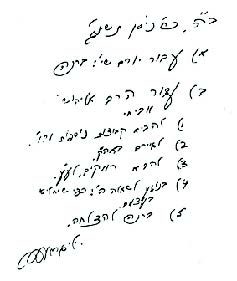
B”H, 28th Nissan 5753
A) …
B) For Rabbi Eliyahu, may he live, Avichai(l)
(1) To bring additional groups etc.
(2) To convert them in the Holy Land.
(3) To bring singles, for now.
(4) Regarding question E: as they
will decide themselves.
(5) Blessing for success.
Y.L. Groner.
Detailed Guidance
R’ Avichail indeed acted according to the instructions of the Rebbe in the response, and following his previous letter, he asked again on the same subject half a year later, when there was progress in the activities of Amishav. From this letter it is definitely apparent how much the Rebbe’s responses and instructions were a foundation for all the activities of Amishav:
B”H, eve of Monday, 10th Cheshvan 5754
To the honor of the Admor, leader of the generation, my teacher and rabbi, the Gaon Rabbi Menachem Schneerson, shlita, Brooklyn N.Y.
Peace and blessing and all pleasantness of G-d,
As a continuation of my letter to your honor, shlita, from Motzoei Shabbos, Parashas Shemini 5753, I hereby thank you for your quick response on the matter of bringing the young people to Gush Katif.
Indeed we brought 41 young people on 2 Menachem Av and they were well received. They work half a day in greenhouses and study Yahadus and Hebrew the second half of the day. About 15 of them are scheduled to convert already on Chanuka so they can study Torah in yeshiva. The rest will convert after Purim and continue their studies even after the conversion, at least until the end of the year.
According to the plan, as per your honor’s guidance, we intend to bring another group of young people of similar size within the coming months, for a similar program.
I would like to raise a question on this subject in reference to your previous instruction.
Our association received a special donation for a trip of three people to India to examine there various issues related to our association’s activities. And the question arose…
A. There is importance in bringing families from the tribe to Gush Katif in order to create permanence for the young people who will feel a strong connection to the place because of this, as well as to strengthen the people of Gush.
B. Due to the enormous expense required to bring thirty families (about one hundred and fifty souls) to the Land before conversion, when there is no assistance either in bringing them or during their studies, from the Agency and the state, we thought, if your honor agrees to this, we could arrange for a recognized Av Beis Din with authorization to travel with us to establish a Beis Din in India and convert there the families chosen for this, after they have lived for many years as Jews.
C. Thus their emigration would be possible and their studies would be possible without special difficulties.
We lift our eyes to your honor, shlita, so that you may show us the correct path in this matter.
A. Should we bring a group of thirty families to Gush Katif as soon as possible?
B. Does your honor agree that we convert them abroad to ease the expenses of bringing them and their studies? (We are having great difficulty obtaining the money).
Since the person traveling to bring the donation for our trip is about to travel abroad at the end of the week, we need your opinion before the trip.
Awaiting your response and with a blessing for complete healing from the Rofei cholei amo Yisrael and gatherer of their exiles.
With respect and blessing,
Eliyahu Avichail – Chairman.
(As of now, the response to this letter has not reached us).
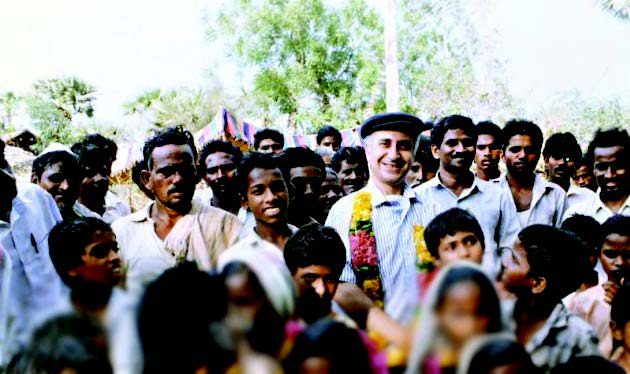
In that same year, 5754, R’ Avichail planned to go on another trip among the tribe members in India. His friend, Mr. Eli Yona, the well-known ‘court photographer’ in 770, who merited many kiruvim from the Rebbe, who also documented authentic scenes from the journey – joined the journey. Until the completion of preparations for the trip, Eli traveled back from Israel to 770.
Upon his arrival in New York, he heard the news that several rabbanim in Israel had raised a question about the trip, and he hurried to submit the question about this to the Rebbe for a request for blessing. After a short time, they informed him from the secretariat that the Rebbe approved the trip with the blessing of: “bracha v’hatzlacha.” Eli hurried to report this to R’ Avichail, and indeed the obstacles were removed and they set out.
Upon their arrival at the tribe’s place of residence, a festive reception was arranged in their honor with the participation of all the tribe members from all the villages in the area. Eli circulated and distributed pictures of the Rebbe and even tried to teach them the hit song of those times… “Moshiach Moshiach.” When he returned from his journey to India, Mr. Eli Yona sat with Rabbi Elimelech Shachar, who put everything in writing, and sent the complete report to the Rebbe. The fax was read before the Rebbe, as the secretary later related, and a smile of satisfaction was seen on his holy face…
Conclusion
The Amishav association brought to the Land only the members of the tribe of Menashe, who settled according to the Rebbe’s instructions and guidance in the settlements of Gush Katif. Also, finally the Chief Rabbinate gave its approval and teams of Batei Din on its behalf traveled to India to perform the conversions there.
It is interesting to note the words of the Medrash about the ingathering of exiles in the true and complete Geula, “In the future to come, when I am destined to gather Israel from the four corners of the world, first He gathers half the tribe of Menashe, as it is said ‘Mine is Gilead and Mine is Menashe’” (Pirkei d’Rabi Eliezer, Chapter 17).
And especially according to the Rebbe, in the last sicha we heard for now – Parashas Vayakhel 5752 – there is no doubt that this is definitely one of the signs of Geula, that “(a semblance of) the inyan of ‘Vayakhel’ – the gathering of all the children of Israel to our holy land from the four corners of the earth – has already begun in the most literal sense, as we see this in our time… that many, many of the children of Israel have immigrated to our Holy Land. And although in all generations there were some from Israel who immigrated to our Holy Land – now the matter is completely incomparable!…”
The Falashas
It is important to clarify – in contrast to the Rebbe’s approach regarding bringing up the descendants of the ten tribes to the Land and their proper conversion by the Amishav association, his attitude was very different regarding bringing up other tribes, such as the “Falashas” in Ethiopia, to whom some Jewish heritage was attributed over many years by various protagonists. Such can seen in the letter before us dated the 22nd of Kislev 5737 [1976]:
B”H
22nd Kislev 5737
Brooklyn N.Y.
Mr. Aharon Cohen
Peace and blessing:
According to simple logic – the enthusiasm of the defenders of this strange “law” from whatever party it may be and the only explanation is only the matter of triumphalism, for this “law” is the opposite of justice and righteousness both toward Jews and toward non-Jews, and there is no need to elaborate on the distressing and also unnecessary matter for your honor.
With respect and blessing.
Another response from the Rebbe in his holy handwriting on the aforementioned matter (from Otzar HaMelech):
[In response] to his writing about the non-response about: 1) The Falashas – a ruling in the Shulchan Aruch – (such that except for a local rabbi regarding local matters) there is no obligation on each and every one to investigate and clarify questions etc. –
But if he investigated and clarified as needed – here applies [the Torah dictate] “Do not fear anyone” and he is obligated to publicize, even if they will not listen to him.
I began the investigation – and immediately saw that the discussion is in the words of poskim from a hundred years ago and more, and in the meantime there were wars and population migrations (including – the aforementioned) and decrees and they forced them to many, many matters etc. as is known and in this there is almost no investigation and inquiry etc. at all and according to the beginning of the investigation – it is close to certain that they need complete conversion (or are forbidden to enter the congregation) – and I did not continue further in the investigation (and especially since rabbis who are on the spot continue with this).
And therefore it is forbidden for me to publicize an opinion on this – and also the above to him, is only to cancel his suspicion that I supposedly did not pay attention to his letter (which I did not suspect him after our friendship of so many years – that he would suspect me of this!)…
HaTomim #16 • pp. 40-56
© 2026 Beis Moshiach Magazine. All rights reserved.
This article originally appeared in Beis Moshiach #1465. You are welcome to share it with friends and family by email or in print, provided that you do not change, add to or omit any part of it, you credit the author and Beis Moshiach, and you include a link to archive.bmoshiach.org (written out in full in printed copies).
To republish this article in a newspaper, magazine, book or website, please request permission in advance at [email protected].