They All Thought “We’re the Only Jews in Georgina”…
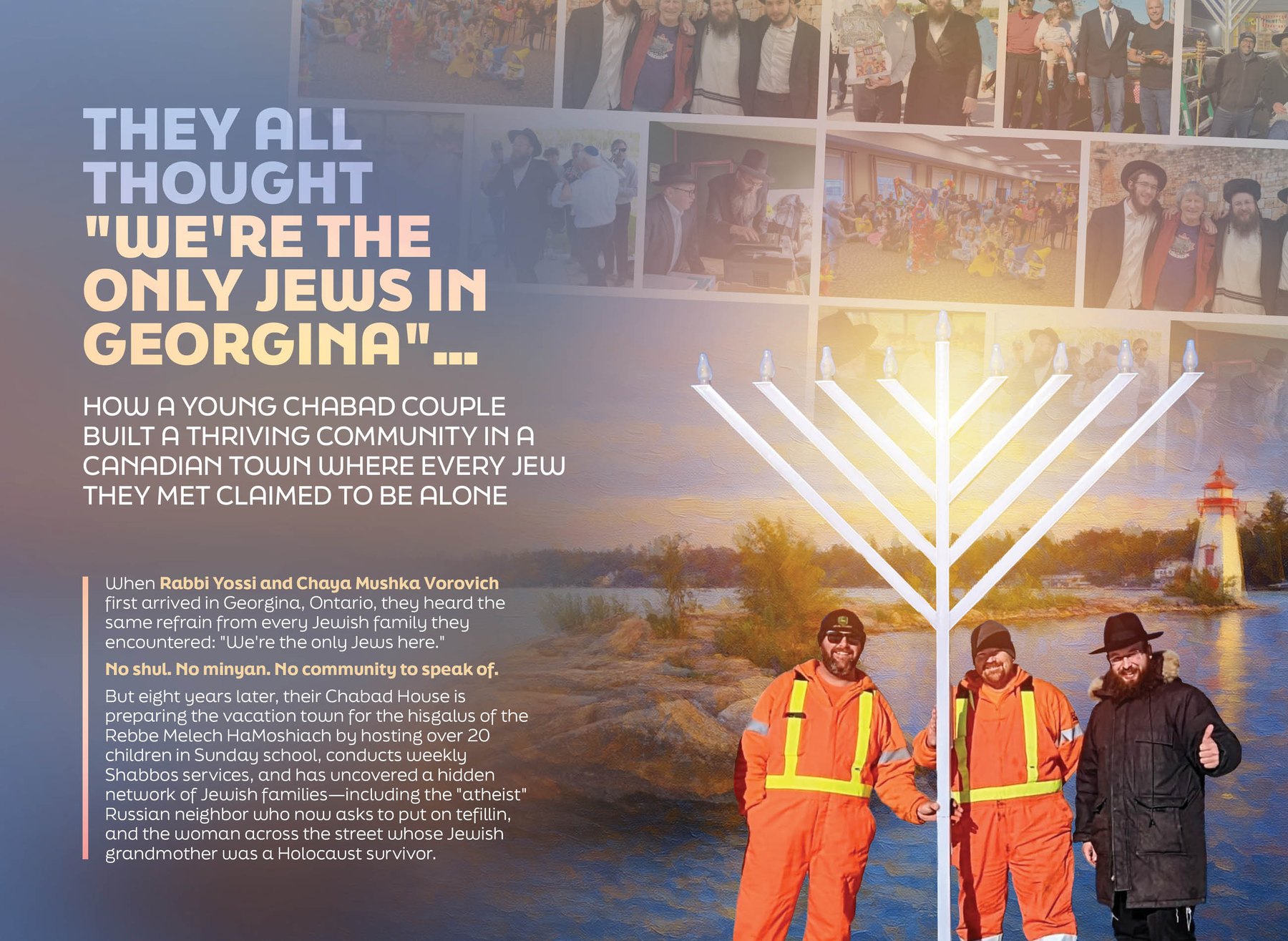
How a Young Chabad Couple Built a Thriving Community in a Canadian Town Where Every Jew They Met Claimed to Be Alone
When Rabbi Yossi and Chaya Mushka Vorovich first arrived in Georgina, Ontario, they heard the same refrain from every Jewish family they encountered: “We’re the only Jews here.” No shul. No minyan. No community to speak of. But eight years later, their Chabad House is preparing the vacation town for the hisgalus of the Rebbe Melech HaMoshiach by hosting over 20 children in Sunday school, conducts weekly Shabbos services, and has uncovered a hidden network of Jewish families – including the “atheist” Russian neighbor who now asks to put on tefillin, and the woman across the street whose Jewish grandmother was a Holocaust survivor.
I had the privilege of growing up in an atmosphere of shlichus, in an active Chabad House alongside ‘mekuravim’ and a daily shlichus atmosphere. Even as a child I always knew that one day I would be the Rebbe’s shliach myself. Watching my parents dedicate their lives to the Rebbe’s shlichus imbued me with a wonder and deep passion to do the same.
After my wife and I married and spent a year in kollel, we were excited to begin our search for a shlichus of our own.
When Dr. Fine*, a member of my parent’s Chabad house, heard that we were looking, he got very excited.
“You should check out Georgina!” he exclaimed. “I had a practice there for years, and all summer long, I met swarms of Jews who live there. There’s definitely potential!”
Georgina is the original “cottage town” of Ontario. For many years, it was the summer residence of wealthy families who vacationed in Georgina’s quaint and spacious cottages, enjoying the breezes off Lake Simcoe. As time went on, Georgina slowly became a permanent home for many residents.
Originally, the city’s ordinances forbade Jews from buying property here. One clever Jew bought a large property through his non-Jewish assistant, and resold it to other Jews. They turned one of the cottages into a shul, which still functions in the summer months. This year, we’ll be celebrating its 78th birthday!
When we first arrived, we knocked on doors, trying to find as many Jews as we could.
“You must’ve made a wrong turn!” many insisted. “There are no Jews here, besides us!”
“Come to our community barbeque and see how wrong you are!” I told them.
Curious, they came to see. It was almost comical to see their eyes grow wide as they entered and saw so many people – including some friends and neighbors they’d never dreamed were Jewish!
Immediately after the BBQ, we sat and wrote to the Rebbe through the ‘Igros Kodesh’ and in the answer was a response about ‘spreading the wellsprings.’ After such an answer, we immediately decided this was the place for us. We returned to Crown Heights to pack our belongings and came back here before the Tishrei holidays 5778 (2017) with a firm decision to stay here. And we’ve been here ever since.
A Husband’s Legacy Illuminates an Entire Community
When the Tree of Life Jewish Community Center in Pittsburgh was brutally attacked, we were all horrified. Our community held a vigil in solidarity with the victims and Jewish people everywhere. That was where we met Gertrude*, who seemed overly excited to meet us.
“If only Herb* could be here,” she kept saying. “He would be so, so happy!”
She told us that her dear husband, Herb, had recently passed. He was a lifelong friend of Chabad and often expressed his wish that Georgina would get its very own shluchim.
The next morning, I flew to New York for the International Kinus HaShluchim. With the first Chanukah of our shlichus quickly approaching, I had one heavy weight on my mind: how to pay for the large public menorah we’d need. I knew it would be expensive, especially since it needed to hold up in Georgina’s extreme cold.
As I walked into 770, I thought, “Rebbe, please give us a bracha!”
Almost before I finished my thought, my phone rang.
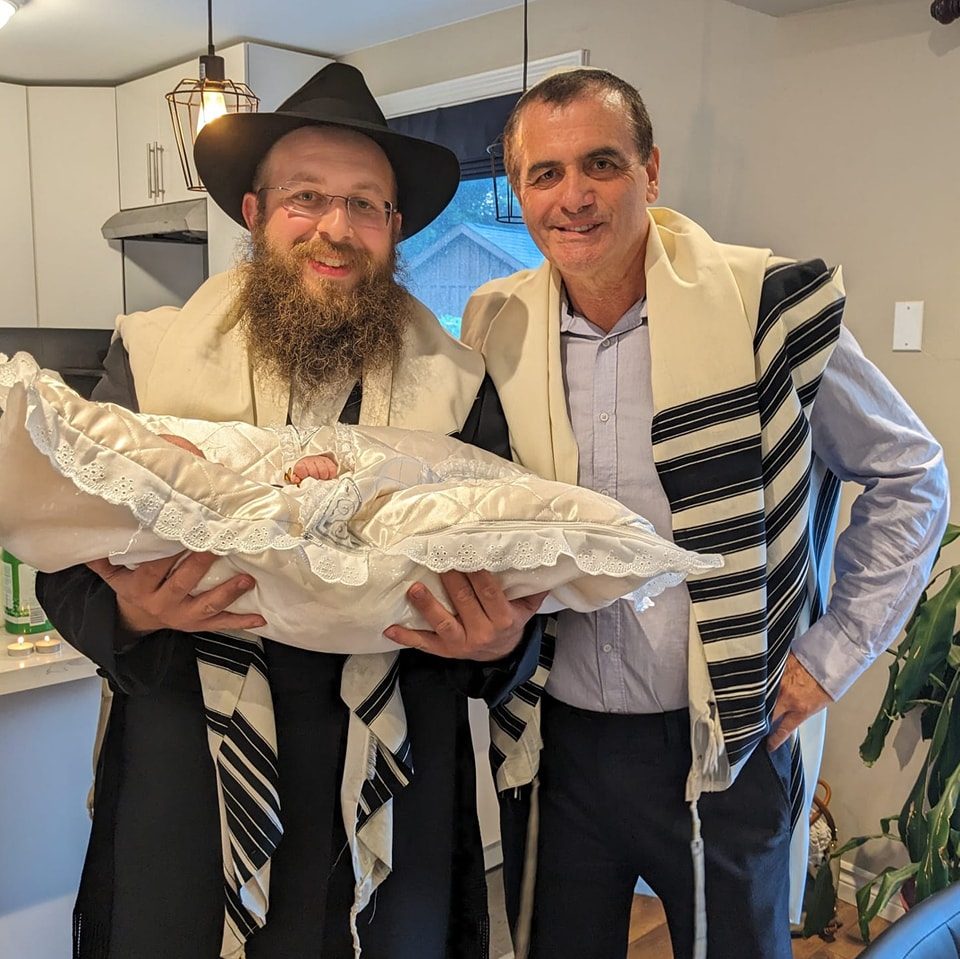
“Hi, Rabbi!” Gertrude sang out when I answered. “I’ve been thinking – Herb would really want me to help you out in some way. It would be a lovely way to honor his memory. I just can’t think of a specific thing…”
“Gertrude, I have good news!” I interrupted, with a laugh. “Your husband loved G-d, and he loved Georgina. Why not honor his memory by bringing light to thousands around the city?”
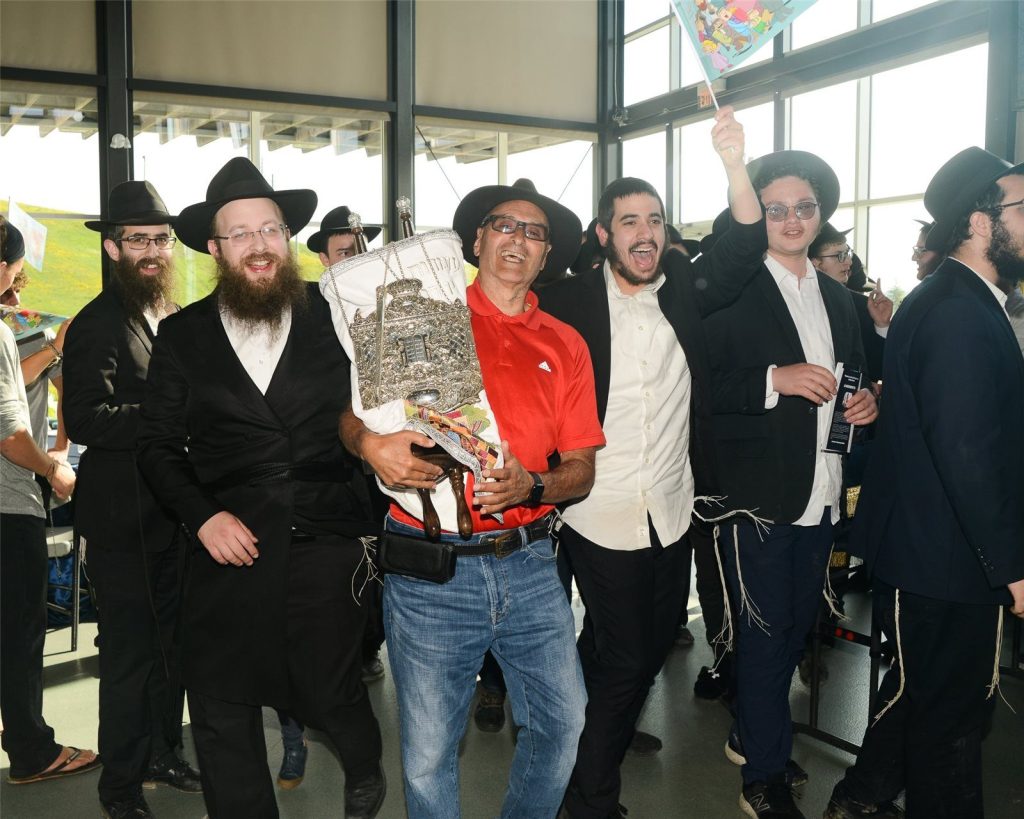
Gertrude was very happy with my suggestion, and I immediately ordered a beautiful, large menorah. It has since become the focal point of one of the most highly anticipated events of the year, enjoyed by the entire community, Jew and non-Jew alike.
A Post-Script That Changed Everything
“Should we have a Lag B’Omer event?” my wife asked, a week after our first Pesach on shlichus.
“We probably should,” I answered. “But it would be nice to spend Lag B’Omer in Meron and visit my grandmother in Israel.”
We were torn, and tabled the discussion for another time.
A few days later, a fierce ice storm made the roads completely impassable. Everyone was stuck at home – and this was in May!
“I guess that’s that,” my wife commented. “Who’d show up to a Lag B’Omer event in the freezing cold?”
“Let’s write to the Rebbe before making any decisions,” I answered.
We wrote all our concerns on a paper and stuck it into a random volume of the Igros Kodesh. We couldn’t believe our eyes when we opened the sefer and read the letter. It was addressed to shluchos of London, England. Since my wife is from London, it felt like the letter was addressed to us, personally. The letter continued with the Rebbe encouraging them to use the opportunity of the upcoming summer holidays, when everyone would be visiting their vacation cottages, to spread Yiddishkeit. If that wasn’t pointed enough, the Rebbe included a post-script that asked for an update on their Lag B’Omer and Shavuos events.
“I’ll call the venue and ask about availability,” I told my wife, as we closed the sefer. “We got our answer.”
How a Toner Order Opened Hearts to Torah
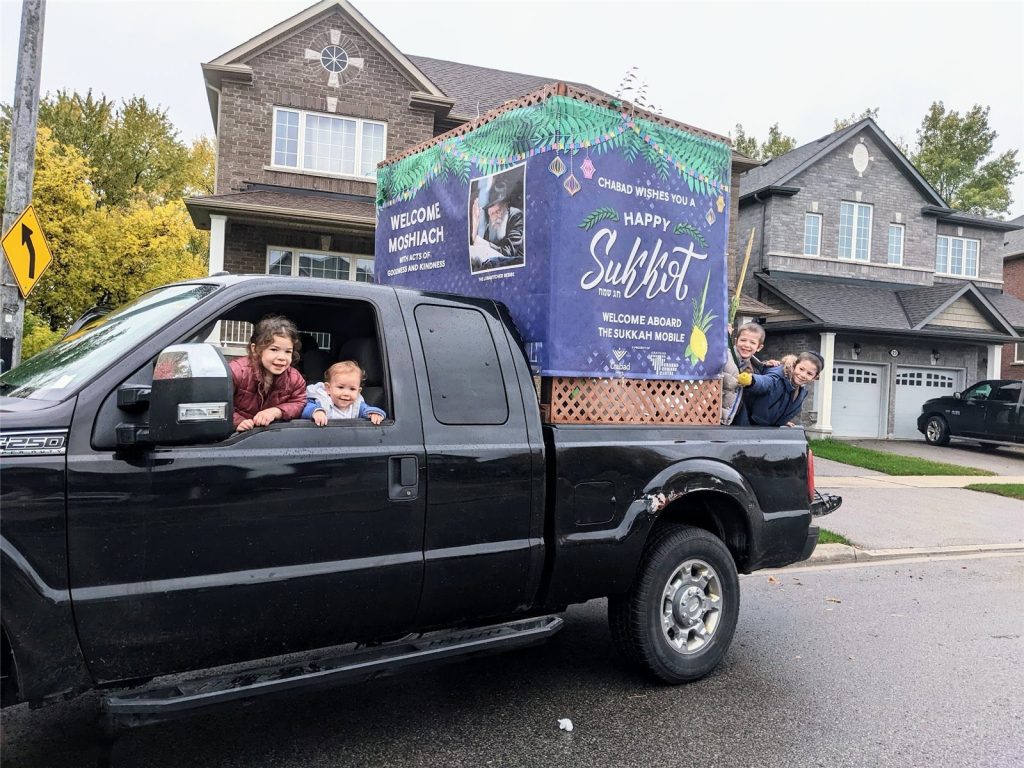
Finding Jews in a new city is not an easy task. One way we met new people was driving up and down each block very slowly, while my wife and I each scanned the passing houses for mezuzos. When we found one, we’d knock on the door and introduce ourselves.
That’s how we met the Gordons*. The parents and children welcomed us cheerfully enough, and seemed happy to meet. A couple of months later, when we visited them with our sukka-mobile loudly blasting cheery Jewish music, they didn’t even answer the door. As we headed back to the truck, we saw them peeking from the upstairs windows, and realized they were deliberately ignoring us. We just shook it off and moved onto the next house.
The next day, Mrs. Gordon emailed me with an explanation of sorts. She told me that they didn’t like the gender segregation in shul, and didn’t want to take part. I told her I understood, but hoped we could still remain friends.
In fact, when I was ready to print a Tanya a short while later, I remembered the Gordons had a side business selling toner, and I made sure to order everything I needed from them.
Still, I was surprised when Mrs. Gordon called out of the blue, asking to register her children for Hebrew school. She told me that when her mother had dropped off our toner order, she was excited to see it was a Chabad House. She desperately wanted her grandchildren to have their bar and bat mitzvas and convinced her daughter to sign them up for Hebrew school to give them pride in their Jewish identity. Mrs. Gordon was convinced, although she warned her mother she’d have nothing else to do with us aside from the Hebrew school.
But, as the Mishna states, one good deed follows another. Soon, the Gordons became one of our leading families, and even encouraged others to sign their children up for Hebrew school as well!
The Rebbe’s Dollar and a Mother’s Bitachon
Vicki* and her family were very involved in the community. Vicki had attended Hebrew school as a kid, and her family had started keeping some mitzvos. It was heartbreaking when Vicki was diagnosed with a serious kidney disease at just 16 years old. Vicki’s mother, Sarah*, was trying her best to cope, but was having a hard time.
“It’s just not fair, Rabbi!” she said, tearfully. “Why should my daughter suffer? We light Shabbat candles. We go to shul. We give charity. We’re already doing more than so many other people. So why us? Why does my little Vicki have to suffer?”
It was impossible to answer her pain, but I suggested writing a letter to the Rebbe. I was going to explain more, but Sarah cut me off.
“Oh yes! That’s right,” she said. “When I was 15, I had a heart condition. My parents took me to New York to see the Rebbe, and we waited in line for dollars. The Rebbe gave me a dollar and a blessing for health, and I made a full recovery. Writing to the Rebbe is a great idea!”
Vicki liked the idea as well, and sat down to write her letter. She poured out her heart in two-pages that we placed in an Igros Kodesh. When we opened the sefer, we read the Rebbe’s response to someone, explaining how to have bitachon in difficult situations. The letter brought a lot of comfort to Sarah and Vicki.
From Chernitsov to a Jewish Burial
We got to know Gabby* and her elderly mother, Francine*, quite well over the years. Gabby volunteered for us for a while, and they came to many events.
Although the family had deeply Chassidic roots tracing back to Chernitsov, a small town in Poland, they didn’t know much about Yiddishkeit. Francine was married to a non-Jew, and they’d already planned to be cremated and have their ashes buried side by side in a non-Jewish cemetery after death.
I broached the idea of an eternal neshama and the power of a kosher kevura many times. Slowly, the idea took root, and Francine agreed to change her end of life plans.
I was there in the last days of her life, and we said Viduy together. She passed away the next day at home, and I sat with her, fervently reciting non-stop Tehillim, until the Chevra Kadisha came to pick her up.
Baruch Hashem, she changed her mind in time, and was zoche to a kosher kevura k’halacha.
A Meis Mitzva: Dignity for the Forgotten
Tracy* was a good friend, so when she found out that her estranged brother was in the hospital with stage four cancer, she told us right away. I was able to meet with him, and help him put on tefillin. After months in the hospital, his condition worsened, and he passed away a short while later.
Unfortunately, we now had a meis mitzva. He was penniless and didn’t have any children to cover the cost of his funeral. Tracy also couldn’t afford it, so we were at an impasse. I couldn’t allow his body to just wait in the morgue, so I worked hard to raise the necessary funds. Baruch Hashem, we were able to give him a kevuras Yisrael.
The Solution Before the Problem: A Bris in the Park
Hashem provides the solution before the problem even arises! As a shliach, I’ve been lucky to see this in action.
We live close to the waterfront, and the views are spectacular. Often, instead of davening at home, I choose to go to the public park and daven on a park bench. Not only do I feel closer to Hashem out in His beautiful nature, but my tallis and tefillin are obviously a spectacle that has helped me identify and meet many Jews.
One day, I was in the park, when I overheard a couple speaking in Russian. I knew the chances of their being Jewish were high, so I went over to introduce myself. Irina* was Jewish; her husband was not. Their young daughter was playing on the playground, so I struck up a conversation while they watched her. Irina was friendly and forthcoming – her husband less so. After a few minutes, I said goodbye and continued on my way.
The next time I saw Irina was when she and her daughter attended our Chanuka event. Irina actually won the “Guess how many dreidels” competition, so I had her contact information on the card.
Months later, I was walking with a shomer Shabbos friend, Dr. Mintz*, and we passed by the park. I saw Irina walking towards us, pushing a baby buggy. I waved hello and greeted her, but then, I suddenly realized that the stroller wasn’t appropriate for the daughter I’d met.
“Who do we have here?” I asked, peeking through the hood of the stroller.
“This is my son! He was just born three days ago!” Irina beamed.
“Mazal tov! Mazal tov!” I wished her. “Will he be having a bris?”
A shadow crossed her face. “No. My husband is really against it.”
“It’s not quite as scary as everyone makes it out to be,” my friend, the doctor, chimed in. “The rabbi just had a bris for his son, and the mohel came to his house. I’m a doctor, and even I was impressed with his professionalism!”
Irina smiled uncomfortably and repeated that they weren’t planning on giving their son a bris. After Shabbos, I remembered I had Irina’s information from the Chanuka event. I emailed her a continued explanation on the importance of a bris.
After a few conversations back and forth, Irina finally agreed. On a beautiful, sunny morning, five days later, her little boy was initiated into the covenant of Avrohom.
Daily Deliveries of Kosher Food
Another perk of our daily three-hour-drive is kosher food deliveries to our community. Aside from kosher wine for Shabbos kiddush, there aren’t many kosher options available to purchase kosher food at our neighborhood grocery.
But we manage with this challenge by the fact that every morning when I drive the children to their place of learning in Toronto, I take advantage of being in the Jewish neighborhood and purchase what we need.
In addition, Jewish families who live in our area and don’t come to Toronto can order the products they need through me and I make sure to bring to deliver their orders to their homes.
*Names changed to protect privacy
This article is adapted from “IllumiNations” – a weekly publication by DollarDaily.org, a special fund that helps a shliach of the Rebbe a day, each day of the year, giving its members the tremendous zechus of daily tzedaka to the Rebbe’s shluchim around the world. Please consider joining this special organization!
Special thanks to Yossi Solomon for helping with this article.
Preparing Georgina for Moshiach
Interview by Yossi Solomom
Baruch Hashem, I had the privilege to study in yeshivos where the topic of Geula and Moshiach are a central theme, both at the at the Cincinnati mesivta with Rabbi Gershon Avtzon and at Yeshivas Chassidei Chabad Lubavitch in Tzfas.
Because of that background, it was always natural for me that when I went out on shlichus, I would make it a priority to speak with my community about the message of redemption and the coming of Moshiach.
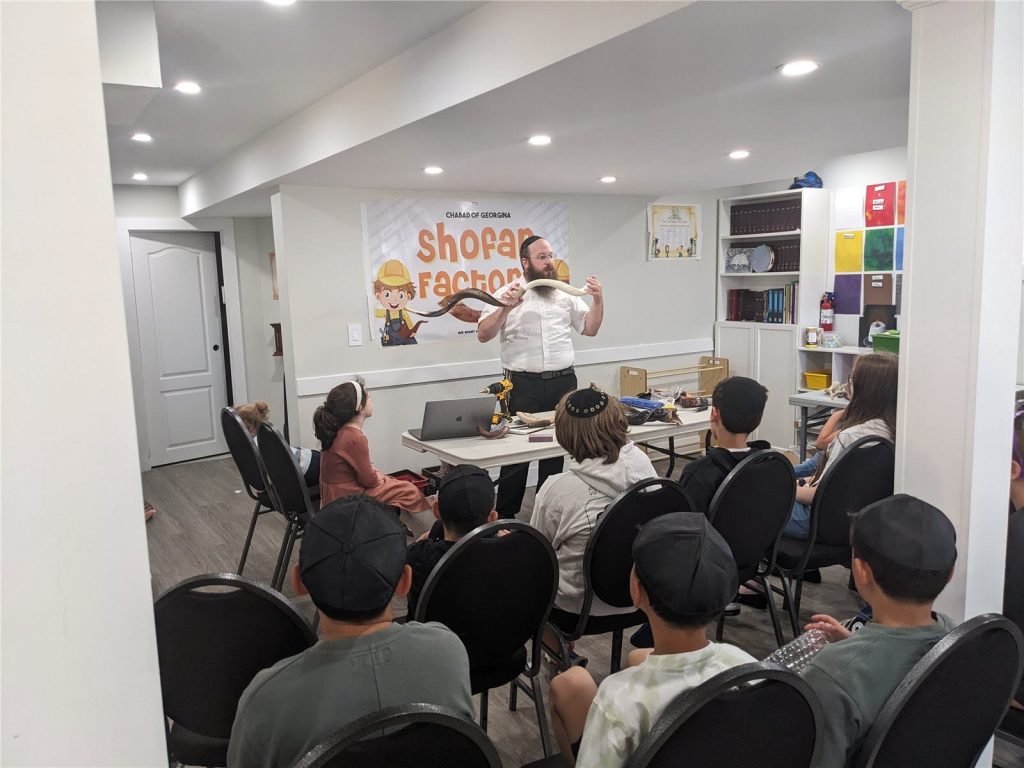
Every Shabbos, we farbreng about it. At the end of every tefilla, we proclaim “Yechi Adoneinu” and read a short passage of inyanei Moshiach. We also printed kippas with the “Yechi” inscription for our attendees.
We always make sure to connect our Purim party to a theme about Moshiach. Last year, our party’s theme was an “airplane” – we simulated the idea that the Geula had arrived and we were all “boarding” the flight on the clouds of glory to the Holy Land.
In our community, people definitely understand the importance of Moshiach’s coming and talk about it often.
Sometimes, shluchim might be afraid to speak about this with the people they are reaching out to, worrying about how they might react. But I truly believe you can see that Jews are thirsty to hear and learn; they are just waiting for someone to talk with them about it.
***
We are privileged to be shluchim and Chassidim of the Rebbe. The Rebbe Melech HaMoshiach gives us strength, and it’s important that we use it to bring about the coming of Moshiach Tzidkeinu right away.
Beis Moshiach #1483 • pp. 12-19
© 2026 Beis Moshiach Magazine. All rights reserved.
This article originally appeared in Beis Moshiach #1483. You are welcome to share it with friends and family by email or in print, provided that you do not change, add to or omit any part of it, you credit the author and Beis Moshiach, and you include a link to archive.bmoshiach.org (written out in full in printed copies).
To republish this article in a newspaper, magazine, book or website, please request permission in advance at [email protected].