The Rebbe & “New York’s Mara D’Asra”
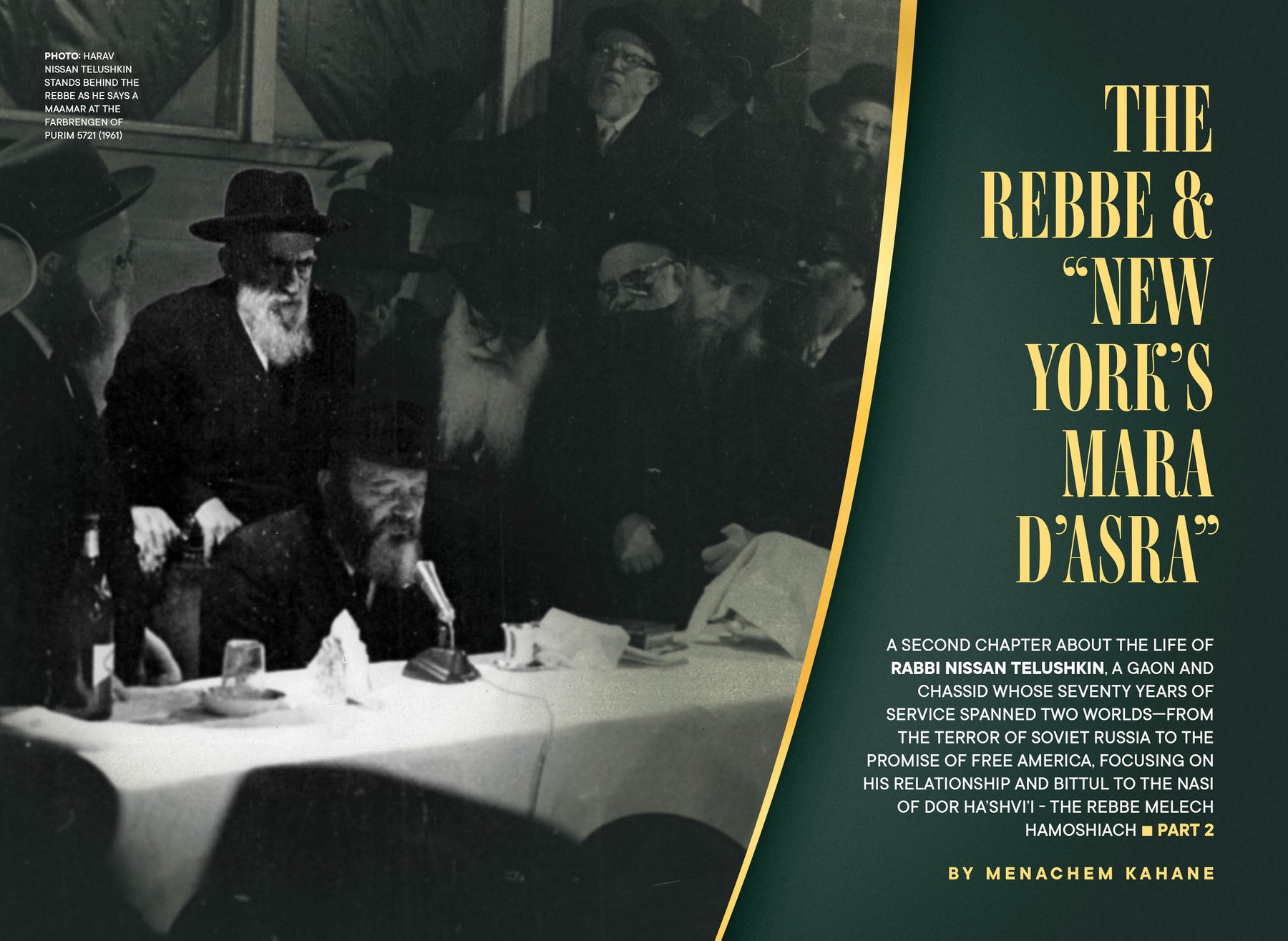
A second chapter about the life of Rabbi Nissan Telushkin, a gaon and Chassid whose seventy years of service spanned two worlds – from the terror of Soviet Russia to the promise of free America, focusing on his relationship and bittul to the Nasi of Dor HaShvi’i – the Rebbe Melech HaMoshiach. Part 2.
The ringing of the telephone suddenly pierced the silence in the room. The man lifted the receiver, and when he recognized the voice on the other end of the line, he suddenly jumped, as though bitten by a snake. He rose from his chair, stood at full height, and responded with submission and humility: “Yes, Rebbe!”
The distinguished Jew whom the Rebbe called personally, was none other than the esteemed Rabbi Nissan Telushkin, one of the prominent Chabad rabbanim in the United States. A genius in Torah and Chassidus and adorned with lofty character traits. Throughout his years in rabbanus, he worked extensively in community needs with devotion, and was a great activist in all areas of Jewish life in post-Holocaust America (as told extensively in part one).
In this chapter we will survey the relationship he had with the Rebbe MH’M.
A Chassid and Mekushar with All His Soul
After the passing of the Rebbe Rayatz on Shabbos Parshas Bo 5710, Rabbi Telushkin was among the first who wrote a letter of hiskashrus to the Rebbe and urged him to accept the leadership.
“After Yud Shevat 5710,” recounts R’ Nissan’s grandson, “my grandfather received a phone call (remember that in those days this cost a fortune) from Rabbi Shlomo Yosef Zevin in Yerushalayim, who inquired whether ‘the Ramash’ – which is how the Rebbe was referred to at the time, would be appointed as successor in leading the Chassidim. My grandfather, who also hoped that Ramash would be appointed as successor, was impressed to see how Rabbi Zevin cared so much, and how he was willing to do everything for this to happen. Of course, he was also very active regarding the coronation.”
The acquaintance between the Rebbe and R’ Telushkin began several years earlier with the Rebbe’s arrival in New York in Sivan 5701. From time to time, scholarly conversations and more were conducted between them, but from the time of the Rebbe’s acceptance of the leadership, R’ Telushkin bonded with him with all his soul. Despite his advanced age, despite being a respected and famous rav, he participated in all the farbrengens that the Rebbe held on every special occasion. He also corresponded extensively with the Rebbe, sending him questions regarding mikvaos and other halachic topics with which he dealt.
The story at the beginning of this article illustrates the relationship between the Rebbe and him, and here are the details of the impressive story:
It was in the year 5713. The Chassid, Reb Moshe Aharon Geisinsky came to R’ Telushkin to consult with him about the possibility of finding work as a “klei kodesh” in New York. Suddenly, while they were talking, the phone rang in R’ Telushkin’s home. On the line was the Rebbe himself. As soon as R’ Telushkin understood that the Rebbe was on the line, he hurried to stand in reverence and submission to hear the Rebbe’s words. The Rebbe, for his part, asked him to help Rabbi Geisinsky find parnassa.
As a side note, the son, Rabbi Shalom Dov Geisinsky, noted that in this story one can see the Rebbe’s ruach ha’kodesh in that he called precisely at the time when his father was with R’ Telushkin regarding the matter in question…
The Rebbe Conducts His Malchus with Majesty, Honor and Love
Like water reflects a face. The Rebbe, for his part, greatly appreciated R’ Telushkin, and would often inquire about his well-being and his health. Rabbi Mordechai Schusterman related that once the Rebbe said about R’ Nissan that he is “the Mara D’asra [halachic authority] of New York City!”…
Here is a letter that R’ Telushkin wrote in the year 5713 to his friend, the esteemed Rav Avrohom Chein, apparently in response to his question about the Rebbe’s manner of leadership:
2nd day of Rosh Chodesh Kislev 5713
“My honorable friend, great in Torah and wisdom, scholar and sage, his honor, the esteemed Rav Avrohom Chein, may he live.
“Kevod Kedushas the Rebbe Menachem Mendel shlita, conducts his kingdom with majesty, with honor and with love. He has drawn the youth to himself, and they are truly attached to him and ready to sacrifice themselves for anything he tells them. And he is truly full and overflowing, wondrously knowledgeable in all areas of Torah and wise and learned in general wisdom, and possessed of good character traits. Indeed, the Almighty sends His great ones according to the generation that needs them.
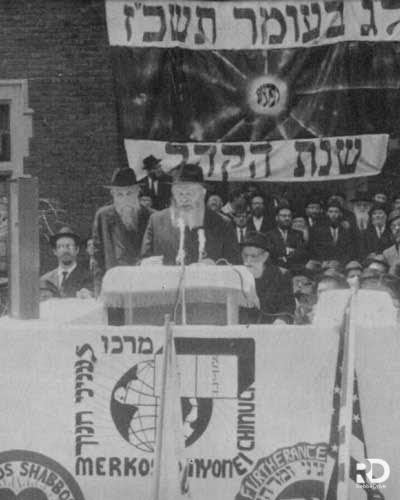
“With blessings for all good things, spiritually and materially, your friend who seeks your welfare in Torah, Nissan Telushkin.”
The Yeshiva Students on Simchas Torah
R’ Telushkin served as rav at the Nusach Ari shul located about an hour and a half’s walk from 770. Every year, the tmimim would come to dance and rejoice in his shul during the hakafos of Simchas Torah, as instructed by the Rebbe. After Simchas Torah 5712, R’ Nissan sent a letter to the Rebbe in which he thanked him for the bachurim who visited his shul and contributed to the joy of the Torah. He valued their self-sacrifice in walking such a great distance.
The Rebbe responded with a letter of blessing (Igros Kodesh Vol. 5 p. 15):
“With pleasure I received your letter from the 28th of Tishrei, in which you describe the good influence of the visit of the dear bachurim, students of Tomchei Tmimim, to your shul on the past Simchas Torah, and the impression they left on all the worshipers.”
The Rebbe adds and highlights: “And I must add that the yasher koach to the aforementioned bachurim is much more than estimated, because for them this visit was connected with kabbolas ol to a great degree in that they needed to leave the farbrengen here among the Chabad Chassidim and Anash, and to go for several hours to shuls and Battei Medrashos, and not only this but to do all this with joy and gladness of heart.”
One can learn of the Rebbe’s warm regard for R’ Telushkin from the fact that when the 30th anniversary of his rabbanus in his community was celebrated, the community organized a special festive event. In honor of the occasion, the Rebbe sent a letter of blessing to the community members and to R’ Nissan.
Mikvas and Purity as Top Priority
R’ Telushkin was a genius and expert in many halachic matters, but the subject in which he revealed rare knowledge was the field of mikvaos and tahara.
The premier Torah work that R’ Nissan composed is without doubt his monumental work Taharas HaMayim. This sefer is considered a groundbreaking creation due to the solutions the author brought regarding halachic problems that arose following the construction of urban water networks about 150 years ago. The pumping systems that were built included receptacles that disqualified the water from being kosher for immersion, and consequently, a unique connection was made to a reservoir of kosher rainwater. The gedolei Yisrael of those years discussed this extensively, and the sefer presents fundamental discussions regarding the kashrus and enhanced methods of connection between the rainwater reservoir and the immersion mikva.
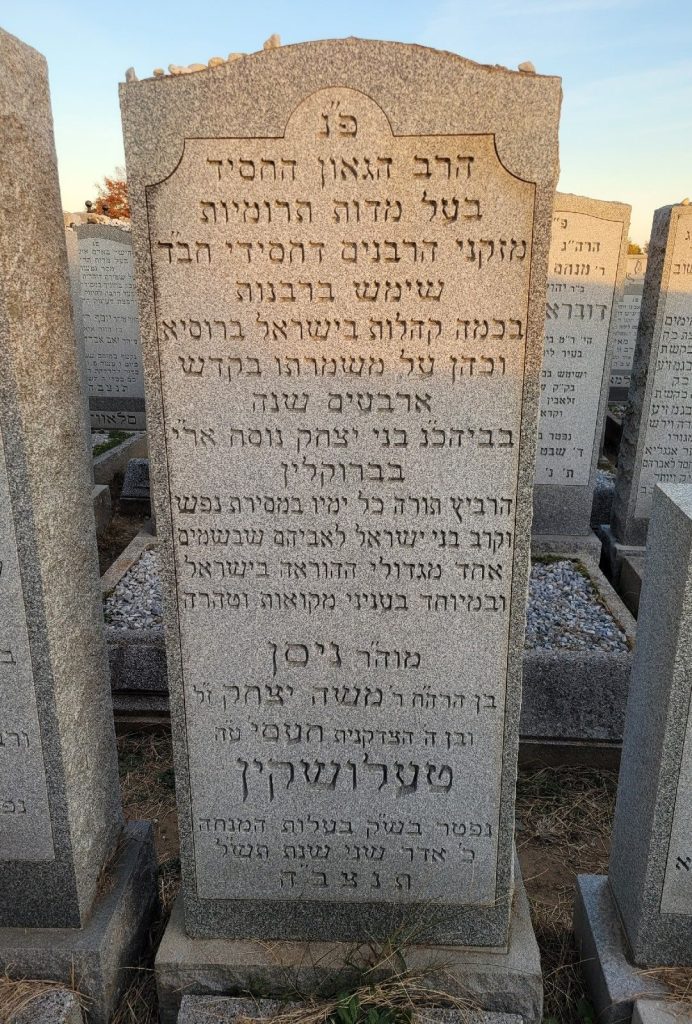
The uniqueness of the sefer stems from the fact that it is based on the shitta of the Rebbe Rashab of a mikva of “bor al gabei bor” (pit upon pit).
Over time, his sefer became a veritable manual for building mikvaos, and following it, hundreds of mikvaos were built around the world. In various letters, the Rebbe directs rabbanim to consult R’ Nissan’s sefer.
The sefer became a major seller and was accepted among all circles of halachic experts and poskim involved in the area of mikvaos.
Many letters that the Rebbe wrote to him on the subject testify to the special regard the Rebbe had for R’ Telushkin and his involvement in the field. Many times the Rebbe thanked him for this, and also regarding his sefer. The Rebbe even encouraged him to publish his sefer in a third and new edition, lavishing much praise about the necessity of the matter – to increase purity in Israel.
“Although I had in mind this time to print some of the teshuvos in halacha l’maaseh that Hashem helped me to answer,” wrote R’ Nissan at the beginning of the third edition of his sefer, “C’K Rebbe Menachem Mendel Schneerson shlita, of Lubavitch urged me to publish specifically this sefer of mine in a third edition, as a timely matter, because of the chiddushim that were innovated in it (and to my zechus he said that this book of mine ‘itmachi gavra v’itmachi kameia’ – the man proved himself and the amulet proved itself) so that it would be useful to the mighty ones and great ones of the generation who guard the holy watch in their communities as the readers will see clearly.”
A rare expression the Rebbe wrote in one of his letters to R’ Nissan: “And I relied on what your honor brings in his book Taharas Hamayim page 182.”
Here is an example from one of the letters the Rebbe sent him on the subject: “And may it be His will that this edition too will achieve the goal of establishing and spreading the matter of the purity of the daughters of Israel, one of the foundations of the House of Israel in its entirety, and the private house of each man and woman… with respect and blessings for long and good days and years and to see good fruit in his labor, the labor of Torah that leads to practical halacha, and in proper health.”
Among the pages of the sefer, one can find many teshuvos from the Rebbe on the subjects discussed. The Rebbe even guided him in various letters he sent him on the complex subjects related to mikva. Interestingly, R’ Nissan even borrowed sefarim from the Rebbe’s library for writing his sefer, as he wrote in his sefer: “In the responsa Chayei Olam Nota, from the sefarim lent to me from the library of C’K Admor shlita of Lubavitch.”
A Story About the Rebbe’s Approach to Mikvaos
An interesting story about the Rebbe’s approach to mikva was told by the Gaon Rabbi Chaim Yitzchok Poupko: “In the early ‘yuds’, I had yechidus with the Rebbe together with the Gaon R’ Nissan Telushkin who was known for his expertise in mikva matters. In the course of the conversation, R’ Telushkin asked the Rebbe about the possibility of permitting immersion in a certain way where there is a question regarding the validity of the immersion, and this for Jews living in places where there is no mikva that is kosher according to all opinions, and in any case they will not immerse in a kosher mikva.
“The Rebbe responded to us with a story: ‘When I was a child and studied with the melamed, we saw how the melamed takes out a volume of ‘Choshen Mishpat’ on Tisha B’Av and studies it. We began to whisper among ourselves and try to understand what’s happening here, for it is forbidden to study Torah on Tisha B’Av… The melamed, who noticed our whispering, explained to us himself the meaning of his actions: “When I come above and they flog me for my deeds, it’s better that they flog me for studying Torah and not for bittul Torah”…’
“And the Rebbe concluded: ‘You are afraid of the Day of Judgment regarding those who will not immerse in a kosher mikva, but it is better to stand for judgment on the mikvaos that you made kosher b’dieved, rather than to stand for judgment for what wasn’t done at all!…’”
‘He Urged Me Many Times to Print the Second Volume’
As an excellent speaker with clear and lucid thought, his homiletic philosophical book HaTorah V’HaOlam in three volumes was also received with great affection among circles of lomdei Torah. The sefarim are full of fascinating ideas on the parshiyos ha’shavua, and written in a lively and heartwarming style. Among its pages and drashos one can find many sayings from our Rebbeim and leaders and great Chassidim.
When he published the first volume of his sefer, of course he sent it to the Rebbe. Soon the Rebbe responded with a special letter, emphasizing the Chassidic aspect of the sefer, and also added several substantive comments: “I hereby acknowledge receipt of your sefer, HaTorah V’HaOlam, first volume. And thank you for your attention in sending it, and it pleased me to see in it, in leafing through the pages as time allowed, that at the beginning there is a saying of the Baal Shem Tov and it concludes, similar to the beginning, with a saying of the Tzemach Tzedek, that although the topics in the sefer have purpose in their own right, behold, high above high, they can be utilized for a purpose that is higher than them, the spreading of the wellsprings.”
The Rebbe concludes his letter with a bracha: “That for many more years he will succeed in leading his community in the way that ascends to the House of G-d with proper health, suitable to the hope and aspiration of our master the Alter Rebbe and to influence them to make them Chassidim, more and more.”
At the beginning of the third part of this sefer, writes R’ Nissan, “Thank G-d that the first volumes of this sefer of mine were received favorably by rabbanim, darshanim and G-d-fearing askanim, bnei Torah. The many warm and enthusiastic letters of praise I received testify to this.
“My heart especially rejoiced in the encouragement given to me by C’K Admor Menachem Mendel Schneerson shlita of Lubavitch, who after receiving the first volume urged me many times to print the second volume, and when the second volume came out, he wrote to me as follows: ‘Your sefer HaTorah V’HaOlam volume 2 has just been received. And in passing through its pages I enjoyed what I so requested from your honor that you publish. May it be His will that for length of good days you will merit to make Torah great and glorious.’”
“With pleasure I received your sefer, HaTorah V’HaOlam, volume three,” writes the Rebbe about the third volume of his sefer, and highly praises the work: “And as his deed in the first so his deed in this, words of arousal to G-d, to His Torah and to His mitzvos, and may it be His will that the words will effect their effect to reveal in the heart of the Jewish man and woman the source of living waters that is in their soul within, and suitable to the intention – that the source be revealed in thought, speech and deed in daily life, for this is the whole of man.”
And the Rebbe concludes with many blessings and wishes: “And may it be His will that he will succeed in all that is said and that for many more years he will increase strength to infuse the light of Torah in the world, complete Torah, external and internal, the Torah of truth without changes and without compromises…”
Another sefer he wrote is Taharas Nissan on Sefer Tehillim and on the aggados of Shas in general.
“R’ Telushkin made Judaism relevant for the simple person at that time, when Jewish learning was disconnected from the relevance of everyday life,” Rabbi Grainem Lazewnik said in his eulogy of him. He was R’ Telushkin’s neighbor from the beginning of the 1940s. “Among other things, he did this through his composition on Tehillim, Taharas Nissan. He took Tehillim and made it relevant to the daily life of the individual. The world today is the same, and the people are the same and everything is experienced anew. R’ Telushkin’s commentary tells us how Tehillim are relevant in our lives.”
In Israeli Public Affairs
Not only did the Rebbe discuss mikva matters with R’ Nissan, but also various halachic matters as well as matters of communal activism.
For example, the Rebbe enlisted him regarding the issue of daily prayer in public schools in the USA, after public opposition arose to it. Among the opponents, there were those who filed a lawsuit with the US Supreme Court to prohibit holding prayer in official educational institutions. The Rebbe’s opinion on the matter was to instill faith among the nations of the world as much as possible [many years later the Rebbe came out with his famous declaration about a ‘moment of silence’], as this opposition causes many Jewish students studying in state schools to refrain from prayer to G-d.
The Rebbe sent R’ Nissan a long letter on the subject (21 Menachem Av, 5723/1963): “At this opportunity, I will express my great sorrow about the complete silence… regarding prayer in public schools, and behold, only a few days remain until the beginning of study time in the aforementioned schools…”
Following the letter, R’ Telushkin convened the Rabbinical Council of America to discuss the issue, and with joint forces they worked so that the court would permit this legally.
R’ Nissan was enlisted to act to realize the Rebbe’s wishes not only in American public affairs, but also in Israeli public affairs. Because he was a member of the Mizrachi circles and religious Zionism, and even headed the education committee of Mizrachi in New York, he could also be influential among his acquaintances.
This is the reason he was enlisted for the establishment of a ‘United Religious Front’ in the elections in Israel that took place in the year 5715 (1955). As is known, the Rebbe urged the religious politicians many times to unite in one religious front, and run for elections as one party (even if after the elections they would split) and thus increase the power of religious and ultra-Orthodox representation in the Knesset.
R’ Nissan was recruited for that election and he helped to fulfill the holy will of the Rebbe in the elections. Greatly thanks to his efforts, the parties ‘Agudas Yisrael’ and ‘Poalei Agudas Yisrael’ united as a joint list named ‘Torah Religious Front’, and received six mandates.
The Rebbe sent R’ Nissan a thank you letter for his involvement and later in the letter he expressed himself sharply against the politicians who sought to torpedo the religious front (the letter was published for the first time in Beis Moshiach).
In the winter of 5720, a yechidus was held between the Rebbe and Zalman Shazar, one of the esteemed members of the Mapai party in those years, during which critical matters for the future of the young state were discussed, including the issue of the Chief Rabbinate. Following publications in the media about the Rebbe’s opinion on the subject, R’ Telushkin turned to the Rebbe in a letter, and requested clarification on his position regarding the question of the Chief Rabbinate of Israel.
In response, the Rebbe clarified that these were published without his consent, and emphasized his fundamental opposition to political interference in rabbinical matters, with support for its complete independence. In his letter, the Rebbe noted that its status must be secured, and public arguments that could harm its honor must be avoided.
The Rebbe also sent his letter to Shazar, to Rabbi Shlomo Yosef Zevin, and to those involved in the matter, while expressing appreciation for R’ Telushkin’s efforts.
“The Gaon R’ Nissan Telushkin, despite having a clear opinion and strong thought about all things happening in the Jewish world, was one of the ‘quiet’ rabbanim and lived all his days in modesty and his speech was always gentle with people,” wrote his friend Rabbi Nissan Waxman.
The Rebbe Decided: Near the Holy Ohel
Rabbi Nissan Telushkin merited long life, and passed away on the 20th of Adar II 5730 in New York, close to age ninety.
Because he was a member of Mizrachi circles, his friends and acquaintances were certain they would bring his aron to Eretz Yisrael, but he was buried near and visible to the holy Ohel. Many were surprised by this.
Several years after his passing, his will was published publicly in which he wrote in detail:
“Dear to me is our holy land, also dear to me is the memory of his honor the Rebbe Rayatz of holy and righteous memory who loved me, and I do not know how to decide whether my place will be in the Holy Land or my place will be near his honor the Rebbe Shlita, may he live for length of good days, to lead the House of Israel until the coming of our righteous Moshiach. His honor the Rebbe Shlita, may he live, will say his opinion on my question, and according to his opinion so shall they do.”
In other words, R’ Telushkin left the question of where to bury him – in Eretz Yisrael or near the Ohel – to the decision of the Rebbe.
It was further clarified that a short time after the passing of the Rebbe Rayatz, R’ Telushkin hurried and purchased a plot of land near the tziyun of the Rebbe Rayatz.
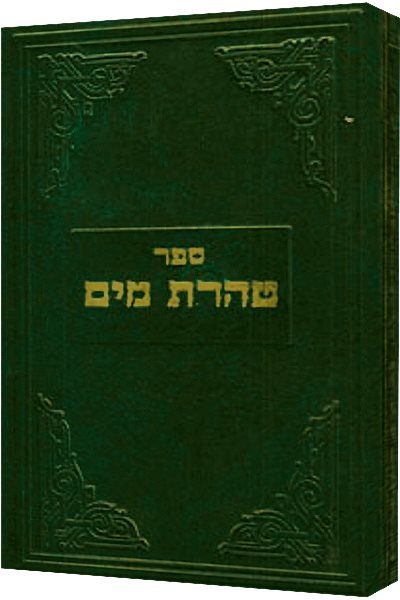
Following the will, his son R’ Shlomo Telushkin turned to the Rebbe, and asked where to bury his father. To this the Rebbe responded: “Since he purchased the grave during his lifetime and intentionally near the grave of the Rebbe Rayatz, there he should be brought to rest.”
A fitting eulogy was delivered by the Gaon Rabbi Simcha Elberg on the distinguished Chassidic character of R’ Nissan:
“The misnagdim, as is known, are possessors of great virtues, and of course deficiencies can also be found in them, and the same thing with Chassidim, virtues and deficiencies. Rabbi Telushkin was a ‘misnaged’ according to his ways, his bearing and conduct. In courtesy and moderation, he did not storm, did not become angry and did not become furious, his speech was in a brief manner, dry, logical, in order and style.
“Ostensibly,” wrote Rabbi Elberg, “these traits testify to his ‘misnagdic’ essence. And yet, in the depth of his inner being he was a complete Chassid. And how could this be so; is not an ordinary Chassid inconsiderate of order, a Chassid usually becomes enthusiastic and furious, his speech is loud, shouting and getting excited, storming and burning with burning fire, and how did R’ Telushkin unite within himself these two opposing phenomena, a Chassid and misnaged together?” wondered Rabbi Elberg, and answered: “Rabbi Telushkin was a Lubavitcher Chassid, and Lubavitch Chassidus stores within it not just one ‘misnagdic’ element…” (HaPardes journal year 44, issue 1 p. 3).
We will conclude this overview of his life with the Rebbe’s words to R’ Nissan: “And in his days and in our days may we merit the fulfillment of the promise that ‘the mikva [lit. hope, but interpreted by the Sages to also mean ritual bath of purity – Ed.] of Israel is G-d’ and He will sprinkle upon us among all Israel pure water, and as it is written ‘And I will sprinkle upon you pure water’ – a close prelude to the true Geula that comes immediately after this.”
Beis Moshiach #1496 • pp. 22-30
© 2026 Beis Moshiach Magazine. All rights reserved.
This article originally appeared in Beis Moshiach #1496. You are welcome to share it with friends and family by email or in print, provided that you do not change, add to or omit any part of it, you credit the author and Beis Moshiach, and you include a link to archive.bmoshiach.org (written out in full in printed copies).
To republish this article in a newspaper, magazine, book or website, please request permission in advance at [email protected].