A Grandfather’s Legacy, a Grandson’s Mission
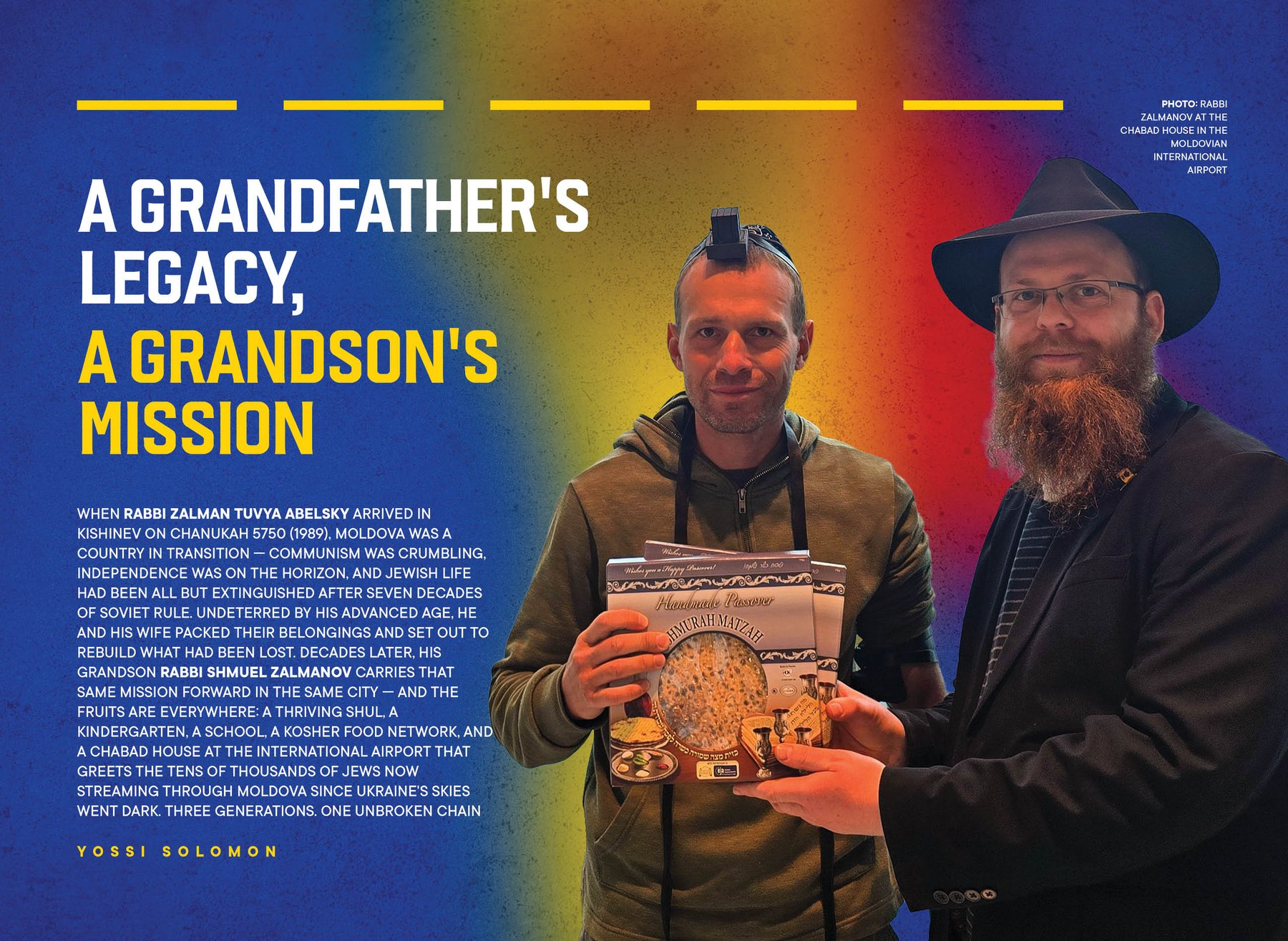
When Rabbi Zalman Tuvya Abelsky arrived in Kishinev on Chanukah 5750 (1989), Moldova was a country in transition – communism was crumbling, independence was on the horizon, and Jewish life had been all but extinguished after seven decades of Soviet rule. Undeterred by his advanced age, he and his wife packed their belongings and set out to rebuild what had been lost. Decades later, his grandson Rabbi Shmuel Zalmanov carries that same mission forward in the same city – and the fruits are everywhere: a thriving shul, a kindergarten, a school, a kosher food network, and a Chabad House at the international airport that greets the tens of thousands of Jews now streaming through Moldova since Ukraine’s skies went dark. Three generations. One unbroken chain.
The Chabad community in Moldova was one of the first established in the Soviet Union during the Perestroika era, with the arrival of Rabbi Zalman Tuvya Abelsky a’h, and his wife Malka, who came to the country during the transitional period between the fall of communist rule and Moldova’s declaration of independence.
Today, his son Rabbi Zushe Abelsky continues the legacy as the shliach and menahel of the institutions, who runs the mosdos with distinction alongside a staff of four shluchim. Under R’ Zushe’s leadership, all activity in Moldova has taken a major leap forward: from major renovations of the central shul and construction of a new mikva, to establishing Chabad Houses in Bendery and at the airport, and developing kashrus and chinuch so that they now form the solid infrastructure of the shlichus. All of this is done with one goal: to prepare the entire country to welcome Moshiach.
Within this expansive system, Rabbi and Mrs. Shmuel and Chaya Mushka Zalmanov operate in the capital, Chișinău [Kishinev]. The couple runs extensive activities including a Chabad House at the airport, a kindergarten, a school, and a variety of other programs.
From a Young Age
Rabbi Zalmanov was exposed to shlichus from a young age. Unlike many shluchim, his connection to Chișinău didn’t come all at once, but developed over tje years – he would regularly travel to the city to assist his grandfather, Reb Zalman Abelsky and his grandmother.
Let’s start from the beginning: when did you decide to go on shlichus, and why Chișinău specifically?
“It all started with my grandfather, Reb Zalman Abelsky a’h who came to Chișinău on shlichus on Chanuka 5750. Despite his advanced age, he and my grandmother packed their belongings and embarked on a shlichus in Chișinău, Moldova, opening a new chapter in their lives.
I myself first came to Chișinău at age 14, as a tamim in a small yeshiva, to help with Tishrei activities. From then on I would travel from Israel to Chișinău for the Yomim Tovim, and through this I came to know the city well, and my connection to the place grew stronger.
“After my year on ‘Kevutza,’ I returned here again for a shlichus that lasted about two years.”
At some point R’ Zalmanov returned to Israel, got married, and continued learning in kollel. At the end of the year, he and his wife were looking for a place to go on shlichus. Was “looking” really the right word? Not quite! Having already known Chișinău well, this was where he wanted to go. “My heart simply pulled me there,” and that was the decision.
“We’ve been here since 5779,” he says. “From then until today we’ve been building Jewish life in the city and Moldova as a whole: we opened a Jewish kindergarten, a Sunday school, a youth club, winter and summer camps. In addition, there is also outreach to students and community members in the city.”
Jewish Chișinău: A Rich Past
Jewish Chișinău knew beautiful days in its history. Jewish life in the city was rich and flourishing until its destruction in the Holocaust. A large community operated in the city, comprising a significant portion of the population and active in the economy and culture – despite suffering severe antisemitic pogroms over the years.
From the earliest development of the community, the Chassidic movement had a major influence on the city’s residents, which prevented the Haskalah (Enlightenment movement) from spreading there. Evidence of this is that the city’s rabbanim were Chassidim. There were communities of Tolna, Bohosh, and Sadigura Chassidim, as well as a small Chabad community.
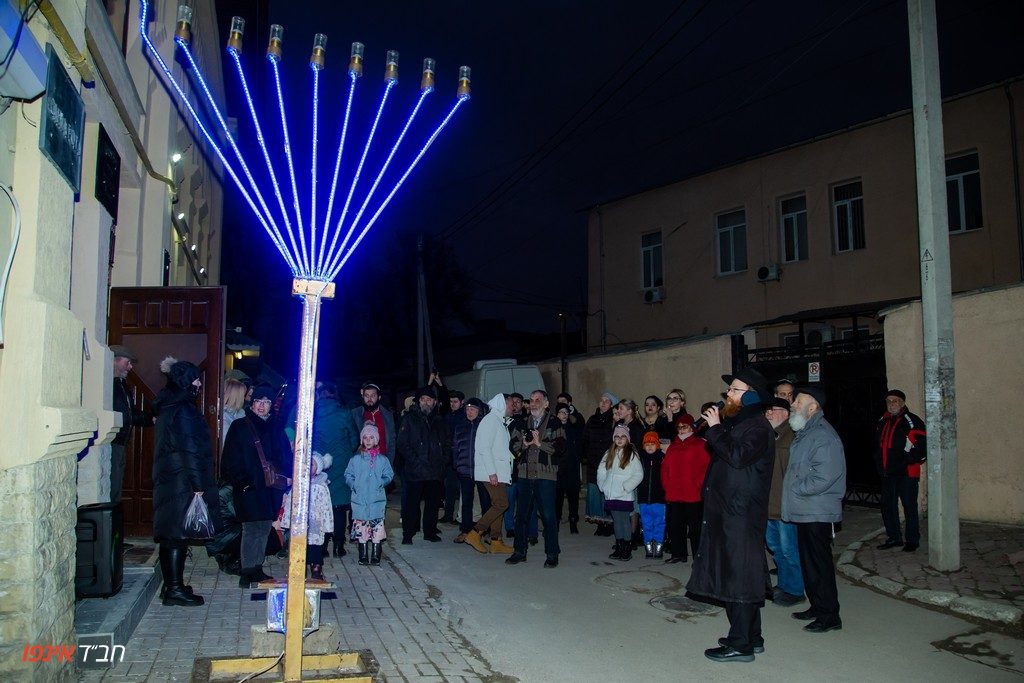
Eventually, the Maskilim did manage, with considerable effort, to gain a foothold in the city and established a school. The Chassidim, for their part, established a yeshiva in the city that served as a center for Moldova and surrounding regions, aimed at stemming the tide of the Enlightenment. This yeshiva existed until 5700 with the outbreak of World War II.
During World War II, a ghetto was established in the city, and most of its Jews were murdered or deported to Transnistria.
They say “all beginnings are difficult.” Can you share the challenges from the early days of shlichus?
Regarding the beginnings – I didn’t start the activity here. Over the years my grandfather initiated extensive activity throughout the country, establishing many institutions including the Tomchei Tmimim yeshiva, a kollel, schools, kindergartens, and more, as well as Chabad Houses and shuls in additional cities.
My grandfather’s work breathed life into the dry bones of the local Jewish people. Seventy years of communism had devastated Judaism in the country, extinguishing nearly every spark of Torah and mitzvos.
Personally, I had fewer ‘beginner’s difficulties,’ since I already knew the place well and spoke the language. But for my wife, who didn’t know the language or the place, it was more challenging. Nevertheless, knowing that we are shluchim of the Rebbe, and that he is the one sending us with spiritual power for success, every challenge takes on a different meaning.
The Rebbe says that the word ‘Shliach’ has the same numerical value as ‘Sameiach’ (joyful); simcha and chayus always bring yeshuos and success to the work of shlichus. I won’t deny that there are sometimes difficult moments, but just then someone arrives and brings a message or encouragement from the Rebbe – for example, through a donation or help – and the heart feels we are not alone in the battle.
I remember when we arrived in Moldova, we had to go to the immigration office to renew our stay in the country. I met a Jewish man who worked at the immigration office and asked if he’d like to put on tefillin. He said he used to put on Rabbeinu Tam tefillin, but now he wasn’t interested – thanks. During our conversation he told me a story about the Rebbe, even though he isn’t a Chabad Chassid.
In his youth he lived in an Orthodox Jewish community in Belgium. At age 13–14, he once went to visit family in New York for Yom Tov. After Yom Tov, he went to 770 for the distribution of ‘kos shel bracha.’ He noticed people receiving bottles and asked why he only received a small cup of wine. Someone explained that the Rebbe gives bottles to rabbis, shluchim, public figures, or those who organize a new farbrengen or Torah class. He decided to wait in line again and when he stood before the Rebbe, the Rebbe motioned with his hand as if to say ‘you already received,’ but he replied that he had only gotten a small cup, not a bottle. The Rebbe asked if he would organize a farbrengen, and he agreed – and received a bottle.
Twenty years later, no longer observant, married with children, he returned to the Rebbe. During the dollar distribution, the Rebbe gave him a dollar, and he moved on. Suddenly the Rebbe called him back, gave him another dollar and said: ‘This is for you – you like to receive twice…’
Stories like these that arrive unexpectedly during shlichus confer strength and a clear sign that the Rebbe is with us.
Additionally, there is a sicha of the Rebbe (Vaeira 5752), where the Rebbe says at the ‘shloshim’ of Rabbi Hecht that the concept of ‘his offspring are alive, so he too is he alive’ applies when family members continue the shlichus. These words stand before me as I remember that we are continuing the shlichus that my grandfather began here in this city.
What is the main focus of activities?
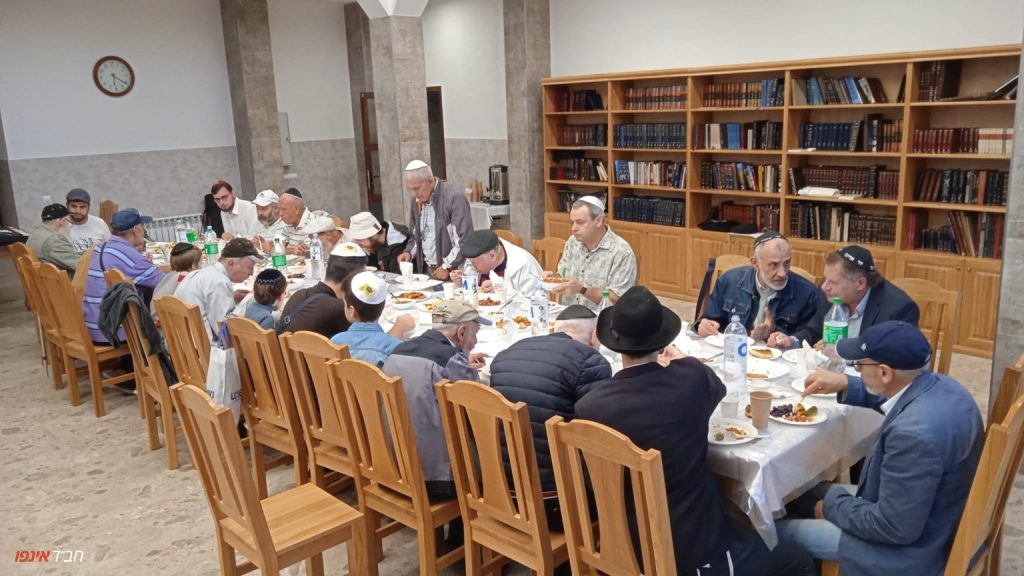
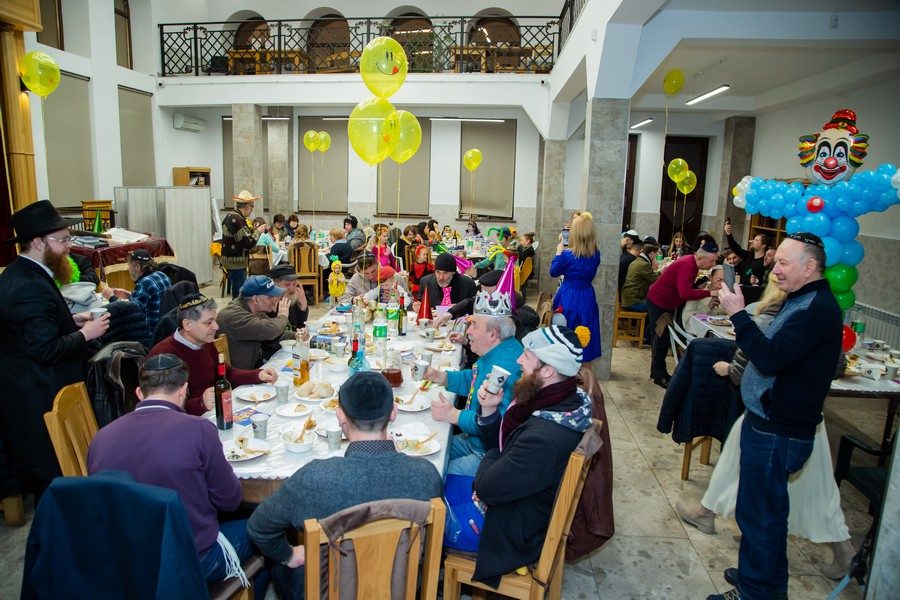
The bulk of our activity centers on the shul: daily tefillos and minyanim, Torah classes and meals for adults who come to learn. In addition, I give a shiur for Jewish students studying medicine, and run youth activities that educate and empower our young people.
All of this, along with Shabbos and holiday meals where guests visiting the city are welcomed.”
A Chabad House at Moldova’s Gateway
As is well known, following the war in neighboring Ukraine, airports in that country were closed, and many travelers to and from Ukraine travel through Chișinău’s airport. “This created enormous demand for kosher food and the ability to daven and put on tefillin in the terminal,” says R’ Zalmanov. “As a result, a special request was submitted to establish a Chabad House that would provide all these things for the tens of thousands of Jews passing through the terminal each year.”
Indeed, after months of negotiations, the government in Chișinău approved the Jewish community’s request to establish a Chabad House in the capital’s international airport. Local security forces also understood the need to help the hundreds of Jewish travelers passing through daily, and gave their approval.
About four years ago, an additional Chabad House opened in a strategic location: when you land in Chișinău and the terminal doors open, the first thing you see is the Chabad House – which costs $1,500 per month in rent. “The central location of the Chabad House,” explains R’ Zalmanov, “lets the thousands of Jews who land here know there is Jewish life here, there is a Chabad House that takes care of everything related to Jewish living – meals, mikva, tefillos, information and guidance for whatever is needed.”
R’ Zalmanov shares an interesting story connected to this Chabad House:
“About a year ago, a family from Kyiv entered the Chabad House at the airport – a grandmother, mother, and grandson. They had arrived at the airport too early and came in. During conversation they told me that the boy had previously studied in Chabad kindergartens in Kyiv. I asked if they had celebrated his bar mitzva, and to my surprise he answered no. I offered him the opportunity to put on tefillin for the first time in his life. At first he refused, as he was unfamiliar with the custom and didn’t understand its significance, but eventually he was convinced and agreed.
“Another touching story occurred when a family from Israel came for a roots visit in Chișinău. The father, a man of about 70, told us that he himself was circumcised in the very shul where we now operate – during the Communist era. At that time, dozens of shuls scattered throughout the city were closed, and only this one was left open. When I asked if he had put on tefillin, he said no. ‘Never,’ he said, explaining that he was far from religion and tradition. After a long conversation, right there, in the same shul where he had his bris mila, he began at age 70 to put on tefillin for the first time in his life. It was a powerful, healing experience that brought things full circle.”
The Geula as Part of Daily Community Life
R’ Zalmanov continues with another story:
“When I was a bachur, I used to travel every two weeks to the city of Bendery, where I met a Jewish man who told me he had never been circumcised. I started putting on tefillin with him and speaking extensively with him. After lengthy persuasion he finally agreed to a bris mila – at age 60. I didn’t stop there, and raised the topic with other Jewish residents of the city. I found two more who had not been circumcised. At some point I brought a mohel from abroad, and in one day three elderly Jewish men were circumcised. On the scale of the Jewish community in Bendery, this ‘made history.’”
Flights between Eretz Yisrael and Chișinău are fairly frequent. Does this affect obtaining kosher food in the city?
Unfortunately, it doesn’t really help. Kosher food is definitely a challenge in Moldova.
Unlike Jewish centers around the world where there is an enormous abundance of kosher products, here the reality is completely different. From the early days of shlichus we felt this was an essential need, and as a result we decided to set up an organized kosher food operation.
We started with a small step – we prepared a comprehensive list of all local products available in Moldova that could be obtained with high-quality kosher certification. We posted this list in a small store we opened, so that everyone could know exactly what could be purchased with confidence. We then expanded the operation and began importing additional products.
Initially we brought a lot from Ukraine; before the war broke out this was simple and accessible, but after the war started, Ukrainian airspace was closed and roads became disrupted. As a result we began importing from Israel, and more recently opened a supply channel from London to ensure continuity and availability of provisions.
Regarding milk and dairy products – every few weeks we send a shomer Shabbos Jew to the dairies and he supervises the milking. This way we have chalav Yisrael milk in Moldova itself.
How do people respond to the Besuras HaGeula?
“The topic of Geula and Moshiach is part of every detail of shlichus,” he says without hesitation. “It’s not just a topic mentioned occasionally, but part of the atmosphere felt in every area – everything is accompanied by ‘Yechi Adoneinu.’ People see and are exposed to this, and understand that it is an inseparable part of our shlichus. At every farbrengen we hold – whether a Shabbos meal, a Chassidishe occasion, or a special event – the central theme always comes up: Geula and Moshiach. Even our main weekly community shiur focuses on learning inyanei Geula.”
When R’ Zalmanov speaks of this, his eyes well up. The inspiration before him is the image of his grandfather, for whom the topic of Geula ‘burned’ more than anything else. “At the end of every tefilla, everyone would dance ‘Yechi Adoneinu’ with chayus. He instilled an atmosphere of emuna peshuta, and I know it still resonates with many people. They remember his enthusiasm, his dances, his sweet chayus – and it gives them inspiration and strength.
“In the Chabad House we have a set of Igros Kodesh in Russian, and many people come to write to the Rebbe and receive answers and blessings. I see how this creates a personal connection to the Rebbe.
“At community events we also make sure this message is strongly felt. There are Moshiach flags, distribution of Moshiach cards, and weekly pamphlets we print in Russian containing sichos on inyanei Geula. We also print and distribute Sichat HaGeula so that everyone can learn, connect, and feel that this message exists and touches each one of us.”
Alongside Rabbi Zalmanov’s activities, his wife is also very active in her domain: she delivers Torah classes to women in an experiential manner, runs ongoing activities for children in the Sunday school, and works with programs such as Shifra and Puah.
What are your future plans?
To open a full-time Jewish day school, and to establish a kosher restaurant at a price accessible to all – so that not only tourists can come to eat there, but also Jews from the local community.
Challenges During the Covid Era
By Pesach 5780, the world had entered an altered reality, that of Covid, the virus that shut down the world. People had to stay home until it passed.
The shluchim in Chișinău, realizing they could not hold a public Seder that year, arranged Seder kits which they delivered. Each kit included matzos, wine, a Haggada and all the simanim of the Seder. “We got hundreds of requests, even from Jews who had no direct connection with the community previously.
“A woman called and worriedly asked whether gefilte fish could be added to the kit. We took care of that and sent it to her house. A year later, she called again, this time it was two days before Yom Tov. She wanted to come in person to pick up the food. When she arrived, she came with three children. I took the opportunity to register them all for a letter in a Sefer Torah shel Yaldei Yisrael. When I registered them I found out that the oldest son was almost bar mitzva age. I suggested to the mother that we arrange a bar mitzva for him in our shul with all the expenses on us; she agreed.
“A while later we made a beautiful event for him with an aliya l’Torah, a big seuda, a festive cake, photography, and most importantly, a real connection to tradition. Since then, the family has become an inseparable part of the community.
“Another story from that challenging time: I called someone who lives in a distant town, two and a half hours from Chișinău. I asked him whether he had matzos for Pesach. He said that because of Covid he hadn’t been able to obtain matza. In the end, we managed to get him matzos through his grandson who was traveling in that direction. When the grandson came to us to take the matzos, I asked him whether he wants to put on tefillin. He didn’t know what I was talking about; he was a karkafta (someone who had never put on tefillin). I put tefillin on with him and together with his grandfather and the entire family we made another connection with a Jew, one of warmth and meaning.”
Beis Moshiach #1497 • pp. 26-33
© 2026 Beis Moshiach Magazine. All rights reserved.
This article originally appeared in Beis Moshiach #1497. You are welcome to share it with friends and family by email or in print, provided that you do not change, add to or omit any part of it, you credit the author and Beis Moshiach, and you include a link to archive.bmoshiach.org (written out in full in printed copies).
To republish this article in a newspaper, magazine, book or website, please request permission in advance at [email protected].