“On Yud Alef Nissan, I Have a Personal Matter. Everyone Will Travel Together to the Ohel.”

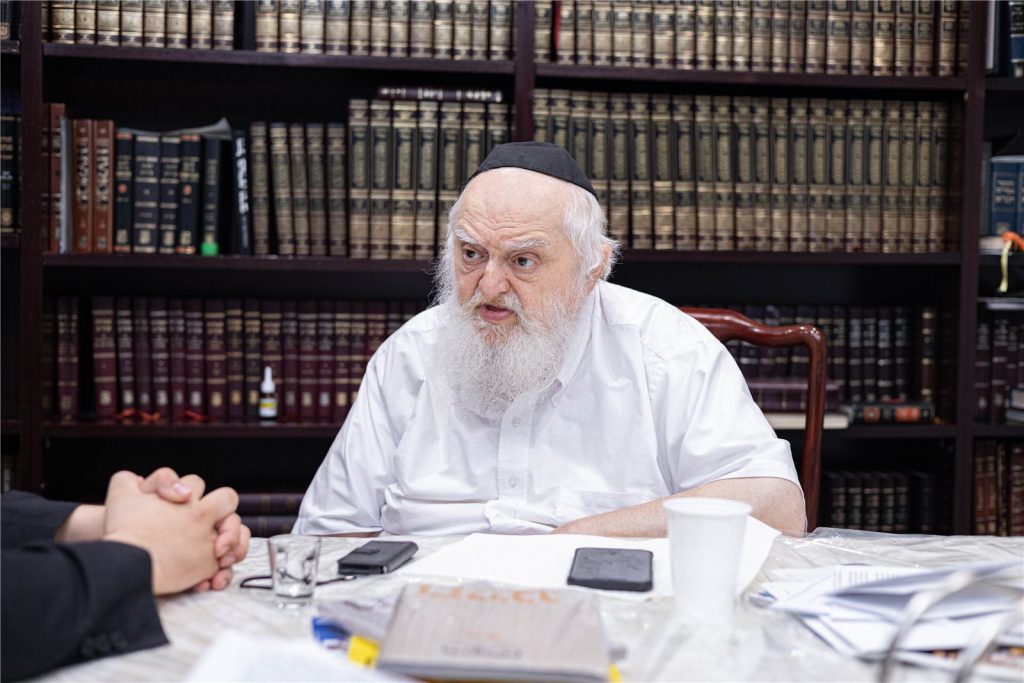
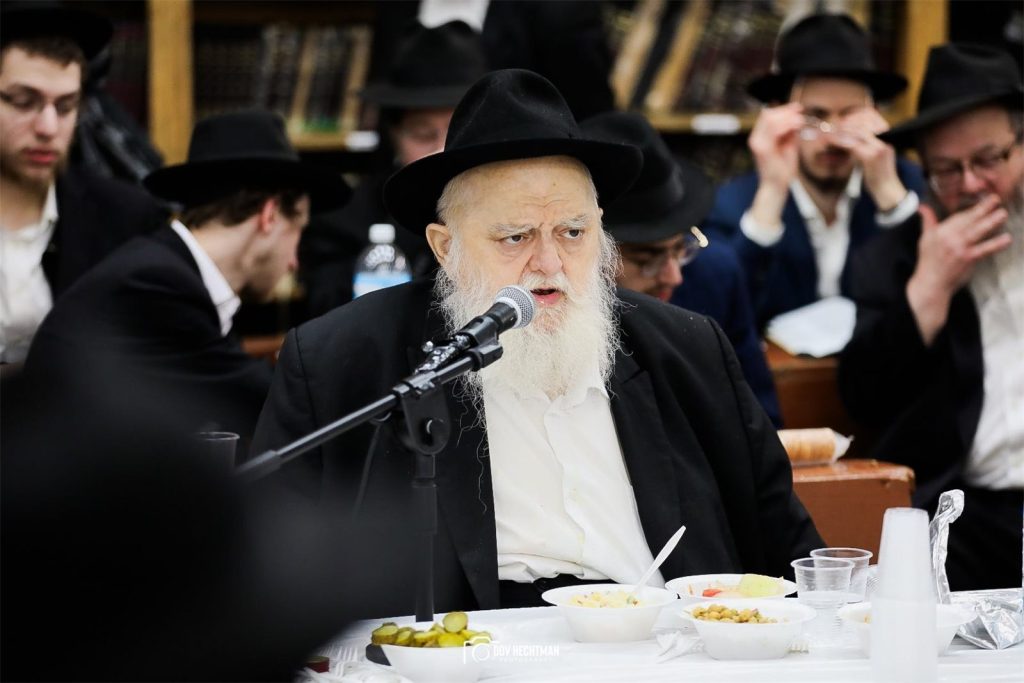
The following memories and stories were shared during farbrengens by Harav HaChassid Hatomim R’ Shlomo Zarchi, Menahel of the central Tomchei Tmimim – 770. They were recorded by one of the Tmimim, edited by the editorial board, and under their sole responsibility.
Adorn Yourself
Reb Leib Sheinin was the rav of Dokshitz, and his Shabbos HaGadol drasha was: “A place where chometz is brought in requires checking; a place where chometz is not brought in does not require checking – you brought the chometz into yourself, not into someone else, so therefore you need to check yourself…” And that was his entire drasha.
One Must Not-Want
There is a tradition in the name of Chassidim regarding the saying of the Alter Rebbe, “I do not want Your Gan Eden… I want only You Yourself.” Why did he not simply say “I want only You Yourself,” and instead added the negation of what he does not want?
Rather, it seems that in order to say that I want only You Yourself, one must first not want something else… We want all of this world, with the lower and upper Gan Eden – and also G-d Himself…
The Point of “Samech Vov”
In 5723–24, when we were young bachurim in the central Tomchei Tmimim yeshiva, Reb Shmuel Levitin called us over and asked what we were learning. We answered, “the Hemshech Samech Vov.” He asked, what is written there? We answered: Sefiros, Tikunim, free choice, the neshama…
He said to us: “You should know this for your entire lives – the central point of the Hemshech 5660 is: ‘There was one clever person [pikeach] there’!”
This was several years before the Rebbe said the maamar of B’Yom Ashtei Asar 5731 [where he elaborates in great detail about the ‘cleverness’ of the ‘pikeach’ in that analogy cited by Chazal].
What to Write to the Rebbe?
There were years when the Rebbe spoke about not traveling to weddings overseas because of the great expense involved. There was a young bachur at the yeshiva who came from a Religious-Zionist background, and that year his sister got married. He told us that his mother never imagined that her son wouldn’t come to the wedding, and she was afraid she would have a heart attack if her son didn’t come.
We suggested to that bachur that he write to the Rebbe and ask for a bracha that this should not harm his mother and that she should not have a heart attack… That he was not traveling was a given.
The Rebbe’s Advice Not to Look in the Pots
Once I farbrenged with Reb Leibel Kaplan, the Rebbe’s shliach in Tzfas, and the entire farbrengen was about the idea that when one thinks about Chassidus, one must not forget the ‘osiyos ha’rav’ [the exact wording used by the Rebbe in the maamar].
His birthday fell in the middle of Chol HaMoed Sukkos, and since the Rebbe did not receive people for yechidus during Chol HaMoed, he would enter before Chol HaMoed in anticipation of his birthday.
When we were young bachurim learning in the mesivta on Bedford (in the year 5721–22), we farbrenged one of the days in the sukkah, and in the middle of the farbrengen he jumped up on the table and began to relate something the Rebbe had told him in yechidus:
He was at the time only a fourteen-year-old bachur. The schedule in the yeshiva was that after the evening meal at the yeshiva, the bachurim would remain for a seder Chassidus and then go to sleep at home. He asked the Rebbe what he could do to break his habit: when returning home after the Chassidus seder, he would open the refrigerator and the pots to see what his mother had cooked that day, even though he had already eaten just two hours earlier and was not hungry.
The Rebbe answered him: “Contemplate the fact that in a few years you will be the head of an entire city, or the rav of an entire city, or the leader of an entire city and it is not becoming for such an important person to look in pots… When you contemplate this, it will affect you so that you will not look in the pots.”
Demand What Bachurim Are ‘Holding By’
The Rebbe once told one of the mashpiim of a Tomchei Tmimim yeshiva in yechidus not to speak at farbrengens about matters that are not relevant to the bachurim.
The Rebbe gave him an example of two bachurim who entered for yechidus, both of whom had heard from their mashpia at the farbrengen that they should ask the Rebbe about these matters. The first bachur asked the Rebbe about these things, the Rebbe answered him, and he went away happy. The second bachur, who was closer to and more genuinely engaged with the matters being discussed, asked; “When will I climb out of this already?” – and the Rebbe, seeing that he truly meant it, answered him at length.
The Rebbe told the mashpia to be careful not to speak at farbrengens about matters that the bachurim do not genuinely hold by, because afterward they would enter for yechidus and ask about things that were not truly relevant to them (like the first bachur who asked briefly and the Rebbe answered briefly and he was happy…).
What to Ask in Yechidus
In the early years, it was customary for bachurim to enter yechidus before their bar mitzva and before their birthday.
Since we were young bachurim at the time, we did not know what to ask in yechidus, and we went to our mashpia Reb Yoel to receive guidance from him. When we approached him, he began to farbreng with us about the very question itself – and he “gave it to us over the head”…
The gist of the farbrengen was: the entire world is falsehood, and Hashem created four cubits of truth in this world – that is the Rebbe’s room. What is the preparation of a bachur before going in for yechidus? He asks what he should ask the Rebbe in yechidus?! That is to say: how can he bring his own falsehood into the four cubits of truth?! On the other hand, however, Chassidim know that one must tell the Rebbe everything.
‘She Asked for Nothing…’
Rabbi Mentlick told me several times that when he entered for yechidus he would write only his name and his mother’s name. Matters related to Tomchei Tmimim he would write in letters – but for yechidus he wrote nothing at all, and whatever the Rebbe wished to say, he would say.
‘All Day Long, Where Is Your G-d?’
At the farbrengen of Chanuka [Mikeitz] 5713, the Rebbe mentioned what is written in Derech Chaim [on the pasuk in Tehillim]: “My tears have been my bread day and night, as they say to me all day long: where is your G-d?” – and the Rebbe wept greatly. “All day long, where is your G-d? – during the time of learning and davening, Elokus is felt. But all day long, where is your G-d? Where is the Almighty when you eat? When you sleep? When you walk in the street? And the proof that you do not feel it – why do you put salt on your food?!”
And the Rebbe’s expression was: “A beheima loves salt.”
Lo Tiheyeh Meshakeila
On Shabbos Parshas Mishpatim 5712, the Rebbe said the well-known maamar “Lo Tiheyeh Meshakeila,” and spoke about the verse “Yamim yutzaru” – that each day has its own task and purpose, and if a Jew wastes even one day or even one moment in idleness during the day, he is in rebellion against the King of Kings, the Holy One Blessed Be He – and the Rebbe wept greatly at the time.
Reb Moshke Gurary was there and wrote a letter to the Chassidim in Eretz Yisrael that the Rebbe said in the maamar that once a year there must be a “hazaza atzmis” [a ‘shake-up’ of one’s very essence] and he added: “What ‘hazaza atzmis’ is – I do not know, but I have seen hazaza atzmis…” (meaning, when the Rebbe shuddered and broke into weeping while speaking).
At the Purim farbrengen, he approached the Rebbe, and it was not clearly heard what he said to the Rebbe. Some say he said: “Never mind that when it comes to understanding I do not understand; at least let me believe.” The Rebbe said to him: “To understand – one must; to want to understand – one must not.”
‘The Bachurim Are Sleeping and the Rebbe Is Davening’
In the year 5725, the Rebbe would regularly lead the davening before the Amud after his mother the Rebbetzin passed away. There was a small crowd that participated in the minyan since not all the bachurim were careful to wake up on time…
(Even when the Rebbe wept on Asara b’Teves and struck the Amud, there was barely a crowd. There were at the time two recording devices, but one tore up the tape of the other, and only Sholom Yisroel Chodakov’s remained. The Rebbe wept then during Selichos, and every word was an “utterance.”)
Reb Michoel Teitelbaum would come in from time to time to Shacharis or Mincha, and when the Rebbe would say (in Hashiva Shofteinu) “Remove from us sorrow and sighing” – with a tune and tears – or when the Rebbe said “Shema koleinu [hear our voice], Hashem our G-d” – Reb Michoel would stand to the side and pour out his heart in weeping, and the zal would be empty… (and even at Mincha!).
Once Reb Michoel took a little mashke and said: “You don’t understand what this is. Where in all of history has such a thing been heard – you walk in on an ordinary Monday for Mincha and the Rebbe is ‘pouring himself out’ at the Amud, and the crowd is not here!”
Reb Zalman Duchman would also come for every tefilla, and once farbrenged in 5725 and said: “Today at the Shir shel Yom the Rebbe wept when he said, ‘He who implants the ear – shall He not hear? He who forms the eye – shall He not see?’” (In general, for the Rebbe it took longer after the Shemoneh Esrei than before.) “Sometimes one must labor to perceive hashgacha pratis – but when you hear the Rebbe say it, you feel it concretely.” And he could not understand how the bachurim remained sleeping.
In general, the elder Chassidim were careful and were present for every tefilla: Reb Yochanan Gordon, Reb Zalman Duchman, and Reb Shmuel Levitin.
Pesach At the Rebbe
Regarding the year of Kevutza, they asked the Rebbe when it would be best for the Kevutza to arrive – from Tishrei to Tishrei or from Nissan to Nissan. The Rebbe said: “It is better to have two months of Nissan than two months of Tishrei” (meaning Yud-Alef Nissan and Pesach, when they would be present at the Rebbe’s Seder).
One year, the bachurim had to return to Eretz Yisrael before Pesach because that year was a leap year, and the Rebbe reprimanded the Kfar Chabad committee for failing to arrange for the bachurim to be with the Rebbe on Pesach. In the Rebbe’s holy words: “So that the bachurim should see ah kosher’n un ah yiddish’n Seder.”
Afterward, the administration of Tomchei Tmimim in Eretz Yisrael wrote to the Rebbe that it was more convenient for them if the bachurim arrived for Tishrei, as that is closer to the beginning of the school year, and the Rebbe agreed.
Whoever Disqualifies, Disqualifies With His Own Blemish
In one of the years, there was a group of bachurim in Tomchei Tmimim 770 who had complaints against Rabbi Mentlick and wanted to remove him from the administration on the grounds that he was not sufficiently mekushar (this was already after I had been appointed as mashpia).
When this reached the Rebbe, the Rebbe reacted with great sharpness, and said: “Once, people were passionately engaged in hiskashrus; today they are passionately engaged in ‘separate things.’ Whoever disqualifies, disqualifies with his own blemish. There is a menahel, a mashpia, and a rosh yeshiva that the shver [the Previous Rebbe] appointed.”
Sleeping in the Middle of the Day?!
One of the bachurim was engaged in ‘avoda’ though he did not genuinely hold by it, and he was accustomed to davening at length until around 2 o’clock every day, and ate nothing until then. Once he wrote to the Rebbe describing his entire daily schedule in his ‘avoda’ and so forth, and among other things noted that at midday he would go rest for ten minutes in order to have strength, and then return to 770 – and he asked about his approach.
The Rebbe did not respond to the other matters, but said that this was the first time he had ever heard of a young bachur who goes to rest in the middle of the day!
And the Rebbe continued (in substance): “Never mind on Yud-Tes Kislev and Simchas Torah, when it is a Chassidic custom to stay awake all night – one may lie down for 15 minutes to half an hour in order to daven with a clear head. But to simply lie down and rest in the middle of the day?!”
A Fine for Violating the Gezeira on Mashke
Once, bachurim wrote to the Rebbe and asked for a tikkun for having drunk more than three ‘shots’ and thereby violated the “decree.” The Rebbe answered that at the upcoming farbrengens over the next half year, they should drink only two as a penalty.
Malkus for the Rebbe?!
In addition to the privilege that Rav Kalmanson merited each year of preparing the Rebbe’s wine, he also merited to serve as the shochet for Kapparos on Erev Yom Kippur, and also to administer the malkos (lashes) that are customarily given – because no one wanted to do it until the Rebbe said that whoever began the avoda of Yom Kippur (shechting the chicken) should complete it.
[Originally Reb Yochanan Gordon would give the Rebbe malkos. Once he was late and someone else entered – and that same year he died in an accident. When Reb Yochanan passed away, no one wanted to take his place. Reb Leibel Groner asked Reb Shmuel Levitin and he refused, so Reb Leibel returned to the Rebbe and said no one was willing. The Rebbe said to go to the shochet and tell him that since he had begun the avoda Erev Yom Kippur, he should complete it.]
Ten Years of the Rebbe Maharash
The Tzemach Tzedek sent Rashbatz on two missions: (a) to print the Likkutei Torah, and (b) to bring a pidyon nefesh to place at the ‘Ohel’ of the Baal Shem Tov and that of the Maggid.
The Tzemach Tzedek instructed him to go first to deliver the panim, but since Rashbatz had a personal matter to attend to along the way – which happened to be near the place where the Likkutei Torah was being printed – he deviated from the Rebbe’s instructions and went first to print the Likkutei Torah.
In the meantime, he heard that the Tzemach Tzedek had passed away. When he opened the pidyon nefesh, he saw that the Tzemach Tzedek had written to the Baal Shem Tov and the Maggid asking for a blessing for long life. Rashbatz was devastated and went to the Baal Shem Tov and wept so greatly that he saw the Baal Shem Tov while awake, and took this as a sign that he had been forgiven.
Nevertheless, years later the Rebbe Maharash called for him and said that it is known that the Alter Rebbe passed away ten years before his time – (as in the story which is known, with Reb Nachum who made an error, and the Alter Rebbe descended from the wagon and walked outside and said “I instructed to travel a different route,” and the Alter Rebbe sighed). The Rebbe Maharash continued: “How much light was missing from the world because the Alter Rebbe departed before his time – and likewise my father, the Tzemach Tzedek, also departed ten years before his time because you did not go straight to the ‘Ohalim’ – and consequently much light is lacking in the world.”
And the Rebbe Maharash concluded: “Now I need you to go on my behalf to the ‘Ohalim’ – but I am afraid you will not fulfill the mission precisely…” – and because of this the Rebbe Maharash asked Reb Zalman Zlatopolsky to watch over Rashbatz and ensure he went straight to the grave-sites. And the Rebbe Maharash lived another ten years after that.
Because of the above, Reb Zalman Zlatopolsky bore a grievance against Rashbatz – and also because he had educated the Rebbe Rashab very strictly, to the point that once blood ran from his nose in the middle of davening and he did not notice, and his father the Rebbe Maharash had to stop the bleeding.
The Rashbatz’s reasoning for educating so strictly was that since this was the Rebbe’s son, he wanted to raise a “Rebbe” – while Reb Zalman Zlatopolsky maintained that the Rebbe’s child must not be caused suffering to such a degree… [Reb Zalman was a big mekushar.]
The Successor of the Tzemach Tzedek
After the passing of the Tzemach Tzedek, three thousand Chassidim gathered in a certain city to appoint a new Rebbe. There was a Chassid of the Tzemach Tzedek who was ninety years old, called Reb Yechezkel, and he was the chief speaker. In his remarks, he explained that they must specifically appoint the Maharil, and in order to fulfill a formality he mentioned a few other names of the Tzemach Tzedek’s sons – but circled back and said that he held they must specifically appoint the Maharil.
One of the Chassidim asked: “And what about the Maharash?”
The elderly Chassid said: “Aha! I wanted to guard the honor of the Tzemach Tzedek’s children – I did not mention his name…” [insinuating that he did not think very highly of him] – and the conclusion was accordingly that the Maharil should be chosen.
Then a Chassid who was a simple Jew stood up and said: “Reb Yechezkel, you are indeed the elder of the Chassidim – but you have not yet shed the ‘garments’ that your mother gave you, and you understand a Rebbe the same as I understand, even though you are the oldest Chassid of the Tzemach Tzedek. When the Tzemach Tzedek was at his greatest heights and holiest times [when he raised the Maharash who was much younger than the others] – who are you to express an opinion?”
And the entire gathering dispersed and went home…
‘Leniency’ on Mashke
In the years when the bachurim kept the gezeira, the Rebbe would occasionally lift the decree. In 5724 – which was the first year of the decree – the Rebbe lifted the decree on Simchas Torah, Acharon shel Pesach, and the 17th of Tammuz when it fell on Shabbos. And likewise in 5725 on Shabbos Parshas Bereishis.
A ‘Personal Matter’ on Yud-Alef Nissan
On the day of the yahrtzeit of the Rebbe [Rashab], Beis Nissan 5710, the bachurim asked the Rebbe to farbreng. The Rebbe took out a calendar and said: “On the 11th of Nissan – in ten days – I have a personal matter, and everyone will travel together to the Ohel. And on Beis Iyar we will farbreng.” And then the Rebbe farbrenged three times with the bachurim: Beis Iyar, Pesach Sheini, and Lag B’Omer.
Soldiers in the Palace
When Reb Nissan Nemanov would come to 770, he would farbreng with great fervor about the fact that the bachurim learning in 770 are like soldiers stationed in the king’s palace – they are held to a different standard, and even if the buttons are not shining brightly enough, one is punishable for it.
The Berditchever of Our Generation…
Once someone wrote to the Rebbe speaking disparagingly about one of the bachurim in the yeshiva. When the hanhala had yechidus, the Rebbe took the pencil that was on the table, threw it, and said: “If it could possibly be true that a bachur had a connection to such an act – what have I accomplished?”
Reb Shmuel Levitin, who was a wise man, said: “Rebbe, first of all it is not true, and I know clearly that there is no truth to the matter. Second, after all, in Lubavitch too there were such things…”
The Rebbe replied: “Are you the Berditchever of this generation?!” Reb Shmuel answered: “For me, it is a zechus to take on such a matter…”
A Beis Nissan Surprise Sicha
Every year, several weeks before Pesach, there was a distribution of matzos that the Rebbe sent around the world and to Eretz Yisrael, shipped by airplane, and the Rebbe would often conduct the distribution in the library.
On Beis Nissan 5741, the distribution for Eretz Yisrael took place in the library, and suddenly the Rebbe walked to the balcony and began to speak. Everyone ran to the library, and in the rush and commotion they broke the whole balcony, and the Rebbe then said a sicha.
A Special Maamar for the ‘Chozrim’ of Chassidus
On Yud-Alef Nissan 5712, the Rebbe said a maamar in his room and wrote down ten names of those who would be present during the maamar. Three of them were bachurim who were designated for the review of Chassidus (chazaras dach), and Reb Dovid Raskin was one of those bachurim. Reb Yoel was present as a chozer, along with shadarim and Reb Shmuel Levitin. Reb Dovid Raskin would record each week who was going to review Chassidus in the shuls.
‘Teshuva Ila’ah’ in Dor Hashvi’i
Reb Zalman Duchman once farbrenged and said that in previous times people were even afraid to say the words “teshuva ila’ah” (sublime repentance), while the Rebbe speaks with a ‘koch’ about teshuva ila’ah at farbrengens.
The Closer One Takes Precedence
In 5727 or 5728, on Acharon shel Pesach, the Rebbe spoke about two things: (a) the takana about arba kosos – [drinking four cups of wine at the ‘Moshiach Seuda’], and (b) that those who went on ‘tahalucha’ should say l’chaim. The Rebbe said then that the Haggadah states: “Who redeemed us and redeemed our forefathers” – meaning one begins with what is closer to us. Therefore one must begin with the tahalucha, which belongs to the Rebbe Rayatz – as opposed to the four cups, which belong to the [Rebbe] Rashab.
HaTomim #19 • pp. 54-62
© 2026 Beis Moshiach Magazine. All rights reserved.
This article originally appeared in Beis Moshiach #1500. You are welcome to share it with friends and family by email or in print, provided that you do not change, add to or omit any part of it, you credit the author and Beis Moshiach, and you include a link to archive.bmoshiach.org (written out in full in printed copies).
To republish this article in a newspaper, magazine, book or website, please request permission in advance at [email protected].