If I Had Just Ten Yungeleit…

Short Stories of the Rebbe related by various Chassidim, Mashpiim and Shluchim at a Gimmel Tammuz Farbrengen in Kfar Chabad.
“Why Are You Sad? There’s A Rebbe!”
Rabbi Shimon Bekerman related:
L’chaim! L’chaim! The truth is, we all need to know that if not for the fact we were niskarev to Chabad, who knows where we would be today. Whatever we have is thanks to the Rebbe. Our entire lives are the Rebbe.
A few of us Anash went to the Rebbe for Yud Shvat 5740 or 5745. On the flight we were at the back of the plane when a lame Jew with a long beard passed by. He walked near us, back and forth, and seemed to want to tell us something. He finally said, “I can see that you’re Lubavitchers.” We told him he was right, and that we were going to the Rebbe. The man said, “I want to tell you a story.”
“When I was younger, I lived in Afula. One day, when I went to daven, the shliach, Rabbi Chaim Sholom Segal, came over to me and said: Reb Yid, why are you sad?
“I told him that I had problems. He wanted me to tell him about them, but I said: How can you help?
“He didn’t leave me alone, until I finally told him that I had a son who had many problems, who suffered a lot, and now the doctors at HaEmek hospital wanted to operate on him.
“Rabbi Segal said: So why are you sad? There’s a Rebbe among the Jewish people! Write to the Rebbe!
“I said: Why should I write to the Rebbe when I’m a Belzer chassid?
“He didn’t give up, but said: If you have a problem, then write to the Rebbe.
“I said that a letter wouldn’t help because the operation would take place in a few days, and until the letter arrived and I would get a letter in response, weeks would go by.
“Rabbi Segal insisted, however, that Chassidim have a tradition that as soon as you write the letter, the Rebbe receives it, and a bracha is given.
“I couldn’t refuse him, so I wrote to the Rebbe. Shortly thereafter, I received a response. The Rebbe didn’t know me but he answered me with a letter of blessing and then in a postscript he wrote that certainly I know about the enactment of his father-in-law to say Chitas every day, and if I didn’t do it until then, I should start, etc.
“I didn’t know precisely what the Rebbe was referring to, and I didn’t give it much thought since I was so busy with our problems. I put the letter in my pocket and carried on with my responsibilities.
“After a few days, my son went in for the operation. They took X-rays the day before, and the next day, my wife and I sat outside the operating room and said Tehillim. In the middle of the operation, we saw something odd. People were coming and going out of the operating room, not as is usually done during an operation. I noticed one of the doctors and nervously asked him, ‘What is going on?’
“He said: ‘We took the child in for the operation with all his X-rays, and a few minutes before the operation was supposed to begin, the surgeon decided to take another X-ray. The new X-ray showed no problem whatsoever! We thought that maybe something was wrong with the X-ray machine, and we took another X-ray with another machine, but it showed no problem with the child. We called a meeting of all the big doctors to discuss this bizarre turn of events.’
“I took the Rebbe’s letter out of my pocket and showed it to the doctor, saying that I had a bracha from the Rebbe.
“Since then,” concluded the man, “although I am not a Lubavitcher Chassid, I learn the daily Chitas. And my son is fine.”
* * *
R’ Shimon Bekerman went on to say:
About thirteen years ago, I went to the Kfar HaNoar of the Kfar HaYarok, and a woman came over to me who introduced herself as Chana, and said she had a problem. She said, “I have a son who has been married for a number of years and does not have children.”
I told her to tell her son to write a letter to the Rebbe and to ask for a bracha. She said that he didn’t know the first thing about the Rebbe and writing to him. I asked her where he lived, and she said he lived in Hertzliya. I suggested that he go to the Chabad house in Hertzliya and write a letter to the Rebbe there.
About a week later, she came to me and I asked her, “Nu, what happened?” She said that her son went to the Chabad house in Hertzliya, where they told him that rather than write to the Rebbe, it would be better if he went to see the Rebbe!
He did go, and when passing by the Rebbe for “dollars,” he asked for a bracha for children. The Rebbe asked his name and his wife’s name, and their mothers’ names, and he told the Rebbe the names, and the Rebbe blessed him.
The next week, he went for “dollars” again, and this time too, he asked for a bracha for children. The Rebbe said: But you already got one? But the man insisted.
His wife gave birth ten months later to a boy, and at the festive bris, the couple told their guests about the Rebbe’s miracle, and that it was thanks to his bracha that they had a son.
Within a day or so, the treasurer of the yishuv came to them and complained, “Why didn’t you tell me about the segula?” He said he was married for the second time, and he wanted a bracha for a son from this marriage. They suggested that he write to the Rebbe and ask for a bracha. The treasurer did so, and two weeks later, he received a phone call in which he was told that the Rebbe said he should check his tefillin and mezuzos.
When the treasurer told this to his friend (the father of the miracle baby), the friend asked him, “So, what did you do?”
The treasurer said, “I didn’t think about it much. I just went to B’nei Brak and asked for the finest tefillin and the finest mezuzos and I replaced everything.”
A month later, he came by with good news.
When A Kibbutznik Went To The Rebbe To Say Thank You
Rabbi Michel Vishedsky related:
When I lived in New York, I had a shoe business. At that time, I had an Israeli friend who had a store on the East Side. We bought a lot of merchandise together, and thus were able to get it cheaper.
One time, when I was on the East Side, I went to visit my friend at his store. When I walked in, I saw a man with a yarmulke, along with his wife and three or four-year-old daughter, who was running around. The man was standing near some suitcases and I realized that they had just arrived from the airport.
My friend introduced me to them and said I was a Lubavitcher. “Are you really a Lubavitcher?” the man asked, and I said that I was.
“Tell me,” he asked, “does the Rebbe have ruach ha’kodesh?” I said that he certainly does.
“Can the Rebbe read minds?” he asked, and I said yes. He asked more and more questions, and I finally said to him, “Why are you asking me all these questions?”
He looked towards his daughter and said, “Do you see that girl running around? She was born with a certain condition, and the doctors said she would never be able to walk.”
The man was a kibbutznik, and he said that a Lubavitcher had come to his kibbutz to give lectures. He personally didn’t believe in anything or anyone, and this was true for most of the people who attended the lectures, but they listened respectfully nonetheless.
“One time, he came to me and said: I can see that you’re always sad. How about telling me, why are you sad? I said to him: why shouldn’t I be sad when I have a beautiful and clever little girl who cannot stand on her own two feet?
“The Lubavitcher said, ‘So why don’t you write to the Rebbe?’
“What Rebbe? I don’t believe in G-d and you tell me to write to a Rebbe!”
“The Lubavitcher urged me to write to the Rebbe, but I said that I couldn’t. I didn’t believe, so how could I write? He finally suggested that he would write for me, and I agreed to this.
“The Lubavitcher began writing the letter and worded it as though I was writing the letter and telling the Rebbe the whole story. He asked me my name and my mother’s name and signed the letter with my name.
“A few weeks went by and I received a letter from the Rebbe. The Rebbe wrote that if I agreed to commit to observing the laws of family purity, he blessed me that my daughter would walk normally.
“When I got this letter I was very surprised by its contents because the Rebbe didn’t know me, and so how did he know that I did not keep the laws of family purity (especially when the letter had been written as a Lubavitcher would write it)?
“In any case, I took it seriously and the next time the Lubavitcher came to the kibbutz, I asked him to bring along his wife so they could teach us the laws of family purity. I decided that for my daughter’s benefit, I wanted to try this, because I had no other options. We learned the laws and began observing them.
“Three months went by but we saw no change in our daughter. We considered stopping observing the laws because it wasn’t helping. Then one day, I was sitting at home on the couch, reading the paper, as my wife and daughter were in the kitchen. Suddenly I heard a big bang and a scream. For a split second, I thought the worst had happened. I dashed over to the kitchen and saw my wife lying on the floor in a faint. I began to pour water on her and shake her, until I succeeded in rousing her.
“I asked her what had happened, and she said: Don’t you see? Look at her!
“I looked at our daughter and nearly fainted too. She had always sat in her carriage and now she was standing on the floor and holding on to the carriage!
“We took her to the doctors and they couldn’t believe what had happened. She began getting physical therapy and today she runs around like any other little girl.
“Now we’ve come in order to see who the Lubavitcher Rebbe is and to show him our healthy daughter. Everybody knows the story at the kibbutz, and many of them began observing family purity. They still eat treif and travel on Shabbos, but they observe the laws of family purity, thanks to what happened to us.”
Lubavitcher Rebbe – You’re Dreaming
Rabbi Tzvi Greenwald related:
In the years 1950-1951, the Rebbe came out with the idea of activism. The Rebbe spoke with Rabbi Eliyahu Makotovsky (later known as Rabbi Eliyahu Kitov) who was an activist on behalf of Poalei Agudas Yisrael and the Rebbe asked him to get involved in politics.
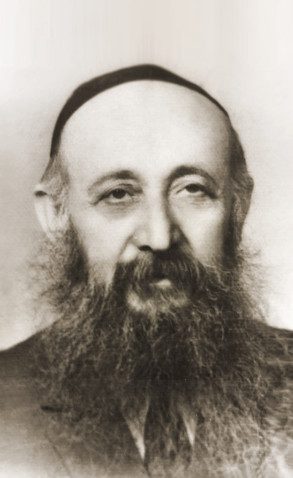
R’ Eliyahu said, “But I wrote a book Ish U’Beiso (A Man and His Home) and that’s what I do!”
The Rebbe replied, “A young man from the yeshiva Eitz Chaim could have written it too. Although it wouldn’t have your flair, the contents would be the same, whereas when it comes to politics, others cannot do what you can do.”
R’ Eliyahu ran for elections in 5709 and then once again, but he wasn’t elected. Then he was secretary for the chief rabbinate, but there were people who interfered in his work. In light of his bitter experiences, he fled communal work, and this is why the Rebbe tried to convince him to go back to it.
In one of their conversations, the Rebbe said, “If I had ten young married men, I could infiltrate HaShomer HaTzair and I would show them how wonderful Torah is. Then they would come in hordes.”
But R’ Eliyahu protested, “Lubavitcher Rebbe, you have fantasies! Over there, they burn everything! Everything is being burned up there!”
You must remember that these were the years when thousands of immigrants from North Africa emigrated to Eretz Yisrael, and they were divided according to parties. In other words, each party, according to its size, was allotted a certain number of immigrants to its institutions. There were immigrants who had a connection with Chabad in Morocco, but Chabad received nothing since it wasn’t a party.
Later on, the Rebbe began work along the lines of u’faratzta, and began infiltrating even among the non-religious. I remember kibbutznikim who begged R’ Yisroel Leibov a”h to come and speak, to show them what Chassidus has to offer. Week after week, a few nights a week, Anash traveled to kibbutzim where they were warmly received. There was a great spiritual arousal.
The Rebbe asked for detailed reports about all the work being done among the people on kibbutzim and moshavim, and even said that they were not reporting in enough detail.
Some time later, before the Six Day War, I went to the Rebbe. Before my trip, I had Yerushalmi friends, who said, “Why do you go to the kibbutzim and moshavim to hobnob and talk with those people? Let them know who and what they are. There is nothing to them! Give it to them over the head, the way they deserve!”
I mentioned this in a note I gave to the Rebbe along with a package of letters that had been written by people from the HaTikva neighborhood. It was a big bundle of pages.
The Rebbe looked quickly through the pages and I thought that the Rebbe only saw the headings, and that later he would look at it more carefully. But to my great surprise, the Rebbe answered me regarding each letter, and each topic that was raised. The Rebbe spoke, but I felt that I couldn’t absorb it all.
I told the Rebbe that I couldn’t remember it all, especially when I didn’t know what was written in the letters.
Then I saw the Rebbe stand up and say, “Regarding what you write about the way to speak to them, in a negative fashion – G-d forbid! You put a barrier between us if you speak that way, and you won’t have anybody to talk to. They didn’t come to you to ask you what they lack. They came to ask you what Chassidus can offer them, what you have to sell, what you have to give. And this is what needs strengthening and support.”
When I returned, my Yerushalmi friends laughed at the Lubavitchers and the baalei teshuva, but the Rebbe, with his great ahavas Yisrael, said to look at the good in every Jew, and not at their deficiencies and flaws.
A Letter That Revealed Ruach Ha’kodesh
Rabbi Yaakov Edery relates:
Our family came to Eretz Yisroel a few days before Shavuos 5715 (1955). My father had passed away two years earlier, and we children came with our mother a”h. The Zionists took the little children and sent them to youth camps where they took their Yiddishkeit away from them. The immigrants didn’t know what was awaiting them. We were all naïve, and thought that the Holy Land, the land of Avrohom, Yitzchok, and Yaakov, is a land of people who want only Torah and holiness. It was a tremendously dangerous time – spiritually speaking.
They didn’t succeed with my brother Moshe and me, because we stayed with our family and did not go to a youth village. This was a miracle.
We also experienced incredible Divine providence. When we arrived at the transit camp in Ashkelon, we were walking down the street when we met Rabbi Yisroel Leibov a”h. We approached him and he set my family up in Kfar Chabad, and arranged that we go to yeshiva. We learned in Pardes, by Rabbi Yaakov Yemini and Rabbi Yosef Golani.
In our class, we had a friend by the name of Avrohom. I think he was from Beit Shaan. His father was very sick and the teacher wrote a letter to the Rebbe, in the name of the class, and asked for a bracha for his father. For three or four weeks, there was no reply.
One day, we heard that the boy’s father had passed away, but the boy still didn’t know about this. That afternoon, a letter arrived from the Rebbe for the teacher. The Rebbe wrote a letter of consolation about the passing of the boy’s father.
In those days, the mail was very slow. A letter from the U.S. arrived only after many days. That means that the letter of consolation was written before the father passed away.
Educational Advice
Rabbi Amos Karniel relates:
About thirty years ago, I lived in Kfar Maimon, a village of religious Jews, the type who wear knitted yarmulkes. In 5733 (1973), our oldest daughter became bas mitzva, and we faced serious challenges. Everybody there went mixed swimming, but our children didn’t go. The school was also co-ed.
That year, I decided to go to the Rebbe. I wrote to the Rebbe about the children and added that they were dealing with the challenges of living there. I wrote this hoping that I would get the Rebbe’s approval to continue living there.
The Rebbe answered that the older the children got, the greater their yetzer haras would be, and not to rely on how it had been until now. The fact that the children had remained strong until now was no proof to anything.
When we asked whether we should move to Kfar Chabad, the Rebbe said we should if my wife agreed.
I was working as a principal at a school in Moshav Brosh. My yechidus lasted 23 minutes, with most of the time devoted to matters of chinuch. One of my questions was about the combined 5th-6th grade, which had nine students of vastly different abilities.
One boy knew 900 Mishnayos by heart, while other children in the class were very distant from achievements like this. There was even a boy who didn’t know how to read and write, and he really wanted to switch to a regular middle school in Kfar Maimon. We thought that for the good of the class, he should remain in school, although there were reasons he should switch.
The Rebbe’s answer was that the good of the group prevailed, but not to put our foot down, but to convince him with “ways of pleasantness.”
HaTomim #13 • pp. 58-63, 57
© 2026 Beis Moshiach Magazine. All rights reserved.
This article originally appeared in Beis Moshiach #1416. You are welcome to share it with friends and family by email or in print, provided that you do not change, add to or omit any part of it, you credit the author and Beis Moshiach, and you include a link to archive.bmoshiach.org (written out in full in printed copies).
To republish this article in a newspaper, magazine, book or website, please request permission in advance at [email protected].