Why Did Dozens of Chassidim Leave Yerushalayim on Erev Pesach?
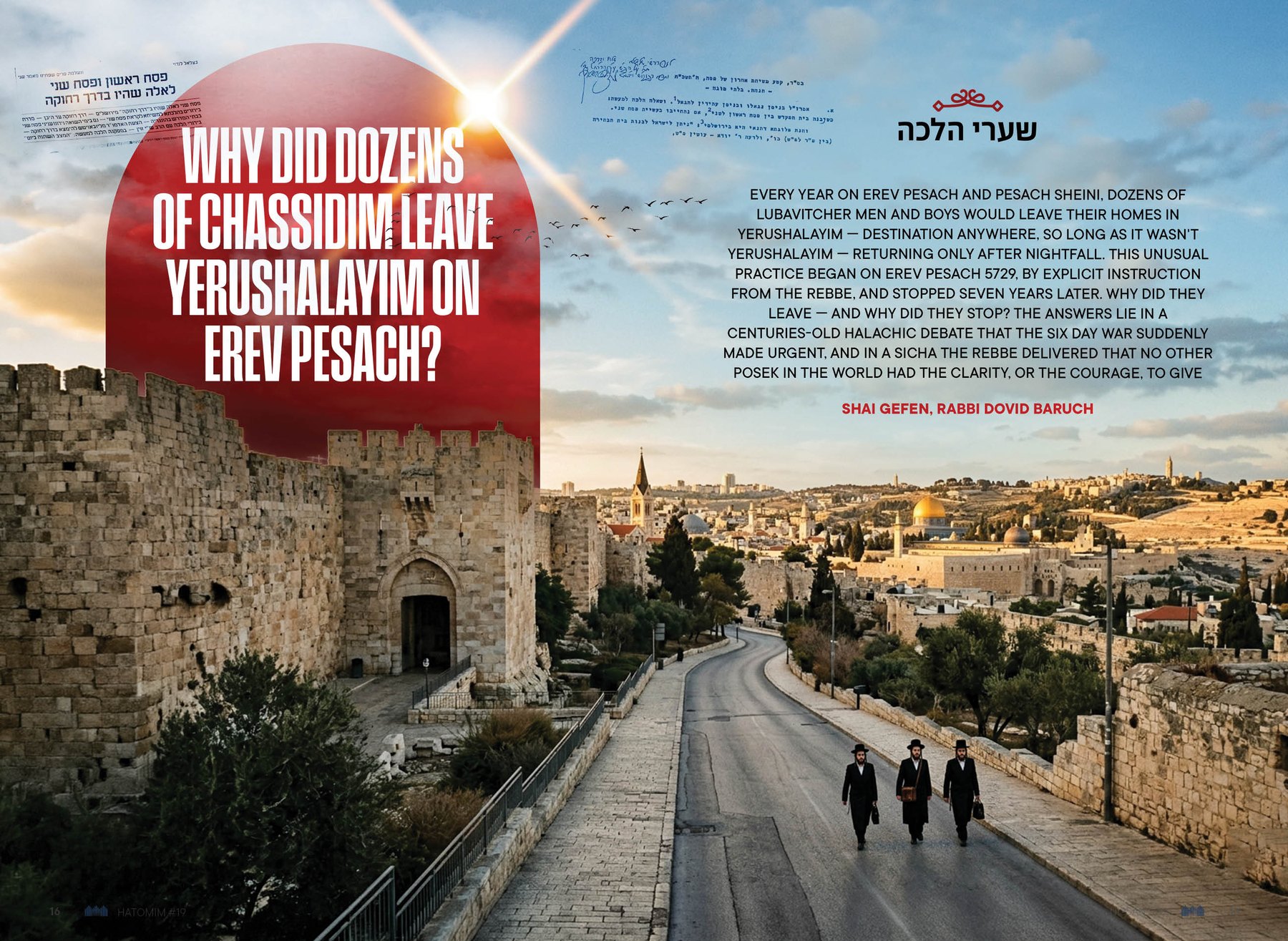
Every year on Erev Pesach and Pesach Sheini, dozens of Lubavitcher men and boys would leave their homes in Yerushalayim – destination anywhere, so long as it wasn’t Yerushalayim – returning only after nightfall. This unusual practice began on Erev Pesach 5729, by explicit instruction from the Rebbe, and stopped seven years later. Why did they leave – and why did they stop? The answers lie in a centuries-old halachic debate that the Six Day War suddenly made urgent, and in a sicha the Rebbe delivered that no other posek in the world had the clarity, or the courage, to give.
Every year on Erev Pesach, as families rushed through last-minute preparations for the Seder, dozens of Lubavitcher men and boys would leave their homes in Yerushalayim – destination anywhere, so long as it wasn’t Yerushalayim. They would return only after nightfall, when the day had ended and with it any possible obligation to bring the Korban Pesach. This unusual practice began on Erev Pesach 5729 – the second Pesach after the Six Day War – by explicit instruction from the Rebbe. Seven years later, they stopped.
Two questions frame the story: Why did they leave? And why, seven years later, did they stop?
The answers lie in a centuries-old halachic debate that the Six Day War suddenly made relevant and urgent – and in a sicha of the Rebbe on Acharon shel Pesach 5728 that no other posek in the world had the clarity, or the courage, to give.
The Rambam’s Ruling: A Kedusha That Never Left
The foundation of the entire discussion is a ruling of the Rambam in Hilchos Beis HaBechirah (6:14–15). The Rambam writes:
“We may offer all the korbanos on the Temple site, even though the Temple itself is not built … because through its original consecration, it was consecrated for that time and for eternity.…”
In practical terms: the Rambam holds the Har HaBayis (Temple Mount) retains its full sanctity even today, and that sacrifices may be brought there even in the absence of a Beis HaMikdash. The Raavad disputes this, arguing that the original kedusha lapsed when the Temple was destroyed and that a new act of consecration would be required. According to the Raavad, bringing sacrifices today without proper reconstitution of the Beis HaMikdash would be halachically invalid or worse.
The entire subsequent debate – from the 13th century to the 20th – proceeds according to the Rambam’s position. It is only because the kedusha remains that the question of bringing the Korban Pesach can even be raised.
A Question Centuries In The Making
Around the year 5017 (1257 CE), Rabbi Yechiel of Paris – one of the great Baalei HaTosafos – traveled to Eretz Yisrael with the explicit intention of bringing the Korban Pesach. A talmid who accompanied him confessed afterward that he had never managed to raise the critical questions – “What do we do about our tumah? And where is the verified Kohen?” – because he had been too preoccupied with other matters. The Korban was never brought. But the story became a landmark in the halachic literature: proof that a major Rishon had seriously contemplated bringing the Korban Pesach long after the Churban.
Did Rabban Gamliel Bring the Korban Pesach After the Churban?
The Gemara in Sanhedrin records that Rabban Gamliel once cited the condition of the lambs and doves as a reason to add a month to the year – a consideration that is only relevant when there is an actual Korban to bring. The question posed to the Yaavetz (Rabbi Yaakov Emden) was sharp: since this Rabban Gamliel appears to be Rabban Gamliel d’Yavneh, who led the Jewish people after the Churban – why would the fitness of the lambs matter?
The Yaavetz offers a striking primary answer: sacrifices were in fact brought after the Churban, at least for a period, while the Mizbeach still stood even without the Beis HaMikdash around it. A Mishna in Pesachim lends further support, recording that Rabban Gamliel instructed his servant Tavi to roast the Korban Pesach – and the Yaavetz argues this too was Rabban Gamliel d’Yavneh, meaning it occurred post-Churban. The Yaavetz calls this his primary answer, and it became a cornerstone for those who argued that bringing the Korban Pesach today is at least theoretically possible.
But the Yaavetz offers a second answer as well – one that cuts even deeper. Perhaps Rabban Gamliel had never brought the Korban at all. He cited the condition of the lambs not because he intended to bring a Korban that year, but because “every day we await salvation and redemption coming soon.” Living in anticipation of the imminent rebuilding of the Beis HaMikdash, Rabban Gamliel felt it necessary to prepare properly for the Geula – to ensure the flocks would be ready and fit when the moment arrived. Since the calendar was still in the hands of Beis Din, he added this as a factor in intercalating the year: so that by Pesach, when the Beis HaMikdash might – please G-d – already stand, the korbanos would be in proper condition.
The two answers represent two very different worlds. The first tells us that Jews brought the Korban Pesach even in the ruins of history. The second tells us that even when they could not, they lived as if they soon would.
Centuries later, the question erupted into full-scale controversy – triggered by a rare window of opportunity. For roughly four hundred years (5260–5674/1500–1914), Eretz Yisrael languished under Ottoman rule, with Jews harassed and Har HaBayis entirely inaccessible. Then, in the early 19th century, came a brief interlude: the Egyptian ruler Ibrahim Pasha conquered the land (5590–5600/1830–1840), and conditions for Jews improved markedly. It was in this climate that Rabbi Tzvi Hirsch Kalisher of Thorn (Prussia) advanced his bold proposal: to renew the offering of the Korban Pesach. He lobbied politically, approaching the philanthropist Anshel Rothschild with a request to purchase Har HaBayis or secure permission from the authorities to bring sacrifices there. Simultaneously, he developed the halachic framework in his work Derishas Tzion. Rabbi Kalisher sent his arguments to his rebbi, Rabbi Akiva Eiger, who brought in his son-in-law, the Chasam Sofer. Both raised serious halachic objections. The resulting exchange – spanning multiple responsa and pamphlets from leading halachic authorities across Europe – established the landscape of the debate the Rebbe would engage after the Six Day War.
The Four Halachic Obstacles
The debate around bringing the Korban Pesach today revolves around four major obstacles, each of which must be addressed before the question can proceed:
1. Sanctity of the Har HaBayis
As noted above, the entire discussion proceeds according to the Rambam’s ruling that the Har HaBayis retains its sanctity. The Raavad’s dissent – that the kedusha lapsed with the Churban – would preclude the question entirely.
2. The Location of the Mizbeach
The Rambam writes that the location of the Mizbeach is precisely fixed and may never be changed. Without knowing where it stood, there is no way to approach the avoda.
Rabbi Kalisher proposed two methods of measurement. The first: begin from the Kosel, the Western Wall, whose position is known, and measure inward using the dimensions recorded in Maseches Midos. The problem is that the Mishna gives only approximate figures – “most” of the Har HaBayis was on the south, “a portion” on the west – not the precise numbers needed for a definitive calculation.
The second proposal, attributed to Rabbi Eliyahu of Greiditz: measure from the Even HaShesiya – the Foundation Stone beneath the Dome of the Rock, traditionally identified as the spot where the Aron stood in the Kodesh HaKodoshim. From there, one could count outward the known dimensions of the Heichal, Ulam, and the space between the Ulam and the Mizbeach to pinpoint the altar’s location.
The difficulty: the identification of the rock beneath the Dome as the Even HaShesiya comes from Arab tradition, not from a verified Jewish chain of transmission. While the Radvaz accepted this identification; others disputed it. Another problem: The rock itself measures roughly 13 by 18 meters – far larger than the entire Kodesh HaKodashim, which was only 20 amos wide. The unresolved dispute about the size of the amah (cubit) adds yet another layer of uncertainty to any measurement-based approach.
3. Tumas Meis
In our times, we are all tamei meis (ritually impure from contact with the dead), since we no longer have the para aduma to purify ourselves. However, the resolution adopted by all authorities who permit bringing the Korban is that tumah is “dechuyah b’tzibbur” – when the entire community is impure, the prohibition is set aside and the Korban may be brought. This applies specifically to korbanos tzibur, public sacrifices; the Korban Pesach is treated as a communal offering in this regard.
4. Bigdei Kehuna – Priestly Garments
A Kohen who performs the avoda without his proper vestments is considered a “zar” – a non-Kohen – and his service is invalid. The four garments of a regular Kohen include an avnet (sash), which according to halacha must contain techeiles – a specific blue dye derived from the chilazon. Rabbi Kalisher argued that the Rambam’s silence on the source of the dye in the context of priestly garments implies it can be obtained from any source. This was rejected by Hagaon R’ Dovid Friedman in his work Sheilas Dovid, who cited an explicit Tosefta requiring the same chilazon-derived techeiles for both tzitzis and priestly garments.
Beyond these four, the authorities who discussed the matter raised many more unresolved questions, among them: whether a Kohen of reliably established lineage could be found; which korbanos would require a machatzis ha’shekel contribution beforehand; and whether the minchas chavitin – the inaugural offering brought by a new Kohen – must precede all other avoda and is not overridden even by communal tumah.
The Proofs Against Bringing The Korban Today
The four obstacles above are practical difficulties. But several of the poskim the Rebbe referenced raised a more fundamental objection: perhaps bringing the Korban Pesach today is simply wrong – not merely impractical but halachically prohibited, or at minimum wholly premature. Their arguments:
1. The Pasuk in Vayikra: The Torah states: “And I will make your sanctuaries desolate, and I will not smell the fragrance of your offerings” (Vayikra 26:31). The Mishna in Zevachim rules that a sacrifice must be brought “for the sake of a pleasing fragrance.” If Hashem has declared He will not accept our offerings during the time of exile, then bringing them may be intrinsically invalid.
2. The Order of Shemoneh Esrei: The blessings of Shemoneh Esrei follow a deliberate sequence: first “Boneh Yerushalayim,” then “Tzemach Dovid” (which includes the coming of Moshiach and the rebuilding of the Beis HaMikdash), and only then “Retzei” (the restoration of the avoda). The sequence implies that the Beis HaMikdash must first be rebuilt before the sacrificial service can resume.
3. The Rambam in Hilchos Melachim: The Rambam writes explicitly that Moshiach will first build the Beis HaMikdash, gather the exiles of Israel, and only then will the sacrifices resume. The order is unambiguous: Mikdash first, Korbanos second. No independent initiative to bring sacrifices before Moshiach arrives is contemplated.
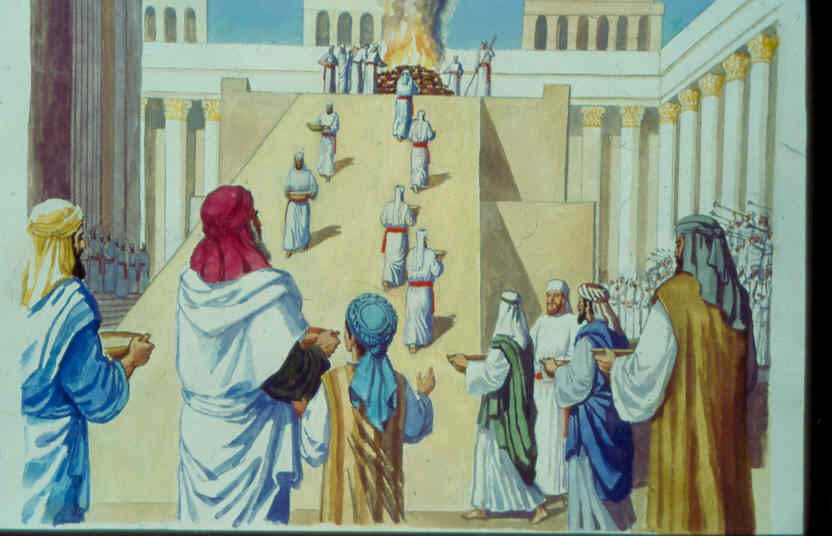
4. The Yerushalmi: The Rebbe himself cites a passage in the Yerushalmi (brought in Likkutei Sichos vol. 12) which states that the question of Pesach Sheini only arises “once the Beis HaMikdash has been built.” The plain reading is that the prerequisite for any discussion of communal Korban Pesach – including Pesach Sheini – is the existence of the Beis HaMikdash itself.
The Halachic Debate After The Six Day War
For centuries, the question of bringing the Korban Pesach remained theoretical. Under the Ottoman Empire, under the British Mandate, and under Jordanian rule of the Old City (5708–5727/1948–1967) – when Jews were barred even from the Kosel – Jewish sovereignty over Har HaBayis belonged to the world of prayer, not halachic calculation.
Then came Iyar 5727 – June 1967 – and the Six Day War. In six days, Israel captured the Old City, the Kosel, and Har HaBayis. For the first time in nearly two thousand years, Jews exercised sovereignty over the Har HaBayis. The theoretical became practical.
Halachic authorities in the months after the war were compelled to revisit whether the Korban Pesach could now be brought. Most major poskim, led by the Rambam, agree that the Korban Pesach can be brought even without a Beis HaMikdash standing. As for the location of the Mizbeach – the poskim rule that uncertainty alone does not preclude bringing the Korban. On the other hand, many of the other factors were missing.
A number of halachic works were published on the subject, but none of them addressed a related critical point: if bringing the Korban is even possibly obligatory, then remaining in Yerushalayim without doing so is itself a potential violation. Only someone who was b’derech rechoka, distant enough to not be able to reach Yerushalayim on time, was exempt. Otherwise, if the whole tzibur was tamei, a serious potential issue kareis was present.
A widespread custom of going to the Kosel on Erev Pesach to recite the passage describing the Korban – “to remember the offering our fathers brought” – developed, but considering the above, it may have been placing well-intentioned Jews in precisely that position.
Why The Rebbe Said: Stay Out Of Yerushalayim
This is what the Rebbe addressed on that Achron Shel Pesach. The Rebbe’s sicha did not rule that the Korban Pesach must be brought. Nor did it rule that it may not be. It ruled that the uncertainty itself created an intolerable risk: the safeik that one might be obligated – combined with the severity of the potential transgression – required removing oneself from the situation entirely.
The Rebbe was explicit about why the majority of poskim forbid bringing the Korban today. He cited the proofs listed above, and noted that they had been accepted by many leading authorities. This was not a ruling that the dissenting poskim were right – it was a ruling that their position was serious enough that no one could afford to ignore it.
The Rebbe was crystal clear:
“My conclusion is that there is a safeik and a s’feik s’feika in this matter. Therefore, those who are far away should not go up to Yerushalayim – and preferably, those who are there should leave.”
Two proofs that the Rebbe’s ruling did not follow the permissive opinions: First, his own explicit language – “since many forbid bringing the Korban Pesach today and have rejected the arguments of those who permit it” – makes clear he was not endorsing the permissive view. Second, the language of safeik and s’feik s’feika throughout the sicha is the language of doubt, not of definitive ruling. The Rebbe was not saying: bring the Korban. He was saying: the risk of being obligated is real enough that you should not be there.
The ruling was thus a precautionary one – driven by the severity of potential kareis – not a positive ruling in favor of the permissive opinions.
The Rebbe’s Sicha
In that sicha of Acharon shel Pesach and subsequently edited by the Rebbe for publication – the Rebbe addressed the issue at length. Since Pesach Rishon of that year had already passed, the sicha focused on Pesach Sheini: the Rebbe argued that just as the Korban Pesach can be brought in a state of tumah on Pesach Rishon when the whole community is impure, the same applies on Pesach Sheini – raising the same halachic question about remaining in Yerushalayim without bringing it.
The Rebbe’s ruling: “In my humble opinion, one should refrain from being within fifteen mil of Yerushalayim on 14 Iyar.” Fifteen mil corresponds to approximately 8.9 miles or 14.4 kilometers – the halachic definition of “near” for purposes of the Korban Pesach obligation. In his hagaha (editorial notes) to the published sicha, the Rebbe added explicitly that everything stated about Pesach Sheini applied equally to Erev Pesach itself.
Why only now, and not throughout all the centuries since the Churban? The Rebbe’s answer was direct: “Until after last year’s war, the hand of the nations was strong.” As long as a foreign power ruled the Har HaBayis, the practical possibility of bringing the Korban did not exist. Now that Israel exercised sovereignty, the obligation came into force, and with it the prohibition against remaining in the city without fulfilling it.
The Correspondence With Rabbi Zevin
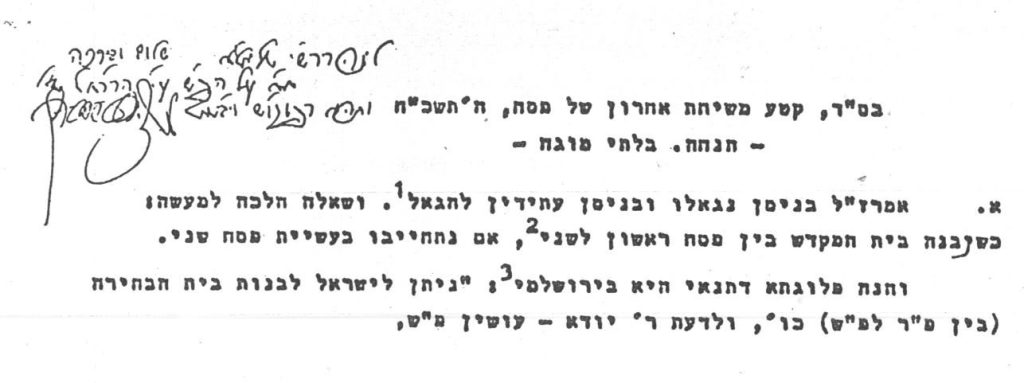
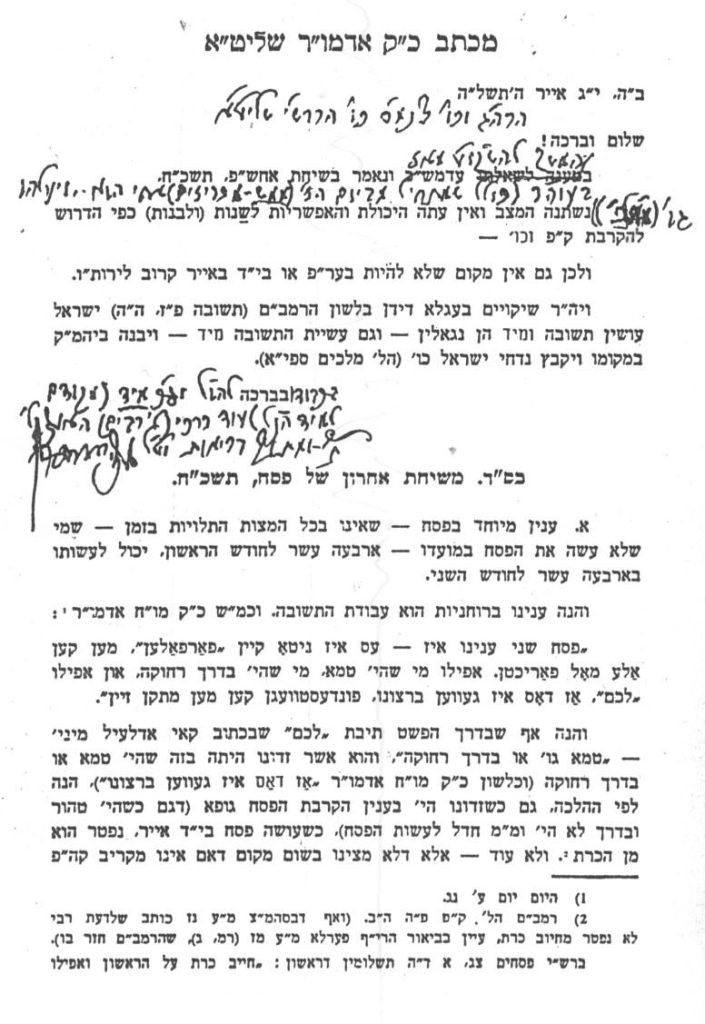
In an unusual gesture, the Rebbe sent the sicha to the gaon Rabbi Shlomo Yosef Zevin, a leading Chabad rav in Eretz Yisrael, an acclaimed halachic author, and editor of the Encyclopedia Talmudis. The sicha was accompanied by a handwritten dedication wishing him a refua shleima.
Rabbi Zevin – himself a towering halachic authority – responded with a lengthy letter dated 3 Sivan 5728, raising numerous objections. Among the most pointed: “Does this mean that all the residents of Yerushalayim – some quarter of a million people – must leave the city on Pesach Sheini?” Rabbi Zevin also pressed a “sheilas tam” – a ‘simple’ question: where do we find a din of derech rechokah on Pesach Sheini at all? The Torah only mentions it in connection with Pesach Rishon. Rabbi Zevin concluded with characteristic humility: “I ask the Rebbe’s forgiveness for daring to express my surprise. ‘This is Torah and I need to learn it.’”
The Rebbe replied in detail. The full exchange was later published in Igros Kodesh, vol. 24. On the question of large numbers leaving, the Rebbe wrote: “Thousands and tens of thousands – G-d-fearing, punctilious Jews – [must consider this]. It is a foundation of my reasoning that since this matter entails (1) a possible kareis, while (2) the burden on males from age thirteen and up is only a few hours away from Yerushalayim, this is not such a great imposition – all the more so for those already on the road who need only refrain from pressing forward into the city at that precise time.”
On the absence of derech rechokah from the laws of Pesach Sheini – the Rebbe’s answer was sharp and elegant: the Mishna in Pesachim lists all the differences between Pesach Rishon and Pesach Sheini. The fact that “derech rechokah” does not appear on that list, and no authority ever noted it as something “the Tanna omitted,” implies that the exemption applies to Pesach Sheini as well. The Rebbe noted this was consistent with the Tosafos in Pesachim, which lists the differences that were in fact omitted from the Mishna – and derech rechokah is not among them.
What Lubavitchers Actually Did
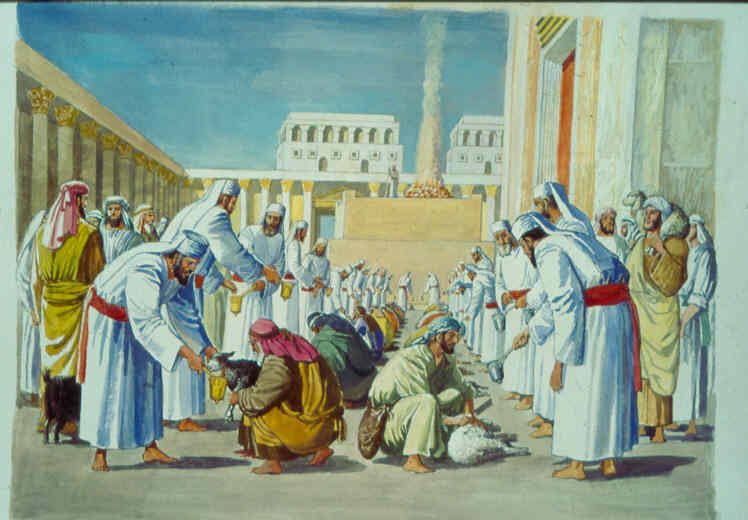
For eight years – from 5729 until 5735 – dozens of Lubavitcher Chassidim acted on the Rebbe’s ruling and left Yerushalayim on Erev Pesach and Pesach Sheini. The logistics were strikingly different for the two occasions: on Pesach Sheini, one could take a bus out of the city and return at nightfall. Erev Pesach was far more demanding – leaving the house in the middle of final preparations for the Seder was no small matter.
The well-known mashpia Rabbi Moshe Weber spent the first Pesach after the Rebbe’s horaa (5729) at the home of Rabbi Yeshaya Hertzel, one of the founders of Nachalas Har Chabad, and continued this practice every year until 5735. Rabbi Shmuel Shneersohn, head of Kollel Chabad in Eretz Yisrael, traveled either to his brother-in-law in Kfar Chabad or to Hadassah Ein Kerem hospital – far enough to satisfy the halachic requirement – and made a point of publicizing both his departure and the reason for it.
Rabbi Yisroel Glitzenstein recalls: “Not all of Anash were able to leave – it was no small matter to uproot yourself on Erev Pesach. But dozens did. On Pesach Sheini, even more people left. As a bachur, I would leave from midday on 14 Iyar and stay until the evening hours. There were groups of Anash who would walk back from Motza to Yerushalayim, timing their return for after sunset, when the time for the Korban had already passed.”
Rabbi Shlomo Dovid Cohen recalls that those who couldn’t travel to relatives in other cities found another solution: they would calculate carefully where “derech rechokah” began, spend the critical afternoon hours outside the boundary, and walk back in only after nightfall. One year when Pesach Sheini fell on Shabbos, Rabbi Cohen stepped off the bus at Motza before midday on Friday the 14th of Iyar, verified he was carrying nothing muktzeh, and began the walk home only toward evening.
Rabbi Zevin himself did not leave – it was not feasible for him – but he stopped going to the Kosel on Erev Pesach to read the Korban Pesach passage. His grandson, Rabbi Nachum Zevin, recalls asking him why he had not followed the Rebbe’s suggestion. “My grandfather answered: ‘If the Rebbe had said it as a directive of a Rebbe, we would have gone immediately. But since the Rebbe framed it as a halachic concern – a matter of safeik and s’feik s’feika – there was room to be lenient.’”
Rabbi Tuvia Blau, rav of the Chabad community in Neve Yaakov, put it simply: “The Rebbe is a man of pure halacha. He measures everything by halachic criteria alone. Here, as soon as Israel was in a position of power and the theoretical possibility of bringing the Korban Pesach arose, it became a real issue – and the Rebbe pointed it out. Not one other rav or posek raised this concern. That tells you something about how precisely the Rebbe measures every detail of halacha, even the doubtful cases.”
The halachic discussion also reached the wider frum press. The well-known writer Rabbi Betzalel Landau, a’h – a regular contributor to HaModia whom the Rebbe held in great esteem (at a dollars distribution the Rebbe told him, “I read your articles in HaModia”) – devoted two articles to the subject, published on Yud-Alef Nissan 5750. The first addressed the general question of bringing the Korban Pesach today; the second focused on the Rebbe’s suggestion to be b’derech rechokah, writing: “Many of us still remember the proposal of the Lubavitcher Rebbe at that time, to those who live in Yerushalayim, to be at a distance from Yerushalayim on 14 Iyar.” He quoted the Rebbe’s answers to Rabbi Zevin’s objections one by one, and concluded with the Rebbe’s 5735 letter which is presented below.
A Precedent From Before The Six Day War: The Belzer Rebbe
The Rebbe was not the first to take this concern seriously. When the Belzer Rebbe, Rabbi Aharon Rokeach, zt’l, arrived in Eretz Yisrael in the winter of 5704 (1944), he insisted on settling in Tel Aviv rather than Yerushalayim – and was emphatic that he would not be in Yerushalayim over Pesach. His brother, Rabbi Mordechai of Bilgoray, zt’l (father of the current Belzer Rebbe), explained the reasoning in detail: the Belzer Rebbe was concerned about the halachic obligation to bring the Korban Pesach and wished to be in a state of derech rechokah.
It is worth noting that the Belzer Rebbe’s own view, expressed in his responsum that apperas in the aformentioned Sheilas Dovid, was that the Korban Pesach should not be brought today. His leaving Yerushalayim was thus precautionary – the same logic the Rebbe would articulate twenty-four years later: even if one holds that the Korban should not be brought, the safeik that one might be obligated is sufficient reason to remove oneself from the situation.
The Rebbe Rescinds The Ruling
In a general letter written on 13 Iyar 5735 – Erev Pesach Sheini of 1975 – the Rebbe announced that circumstances had changed: it was no longer possible to rule over the Har HaBayis, and the halachic concern was therefore no longer applicable.
In a letter to Rabbi Zevin, to which the Rebbe added a handwritten note, he explained: “Due to our many sins – beginning already on the seventh day, when [the government] effectively said ‘he is my brother’ and gave [the Arabs] a foothold – the situation has changed, and there is no longer the ability or practical possibility of instituting the necessary changes to bring the Korban Pesach. Therefore, there is no reason to avoid being near Yerushalayim on Erev Pesach or on 14 Iyar. May it be fulfilled in our time, as the Rambam writes: ‘Yisroel does teshuva and is immediately redeemed’ – and the Beis HaMikdash will be rebuilt, and the outcasts of Israel will be gathered.”
The Rebbe’s reference to “the seventh day” was pointed: from the very day after the Six Day War ended, Israeli leaders had signaled their willingness to return the Har HaBayis to Arab control. In the Rebbe’s halachic framework, that moment marked the end of yad Yisroel takifa – and with it, the practical possibility of bringing the Korban Pesach.
What happened? On the very day the war ended – the “seventh day” in the Rebbe’s language – Defense Minister Moshe Dayan handed administrative control of Har HaBayis back to the Waqf, the Muslim religious authority. The phrase the Rebbe later used to describe this moment comes from the story of Achav and Ben Hadad in Melachim: “Achi hu – he is my brother” – the moment when an enemy was treated as a partner and given a foothold he should never have been given. Whether yad Yisroel takifa – genuine Jewish sovereign authority over the site – had truly been established even in those first days became a question the Rebbe would return to.
In a remarkable act of halachic generosity, the Rebbe retroactively excused all those who had not left Yerushalayim in the preceding years. Since real Jewish sovereignty had arguably never truly been established from the very first day, there had perhaps never been a full obligation to begin with.
The Rebbe concluded his sicha of Acharon shel Pesach 5728 with a prayer that captures the deeper longing behind the entire episode: “[May we merit,] quite a bit of time before Pesach Sheini and afterward, to see the good of Yerushalayim, our holy city, and the place of our holy Temples.”
Amen v’amen.
Note: References and marei mekomos for the topics discussed in this article can be found in Issue #44 in the Hebrew “Hatomim” supplement of Beis Moshiach, available on RebbeDrive.com
HaTomim #19 • pp. 16-27
© 2026 Beis Moshiach Magazine. All rights reserved.
This article originally appeared in Beis Moshiach #1500. You are welcome to share it with friends and family by email or in print, provided that you do not change, add to or omit any part of it, you credit the author and Beis Moshiach, and you include a link to archive.bmoshiach.org (written out in full in printed copies).
To republish this article in a newspaper, magazine, book or website, please request permission in advance at [email protected].