Our Elders Showed the Way
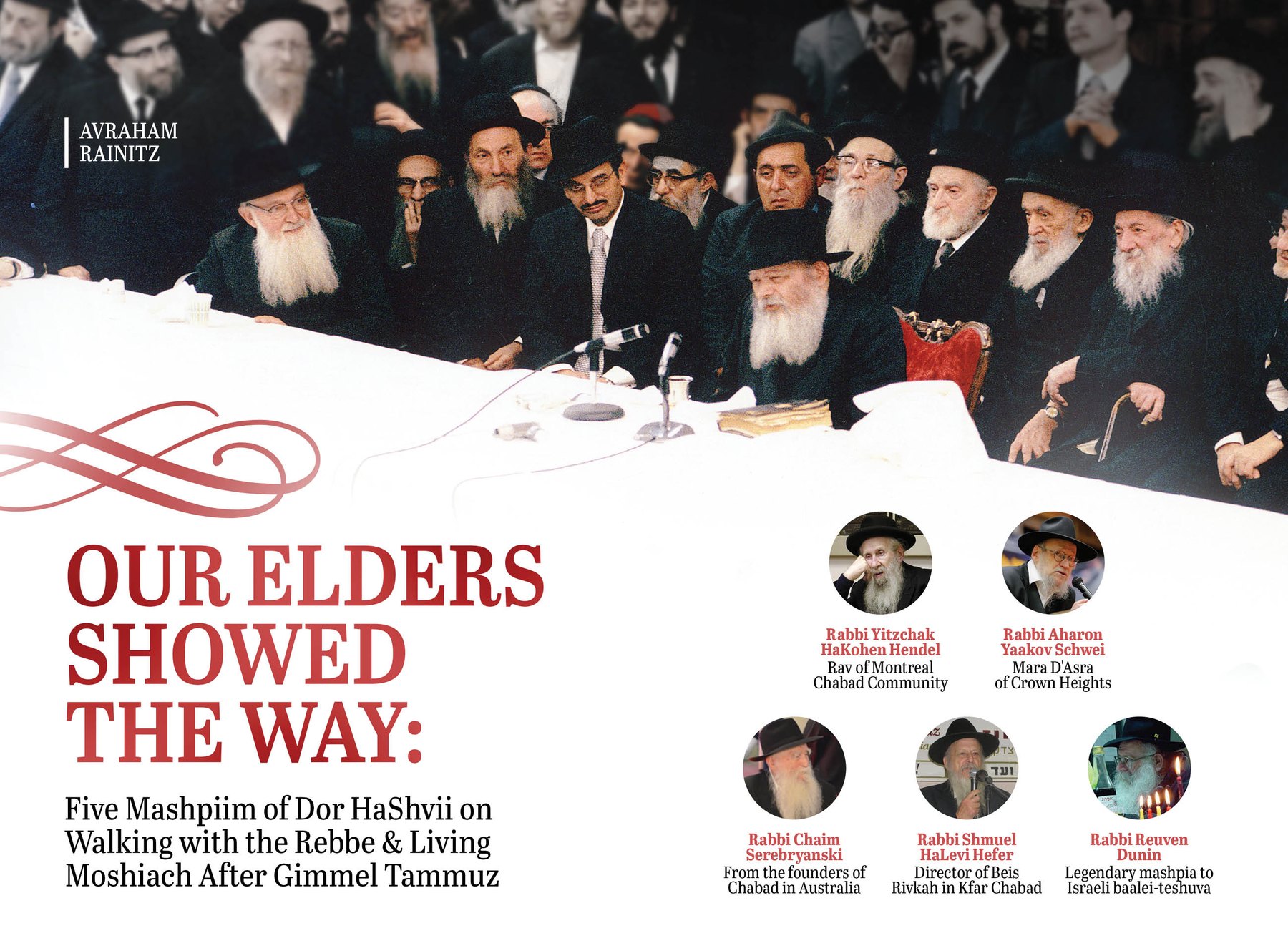
Five Mashpiim of Dor HaShvii on Walking with the Rebbe & Living Moshiach After Gimmel Tammuz
“I have always known that the practice of it is greater than its study, and this comes only through transmission from person to person, from one Chassid to another, like lighting one candle from another… And such was the custom of Anash in every generation, who were hungry and thirsty to hear a story and a good word from the elders of Anash… The elder Chassidim raised generations of Chassidim.” (Igros Kodesh of the Rebbe Rayatz, Vol. 1, p. 615)
Many decades have passed since I began writing for Beis Moshiach. Over these years, I was privileged to farbreng with many of the elder Chassidim, the majestic figures of the seventh generation. Even if things were published in the newspaper as an ‘interview,’ with those men of truth, the lions of the group, there was no such concept as an ‘interview.’ They simply sat and farbrenged; the truth poured forth from their hearts.
These were Chassidim from across the entire Chabad spectrum of the seventh generation. Some came from Russia and Ukraine, some from Poland and its regions, and some were ‘sabras’ who drew close to the Rebbe in the ‘early years.’ What they all shared was that they were raised on the knees of the elder Chassidim of previous generations, dwelt in the Rebbe’s shadow during the early years of his leadership, received personal and special closeness from him, and above all, were devoted heart and soul to fulfilling the directives of the Rebbe MH’M.
If the conversations of elder Chassidim are precious throughout the year, how much more so in the days surrounding Gimmel Tammuz. In these days, when the physical reality visible to our physical eyes seems to contradict the true reality described in the Rebbe’s sichos, we need more than ever the guidance of the elder Chassidim, who paved the way for the pure Chassidishe chinuch of the younger generation, in the virtues of genuine hiskashrus and devotion to the Rebbe.
“If you burn with a desire to see the Rebbe — increase your proclamation of ‘Yechi HaMelech’!”
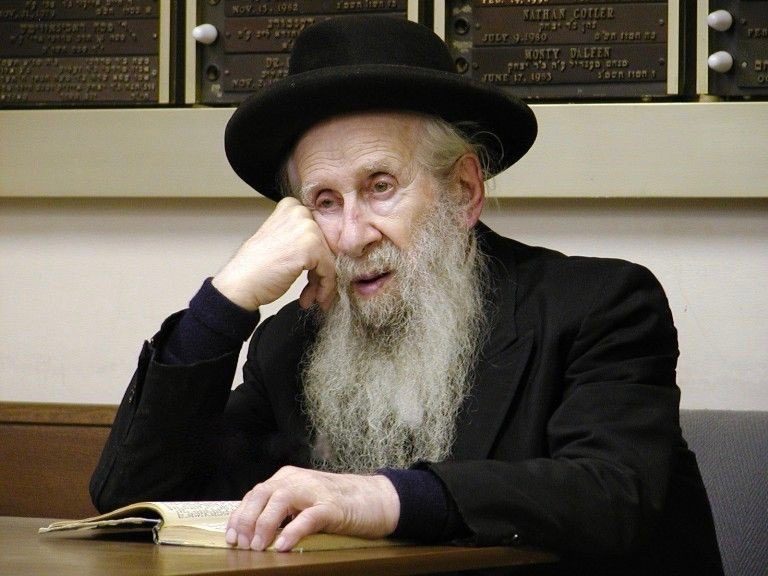
“In every generation, the heads of the Chassidic community, each in his city and place of residence, gather the public and illuminate with the Torah of Chassidus, and speak extensively and calmly about the avoda sheb’lev—which is prayer. The elder Chassidim guide the young men, share with them the ways of their own youth, and teach them good character.”
(Igros Kodesh of the Rebbe Rayatz, Vol. 2, p. 375)
One of the leaders of the Chassidic community who led the emuna in the Rebbe as Moshiach was the Gaon and Chassid Rabbi Yitzchok Hendel a’h. Rabbi Hendel learned in Tomchei Tmimim Yeshiva in Warsaw, and merited to be among the ‘chozrim’ of the Rebbe Rayatz. After the war, he arrived in Montreal, Canada, where he was among the founders of the yeshiva and served at its head. During yechidus with the leaders of the Chabad community in Montreal, the Rebbe Rayatz appointed him as rav of the Chabad community. Over the years he was appointed a member of the city’s rabbinical council, and in his later years was crowned as Av Beis Din of Montreal.
During the summer of 5751 and the winter of 5752, when the Rebbe proclaimed the Besuras HaGeula to the entire world and in his holy sichos hinted most clearly that the Nasi HaDor is the Moshiach of the generation, Rabbi Hendel was among the foremost rabbis who publicized the Besuras HaGeula every step of the way, without watering down the message. He himself signed and ensured that additional rabbanim signed the psak halacha declaring that the Rebbe is “b’chezkas Moshiach”—presumed to be Moshiach.
After Gimmel Tammuz 5754, in those difficult and turbulent days when a large portion of the Chabad Chassidic community wandered about, confused and bewildered before the strange reality that had suddenly emerged, Rabbi Hendel became one of the most prominent figures in the Chabad world regarding the clarification of the Chassidim’s faith in the Rebbe as Melech HaMoshiach.
When we spoke about the concealment and hiddenness after Gimmel Tammuz, I asked him how one can know what the right path is. To my question, he replied emphatically: “Der Rebbe hot altz bavarent” [The Rebbe anticipated everything]; one only needs to search carefully in the Rebbe’s sichos.
He then shared with me one of the insights he found in the Rebbe’s teachings: “In the sicha of Beis Nissan 5748, the Rebbe revealed to us the path to bring about the hisgalus of Moshiach, and said that the people of the generation can also effect an increase in the matter of life for the leader of the generation, through the proclamation ‘Yechi HaMelech.’ And in the Rebbe’s holy words: ‘There must be a primary addition in the matter of life, (also) through the action of the people who proclaim “Yechi HaMelech,” the content of which proclamation is that the time has already come for “Awake and sing, you who dwell in the dust,” my father-in-law, the Rebbe, the leader of our generation, and further, “Awake and sing, Dovid Malka Meshicha!”
“When one contemplates these awesomely magnificent words—some of which were written in the Rebbe’s own holy handwriting!—that each and every one of us can effect a primary increase in the life-force of the leader of the generation, then every Chassid in whom burns a yearning to see the Rebbe strives to add to and strengthen the matter of the proclamation of ‘Yechi HaMelech,’ which is the path to removing the dreadful concealment and hiddenness, and is what brings closer and hastens the longed-for moment when we will again see the Rebbe with our physical eyes.”
Rabbi Hendel further emphasized that “since we find ourselves in a time of astounding concealment and hiddenness, a trial unlike any since the Holy One, blessed be He, chose the Jewish people and appointed Moshe Rabbeinu as the leader of the generation, it is most natural that the innermost and deepest soul-desire of every Chassid is to end this terrible situation, in order to again see the leader of the generation in physical reality. And when a Chassid hears from the Rebbe that there is a proclamation that effects an increase of life in the King, this proclamation immediately becomes a central focus for him!
“And above all, since Simchas Torah 5753, the ‘Yechi’ proclamation became a central focus with the Rebbe’s direct approval and encouragement, as for over a year the Rebbe emerged nearly daily and personally encouraged the proclamation of ‘Yechi.’ Every Chassid remembers those special moments when we stood before the Rebbe and proclaimed ‘Yechi Adoneinu’ to add life to the Nasi HaDor and to hasten the revelation of Melech HaMoshiach.
“I remember,” Rabbi Hendel shared with me a particularly moving personal moment, “how I stood close to the Rebbe on one of those occasions, and blessed the Rebbe with the Birkas Kohanim and with ‘Yechi Adoneinu,’ and the Rebbe answered ‘Amen’!
“When we seek to ‘live with the Rebbe,’ each person recalls the last time he saw the Rebbe, and ‘lives’ with that. For most Chabad Chassidim, that last time was at the holy occasion of the ‘Yechi Adoneinu’ proclamation before the Rebbe’s holy countenance, and this is yet another reason why precisely this matter has become central and essential in a Chassid’s life.”
For Rabbi Hendel, the chayus in inyanei Moshiach was an inseparable part of a complete tapestry of divine service in a pnimiyusdike way. When we spoke about the need to live with Geula and Moshiach, he told me: “What does it mean to ‘live with Geula and Moshiach’? During davening we must concentrate on this. In the bracha of ‘Goel Yisrael’ we must focus and request not only the very matter of the Geula, but also that the Rebbe will redeem us. We must constantly ask for the coming of Moshiach, and remember who Moshiach is.”
He emphasized that the belief in the Rebbe as Moshiach must be genuine and inward. And if things are sincere, it is clear that the tefilla of a Jew who is permeated with true anticipation of Moshiach’s coming must be considerably more serious.
He shared with me, among other things, what he said to his community members: “If you truly want Moshiach, concentrate more intensely on the words ‘the offspring of Dovid Your servant, speedily cause to flourish,’ and on all the parts of tefilla dealing with anticipation of the coming of Geula and the rebuilding of the Beis HaMikdash.”
“When things are clear within us, they will be accepted in the world!”
“The elder Chassidim are the ‘midwives’ of the Chassidim… The essential thing is feeling, to feel. And in order to feel, one requires an entirely different kind of training. A person attains this training when he ‘receives’ well from the elder Chassidim.”
(Likkutei Diburim, Vol. 3–4, p. 502)
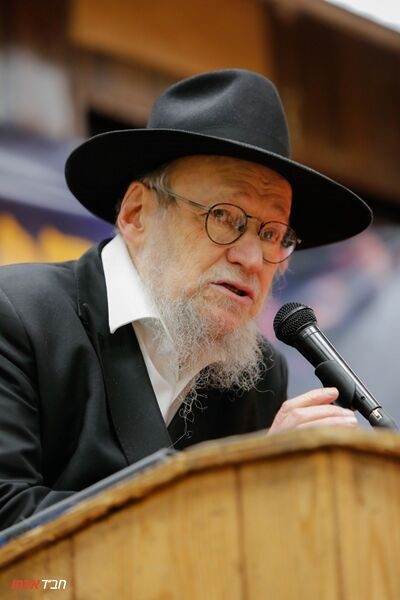
One of the majestic figures of the Crown Heights neighborhood was the Gaon and Chassid Rabbi Aharon Yaakov Schwei a’h. For many years he served as an educator and exerted his influence in the neighborhood’s institutions. For over fifteen years he served as the Mara d’Asra and member of the Beis Din of Crown Heights. In his youth, he studied with mesirus nefesh in the underground yeshiva in Samarkand from where he wandered to Brunoy, France, and then to Montreal, Canada. At all those stations in his life, Rabbi Schwei was privileged to receive from the ziknei ha’rabbanim and mashpiim of Chabad Chassidus.
Alongside his great erudition and expertise in halachic matters, he was a Chassid with a warm and sensitive heart. When he spoke at farbrengens on topics requiring strengthening and inspiration, he would burst into weeping from the depths of his heart, and in a broken and pained voice would deliver the message he wished to convey.
Even after being appointed Mara d’Asra of Crown Heights, the topic of chinuch was in his blood. When we spoke about the current situation, he first wanted to speak about educating children, and emphasized: The best way to educate a child to live with the Rebbe is when one places emphasis on the chayus in inyanei Geula and Moshiach. Children do not connect to something that was in the past. They tend to connect much more strongly to things that exist in the present. Therefore, when one educates children that the Rebbe is alive and present and is with us in the present, they live with it very strongly. One sees tangibly that those who live with Moshiach and educate their children this way have very great success.
As a community rabbi, Rabbi Schwei did not ignore those who take a different approach, and clarified that it is clear that those who employ other approaches in chinuch also do so with the intention of connecting to the Rebbe, and certainly they too have siyata d’shmaya. The Rebbe once said about the Rebbe Rayatz that he is a “gutter” [a good one], and therefore he will assist anyone who wishes to connect to him. The difference is only that one who relates to him as a Rebbe dwelling in the supernal treasuries, he assists him as much as possible from afar, from the supernal treasuries; but one who relates to him as a living and present Rebbe who is here below with him, he assists him as much as it is possible to assist when one is in close proximity. And truly, those who believe that the Rebbe is alive and present, and live with this and educate accordingly, merit the most sublime revelations.
From the chinuch of children we moved on to speaking about the Besuras HaGeula. Rabbi Schwei had a clear approach on the topic, and as with every question in the realm of Chassidic leadership, he emphasized: It suffices to observe the Rebbe’s conduct in order to know the correct path. The Rebbe utilized every opportunity to speak about the Geula. And in this itself one sees that the more the years passed, the more the pace of sichos about the Geula increased. In the years of the ‘mems’ (the 80s), the Rebbe engaged in this topic much more than in the ‘lamed’ years (the 70s), and in the ‘nun’ years (the 90s) the Rebbe’s sichos are replete with inyanei Geula.
In light of the Rebbe’s conduct, there is no doubt that today one must publicize the Besuras HaGeula far more than we publicized it in the ‘nun’ years, and far more than last year, especially since we are now closer to the Geula!
In his view, after the Rebbe declared that the world is ready to be mekabel Moshiach, and after the Rebbe encouraged the singing of “Yechi Adoneinu” publicly, there is no problem in publicizing the identity of Moshiach. The only problem that can arise is when we are afraid…
“If there are those who do not accept the Rebbe’s message,” he said firmly, “it is only our fault. That we do not believe in it sufficiently, and when words do not come from the heart, so it is hard for them to enter the heart.”
Rabbi Schwei summarized the matter by saying: “That is the whole story. ‘We were in our own eyes as grasshoppers,’ and therefore ‘so we were in their eyes.’ When we stop being ashamed of the Rebbe’s words and his clear directives to publicize the Besuras HaGeula, the words will automatically be accepted without any opposition.”
Rabbi Schwei wished to encourage and strengthen the publication of the weekly Beis Moshiach, which every week brings the light of faith, the fire of hiskashrus, and the warmth of true Chassidic spirit to thousands of Chassidic homes around the world. “I have no doubt in my heart,” he said, “that at the Rebbe’s hisgalus, you will stand in the front row to greet him, and the Rebbe will thank you for the wonderful work you do, and for having strengthened the emuna in everything he said.”
“We connected to the Rebbe, even when we could not see him”
“He should meet with the elder Chassidim who are nearby, and they will guide him in this through the experience they had in similar cases.”
(Igros Kodesh of the Rebbe, Vol. 13, p. 350)
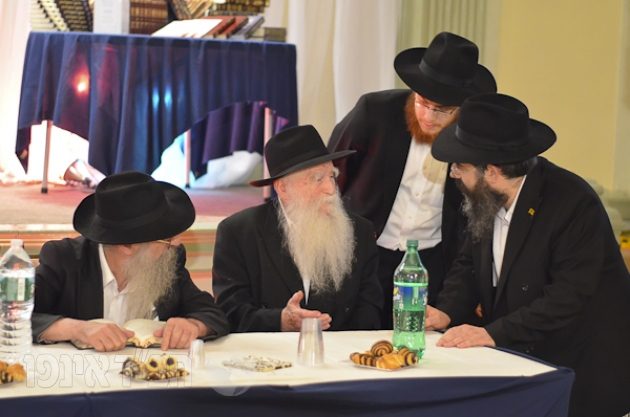
For a long time I would meet weekly with the elder Chassid, Rabbi Chaim Serebryanski a’h, for a ‘weekly farbrengen,’ in which he shared with me many of his memories about his father’s enormous activity in establishing Chabad institutions in Australia. Reb Chaim was not a man of many words, yet it was nonetheless captivating to hear from him a pure and refined Chassidic perspective.
One year, approaching Gimmel Tammuz, when we spoke about hiskashrus to the Rebbe in a time of concealment and hiddenness, Reb Chaim said: “We also had a similar situation…” And he told the following:
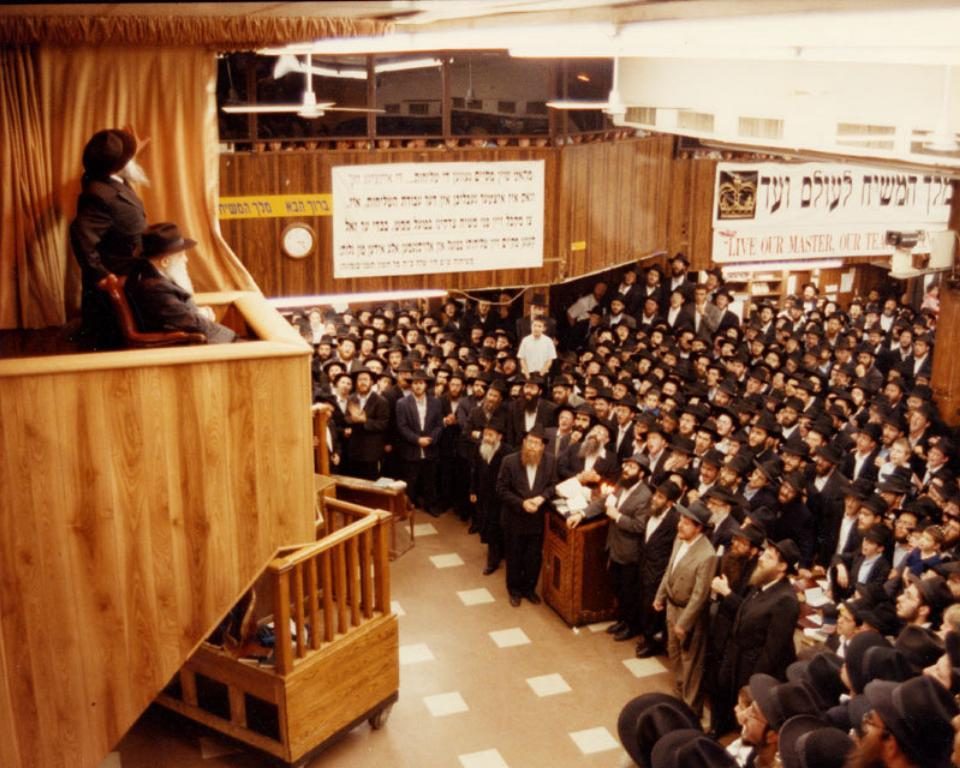
“When we were in Russia, we never dreamed that a day would come and we would see the Rebbe. From when the Rebbe Rayatz left Russia in the year 5688 (1928), until we arrived in Paris in 5707 (1947), there was no possibility of traveling to the Rebbe. But even though we did not see the Rebbe, we strengthened our connection to the Rebbe and fulfilled his directives. There were Chassidim who required mesirus nefesh in order to fulfill the Rebbe’s ratzon, and there were even those who literally gave their lives. All this in order to remain connected to the Rebbe, even though they could not see him at all.
“What strengthened us during those years was the repeated study of the maamar ‘Ein HaKadosh Baruch Hu Ba B’terunia 5685,’ in which the Rebbe Rayatz writes that in this time, powers are granted greater than what the Jewish people had at the time of the Beis HaMikdash. There is no doubt that today as well, when we again do not merit seeing the Rebbe, those same exalted powers are granted and we have all that is needed to remain connected to the Rebbe despite the concealment and hiddenness.”
In Reb Chaim’s eyes there danced a spark of Chassidic wisdom, intertwined with a burning emuna peshuta. I recall when he said to me with confidence: “The Rebbe is here in this physical world, even though we do not see him. And when we did see him, did we see the Rebbe’s essence? We saw only the body, but had no comprehension of the Rebbe whatsoever!”
One day Reb Chaim shared with me the following story, from which he drew a lesson:
“My uncle, Rabbi Bentzion Shem Tov, lived in England but would come to the Rebbe frequently. In 5712 (1951–52) an entire year passed in which he did not visit the Rebbe. When he arrived in 5713, the Rebbe asked him what had happened during the year and he responded that there had been nothing particularly new. The Rebbe was astonished and said: ‘How can that be? We are a year closer to the coming of Moshiach!’
“These words must echo in our ears when we speak about how many years have passed since Gimmel Tammuz. We are many years closer to the coming of Moshiach! It is thus understood how greatly we must intensify our hiskashrus to the Rebbe and increase our actions to greet Moshiach Tzidkeinu.”
True to the adage “he preaches well and practices well,” Reb Chaim himself publicized the Besuras HaGeula and the Goel everywhere he went. Once he told me that during his last visit to his daughter and son-in-law, the Rebbe’s shluchim in Maryland, they asked him to speak before young non-Jews, graduates of a nearby public school.
“I told them,” Reb Chaim shared with me, “that Moshiach is about to come very soon, and already now the world is preparing and advancing toward the new era. As an example, I told them about a survey conducted in Russia, that same Russia in which I grew up, and where one who declared his faith in G-d was liable to be sent to Siberia, but since the Rebbe began saying that Moshiach is active in the world, Russia also changed, and in a survey recently conducted there it was revealed that 90 percent believe that G-d created the world!
“The young non-Jews were very enthusiastic to hear these words, and truly rejoiced to receive the Rebbe’s Besuras HaGeula, that the entire world will become a world of complete goodness and holiness.
“The Rebbe has already prepared the world for us,” concluded Reb Chaim, “we need only to fulfill our small part, and we will immediately merit the revelation of the Rebbe Melech HaMoshiach.”
“With the Rebbe there are only ascents. If there is concealment and hiddenness, it is a test.”
“The elder Chassidim absorb the majesty and splendor they merited to witness, the Shechina that rested upon the Holy of Holies of the holy Rebbeim, nishmasan eden, and the radiance and luminescence that dwelt upon the elder Chassidim of the generation, when they were young scholars being raised in the environment of the Chassidic community.”
(Sefer HaSichos [translated], 5703, p. 84)
The path of the Chassid Rabbi Shmuel Chefer a’h to Chabad Chassidus was particularly interesting. He was born in Hungary, emigrated to Israel, volunteered in the ranks of the Palmach, and ultimately encountered Chabad Chassidus specifically in Morocco, where he had arrived on a mission for the Jewish Agency.
When he returned to Eretz Yisarel, he grew very close to Chabad Chassidim, especially to the well-known mashpia, Rabbi Shlomo Chaim Kesselman. After his marriage he became active in Chabad affairs, and quickly became a central figure in Chabad activism in Israel. He was appointed as a member of the board of the Reshet Oholei Yosef Yitzchok, and later as director of Beit Rivkah in Kfar Chabad, and also served as deputy chairman of Agudas Chassidei Chabad in Eretz Yisrael.
Rabbi Chefer merited great closeness and special regard from the Rebbe, and was a symbol and example of the fact that a Chassid’s greatness is not measured by his city of birth or his accent, but primarily by his deeds and devotion to the Rebbe’s instructions. I recall that when we spoke about this point, he expressed himself sharply and said: “I merited to be with the Rebbe many times in yechidus, and I never heard anything about distinctions between pedigreed Chassidim and those who had just come to Chabad! On the contrary, I heard from the Rebbe numerous remarkable statements about the superiority of new Chassidim over veteran ones…”
In any case, Rabbi Chefer himself merited private audiences with the Rebbe many times, and he shared with me a special statement he heard from the Rebbe on the subject of the Geula, during one of those audiences:
“The seventh time I was with the Rebbe was on Yud Kislev 5730. I was in a state of great excitement, and I said to the Rebbe during the yechidus: ‘I am here for the seventh time, der Oybershter zol helfen [may G-d help] that on the eighth time we will come to greet Moshiach Tzidkeinu.’
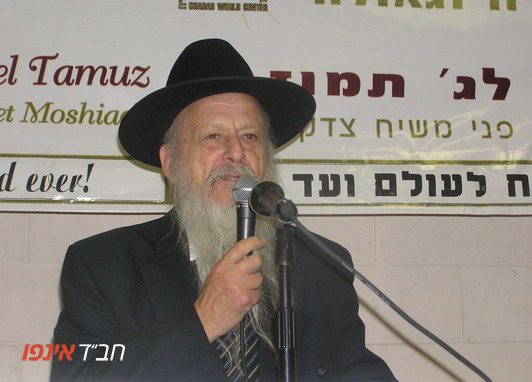
“Throughout the entire audience the Rebbe’s face was smiling, but when I finished that last sentence, the Rebbe became very serious and said: ‘Der Mitteler Rebbe zogt—(remarkably, the Rebbe did not say ‘hot gezogt,’ in the past tense, but ‘zogt,’ in the present tense)—az Chevlei Moshiach zaynen mir shoyn baygekumen; Moshiach ken shoyn kumen’ [= The Middle Rebbe says that we have already passed through the birth pangs of Moshiach; Moshiach can already come]!
“A few weeks after I merited to hear this statement from the Rebbe, the topic arose of completing a Sefer Torah for Moshiach. We held a gathering of Chabad activists, attended by Rabbi Ephraim Wolf, Rabbi Shlomo Maidanchik and others, and I pushed the initiative forward. Generally, the activists were afraid to raise the issue, arguing: who are we to bring up such an important matter? We decided to ask Rabbi Chodakov, and he could not understand how the idea had even occurred to us.
“It seems he told the Rebbe about it, and on Rosh Chodesh Shevat, at three in the morning, I received a phone call from Rabbi Ephraim Wolf. I was very alarmed. What would move him to call me at such a late hour? In a voice choked with emotional tears, Rabbi Wolf told me that just minutes earlier Rabbi Chodakov had called him and told him that he had just received a call from Rabbi Krinsky, who was at that time at the Ohel with the Rebbe, and the Rebbe had asked him to call and say that the proposal had been accepted, and that letters in the Moshiach Sefer Torah could be sold.
“We held an immediate meeting and decided to launch a major press campaign. Since that day’s newspapers had already been printed, we had to wait another day. We wrote in the announcements that anyone wishing to participate in the Sefer Torah shel Moshiach could send their name along with one lira, and everything would be transmitted to the Rebbe. The announcements were published in the press on Beis Shevat, and time was very pressing. The Rebbe wanted it to be completed on erev Shabbos, Yud Shevat.
“Within just a few days we received eighty thousand signatures! We traveled with all the letters to the Rebbe, and went straight from the airport to a yechidus. We brought the Rebbe all the signatures, and were certain the Rebbe would praise us for the great success, but the Rebbe was not satisfied and said: ‘So few?!’…”
Rabbi Chefer told this story while concluding with a message relevant for these times: “From this story, and from the Rebbe’s conduct over the years, one can see the Rebbe’s guiding principle: however much the Chassidim acted in inyanei Moshiach, the Rebbe always demanded and continues to demand more. And until we actually bring Moshiach, the Rebbe stands over us demanding more and more. Even today, after Gimmel Tammuz, we must continue with even greater vigor and strength to publicize the Besuras HaGeula and the Goel as the Rebbe instructed in his sichos, and demonstrated with maaseh rav in the years 5753–54.”
Rabbi Chefer, who every Motzoei Yom Kippur would stand in the Chabad shul on Rechov Rabbi Akiva in Bnei Brak and call out the proclamation “Yechi” in a loud voice immediately following “Hashem Hu HaElokim,” did not ignore the nisayon of Gimmel Tammuz but explained that with the Rebbe there are only ascents, and therefore it is clear that this event too is another stage on the path to Geula:
“It seems that this temporary concealment was intended to put our faith to the test, like the test that the Jewish people faced when Moshe was (in their estimation) late in coming down from the mountain. Thankfully, the overwhelming majority of the Chabad community stands with courage in this difficult nisayon, the likes of which the Jewish people have never faced. Even during the test in Moshe’s time, the majority of Israel stood firm and in total only a few thousand people, out of several million, sinned with the Golden Calf. Only then the nisayon was brief, whereas now the nisayon has been prolonged. And yet, the Chabad community is, boruch Hashem, standing firm in the nisayon, believing with simple faith in the Rebbe’s words, without pshetlach (clever interpretations) and without intellectual gymnastics.”
When we spoke about spreading the Besuras HaGeula and the Goel, Rabbi Chefer emphasized that in order to succeed, one must engage the mind before taking action, and examine the best ways to convey the Rebbe’s clear messages. This certainly depends on local conditions. The Rebbe repeatedly emphasizes that “when you go to a city, follow its customs,” and that in every place one must conduct oneself according to local norms and influence from within. One must certainly know that there are places where people will only accept a new idea if it is presented in a sophisticated manner. In such places, activists are obligated to convene a think-tank to figure out how to convey the Rebbe’s clear messages in a form of presentation that will be accepted locally.
Rabbi Chefer told me that at the entrance to the offices of Beit Rivkah in Kfar Chabad there is a large sign with the holy declaration “Yechi Adoneinu,” and when senior officials arrive, people who have no idea about the subject of Moshiach, they see a beautiful, intriguing sign and ask him about it. He tries to explain to each person in their own language, and boruch Hashem, the Rebbe’s message is received warmly.
“Not merely a prophecy about the future — the Rebbe simply sees reality as it is.”
“I see immeasurable benefit in every Chassidic story, even the simple and ordinary ones, as they bring great benefit. How much more so the memories from the farbrengens of elder Chassidim, their words and sayings, even the sharp witticisms and clever remarks are full of deep content.”
(Igros Kodesh of the Rebbe Rayatz, Vol. 5, p. 115)
I came to know the mashpia Rabbi Reuven Dunin a’h, or simply “Reuven,” as he corrected me when I called his home and asked if “Rabbi Dunin” was in, during my years of study at the Tomchei Tmimim Yeshiva in Migdal HaEmek. From time to time we would call him and invite him to come and farbreng at the yeshiva, and he for his part, whenever possible, very much loved to come and farbreng with the tmimim. This was during the years 5755-57, and naturally many farbrengens touched on the pure faith in the Rebbe’s words even in a state of concealment and hiddenness from our physical eyes.
He was a mashpia of a different kind. Something special. Reb Reuven made his first acquaintance with the world of Chabad when he arrived in khaki shorts to the zal of Tomchei Tmimim Yeshiva in Lod, where he tasted of the flavor of Chassidic teaching, traveled to the Rebbe, and bound himself heart, soul, and spirit to him. The Rebbe in turn responded with great love, granting him a special relationship that only a handful of Chassidim merited.
Through difficult labor in his work of being mekarev people in Eretz Yisrael, he succeeded in sweeping hundreds and thousands along with him, thus founding a new generation of Chabadniks and rough-and-tumble ‘sabras,’ for whom emuna in the Rebbe was the most natural thing in the world.
As was his way throughout the years, Reb Reuven had an aversion to pshetlach and theories rooted in one’s own intellect. From the time the Moshiach campaign began, and even more so after the Rebbe encouraged the singing of “Yechi Adoneinu,” as a Chassid bound with all his heart and soul, he knew this was the Rebbe’s true will, and publicized it everywhere accordingly.
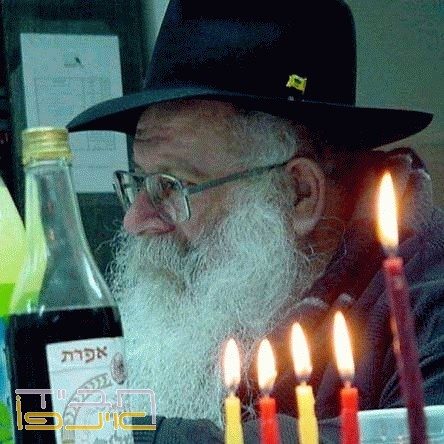
This is also what he did after Gimmel Tammuz in what he would say at his farbrengens, as well as by living example as one who actively publicized the identity of Moshiach. Reb Reuven himself would wear a pin on his lapel and hat, a small Moshiach flag. As if that were not enough, he would also walk around with a bag full of these little flags, distributing them to everyone who agreed to wear one.
He instilled the faith that the Rebbe is Moshiach and is chai v’kayam, through his captivating farbrengens and his conversations with hundreds of those he influenced. At one of his farbrengens he expressed, in a deep cry, with his own unique style and phrasing, the foundation of pure faith that even after the “concealment and hiddenness,” nothing had changed:
“We simply need, with all due respect, to start learning Tanya. I hope I am wrong, but sometimes one gets the impression that people are embarrassed to sit with a Tanya, especially in its opening pages [where it speaks of the heads of the thousands of Israel in every generation]… And when that foundation is missing, all the other problems of every kind arise as well: ‘After Gimmel Tammuz,’ it doesn’t add up for him… Let me understand what actually happened to you? What made sense to you before Gimmel Tammuz, and what ‘happened’ to you after Gimmel Tammuz? Explain in simple words: what took place within you that you suddenly can’t say it? What is all this stammering about?
“What can I tell you… When I sometimes hear how ‘Yechi Adoneinu’ is proclaimed, rachmana litzlan, you’d think you were in some cave or underground hideout in Russia… it just slips out of the mouth before… and this can happen even within one’s own dalet amos! If it’s ‘Yechi Adoneinu’—then it should be ‘Yechi Adoneinu’!” ■
Beis Moshiach #1510 • pp. 20-29, 30
© 2026 Beis Moshiach Magazine. All rights reserved.
This article originally appeared in Beis Moshiach #1510. You are welcome to share it with friends and family by email or in print, provided that you do not change, add to or omit any part of it, you credit the author and Beis Moshiach, and you include a link to archive.bmoshiach.org (written out in full in printed copies).
To republish this article in a newspaper, magazine, book or website, please request permission in advance at [email protected].