“In The USSR, Before Learning How To Talk, We Learned How To Keep Quiet”
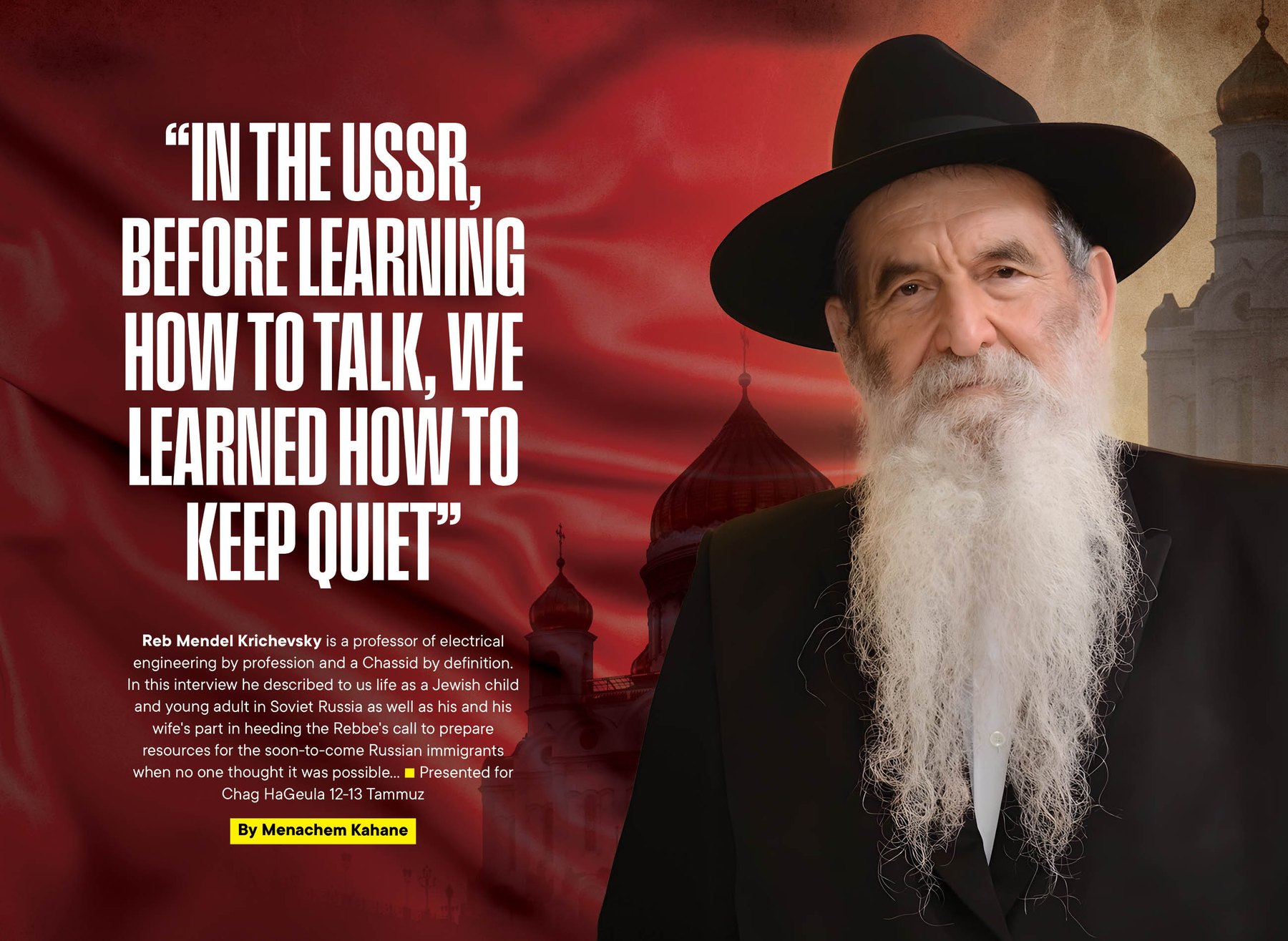
Reb Mendel Krichevsky is a professor of electrical engineering by profession and a Chassid by definition. In this interview he described to us life as a Jewish child and young adult in Soviet Russia as well as his and his wife’s part in heeding the Rebbe’s call to prepare resources for the soon-to-come Russian immigrants when no one thought it was possible… Presented for Chag HaGeula 12-13 Tammuz
Samarkand, 5708. On a particularly dark night, the Chassid, R’ Yankel Notik sat, trembling and on the run in a strange place. This was shortly after the Notik family tried escaping Russia via Lvov together with hundreds of other Chassidim. His father, the mashpia, Rabbi Shmuel Notik, was going to travel in a train of refugees that set out on 9 Teves and that successfully crossed the border, but for various reasons, he hadn’t been able to board.
He decided to join the mashpia, Rabbi Mendel Futerfas, who was about to leave Russia accompanied by a small group of only nine people. Later on, it turned out that the person who had taken care of the tickets was actually a KGB agent and he turned in all nine of them. The police arrested them all.
Those arrested, including R’ Notik, his wife and daughter, Sarah Fruma, were transferred to the secret police of Lvov, where they underwent extensive interrogations and torture.
The son, R’ Yankel, realized that soon they would be after him since he was the only one who had remained free when the rest of his family had been arrested. He fled, without any documents, just the clothes on his back. He somehow made it to distant Samarkand without money and without documentation. “I saw before me a shadow of a man,” said R’ Mulle Pruss, years later.
“I thought, how can I save him, help him, especially when I myself need to hide. Then I had an idea, Yanni (Yaakov) Krichevsky.
“Yanni Krichevsky was a senior manager of a chain of textile factories in Tashkent and was a big chevraman and a clever fellow who helped whoever he could help. Despite the late hour, I went to Krichevsky and told him that documents had to be arranged for Notik because without them he was done for, and that he also needed money and food. Krichevsky reassured me, saying, ‘Shmuel, consider it done. I will take care of the papers.’
“Indeed, with his connections, he got forged papers for Notik in which his name was changed. His new name was Eli Moshe Milstein. He used this identity for ten years! Yankel Notik lived in Tashkent for a number of good years.”
* * *
This story, among many others, is characteristic of the fascinating life of my interviewee, R’ Mendel Krichevsky, a person who lived a life of mesirus nefesh behind the Iron Curtain during the bitter years. To mark Yud-Beis-Yud-Gimmel Tammuz, I spoke with R’ Mendel about his memories of those days and his experiences growing up in a home of daily mesirus nefesh.
R’ Mendel recently passed the 80 year mark, is the father of eleven children, many of whom are shluchim around the world, and his spirit is vibrant like a young man. He is tall, has a long, snow-white beard, and has an especially clear voice. The conversation flowed easily, much like a Chassidishe farbrengen about life back then…
The Pin Opened Doors
R’ Mendel Chonon Krichevsky was born on 21 Sivan 5706 to R’ Chanoch Henach Yaakov (Yanni) and Rochel, in a suburb of Moscow.
“The year I was born, Russia allowed Polish citizens who had gone to Russia during the war, to return to Poland. My father also tried to cross the border with the Chassidim but it didn’t work out. So we moved to Samarkand where the KGB was less strict and dangerous. In Samarkand, it was more of a Chassidishe life. The great Chassidim lived in the community including R’ Mendel Futerfas who was there for several years, R’ Berke Chein who even hid for a while in our house, and many other special personalities.”
In 5713, after the Doctors’ Plot and the death of Stalin, the family moved back to Moscow.
What was the mesirus nefesh like in daily life considering the fear of the KGB?
“Suffice it to say that my mother would always sleep in regular clothes, not night clothes, lest she be taken to prison in the middle of the night and she wouldn’t have time to get dressed properly and modestly. There were a few times when my mother would return from her job and would discover a bris milah taking place in an inner room of the house. Despite the danger, she would cooperate fully. One can even say that she was happy that our house helped in the performance of important mitzvos like these.
My father would also offer his house for chuppos for those who were afraid to make a chuppa at the shul or their own home. We also had minyanim in our home for Shabbos and Yom Tov and even weekdays.
I remember that the chazan, R’ Yaakov Lerner would try to daven in a low voice so as not to arouse the suspicion of the neighbors and my father would always encourage him to daven loudly, “Nu, nu, louder. You can’t be afraid of them.”
We didn’t make a big deal out of everything. This was life. To us, mesirus nefesh wasn’t with words but life itself!
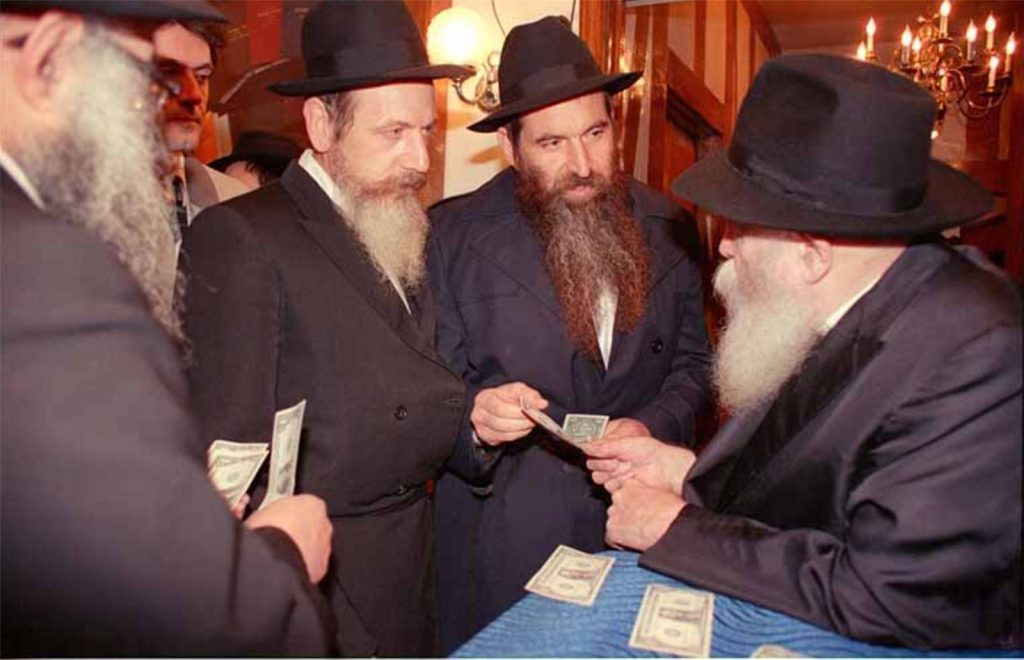
I remember that R’ Lazer Nannes, when he left prison after being there for decades, and it was dangerous to have anything to do with him, stayed in our home. My mother would feed him soft foods that cooked on a low flame for many hours so his shriveled stomach, that hadn’t eaten proper food for many years, could slowly digest food and get used to good, normal food.
In general, hosting R’ Lazer wasn’t at all simple. Whoever left Russian prison was under constant surveillance by the secret police. But this didn’t deter my mother from caring for R’ Lazer with real devotion.
My father was also a special person. He lived with mesirus nefesh. He didn’t have a personal life; his life was completely mesirus nefesh. You can see an example of this in the following story, one that is not known.
My father was a seasoned businessman who provided textiles to the army and the government. He befriended many people in government and senior people in the military. He would give them many bottles of special vodka that cost a lot of money, that was hard to obtain even for senior people. He bribed them to look away from his secret work having to do with the Chassidim.
He often got the money for this by charging inflated prices for many items that he supplied to the army and government. In those days, within the secret police there were special pins that let you know that this person was part of a secret, select group, and whatever orders he would give would have to be carried out unquestioningly. Somehow or another, my father got one of these pins and he used it to save many Chassidim from death.
When we lived in Samarkand, my father saw how difficult it was for the Chassidim to support themselves because they wouldn’t work on Shabbos. He came up with the idea of opening a factory where only Chassidim would work and he would ensure that they would not work on Shabbos.
After various procedural moves and a lot of bribes to various officials, my father opened the factory. Thanks to him, many Chassidim found a way to support their families without having to work on Shabbos. Although they did not work there on Shabbos, it was one of the most successful factories around.
Later on, my father even had a mikva built at the factory. Its construction was a bit complicated. People had to be brought who knew they were building a mivka and knew how to keep a secret. An expert on mikvaos had to check its kashrus, and they had to ensure there would be rainwater, a storage pit etc. When it was finally completed, it was a big help for the Chassidic community.
The Daring Bris Milah Seuda
Another story, which was particularly daring, happened when we lived in Samarkand. When my brother, Matisyahu, was born in 5709, a number of senior Soviet officials contacted my father and warned him, “If you circumcise your son, you will be sent to Siberia for at least ten years.” My father responded in a tough manner, saying that although he respected their request, there was no way he would forgo his right to make a big celebration for his family and friends in honor of the birth of his son. The officials couldn’t deny him that.
My parents immediately began preparing for the party. They invited family and friends, all from the Chassidic community. In order not to arouse suspicion, they also invited Mr. Spiegel, a high-level official in the Uzbekistan government who also happened to be Jewish.
The guests assembled and my father sat with Spiegel and offered him a cup of vodka. Then he assigned another guest to drink with Spiegel, and then, another guest. A short while later, Spiegel was drunk and they were ready for the bris milah.
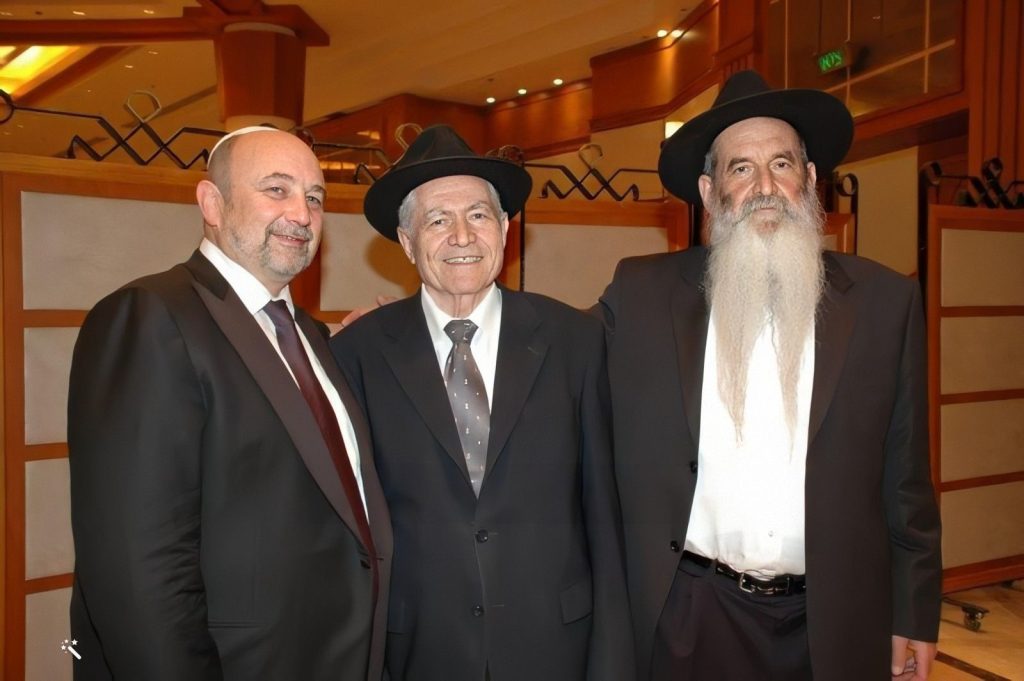
The sandak was Rabbi Shmaya Marinovsky, a distinguished Chassid. His white beard was damp with tears at the zechus. Everyone knew that if Spiegel sobered up, my father would be sent to exile for many years.
Ten guests crowded around the baby who was named for Matisyahu who stood strong against the Yevanim and vanquished them.
During the bris, Spiegel suddenly woke up from his drunkenness and asked, “Who is that holy man?” as he pointed at Marinovsky.
Since they were worried that Spiegel would realize what was going on, they told him there was a custom in which an old tzaddik holds the baby and blesses him. The communist said, “I also want to kiss his hand.” R’ Marinovsky turned white in terror.
Shortly after the bris, my father went to Spiegel’s office in Tashkent. He wanted to find out whether Spiegel had reported him and whether something bad was being ‘cooked up’ against the Jewish community. My father brought some things he could use as a bribe.
When my father saw there was no sign on Spiegel’s door, he was shaken. In Soviet Russia, the removal of a sign from an office meant that the person sitting in that office had been fired or imprisoned.
My father quietly, diplomatically, began to investigate, worried that they had discovered that the high level official had attended a bris which would mean that he would surely be arrested soon. To his surprise, he was told that Spiegel had left his job due to health reasons. My father decided to visit him at home.
When my father arrived, he was surprised to hear that Spiegel had been so affected by the sacrifice of his fellow Jews for their Judaism that he had decided to forgo his high rank and career with its high salary and return to his Jewish roots.
We Are Also Looking for Him
Many other stories come to mind that illustrate my father’s tremendous nerve and cool head.
In general, my father was a very smart, clever man. He had the ability to quickly size up a situation. I’ll give you an example. When my brother opened a business in Eretz Yisrael and he saw that for some reason, he had hardly any profits, he told my father about this. My father showed up at the business and saw how the suppliers brought merchandise, he went over the papers, and after a few minutes he told my brother which of the suppliers was robbing him. He was proven right.
Here’s another story:
One day, my father was walking down the street when a policeman stopped him who was holding a picture of my father. The policeman said to him, “We are searching for him for a long time. Perhaps you recognize him?” In Russia, this meant that the policeman was hinting that you were arrested.
On the spot, my father took out a picture of himself from his pocket and said, “Yes, we are also looking for him,” and he motioned to the pin that was hidden behind the lapel of his jacket.
The policeman nodded and left.
In Russia, there were a number of police forces, the secret police and the regular police and they had different branches. The policeman realized that my father was an officer in a different, unfamiliar unit and that he was also seeking the “criminal.”
As a boy, how do you remember life under those circumstances where you had to fight for everything, be suspicious and hide, also because of the informers who were everywhere?
“That’s what I born into. That was reality. There was no other life. People nowadays cannot grasp it. They cannot fathom how one could live a normal life. So, true, not everything was tranquil and serene to say the least, it wasn’t at all easy, but it wasn’t so far out. I hadn’t been anywhere else to realize that life like this is not a life.
In the living room of our house hung two large hunting rifles in the event they would be needed in the face of real danger. We knew that at any moment, one of my parents could be arrested.
Were there times that you were very scared?
On the morning of my bar mitzva, my father taught me how to put on tefillin and I davened at home with tefillin. The door suddenly opened and there stood my teacher from the local school. I immediately jumped under the table so she wouldn’t see me wearing tefillin. My parents gave her an excuse about my being sick and she left.
But the fear that pounded in my heart was tremendous. My heart beat rapidly for a long time after that. If my teacher had turned a little bit, she would have seen me under the table.
And then…
Then, in the best case scenario I would be sent to be reeducated in an orphanage and they would arrest one of my parents. In a worse case scenario… it’s better not to say.
Did you ever have to use physical force?
Boruch Hashem, hardly ever. There was an incident when I was walking down the street and a drunken policeman who reeked of alcohol purposely blocked the way. I ignored him and turned to the side but he blocked me again. This went on a few times until I couldn’t take it anymore and I pushed him into a pile of snow and I went on my way.
Did you experience anti-Semitism?
Very few times. Thanks to my height, they weren’t quick to start up with me. I remember an incident from school when one of the boys made fun of the fact that I was a Jew and added a few choice derogatory terms. After a few small ‘pats’ the story was over and he didn’t repeat it. Those who thought of copying him changed their minds right after they saw what happened to him.
The life of communist youth was easier and more attractive…
Chalila! It never occurred to me to break ranks. I always had a feeling of pride that I have the great privilege of being a Jew, which nobody else had, not even my good friends in school. This privilege also obligated me to behave differently.
What I do remember as a child was my great desire for a meat sausage. Since there was no such thing as a kosher sausage I was always jealous of my classmates because they were allowed to eat this.
When we moved to Eretz Yisrael I looked for a kosher sausage and after I tasted it, I realized I hadn’t missed out on much.
At home, did you speak about the Rebbe and hiskashrus to him?
No. In Russia back then, before they taught a child to speak, they taught him how to be quiet. As a child, a young boy, I didn’t know there was a Rebbe. My father lived with it constantly but I wasn’t made aware of this. The fear lest a word leave my lips about the Rebbe was great and therefore, my parents didn’t talk to me about this. However, there was always this feeling that we have a leader who instructs us in what to do and how to do it, and he is always thinking of us.
It was only when I grew older that I became more aware of the Rebbe. I remember that whenever there was any kind of problem, we would ask the Rebbe and his answers would come through hidden means.
Shlichus in Eretz Yisrael Too
Not many know that R’ Mendel Krichevsky is a senior scientist with the SATEC company in Yerushalayim. In 5723 he went to the Power Engineering University in Moscow, which he graduated in 5728 as an electrical and electro-mechanical engineer. His graduate thesis was on the subject of a nonlinear electromagnetic motor starter and this was later accepted as his dissertation for his PhD.
After moving to Eretz Yisrael, he founded a research team to develop electric appliances and electronics in the Engineering Institute of the Research Institute of the University of the Negev.
If that wasn’t enough, he won the IR100 award of the American Industrial Research Council awarded for the development of the hundred best products in the world in the field of engineering, for the development and patenting of the ‘Citostart’ automatic motor starter. He also produced eleven patents and thirty-eight publications in Eretz Yisrael and professional conferences in the world.
He is a member of the Engineering Council and a sought after speaker at conventions and courses of the group.
“In my youth, when I studied electricity and electronics at Moscow University, I had a dream of moving to Eretz Yisrael. I had already invented two unique patents in the field of electronics and didn’t want the Russians – who aided Israel’s enemies – to benefit from them, and maybe I would indirectly undermine the security of those who lived in Eretz Yisrael.
“In 5732, the Russian government began slowly issuing visas. After no small amount of concerns, we submitted papers and asked to leave for Eretz Yisrael. President Nixon was going to visit Russia and in order to give an impression of freedom and lack of oppression, the Russian government allowed many Jews to leave, including our family, me, my wife, and daughter. Within a week we had left Russia and when we arrived in Eretz Yisrael, the Jewish Agency put us in Arad.
“My parents left Russia in 5732. At the first opportunity, my father flew to the Rebbe. He didn’t wait until he had established himself financially and found a place. The feeling of excitement for the Rebbe burned in him above and beyond anything else.
“After a shortened army service, I got a job at Ben Gurion University in Beer Sheva as a lecturer on the subject of electricity, thanks to my expertise in electronics and electrical engineering. I moved to Beer Sheva where I later started a company to develop electronic products.”
The Krichevsky couple settled in the city where our forefathers once lived. This was after years under communist rule, years in which Jews were disconnected from Judaism. Within a short time, R’ Mendel and his wife Mera made up for lost time.
“It’s not that we didn’t keep Torah and mitzvos in Russia; we kept all we could. But it still didn’t come close to keeping mitzvos in Eretz Yisrael, without the KGB on our heads.
“In Beer Sheva I met the Chassidic rabbanim: Yechezkel Sofer, Avrohom Krakauer, and Tanchum Boroshansky. They all had a great influence on me. Together, we started the Chabad Talmud Torah which hastened my drawing closer to becoming a Chassid of the Rebbe.
“What completed my connection to the Rebbe was a visit I made to 770. When I saw the Rebbe for the first time, I didn’t know where to put myself. This visit completed my becoming a Lubavitcher; not just someone who has Lubavitch roots but literally in his own right.”
In the coming years, the Krichevsky family grew. They had eleven children whom they raised devotedly with chinuch as the top priority.
While still in Beer Sheva and afterward in the other places where they lived, their home was open to all. The children were used to mattresses in the rooms and guests becoming part of the household, sometimes for months. New immigrants who had no place to be, knew that the Krichevskys was the place to be until they got an apartment, or the place to hear a good word or advice, a place where they had their first taste of Shabbos.
Among the many guests were also children from Chernobyl who were brought to Israel after the nuclear disaster. Every Shabbos, several of them were at the Krichevsky home, a small house that was full of children but there was always room for another guest.
As the girls grew older and they needed a Chassidic high school, the family moved to Kiryat Malachi and then to Yerushalayim, where they also started a Chabad cheder. They purchased the playground equipment themselves and during the first months, they paid the teachers’ salaries. Chinuch of the children was above everything else, justifying moving, and coming before any other expense.
“Our move to Yerushalayim was after the Rebbe prophesied the fall of the Iron Curtain and told Prof. Branover about building a neighborhood in Yerushalayim for Russian scientists who would be arriving, and to find them jobs, all under the auspices of SHAMIR (the Association of Jewish Professionals from the Former Soviet Union).
“Using my position, I helped a great deal in establishing the neighborhood. I took a sabbatical from the university and together with Prof. Branover and Rabbi Notke Berkahan, I devoted myself to this project along with finding work for the new immigrants.”
The Rebbe’s prophecy came true and many Jews from Russia moved to Israel in the nineties. The Krichevskys were pained to see the suffering of the immigrants, some of whom had respected positions back in Russia and now found it hard to make a respectable living.
R’ Mendel and his wife took action. Mrs. Krichevsky a’h, with a bracha from the Rebbe, abandoned the field of music which filled her life and together with her husband built an employment agency from scratch for immigrant academicians.
With the severance pay that R’ Mendel got from the university, they rented an office in central Yerushalayim. They got a donated computer, paper, pens and one telephone. That’s all they needed to start. During the first year, the work was entirely voluntary. The demand was enormous. Dozens of immigrants asked for help. Word got around about an office where you were treated well and the likelihood was high that you’d find a job.
Mrs. Krichevsky bought all the newspapers every day and marked any relevant wanted ads. She contacted all human resources companies and with her great powers of persuasion she would get employers to hire new immigrants even though the latter did not know Hebrew. She took particular satisfaction when she was able to find someone a job precisely in his area of expertise.
“At a certain point, I went to work at SATEC in Har Chotzvim in Yerushalayim which is run by Danny Branover and that’s where I still work,” says R’ Mendel. “At SATEC, all the employees are Jews from Russia. On special days I bring l’chaim and refreshments and we sit and farbreng.”
With the development of the religious yishuv, Tel Tzion, near Yerushalayim, the Krichevskys moved there. R’ Mendel doesn’t make a move before writing to the Rebbe for advice and a bracha.
“Thirteen years ago, I thought of living in Ramot in Yerushalayim, after Rabbi Yitzchok Kogan opened a beautiful center there for Russian immigrants. I wrote to the Rebbe and the answer I opened to in the Igros Kodesh was clear. The Rebbe wrote: Why rush to leave where you are when your contribution to the community is known to all? We decided to remain in Tel Tzion and we do all we can to help the community thrive.”
When speaking about mesirus nefesh nowadays, how is this done?
“Whereas once we died al kiddush Hashem, today we need to live al kiddush Hashem. In other words, to devote oneself to G-d’s will, our mission in the world in every detail of our lives, giving it over to G-d.”
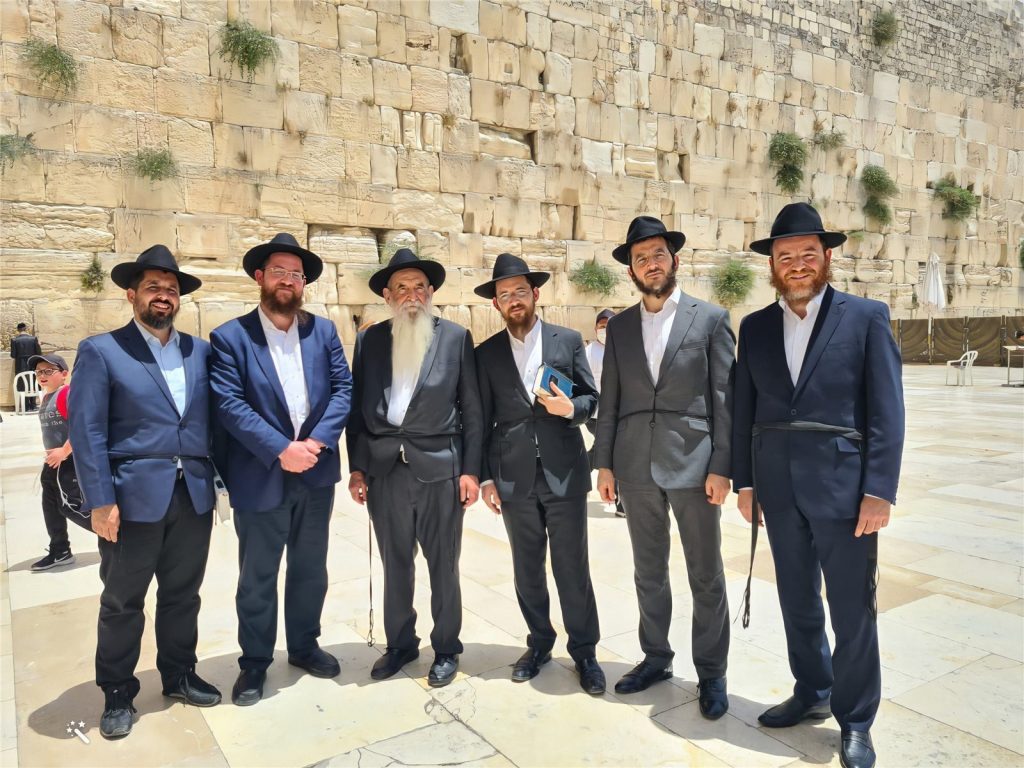
As mentioned, R’ Mendel received a special award for inventing eleven patents in the field of electrical engineering but he has another eleven “patents,” of which he is no less proud. “I have eleven children, most of them serving as the Rebbe’s shluchim. It’s a bit hard since I barely see the grandchildren but that’s the true light.”
Adding Life to the King
Whoever has davened at the Chabad shul in Tel Tzion, heard “Yechi” at the end of davening, said by R’ Mendel standing at his shtender in the eastern corner of the shul.
Why do you think it’s so important to proclaim “Yechi?”
“The Rebbe told us in his sichos that he is Moshiach, redeemer of Israel. He spoke about the proclamation ‘Yechi HaMelech” adding life to the king. The Rebbe encouraged the singing of ‘Yechi’ many times. It wasn’t just for insiders but was documented by the media at the time.
“Therefore, every Chassid understands that as long as we haven’t merited the full hisgalus of the Rebbe as Moshiach, we need to proclaim ‘Yechi’ which adds life to the king and hastens and brings his hisgalus.”n the background.
Beis Moshiach #1418 • pp. 24-33
© 2026 Beis Moshiach Magazine. All rights reserved.
This article originally appeared in Beis Moshiach #1418. You are welcome to share it with friends and family by email or in print, provided that you do not change, add to or omit any part of it, you credit the author and Beis Moshiach, and you include a link to archive.bmoshiach.org (written out in full in printed copies).
To republish this article in a newspaper, magazine, book or website, please request permission in advance at [email protected].