How The Nine Days “Siyumim” Shturem Began
Before leaving for the Ohel on 29 Tammuz 5735, the Rebbe notified that he’d be conducting a farbrengen that evening. At the farbrengen, the Rebbe landed a new hora’ah…
It was Tuesday, 29 Tammuz 5735. That day, as on every Erev Rosh Chodesh, the Rebbe went to the Ohel, going to the mikva first. While at the mikva, Rabbi Leibel Groner went to the zal where the bachurim sat and learned and told them there would be a farbrengen with the Rebbe at eight o’clock.
This was an exciting surprise. Nobody had expected a farbrengen with the Rebbe on an ordinary day. Many jumped up and ran to tell other people the news. Word got out to Chabad worldwide: there would be a farbrengen that night.
The tmimim and Chassidim who lived in nearby cities hurried to get to the farbrengen. At 8:15 the Rebbe returned from the Ohel and davened mincha in the small zal, dressed not in the usual, but in a silk sirtuk. It was promising sign. After a brief time spent in his office, the Rebbe came out to the farbrengen.
First, the Rebbe said to sing the Niggun Hachana for the maamar. During the niggun, the Rebbe made a motion with his hand to indicate that the niggun should be sung speedily, and the Chassidim increased the tempo to get to the end. As it seemed to take too long, they cut off the singing in the middle. The Rebbe smiled broadly and said to continue singing the niggun till the end. Then the Rebbe said the maamar which began with the words, “Tziyon B’Mishpat Tipadeh.”
In the first sicha following the maamar, the Rebbe began to explain that during the Nine Days joy is diminished, but part of the joy which is permissible according to Shulchan Aruch is to increase in Torah study which makes the heart rejoice, as it says, “the orders of the L-rd are upright, causing the heart to rejoice.”
Then came the Rebbe’s surprising suggestion. In every location, throughout the Nine Days, public siyumim of tractates should take place. Even on Tisha B’Av, a siyum should be made on a tractate that was permissible to be learned, the tractate of Moed Katan.
The Rebbe said the reason is, since these days will be turned into days of rejoicing, we should begin to work on that through human effort.
The completion of a tractate is not something that’s suitable for every person, especially in such a short time. Therefore, talmidim of yeshivos and kollelim had the obligation and privilege to make a siyum every day. Other Jews, through their donations to places of learning, would be partners in the learning and the siyum; and the joy.
The Rebbe got even more into the details and added that actually a siyum on the tractates of Tamid, Middos, and Avos pertained to everyone, even women, who should conduct a siyum on the tractate Avos during these days. Those who were unable to make a siyum on their own, should participate in the siyumim made by others, and this would increase their joy.
This should be in every community (at least, in one place), that there be a siyum either in the yeshiva or kollel or shul and Beis Medrash, all the more so in the Holy Land, a land with ‘G-d’s eyes upon it from the beginning of the year till the end,’ and all the more so at the Kosel HaMaaravi and Meoras HaMachpela.
This is one of the reasons to have a farbrengen now, so it will be possible to convey this, and to hear this immediately in the Holy Land, so they can immediately arrange that already on Rosh Chodesh Av, the beginning of the Nine Days, there will be a siyum at the Kosel HaMaaravi and at the Meoras HaMachpela.
At the end of the sicha, the Rebbe added a special instruction regarding the yahrtzeit of the Arizal which would take place five days later:
It would be proper that they go to the tziyun of the holy Ari and b’rov am hadras melech and learn there, from his teachings, and afterward too, as his teachings are explained… in the teachings of Chabad Chassidus, and to learn a matter in Kabbala there, also, as it is explained… in the Torah of Chabad Chassidus. And to do this (as mentioned before), b’rov am and especially yeshiva students and kollel yungerleit who are in Tzfas on site, and probably those from other locations in the Holy Land will also participate… Also the matter of giving tzedaka… and all the more so, the matter of tefilla b’tzibbur.
The new instruction surprised Chassidim everywhere. “In the air there was this feeling that by fulfilling this instruction, the Geula would be closer than ever and we would merit to see it in the upcoming Nine Days, for joy would be increased, the joy of the future Geula,” recalled one of the Chassidim.
Right after the farbrengen, after the Rebbe went home, Rabbi Dovid Raskin announced an immediate meeting to properly prepare for the implementation of the Rebbe’s new instruction for the Nine Days which had already begun, and the instruction had to be implemented then and there.
It’s not easy to start a mesechta and finish it the same day, but the fact that Rosh Chodesh Menachem Av had already begun didn’t leave much time; a siyum had to be held on that day.
The very next day, siyumim were held during the day via the internal sound system of 770 and the small zal. Tmimim began using their time to learn short, easy mesechtos. In the various kollelim, the members held siyumim and camps had siyumim every day; also at Kennedy Airport.
Despite the short notice, the instruction was fully carried out and every day there were siyumim in 770 after tefillos.
Making A Siyum At The Beginning
Shortly after the Rebbe’s farbrengen was over, daybreak of the first of the Nine Days took place in Eretz Yisrael. Obviously, not too many people were ready to make a siyum and it seemed impossible to accomplish.
In yeshivas Tomchei Tmimim in Kfar Chabad, they got to work and came up with an idea. After Shacharis, the hanhala announced that they were dividing the yeshiva into two shiurim that would take place throughout the day in which they would learn mesechtos in Shas quickly and accessibly with the maggidei shiur, the brothers Rabbi Moshe and Rabbi Eliyahu Landau. Each bachur chose which shiur he wanted to attend.
In the first class they began learning Tamid, a short mesechta about the service in the Beis HaMikdash. They finished it that day and the bachurim went to all the shuls of Anash in the area to make siyumim.
In the second class they began learning Megilla which took a longer time. They finished it by the following evening. These bachurim also went to all the shuls of Anash in the area and held siyumim there. At the same time, students from the first class began learning another mesechta that day which they finished the next day and so did the second class. They repeated this for nine days, until Tisha B’Av.
The shiurim were given for hours and ended late at night and sometimes, toward morning. Although it was hard, they all wanted to implement the Rebbe’s request to hold siyumim everywhere.
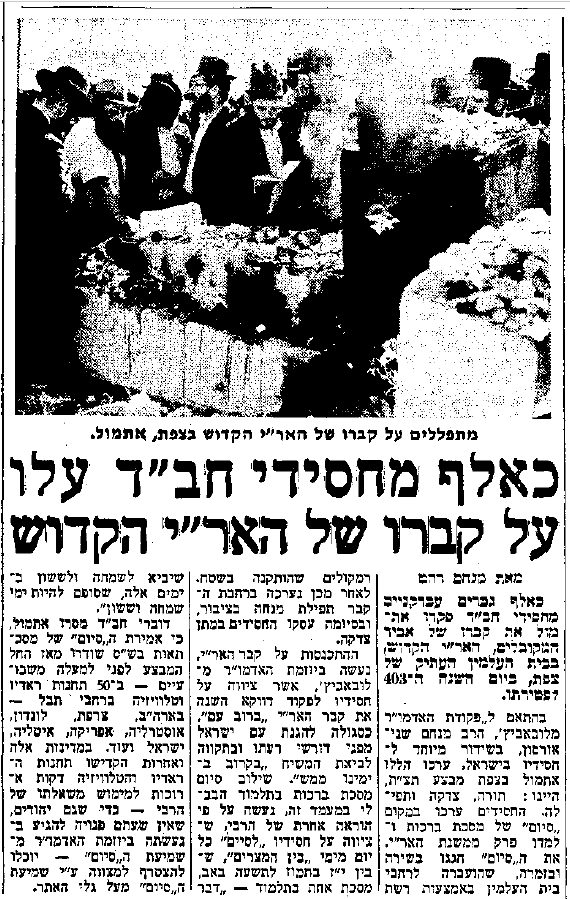
Siyumim b’rov am were held at the Kosel HaMaaravi and at the Meoras HaMachpela too. This new instruction was quickly publicized in the newspapers at the time.
On Shabbos Chazon, the Rebbe said another maamar and urged again about holding siyumim everywhere. After Shabbos, the Rebbe edited the maamar and the maamar of the sudden farbrengen on Rosh Chodesh. When these maamarim were published, the secretariat issued an announcement that they should be learned in public on Tisha B’Av.
As we approach Tisha B’Av, the mourning practices become stricter but for the Rebbe, it was the opposite. Before Tisha B’Av, the Rebbe told the secretaries to contact Eretz Yisrael with the following instructions:
1-At the siyum that would be made at the Kosel on Tisha B’Av on meseches Moed Katan, since it concludes with the same maamarei Chazal as the siyum on meseches Brachos – to also review what is brought in Likutei HaShas of the Arizal on meseches Brachos. And to ask Rabbi Zevin whether this was permissible.
2-Not to bring children to the Kosel this year but to arrange all events for each in their place.
3-To fulfill all the rest of the instructions from the previous year (to learn at the Kosel, in shifts, the reshimos of the Tzemach Tzedek on Eicha). Later, the Rebbe said that he meant what was published in the sicha of Shabbos Chazon 5730, that on Tisha B’Av to add in Torah and tzedaka.
4-To publicize in Eretz Yisrael that the maamar, “Tziyon B’Mishpat Tipadeh” of erev Rosh Chodesh Menachem Av of that year, should be ready (for people to learn from on Tisha B’Av).
Indeed, during Tisha B’Av, despite the difficulty of fasting, the tmimim and Anash made siyumim all over. In Crown Heights, after Mincha many bachurim went out on tanks to make siyumim in shuls throughout the metropolitan area.
Mass Aliya To The Kever Of The Arizal
Five days passed since that sudden farbrengen. Everyone remembered that the Rebbe had made an additional request, to go to the gravesite of the Arizal on his yahrtzeit, 5 Av, and to do so “b’rov am hadras melech and probably those from other locations in the Holy Land will also participate.”
It was a Sunday when thousands of Chabad Chassidim went to the Arizal’s tziyun. Most concentrations of Anash were in the center of the country and the trip north in those days took nearly an entire day. Dozens of buses were hired, bringing the Chassidim from all over the country.
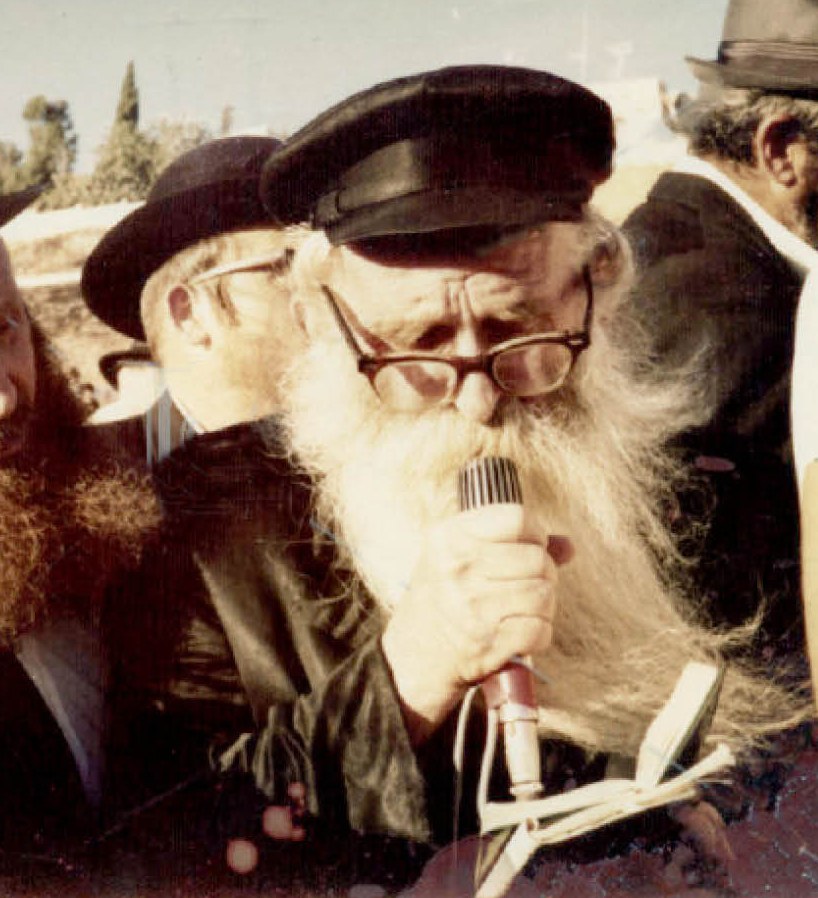
Loudspeakers had been set up at the cemetery. The event began at six with a siyum on meseches Brachos and learning from the teachings of the Arizal. Then the thousands present celebrated the siyum with much joy and singing.
Since the Rebbe said that they should also include the aspect of tefilla at the place, the question arose – according to halacha, one is not allowed to pray in a cemetery unless it’s at kivrei tzaddikim since they are considered living, but the Arizal is buried in the middle of a cemetery.
Rabbi Leibel Kaplan a’h, shliach in Tzfas, found a psak halacha in a book of responsa which said that those who are buried near the kever of a tzaddik forgo their honor and allow prayers to take place near their graves.
The following year too, the Rebbe said to go to the grave of the Arizal but two years later, 5737, the Rebbe didn’t want it to be a chazaka so he did not say to go. Nevertheless, the Chassidim knew what the Rebbe wanted.
The Rebbe Stopped To Listen To A Siyum
The Rebbe’s instruction to hold siyumim throughout the Nine Days wasn’t a one-time thing. In the years that followed, Chassidim continued to make siyumim. Each year, the Rebbe brought it up, each time with additional points, while stressing the connection to the Geula.
One year, the Rebbe said to connect the siyumim with an inyan in Chassidus. Other years, the Rebbe spoke about the need for an addition in Ahavas Yisrael or an addition in giving tzedaka, and to actually give after the siyum. On many occasions, the Rebbe spoke about the great quality of making a seuda and farbrengen after the siyum as is fitting for a yoma tava l’rabbanan (a holiday for scholars), albeit without meat and wine.
In addition, the Rebbe made it all more accessible to broader audiences. He said to hold siyumim via the radio [see box]. Another year, he asked that the siyumim be made on mesechtos that are easy to understand so that you could meet someone on the street and review for him the subject matter of the siyum.
As mentioned, the siyumim in 770 were made over the sound system, and the Rebbe often listened to these siyumim.
On Tisha B’Av 5750, the Rebbe was standing near the elevator just as the mesayem in the big zal began to make a siyum over the loudspeaker which could be heard on the upper floor. The Rebbe stopped and listened to the siyum, and even waited until after the full saying of the lengthy ‘yehi ratzon.’ When the mesayem did not say Kaddish [because there were those who were under the impression that it is not minhag Chabad to say it], the Rebbe said, “He’s not saying Kaddish?! He made a siyum! In all the Gemaros there is brought Kaddish for a siyum. Why doesn’t he say it?”
In 5751, the Rebbe said not to stop making siyumim by Tisha B’Av, but to continue making them until 15 Av since these days are a continuation from Tisha B’Av, and he urged doing so with increased encouragement and empowerment.
We will end with what the Rebbe said about the segula of siyumim:
Yehi ratzon that even before 15 Av and even before the days preceding it, to the point that teikef u’miyad mamosh, the Geula will already come and then we will celebrate the greatest joy of all, the joy over the arrival of the true and complete Geula through Moshiach Tzidkeinu. ■
THOUSANDS PARTICIPATE IN SIYUMIM VIA RADIO
The Rebbe, as is his approach in all matters of holiness, is not satisfied with operating only on a local level, but aspires to conquer the world through his campaigns. The Rebbe wanted to bring “Mivtza Siyumim” to as many Jews as possible and thereby grant them the increased joy, the joy of Torah, during these days of mourning.
Every day, a siyum on a mesechta was broadcast on about fifty radio and television stations around the world, in America, France, London, Australia, Africa, Italy etc. and, of course, in Eretz Yisrael. The Rebbe himself listened every day to a siyum on the radio. The purpose of holding siyumim on the radio was to enable even those who didn’t have time to attend a siyum to participate, as a result of which they would experience an increase in joy.
When a report was sent to the Rebbe about radio broadcasts in Eretz Yisrael, the Rebbe responded:
I was pleased to be informed by our friend, Rabbi Sholom Dov Wolf, about the efforts on your part in the matter of the broadcasting of the studies of our holy Torah. It is superfluous to go on at length about the great value of the matter of bringing to the audience of listeners and a large assemblage the words of our Torah, which is called the Torah of life; in other words, instructions for life, daily life, especially with the inyan of a siyum which has a special psychological effect. According to the instruction of the Torah, this is connected with a special joy and a seudas mitzva.
And even if the broadcasts only reached one person, even one soul is an entire world; all the more so to a great assemblage, great not only numbers but in quality too, and we have no way of knowing if maybe the only way to reach them is through the radio and these broadcasts. And it’s understood the greatness of the zechus of this extremely valuable operation.
Beis Moshiach #1420 • pp. 24-29
© 2026 Beis Moshiach Magazine. All rights reserved.
This article originally appeared in Beis Moshiach #1420. You are welcome to share it with friends and family by email or in print, provided that you do not change, add to or omit any part of it, you credit the author and Beis Moshiach, and you include a link to archive.bmoshiach.org (written out in full in printed copies).
To republish this article in a newspaper, magazine, book or website, please request permission in advance at [email protected].