When The Alexandrian Spice Masters Couldn’t Compete

For the Three Weeks, we present an overview about the production process of the Ketores and more Beis HaMikdash topics, by Rabbi Shneur Zalman Cohen, an acclaimed author and lecturer on Hilchos Beis HaBechirah
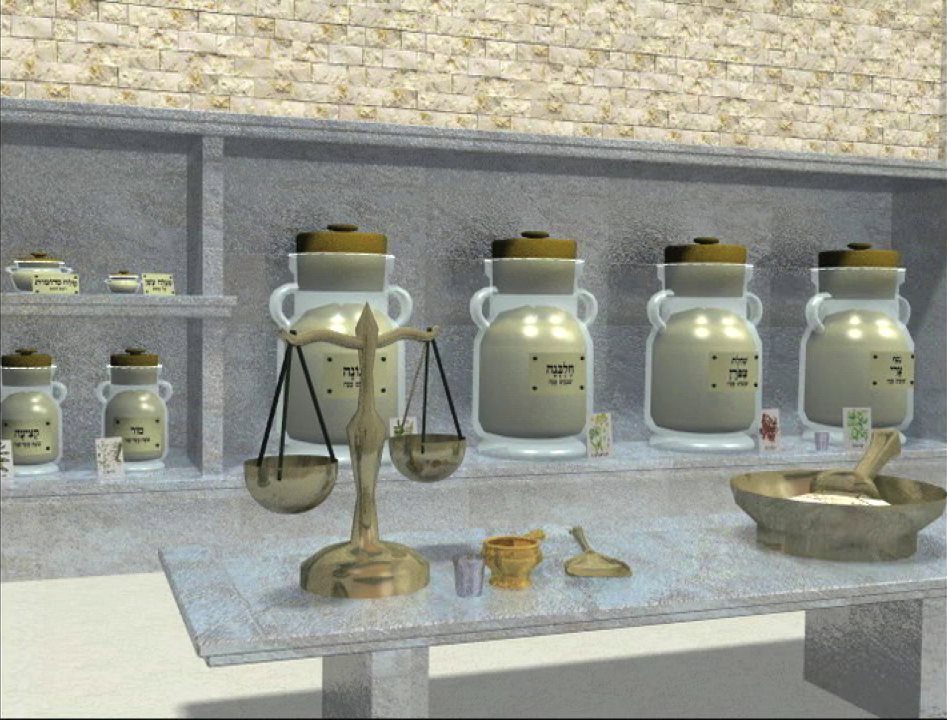
The ‘lishka’ (chamber) of Beis Avtinas was on the southern side of the Azara, above the Shaar Ha’mayim. The family of Avtinas were appointed over this chamber. Their job was to grind the ingredients of the incense and to mix them so they would be ready to burn on the altar.
Seven days before Yom Kippur, the Kohen Gadol would go to this chamber where he would sit and learn how to take a fistful of incense. Why did it take days to learn? Because this was one of the most difficult services in the Mikdash.
The Gemara says that the Bnei Avtinas were experts in the making of the incense and did not want to teach it to others. The Sages brought artisans from Alexandria who knew how to make the same kind of incense but did not know how to make the smoke go up the way the Bnei Avtinas did. The Bnei Avtinas knew which herb caused the incense’s smoke to rise up like a pillar, which is magnificent, but the artisans from Egypt didn’t know which herb it was and had to use a different herb and the smoke dispersed and didn’t go straight up.
Today, we don’t know which herb it was, and as the Rambam writes, in the Gemara already they wrote that this herb was unknown except to the Bnei Avtinas. The most accepted identification of this ingredient is the plant leptadenia pyrotechnica, a rare desert plant in the area of the Dead Sea Valley, in the Sinai, in Edom and Arabian peninsula. But some disagree with this identification for a number of reasons because it doesn’t fit with what we know.
The Mortar Which Listened to Voices
One of the important implements used by Beis Avtinas was the mortar. It is told that in the Beis HaMikdash there was a mortar from the time of Moshe Rabeinu with which they ground the ingredients of the incense into a fine powder. It would enhance the spices and give them a strong, good fragrance by the sound it made during the grinding. This is why, the one grinding would say as he ground, “hadeik heiteiv, heitev hadeik.” Why? Because the sound was good for the spices.
One time, the mortar was damaged and they brought artisans from Alexandria who fixed it but after that, the mortar did not provide the same fragrance to the incense as it once did. Seeing this, they undid the fix that had been added to it and it reverted to giving a fragrance they way it did before the fix.
Here Is Where They Prepared the Chavitin
There were another two lishkas in the Ezras Yisrael, on the two sides of the Gate of Nikanor. There was one on the right of the gate (on the northern side) which was the lishka of Pinchas HaMalbish, and one on the left (on the southern side) which was the lishka of those who made the ‘chavitin’ (the daily meal offering brought by the Kohen Gadol).
Let’s learn a little about the lishka where the chavitin were made. One of the daily, regular offerings in the Mikdash (on Shabbos too) was the minchas chavitin. Every day, they would knead, bake and fry in oil twelve loaves; half of them were offered on the altar in the morning with the morning Tamid offering, and the other half was offering with the evening Tamid offering.
It would be paid for by the Kohen Gadol and he was the one who offered them. It was called minchas chavitin because it was made in a machavas (type of pan) as it says, “on a frying pan in oil shall you make it.”
The chavitin were made daily in the lishka of those who made the chavitin which, as mentioned, was to the left of the Gate of Nikanor.
The Lishka of Pinchas Ha’malbish
The lishka of Pinchas HaMalbish was named for the first one appointed to this role. After that, they called all those in charge of the priestly garments, “Pinchas HaMalbish.”
In this lishka was the person in charge of dressing the kohanim when they came to serve in the Mikdash as well as removing their priestly garments when they finished a day of service.
This person was in charge of preserving the clothes and making new clothes for the kohanim. Any item of clothing which became dirty was not cleaned; wicks for the menorah were made out of them. Out of the pants and belts that wore out they made wicks for the lamps for Simchas Beis HaShoeiva.
The Kiyor and the Muchni
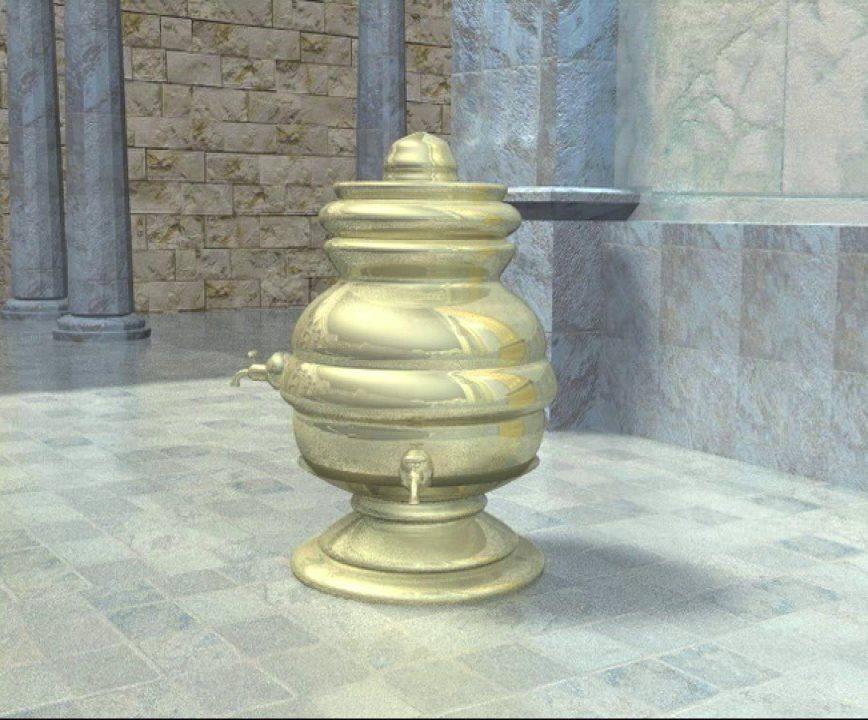
The Kiyor was placed between the Ulam and the altar and it was used by the kohanim to wash and sanctify their hands and feet every morning before they began serving in the Beis HaMikdash.
A kohen who did not wash his hands and feet and served, his service was invalidated. He was forbidden from even entering the Ulam and Heichal.
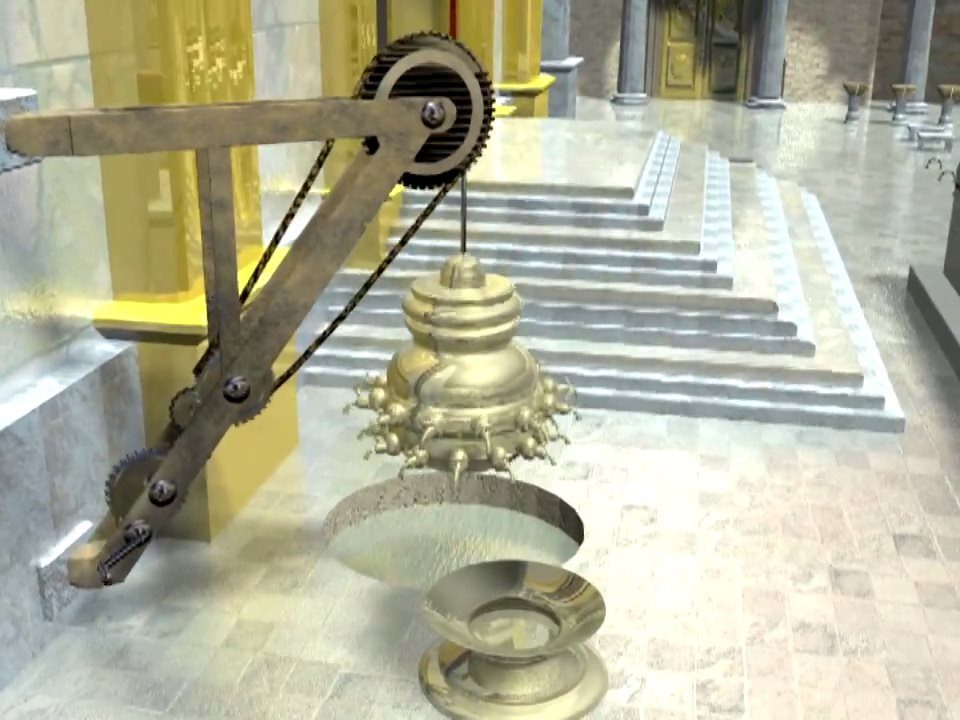
Before the kohanim washed their hands and feet in the morning from the Kiyor, they had to empty the water from the Kiyor and fill it with fresh water since the water that remained in the Kiyor became pasul if it remained overnight. (The halacha is that anything within a kli shareis becomes invalid if left overnight). They refilled it from a huge reservoir of water which Shlomo HaMelech installed in the first Beis HaMikdash (the reservoir was connected to the spring of running water under the Azara and the water in it did not become invalidated since it was connected to the spring of Ein Eitam).
A Kohen Gadol by the name of Ben Katin made some improvements in the Kiyor in the time of the Bayis Sheini. One of them was that he built a ‘muchni’ for the Kiyor. This improvement solved the problem and they no longer had to fill it with water every morning. What was this muchni? Ben Katin installed a wooden wheel that the Kiyor was connected to with a cable by which the Kiyor could be lowered into the well beneath. When the water in the Kiyor was connected to the underground water, it did not become invalidated.
Another improvement: During Bayis Rishon, the Kiyor had only two faucets. Ben Katin installed twelve faucets, based on the number of kohanim who participated in the offering of the daily Tamid. This way, all the kohanim could sanctify their hands and feet simultaneously.
Identifying the Materials with Which They Dyed the Priestly Garments
Wherever the Torah says sheish or bad, it means flax turned into linen. When it says techeiles it means wool dyed turquoise. Some say the techeiles is the blood of the chilazon whose color is actually green. Argaman according to the Rambam is wool dyed a reddish-purplish color that is called lacha. This is usually identified as the insect by the name of laccifer lacca. Tolaas shani is wool dyed reddish-orange from red particles that contain the ‘worm’ and is called kermez in Arabic. This is generally identified as the Kermes insect.
The Lattice That Surrounded the Mikdash
Within the structure of Har HaBayis there was a low partition, ten tefachim high (under three feet). This partition was made of thin wood that crisscrossed which is why it was called lattice.
The holes enabled those who were impure or non-Jews, who could not enter the sanctified areas, to look inside.
There are various opinions about the purpose for which the grating was made. Some say it was made only for decoration. Others say it was made to allow carrying on Shabbos and to consider the part from the lattice and inward together with the Azaros, as a private domain.
We will focus on the opinion that the lattice was to prevent the impure and non-Jews from going in, as there appears to be existing evidence to this day attesting to this.
It is told that when the Yevanim ruled Eretz Yisrael, the Yavan kings made thirteen breaches in the lattice so the goyim could enter, but when the Jews regained control they fixed these breaches. The Sages enacted thirteen prostrations to correspond to the thirteen breaches, i.e. whoever passed one of the places which had been breached, had to prostrate himself and thank G-d for the destruction of the Yavan kingdom and the abolishment of their decrees.
Actually, during the reign of Antiochus the Great (during Bayis Sheini) as part of his easement to the Jews, he forbade goyim from entering the area of the Mikdash.
One of the inscriptions of the lattice was found in the time when the Turks ruled Eretz Yisrael in 5631 and it is in a museum in Istanbul. In the Israel Museum there is another half limestone with the lattice inscription on it.
Beis Moshiach #1421 • pp. 30-33
© 2026 Beis Moshiach Magazine. All rights reserved.
This article originally appeared in Beis Moshiach #1421. You are welcome to share it with friends and family by email or in print, provided that you do not change, add to or omit any part of it, you credit the author and Beis Moshiach, and you include a link to archive.bmoshiach.org (written out in full in printed copies).
To republish this article in a newspaper, magazine, book or website, please request permission in advance at [email protected].