The Mysterious Return of The Rogatchover Gaon to Dvinsk
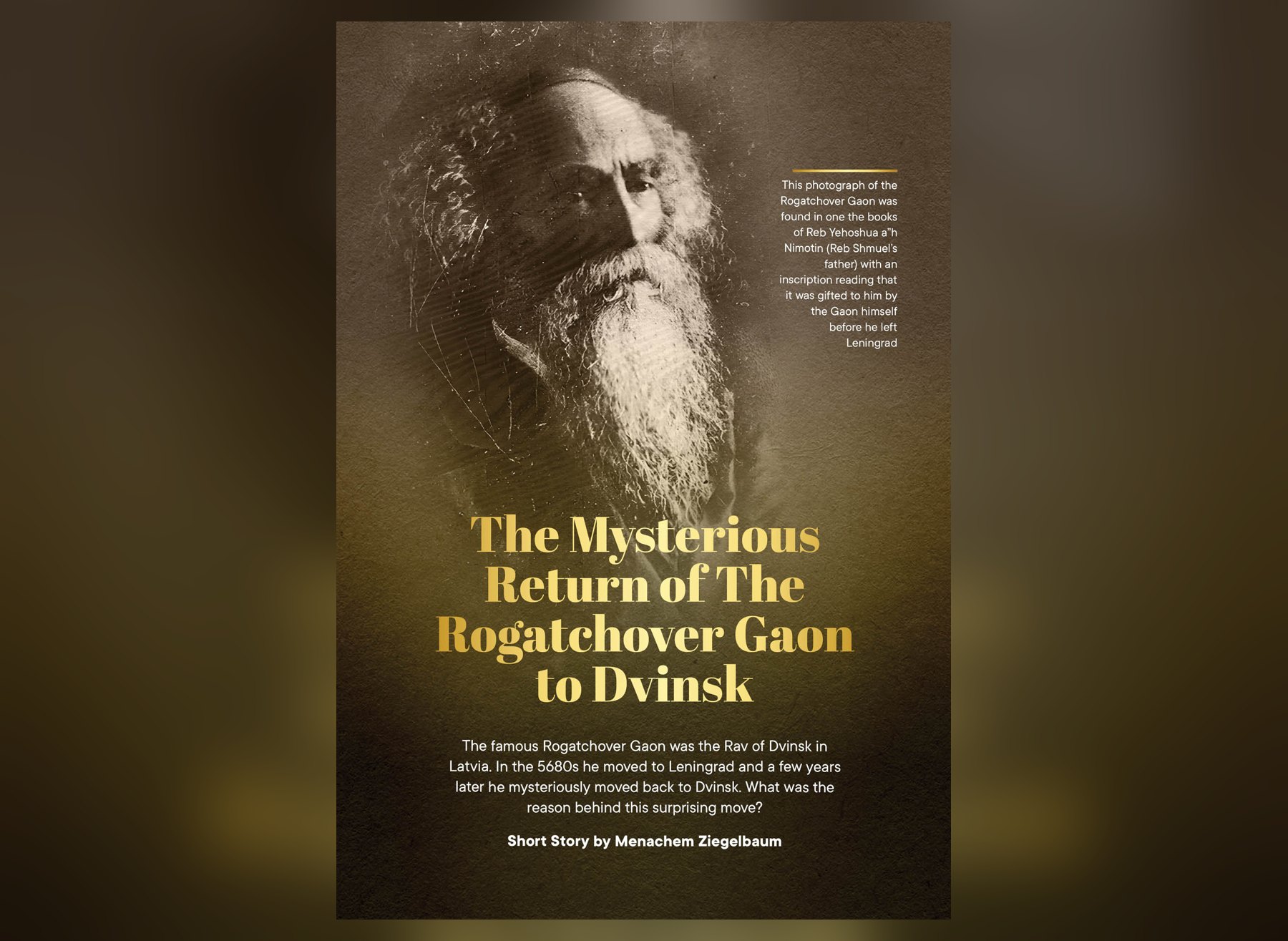
The famous Rogatchover Gaon was the Rav of Dvinsk in Latvia. In the 5680s he moved to Leningrad and a few years later he mysteriously moved back to Dvinsk. What was the reason behind this surprising move?
I
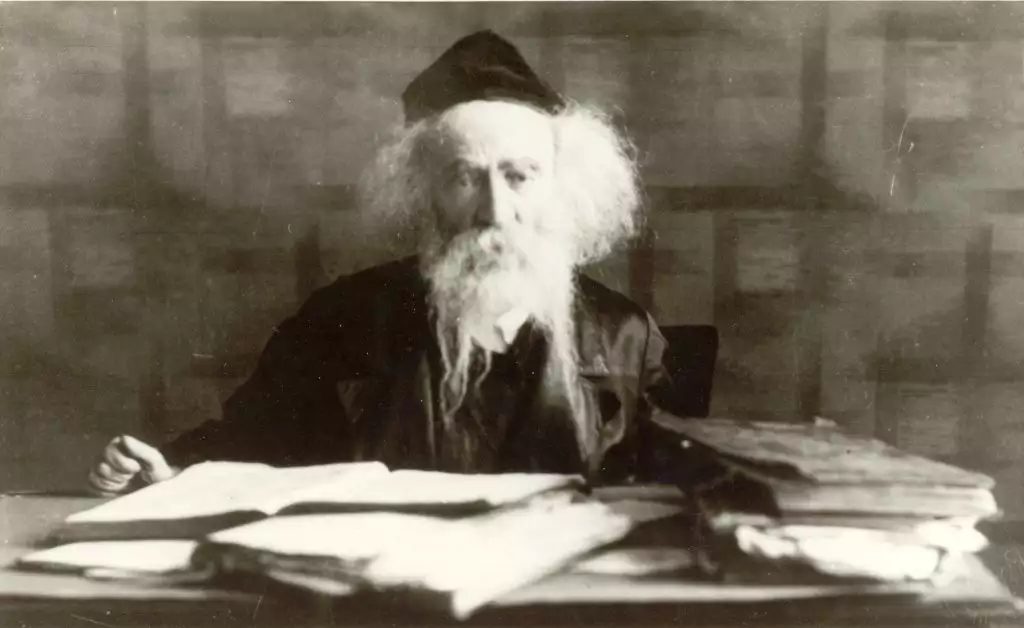
The Rogatchover Gaon, Rabbi Yosef Rosen, lived in Leningrad for a number of years. He had escaped there from his city of Dvinsk, due to the dire threats of the first World War. In Leningrad, he was appointed to serve as the Chief Rabbi of the city, a position he held for those few years.
This prodigious genius was versed in every area of Torah, as was written about him that “there was nobody comparable to him in his generation, and even in many generations preceding him and following him, as far as his wondrous fluency in the entire Torah down to its finest details and deepest hidden secrets.”
Due to his extreme sharpness in Torah, he had no tolerance for what he felt were pointless exegetic acrobatics or foolish lines of reasoning of those “scholars” who were men of stature in their own right, and he would brush them aside with a wave of the hand.
Despite that, when it came to the Rebbe Rayatz, he was totally battul to him, would refer to him with the title “Nasi,” and humble himself before him.
The Rebbe Rayatz, in turn, held him in the highest esteem, as is manifestly clear in the wondrous titles with which he addressed the Gaon in his letters.
A perfect illustration of this is the following story:
In the year 5780, after the passing of the Rebbe Rashab, his only son, the next link in the golden chain of Chabad leadership, fell ill with the often fatal typhus. At one point, it appeared that he had reached death’s door.
The Rebbe asked that they send a “pidyon nefesh” from Rostov to the Gaon Rabbi Yosef Rosen in Leningrad, asking him to arouse divine mercies.
The Gaon answered in a letter that opened with the titles Nasi b’Yisrael, Aluf b’Yehuda, Geza Tarshishim. In the letter, he explains, as was his way, in a manner of Torah learning and exegesis, that the Alter Rebbe had both the “Crown of Torah” and the “Crown of Nesius” and he passed both on as an inheritance to his children. In order to transition from the “Crown of Torah” to the “Crown of Nesius” it was necessary to go through the “libun” (kashering through fire) process, and this was the explanation for the illness, which served as a form of “libun” for the newly appointed Nasi.
He concludes the letter: “I hereby decree with the power of the Torah that he be healed.” And so it was.
II
When the persecution of the Rebbe Rayatz in Rostov intensified, he decided as a compromise solution to leave the city and move to the large city of Leningrad. Before he did so, he saw to it to request the permission of the Gaon, the Rav of the city, to move into his territory.
The Rebbe sent three Chassidim to ask permission of the Gaon. The Chassidim went to Rabbi Rosen and decided in their foolish arrogance to suggest that he move back to Dvinsk. According to their thinking, “a king breaks through all fences,” and the Rebbe didn’t need to ask permission of any man.
The Gaon smiled and did not respond at all.
When the Rebbe Rayatz found out about the audacity that they displayed towards the Gaon, he sent them a message that they were playing with fire. He instructed them to go back to him and beg his forgiveness.
One of the three approached the Gaon and told him that the Rebbe instructed him to ask forgiveness, not so subtly hinting: I don’t see a need to ask forgiveness as I was acting zealously for the honor of the Rebbe, but it was the Rebbe who instructed me to do so…
Once again, the great man smiled benevolently and announced, “That is a true Chassid. He asks mechila only because the Rebbe instructed him to… Such behavior is so precious to me that it is only in that merit that I hereby forgive wholeheartedly.”
It is told that the other two Chassidim did not go to ask forgiveness and they met a harsh and bitter end.
After receiving permission, the Rebbe Rayatz arrived in Leningrad in Sivan of 5784. As soon as he came, he went with his loyal Chassid Reb Shmuel Nimotin [may Hashem avenge his blood] to meet with the Gaon, the Rav of the city.
R’ Nimotin later described how the Rebbe Rayatz prepared for the meeting like someone preparing to meet the king. When he was ready to leave, he turned to him and asked, “Shmuel, are the endikes straight?” [The shirts back then didn’t come with built in collars and buttons on the ends of the sleeves. Instead, there was a separate collar that was placed on the shirt, and the ends of the sleeves had holes for cuff-links. The Rebbe referred to the ends of the sleeves as “endikes” in Russian.] When he left the house, his face was glowing like a supernal angel.
R’ Shmuel went in to the Gaon first and informed him that the Rebbe had arrived. The Gaon got up from his place with reverence and went out to greet his honored guest, the Nasi Yisrael. The meeting lasted two hours.
From that point on, R’ Shmuel Nimotin, a Chassidic Rav, Shochet and Bodek, a Gaon in his own right, incisive and clever, served as the contact person between the Rebbe and the Gaon.
For a few years, Rabbi Rosen lived not far from the home of the Rebbe Rayatz in Leningrad, which deepened the friendship and esteem between the Rebbe and the Gaon.
It happened again that the Rebbe sent R’ Nimotin to call Rabbi Rosen. When the Gaon heard the request, he immediately got up. “The Nasi calls!” he said and asked for his coat. When his wife heard this, she clapped her hands and exclaimed, “You didn’t eat anything yet today.” The Gaon said, “Yes, she’s right.” She quickly put small sardines down for him along with cake and milk. The Gaon took a taste and then said, “I need to hurry. The Nasi is waiting.”
Upon arriving, the Rebbe went out to greet the Gaon and they sat a long time together. At the end of the meeting, the Rebbe escorted him. When the Gaon went down in the elevator, the Rebbe said, “The elevator is now carrying a tzina malei safra [Aramaic term used in the Gemara for an individual with encyclopedic Torah knowledge, lit. a crate filled with sefarim].”
III
After World War I, when the battle cries had calmed and the upheavals of the revolution had quieted down, the Gaon wanted to return to Dvinsk. Before returning to his home city, the Rebbe Rayatz exerted himself and honored him with a rare goodbye visit as a sign of esteem for his greatness. Before the Rebbe went to the Gaon, he called for R’ Nimotin and asked that he escort him to the Rogatchover’s home.
R’ Nimotin was happy to do so. It was a great privilege to accompany the Rebbe and serve him, especially for such a special visit to the Gaon.
The Gaon received the Rebbe with great fondness and the two sat and spoke for a while. Then the Rebbe went home, escorted by his loyal Chassid. R’ Nimotin realized he should take advantage of this opportunity. After taking leave of the Rebbe with permission, he went back to the Gaon’s house, this time to escort him to the busy train station in Leningrad and to carry his belongings.
When the Gaon saw him, his face lit up. “Shmuel, I want you join me in the carriage to the train station,” he requested. Needless to day, R’ Shmuel was very happy to do so.
When the Gaon left his home to travel to the train station, R’ Shmuel helped him with the packages that he needed to take to the carriage. Despite his own greatness, he did not see it as a dishonor, but quite the contrary…
The Gaon boarded the carriage, followed by R’ Shmuel, and the two of them made their way to the station. The Gaon, who was lost in thought, suddenly roused himself from his pondering:
“Shmuel, you surely want to know what I spoke about with the Nasi.” He did not wait for an answer and went on to say, “We spoke about my returning to Dvinsk. And so, I want to tell you why I suddenly decided to return to Dvinsk.
“The Rebbe and I spoke about the fact that based on all the signs and the state of the world, we are already standing immediately prior to the coming of Moshiach. Moshiach Tzidkeinu is about to come soon. The Rambam says, [this part was said in a learning tune] that before the coming of Moshiach, the entire Sanhedrin will convene in Teveria and then Moshiach will come to them and everyone will go together to Yerushalayim.
“Since, in our generation, I am part of the Sanhedrin, they will surely soon come to tell me to travel to Eretz Yisrael and the entire Beis Din will meet there. But they [the Gaon did not explain who ‘they’ are] know that I am the Rav in Dvinsk. Then they will come to Dvinsk to inform me to go to Teveria. But if I won’t be there, how can they tell me to go?
“Therefore, the best thing is for me to go back to Dvinsk and when the time comes to travel to Eretz Yisrael, I will be ready and go to Teveria immediately, for there is no time to waste to look for me.”
R’ Shmuel Nimotin wrote this story in a letter to his father:
“Yesterday, the apple of our eye, the Gaon yichyeh traveled away from us. Our hearts are greatly saddened. All his acquaintances and admirers came to his house [to see him off], as well as to the train station. Even the Rebbe [Kevod Kedushaso yichyeh] came to his home to inquire after his welfare and to accompany him, and was received with love. They sat for about half an hour and spoke about Moshiach Tzidkeinu and what will be the order of events with his coming.”
Beis Moshiach #1427 • pp. 32-35
© 2026 Beis Moshiach Magazine. All rights reserved.
This article originally appeared in Beis Moshiach #1427. You are welcome to share it with friends and family by email or in print, provided that you do not change, add to or omit any part of it, you credit the author and Beis Moshiach, and you include a link to archive.bmoshiach.org (written out in full in printed copies).
To republish this article in a newspaper, magazine, book or website, please request permission in advance at [email protected].