From a Supermarket Payphone to a Thriving Jewish Center

A young Chabad couple who began their shlichus making calls from a supermarket payphone have transformed Jewish life in Belo Horizonte, Brazil. Four decades later, Rabbi Nissim and Rivka Katri reflect on their journey from those humble beginnings to leading a vibrant Jewish community center
Rabbi Nissim Katri will never forget the following incident that occurred right at the beginning of his shlichus.
“We started our shlichus at the beginning of 1987. In those years, there was still no internet and certainly no mobile phones. Even the landlines in homes couldn’t be transferred from place to place. So we were forced to work without a phone at home or at the Chabad House, which is a basic necessity for a shliach. Without it, it was very difficult to contact people and invite them to activities.
“To call people, we had to go to a public phone that was in the supermarket, two blocks away from our house. That’s how we started our shlichus…
“It happened on the most ordinary day, during noon hours, when I was walking back from shopping. We didn’t even have money to buy a car. I entered the street where I lived, and suddenly I felt an enormous joy filling me. So much so that I felt as if the whole street was happy and dancing with me,” R’ Katri recalls. “A rather strange feeling, to be sure, great joy without any external reason. I got home and unpacked the groceries. Suddenly the neighbor who had a phone at home knocked on my door and told me that someone from abroad had called him for me.
“I went to his house to take the call. On the line was a friend from New York who wanted to share the good news about ‘Didon Notzach.’ It’s amazing to see how a shliach who is so far away, disconnected without any means of communication, no other Chabadnik in his entire area, felt the joy of ‘Didon Notzach’ even before being told about it…
“The next day, we received word that the Rebbe had announced that these days were days of favor to ask for blessings, and he would read all requests at the tziyun of the Previous Rebbe and the prayers would go straight to Hashem.
“That period was the beginning of the fax era, so we didn’t even have a fax machine. To send a fax of blessing to the Rebbe, we traveled to the city center, where there was a main post office that had a machine.
“I thought to myself, ‘What are the chances that out of tens of thousands of faxes being sent to the Rebbe from around the world right now, our fax will manage to “catch” the line open and reach the Rebbe.’ But still, we wanted to take advantage of the ‘time of favor’ and send it. When the clerk sent the fax, right on the first try when he pressed the button, the fax went through… I couldn’t believe it. How could it be that from all over the world people are sending faxes to the Rebbe right now, and my fax managed to go through? I felt it was a sign from heaven for me – how much the Rebbe is with the shluchim around the world, and that he is ‘available’ to them at all times,” R’ Katri concludes his memories from his first period of shlichus.
When many people hear of “Brazil,” an image immediately comes to mind of a large country with breathtaking landscapes alongside dire poverty that keeps getting worse, and surrounding it all, uncontrolled crime.
One of the largest cities in Brazil is Belo Horizonte. You may not have heard of it. The city is located in the southeastern region of the country. Its population numbers more than two million residents. The crime rates in Belo Horizonte are relatively low compared to other major cities in the country, and it is considered a significant economic hub in Brazil. Many international companies have established their offices in the city.
According to conservative estimates, the Jewish community in the city numbers about five thousand Jews.
During a recent visit I made to Brazil, I sat down for a conversation with R’ Katri, the Rebbe’s shliach in the city, and heard from him about his activities there alongside his wife Rivka. He has been working in the city for almost forty years, and he knows that until the hisgalus, he will continue to fulfill his role to prepare the city to welcome Moshiach.
Closing The Circle
How did you end up on shlichus in a city like Belo Horizonte?
“In my youth, I studied at the Petropolis Yeshiva in Brazil established by Rabbi Benyamini z”l, despite my parents wanting me to study at university to acquire a profession.
“In those days, about forty years ago, there was a shortage of rabbis and teachers who spoke Portuguese. The rabbis then in Brazil mostly came from outside the country, so they weren’t really proficient in the local language. It’s no wonder that the connection with the locals was more difficult to establish.”
The Chabad yeshiva established in Brazil was a “factory” for rabbis and shluchim who went out to work in Brazil and its neighboring countries. Even as bachurim, the yeshiva students went out to spread Yiddishkeit throughout the country, especially during the Tishrei holidays.
In 1980, the tamim, Nissim Katri, was sent on shlichus to the city of Belo Horizonte. He was tasked with managing the tefillos of Yom Kippur.
“At the end of the holy day, the shul’s gabbai approached me and pointed out an elderly Jew who hadn’t set foot in the shul for twenty-five years. It was on this holy day when we came to impact the community that he returned to the shul after such a long disconnect.
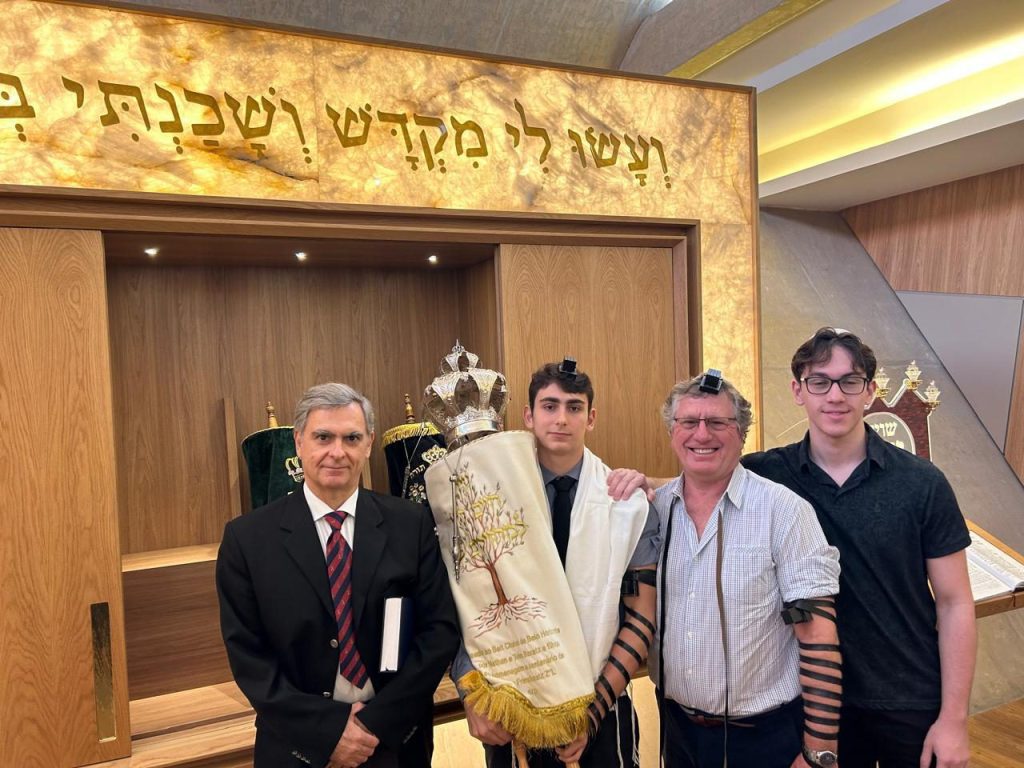
“The image of the elderly man penetrated deep within me and made me understand how many Jews are waiting for us to come and ignite their Jewish soul. This gave me the incentive to go on shlichus,” R’ Katri relates.
After R’ Nissim and his wife Rivka’s wedding, the Katri couple settled in S. Paulo, where they lived near the Rebbe’s shliach Rabbi Shabsi Alpern. Among his roles, he recruited young couples for shlichus in various cities across the country. Rabbi Alpern set his sights on the young man and asked the Rebbe whether to send him to one of the places in Brazil lacking shluchim. The Rebbe’s answer was “Consent and blessing and the matter is proper, I will mention it at the tziyun.”
That same week, Nissim himself also received a bracha from the Rebbe about going on shlichus, following a question he sent to the Rebbe about the shlichus. “My wife and I saw in these responses a clear answer that we should go on shlichus to one of the cities where there wasn’t yet a shliach.”
After a few days, Rabbi Alpern presented an offer to go on shlichus to one of the cities. The young couple traveled to the city, checked out the place, and when they returned, they asked the Rebbe whether to go on shlichus to that place, but the Rebbe’s answer was slow in coming. Only after some time did the answer arrive: “Ask knowledgeable friends.”
“We consulted with our brothers-in-law who were already serving as shluchim in Brazil at that time, and they said that the shlichus in that city wasn’t suitable for us. From our perspective, their answer was the Rebbe’s answer. We therefore continued to look for a suitable shlichus location.
“After two months, Rabbi Alpern suggested we go on shlichus to the city of Belo Horizonte – the same city where I had already been at age seventeen, and which gave me the desire to go on shlichus. He told me that since I had already received an answer from the Rebbe to go on shlichus, there was no need to ask again. But my wife Rivka disagreed and explained that we don’t do anything without a bracha from the Rebbe.
“It was Friday when we asked the Rebbe if it was appropriate for us to go as shluchim to Belo Horizonte. Two days later we received a bracha from the Rebbe and we set out.”
Starting From Scratch
R’ Katri experienced the beginning of his shlichus from the time he went until today – as a tough challenge. I ask him to tell about the special moments he remembers from his shlichus in the city, and he chooses to start with a story from the first period.
“At the beginning of our shlichus, a shul gabbai told me about a Jew who sits at the back of the shul. He told me that this Jew’s parents lived 500 kilometers from our city, and his father had passed away in recent days and was buried in a non-Jewish cemetery. I checked the possibility of transferring him to a Jewish cemetery, but I was informed that we would have to wait several years to bring him to Jewish burial.
“A few days later, a lawyer from the city of Alfenas – the city where that Jew who passed away was buried – called me and told me that he was going through difficult things like paranoia and so on. He asked me to bless him to be extricated from the fears he had.
“Suddenly in my mind flashed the matter of that Jew who was buried in his city in a non-Jewish burial, and I felt there was an opportunity here… I asked the lawyer, ‘Would you like the difficult things you’re going through to stop? If so, arrange a license to transfer the Jew who died a few days ago to a Jewish cemetery.’ The lawyer replied that he knows the deceased Jew, and he would take care of transferring his grave to a Jewish cemetery.
“He made sure to write to all the appropriate authorities and convinced them that this Jew was buried by mistake in a non-Jewish cemetery and needed to be transferred to a Jewish cemetery. He was successful, despite it being against Brazilian law which states that a person who is buried can only be moved to another cemetery after five years from the day of burial.
“Thus we merited to bring him to proper burial according to Jewish law.
“After two months, this Jew’s wife also passed away, and she was buried next to her husband. Thus we merited Jewish burial for two Jews,” R’ Katri says with satisfaction.
“It turns out the story doesn’t end here. The son of this Jewish couple was a lonely and depressed man. There were various elements who wanted to take advantage of him, and we wanted to prevent this, and we made sure to bring him closer to our Chabad House. As a result, he began participating more in tefillos and classes, and was saved from those elements who sought to distance him from Jewish life.”
How do you raise and educate children in such a remote and isolated place from a Jewish perspective, without a chevra and organized activities?
When people would ask us about food, we answered that this wasn’t our main problem, despite the fact that during that period of moving to the city, we had nothing to eat except fruits, cereal, and water. We didn’t even have crackers for Shabbos…
However, our main problem was educating the children in a city like ours. With no choice, we took their education also as part of our shlichus challenges.
In the morning they studied at the community school where they learned secular studies, and in the afternoon hours my wife and I taught them religious studies. Boruch Hashem, we managed to bring them to a high level in limudei kodesh, so that when they arrived at the Petropolis Yeshiva, they had extensive knowledge in limudei kodesh, even more than those who studied in official Talmud Torahs in other cities in Brazil…
During their vacations we tried to send them to summer camps. An interesting anecdote: when they first arrived there, they refused to eat for fear the food wasn’t kosher. That’s how much they protected themselves… until their cousin came and explained to them that the camp only provides strictly kosher products, and that they could eat without concern…
How do you, in fact, get kosher food?
Today it’s much easier, because you can get many products here with good kosher certification, but in our first years of shlichus, Rabbi Alpern would send us a container from S. Paulo every few months with all the food products we needed with strict kosher certification.
Every Sunday I would go to the dairy farm and milk some fresh milk for my children. Eventually something interesting happened, even otherworldly. This dairy farm closed precisely at the time that shelf-stable milk with good kosher certification started arriving in our city. I felt as if the entire existence of the dairy farm was only so that we could have chalav Yisrael. After we could manage without it, the farm shut down…
This is really the opportunity to thank Rabbi Alpern for all the material and spiritual help and support he gave us over the years.
Can you share with us special stories that demonstrate how the Rebbe is with you in your life on shlichus?
We feel it all along the way, every day anew. The stories are many, and it’s really a feeling that accompanies us day by day.
There is a Jew here who fought in World War II against the Nazis. He had a daughter who lived in the city of Itabira, about 100 kilometers from us, and he asked us to put mezuzos in her house.
My wife refused to travel with me, saying she wasn’t willing to travel with all the children to a remote place to put a mezuza in the doorway of a woman whose father wants us to put up a mezuza for her, without even knowing if the daughter herself wants it.
But when she woke up the next morning, she told me she had decided to join me for the trip. When I asked why she changed her mind, she told me that that night she had an amazing dream about the Rebbe. She saw the Rebbe traveling in his car to that woman’s house, while looking at her with a serious face and saying, “I’m traveling to Itabira and you don’t want to travel?” Of course we traveled there immediately, and the daughter received us warmly. We put up the mezuza in the doorway of the house. Afterward we sat down for a conversation with the woman and her husband.
When we left for home, my wife told me that now she understands the Rebbe’s intention, who so wanted us to visit her. This woman is sick with a rare disease, and apparently it wasn’t for nothing that the Rebbe wanted us to go put a mezuza in her doorway, and stay in contact with her. This connection continues until today (see box). Boruch Hashem, thirty years have passed since then, and she is still dealing with her rare disease, but she lives and functions normally…
The Only Jewish Address In The Area
The city of Belo Horizonte is truly a spiritually ‘remote city’ in every sense. The arrival of the shluchim finally generated a first spark of authentic Judaism for the city’s Jews. “The importance of our activity in the city is really basic. If we weren’t here, there would be nothing Jewish here. Besides us there is only a Reform temple,” says R’ Katri. “In fact, we are the only Jewish address in the area, while with others there is destruction and ruin. If we weren’t here, the whole community would have gone lost.”
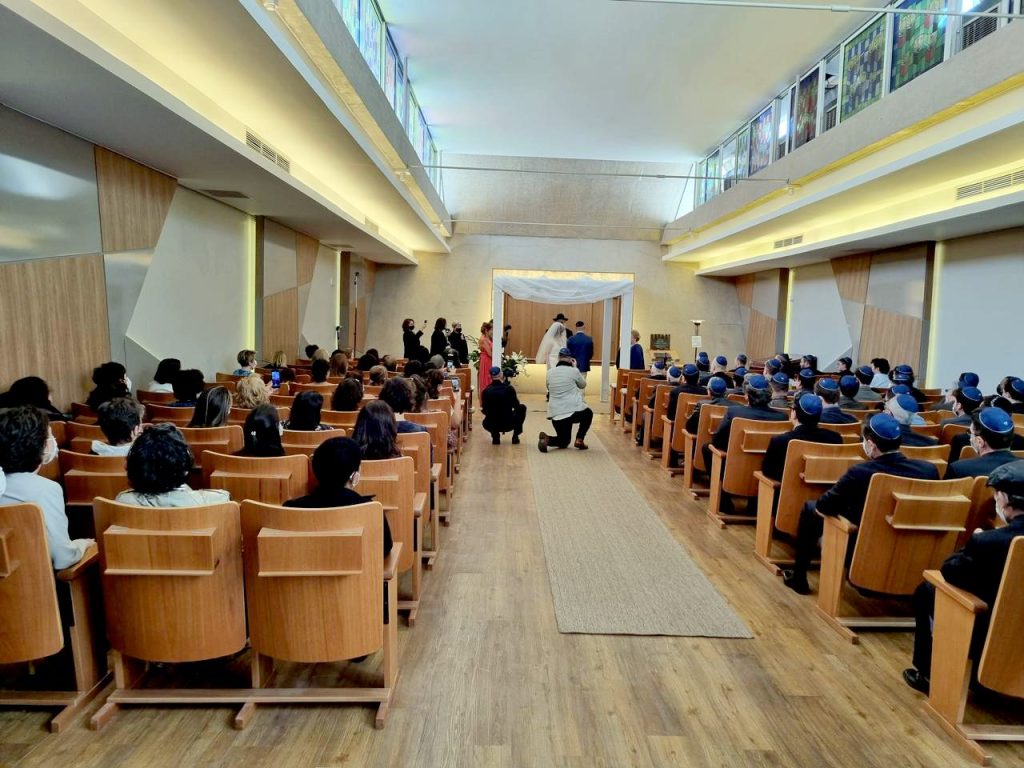
The official Jewish community in Belo Horizonte was founded over a hundred years ago. The shluchim are currently responsible for all Jewish activity in the city and its surroundings. They built a large building, a community center, five stories high. The place also contains an extensive Jewish library in various languages, and recently they have even begun working on a mikva.
As always, the younger generation grows and joins the king’s legion. Their son, Menachem Mendel and his wife Chana Moriah Katri, joined their parents’ activities with the aim of expanding the activities and reaching additional Jews, including people who have never set foot in the shul. “Thanks to their wonderful work and their cheerful smiles, many more Jews come to our activities,” says R’ Nissim, sounding proud. “The regulars are simply amazed to see how Jews who for many years did not come to the shul have returned to visit it.”
The new building that was built in recent years has also generated great interest among the city’s Jews. “This is the only Jewish center that has been built here in decades.”
How do you spread the message of Geula and Moshiach in Belo Horizonte?
“In all the drashos and all the activities we do, we mention Moshiach. There is not a single campaign that we do without large Moshiach flags that proudly wave for all to see.
“The highlight of the year is Acharon shel Pesach. We are the first in Brazil who, already thirty-five years ago, began to hold a huge Seudas Moshiach with hundreds of participants. Even the heads of the Jewish community in Belo Horizonte who are still far from matters of tradition, make sure to come every year to the Seudas Moshiach that we make. Of course we take advantage of the opportunity to talk about the importance of the anticipation of Moshiach and doing things to hasten the Geula,” says R’ Katri.
Finally, what do you have to say to the readers?
I often see people arguing about trivial things, things that have no real importance, and it’s a shame. It’s important that we focus on increasing peace in the world and spreading the Rebbe’s inyanim, bringing every Jew closer, each one in the place where they are on shlichus, and thus we will hasten the revelation of Melech HaMoshiach.
KOSHER FOOD FOR 150 SOLDIERS
Rabbi Nissim Katri relates:
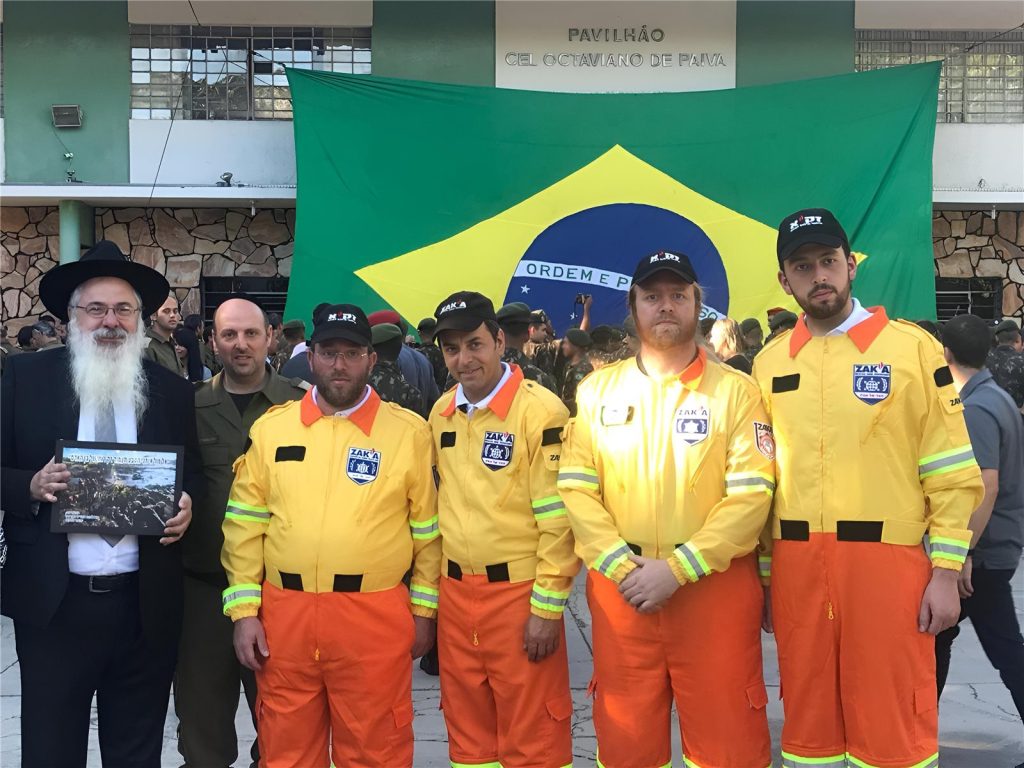
About five years ago, a large dam collapsed in the city of Brumadinho in southeastern Brazil, a few dozen kilometers from our city. The disaster was huge. At least 110 people were killed and 238 were initially registered as missing in the disaster. The Israeli government sent a delegation from the Home Front Command to assist in rescuing casualties and missing persons. The delegation was headed by Brigadier General Golan Vach, a religious Jew.
I received a request to prepare kosher food for some of the delegation’s soldiers until the army would arrange and provide them with kosher food. Of course, we responded to the request. However, it ultimately turned out that the army couldn’t manage to arrange kosher food, and we were asked to provide kosher food for all members of the delegation, which numbered one hundred and fifty people.
Within just a few hours we had to make kosher food for one hundred and fifty people not only for the first day, but for their entire stay in the area. Boruch Hashem, the entire community came with great pride to help us welcome the Home Front Command team and prepare kosher food for them for all the days of their stay in the city. Needless to say, their help instilled in them the importance of keeping kosher. With siyata d’shmaya, we did it.
At the end of their operation, the mission commander came to thank us for the hospitality, and explained the importance of a hot meal for a soldier at the end of a day of labor during which he was exposed to the horrors of the disaster.
The soldiers themselves stayed in a secure military base, and a Mossad agent was responsible for coming to our Chabad House to take the food and deliver it to them safely.
One day he told me that he once visited Bangkok as a tourist, and like many other young people, he went to the Chabad House to eat. Next to him sat a girl who later became his wife. “I married my wife thanks to Chabad,” he said, “and now, when I’m back at a Chabad House, taking care of kosher food for the soldiers, I feel an emotional closing of the circle.”
NO NESHAMA GOES LOST
Rabbi Nissim Katri relates:
In the article, the story is told of a woman with a rare illness and the shluchim put up a mezuza in her home. Her son was going to be celebrating his bar mitzva. I know that for most bar mitzva boys, this is an opportunity to encounter Judaism up close and who knows when another opportunity will come up? We take advantage of this to convey the basics of Judaism in an experiential way in the hopes that this will remain with them all their lives. It goes way beyond putting on tefillin and an aliya to the Torah.
But this woman’s son wasn’t at all interested in a bar mitzva celebration. It was strange, because most boys his age love the celebration, the gifts and all the excitement and focus on them, but he refused to celebrate. He also wasn’t interested in anything to do with Judaism. His father was nonplussed and told me that his son was sticking to his guns but he hoped that one day, his spark would be ignited.
I sadly thought that if at this time when all his friends were drawn to celebrating their bar mitzva he wasn’t interested, what chance would there be that he would ever take an interest in Yiddishkeit? I was afraid that this boy would be lost forever to the Jewish people.
Indeed, he grew more distant and eventually went to live in Vitoria, about 250 miles away from us.
During Covid, the world became acquainted with Zoom. The shiurim we gave to Jewish students were switched to Zoom classes.
My son Mendel had renewed ties with the young man and he drew him into the Zoom shiurim. After a while, the man took a great interest in the shiurim and at a certain point he decided he wanted to move to our city, Belo Horizonte.
To my surprise, he asked me to put tefillin on with him. This happened nineteen years after I thought we had lost him from the Jewish people. At some point, we even bought tefillin for him so he could put them on daily. He advanced in his Torah learning and even went to learn in yeshiva in Eretz Yisrael for a year and a half! Today, we are looking for a good shidduch for him.
I castigate myself for how I erred in assessing a Jewish heart. This caused me to properly appreciate every neshama, every Jew.
Beis Moshiach #1445 • pp. 14-23
© 2026 Beis Moshiach Magazine. All rights reserved.
This article originally appeared in Beis Moshiach #1445. You are welcome to share it with friends and family by email or in print, provided that you do not change, add to or omit any part of it, you credit the author and Beis Moshiach, and you include a link to archive.bmoshiach.org (written out in full in printed copies).
To republish this article in a newspaper, magazine, book or website, please request permission in advance at [email protected].