Moshiach’s Song in Mozart’s Tongue
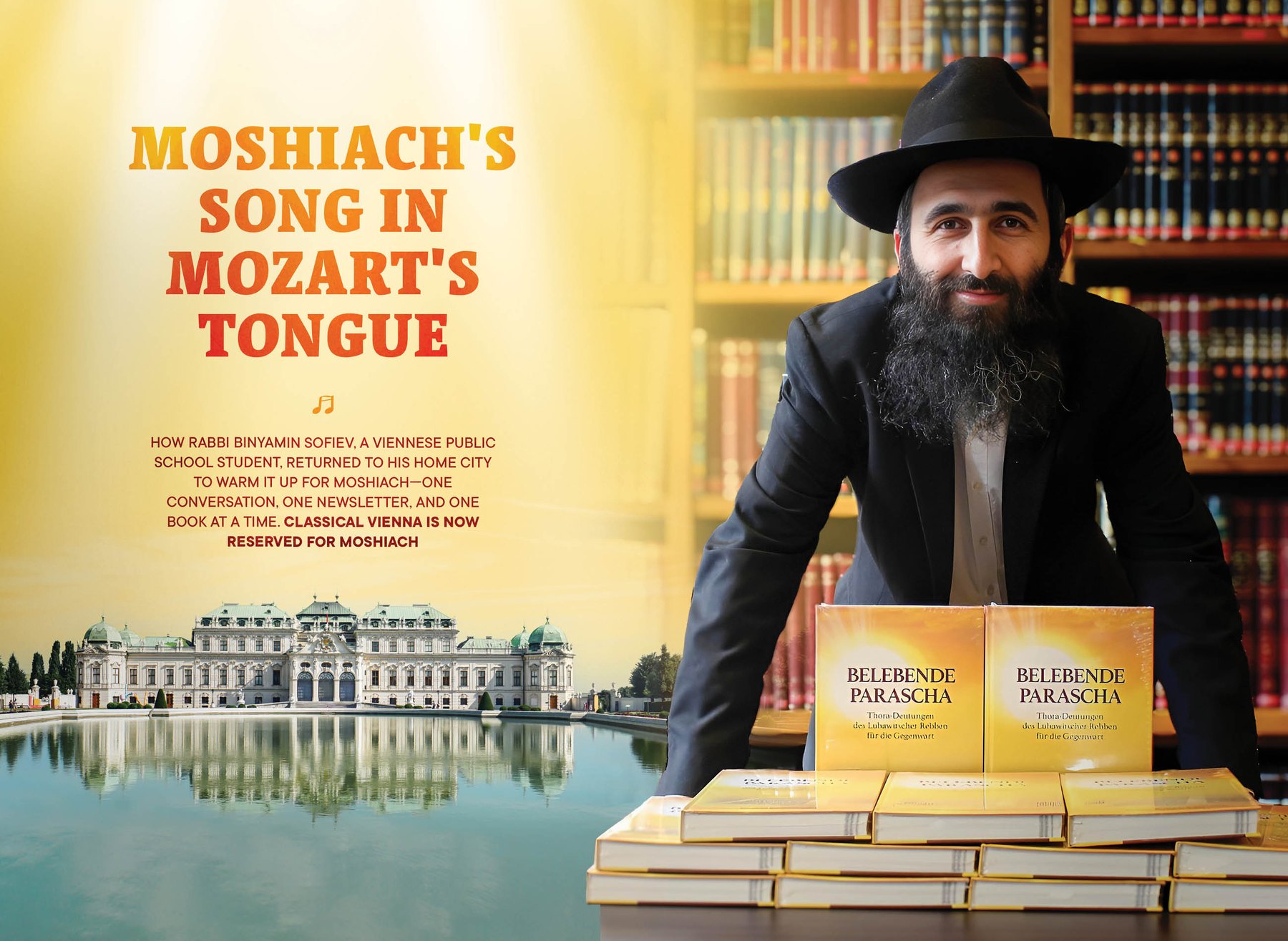
How Rabbi Binyamin Sofiev, a Viennese public school student, returned to his home city to warm it up for Moshiach – one conversation, one newsletter, and one book at a time. Classical Vienna is now reserved for Moshiach
If you met Rabbi Binyamin Sofiev, you would be impressed by a Chassidishe yungerman who has written numerous sifrei Chassidus in German. Additionally, he serves as the Rebbe’s shliach in Vienna, Austria. It’s hard to imagine that this refined young man didn’t grow up in a Chassidishe home; far from it. He grew up and was educated in a non-Jewish school in the same city to which he returned years later as a shliach.
In an interview with Beis Moshiach, he shares his interesting life story and his work as shliach in Vienna.
Rabbi Sofiev was born in 5742/1982 to a traditional Bukharian family living in Tel Aviv. When he was just four years old, his parents decided to immigrate to Vienna due to financial difficulties in their hometown.
“There wasn’t really any Judaism in Vienna,” he says, “and so I was sent to Austrian state kindergartens and schools, which were obviously not Jewish.”
Only when he reached the age of eleven did his parents decide it was important for their son to know a little about Judaism, and consequently decided to send him to learn some Jewish studies, “during which my Jewish spark was ignited,” R’ Sofiev recalls.
“I remember they talked about the importance of maintaining kosher standards, and only then did I first learn about these concepts, but I didn’t start implementing them right away. It took more time until I started applying them in my daily life.”
At eighteen, he felt something beginning to stir in his soul. He still didn’t know what a neshama was, but the feelings began to stir within him. As a result, he began making sure to go to shul every morning, and on Shabbos he began keeping what he knew, but it wasn’t much…
It wasn’t simple at all. “At first, I had many difficulties with my parents who struggled to accept the change that was beginning to take place in me, but as time passed, especially after my parents divorced and my father left home – it became easier for me. Given the situation, I also made the home kitchen kosher.”
That year, 5761/2001, Binyamin completed his high school studies in Vienna, and he decided he wanted to study medicine. On the advice of Rabbi Yaakov Biderman, the Rebbe’s shliach to Vienna, young Binyamin made a decision that before continuing with medical studies, he would go study for one year at the Tomchei Tmimim yeshiva in Tzfas, and after that continue with his plans.
The plans, of course, changed. “I stayed learning at the yeshiva for over three years, after which I became engaged, got married and continued my studies in the kollel in Tzfas, where I studied for two more years…”
Was that when you went out on shlichus to the city where you grew up?
“During my time in kollel, we were offered to go on shlichus to Vienna. Since I grew up there and knew the city and mentality well, the offer seemed suitable to me.
“We wrote about this to the Rebbe and the response we received through the Igros Kodesh was that we should indeed go on this shlichus, and that the task intended for me couldn’t be performed by anyone else. However, the Rebbe emphasized that one cannot go on shlichus before completing the things that needed to be done in Eretz Yisrael.
“Since my wife was in the middle of her teacher certification courses, we understood that we needed to wait with going on the shlichus until she completed her studies.
“Two years later, we understood that the right time the Rebbe spoke about had arrived, and we went on shlichus to Vienna,” R’ Sofiev relates.
As a shliach, he began working as a teacher in the Jewish school that opened in the city, and simultaneously began working with the Bukharian community which numbers about four hundred families. The Bukharian community flourished after the opening of a shul named ‘Beit HaLevi,’ named after the philanthropist Lev Leviev who donated toward the building.
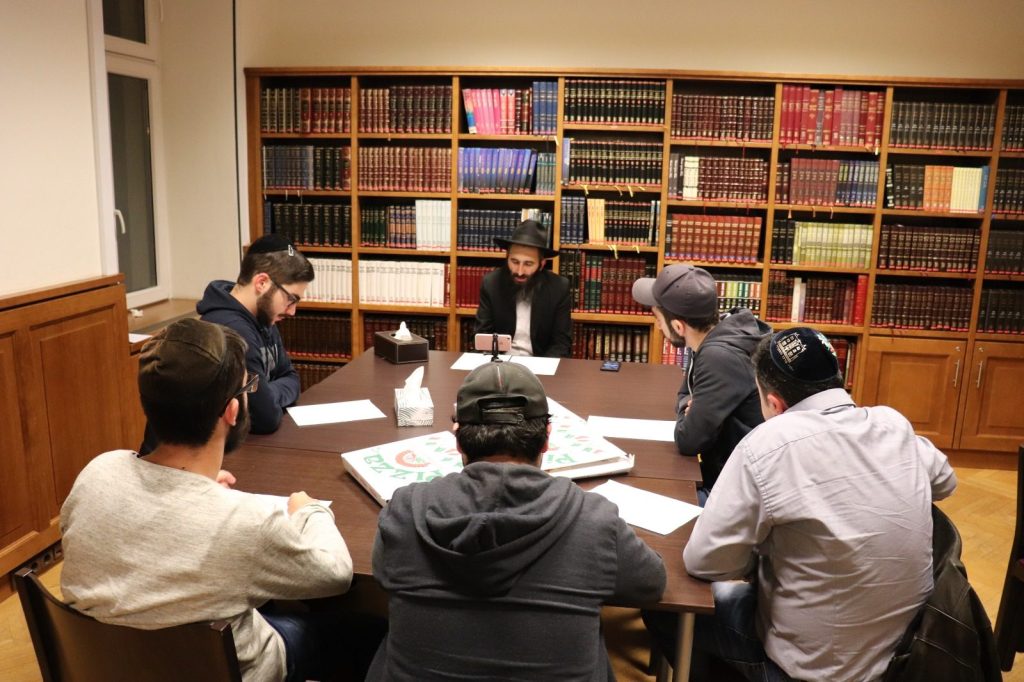
Indeed, R’ Binyamin threw himself into his work. He works extensively with young people in the community, giving them Torah lessons in German (the local language) on various topics: kashrus, family purity, and more. Additionally, he serves as a shliach for the Caucasian community, which numbers about fifty families.
Alongside this shlichus, he began to realize his writing talent, and he started publishing weekly parsha newsletters in German. The newsletter currently stands at number 1,050… Among the various sections of the newsletter, there is also a Geula and Moshiach section that is based mainly on a parallel section in the Hebrew weekly HaGeula, M’anyein v’Achshavi, translated into German. “From these newsletters, I have put together a number of in-depth books over the years (according to the annual cycle) and there are currently twenty books on these topics,” he says with satisfaction. “I myself don’t know how I manage to publish them, even financially, but I do see how much people love and appreciate these newsletters. They see something authentic in it, boruch Hashem, and I feel special siyata d’shmaya.”
When did you publish your first book?
“I published my first book in the year 5777. Before publishing the book, I wrote to the Rebbe and requested a bracha for success.
“The third book I published contains stories about the Rebbe. People really love this book. I know that these stories have had an impact on people, encouraging them to read. There are several families who read the book, and as a result, decided to check the mezuzos in their homes.
“There was a family dealing with a health issue concerning one of the family members. After reading the book, they understood the great impact that kosher mezuzos can have on the health of the household members, and therefore, they realized the importance of checking the mezuzos. They decided to have the mezuzos checked and, to their surprise, discovered that some of the mezuzos in their home were pasul. After the mezuzos were corrected or replaced, the health issue was resolved.”
Did you face any initial difficulties adjusting to your shlichus?
“Unlike many other shluchim, when we arrived on shlichus, we didn’t encounter any special difficulties. In terms of Jewish life, we had kosher food, a mikva, shuls, and minyanim at all hours of the day…
“The only challenge I face is in spreading the message of Geula — conveying it in a way that it will be accepted by the one on the receiving end. Vienna is not France, so the approach here must be more diplomatic. People here are more set in their ways.”
How do you deal with this challenge?
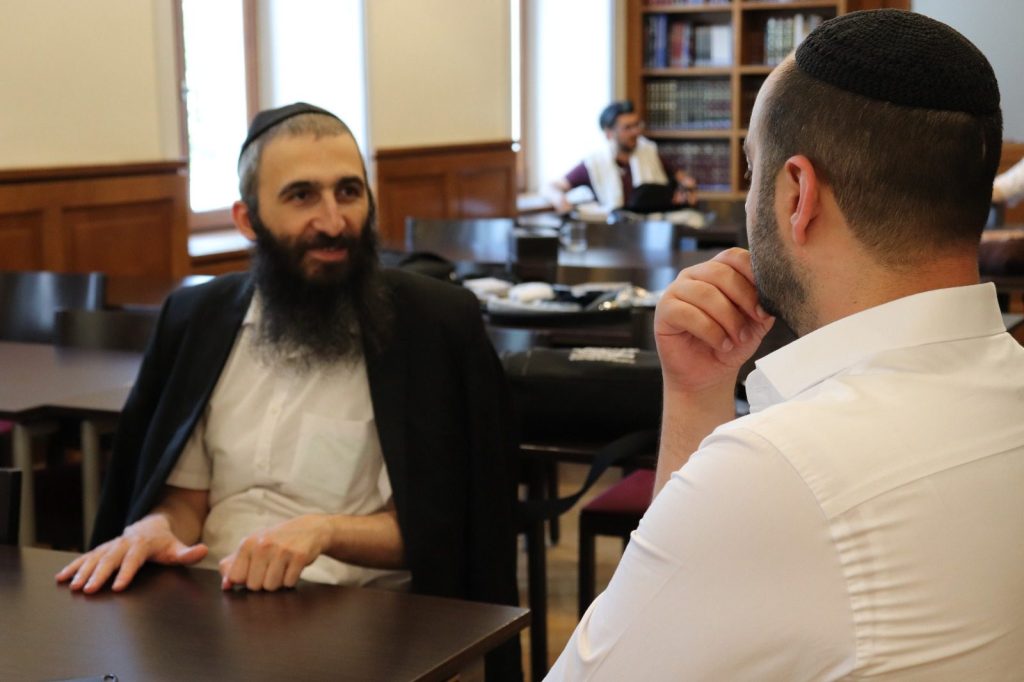
“I try to convey the message primarily through ‘one-on-one’ conversations with people I see are open and willing to listen. I explain to them the concept of Moshiach and his role in the world, and the message is generally well received by the listeners, some more, some less.
“Over time, I’ve come to understand that the challenge is mainly for me; I’m constantly thinking about how to convey this in a way that as many people as possible will hear about it. Of course, today we can talk about it much more openly than when I arrived here about twenty years ago, but it’s still a challenge.
“Lately, I’ve been working on a book about Moshiach and Geula in German, in a question-and-answer format, covering all aspects related to the topic.”
The Power of a Heartfelt Conversation
The impact R’ Sofiev has had on the community members is impressive. They love attending his classes, consulting with him on various matters, and receiving his guidance. “We can never know how much one conversation, even a short one, can affect the person in front of you, even in ways you may not have been aware of at first,” says R’ Binyamin, sharing an example:
“I have a weekly class in Tanya with several people, among them a Bukharian Jew who was uncertain whether to send his children to a cheder or to a Jewish school where boys and girls study together. He preferred sending them to the Talmud Torah, but his wife was less inclined.
“Of course, I explained to him the importance of learning only al taharas ha’kodesh, and that it’s better to send them to a cheder.
“After a great deal of deliberation, he sent his children to the cheder and, boruch Hashem, he and his wife are very happy with the decision. Every time I see him, he makes sure to remind me that because of our conversation, he sent them to the right place and not to a mixed school.
“This is a small but significant example, showing how one conversation can change the lives of an entire family, and even future generations,” says R’ Sofiev.
“Here’s another example: Every year, during the Three Weeks, we invite a guest lecturer to speak about the Mikdash. Sometimes I lecture myself, with a beautiful presentation and explanations that I prepare.
“One year, one of the participants approached me and said, ‘You should know that because of the class you gave on Hilchos Beis HaBechira, I made a change in my life.’ I was surprised to hear this, and he explained: ‘During the lecture, you spoke about how Moshiach could come at any moment, and the Third Mikdash will be rebuilt, so we cannot remain in the same spiritual state; we must change. Your words deeply affected me, and I decided to strengthen myself in keeping Torah and mitzvos and to be ready at any moment for the hisgalus of Moshiach.’”
How do the children fit into the family’s shlichus work?
“I have, boruch Hashem, six children. The two older ones, a boy and a girl, study in Chabad schools in Tzfas. When my oldest son studied in Vienna, we used to go together on mivtzaim during Chanuka or on Fridays for mivtza tefillin etc.
“Besides the older children, I have daughters still studying in Vienna. One of them attends the Bais Yaakov school in the city — the only Chabad girl there. She tries to influence the school with mivtza neshek even though it’s not always easy, since the girls at Bais Yaakov are more inclined toward Litvish. Nevertheless, she is active and successful in her shlichus there. When I went to the Kinus HaShluchim, she decided to tell her friends at school that her father was going to the Rebbe and offered to take names for brachos. Many girls gave her names for brachos, such as for finding a shidduch, health, etc.
“Of course, besides the children, my wife, Chana Lilach, plays a major role in the shlichus as well,” says R’ Sofiev. “This is reflected primarily in her support of me and the activities I do, enabling me to be at the Beis Medrash every evening instead of at home. So, the responsibility for the children at night falls on her.
“In addition, she takes care of hospitality during Shabbos and Yomim Tovim, and not only that. Besides raising the children and managing our home, she also has a series of shiruim on family purity, a daily halacha she records and sends via WhatsApp groups, and more.”
Today, imparting and instilling Jewish–Chassidic education is a significant challenge, especially in a country like Austria. How do you cope with these unique challenges?
You’re right that it’s indeed a challenge, but when a child has ‘Jewish pride,’ which we try to instill, and even more so, when they understand that we are here as shluchim of the Rebbe and therefore we need to be influencers and not the other way around, this kind of chinuch really strengthens the children.
What are the rates of intermarriage in the Jewish community in Vienna?
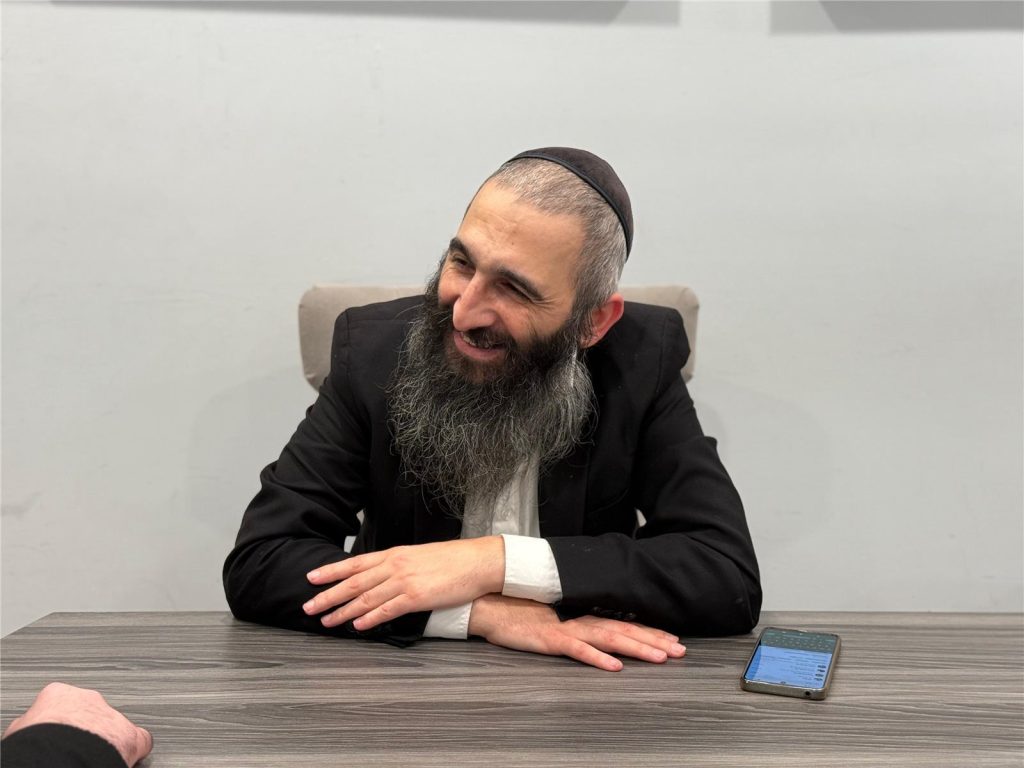
In the Bukharian community I work with, there is almost no intermarriage; it’s a very conservative community. In contrast, in the Ashkenazi community, the rates of intermarriage are high. The sad reality is that intermarriage is not so much an issue with local Jews, but rather with Israelis who have moved abroad.
How do you fight this painful phenomenon?
There are Israeli shluchim whose task is to address this, like Rabbi Mendy Weinberg, and others. He works with the community where the intermarriage rates are the highest. Recently, they brought another shliach, Rabbi Shmuel Mashan, responsible for the English-speaking community in Vienna. This involves mainly students who finished their studies at the Jewish university.
In any case, through the shiurim and conversations we have with the Jewish community members, we explain the importance of marrying a Jewish woman, as it involves the continuity of the individual Jew, their family, heritage, and the Jewish people as a whole.
I even know of some young men who are trying to keep Torah and mitzvos, but at the same time are in relationships with non-Jewish women, and they don’t know how to handle the situation. In some cases, the non-Jewish woman decides to convert, which wasn’t even considered initially…
Once, a young man came to me asking for a personal soul-to-soul conversation. Of course, I agreed to meet with him, and we sat down. During the conversation, he shared with me that he had a non-Jewish girlfriend, and he wanted to end the relationship, but emotionally, it was hard for him. It was simply hard for him to tell her that it was over. He asked if I could speak to her on his behalf…
I agreed and scheduled a conversation with her. During the conversation, I sensitively explained the situation to her. She understood the great travesty in intermarriage, and now she’s internally debating whether she wants to convert properly or break up with him. In this case, the direction is positive, and boruch Hashem, he understood what the right thing for him was.
Can you share with us your goals in increasing the light of Judaism in Vienna?
In my shlichus, I’m less involved in building buildings, as I work in an existing institution. My focus is mainly on Torah study, Torah classes, and publishing new books that are not only distributed in Vienna but in all German-speaking countries: Switzerland, Germany, and others.
The Rebbe’s shluchim in these countries order books from me, which they use in the Torah classes they teach. With the development of the digital age and social media, I decided to enter these areas as well. I give classes that are uploaded to social media platforms, and as a result, hundreds, and sometimes thousands, join and are exposed to Torah teachings.
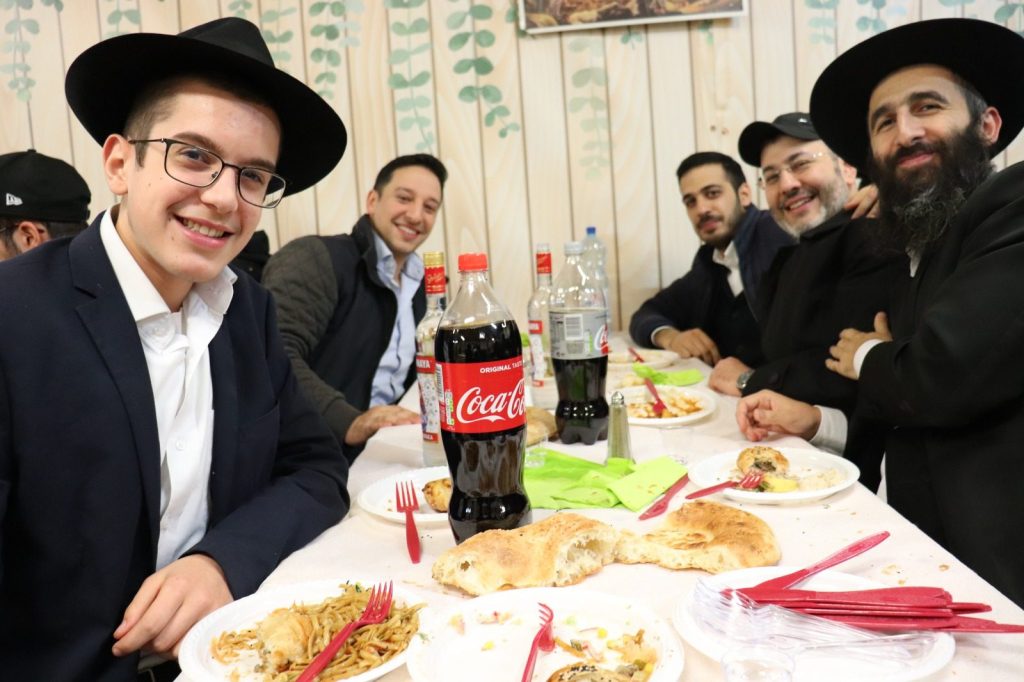
Recently, I’ve been receiving warm responses to the books and videos, as their exposure continues to grow, with thousands watching them. One can feel in a tangible way how the Jews here are awakening and thirsting for more Judaism.
Finally, we’d love for you to share your plans for the future of your shlichus.
First, as I mentioned, I hope to publish a book on the topics of Geula and Moshiach in German this year, based on a question-and-answer format on related topics.
In addition, I hope to develop the Caucasian community I work with further. For that, I intend to add more hours in which I will give more Torah classes, increasing the number of participants, whether in person or digitally.
Every person has talents that Hashem has blessed them with, and in those, they excel. Every shliach needs to identify their strengths and use them to carry out the shlichus of the Rebbe, to prepare the world for the revelation of the Rebbe, Melech HaMoshiach.
Beis Moshiach #1449 • pp. 22-29
© 2026 Beis Moshiach Magazine. All rights reserved.
This article originally appeared in Beis Moshiach #1449. You are welcome to share it with friends and family by email or in print, provided that you do not change, add to or omit any part of it, you credit the author and Beis Moshiach, and you include a link to archive.bmoshiach.org (written out in full in printed copies).
To republish this article in a newspaper, magazine, book or website, please request permission in advance at [email protected].