The Rashag’s Last Chuppah
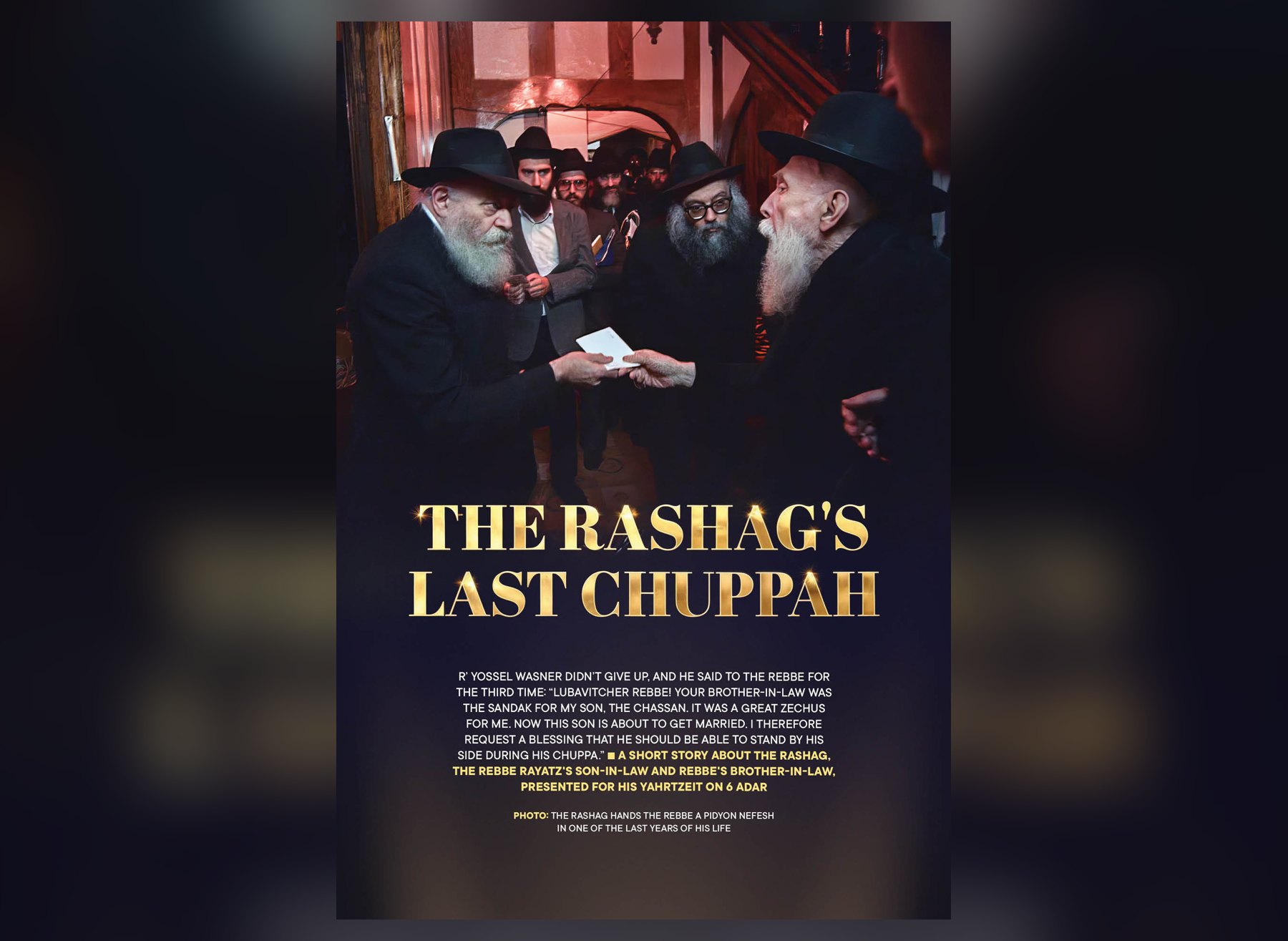
R’ Yossel Wasner didn’t give up, and he said to the Rebbe for the third time: “Lubavitcher Rebbe! Your brother-in-law was the sandak for my son, the chassan. It was a great zechus for me. Now this son is about to get married. I therefore request a blessing that he should be able to stand by his side during his chuppa.” * A short story about the Rashag, the Rebbe Rayatz’s son-in-law and Rebbe’s brother-in-law, presented for his yahrtzeit on 6 Adar
Many Boyan and Satmar Chassidim knew the philanthropist R’ Yosef Wassner. Reb Yossel was a well-known successful businessman. He didn’t keep his money to himself but donated enormous sums to tzedaka; he was among the most prominent Torah supporters in the United States. He greatly supported the court of the Boyaner Rebbe, whose dynasty his family followed; he built the central kloiz of the Chassidus in Yerushalayim, built shuls in Yerushalayim and Beitar Ilit, as well as the Talmud Torah building in Boro Park. He also generously supported the Chassidus’s institutions and was a member of the leadership committee of Boyan institutions.
Besides this, he donated generously to Satmar educational institutions, as he was a great admirer of the “Vayoel Moshe” of Satmar, whom he had known in Switzerland in the years following World War II.
Among other things, he generously supported the central Yeshiva “Tomchei Tmimim” Lubavitch. This was thanks to Rabbi Shmaryahu Gurary, known as “Rashag,” son-in-law of the Rebbe Rayatz and brother-in-law of the Rebbe MH”M, who was appointed by the Rebbe Rayatz to be the menahel poel [acting administrator] of the renowned Chabad yeshiva network. In this capacity, Rashag worked tirelessly, traveling extensively to solicit donations from wealthy individuals and philanthropists for the yeshiva and its students.
It was during the early period of their acquaintance when Rashag arrived at R’ Yossel Wassner’s luxurious office. During this visit, Rashag sought not only to solicit a donation but also to request that he be the guest of honor at the annual dinner held by the yeshiva.
It wasn’t at all easy for Rashag to find a new donor each time who would agree to be the guest of honor; it was no small matter, as the guest of honor contributed all the dinner expenses from his pocket and had to bring guests – usually his business associates, also wealthy and generous individuals, who would also open their hearts and pockets for the yeshiva.
This difficulty can be read about in a rare letter sent by Rashag to the Rebbe MH”M on Erev Rosh Hashana 5732, which he opens with the words “My brother-in-law, the Rebbe Shlita.” In the letter, after requesting to arouse mercy from the source of true mercy and kindness, he adds pleadingly: “I request that his honor, the Rebbe Shlita, carry me in his prayer, and that Hashem should arrange for me a suitable person to be the guest of honor at the annual dinner of ‘Tomchei Tmimim’ coming upon us for good, and that Hashem should grant me great success this year so that I can clear all the debts of the yeshivas, and that I can manage the yeshivas with peace and abundance…” Signed: “His brother-in-law.”
R’ Yossel, being a shrewd businessman, upon hearing Rashag’s special request, narrowed his eyes in deep thought, then turned respectfully to Rashag: “Tell me, with all due respect, why should I be the guest of honor at your yeshiva’s dinner when I’m not affiliated with Lubavitch?”
Rashag wanted to respond about the importance of the yeshiva that was founded by the Rebbe Rashab to fight against the maskilim and those who scorned the footsteps of Moshiach, but R’ Yossel raised his hand as if wanting to add something.
“I am willing to be your guest of honor, on condition that you – meaning Rashag – come with me to visit my grandfather, my mother’s father, and hear him speak.”
The philanthropist’s grandfather was an extraordinary talmid chacham who had merited to be in the presence of Rabbi Avraham Yaakov Friedman, the first Rebbe of Sadigura, for sixteen years, who was the second son of the holy Rebbe, Rabbi Yisrael of Ruzhin.
R’ Yossel, who recognized Rashag’s great stature, wanted through him to honor his grandfather. “If you come to him for a visit of respect, I will be willing to donate,” the businessman with the Chassidic soul declared.
Rashag, who had already experienced more difficult conditions and had traveled for many years on challenging roads for the benefit of the Tmimim, agreed to the proposal.
As agreed, Rashag visited the philanthropist’s grandfather’s home, showed him proper respect, listened to his Torah teachings and enjoyed a pleasant conversation.
The philanthropist, for his part, kept his promise and became the guest of honor at the dinner, donating generously. Not only that, but he also donated significant amounts to the Chabad organization Chamah, and headed the ‘Mivtza Neshek’ campaign to spread the idea of Shabbos candle lighting. In 1988, after the passing of the Rebbetzin, he funded an advertising campaign in all media regarding Shabbos candles. The Rebbe blessed him to continue in this role until the coming of Moshiach.
I1
R’ Yosef Wassner held Rashag in unusually high regard. Once he told Rabbi Nachman Yosef Twersky of Crown Heights that “only few know who the Rashag is,” adding that he had an especially strong mind that could manage many things simultaneously.
His appreciation for Rashag was so great that when his son was born, he invited Rashag to be honored with the great honor of being the sandak, despite being connected heart and soul to other Rebbes.
The strong connection between Rashag and the Chassidic philanthropist led to him participating many more times as guest of honor at the dinner for Tomchei Tmimim. The Rashag, for his part, reciprocated by bringing him to the Rebbe for yechidus in the days prior to the dinner, during which the Rebbe would bless him abundantly. Even in years when the Rebbe stopped receiving people for yechidus, Rashag would arrange to bring him before the dinner to the Rebbe, who would receive him unofficially in gan eden ha’tachton. Sometimes this would be after Mincha or after Maariv, and the Rebbe would speak with him for a few minutes and bless him with numerous blessings.
In Tishrei 5741 (1980), the Rashag suddenly suffered a stroke, and from then began a new period in his life’s journey, a period full of pain and suffering. In the winter of 5749 (1989), his condition began to deteriorate, and he was rushed to the hospital. For several weeks, his presence was missing from the landscape of the main Beis Medrash of Lubavitch in 770.
During that period, the dinner for the yeshiva was scheduled to take place, and R’ Yosef Wassner was supposed to participate again as the guest of honor. As was his custom every year, he was brought to gan eden ha’tachton, where he met the Rebbe. This time he requested a special blessing for the Rashag’s health. It was somewhat of a presumptuous request, as Rashag himself was at an advanced age, after a stroke, and in such a condition – there wasn’t much that could be done naturally.
The Rebbe ignored the blessing request and addressed the other topics that the philanthropist raised in his conversation.
But R’ Yosef Wassner was not one to give up. It wasn’t for nothing that he was considered a shrewd businessman. He turned to the Rebbe again and said: “My son Yehuda Leib is a chassan, and I want Reb Shmaryahu ben Sheindel Gurary to participate in his wedding; therefore, I request a special bracha for his recovery.” Again, the Rebbe continued to address other topics, seemingly ignoring this request.
R’ Yossel didn’t give up, and he said to the Rebbe for the third time: “Lubavitcher Rebbe! Your brother-in-law was the sandak for my son, the chassan. It was a great zechus for me. Now this son is about to get married. I therefore request a blessing that he should be able to stand by his side during his chuppa.”
Immediately upon saying these words, the Rebbe blessed the Rashag and promised that he would be able to come to the wedding.
II1
The Tmimim and Anash who were present during that period in the Rebbe’s court remember well the great surprise of seeing Rashag return one day to daven in 770 as in former days. This was no small matter, after a period when he had been hospitalized or alternatively treated at home. Rashag walked on his own two feet and appeared healthy.
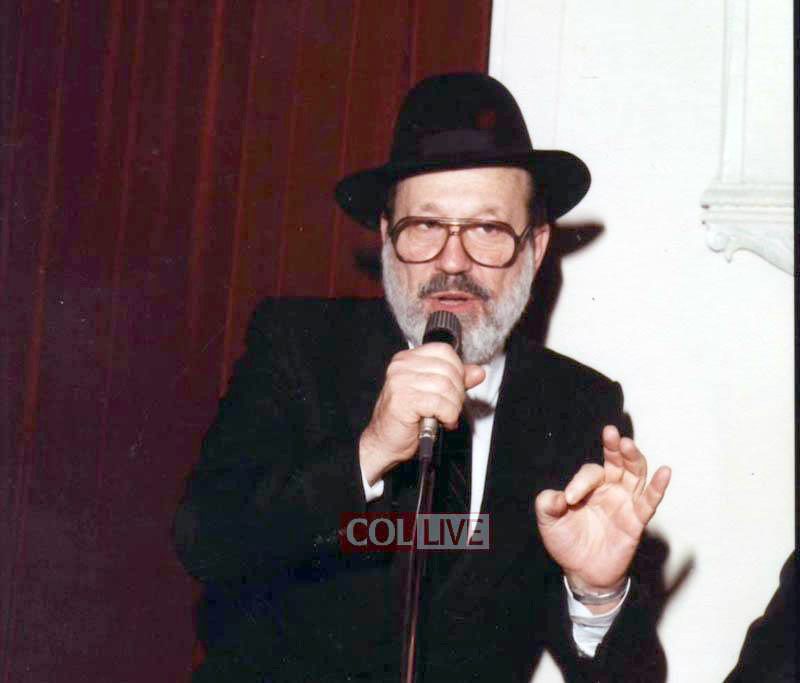
“It was a surprise. Nobody understood what suddenly happened,” recalls Rabbi Nachman Yosef Twersky, one of the distinguished Chassidim in Crown Heights. “It was a chiddush to see him in such a way, as if he had returned to his strength.”
As the Rebbe had promised and blessed, on the 26th of Teves, Rashag attended the wedding of R’ Yosef’s son, R’ Yehuda Leib, and stood by his side during the emotional moments.
About a month and a half later, on the morning of Shabbos, the 6th of Adar 5749, he passed away. In the farbrengen that took place that day, the Rebbe referred to his passing when speaking about those who received powers from the Rebbe (Rayatz) to manage the Yeshiva Tomchei Tmimim.
The next day, his funeral was held at the Montefiore Cemetery, where he was buried next to the ohel of his father-in-law, the Rebbe Rayatz – and the Rebbe himself participated. Throughout the days of mourning, the Rebbe davened in Rashag’s home on the third floor of 770. Additionally, he instructed to print a special edition of Tanya, l’ilui nishmaso, and that the printing should be completed within the seven days of mourning.
(This story was told by R’ Nachman Yosef Twersky, as he heard it directly from R’ Yosef Wassner z’l)
Beis Moshiach #1449 • pp. 30-33
© 2026 Beis Moshiach Magazine. All rights reserved.
This article originally appeared in Beis Moshiach #1449. You are welcome to share it with friends and family by email or in print, provided that you do not change, add to or omit any part of it, you credit the author and Beis Moshiach, and you include a link to archive.bmoshiach.org (written out in full in printed copies).
To republish this article in a newspaper, magazine, book or website, please request permission in advance at [email protected].