Who Killed the Governor’s Son?
From the TzaddikStory.org collection
Welcome to HaRav Klonimus Street, a quiet little road in the Ramat Shlomo neighborhood of East Yerushalayim. It might not seem like much at first – just a small, dead-end street with a few buildings. But, since it’s built on a mountainside, it offers a lovely view of Sanhedria and Ramat Eshkol, just across the highway.
This street isn’t just a place – it wears a name with a story. A story of miracles, and a great Tzaddik who once saved the Jewish people of Yerushalayim. Who was Rav Klonimus, and what did he do? Well, let’s start at the beginning.
* * *
The year was 5298 (1538), and Yerushalayim was bustling with life. Sellers filled the marketplaces, children played in the streets, and donkeys carried goods through the small alleys. But under the noise, there was fear. The city’s old walls had crumbled, leaving Yerushalayim open to attacks from dangerous Bedouin tribes that lived nearby.
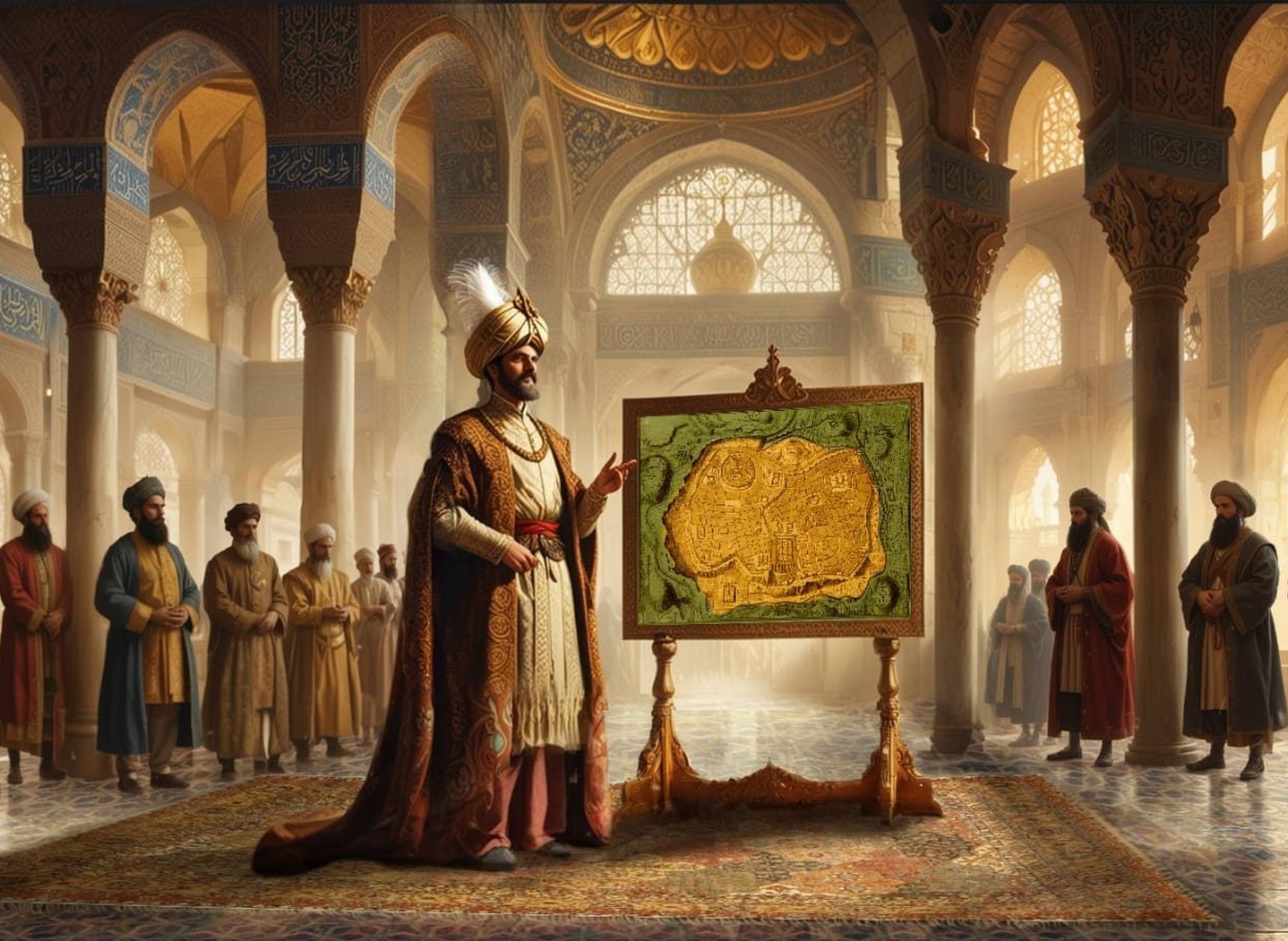
In the Sultan’s palace, Suleiman the Magnificent (as he was called) stood in front of a large map of Yerushalayim, his face serious. “The city is unprotected,” he said firmly. “This is unacceptable. Yerushalayim is holy, even to us Muslims – it needs strong walls to protect its people.”
One of his advisors interrupted, clearing his throat. “Um, Your Majesty, rebuilding the walls will be expensive. Not to mention, it’ll take ages…” he began cautiously. “We’ll need workers from all over the empire, stones from quarries, and tools to shape them. The price alone will be way too great. Perhaps it’s not the most important thing right now – we have armies to feed and wars to fight.”
Suleiman looked at him with a serious face. “And what is the price of leaving Yerushalayim unprotected? The people live in fear. Should we allow them to suffer because we’re afraid of the price?”
Another advisor stepped in. “Your Majesty, we’ll need engineers, builders, and guards to protect the workers during construction. And don’t forget, the gates will require special wood and metal…”
Suleiman raised his hand to silence them. “Enough. The safety of Yerushalayim’s people is worth every coin. This isn’t just about keeping buildings safe; it’s about protecting a city that’s special to us and many others. Start the work, and don’t hold back.”
The advisors looked at each other and nodded. “Whatever you say, Your Majesty.”
Suleiman stood straight, looking at the map. “Remember, a city without walls is like a body without armor. Yerushalayim will be strong again.”
* * *
Word spread quickly about the Sultan’s plan. In the Jewish quarter, Chacham Avraham gathered his students to share the exciting news.
“The Sultan has ordered the walls of Yerushalayim to be rebuilt,” he said, his voice full of hope. “This is great news. The city will finally be safe again – no more fear. The Sultan has been very kind to us Jews.”
One of the boys raised his hand. “Rabbi, why does the Sultan care so much about Yerushalayim?”
Chacham Avraham smiled. “Suleiman respects this city a lot. Some say he feels connected to Shlomo HaMelech – King Solomon – who built the first Beis Hamikdash here. In the Muslim tradition, King Solomon is called Suleiman, just like the Sultan’s name. Maybe he feels like he’s following in Shlomo HaMelech’s footsteps. Hashem sent us a kind ruler to protect Yerushalayim, and we should be grateful for that.”
Work began quickly. Builders came from all over the empire with tools, wood, and heavy stones. The sound of hammers and chisels filled the air as the walls began to rise again.
“Abba, look how big those stones are!” little Yosef said, standing near the construction site with his father.
His father nodded. “They’re making these walls strong enough to last for many generations,” he said. “One day, you’ll tell your children that you saw them being built.”
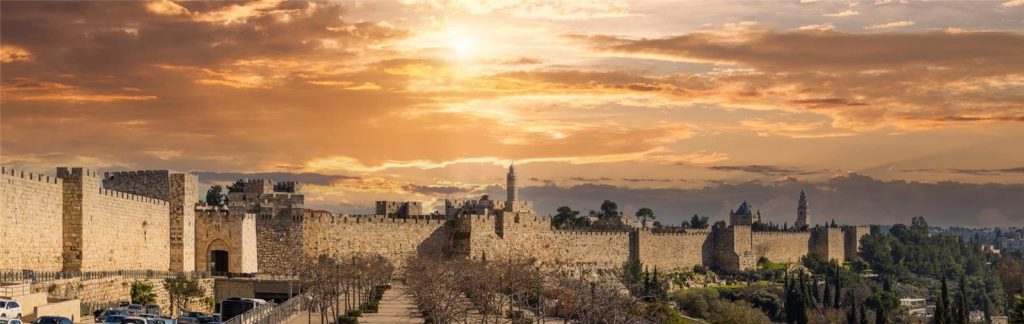
By the year 5302/1541, the work was done. The walls stretched over two miles around Yerushalayim, tall and strong. The people of Yerushalayim gathered to celebrate their new safety.
Chacham Avraham and his students stood near the towering walls. “These aren’t just stones,” he told them. “They remind us that Hashem is always watching over us. And sometimes, He sends us kind leaders, like Sultan Suleiman, to help protect us.”
Even today, if you travel to Eretz Yisrael, you’ll see the big stones that surround Yerushalayim. These were the walls Sultan Suleiman’s men built, and they stand strong today, reminding us of Hashem’s protection and the holiness of Yerushalayim.
But there’s another story from this Sultan’s time – one that not everyone knows. And that’s the story we’re about to tell.
* * *
Sultan Suleiman was a kind and fair ruler. Under him, the Jews of Yerushalayim felt safer than they had in years. But not everyone in the city liked the Jews. Some people were jealous and tried to find ways to cause trouble.
One day, a group of local Arabs, known for this type of thing, went to the governor of Yerushalayim with an idea. These men were dishonest.
One of them shouted, “Governor, we need to tell you something! The Jews aren’t loyal to the Sultan!” He pointed his finger angrily. “You can’t trust them!”
These men didn’t have any proof. They were simply lying to make the Jews look bad.
The governor leaned back in his chair and looked at them carefully. “What makes you say this?” he asked.
“They keep to themselves,” one man said. “They speak their own language, pray in a different way, and don’t come to the city’s festivals. Doesn’t that mean they’re hiding something?”
Another man stepped forward, nodding. “We’ve seen them meeting at night,” he said. “Who knows what they’re planning? Maybe they’re plotting against the Sultan! Governor, I’m telling you – these people are bad news.”
The governor frowned as he watched the men move around nervously. He didn’t believe their story, and he thought they might be the real danger here.
“These are big claims,” he said seriously. “If they’re true, the Jews will be punished. But if they aren’t…” He stopped talking, and the men’s faces turned pale. They knew they’d get in serious trouble.
“We’re just trying to keep the city safe, you know,” one of them said, quietly.
The governor held up his hand to stop him. “I’ll look into this myself,” he said. “If the Jews have done anything wrong, I’ll take action. But if they haven’t, you’ll be sorry for lying.”
The men bowed quickly and hurried out. Their plan was already falling apart.
The governor started his investigation. He talked to people all over the city and learned the truth: the Jews were loyal, worked hard, and obeyed the laws. The meetings the men talked about were just for Torah study and Minyanim.
When the governor returned to his office, he called for the accusers.
“I’ve finished my investigation,” the governor said firmly. “The Jews are loyal to the Sultan. Your claims are untrue. Don’t waste my time – or the Sultan’s time – again.”
He looked at the group with a stern glare. “For spreading lies and trying to cause trouble, you’ll spend three days cleaning the city streets. Let this teach you to think before you speak.”
The men’s faces fell as the guards stepped forward. One of the guards smirked and said, “Get ready, because our men will be watching you clean every inch of these streets. From now on, you’re all garbage men.”
The men looked at each other nervously. “But Governor,” one of them pleaded, “surely there’s some other way…”
The governor raised an eyebrow and interrupted. “No. Cleaning the streets in front of everyone is the perfect punishment.”
The men walked away quietly, their heads hanging low. Their plan had completely fallen apart, and now, they were the ones in trouble.
The Jewish community, unaware of how close they had come to danger, continued their lives with trust in Hashem, knowing He was always watching over them.
* * *
Though humiliated, the group of troublemakers didn’t actually feel sorry for what they’d done. Instead, their leader, Malik, called them together to plot revenge.
“This isn’t over,” Malik growled, gripping the broom. “He thinks he can turn us into garbage men? We’ll strike back, and this time, the Jews and the governor will pay.”
“What can we do?” one of his followers asked nervously. “The governor’s men are already watching us.”
Malik leaned in, his eyes gleaming with a dark plan. “We’ll kidnap Ibrahim, the governor’s son,” he whispered. “We’ll kill him and leave his body in the synagogue. The Jews will take the blame, and the governor will destroy them.”
The group went quiet, thinking about the plan. “It’s dangerous,” one man said.
“Risky, yes,” Malik replied, “but it will work. The Jews will suffer, and the governor will regret ever trusting them.”
* * *
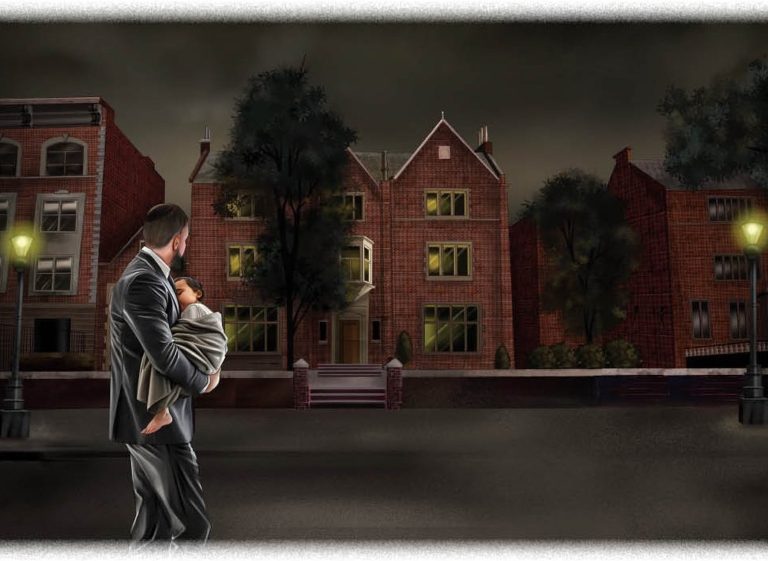
It was late Friday night, and Yerushalayim’s streets were quiet. Families had welcomed the Shabbos, with candles glowing and the smell of fresh challa in the air. But in the shadows, Malik and his followers hid, waiting for the perfect moment to carry out their wicked plans.
Ibrahim, the governor’s young son, was just nine years old. He had been playing outside, chasing a small ball near the edge of the street. Malik and his men snuck closer, their footsteps silent.
In an instant, they grabbed Ibrahim, covering his mouth before he could cry out. “Quick, this way,” Malik whispered angrily, dragging the frightened boy into a dark alley.
The men took Ibrahim to a deserted area outside the city, where, tragically, they carried out their cruel plan. They collected some of his blood to use later.
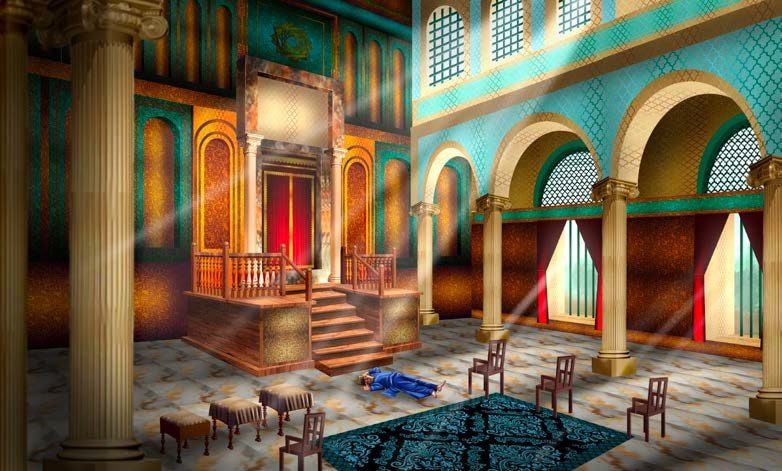
Under the cover of darkness, they carried poor little Ibrahim’s body back into the city. Their destination was the great Shul where Rav Klonimus, a tzaddik and Rav, led the Jewish community. Malik’s plan was as evil as it was sneaky.
“This will make it look like the Jews did it,” Malik whispered to his men as they slipped into the Shul. The building was quiet and still. They placed Ibrahim’s body in the center of the room, sprinkling the blood around to make it seem as if the terrible act had happened right there.
Before leaving, Malik stepped back and took in the scene. “By morning, everyone will believe the Jews are to blame,” he said with a wicked smile. His men nodded, and they disappeared into the night, leaving behind a scene designed to bring disaster upon Yerushalayim’s Jewish community… and an innocent child that had paid for it with his life.
The Shul, usually filled with prayers, had become a scary place. Something terrible was about to happen, and by morning, Malik’s plan would be complete.
– To be continued –
Beis Moshiach #1450 • pp. 55-59
© 2026 Beis Moshiach Magazine. All rights reserved.
This article originally appeared in Beis Moshiach #1450. You are welcome to share it with friends and family by email or in print, provided that you do not change, add to or omit any part of it, you credit the author and Beis Moshiach, and you include a link to archive.bmoshiach.org (written out in full in printed copies).
To republish this article in a newspaper, magazine, book or website, please request permission in advance at [email protected].