Moshiach Should Be as Famous as Google and Microsoft

Producers of “The Alef” in a candid talk with Rabbi Simon Jacobson on living in the post Gimmel Tammuz era of the Dor HaShvi’i
Rabbi Gurary: So to summarize – you’re saying that Moshiach is a process, and after 2,000 years, we’re moving toward a necessary transition point. The signs suggest it’s happening now, and if there are obstacles, it’s either because we don’t understand why we still need these painful experiences, or these challenges don’t negate the bigger picture?
Rabbi Jacobson: Exactly. When I deal with people who have experienced trauma and tragedy, I notice that those who grow through it and become stronger don’t necessarily feel less pain – they see the bigger picture. They ultimately recognize they must build something from their experience.
The same applies collectively. The Jewish people went through the Holocaust – six million killed. Every loss matters. As the Rebbe puts it, we don’t know why it happened, especially after we were promised that the Geula was imminent. But we ask ourselves: What are we going to do about it? Look what was built – families, a country, communities. Our answer is that we will not give up, no matter what.
After Gimmel Tammuz
Rabbi Gurary: As we approach Gimmel Tammuz, thirty years later, how do we maintain this perspective? For those of us born after Gimmel Tammuz, now raising families and building communities, how do we understand our role as the last generation of Galus and first of Geula?
Rabbi Jacobson: Let me be personal about this. I’m naturally skeptical and have these questions myself. I was here during the height of the frenzy and excitement, when everything felt immediate and urgent. Now, 30 years later, it’s extremely sad because this wasn’t how it seemed meant to be. This wasn’t the script. Someone recently asked me bluntly, “Who says it can’t be another 30 years?” No one thought it would be 30 years now. So all I can do is share my own personal response and then I’ll try to share a more scholarly response:
I was 21 years old in 5738 (1977) when the Rebbe had a heart attack in the middle of hakafos. It was a serious heart attack, but thank G-d, the Rebbe not just survived—he came out stronger than ever. That wasn’t a surprise; we all believed that’s what would happen.
My Moment of Faith
But back then, as a skeptic, I remember thinking to myself “What if, G-d forbid, we were to lose the Rebbe?” You couldn’t even think about this officially – it was unthinkable. The Rebbe is immortal, here to bring Moshiach eternally. But I had these thoughts at age 21 while in 770. I couldn’t deny these doubts.
Then I came across the story of the Alter Rebbe and Reb Shmuel Munkes. Today we have more details about this famous story where the Alter Rebbe asked him whether he should cooperate and allow himself to be arrested – this was related to the Yud-Tes Kislev story. Reb Shmuel Munkes said, “If you’re a Rebbe, nothing will happen to you. What are you afraid of? And if you’re not a Rebbe,” – today we know his exact words which were basically – “you deserve a bullet to your head because you took away the pleasure of olam ha’zeh from so many Jews.”
Sometimes you don’t see how things will work out. You have to decide: are you in this army or not? You’re not in the army only when things are pleasant. I made my decision then. So when Gimmel Tammuz came, while it affected me emotionally like everyone else, it didn’t affect my emuna because I had already gone through my personal moment of truth.
So what are our options now? Let’s be blunt. We could say, “30 years have passed. I’m not in anymore. This didn’t work out. I’m moving on.” Or maybe suggest that the Rebbe, G-d forbid, made a mistake. I don’t see those as options. The Rebbe’s teachings are emes (truth), going back to the Alter Rebbe and the Baal Shem Tov.
Do I understand why it took 30 years? What happened? Why didn’t what the Rebbe said happen as expected? I don’t have answers to these questions. The Rebbe himself often asked why Moshiach hadn’t come yet. Initially, the Rebbe would say it was because we hadn’t finished certain tasks. But later, the Rebbe started saying that based on the fact that the birurim (spiritual refinements) are over, everything was done. There’s no explanation for this delay.
So if the Rebbe himself had this unaswered question – I definitely don’t need to have an answer. But then the question becomes: do you get paralyzed because you don’t have an answer, or do you keep going? To me, giving up isn’t an option. Look at all the shluchim – no one has quit. That’s a sign that people will move forward no matter what happens.
That’s my emotional response. I don’t need an answer – it’s either emes or not emes. If it’s not emes, I remember telling myself back then, get out now. Why wait for something to happen? That’s what I took away from the Reb Shmuel Munkes story.
On an Intellectual Level
On an intellectual level, it comes down to believing that G-d created the world and Moshiach will come. The Rebbe told us that Moshiach will come in this generation, Dor Hashvi’i. He said this in his first maamar of Basi L’Gani – he didn’t just say it in Tof-shin-nun-alef (1991), he said it already in Basi L’Gani. This is the Dor Hashvi’i, the last generation of galus and the first generation of geula.
The only thing I can say is that we haven’t done everything we could. That’s the only “excuse,” though I don’t see it as an excuse. The only question I have to ask myself after Gimmel Tammuz is: am I doing everything I can? Everything else is up to G-d’s mysteries. Maybe one day we’ll understand why it took so long. The only thing we can ask is: what are we going to do about it?
I’m being very honest here. I don’t see anything else that can be said. Sure, people come up with all kinds of cute answers and gematriyas about how Moshiach comes through the transformation of Gimmel Tammuz. That may work for them. It doesn’t work for me. I’m not invalidating the question, but it’s not enough reason to give up. On the contrary, I feel responsible because the Rebbe gave us this job, these marching orders. Giving up now would mean not accepting the orders we received.
Rabbi Gurary: This Tishrei, I was speaking with friends about what hiskashrus means to people born after Gimmel Tammuz. There were various perspectives discussed, but most of them, I would say, don’t work for a lot of people. The only thing I found everyone can connect to is our dedication to completing the Rebbe’s mission.
Rabbi Jacobson: Absolutely. And we haven’t reached critical mass yet. We’ve reached people, maybe millions, but not billions. I’m not saying it’s just a numbers game – one person can tip the scales. Saving one Jew is saving the universe. But I can’t rely on that alone. We have to do more.
Look, I wrote “Toward a Meaningful Life” and I do many videos, speaking to people from all walks of life. G-d has blessed me with the ability to reach people outside the realm of traditional Judaism, to communicate Torah to them. But by no means are we close to what we need to achieve.
I look at the big companies out there – Apple, Google, Facebook, Amazon, Microsoft. We’re not even close to names like that. Moshiach and Geula and Chassidus need to have that level of name recognition. Then I could say to the Rebbe “we did something. We’re up there with the biggest – the whole world knows the words Chabad, Rebbe, Moshiach, and Geula.
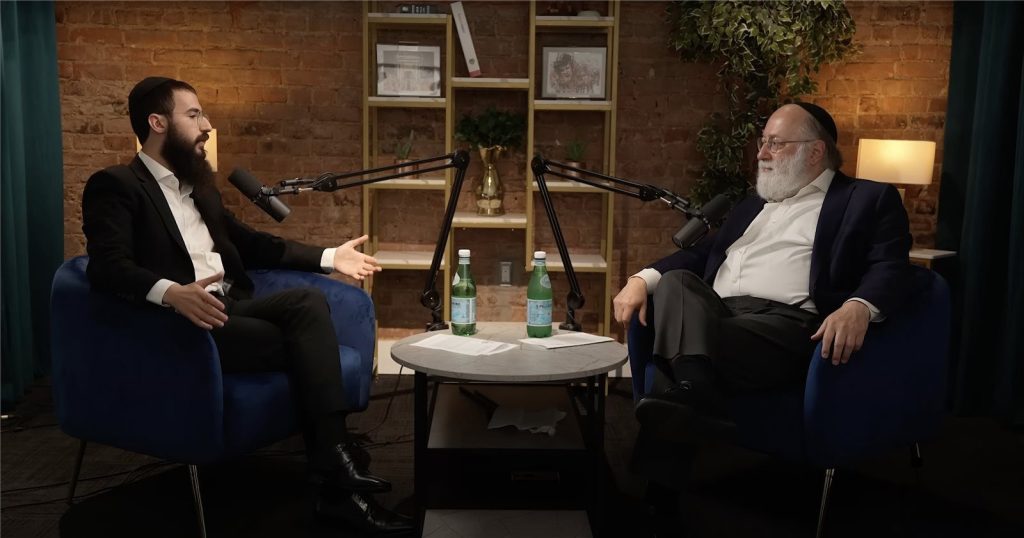
I don’t need much meditation to contemplate what more can be done in my line of work. Sometimes I say this to shluchim and they respond, “What are you kidding me? We’re never going to reach that level.” I say, I believe in the product. I think we can. Does it mean we have to reach that level? No, maybe they will still see one more effort, and b’rachamim (with mercy) Moshiach will come much before that. But from our perspective, we cannot stop. We have to keep going.
This focus is probably easier today because technology allows it. Without technology, you could challenge me: “How are you going to reach billions of people? Do you know how much money that would take?” But today, we know one email can reach 8 billion people. One social media post, one podcast…
Closing Remarks
The whole point is lighting one flame, then another, then another, because everybody has their sphere of influence. Chassidus teaches the when lighting one candle from another, the first flame doesn’t diminish when lighting others. So we have shluchim empowering shluchim, empowering people, because the people that shluchim reach must extend that reach to their own sphere of influence. There are only what they call five degrees of separation between people, so if everybody just reaches five people, exponentially you can impact the whole world.
This transcript has been edited for clarity while trying to maintain the original content and meaning. Hebrew and Yiddish terms have been preserved with translations provided where appropriate. The original podcast can be accessed at TheAlef.co and on various audio platforms.
Beis Moshiach #1451 • pp. 18-21
© 2026 Beis Moshiach Magazine. All rights reserved.
This article originally appeared in Beis Moshiach #1451. You are welcome to share it with friends and family by email or in print, provided that you do not change, add to or omit any part of it, you credit the author and Beis Moshiach, and you include a link to archive.bmoshiach.org (written out in full in printed copies).
To republish this article in a newspaper, magazine, book or website, please request permission in advance at [email protected].