A Father to Thousands – Part 1
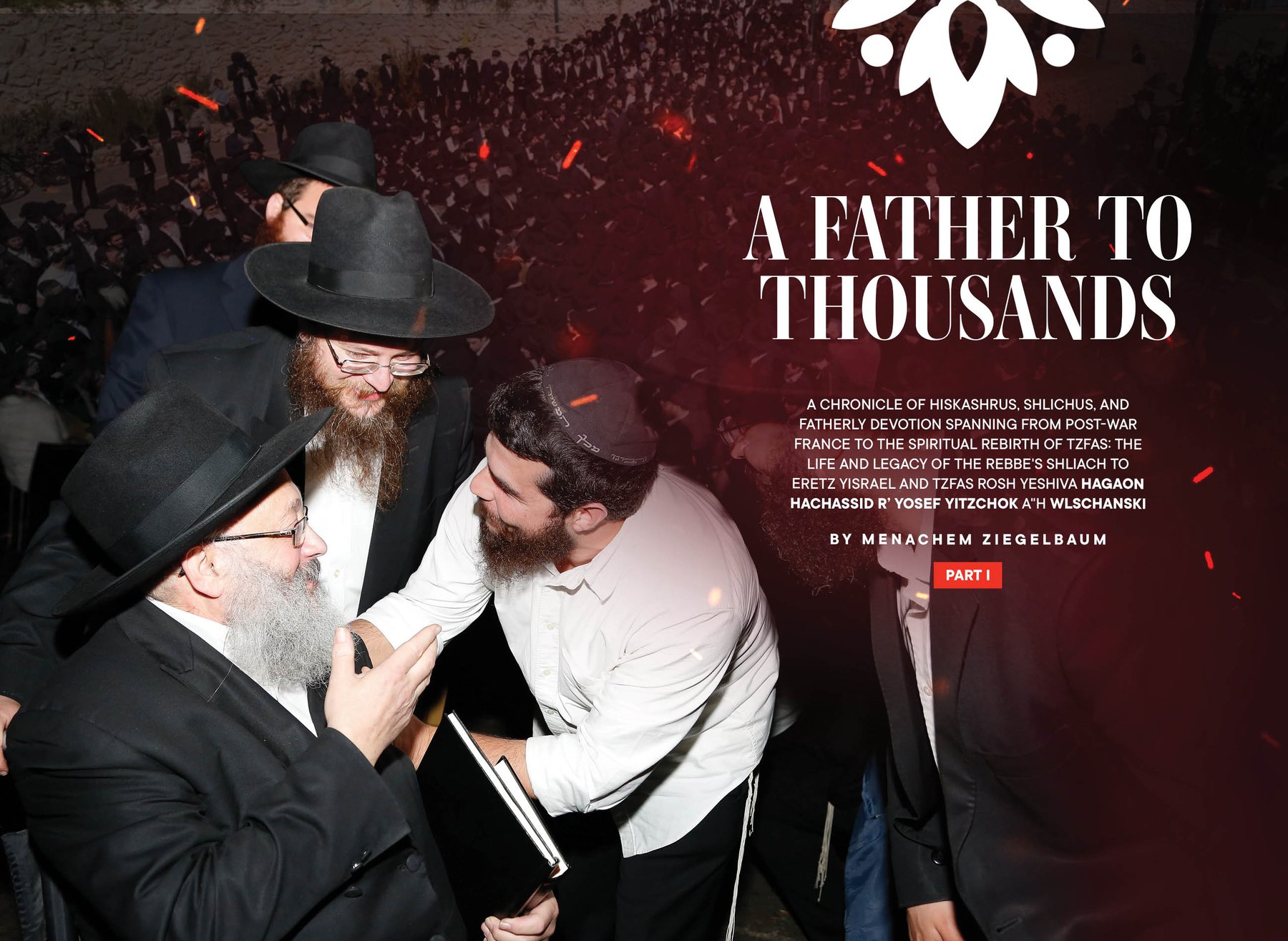
A chronicle of hiskashrus, shlichus, and fatherly devotion spanning from post-war France to the spiritual rebirth of Tzfas: the life and legacy of the Rebbe’s shliach to Eretz Yisrael and Tzfas Rosh Yeshiva HaGaon HaChassid R’ Yosef Yitzchok a”h Wilschansky
In late Cheshvan 5778 (2017), a real storm broke out within the walls of the yeshiva in Tzfas. After a long legal saga that reached the Israeli Supreme Court, the yeshiva’s administration in Tzfas received an eviction order from the Enforcement and Collection Authority. All the talmidim who were housed in the former ‘Rakefet’ hotel building were required to vacate the building immediately. The eviction order stated that the yeshiva would be forcibly evacuated on the 3rd of Kislev 5778 at 8 AM.
Time passed, and the yeshiva did not comply with the court orders that arrived at its doorstep and did not evacuate the building according to the ruling. The Enforcement Authority announced that if they did not leave voluntarily, they would forcibly evacuate the building and its talmidim. It was later revealed that the Tzfas police had already prepared with reinforcements and practiced mass forcible evacuation…
“This is a building that houses hundreds of young men, where do they want us to go?!” wondered the hanhala of the yeshiva. The least realistic option available to the administration was to raise, within a few days, a sum of 24 million shekels – a completely unrealistic amount – and purchase the building legally, which no one involved considered.
However, one person remained calm and composed. It was the Rosh Yeshiva, Rabbi Yosef Yitzchok Wilschansky, who tapped calmly on the table, as was his habit, and remarked in his soft voice, “We are here on shlichus, and a shliach must do his job, even at the price of 24 million.”
This statement, uttered by the man who served as a father of thousands of yeshiva bachurim over a number of generations, in a decisive tone, taught those present a fundamental lesson about the essence of shlichus. The decision was made.
What happened next was a series of great miracles. Within hours, two hundred alumni showed up for a preparatory meeting ahead of a hasty campaign, and within a few days, an unprecedented mass fundraising campaign was held, during which the yeshiva raised 24 million shekels and purchased the building. The dream became reality.
But it wasn’t just about the desired millions – it was much more than that. During those few days, waves of love, appreciation, and admiration flowed from all corners of the country and abroad to one central point: to the individual person of the Rosh Yeshiva, Rabbi Wilschansky, who was a Rosh Yeshiva, a Mashpia, and above all, a beloved father to thousands of his students-graduates. They remembered their youth when they dealt with countless adolescent difficulties, and he was there beside them, paving the way for them, clearing obstacles, understanding their hearts, and placing a hand on their shoulders. They felt that there was someone who knew them, cared for them, truly cared.
The touching memories of the graduates flowing at that time from all directions are the tip of a comprehensive ‘Sefer Zichronos,’ full of words of gratitude to the Rosh Yeshiva who combined sharp intellect and sweetness of heart together; a rare analytical ability with extraordinary sensitivity. All these were made available to his students day and night, during their years of study at the yeshiva and even years later, when they built their homes and found in him a listening ear, an understanding mind, and a feeling heart – and especially a caring shoulder to lean on.
Youthful Hiskashrus
“I was born and raised in the early years of Anash in Paris, after they left Russia, and the atmosphere was like a continuation of Russia. I’ve said humorously several times that I grew up in Samarkand… because that was the atmosphere of the yeshiva in Brunoy, albeit in slightly different clothing,” Rabbi Wilschansky recounted in one of his rare interviews with Beis Moshiach, where he shared his personal memories.
Rabbi Wilschansky was born in France on the 3rd of Adar II 5711 (1951) to Rabbi and Mrs. Refoel and Zlata Wilschansky
When he was only about three years old, his mother passed away, and he grew up in the home of his grandfather, the shadar, Rabbi Alexander Sender Menkin, from Paris, and in the home of his uncle Rabbi Yehoshua Dubrawsky.
His childhood memories are influenced, of course, by the Rebbe. That was his childhood, as he recounted:
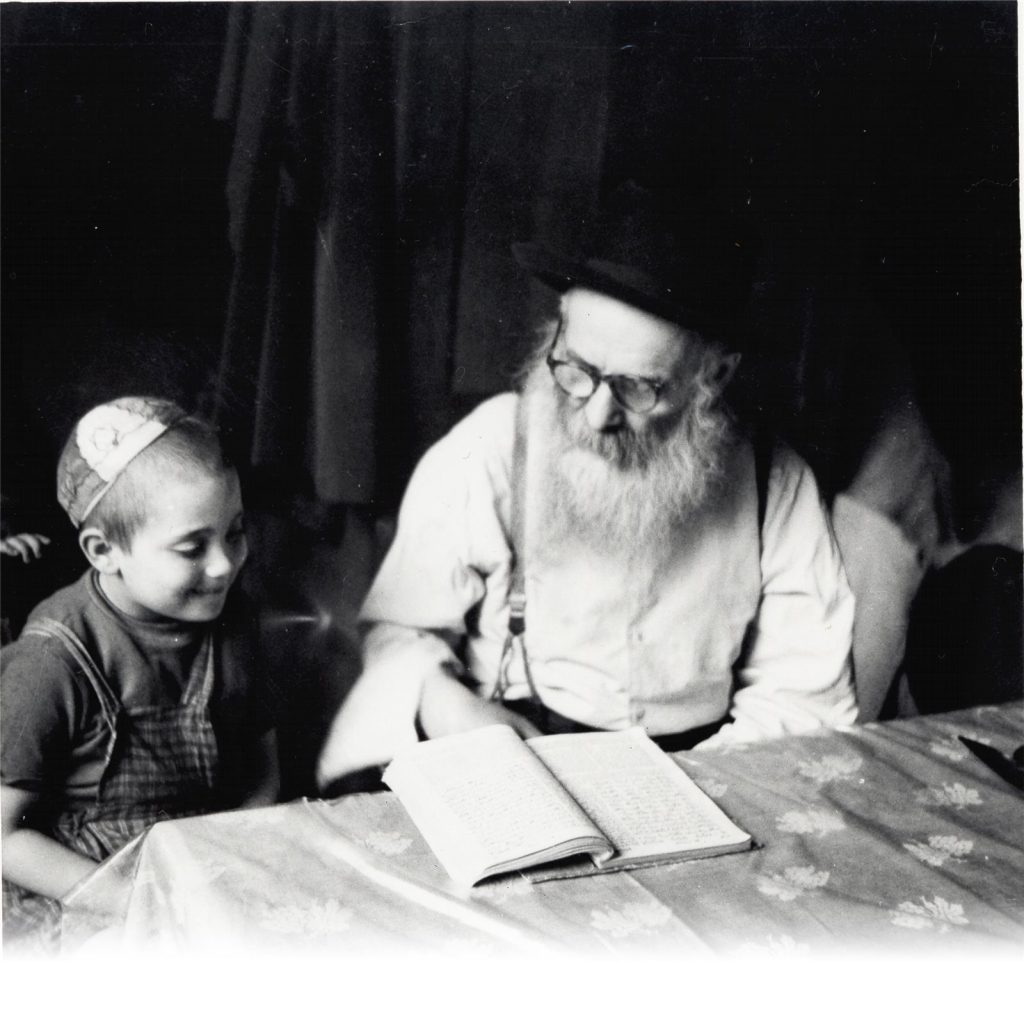
As little children, we absorbed the preciousness of the Rebbe’s picture, and it always aroused a feeling of love for the Rebbe, as well as the expression “Der Rebbe zol zayn gezunt (May the Rebbe be healthy),”
At a later age, when we were already in the yeshiva, it was a whole deal to collect pictures of the Rebbe; we would spend all our allowance on that. There were few and rare pictures then, and it wasn’t easy to make copies. If someone managed to put together an album with pictures of the Rebbe, it was an extraordinary achievement.
When we came to Eretz Yisrael years later, we discovered that what was obvious to us was perceived as a great chiddush. Even in Crown Heights, not many hung a picture of the Rebbe on a baby stroller, and when we arrived in Eretz Yisrael and people saw this – there were many puzzled looks…
Today, the times have changed for the better, but we must remember that this is what we need to instill in children from a very young age. That the first thing a child should be able to point to is the Rebbe! Not to teach them about it at the age of eighteen, but to raise them in such an atmosphere, in a home that lives this way, from their first steps in the world.
My father worked for many years as the secretary of the European Office founded by the Rebbe Rayatz and later under the leadership of the Rebbe MH’M, alongside the Rebbe’s personal representative Rabbi Binyamin Gorodetzky. So we essentially grew up in a house that breathed the Rebbe’s shlichus. For example, all the general letters from the Rebbe would come through the office, and more.
The passion for the Rebbe didn’t remain just as an abstract desire; everyone waited for the moment when they could actually travel to the Rebbe and did everything they could to make it happen.
First Time At The Rebbe
I was among the fortunate ones who at age seven already traveled to the Rebbe with my father. This was for Tishrei 5719 (1958).
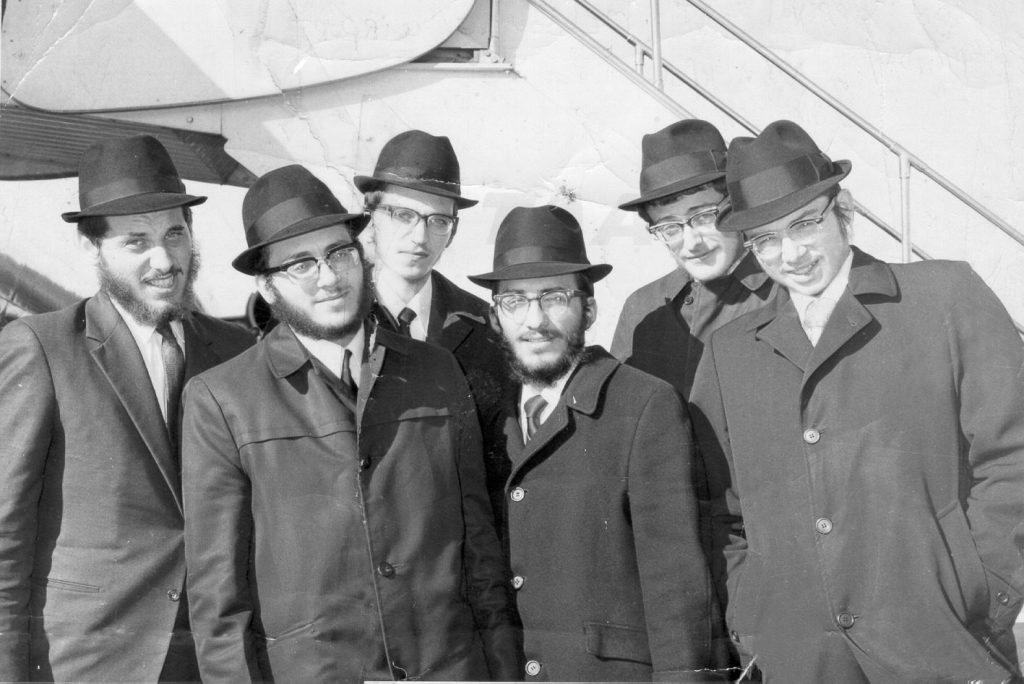
After lengthy delays, we arrived at the Rebbe before Yom Kippur. Traveling to the Rebbe was the greatest happiness and dream of every child at that time. This passion didn’t come from fiery speeches we heard, but from life itself. Being Chassidim of the Rebbe – this was the simple and obvious thing. What are we? We are Chassidim of the Rebbe!
In general, during my years in the yeshiva, whenever someone was traveling to the Rebbe, it was a whole event, everyone would escort them with singing “Ki B’Simcha Seitzeiu,” and the excitement was always tremendous. The same was true when a guest would arrive from the Rebbe, like Rabbi Yisroel Jacobson who sold esrogim; in the summer months, he would come to Italy to supervise the picking of the esrogim, and every Shabbos Nachamu he would be at the yeshiva and lead a farbrengen. Reb Nissan, who was the rosh ha’medabrim, would sit and listen to him eagerly. Similarly, Rabbi Kazarnovsky once visited and farbrenged with us, and I particularly remember that farbrengen where he told many stories about the Rebbe; a commodity that was very rare then. Stories about the Rebbe were barely published then.
When a tape from the Rebbe’s farbrengen would arrive – it was truly a Yom Tov for us. Everyone would sit around the device into which the cassette was inserted (usually just one cassette, from the first part of the farbrengen), and listen to the recording.
I went in with my father for a yechidus. I stood completely frightened. The Rebbe read the note, asked my father a few questions, and then the Rebbe turned to me and asked, “What are you learning?” I replied, “Perek Hamafkid.” The Rebbe began to ask me about the laws of the four types of guardians (as I later heard from other children who entered, almost always the child couldn’t answer all the questions). And so it was with me, he asked me who are the four guardians, and I knew to say the shomer chinam (unpaid guardian), shomer sachar (paid guardian), shoel (borrower), but with the fourth socher (renter), I got stuck…
The Rebbe asked me: “Who is your rebbi?” and I answered Reb Aharon Yosef Blinitsky. The Rebbe took a silver dollar coin, handed it to me, and said: “Now I’ll give you a dollar, and when you go home, go to your rebbi and ask him to tell you,” and concluded with brachos.
When the yechidus ended, we started walking backward. At that moment, I tried to whisper to my father that I remembered the fourth guardian! But he, of course, didn’t listen to me and just signaled with his hand that we were leaving now… I don’t remember the exact language of the brachos in the yechidus.
Since I already knew the answer, I probably didn’t immediately ask Rabbi Blinitzky who the fourth guardian was. Maybe I told him, but most likely it wasn’t as a question. Eight years later, I approached Reb Aharon Yosef and asked him what the law of a paid guardian is… He looked at me and began to laugh, I told him: “The Rebbe instructed me to ask you, and apparently I haven’t yet asked! So I’m now implementing the Rebbe’s instruction” – and he answered me with kabbolas ol…
From this yechidus I understood, over the years – that the Rebbe says one needs to ask. One needs to know that there is such a concept as asking, consulting, not relying on one’s own understanding. This is expressed in every aspect of a Chassid’s spiritual and material life. It may also be that this inyan where the Rebbe brings the child to a state where “he has no answer” – also holds a message: know that you don’t know everything, there are things that you still need to learn and memorize. There’s a tremendous message in this.
They Didn’t Talk About Love For The Rebbe – They Loved The Rebbe
I arrived at the yeshiva in Brunoy in 1962. There were six shluchim of the Rebbe to the yeshiva then, and they created a completely different atmosphere. The connection with 770 was much stronger. Reports were received regularly; if there was a major farbrengen, a tape would arrive, as I mentioned. The shluchim brought in the atmosphere of living with the Rebbe not just as something distant and an object of longing, but as something tangible and present; they gave special momentum to the publication and implementation of the Rebbe’s new takanos, such as reviewing maamarim, hafatza, and more.
It’s very important to emphasize that even before that, in elementary school we were educated for practical expression of our hiskashrus to the Rebbe. For example – to recite the Rebbe’s perek of Tehillim. I remember that I was already saying it from chapter 55. We would memorize this perek and learn it by heart.
In short – they didn’t talk about hiskashrus, they were mekusharim. They didn’t talk about love for the Rebbe – they loved the Rebbe. The Rebbe was the central axis in life, from which everything emanated and returned to.
Even as a child before my bar mitzva, my father guided me to write to the Rebbe. I wrote to the Rebbe in Yiddish, because that’s how I knew how to write, and the Rebbe answered me in Yiddish.
We Were Privileged To Stay With The Rebbe
As bachurim, we went to the Rebbe for Tishrei 5729 (1968), and then returned to the yeshiva in France. For a period of time, we were the oldest class, and our desire to travel to the Rebbe knew no bounds. At a certain point, towards Tishrei 5730 (1969), Reb Nissan agreed that we could travel, and then we came to study permanently at 770.
But the Rebbe had other plans, and at the end of the month, a general yechidus was held for all the bachurim and Anash who came from France and Montreal, in which the Rebbe instructed everyone to return to their places as shluchim.
My brother and I were the exceptions, in a certain sense. We had already been officially accepted by the yeshiva, and even before we left Brunoy, they sent us an “affidavit.” All the others had not yet been accepted but came with the aim of being accepted.
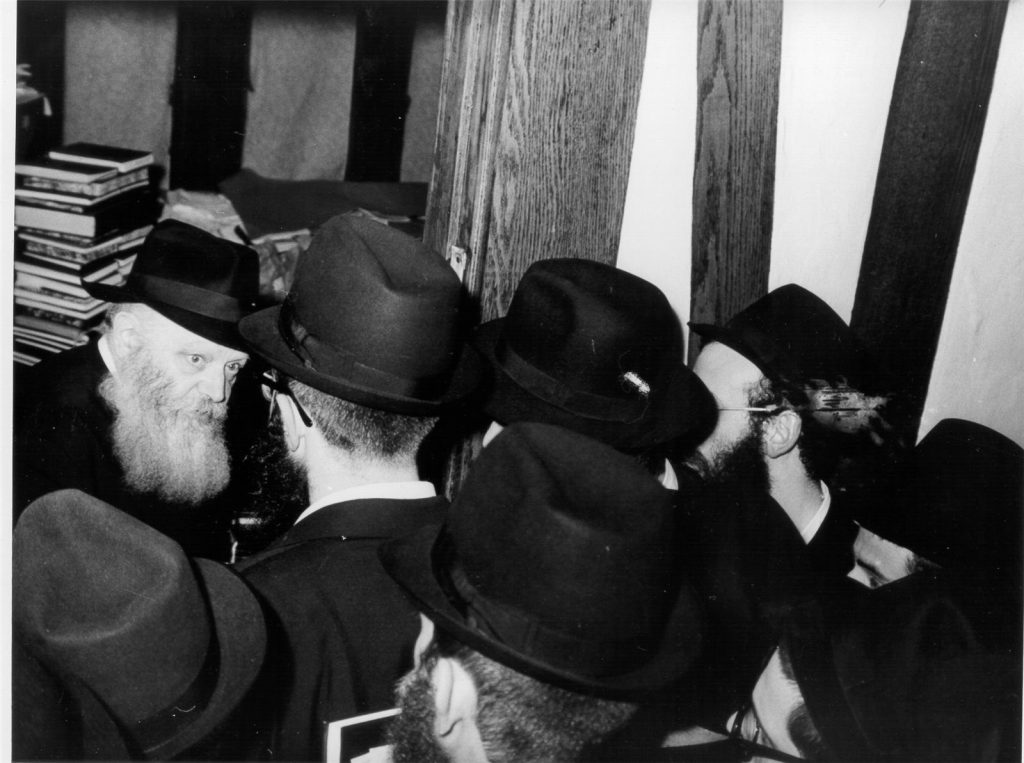
We asked the secretary, Rabbi Chodakov, whether to enter the yechidus, because it was announced that it was intended for all those who came from Paris and Montreal. Rabbi Chodakov told me to enter. After we left the yechidus, a difficult dilemma began – the Rebbe spoke in such explicit terms about shlichus, to the extent that there was a suggestion that maybe we should return to the yeshiva in France. In the end, after consultation, it was decided that we would remain.
In terms of the feeling of hiskashrus, 770 was a direct continuation of what was before – since it was always life itself and the source. What was especially fresh for us was that the whole subject of hiskashrus to the Rebbe received a more tangible and daily form: going to review maamarim (then, a fifty-minute walk was considered extreme mesirus nefesh…); being at the Rebbe’s tefillos.
Since at that time the “Likkutei Sichos” began to be issued regularly, there was a special passion in studying those sichos, which came to the fore in the ‘Sichos Seder’ (set times for learning the Rebbe’s sichos). In Brunoy, there was also a Sichos Seder, but then there were only four volumes of Likkutei Sichos, and even of those, there were only a few copies…
Chosen For Shlichus
Rabbi Wilschansky recounted his feeling during those auspicious days when he was chosen to be a shliach to the yeshiva in Australia:
“We were thrilled; being privileged to receive from the Rebbe the approval to be his shliach, and especially at that time when it was a very rare thing, Once every two years, the Rebbe chose a group of his special shluchim, with each group numbering six tmimim, and I was privileged to be counted among the members of the third group since the beginning of the special shlichus.”
It was in Iyar 5731 when the tamim Yosef Yitzchok Wilschansky was among the group of talmidim-shluchim sent by the Rebbe to Australia. The sweetness of those days, he recalled even decades later:
Already in the month of Adar, the mazkirus began to call various bachurim, each one individually, for a conversation in which they were asked if they were willing to go on shlichus to Australia, if their health allowed it, if they had permission from their parents.
On the 25th of Adar, the Rebbe went to the Ohel, and in the morning, the secretary Rabbi Binyamin Klein announced that in the evening there would be answers regarding shlichus, who would be going. The excitement during those hours was at its peak. And indeed, that evening, R’ Klein called me to the mazkirus and informed me of the Rebbe’s answer. The news quickly spread in 770. The talmidim who were in the area approached to excitedly wish me mazal tov and spontaneously they began to dance in the entrance corridor before the small zal.
At that very moment, a bachur stood nearby and snickered a bit: “They’re saying mazal tov here… as if he became a chassan…” Just then, Rabbi Sholom Jacobson, who was one of the older tmimim, was standing there, and he responded to that bachur: “Everyone will be a chassan in the end, but not everyone is privileged to such a shlichus!…”
These words expressed the feeling of what it means to go on the Rebbe’s shlichus.
In the yechidus before going on shlichus, the Rebbe explicitly said that the purpose of our shlichus is “to conquer the world through Torah study.” This was the motto of the yeshiva: to conquer the world for the Rebbe.
We traveled to Australia via Eretz Yisrael, and from there via Iran towards Australia. The Rebbe said that wherever we would be, we should speak words of Nigleh and Chassidus.
As far as my feelings, I can say this: No matter how much you prepared, what you did before – now the Rebbe had put you on the train, and you are a shliach. This shook the hearts of even the most introverted and normally reserved people. It was so surreal and special, all the preparations for the shlichus, the yechidus’n, and the detailed instructions on what and how to do during the trip.
In the past, a Chassid had to work on himself and refine himself for years, but today, the Rebbe in his great kindness grants the opportunity, even to a Jew who in terms of his own abilities is not yet on a high level – to be his “shlucho k’moso,” and with this power to fulfill the shlichus in the most elevated way. This is a great and wonderful zechus, that the Rebbe elevates and uplifts a Jew, and gives him immeasurable powers. This is shlichus, and this is the feeling of joy and spiritual elevation that should fill every shliach.
Also chinuch for shlichus – the more natural, simple, and self-evident it is, rather than an additional “task” – the more these things permeate the children as a fact of life. This is who we are, this is our essence, and this is how the children and students will feel as well.
Leaving On Shlichus
In 5733, after returning from Australia to 770, he joined the “Vaad L’Hafotzas Sichos” and took part in editing the weekly “Likkutei Sichos” booklets that were published with the Rebbe’s editing. His prodigious talents, depth, and sharpness in learning helped him in preparing the Rebbe’s sichos for publication.
The chayus and sweetness he had in studying Likkutei Sichos accompanied him throughout his life.
“As a child, I remember that whenever a new volume of ‘Likkutei Sichos’ would arrive in Eretz Yisrael, my father wouldn’t leave it, day or night, until he had read and studied it from cover to cover,” recalls his son, Rabbi Menachem Mendel. “He especially loved to examine the additions at the end of each volume, which included many letters from the Rebbe containing instructions and guidance for life (even before the volumes of ‘Igros Kodesh’ were published. And of course when those came out, there was even more orah v’simcha). When I remember this, I cry.”
In Elul 1935, he married his wife, Malka Perel, daughter of Rabbi Moshe Ashkenazi, rabbi of the Chabad community in Tel Aviv. Years later, his father-in-law, Rabbi Ashkenazi, related that when the shidduch was suggested, he mentioned it to the Rebbe during a yechidus, and the Rebbe responded saying: “With Wilschansky, the children are good,” and added words praising the chassan.
After he married, he began studying in the Rebbe’s kollel, while continuing his work with the Vaad L’Hafotzas Sichos. But this period did not last long.
“When I was about to finish the first year, I received various offers for shlichus, but ultimately the decision was made – with the Rebbe’s consent – to stay for another year in kollel.
“Then, during the Yud-Tes Kislev 5736 farbrengen, the Rebbe suddenly spoke about his desire to send shluchim to Eretz Yisrael. What followed after this sicha was very unusual: more than three hundred people registered for the privilege to be part of this shlichus! During farbrengens held on subsequent Shabbosos, the Rebbe spoke about certain conditions required of candidates for shlichus, gradually narrowing down the list of candidates, and from the final list that included only those who met the conditions he set, the Rebbe chose those who would serve as his shluchim to Eretz Yisrael.
“It goes without saying that when we received the news that we had been chosen to be the Rebbe’s shluchim – the joy was immense, beyond description.
“Anyone who examines the Rebbe’s sichos from that period immediately sees that this was undoubtedly a heavenly matter, a truly one-time shlichus, unique in nature, far beyond the usual shlichus to other places. With several wondrous expressions, the Rebbe conveyed the significance of this shlichus in that he wants to be in Eretz Yisrael, and when a person wants to be in a certain place but cannot, he sends a shliach, and a person’s shliach is like himself, and this was why he was sending these shluchim. It is therefore understandable how deep and personal was the feeling of joy in having such a shlichus, and how these deep feelings influenced all our thoughts and behaviors. This is not just a shlichus to perform a task; our very presence in Eretz Yisrael is itself already part of the shlichus. This is a shlichus that encompasses you 24 hours a day, literally.”
Tzfas in those days was very different from the Tzfas we know today. It was a remote city both geographically and spiritually. The city was completely devoid of any public sign of Yiddishkeit. This was true for the native residents, and even more so for people who had just arrived from normal Jewish life in New York. In the entire city, there was no store selling kosher food; kosher bread came from Kiryat Shemona, and only after the shluchim personally checked that the flour sifter in the bakery met the halachic criteria. Meat and fish were brought by Rabbi Leibel Kaplan when he would come from central Israel. As for kosher milk, once a week ‘Tnuva’ would bring milk, cheese, etc. The Jewish revolution that Tzfas experienced in recent decades owes much to the Rebbe’s shluchim who raised the spiritual level of a city that was a spiritual wasteland.
R’ Aryeh Leib Kaplan z’l, who had already arrived in Tzfas a few years earlier, was engaged in establishing a Chabad neighborhood with all its mosdos. The first mosad established was a kollel for married men, which R’ Wilschansky joined along with the other shluchim who arrived in Tzfas.
The Crown Jewel: The Yeshiva
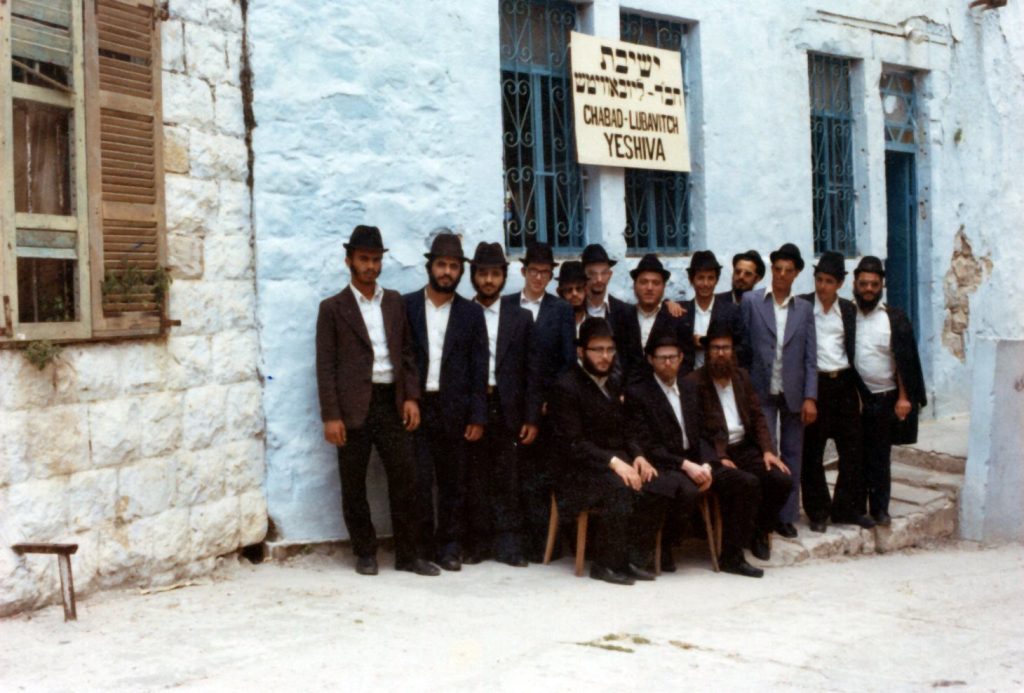
In Iyar 5737, a new chapter began in the history of Chabad yeshivos in Eretz Yisrael, when R’ Wilschansky established the Chabad Lubavitch Yeshiva in Tzfas together with his friend and partner in holy work from then until today – Rabbi Shlomo Zalman Levkivker.
“The practical stage of establishing the yeshiva actually began with someone who was not a Chabad Chassid, Mr. Yisroel Kenig, who was a mekushar to the Rebbe, and was responsible for the northern district in the Ministry of Interior,” R’ Wilschansky later related. “He said to R’ Kaplan: ‘If you open a yeshiva in Tzfas, so that on Rechov Yerushalayim (Tzfas’ main street) there will be young men walking around with tzitzis, I will ensure funding for the yeshiva for some time.’
“R’ Kaplan called Rabbi Chodakov and told him the details of the story with Kenig’s offer. He added that the administration of the yeshiva in Kfar Chabad was willing to send a class of talmidim to strengthen the new yeshiva that would be established. Rabbi Chodakov immediately responded: ‘Kenig doesn’t open Chabad yeshivas, Chabad opens a yeshiva! Kenig can support the yeshiva, but it’s Chabad that opens it.’
“R’ Kaplan then came into the kollel and told us about the whole thing,” R’ Wilschansky recalled. “Some of us were already at the stage of looking for work after kollel. Rabbi Eliyahu Friedman a’h volunteered to serve as the yeshiva’s administrator, while R’ Kaplan asked me and R’ Shlomo Zalman Levkivker to serve as roshei yeshiva. The yeshiva opened after Pesach 5737. A group of nineteen boys came to us from Kfar Chabad,, and they became fayne Chassidishe yidden here.
“It can be said that from when the yeshiva in Tzfas was founded, it was a yeshiva of ‘shlichus,’ a yeshiva established by the Rebbe’s shluchim to fulfill his holy will and direct horaah in establishing mosdos in Tzfas, and so it remains until today. The spirit of shlichus and dedication to the Rebbe’s inyanim is the very essence of the yeshiva’s structure, foundation, and existence. This was also expressed in the desire to constantly develop the yeshiva, starting with the department for baalei teshuva which was then the first, and unique for yeshivas in Eretz Yisrael, and later in the department for immigrants from the former Soviet Union, and in subsequent years, ‘Chanoch L’Naar’ mosdos developed from the yeshiva, breaking new ground in the Chabad educational world in the last generation.
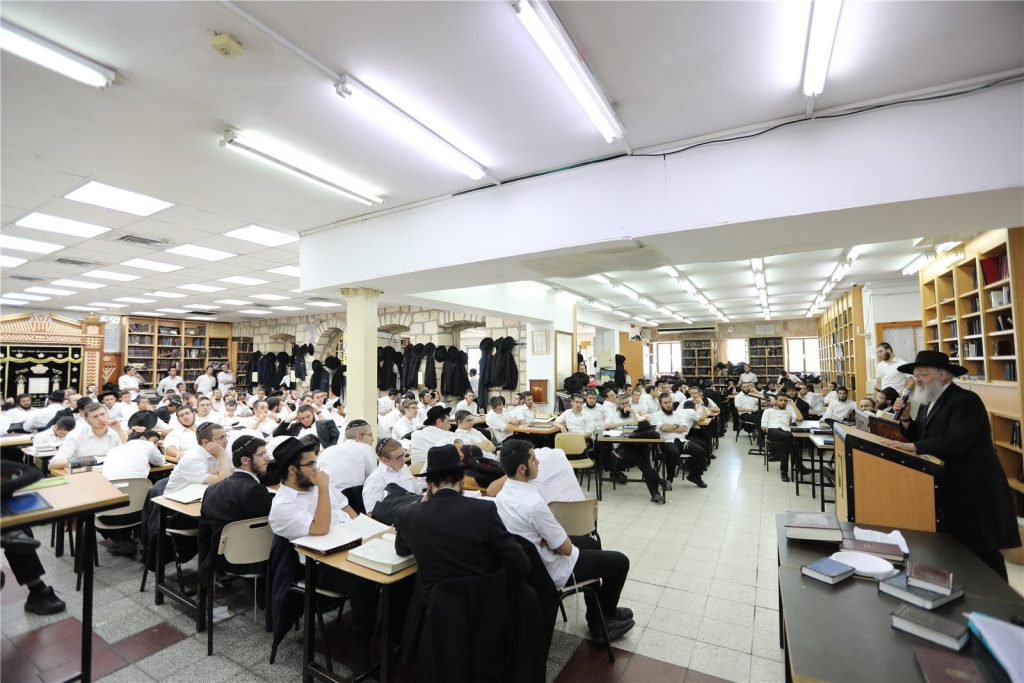
“Throughout the entire time, there was a special connection between the shlichus in Tzfas and the Rebbe. R’ Kaplan received an instruction to report directly to the secretariat, not as was customary in other places where things were coordinated through the hanhala of the mosdos in Eretz Yisrael. While other yeshivas were established as branches of the central ‘Tomchei Tmimim’ Yeshiva – the yeshiva in Tzfas was established as an independent yeshiva and not as a branch of the central ‘Tomchei Tmimim.’
“Because of this, R’ Kaplan asked us to suggest names for the yeshiva, emphasizing that this was being done because the yeshiva was not a ‘branch,’ but a new mosad connected to the Rebbe in the most direct way. R’ Kaplan passed on several suggestions to Rabbi Chodakov, who directed that for the time being, the yeshiva would be called simply ‘Yeshiva Gedola,’ without any additional name. Eventually, the yeshiva received the name ‘Yeshivas Chabad.’
“After about half a year, the Rebbe sent a letter to the talmidim of the yeshiva in Tzfas and noted ‘Talmidei Yeshivas Tomchei Tmimim Tzfas.’ The menahel, R’ Friedman, was excited: ‘Now the yeshiva is part of the Tomchei Tmimim yeshivas,’ and he wanted to print letterhead with the appropriate heading… We asked Rabbi Chodakov about this, and he answered: ‘The reason the Rebbe wrote ‘Talmidei Yeshivas Tomchei Tmimim’ is because it is clear that the yeshiva students are tmimim, but the name of the mosad should remain as it is.’
After some time, in a letter to the Kinus HaShluchim held in the yeshiva, the Rebbe wrote a letter explaining the name of the yeshiva – and the Rebbe added the word ‘Chassidei’ to the name of the yeshiva – ‘Yeshivas Chassidei Chabad Lubavitch Tzfas.’”
To be continued
Beis Moshiach #1457 • pp. 18-28
© 2026 Beis Moshiach Magazine. All rights reserved.
This article originally appeared in Beis Moshiach #1457. You are welcome to share it with friends and family by email or in print, provided that you do not change, add to or omit any part of it, you credit the author and Beis Moshiach, and you include a link to archive.bmoshiach.org (written out in full in printed copies).
To republish this article in a newspaper, magazine, book or website, please request permission in advance at [email protected].