Dear Rebbe
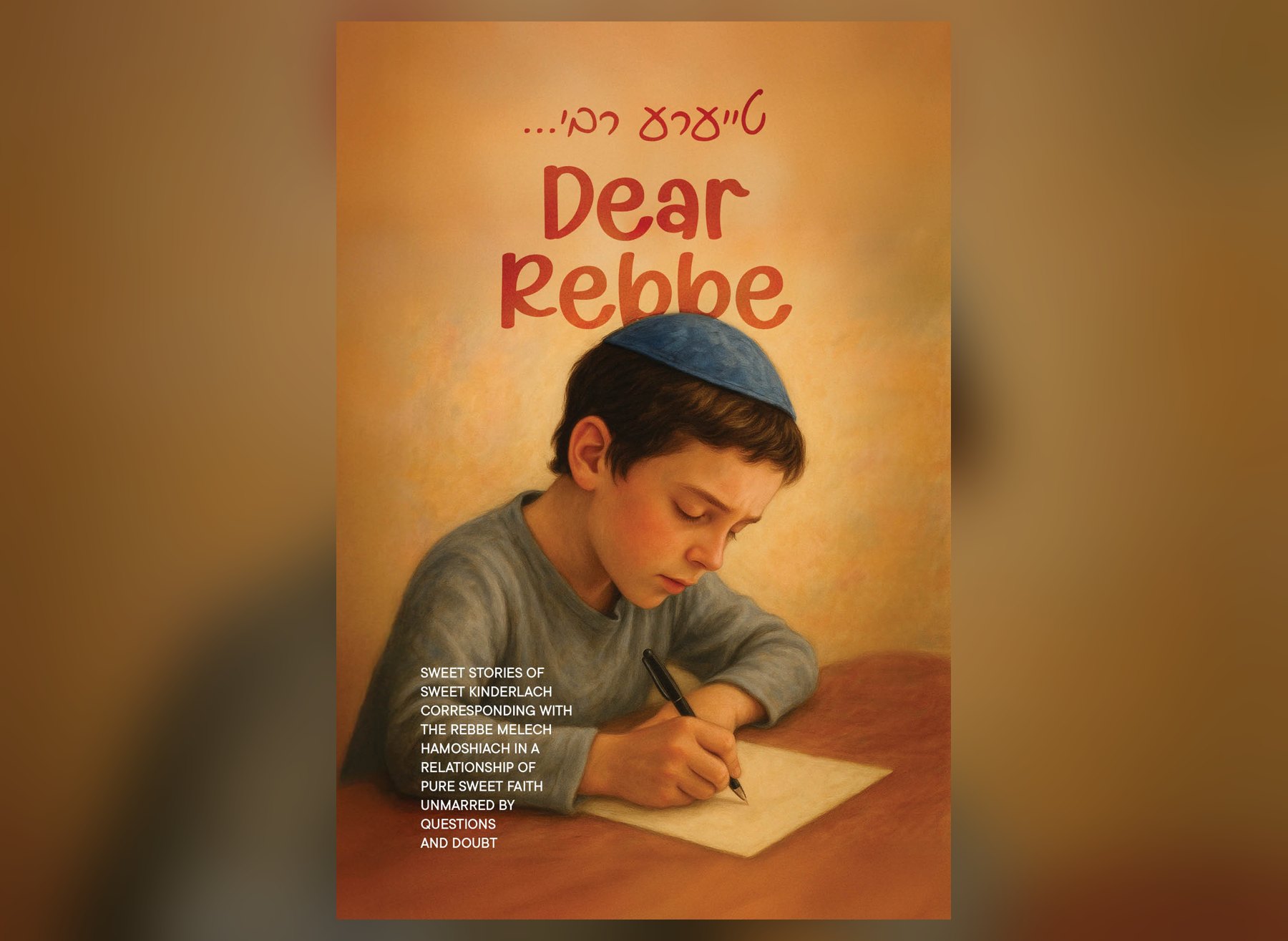
Sweet stories of sweet kinderlach corresponding with the Rebbe Melech HaMoshiach in a relationship of pure sweet faith unmarred by questions and doubt
Ahuva: Our children were eagerly waiting for another little brother. Not that we’re too small a family! Boruch Hashem, we have a serious battalion that’s mischievous and very active. But still, the youngest was already almost three years old, and for Chassidishe children like ours, that seemed like an eternity. How can we live without a baby?
They asked more than once, “When will we have another baby? Mendy is already so big!”
We couldn’t tell them that good news was already on the way, it was still too early, so we sent them to the One who holds the keys, to pray to Hashem, because only He gives children, right?
Our Mushky decided to be practical. She sat down and wrote to the Rebbe that they very much wanted another little brother to join the family. The response she received left us, the parents, stunned. The Rebbe blessed, and I wish I remembered the exact words, that there would be good news in the month of Sivan. That was indeed when I was due to give birth, but we hadn’t planned to tell anyone yet, with six months of pregnancy still ahead of us.
But the Rebbe chose to reveal the date to our children, and who are we to say no… They were happy and waited with great anticipation and complete faith. Not for a moment did they entertain thoughts of ‘maybe… if only… let it be…’
Two days before Shavuos, a new soldier joined our family, but long before that, we were filled with tremendous emunas chachamim. We, the parents. For the children, everything is clear and simple, unlike for us…
The Rebbe’s ‘tip’ for Inner Peace
Shneur is a sweet Chassidishe boy living in central Israel. When the war broke out on Simchas Torah, his parents, like every sane parent in this country, tried to shield him from age-inappropriate information, to minimize his exposure to the difficult events. However, it’s very difficult to hide things, especially when meeting with all the neighbors every other night in the building’s shelter.
At some point, Shneur learned about the hostages. The thought of Jews being held by the enemy against their will, with no one knowing their condition or situation, shook his soul. He had great difficulty sleeping at night and was nervous and frightened during the day and at school.
One day he decided to share his concerns with the Rebbe.
He sat at the table after washing his hands and giving tzedaka, and wrote in innocent words: “Please arouse great mercy for the soul, spirit, and life of Shneur son of… I cannot stop thinking about all the hostages.”
The Rebbe’s letter opened with comforting words: “In response to your letter, in which you write about lack of mental peace, etc.” In the letter, the Rebbe explains how all these thoughts come from the opposing side, and therefore a person has the power to completely nullify them. The Rebbe writes that people are not equal – some need more time and some less, and each person has their unique way of coping, but ultimately everyone can overcome. The Rebbe also suggests contemplating that the neshama is the main thing, not the body, and that everyone has a role in influencing their environment, which should be their focus.
Shneur took a deep breath and calmed down.
He understood that there was a solution to his mental unrest. He doesn’t know how long it will take him to surmount it or in what way, but eventually he will recover. And most importantly, he knew there was a Nasi of the Jewish people who was with him, understanding him better than anyone else and guiding him. That alone was reason to calm down.
The Rebbe Reassured: a Happy Ending
Brachi: I was in the final years of elementary school. In those days, more than twenty years ago, the whole subject of writing to the Rebbe through the Igros Kodesh wasn’t common at all. I was about to have surgery, and I wasn’t willing to go through the medical procedure without receiving the Rebbe’s bracha.
I sat and wrote to the Rebbe in my own words about the treatment I was about to undergo, and asked for his bracha for the success of the operation and for complete healing.
In the letter I received, the Rebbe writes that the path wouldn’t be easy and there might be complications, but ultimately everything would end well. There was something stressful in the letter, but I reminded myself of the main point. In the end, it would be good.
I went into surgery.
The operation was performed under local anesthesia only, with me lying awake, aware of everything happening around me, only a curtain hiding the doctors’ actions from me.
At first, things went as they should. At some point there were complications, and I could actually hear the doctors consulting with each other, getting stressed. It was very frightening, and my blood pressure rose significantly. The doctor said to me, “Calm down, you’re too scared!”
I reminded myself of the Rebbe’s response. I knew in advance that something would get complicated, the Rebbe had prepared me, so why was I suddenly so frightened? I reminded myself of the end of the letter, that ultimately the treatment would succeed and everything would work out… I could literally hear my heartbeat, which was being monitored by machines the whole time, calm down, stop racing. The end, as the Rebbe said, was indeed completely fine, and apart from the fear during the surgery, nothing remained and no damage was caused.
Afterward, I was glad that the Rebbe had told me about the complications and not just blessed me with complete healing. Had I not known in advance about the difficulties I would face, it would have been much harder to calm myself.
Pure Family
One afternoon, Naomi, a shlucha in Eretz Yisrael, sees her son entering the living room with the son of the neighbors, who are not yet observant. She checks what’s going on, and he tells her that he met the neighbor crying in the stairwell, asked why he was so sad, and when he heard about his problem, offered that he come in and they’d write to the Rebbe together.
Naomi was very moved and wondered if she should stay and help them with the writing and explaining the Rebbe’s words in the letter. However, she was busy, and it seemed that the children were managing fine without her, so she left them alone and was sure that if they needed her for an explanation or translation, they would certainly call her.
A short time later, the young shliach accompanied his friend home, looking much more positive.
“Tell me, what happened? What did the child ask for and what did the Rebbe answer?” the mother inquired. “I saw that he was much calmer after you wrote to the Rebbe!”
The little shliach nodded his head seriously. “He was sitting on the stairs crying because for a long time he had been asking his mother to buy him a dog, and she refused. He was almost desperate!”
Naomi is surprised to hear about the problem and immediately asks: what did the Rebbe answer him?
“The Rebbe answered that he should be particular about the laws of family purity…” the young shliach answers calmly.
The shlucha is nonplussed. To be particular about the laws of family purity? How could her son explain such an answer to the sweet neighbor? She herself doesn’t know how to explain this to her young son…
“What did you do?” she asks carefully, “How did you explain such an answer to the neighbor?”
The son looks at her in surprise, “What do you mean? Why complicate things? It’s a very clear answer! I explained to him that the Rebbe writes that a family needs to be pure. Bringing an impure animal into the home is definitely not family purity. He understood that his mother is right. If they want to maintain family purity, then dogs need to stay outside the home.”
She smiled, surprised. What’s true is true. What did she think? The relationship between the Rebbe and children is so pure, clean, and clear. Only we adults sometimes get confused with answers and get complicated…
Guidance at Every Stage
Levi Yitzchok barely celebrated his Bar Mitzva, the hat still sits on his head new and unnatural, and already he’s dealing with the process of being accepted to yeshivas. He took several tests, is deliberating between several yeshivas, and is really stressed about the whole matter. Ultimately, his decision now will determine his future for the next three years, and to a large extent also his future in yeshiva gedola, b’ezras Hashem.
One early morning, after a night of sleeplessness, he sits down to write to the Rebbe.
The Rebbe writes to him about student activities, “I have already related my opinion several times that all matters of talmidei ha’yeshivos need to be conducted by the yeshiva administration and with their agreement…”
The Rebbe continues by writing that the yeshiva also needs to consider the diversity and character of the talmidim, as well as matters where the need of the hour is in the category of a mitzva that cannot be done by others, and then it is even permissible to cancel Torah study, but all this is only after the clear knowledge that everything is conducted exclusively by the yeshiva administration.
Levi understood the letter, because it was very relevant to him… because it spoke about his role as a ‘tamim,’ and mainly, because he had already received this instruction several times in previous letters, so he could be calm. Feel at home.
Even in the yeshiva, the same Rebbe, the same challenges, the same close guidance…
I Received a Drawing from the Rebbe
Chani is a tiny soldier in Tzivos Hashem, so small that she hasn’t even reached the age of reading and hasn’t learned to identify letters.
One evening she sees her mother sitting and writing seriously to the Rebbe. She watches her mother and decides to write to the Rebbe too.
She takes a page, takes crayons, and draws a sweet and childish drawing for the Rebbe.
Mommy finishes the letter, and inserts it into Igros Kodesh, checking what the Rebbe answered her.
Chani also takes the sefer, and inserts the drawing she drew especially for the Rebbe between its pages. She opens the volume carefully and excitedly, checking between which pages her letter entered. The letter entered close to the binding, where two pink pages with a marble texture attach the binding to the book.
“Mommy,” she calls with excitement and enthusiasm, “I drew a picture for the Rebbe, so the Rebbe also sent me back an answer in a picture!”
Beis Moshiach #1457 • pp. 46-49
© 2026 Beis Moshiach Magazine. All rights reserved.
This article originally appeared in Beis Moshiach #1457. You are welcome to share it with friends and family by email or in print, provided that you do not change, add to or omit any part of it, you credit the author and Beis Moshiach, and you include a link to archive.bmoshiach.org (written out in full in printed copies).
To republish this article in a newspaper, magazine, book or website, please request permission in advance at [email protected].