Rabbi Wilschansky’s Art of Education – Part 2
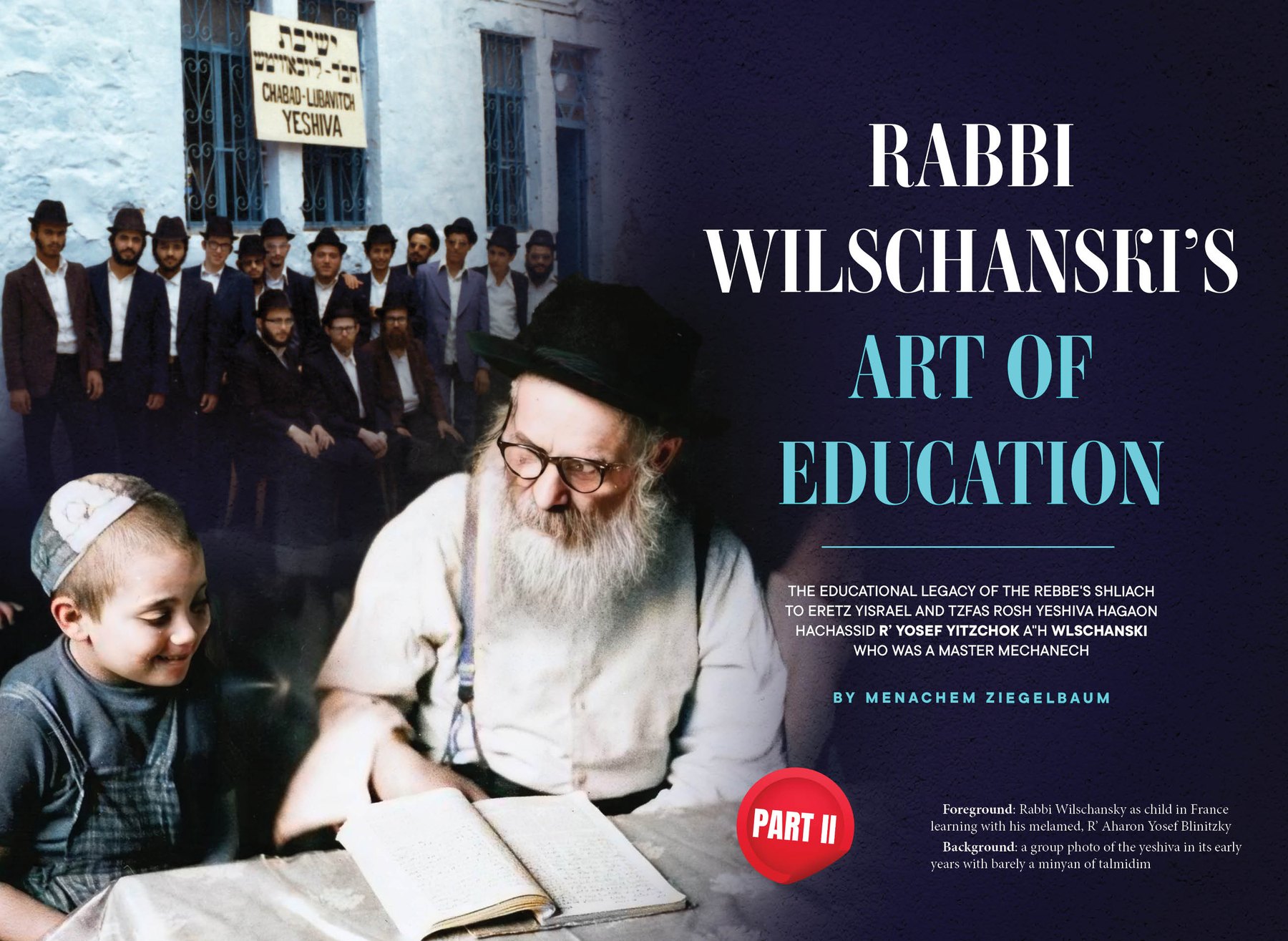
The educational legacy of the Rebbe’s shliach to Eretz Yisrael and Tzfas Rosh Yeshiva HaGaon HaChassid R’ Yosef Yitzchok a”h Wilschansky who was a master mechanech
Throughout the first decade, the yeshiva numbered only a few dozen students, about 20-30. In the 1980s, after Rabbi Rami Antian left the material administration of the yeshiva, R’ Kaplan took upon himself the burden of administration. After R’ Kaplan’s untimely passing, Rabbi Wilschansky reluctantly took upon himself the heavy responsibility of administering and managing the gashmi side of the yeshiva along with some of his colleagues.
Thus he combined spiritual administration with material administration, with neither detracting from the other, and all with success beyond the natural order. R’ Wilschansky later conceded that he would have liked to be in the Beis Medrash much more, but due to time constraints, this was not always possible (in recent years, due to his health, the situation allowed even less). Nevertheless, during those years, he made sure to be the person who would test the bachurim upon their entry to the yeshiva, and every week on Thursdays, he would give a shiur klali.
It became apparent over time that the financial and material side was navigated with no less skill and success, which led to the flourishing of the yeshiva both in the number of students and in raising the material standards as students were nourished with bountiful meals – and above all: in hiring an extensive spiritual staff to provide personalized care for hundreds of talmidim.
* * *
In many mosdos chinuch, the situation is often reversed, and the yeshiva administration cares more for the yeshiva than for its students. This can be seen in the focus on protecting the good name of the yeshiva, its organizational reputation and success.
For the Rosh Yeshiva, it was exactly the opposite. Throughout all the decades of the yeshiva’s existence, R’ Wilschansky cared first and foremost for the talmidim, as if they were his sons. He looked into the eyes and souls of the bachurim, and less at their surface appearance and the extent of their success or talents. All these were less important to him.
“The yeshiva definitely does not accept only talented individuals, but boys of all levels and all types; at the same time, the main emphasis of the yeshiva is to reach, with each boy, the fulfillment of his personal degree of excellence, and I can say that this goal is achieved in over 90 percent of cases,” he said later, and in these few sentences he distilled his entire educational philosophy.
It is no wonder, then, that the story of the yeshiva is undoubtedly a story of incredible success – not only at the level of individualized education, but also at the level of learning and Chassidishe behavior. This is the secret of the yeshiva’s success, as well as the extraordinary flow of applicants, to the point where the supply cannot meet the demand.
R’ Wilschansky, with revolutionary educational insight, did not ignore the difficulty in accepting boys of all levels, including those considered weak in learning.
“One of the principles guiding us when accepting a weak student, is not to ignore the fact that this is a weak student. Someone who finds it difficult to digest the fact that he has accepted a weak student to the yeshiva, and deals with the difficulty by denying reality and convincing himself that this is a regular bachur – causes harm both to the talmid and to the yeshiva.
“When the admissions committee decides to accept a weak bachur, he is marked by us as a bachur who needs to be cared for even more. When I say ‘us’ – I mean only the members of the admissions committee. Most staff members do not know who is a good boy and who is a weak boy. The teacher receives a new class, and as far as he is concerned – all are good and worthy bachurim. In addition, the admissions committee members who are aware of his situation, make sure to assign good bachurim to him who will advance him in learning. There is also a special staff member whose job it is to help the weak ones, and he receives guidance to invest especially in a particular bachur.
“The embracing atmosphere that exists in our yeshiva, both from the staff and among the students themselves, helps all talmidim receive help and assistance in good spirit, and to enjoy a supportive social atmosphere, and tutoring, while preserving the bachur’s dignity.”
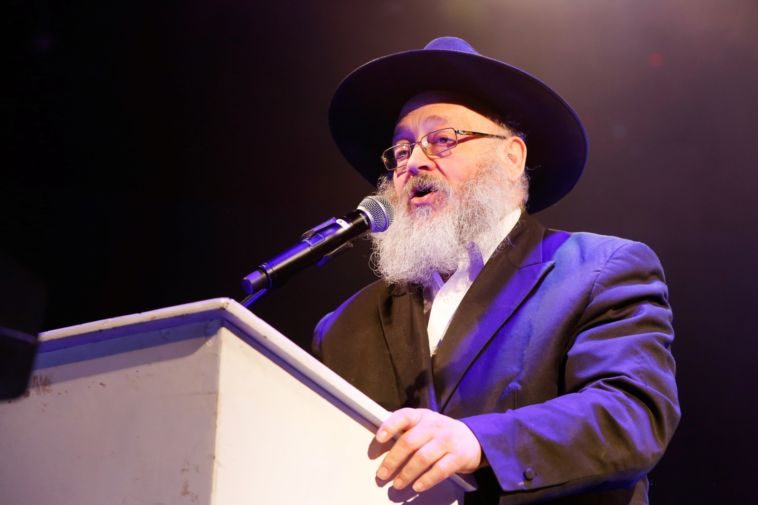
When once asked in a direct question whether he didn’t have a desire to teach especially excellent and brilliant talmidim, as other roshei yeshiva do, the Rosh Yeshiva exclaimed:
“Certainly! Certainly I have an aspiration and pleasure to teach bachurim with a high level of learning and to present them with deep pilpulim. Even today, despite all my other involvements, I continue to deliver the shiur klali to the boys as I derive great chayus from it. Let me tell you that in our yeshiva there are bachurim who are outstanding lamdanim, serious chevra who devote themselves to learning, in Shas and Rambam. You can see this in the many sifrei pilpulim and kovtzim that the talmidim publish every year.
“However, we have never allowed ourselves to go in the direction where we would accept only excellent talmidim. We are constantly aware of the Rebbe’s desire and his guidance, to also accept bachurim who excel less in learning. The Rebbe says that if in the past, young men were educated at home and came to the yeshiva to learn, today education also takes place within the walls of the yeshiva, and therefore the Rebbe wants the hanhala to provide a response to every bachur who wants to learn, according to his abilities and talents, even if that bachur is not considered among the elite.
“Why do we do this? Because we care about every boy. We are not afraid of any challenge or difficulty; we always give a chance to every bachur.”
A Particularly Moving Moment For The Rosh Yeshiva
When the approach of the Rosh Yeshiva is like this, it’s no wonder then that the talmid doesn’t end his studies at the yeshiva upon leaving for Kevutza; the connection with him continues long afterward. “This connection is related to the main educational approach of the yeshiva – a yeshiva that is entirely dedicated to hiskashrus to the Rebbe, that is entirely dedicated to its talmidim, according to the Rebbe’s instructions; these are things that are deeply engraved in the consciousness and feelings of the talmidim, and keep them connected to the yeshiva even many years after they have finished learning at the yeshiva and even after they marry. The chinuch pnimi, the special hiskashrus, the warmth, atmosphere and chayus of the yeshiva accompany them in the chinuch of their own children, and keep them connected to the Rebbe’s yeshiva.”
R’ Wilschansky described his educational perspective. “When a staff member comes to me about a particular student, saying, ‘He is disturbing me,’ ‘I cannot give a shiur because of him,’ this is terminology I’m not willing to accept, since the teacher is highlighting himself and his needs, and in our yeshiva the talmid is at the center. When a teacher speaks in such a way that the talmid disturbs him, he will find it difficult to find a way to advance that talmid. I am willing to accept statements like ‘The bachur disturbs the shiur’ or ‘affects the progress of his friends.’ The way of expression reflects the position of the teacher in relation to the student, and vice versa.”
The major fundraising event for the yeshiva, to purchase the dormitory building in 2018, testified more than anything to the enormous, indescribable love of the talmidim of the yeshiva for the Rosh Yeshiva. Within a short period of time, the graduates raised a sum of twenty-four million shekels, much more than the yeshiva heads and the leaders of the fundraising campaign had estimated.
The late Rosh Yeshiva saw that campaign as a significant milestone in the loving relationship between the yeshiva and its students – and vice versa!
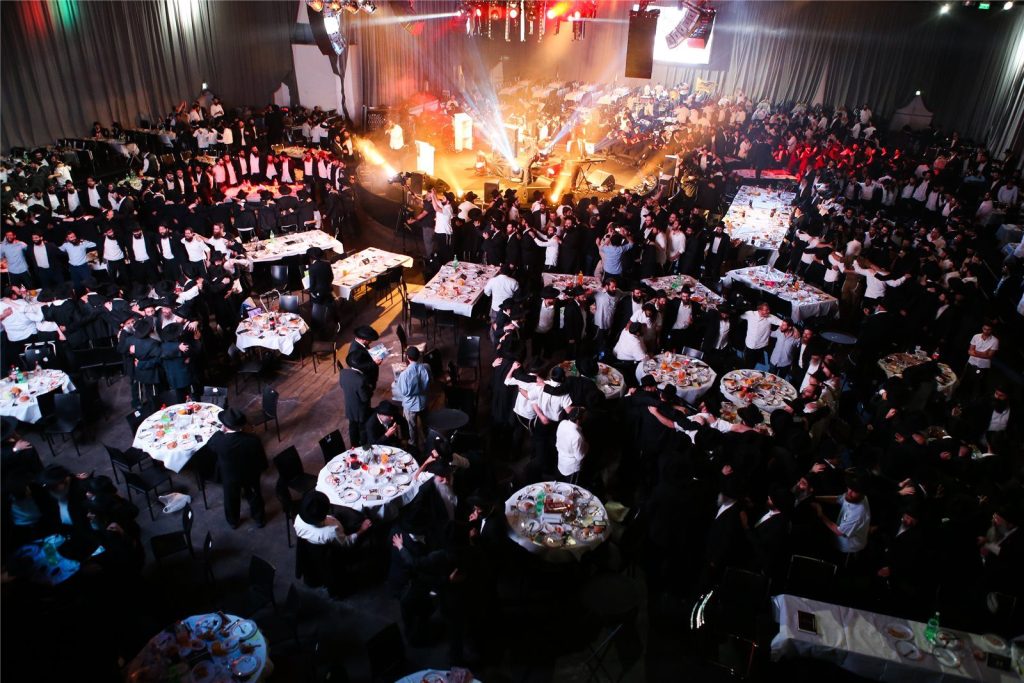
“When the yeshiva faced one of its most difficult periods, when the dormitory building was in danger of being evacuated, we all saw the special love of the graduates for the yeshiva, as they mobilized en masse with enthusiasm and care to attain the colossal amount required then, sparing no means, without regard to their financial situation,” he later testified emotionally. “It was a particularly moving moment for me; a moment that brought to the surface the chinuch and special atmosphere of the yeshiva that bears fruits and fruits of fruits.”
‘All Tzfatim Together’
“One of the important principles that guides me is to be caring toward every talmid,” he once said candidly. “I received the foundations for this when I was a bachur at the yeshiva in Brunoy, where ‘fresh mekuravim’ would arrive every week and we would study with them. Even when we later went on the Rebbe’s shlichus to the yeshiva in Australia, we were maggidei shiur and mashpiim in the yeshiva for the children of Anash. The yeshiva also had bachurim who had become closer to Yiddishkeit and needed special attention, not only in learning, but also in guidance and direction.”
As part of the sense of shlichus that forms the foundation of the yeshiva, the rabbanim of the yeshiva – also through the alumni organization – maintain continuous contact with the yeshiva graduates and serve as their ‘asei lecha rav’ even years after they move on to the next stages in their lives. R’ Wilschansky never forgot his students, despite the fact that at any given hour there were about four hundred talmidim sitting before him whom he had to care for spiritually and materially.
With such love, it’s no wonder that when the yeshiva sought to gather its thousands of graduates, the family slogan was so warm and close: “Alle Tzfatim Tzuzamen.” And the Tzfatim? Oh, their hearts melted, and they flocked as one… they simply felt an inseparable part of the Chabad Yeshiva family in Tzfas.
R’ Wilschansky also broke new educational ground by being the first to introduce a young, dynamic educational team with up-to-date ideas into the yeshivas he established. He did indeed appreciate the veterans with experience, but knew that in the current generation – the young have no less strong an influence. With his great astuteness, he made sure to combine the older and experienced generation with the younger generation that sought to succeed at all costs. This was a revolution by any measure!
“Our secret of success is that we bring young manpower into the yeshiva and refresh the ranks. The Rebbe always demands that we utilize the power of youth, and this is exactly what we do in the yeshiva, and with great success,” he once explained. “The young staff members have an excellent approach to the boys, and over the years we learn to appreciate more and more the connection and closeness created between the younger staff and the students.”
Is it any wonder, then, that additional yeshivas in Eretz Yisrael and around the world have copied the success formula of the man whose entire soul was invested in chinuch, who always saw several steps ahead, saw beyond what is visible to the eyes, and knew how to reach the depths of the students’ souls.
Tree, tree, with what shall I bless you? May your fruits be sweet – that is the wish, that is the blessing.
It seems that this bracha has been abundantly fulfilled in the great yeshiva in Tzfas. Over time, it has grown secondary branches in which the numbers of students have also multiplied, such as the yeshivas in Haifa, Nof HaGalil and Tel Aviv, alongside the yeshiva for high-school age boys in Tzfas which has become the premier Chabad yeshiva in Israel, the ‘Chanoch L’Naar’ yeshiva or the ‘Technological Torah Institute’ intended for students who need a more personalized framework. There is a home for every bachur, just go on in.
All of these, and we have not yet dealt with the significant contributions he made to the establishment of additional yeshivas and many educational institutions in Eretz Yisrael, serving as a supporter, advisor and assistant both in the chinuch approach and in ways of managing the institutions.
“My father, despite his tremendous responsibilities, was the most significant factor in the establishment of the yeshiva in Haifa,” says his son Rabbi Menachem Mendel, the Rosh Yeshiva in Haifa. “My father was not only a man of inspiration, but over the years also gave practical help. In the first years of its founding, he would even come every week to give a shiur klali at the yeshiva; he was also a full partner in decisions, we consulted with him on a daily basis, and he even took a considerable burden of the financial expenses upon himself.”
This chapter of the yeshiva touches upon only a small part of the ways of the master mechanech who was taken this week to his eternal home, leaving behind thousands upon thousands of loving and admiring students, but space constraints have to be considered.
The Pillar Of Fire At The Head Of The Camp Of Faith
As a Chassid who was entirely nullified to the will of the Rebbe, Rabbi Wilschansky lived and poured life into others with special fervor for every horaah that came from Beis Chayeinu.
The special chayus in inyanei Geula and Moshiach was a characteristic of R’ Wilschansky long before the ‘hot’ sichos of 5751-5752 were said. One of the members of the charedi community in Tel Aviv testified that when R’ Wilschansky was a young chassan in his father-in-law’s house, Rabbi Moshe Ashkenazi – as a young Rosh Yeshiva – he would go around Tel Aviv shuls and personally put up notices about the importance of the Seudas Moshiach, which was very uncommon in other circles…
In the years 5751 and 5752, and especially after the Kinus HaShluchim 5752, when the Rebbe announced that all the details in the work of shlichus should be permeated with the main shlichus of ‘kabbolas pnei Moshiach Tzidkeinu,’ he fulfilled this literally. There was no area in his shlichus work that was not ‘permeated’ with the message of Moshiach, from beginning to end.
Talmidim who learned with him in the winter of 5752 say that even today they can picture the scene of how on Shabbos morning in the yeshiva in Tzfas, he reviewed the Rebbe’s sicha on “opening your eyes,” and emphasized how the Rebbe was intensifying the Geula messaging from Shabbos to Shabbos.
R’ Wilschansky instilled in his students that even the study of Nigleh needs to be permeated with Geula and Moshiach. He would say that when a talmid strives to understand a piece in the ‘Shaagas Aryeh,’ by doing so he is bringing closer the complete hisgalus of the Rebbe, just as he acts through spreading the Rebbe’s Besuras HaGeula, because in every moment that he fulfills what the Rebbe wants and demands from him, at this moment – he fulfills the divine will and brings closer and hastens the hisgalus of the Rebbe MH”M.
In addition, he instituted a special seder in the yeshiva for the study of inayanei Geula and Moshiach, and even arranged special teachers for this topic, so that the bachurim would study the sichos in depth, which the Rebbe said is the direct way to bring about the coming and revelation of Melech Ha’Moshiach.
When asked with what zechus he proudly and boldly bore aloft the banner of faith in the coming of Moshiach, R’ Wilschansky replied:
“It’s not that we took the ‘flag of Moshiach’ for ourselves, but this is a continuation of the same policy line on which the entire yeshiva is built and founded from the first moment: loyalty to the Rebbe, loyalty to the Rebbe’s instructions and devotion to them. And from the moment the Rebbe demands chayus in inyanei Moshiach full steam ahead – obviously, this is what we do.
“Our yeshiva was privileged to be opened in Tzfas, which has a special connection with Moshiach, as is known that Moshiach will be revealed in the land of the Galil. And who knows, perhaps the fact that the Rebbe sent the shluchim to Tzfas specifically, and that is where came the emphasis on hiskashrus without compromises and without questions, but simply, with complete devotion – there is in this a certain rectification of the story with the Arizal’s students who hesitated when their teacher asked them to join him on Friday evening to be mekabel pnei Moshiach and, as is known, the Rebbe explained that the problem with the conduct of the Arizal’s students was a lack of faith in their teacher to accept his words with complete simplicity…”
In The Face Of Obstacles And Delays
Even when it seemed that there were obstacles and delays on the way to Geula, like the event of 27 Adar I 5752 – R’ Wilschansky was the pillar of fire before the camp, who led his talmidim and those who were under his influence on the direct path toward Geula. As soon as the first publications appeared that spoke explicitly about the Rebbe as Moshiach and accepting his malchus, he determined without hesitation “this will continue and intensify.”
When there were those who spoke of retreat and weakness in faith, he responded sharply and said: “There is a Chassidic saying on the verse ‘Faith is lost and cut off from their mouths:’ The simple interpretation is that when faith is lost, the sign of this is that it is cut off from their mouths, they stop talking about it. So even the simple interpretation emphasizes the importance of speech. But the Chassidic interpretation is deeper: Why has ‘faith been lost’? Because ‘it has been cut off from their mouths’! If they don’t talk and engage in it, certainly they can raise question after question about things that once even the lowest among the Chassidim would have been ashamed of in the past.”
Not only did R’ Wilschansky lead the yeshiva bachurim on the path ascending to Geula, but also the general Chabad Chassidim in Eretz Yisrael. He presented his clear teaching on the subject in farbrengens and speeches, as well as in in-depth interviews in Beis Moshiach.
R’ Wilschansky was a member of the hanhala of the ‘Matteh Moshiach’ organization in Israel, partnering in charting ways to publicize inyanei Geula and Moshiach openly.
After Gimmel Tammuz, when there were those who sought to recalculate the route, R’ Wilschansky was among the leading rabbis and mashpiim who set a clear policy that we need to continue and proudly publish the fact that the Rebbe is Melech HaMoshiach. He also participated and spoke at Geula and Moshiach conventions held over the years.
Also regarding the eternal life of the Rebbe, R’ Wilschansky set a clear tone with a special chayus in the sichos in which the Rebbe speaks about the fact that in the Nasi of the ninth generation there will be no passing as there was on Yud Shevat, about eternal life without interruption, about Yaakov Avinu lo meis, and more and more. He repeatedly said that after the Rebbe said and printed all these sichos, and then Gimmel Tammuz occurred – what should a Chassid understand? The natural Chassidic feeling of a Chassid is to adapt his conduct to what clearly emerges from all these sichos.
In The Field Of Communal Service
The late Rosh Yeshiva was endowed with great wisdom, astuteness and sharpness. To the same extent that he could deliver an in-depth shiur klali before hundreds of talmidim, he also knew how to navigate and set forth a pathway in many of the general affairs of Chabad in Eretz Yisrael.
As one of the Rebbe’s shluchim to the Holy Land and within the structural framework of the instructions the shluchim received from the Rebbe, R’ Wilschansky was naturally involved in communal affairs, both in Tzfas and in general Chabad affairs in Israel.
It is no wonder then that in 2001, Rabbi Shlomo Maidanchek, chairman of Agudas Chasidei Chabad in Israel, added him as a member of the hanhala of Agudas Chasidei Chabad. The Chabad Beis Din approved the appointment and the secretary of the Beis Din, Rabbi Yitzchok Yehuda Yaroslavsky, even participated in the board meeting in which the decision was made and blessed it on behalf of the Beis Din.
From R’ Wilschansky’s perspective, the affairs of the yeshiva, like the affairs of the community at large – are one and the same: “Everything starts with the attribute of hiskashrus to the Rebbe. Before I approach any subject, I will ask myself what is the Rebbe’s opinion on the matter? Is it clear to me that this is the Rebbe’s view and there is no other? Is the Rebbe a part of us or, ch’v, a separate thing? True hiskashrus to the Rebbe is first of all to know that our lives should revolve around the Rebbe’s ratzon.”
His oldest son, R’ Menachem Mendel, adds a nuance to his father’s involvement in communal affairs from his perspective: Complete hiskashrus to the Rebbe!
“I will never forget how before Pesach one year, a new volume of ‘Likutei Sichos’ arrived and my father did not leave it; at home, in the shul in Kfar Chabad, and in the old shul in Tel Aviv when we were at our grandfather, Rabbi Moshe Ashkenazi’s, he was constantly learning it until he finished reading it from beginning to end.
“In our days there are not many people who understand communal affairs like my father and at the same time are knowledgeable in ‘Likutei Sichos,’ in maamarim, in ‘Igros Kodesh,’ drawing from all this a perspective on the Rebbe’s views on every subject and issue and act based on this. Already years ago, my father understood that the correct thought process in communal affairs is acquired through the Rebbe’s Torah.”
The communal activism aspect of R’ Wilschansky was also an integral component of actualizing the Rebbe’s inyanim, in practice, in the Chabad public in Israel.
“Communal involvement also impacts the issue of Moshiach,” R’ Wilschansky emphasized. “There are those who think, ch’v, that ‘Yechi Adoneinu’ is chitzoniyus. There can be no greater mistake than this, since all our deeds and work are to bring the Yemos HaMoshiach.”
Together with thousands of his students and followers, he proudly raised the banner of Geula, encouraging the talmidim to strengthen their connection with the Rebbe, while the Yeshiva adheres to a stance of unwavering faith in the words of the Rebbe and the eternal life of the Rebbe. He even signed rulings that the Rebbe is Melech HaMoshiach, and that the Rebbe is alive and well in a physical body.
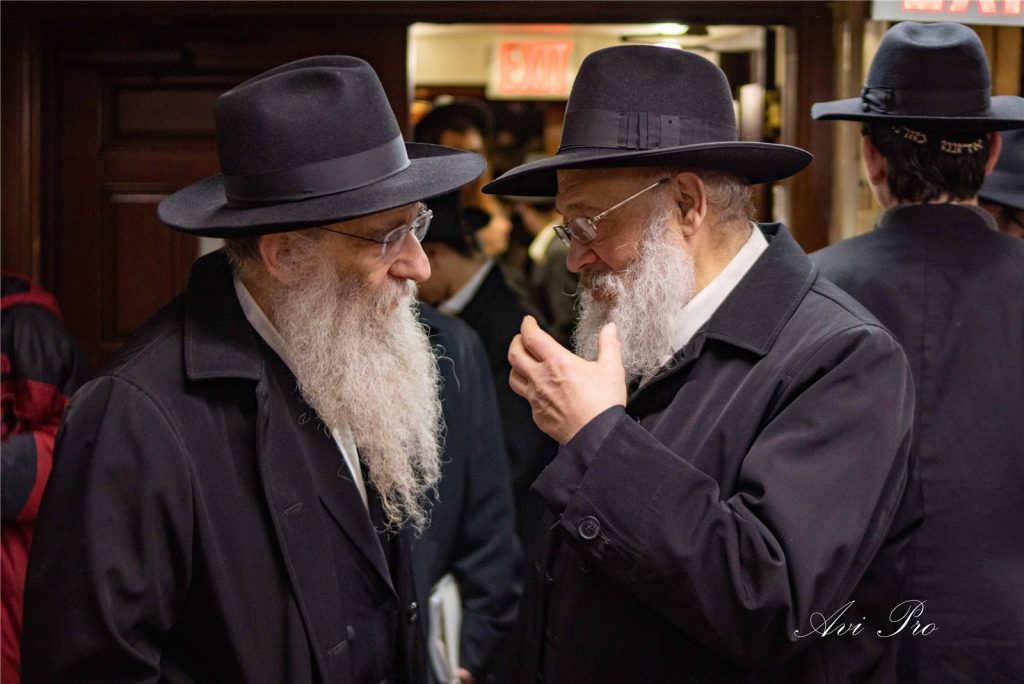
“In him you consistently saw the strength of leadership, responsibility for the Jewish people, and his unwavering devotion to spreading the teachings of Chabad and the Rebbe’s path,” mourned Rabbi Meir Porush, Minister of Yerushalayim and Jewish Tradition, who had close ties with him in issues of Chabad activity. “I had the privilege of maintaining a warm connection with him over the years, hearing his wisdom, and consulting with him.”
All Tzfatim Crying Together
On erev Shabbos, Parshas “V’Atah Tetzaveh,” on the night of the 9th of Adar, he passed away after a prolonged illness, at the age of 74 years. And once again, the sound of the trumpet was heard, and the voice echoed from one end of the camp to the other – “Aleh Tzfatim Tzuzamen.” Thousands of graduates came from all corners of the country to say goodbye to the loving father who had cared for them over the years, and who had been a guide, a loving father, and a Rosh Yeshiva who taught them well.
He is survived by his wife and his children, who are shluchim of the Rebbe, mekusharim to the Rebbe: Rabbi Menachem Mendel – Rabbi of the ‘Neve Geula’ community and head of the Chabad Lubavitch Yeshiva in Haifa; Rabbi Meir – head of the Chabad Lubavitch Yeshiva in Tzfas. Rabbi Chaim Eliezer – head of Yeshiva ‘Chanoch L’Naar’ and Rabbi of the ‘Tzeirim’ community in Tzfas; Rabbi Shmuel Alexander Sender – director of the semicha institute in Milan, Italy. Rabbi Yisroel Shneur Zalman – head of the Chabad Lubavitch Yeshiva Ketana in Tzfas; Rabbi Betzalel – Rebbe’s shliach in the Pinat HaCarmel neighborhood in Haifa and a teacher in Tomchei Tmimim of Krayot. And his daughters: Mrs. Zlata Lipschitz and Mrs. Chaya Mushka Nisselevitz.l
Beis Moshiach #1458 • pp. 10-19
© 2026 Beis Moshiach Magazine. All rights reserved.
This article originally appeared in Beis Moshiach #1458. You are welcome to share it with friends and family by email or in print, provided that you do not change, add to or omit any part of it, you credit the author and Beis Moshiach, and you include a link to archive.bmoshiach.org (written out in full in printed copies).
To republish this article in a newspaper, magazine, book or website, please request permission in advance at [email protected].