The Man Whom the Rebbe Gave Power of Attorney
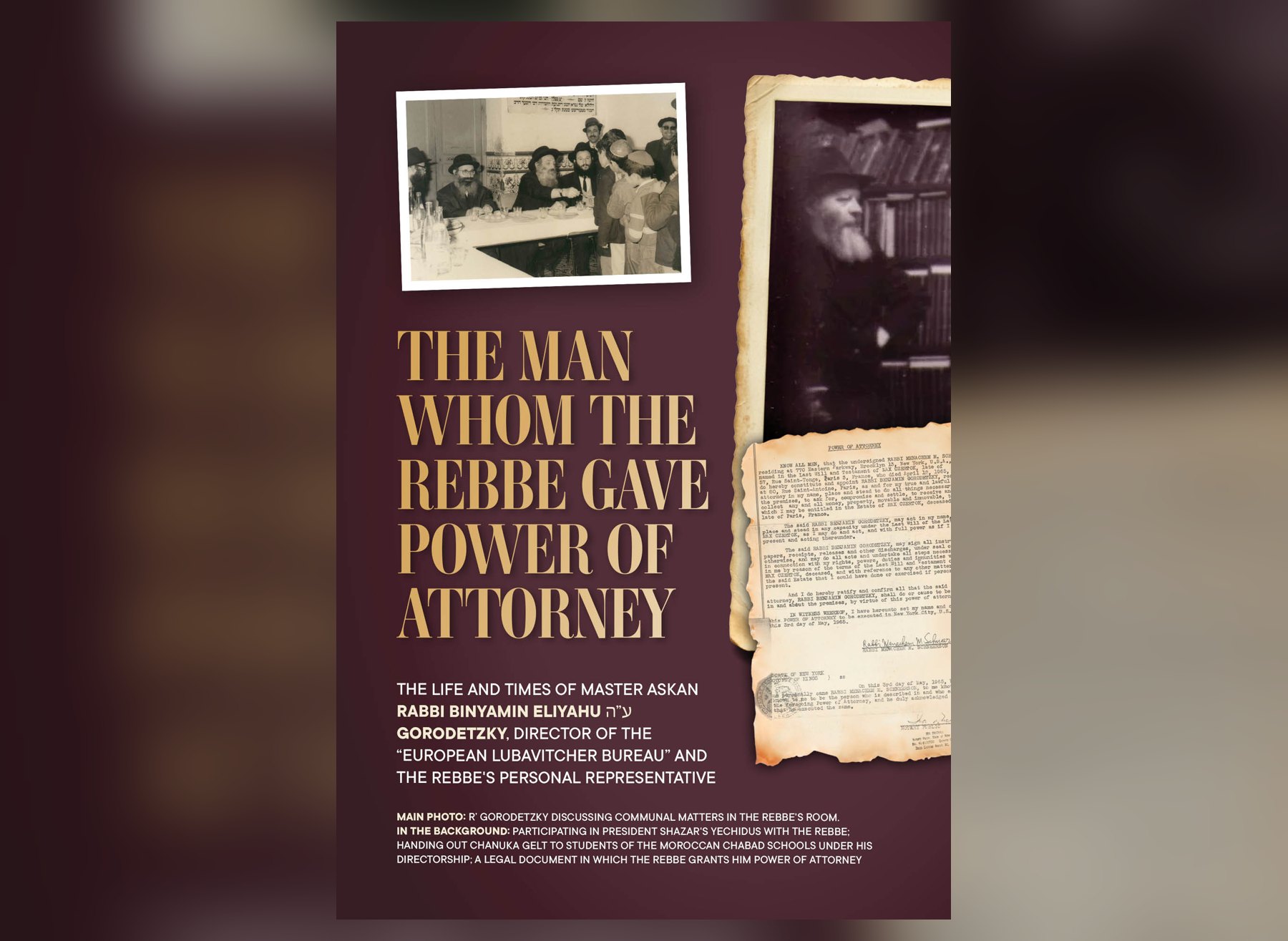
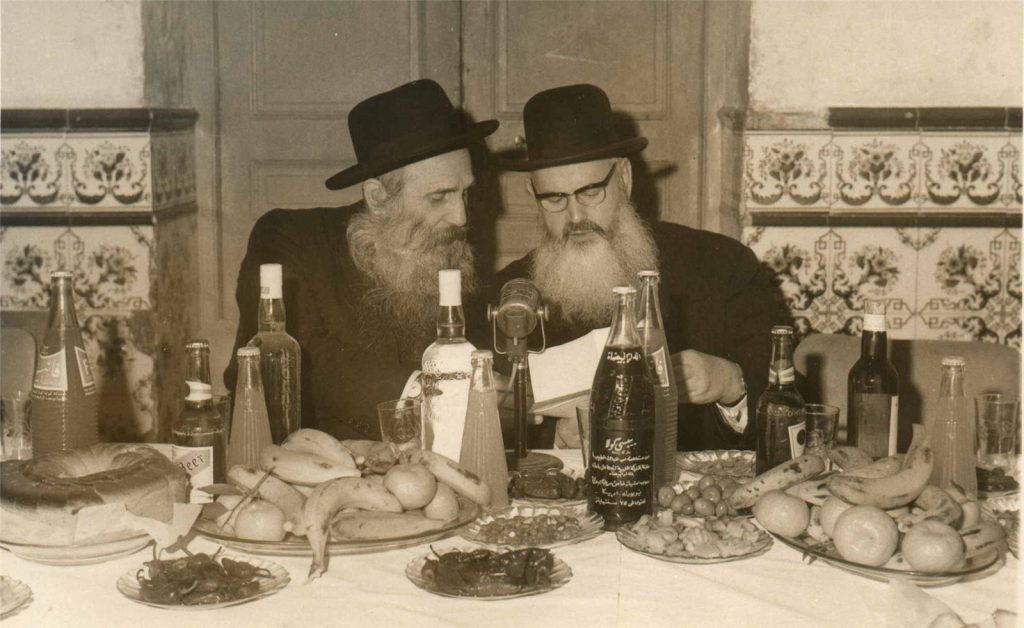
The life and times of master askan Rabbi Binyamin Eliyahu Gorodetzky a”h, director of the “European Lubavitcher Bureau” and the Rebbe’s personal representative.
Leading the Communal Work in Moscow
Throughout the years, R’ Gorodetsky continued to stand in the vanguard, as he continued to build the world of Torah by establishing Talmud Torahs and yeshivas.
Contact with the Rebbe became more difficult, but not impossible. At a certain stage, he received a new assignment from the Rebbe: to manage the Rebbe’s financial affairs in Russia, replacing Rabbi Moshe Gurary who was preparing to leave Russia. It was an extremely responsible and dangerous position.
R’ Gorodetsky immediately left for Moscow to conduct an orderly handover.
This key position forced R’ Gorodetsky to uproot with his family from Kiev to Moscow. He traveled toward Kiev via Homil, where a branch of the yeshiva operated. He spent Shabbos at the home of Rabbi Avrohom Katzenellenbogen, who was heavily involved in everything related to ‘Tomchei Tmimim.’
On motzoei Shabbos, a farbrengen was held in the inner room of Reb Avrohom’s house, with the participation of yeshiva students. The farbrengen was conducted in secret, out of constant fear of the authorities.
No one knew how, but the wicked ones knew that R’ Gorodetsky was there. During the night, knocks were heard several times at the door, each time asking: “Is Gorodetsky here?” with the excuse that ‘they have a telegram for him.’ The answer remained resolute: “He is not here.”
None of those present had any doubt that these were N.K.V.D. men disguised as postal workers.
The surveillance after him was close and persistent. If not this night – then the next day…
Second Imprisonment
When he boarded the train the next day on his way to Moscow, he was arrested by NKVD men. They removed him from the train and led him toward a black car. “One of them opened the car door, extended his hand to me and said ‘Shalom aleichem, Kiever Rav. Soon you’ll be able to see your father-in-law – Reb Shmuel from Kutaisi, in Siberia.’” The threat was clear and sharp.
This was the moment when R’ Binyamin’s spirits fell. He realized that they knew every detail about him, and that he had been under surveillance for a long time. However, in his greatness of spirit, he took a deep breath, gathered courage and said “Well, people also live in Siberia…”
He was brought to a large and isolated building, surrounded by a frightening wall and an iron gate. He was taken to a small and narrow cell in an underground cellar.
Soon he was taken for interrogations, where ‘Simonovsky’ – a Yiddish-speaking Jew who accompanied him when he was arrested, also sat. During the interrogation, he was asked many questions in Yiddish: about the purpose of his visit to the city, about his connections with Lubavitchers, and about his educational activity. The investigators showed accurate knowledge of his movements, and accused him of continuing the activity of the Rebbe Rayatz who had already left the Soviet Union. They made it clear to him that they were following him and knew his personal and community connections. They mentioned his father-in-law’s exile to Siberia, and claimed it was R’ Binyamin’s time “to confess all his deeds” – otherwise he would rot in the cellar.
“I gathered courage,” R’ Binyamin recounted, “and with a small smile I answered them calmly and coolly that I know nothing, and I have no connection or involvement in anything they accused me of. I am traveling for my private affairs, and I am not guilty of anything.” When the interrogators began speaking rudely, he commented on their style, which led to greater anger on their part, and to the end of the interrogation.
At his request, he was returned to his place of detention along with his tefillin…
R’ Binyamin’s place of imprisonment remained unknown. His wife was told everywhere that no prisoner by this name existed… She turned to the chief prosecutors in Minsk and Moscow, but their answer was uniform: “We know nothing about him…” Only after months of searches and pleas, she was finally directed to the city of Homil – hoping to find some clue about his fate there.
On Yud-Tes Kislev, while he was davening that in the merit of this auspicious day he would be saved from his imprisonment, R’ Binyamin received a package from his wife. “My joy was great when I realized that my family members had finally discovered the place of my detention.” Alongside the joy, there was disappointment and an expectation that was not fulfilled: “I hoped and expected that on this great day I would merit complete release, or at least transfer to another prison.”
The conditions of detention were particularly harsh. For two weeks he remained in the cell without going out to the yard, and without basic human conditions. “One can easily imagine the intense suffering when for two full weeks they not only don’t allow me to see sunlight, they also don’t provide me with the most basic human conditions.”
Escape Through Sleep
During the imprisonment, R’ Binyamin went through difficult days of intensive and exhausting interrogations, humiliations and psychological pressure.
At the end of one interrogation, the investigator hinted that he was ready to release him on condition that he not return to Kiev, but remain to live in Moscow. “When I agreed to his proposal [in any case this was his original plan – MK], he ordered me to visit them from time to time to maintain constant contact with them, and to fulfill their orders. I immediately understood his intention [i.e. to inform on his fellow Chassidim]. I answered him that this was out of the question, and I would not accept such a role… Upon hearing my answer, he was enraged and slammed the door behind him.”
The next day, the sentence was read to him: three years of imprisonment in Kotlas in northern Russia.
Somehow, with great resourcefulness and cunning, R’ Binyamin succeeded in escaping from his place of exile, and boarding a train as a free man.
But even now his troubles did not end. Dangers lurked for him at every step.
In the same compartment in which he traveled, many passengers were crowded to such an extent that no sitting or lying space remained. The cars were built in such a way that below were sitting places, and above them two sleeping levels. He understood that he had no choice but to climb to the upper sleeping level and arrange a corner for himself across the width of the car. “I lay down to sleep, I was very tired and fell into a deep slumber,” he recounted. The deep sleep was what saved him.
When he opened his eyes at five in the morning, the car was almost empty. Those remaining told him he was lucky – NKVD. men had arrested most of the passengers for attempted escape. “They even arrested those right next to you,” they told him, “and shone flashlights into your eyes for about fifteen minutes. Since you didn’t wake up – they left you alone and went away.”
R’ Gorodetsky explained what happened: “Usually, the fleeing prisoner cannot sleep in deep slumber while being in a state of tension and anxiety. If I didn’t wake up despite them trying to wake me for about a quarter hour, it proved that I was not a fleeing man,” he recounted. “But as a believing Jew I believed with complete faith, that ‘from G-d a man’s steps are set,’ and G-d’s help stood by me to save me, and in the merit of that tzaddik our Rebbe [the Rayatz] נ״ע.”
By roundabout ways, R’ Binyamin traveled in order to reach Moscow without being noticed by the secret police.
When he arrived at Malachovka, a suburb of Moscow, R’ Binyamin stayed at the home of Reb Avrohom Maiyor. “Afterwards I rented a separate apartment for myself, and my wife came to me from Kiev.”
The question of where to live burned intensely. “I asked our Rebbe where to establish my place of residence, and he ordered me to settle in Kursk, where one of our people lives – Reb Shmuel Zalmanov, who will help me in my settling there.”
He indeed moved to live in Kursk, despite the danger involved, under a false identity so as not to risk additional imprisonment.
R’ Gorodetsky recounted about a particularly dramatic moment when on the street he once passed a Jew who knew him from Kiev who ran to him, hugged and kissed him while shouting “Oh Rebbi, have you already been released?…”
The explosive encounter was of enormous danger for him. His entire masquerade could have been peeled away in one moment. His blood froze in his veins, his eyes scanned the street in fear lest someone heard the revealing cry. But again this time, he was filled with resourcefulness very quickly: “I looked at him with wondering eyes as if I didn’t know him, and that he was mistaken in his judgment.” But the man who was convinced of R’ Binyamin’s identity refused to give up: “I am not mistaken at all, I know you well – you are the rabbi of Kiev! Or perhaps you have a brother who resembles you?”
Here doubts began to gnaw at the man’s heart upon seeing his fellow’s lack of understanding…
“I explained to him that he was mistaken,” R’ Binyamin continued, “and I slipped away from him.”
The Jew who was friendly with Reb Shmuel Zalmanov shared with him what had occurred. But Reb Shmuel, who immediately understood the danger and the need for caution, explained: “That’s not the rav. That’s Eliyahu the guard, or perhaps Eliyahu the baker… it seems you are mistaken.”
On the Way to Freedom
Despite being pursued for his life, and under constant surveillance – with no rest or peace for his bones – he established a new yeshiva in Kursk. When he saw that the surveillance did not cease, he fled with his family to Voronezh. While they were there, the war front between Germany and Russia broke out. Fearing the approaching danger, R’ Gorodetzky managed through bribery to leave the city with the last train of officers’ families toward the city of Tashkent, far from the front, and from there the family continued to Samarkand.
Due to his great resourcefulness, he managed to leave Russia after the war with his family using forged Polish passports, and the Gorodetzky family reached Krakow, Poland.
At that time, the Rebbe Rayatz was staying in the United States, and from there he instructed R’ Binyamin to proceed toward Paris. After a difficult journey full of hardships, the family reached Paris. There too, immediately upon his arrival, he harnessed his developed organizational talents for the benefit of the community, and began to care for the refugees and survivors of the sword and persecution that filled Europe at that time, after World War II.
At the beginning of the year 5707, the Rebbe Rayatz called him and instructed him to embark on a mission of chizuk and encouragement, to visit the refugee and displaced persons camps where Chassidim were staying. From Germany, the Rebbe instructed him to travel to France to check the condition of the Anash refugees and see how he could help them with absorption, settlement, livelihood arrangements, etc.
While fulfilling his shlichus and reporting in detail on his activities, the Rebbe Rayatz sent him a letter in which he assigned him his main life mission: to play a central role in building the Judaism of Europe, Africa, and Eretz Yisrael, and appointed him to be his personal representative in this activity.
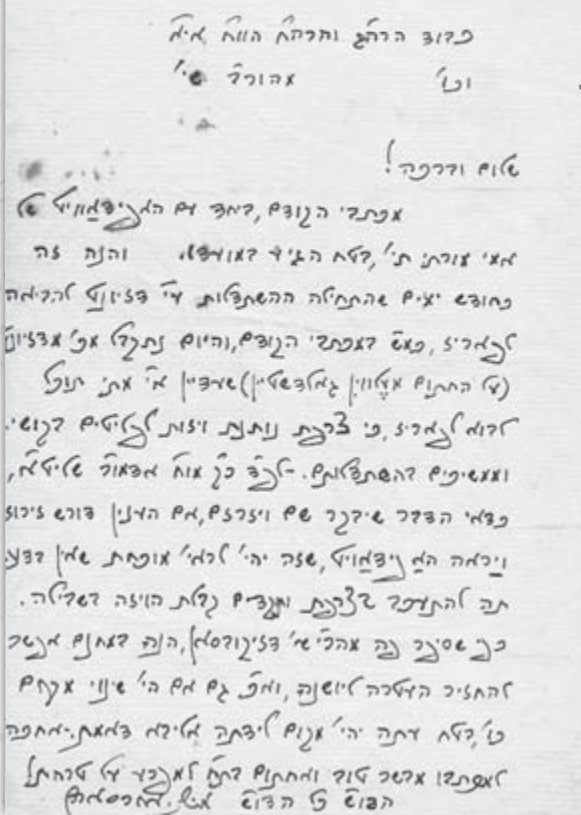
In his letter dated 15 Kislev 5707, the Rebbe Rayatz appointed “my dear and most elevated friend and student, the worthy and honored Rabbi Binyamin Gorodetzky,” to open an office for refugees. “I hereby empower him to establish an office in Paris in my name, called the European Office for Aid to Refugees and Their Settlement, with the detailed function described in my general letter attached hereto.”
Knowing his character, his organizational talents, and above all his complete bittul and hiskashrus, the Rebbe designated him to be his shliach for the revival of the wounded and battered Jewish people after the terrible destruction of the horrific Holocaust on the European continent and the Communist oppression in Russia.
Indeed, R’ Binyamin began to work for the material and spiritual welfare of hundreds and thousands of refugees, receiving countless letters of instruction and encouragement from the Rebbe Rayatz.
The enlightening letters from the Rebbe to him show the Rebbe’s concern for the welfare of Anash, which was conducted through various instructions to R’ Gorodetzky in diverse areas – from help in finding parnassa, financial support, establishing gemachs and sending packages of clothing, to spiritual nourishment in the form of sending new kuntreisim (pamphlets), maamarim, and letters from the Rebbe Rayatz.
After a journey he made to Munich and Paris, where he visited the Chassidic communities, R’ Gorodetzky traveled to the United States to meet the Rebbe Rayatz, his meshaleiach, whom he had not seen for twenty years.
The Rebbe Rayatz to R’ Binyamin: “You are mine!”
“I arrived in New York on 9 Teves 5707,” R’ Binyamin wrote in his personal diary. “After twenty years of separation and distance from our Rebbe, from the day he left us at the beginning of the year 5688, I merited again to visit and meet face to face with Kevod Kedushas our Rebbe.
“It is difficult to describe on paper my feelings from this visit. After twenty years of orphanhood and separation, I was with our Rebbe in yechidus for several hours. I conveyed to him warm regards from Anash in Russia, and from my last visit to Pocking… I conveyed to him general and heartfelt regards, and I saw great satisfaction on his face.”
Feedback from this special yechidus was received by R’ Binyamin from none other than the son-in-law, Ramash:
“Several hours after my visit with our Rebbe, his son-in-law – the Rebbe shlita and his wife the Rebbetzin – sought me out and asked me about what happened during my visit with our Rebbe and what I spoke with him about. I answered that I conveyed very warm greetings from Anash.
“Afterwards they told me that after I left his house, our Rebbe wept for a long time without stopping, but they said in the name of our Rebbe that these were tears of joy. They told me our Rebbe’s words when he said: ‘This is the same Binyamin I knew. Only his beard has grown, but he remains the same Binyamin – after twenty years have passed.’
“It should be remembered,” noted R’ Binyamin, “that I was the first to merit meeting with our Rebbe after twenty years had passed since our Rebbe left Russia in the year 5688 (1928), to bring him personal greetings from Anash and to gladden him with good tidings which he enjoyed greatly.”
In the yechidus itself, the Rebbe Rayatz showered him with rare words: “You must know that you are my man. And you must not conduct any business with anyone. Tell my sons-in-law: you are my man. Tell your father-in-law that you are mine. Say to yourself: you are my man. And also say to the community: you are my man.”
Sixty Years of Public Service
From then on, R’ Gorodetzky served as the extended hand of the Rebbe Rayatz – and later of the Rebbe MH’M – who sent him on countless shlichuyos in Europe and North Africa, as well as in Eretz Yisrael. All his rare talents, his sense of public service, extraordinary wisdom, and great personal courage – he harnessed for the benefit of their holy affairs.
Alongside his central work in the ‘Lishka’ (office) he established according to the instructions of our Rebbeim, the main headquarters of Chabad activity on the continents of Europe, Africa, and Asia – he was appointed over the years as an active member in the main Chabad institutions established by the Rebbe Rayatz in the USA: “Agudas Chassidei Chabad,” “Merkos L’Inyonei Chinuch,” and “Machane Israel.”
Immediately after the motzoei Shabbos of the histalkus, on the night of 11 Shevat, the Rebbe sent a short telegram to R’ Gorodetzky’s address in France with the words: “Admor was nistalek Shabbos. Funeral tomorrow noon. Vaad Anash.” This was the way all Anash in France learned the painful news of the passing of the Rebbe Rayatz.
During the shiva, the Rebbe sent another telegram from which it clearly emerges that he was the one who took the reins immediately (although the formal acceptance of the leadership was on Yud Shevat 5711). Regarding matters of leadership, especially for those for whom it held practical relevance, they felt and knew immediately that the Rebbe was the one who was continuing the Nesius and all of the work, without there being ch’v, even a moment’s interruption.
The message was clear – everything is to continue as it was: “B’ezras Hashem, all the work will continue. My opinion is that for the fulfillment of his work, it is necessary that he continue in his post in his place as before, and I am assured of him that he will add even more energy to his holy work. All the above from Ramash, and he will write after the shiva, Chodakov.”
Needless to say, R’ Gorodetzky immediately devoted himself heart and soul and accepted upon himself the Nesius of the Rebbe. Throughout every moment of the years of the Rebbe’s Nesius, he was devotedly connected and committed to fulfilling his holy will. As the Rebbe himself expressed his evident satisfaction with this conduct, in his letter to him dated the 3rd of Chol HaMoed Pesach 5710:
“And let his mind be at ease as he has put my mind at ease, in that he now remains at his post and place, in these times when all matters and institutions need exceptional guarding and strengthening and additional expansion both outwardly and inwardly.”
From then on, over the years R’ Gorodetzky merited to receive from the Rebbe hundreds of long and detailed holy letters – sometimes those that contained references to several matters. These letters encompass a rare scope of activities in different places throughout the world.
Over the years, he merited to enter hundreds of times into the holy inner chamber, for long private audiences in which he would report to the Rebbe about his activities and encounters, and would receive guidance on how to continue, with whom, where, and when.
These private audiences continued even after the Rebbe stopped receiving people for yechidus. He was among the few who merited to be received for yechidus until close to Chof-Zayin Adar I. In recent years, when his strength weakened, his son Rabbi Shalom Dov Ber assisted in his work and even took upon himself some of the matters with which his father was entrusted.
For more than forty consecutive years, he was constantly on the move in one long, unceasing shlichus on behalf of the Rebbe. During these years, he established, strengthened, and founded Jewish communities in Morocco, Tunisia, Africa, Europe, and Eretz Yisrael. He extended spiritual and material aid to our Jewish brethren wherever they were, while weaving an extensive network of connections with international Jewish organizations that opened funds to finance these enormous enterprises.
During these years, he was personally involved in establishing hundreds of institutions of Torah, chesed, chinuch and welfare – in Eretz Yisrael, France, Europe, and in African countries, standing at the right hand of the Rebbe’s shluchim in these places.
Thus were extensive Chassidic mosdos established one after another at the ends of the earth: the “Oholei Yosef Yitzchok Lubavitch” network, branches of “Tomchei Tmimim” yeshivas, “Beis Sarah” and “Beis Rivkah” schools for girls, vocational schools in Kfar Chabad, and Chabad neighborhoods in Eretz Yisrael.
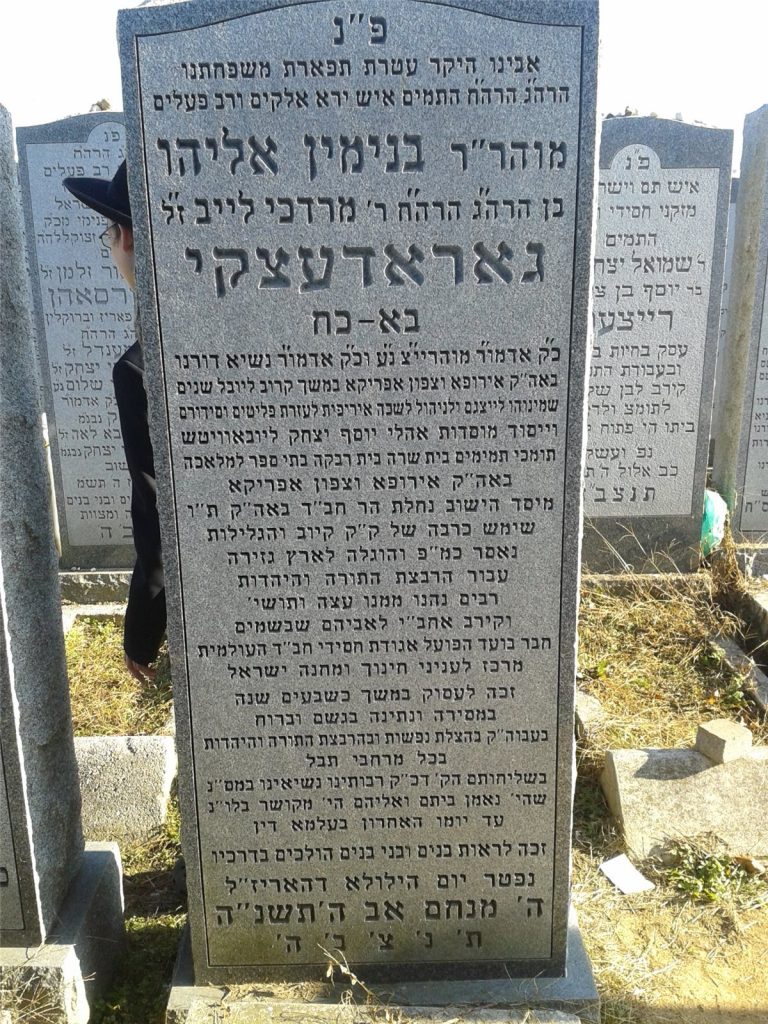
He fulfilled all horaos with bittul and willing action, as a distinguished Chassid for whom the Rebbe’s words were a ‘lamp for his feet’ all his days until his passing thirty years ago – the 5th of Menachem Av 5755 (1995).
The shlichus of R’ Gorodetzky’s soul in this world concluded after nearly ninety years of world-shaking upheavals. His early years of life were in the shadow of difficult wars with terrible losses that shook the world and all within it, periods when darkness and light were intermingled, when mesirus nefesh was an everyday matter. All these only prepared him for his life’s role which our Rebbeim designated for him – a central role in building the Yiddishkeit of Europe, Africa, and Eretz Yisrael, with infinite dedication.
Part of the history of his turbulent life was told in his work Sefer Zikaron, which was published for his 75th birthday.
The fruits of his success – with Hashem’s kindness, the blessings of our Rebbes, our leaders, and their influence – continue to grow and bear fruit to this very day.
Beis Moshiach #1476 • pp. 10-17, 33
© 2026 Beis Moshiach Magazine. All rights reserved.
This article originally appeared in Beis Moshiach #1476. You are welcome to share it with friends and family by email or in print, provided that you do not change, add to or omit any part of it, you credit the author and Beis Moshiach, and you include a link to archive.bmoshiach.org (written out in full in printed copies).
To republish this article in a newspaper, magazine, book or website, please request permission in advance at [email protected].