From Brunoy to New Haven
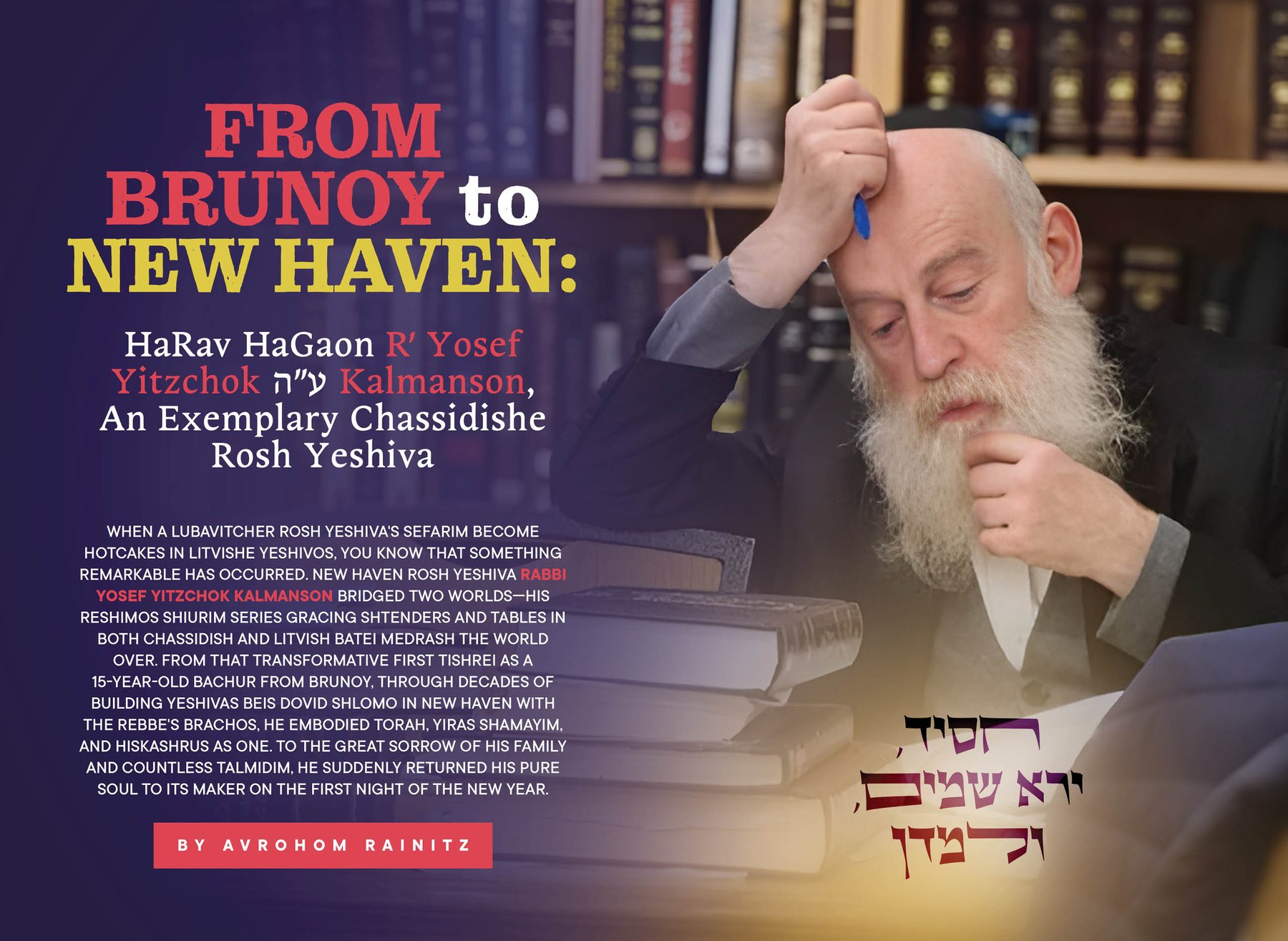
When a Lubavitcher rosh yeshiva’s sefarim become hotcakes in Litvishe yeshivos, you know that something remarkable has occurred. New Haven rosh yeshiva Rabbi Yosef Yitzchok Kalmanson bridged two worlds – his Reshimos Shiurim series gracing shtenders and tables in both Chassidish and Litvish batei medrash the world over. From that transformative first Tishrei as a 15-year-old bachur from Brunoy, through decades of building Yeshivas Beis Dovid Shlomo in New Haven with the Rebbe’s brachos, he embodied Torah, yiras Shamayim, and hiskashrus as one. To the great sorrow of his family and countless talmidim, he suddenly returned his pure soul to its Maker on the first night of the new year.
The clock showed nearly midnight on that autumn night in Brunoy. Rabbi Mendel Futerfas, the renowned mashpia who had stopped in France on his way to the Rebbe for the month of Tishrei, sat surrounded by dozens of young bachurim. He had just finished an emotional farbrengen, but instead of dispersing to their rooms, the bachurim remained riveted in place.
When Rabbi Mendel heard that many of the boys sitting before him had never been to the Rebbe, his expression changed completely. The cry that burst from him echoed through the walls of the yeshiva: “Boys aged 14-15 who have never been to the Rebbe?! You must travel immediately!” In Rabbi Mendel’s voice was a sense of urgency that could not be ignored. “It cannot be that you remain here and don’t see the Rebbe,” he insisted.
Yosef Yitzchok Kalmanson, a 15-year-old boy with sharp eyes and a shy smile, sat in the corner and felt something ignite within him. For years he had listened to recordings of farbrengens that arrived from New York to Brunoy, moved by every word of the Rebbe, but the thought of actually traveling seemed like a distant dream that could only materialize after he would be ready “in thought, speech, and deed,” as the mashpia Rabbi Nissan Nemanov demanded of them. Now, as Rabbi Mendel stood before him, demanding “to travel immediately,” he felt the words penetrate his very bones.
‘After all, I saved some money after my bar mitzva,’ he thought to himself, ‘maybe it really is possible?’ He decided to travel that very Tishrei.
A short time later, the dreams became reality. A group of boys from Brunoy packed their bags, traveled to London, and joined a charter flight of Chassidim to New York. As the plane took off, Yosef Yitzchok peered out the window at Europe receding in the distance, not knowing that this moment marked a turning point in his life.
Thus began the first journey of the boy from the Paris suburbs to the Rebbe – a journey that would set the pattern of his life for decades to come.
The fire that was kindled that Tishrei with the Rebbe continued to burn in the heart of Rabbi Yosef Yitzchok Kalmanson until his last day, when he returned his soul on the night of this past Rosh Hashana, at the age of seventy.
Following the aron of the Rosh Yeshiva of “Beis Dovid Shlomo” in New Haven walked numerous mourning talmidim, those who received Torah and lamdanus from him either through his in-depth shiurim or through his renowned Reshimos Shiurim series of sefarim.
A Greenhouse for Chassidishe Chinuch
Rabbi Kalmanson was born on 2 Adar 5715 in the town of Montmorency in the Paris suburbs, together with his twin brother – yibadel l’chaim tovim – Rabbi Yechiel Menachem Mendel (later Rosh Yeshiva of Brunoy), to his parents Rabbi Yekusiel Dov and Rebbetzin Bas Sheva Kalmanson. Because they were born small, the brissin were postponed. In response to the letter of announcement their father sent to the Rebbe, the Rebbe replied (23 Adar 5715): “It is correct to perform the bris when there is agreement of both the mohel and the doctor. May it be at a good and auspicious time.” Interestingly, the Rebbe sent the traditional letter before the upsherin twice – once on the 14th of Shevat, before their third birthday, and again on the 21st of Tammuz that year.
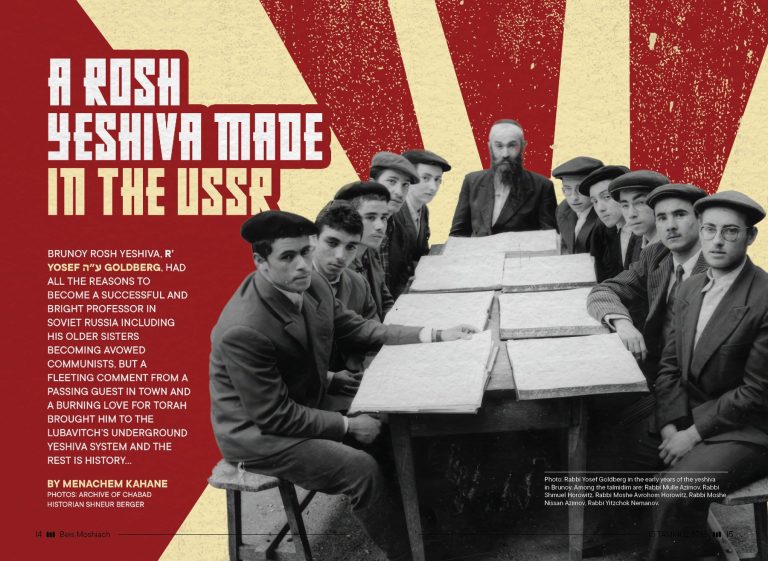
Already at a young age, the twin brothers began their education in Yeshivas Tomchei Tmimim in Brunoy under the watchful eye of the renowned mashpia Rabbi Nissan Nemanov and the Rosh Yeshiva Rabbi Yosef Goldberg. At that time, Brunoy was a “greenhouse” for Chassidishe chinuch in Europe. The class in which the Kalmanson brothers studied was considered special – as many of their classmates later became Roshei Yeshivos and mashpiim in Chabad worldwide.
The Elderly Chassid Awakened: “Has Moshiach Come?”
His connection to the Rebbe began at a young age, and as he himself related: “Even though we never saw the Rebbe, we were very connected to what was happening at 770. After every weekday farbrengen, we would receive a cassette that arrived about two weeks after the farbrengen. When we received the cassette, there was great excitement among all of us, and we all gathered to listen to the farbrengen.”
The cassettes arrived by mail from New York to Paris, and from there to Brunoy. The recording quality was not always perfect, to say the least, and the bachurim had to make great efforts to understand every word. “After we listened to the farbrengen, we would farbreng ourselves,” he related. “It was like a chain of hiskashrus – receiving it from 770, processing in Brunoy, and continuing forward.”
A particularly moving moment for him was at the famous farbrengen of Yud Shevat 5730. “This was the first time there was a phone line to Israel. At that time France didn’t have its own line, so we all gathered in the dormitories of the yeshiva on the second floor, called Israel and listened to the farbrengen through their line in the middle of the night in France.”
Rabbi Kalmanson remembered this broadcast as an especially moving experience. “We didn’t have a speaker, so one bachur listened through the receiver and repeated to everyone what the Rebbe said… After the farbrengen ended, we all began dancing from excitement.” The dancing awakened Rabbi Aharon Yosef Blinitzky z”l who was sleeping on the lower floor. “Suddenly he ran up the stairs, still putting on his clothes, and shouted: ‘Has Moshiach come?!’… As a Chassid who woke up in the middle of the night to the sound of dancing, he was certain Moshiach had come; otherwise what reason could there be?!”…
On Purim 5731, France finally received its own direct broadcast line. “All of Anash gathered in shul at three in the morning to hear the farbrengen,” Rabbi Kalmanson later related. “You can imagine the scene. Every time there was a farbrengen, we experienced it anew – until we merited to come to the Rebbe ourselves.”
“In the Room It Was Just Me and the Rebbe, and It Was a Feeling of Great Closeness”
In Tishrei 5731, when he was 15 years old, Rabbi Kalmanson merited to travel to the Rebbe for the first time. “Our mashpia, Reb Nissan Nemanov, preferred that boys travel only when they were older, so they would be more prepared and make proper preparations before traveling to the Rebbe. Therefore many of us had never been to the Rebbe even though we were 15.
“Reb Nissan made sure we made proper preparations. He told us that we must work on our thought, speech, and deed before traveling to the Rebbe. I especially remember that he instructed us to daven better, and to say Shema with greater concentration, and also to study maamarim as preparation for the trip.”
But as mentioned at the beginning of the article, the visit of the mashpia, Rabbi Mendel Futerfas changed the situation. That month of Tishrei was full of unforgettable spiritual and emotional experiences. “That entire month of Tishrei with the Rebbe was an amazing time. It was a completely new world for me, and the whole month passed like a dream. There were constantly new and moving things that the Rebbe did, and we wanted to be there to see him. The Rebbe came out for many tefillos, and there were many farbrengens. That year, Simchas Torah continued straight into Shabbos Bereishis. From Erev Yom Tov until four in the morning on motzoei Shabbos, it was one big chain of events.”
When he entered for his first yechidus, “A very strong feeling struck me, that the Rebbe is like a father. In the room, it was just me and the Rebbe, and it was a very close feeling.”
At that time, all the guests who came for Tishrei would enter yechidus twice during their visit: once at the beginning, shortly after they arrived, and a second time before they left. Generally, in the first yechidus the Chassid would ask the Rebbe all his questions, while the second yechidus was shorter, a sort of farewell.
One of the questions he raised before the Rebbe became a horaah that accompanied him his entire life: “I asked the Rebbe how to ensure I would keep good resolutions I make for myself, which sometimes fade with time. The Rebbe told me that in the future, when I make a resolution, I should discuss it with a friend, and this would help me keep it, because there would be someone else who knows about it. At the end of the yechidus, the Rebbe gave me brachos for learning, davening and yiras shomayim,” he related with longing even decades later.
Second Trip and Instructive Yechidus
“The next time I went to the Rebbe was for Yud-Alef Nissan 5732, the Rebbe’s 70th birthday. When we discovered that the Rebbe would farbreng, there was indescribable excitement in the air.”
That year another significant event occurred in his family – his sister married in New York, which posed a practical question for him. “I remained in New York for the following months until my sister’s wedding in the month of Tammuz. Since I planned to come for Tishrei anyway, I thought it would be logical to remain in New York for the relatively short time until Tishrei, instead of flying back and forth.”
“When I was in yechidus, this was one of the things I wrote to the Rebbe. But the Rebbe told me this was a decision the yeshiva administration needed to make.” This response reflected the Rebbe’s approach, that even when dealing with a personal question, he insisted on respecting educational authority. “I asked the hanhala, and they said I must return to yeshiva after the wedding. I did so, and then returned again for Tishrei.”
Years of Shlichus in Brunoy: When the Letters Began Arriving
After his years of study in yeshiva, Rabbi Kalmanson remained for two years as a shliach in Brunoy. This period was full of activity and further strengthened his connection with the Rebbe through regular correspondence. “Every few weeks we would send a detailed report to the Rebbe about all the activities we did.”
Initially they received responses only occasionally, but the turning point came when “in the summer of 5735, one of the shluchim, Rabbi Yosef Yitzchok Pevzner, showed the report they were about to send to Rabbi Gorodetzky, the Rebbe’s representative in Europe and Africa, who ran the ‘Lishka’ (the Rebbe’s office) in Paris. When he saw the report, he was very moved and offered to bring it personally to the Rebbe. From then on, every time we sent a report to the Rebbe, we received a letter response from the Rebbe.”
The change was dramatic. The group of shluchim who preceded them received only two letters during their entire shlichus, while they began receiving a letter after every report they sent.
In the Rebbe’s letters were precise and detailed instructions. “During our shlichus in Brunoy, a Shabbaton was held in Switzerland for Jewish students from all over Europe, and we were invited to speak and farbreng with them about Judaism. On one occasion, we repeated a sicha explaining that in the time of the Greeks before Chanuka, the spiritual state of the Jews was poor, because for Jews, the physical and spiritual are intertwined.
“A diplomat from the Israeli embassy in Paris was present at the Shabbaton. He approached us and asked, ‘We see that Jews can live wonderful physical lives even though they don’t observe Judaism, so it seems there’s no connection between the two.’
“We included his question in the next Kovetz He’aros under his name, and the kovetz was sent to the Rebbe. In the next letter we received, the Rebbe wrote regarding this question (paraphrased): ‘Surely the editors will arrange an answer based on what is explained in Iggeres HaTeshuva chapter 6 and Kuntres Umaayan page 16.’ Indeed, in those sources it says that there is a difference between the time of the Beis HaMikdash, when Jews received their chayus from holiness, and the time of galus, when the Shechina is in exile and Jews can receive their chayus from kelipa.”
Another interesting letter they received from the Rebbe came following a Purim 5736 activity they organized. “The shluchim in Brunoy then went out on Mivtza Purim which included visiting the Israeli consulate and security offices in France. They decided to include photos from the event in the report they sent. In the Rebbe’s response, he wrote at the beginning of the letter ‘Received the report’ and added in his hand an arrow to the words ‘and the photos,’ indicating he had received and seen the photos as well. This response made them very happy, as it showed that the Rebbe appreciated and wanted to see the documentation of the activities.”
The Rebbe’s letters to them were sometimes sent as a joint letter to the entire group of shluchim, and sometimes as a personal letter to each one (such as before Pesach, when each shliach received a separate letter with brachos for the upcoming Yom Tov). When they received a group letter, they would photocopy it for everyone and draw lots among themselves for who would keep the original – a testament to their love and appreciation for every letter from the Rebbe.
A Young Bachur as Rosh Yeshiva
Around Pesach 5737, Rabbi Nissan Nemanov began speaking with the yeshiva administration at 770 about bringing a Rosh Yeshiva to the yeshiva in Brunoy, and they sent his brother, Rabbi Yechiel Kalmanson.
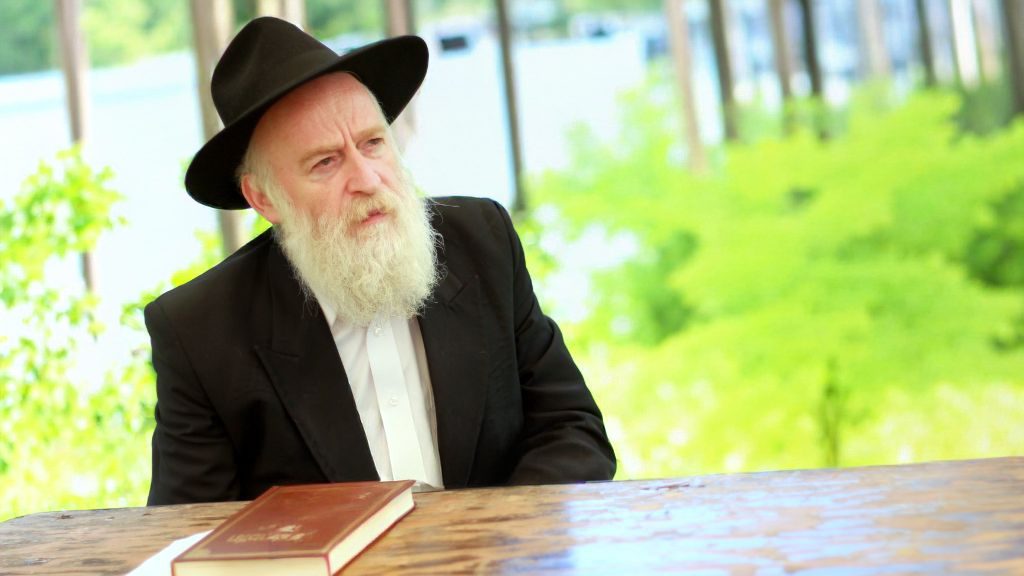
“Toward the end of that year, Rabbi Dovid Raskin and the 770 administration called me and told me they were sending a group of bachurim to the yeshiva in New Haven, and based on what they saw from my brother in Brunoy, they felt I would be suitable for the position of Rosh Yeshiva there,” Rabbi Yosef Yitzchok Kalmanson later related. This offer was significant – to establish a new yeshiva in Connecticut based on the successful model of Brunoy.
“I wrote to the Rebbe, and the Rebbe gave his bracha. And so at the beginning of 5738 I traveled to New Haven, where I have been throughout the years.”
Leaving Brunoy was not simple – as this was the place where he grew up and was educated from his earliest youth until his mature years, but the call to shlichus was clear.
Despite their departure being shortly after the Rebbe’s heart attack on Shemini Atzeres 5738, the group of bachurim-shluchim to New Haven merited to enter and daven in a small minyan held with the Rebbe, as a sign of special encouragement and bracha from the Rebbe.
The establishment of the yeshiva succeeded beyond expectations. “Before we traveled to New Haven, the Rebbe showered us with many brachos. One of the things the Rebbe said when the yeshiva was established was that we should always say ‘tzar li hamakom’ – the space is too cramped for me – that there would always be a need to expand the yeshiva.”
Indeed, the bracha was fulfilled in full: “After the first year we expanded the Beis Medrash, and the year after we added another room. After a short time we began renting a nearby shul and eventually purchased the building. Since then we’ve purchased an entire campus. We truly see how the Rebbe’s brachos were fulfilled.”
Decades of Torah Dissemination
Over the years, Rabbi Kalmanson recorded his thoughts and chiddushim but didn’t publish them. The change came in 5748, when the Rebbe spoke about the importance of printing sefarim and documenting personal Torah insights. “I wrote to the Rebbe and asked if I should print my chiddushim, and the Rebbe gave his blessing.”
The first sefer received a brief response from the Rebbe: “When the sefer was printed, I submitted it to the secretariat and received a response from the Rebbe: ‘Azkir al ha’tziyun.’
“Some time later, I received a letter from a Litvishe bachur who wrote to me that the bachurim in his yeshiva were enjoying the sefer, and that it caused a great ‘kiddush Lubavitch’ in his yeshiva.” This was a moving moment for Rabbi Kalmanson – that his Torah insights were bridging Torah worlds and being mekadesh Chabad’s name outside as well.
But the second sefer brought an especially moving response. “When my next sefer was printed, I sent the Rebbe a copy of the book and included that letter from the Litvishe bachur. This time, I received a relatively long response from the Rebbe – with two lines of brachos and wishes for success in disseminating Torah. The nachas ruach the Rebbe had from the ‘kiddush Lubavitch’ caused by printing the sefer was obvious”…
The Reshimos Shiurim series continued to develop and became renowned in the yeshiva world. The sefarim included chiddushim and biurim on various mesechtos – Shabbos, Gittin and Kiddushin, Bava Basra and more. They received enthusiastic approbations from prominent Roshei Yeshivos from all circles, and were studied in both Litvish and Chassidish yeshivos.
Over the years, Rabbi Kalmanson developed a unique learning methodology characterized by several guiding principles: thorough clarification of the approaches of the Rishonim, clear organization of the sugya, and emphasis on a ‘clean’ and orderly mehalech – an approach that resonated in both Litvish and Chassidish yeshivos. Talmidim remembered his shiurim as a rare combination of Torah depth and clarity of explanation.
Beyond the formal aspects of learning, Rabbi Kalmanson was careful to instill in his talmidim the values of hiskashrus to the Rebbe. He often told them about his personal experiences with the Rebbe, about his directives, and about how one must see every educational activity as a continuation of the Rebbe’s shlichus. For example, after the Rebbe’s blessing about expanding the yeshiva, he would say that the mosad would never “finish growing” – and one must always aspire to another class, to dedicate another Beis Medrash, as the Rebbe instructed.
Many alumni of the yeshiva testified that throughout his years of leadership he never rested on his laurels, but consistently worked to develop and expand the yeshiva, seeing it as fulfillment of a direct command from the Rebbe. This wasn’t just a dream or aspiration, but a practical action plan based on direct instruction from the Rebbe.
A Daily Mivtza Teffilin Route
“We know that true hiskashrus to the Rebbe is through learning Torah,” Rabbi Kalmanson said when asked about his message to the thousands of bachurim of our generation who didn’t merit to see the Rebbe. “We see how the bachurim who engage in learning the Rebbe’s Torah – the sichos, the maamarim; they are the ones who go out on mivtzaim and dedicate themselves with all their heart and soul to the Rebbe’s inyanim.”
Rabbi Kalmanson was just that. A Rosh Yeshiva who swam the sea of Talmud comfortably, but could often be seen conducting a true warm Chassidishe davening and he had a daily Mivzta Tefillin route where he would meet fellow Yidden and encourage them to grow in their observance of Yiddishkeit. All this was without fanfare and with true Chassidishe bittul!
As mentioned, on the night of Rosh Hashana 5786 he did not feel well. Hatzalah was called, but to the great sorrow of his family and many students, he suddenly returned his pure soul to its Maker on the first night of the new year.
Rabbi Kalmanson is survived by his wife, Hindy; his children, Mrs. Chani Altein shlucha in Pittsburgh, PA, Mrs. Nechama Dina Hendel, a shlucha at ‘Beis Levi’ for English speakers in the Baka neighborhood in Jerusalem; his son Rabbi Mendel Kalmanson – London. His daughter Mrs. Menucha Schochet, a shlucha in chinuch in Los Angeles; his son Rabbi Yekusiel Kalmanson, Los Angeles; his son Rabbi Moshe Kalmanson – a shliach in Texas.
He is also survived by his siblings: Rabbi Yechiel Menachem Mendel Kalmanson (Brunoy, France), Rabbi Yisroel Shimon Kalmanson (Crown Heights), Mrs. Doba Raiza Vorst (Amsterdam, Netherlands), Mrs. Chaya Uminer (Crown Heights), Mrs. Baila Goldstein (Crown Heights), and Mrs. Shterna Shpritzer (Crown Heights).
In the summer of 5735, while on shlichus in France, Rabbi Kalmanson and his fellow shluchim arranged the purchase of a Mitzva Tank to be dedicated as a gift for the Rebbe. They asked the Rebbe whether they could do so and the Rebbe told them to submit the key as a symbol of the gift at the Yud-Beis Tammuz farbrengen that year.
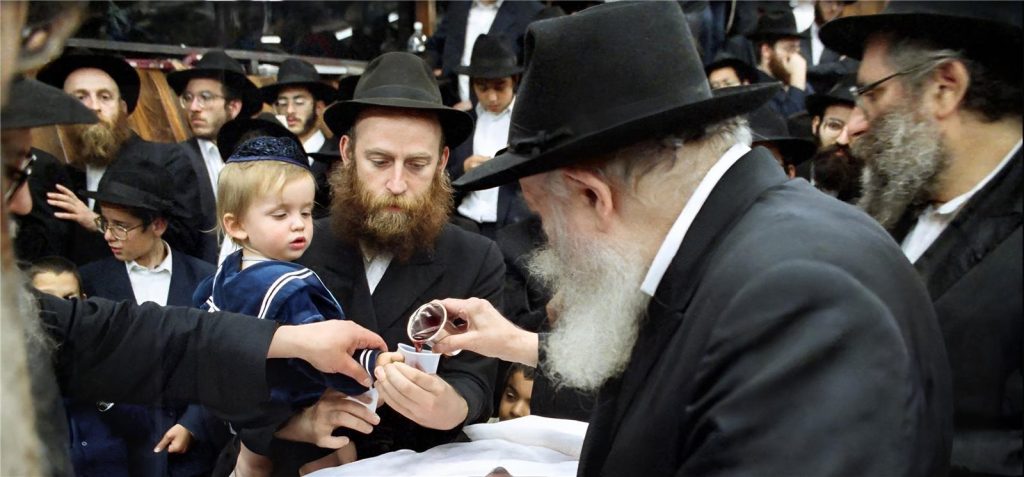
At the farbrengen, after one of the sichos, some people went up to give the Rebbe symbolic gifts and Rabbi Kalmanson gave the tank key to the Rebbe. The Rebbe accepted it with a big smile and gave him warm brachos for the success of his shlichus.
Beis Moshiach #1481 • pp. 10-18
© 2026 Beis Moshiach Magazine. All rights reserved.
This article originally appeared in Beis Moshiach #1481. You are welcome to share it with friends and family by email or in print, provided that you do not change, add to or omit any part of it, you credit the author and Beis Moshiach, and you include a link to archive.bmoshiach.org (written out in full in printed copies).
To republish this article in a newspaper, magazine, book or website, please request permission in advance at [email protected].