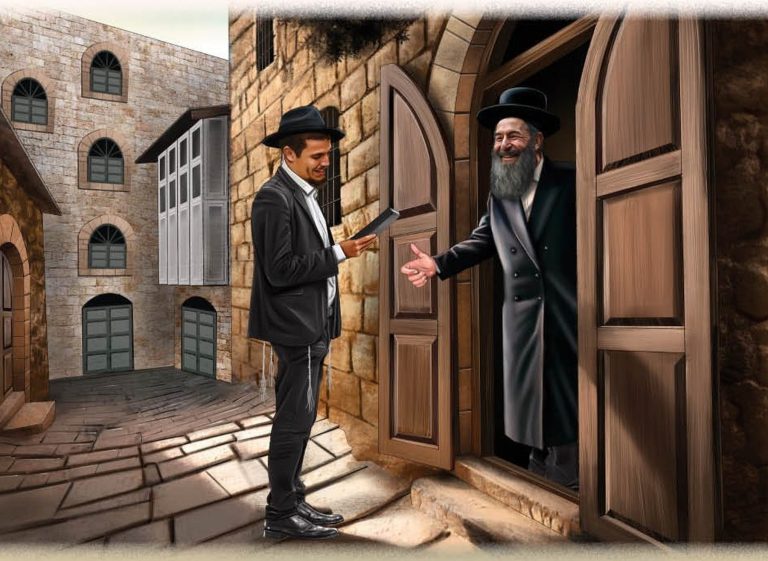
Saved by Shabbos
From the TzaddikStory.org collection
Previously: Nissim moves to South Carolina and meets the shliach, Rabbi Doron. He writes a letter to the Rebbe asking for help keeping Shabbos. Amazingly, the Rebbe answers the very next day, a Friday, expecting him to start keeping Shabbos that very afternoon!
Finally! Finally! He could keep Shabbos, like every other Jew. The Rebbe gave him the strength – and the courage – to do what his neshama had been begging him to do. How many tears had he cried, how many delivery drives and sales had he made on Shabbos, just wishing he could be in shul or resting at home instead?
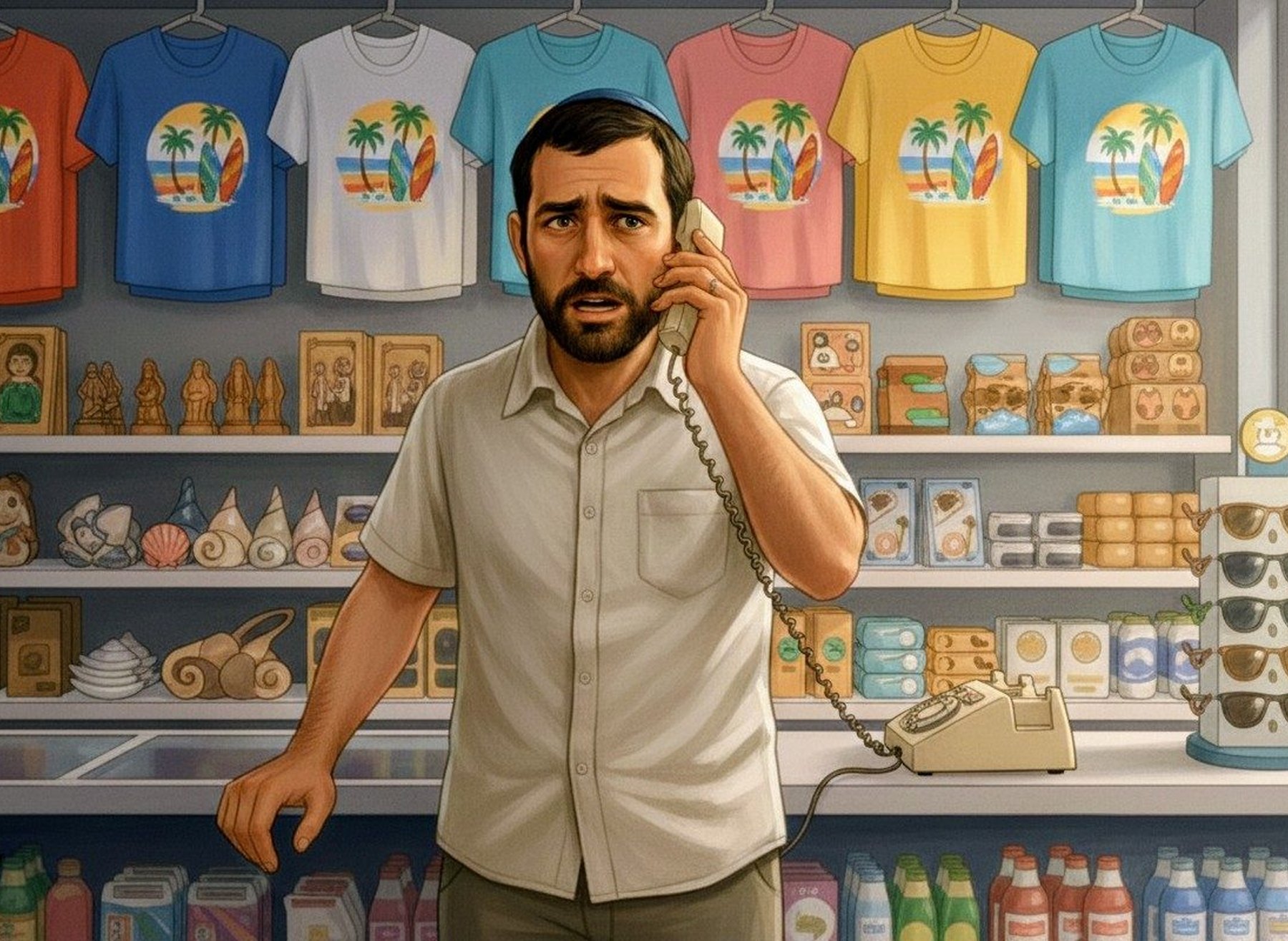
And now, finally, he did it… Wait, but now what? Who will work instead of him? He called his boss – no answer. Called again – no answer. He called one more time.
“What’s the problem, Nissim?” asked his boss’ secretary.
“I’m not able to work on Saturdays anymore. Can someone take over for me…? I know you won’t just shut down the shop. You always have the most customers on weekends.”
“Do you mean this week, or every week?” she asked.
Will I be fired…?
“Forever,” said Nissim. “If I lose my job, then I lose it.”
She put him on hold. Nissim tapped his foot nervously. He felt chills. Was this the best day of his life, or the worst…?
Finally, she came back. “The boss says someone else will take over. Give him the keys, and take two weeks’ vacation. When you get back, we’ll have a talk.”
Nissim was stunned. “…Just like that?”
“Yes. That’s what the boss said.”
Nissim hung up. He understood the boss’s message as a way to politely say, It was nice knowing you. We won’t be seeing you again.
How would he make money to support his family in this small town?
That didn’t bother Nissim for longer than a minute. He’d put all his trust and confidence in Hashem and what the Rebbe had said. Whatever happened would happen. The Rebbe is watching over me, he thought, over and over.
Half an hour later, a different worker came to the store.
“I heard you won’t be coming in…?” the new person asked.
“Yes, I’m keeping Shabbos,” Nissim said, zipping up his jacket and picking up his car keys.
“Hmph,” said the new worker.
Nissim gave him the keys, so he could open the store tomorrow, and drove home. He hadn’t done any preparations for Shabbos. He went to the supermarket and bought wine and some kosher meat. He had to start somewhere.
When he got home, he called out the news. His wife was shocked. She saw Nissim’s smile, the bags of kosher food… She hadn’t been ready for this.
“What are we going to do about work? What will happen to us?”
“We just have to have faith,” Nissim told her.
He wasn’t nervous. He didn’t care what would happen after his vacation, whether he went back or not. He put all his trust in Hashem. Everything would be okay.
One week later, Nissim was preparing for Shabbos at home. He was mixing a few spices for the meat. The soup was bubbling on the stove. Suddenly, the phone rang again.
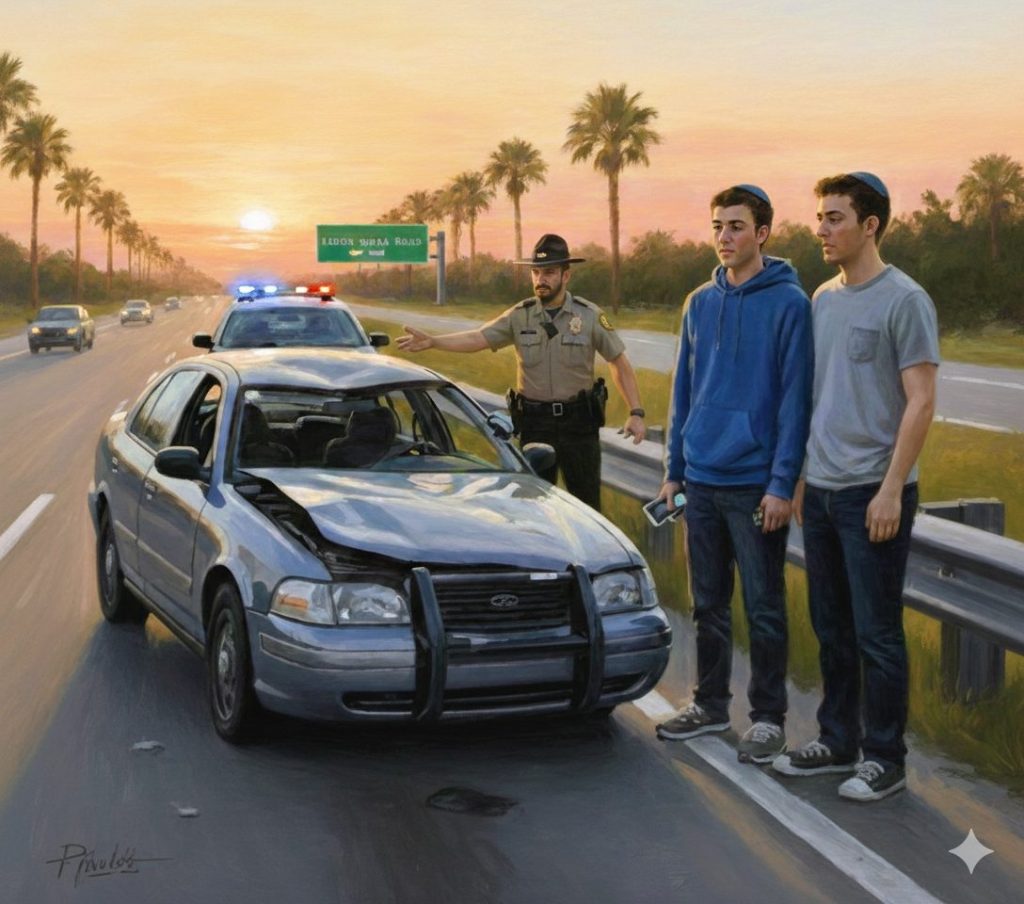
It was the highway patrol. “Mr. Mizrachi, your son has been in a car accident.”
Nissim’s heart stopped. “Where?”
“North Myrtle Beach.” Nissim couldn’t believe it: when the officer gave him the location, he realized it was right next to the beachwear store he once worked at.
He rushed to the scene. The car was wrecked, crushed like a soda can. It looked impossible that anyone could have survived.
But, miraculously, Nissim’s son and his friend climbed out without a scratch. They didn’t even have to go to the hospital. It was an absolute miracle no one could explain.
Nissim whispered, “Baruch Hashem. Thank You, Hashem.”
They then called the tow truck to take the car to the garage, and Nissim drove his son and his friend home to rest.
He didn’t panic or yell at his son. If this is what had to be, it had to be. It seemed so clearly out of his control.
From that week on, Nissim kept Shabbos fully. No more working. No more delivering bread or working at the cash register, selling t-shirts to tourists on Saturdays. Nissim moved closer to the Beit Knesset, and his whole family supported him in keeping Shabbos.
Every Shabbos evening and morning, Nissim walked proudly down Oak Street, wearing his best clothes and cowboy boots. Sometimes he walked past people in Jeeps with surfboards on top, headed to the beach. Sometimes he passed by workers going to their shops. Many times, it was hot and sweaty – but he marched on. He was going to daven the Shabbos teffilos and hear the Torah read. He was there from the first Kaddish to the last.
After the tefilla, every single Shabbos, Nissim sat down with the community for a kiddush with a steaming homemade chamin (chulent) and many side dishes, drinks, and desserts. A crowd, sometimes large, sometimes small, ate, sang, and shared words of Torah. Almost every week, Nissim got up and shared what the Parsha means to him in his life, while everyone listened quietly. He learned many new things from the Divrei Torah shared by the rabbis and occasional guests. Nissim felt at home.
Nissim always thought about the Rebbe, and also remembered his father and his grandfather, who kept Shabbos in their Jewish community in Egypt. Sometimes, his wife Simone and their sons joined them in shul. Simone smiled at all the women and listened carefully. Everyone knew the Mizrachis.
All week, Nissim worked hard at whatever he could do for money, waiting to hear if he still had a job at the beach shop. But on the seventh day, he cleared his mind and didn’t even think about work. Shabbos became the shining light of their week. Shabbos had finally come home.
After two months were up, his old bosses called him from their headquarters in New York – “Come to the office, we want to talk to you.”
“I’ll be right there.”
“Okay, Nissim, we’ve thought about your choice.”
Will I be jobless? Nissim wondered.
“We’ll allow you to have Fridays and Saturdays off, but you’ll need to work somewhere else. You can’t run the cash register at the store – they’re too busy on weekends. You’ll pack boxes in the warehouse instead. You won’t have to work on Shabbos or Yom Tov.”
Nissim tells the rest in his words:
I felt like jumping for joy. This gave me a sign that my confidence in Hashem was right. I didn’t expect things to go that easily, but things all rolled along in the right way. I went back to work, this time in the warehouse. Away from the weekly pressures, and yet I had the same boss and pay.
As I worked, unpacking boxes of t-shirts, candles, and seashell keychains, I thought, “What did rachmana litzlan mean…? Why did the Rebbe repeat that two times? Why did the Rebbe draw a line under the words?”
I finally understood. One rachmana litzlan (which means May Hashem save) was for my son, and the other for his friend, both of whom survived the terrible car wreck. I understood this completely. The Rebbe could see what was going to happen, and so the Rebbe wrote it twice. Both those young men were saved, in the merit of Shabbos – which I’d been told to start keeping immediately.
I have plenty of time to think in my quiet warehouse job. I feel like everything comes from above. And sometimes I wonder, “Maybe that’s why I moved from California to South Carolina… to be closer to the Rebbe.”
* * *
Years later, Nissim traveled to New York with Rabbi Doron to see the Rebbe in 770. He stood in line with many others, waiting to see the Rebbe in person. He whispered some words of Tehillim, while Rabbi Doron sent him reassuring looks.
When his turn came, Rabbi Doron introduced him. “This is Nissim Mizrachi. He followed the Rebbe’s instructions and began keeping Shabbos.”
The Rebbe looked at him with kind, piercing eyes. He gave Nissim a blessing, bracha v’hatzlacha, and a dollar. Nissim felt like everything else melted away, like he couldn’t even remember his own name. His heart felt like it would burst. This was the Rebbe, who had once appeared in front of his eyes, just in time to send a message that saved his son’s life. Nissim felt that the Rebbe saw him and knew him.
Hundreds of thousands of people came by the Rebbe all the time, and they all felt that the Rebbe knew them.
Nissim treasured this moment, for he felt rewarded for doing his best, and for having emuna. He could see he was doing the right thing. He felt strong in his Yiddishkeit.
* * *
Now, over thirty years later, Nissim still tells this story. And every time, his eyes shine as he says:
I can still remember the feeling from that dream. I saw the Rebbe’s face so clearly – he was looking right at me and speaking to me, and I heard his voice. It lasted only two seconds, and then he disappeared. That’s what made me jump out of bed, patting my chest and my head, looking around, asking myself: What is this? Who was that? Where am I? It felt real – maybe I truly saw him. That was my encounter with the Rebbe. That’s how Hashem helped me keep Shabbos. And that is how Shabbos became the heart of our home.
I put all my trust in Hashem and the Rebbe.
The Rebbe said the Geula is coming. I hope to see the Geula very soon, when no one has to work on Shabbos. It will be a time when all the Jewish people can sit around a feast and sing and share words of Torah, as long as they like.
* * *
Here is one more story Nissim wanted to share, from after Gimmel Tammuz, when we’re no longer able to see the Rebbe physically.
One Shabbos, while he was shul, they were getting ready to read the Torah.
Rabbi Doron Aizenman called up the Kohen for the first Aliya. Nissim sat comfortably at a table for six people, covered with a white paper table cloth. The Chumashim were being passed around, and he took one.
As he heard Rabbi Yossi Naparstek read the first pesukim in the pleasant tune of the parsha, Nissim opened his Chumash to find the rabbi’s spot.
Something then fell out of the Chumash. What was it…?
A small card with a picture of the Rebbe.
Whose was it?
Nissim placed it aside and followed along with the pesukim inside the Chumash.
After the kriah and mussaf were over, he asked his friends, “Is this yours? Do you know whose it is?”
No one knew. There must be a reason Hashem wanted him to have this picture of the Rebbe. Nissim always put his complete trust in Hashem.
After Maariv that night, he slipped the little card into his tefillin bag and went home. His wife and son were in the kitchen, waiting for Nissim to begin havdala.
When he took the besamim spices and the candle, he suddenly felt he should also bring the picture of the Rebbe. He placed it nearby, so as he said the words ‘hamavdil bein kodesh l’chol’ and saw the candlelight shining on his family’s faces, he looked at the Rebbe’s face too.
Weeks passed. He felt the Rebbe needed him to keep his picture nearby during havdala. Nissim said the brachos and smelled the besamim and saw the Rebbe’s holy face. It just felt right.
Another week passed, and Nissim got a call from the department of motor vehicles.
“Mr. Mizrachi, please come to our office. We’re replacing all license plates with the new South Carolina plates, and you have to trade yours in. Come in on Tuesday at 10 A.M. for your new one.”
He left work on that sunny day to get his new license plate. He didn’t think about it much. He left the envelope, which was wrapped in plastic, on the kitchen counter with all the old mail and keys.
A few days passed. Nissim knew he had to take care of one last thing: He had to send his old one to the office, or else it would be late. So, that evening, he asked his son, Joel, to bring him a screwdriver, and they went outside.
He unscrewed the old license plate off his little green Toyota. He ripped open the envelope and the plastic covering the new plate and placed it face down on the driveway.
When Nissim finally got all the screws out, his car was ready for the new plate. He turned it over, and his mouth dropped open. The plate said a few letters, and then the number 7-7-0. Why?!
When he had a quiet moment to himself, he realized that the Rebbe must have sent it for him. Maybe it was like a thank you, since Nissim always had the Rebbe in mind when he made havdala. He did it for him…
When Nissim drove up to the Chabad house for Mincha-Maariv that night, Rabbi Doron parked right behind him. He came up the stairs and said, “Whose plate is that? Whose car says 770 on it?”
Nissim didn’t want to draw attention to himself, so he didn’t say anything – but his friends all said, “It’s Nissim’s.”
The funny thing is, a few years later, Nissim got another message from the department of motor vehicles. They said all the drivers had to come in again and trade in their plates. The state wanted to add another letter to each license plate, so there would be four instead of just three.
“Okay,” Nissim said, “Can I keep the 770 part?”
“You want a personalized plate? That’s fine. It’ll cost $100.”
“No problem. I’m happy to pay.”
“Okay, Mr. Mizrachi – which letters would you like to choose?”
“Letters…?”
“Yes – you can pick four.”
“Hmmm…”
The first thing that came to his mind was – “M-N-D-L.” Mendel.
And that was that. Nissim held on to his special license plate for years, even after getting a new car. Wherever he goes, he thinks of the Rebbe.
When he drives down the streets of beachwear shops and palm trees, he thinks of the Rebbe. He is our neshama’s shepherd, and Nissim knows he’s thinking of him. He turns up the music and hums along, as he thinks about what the Rebbe said about “Shnat Geula” – a year of redemption. And as he drives, he wonders… maybe this year will be the year!
Beis Moshiach #1488 • pp. 55-59
© 2026 Beis Moshiach Magazine. All rights reserved.
This article originally appeared in Beis Moshiach #1488. You are welcome to share it with friends and family by email or in print, provided that you do not change, add to or omit any part of it, you credit the author and Beis Moshiach, and you include a link to archive.bmoshiach.org (written out in full in printed copies).
To republish this article in a newspaper, magazine, book or website, please request permission in advance at [email protected].