Be More Jewish
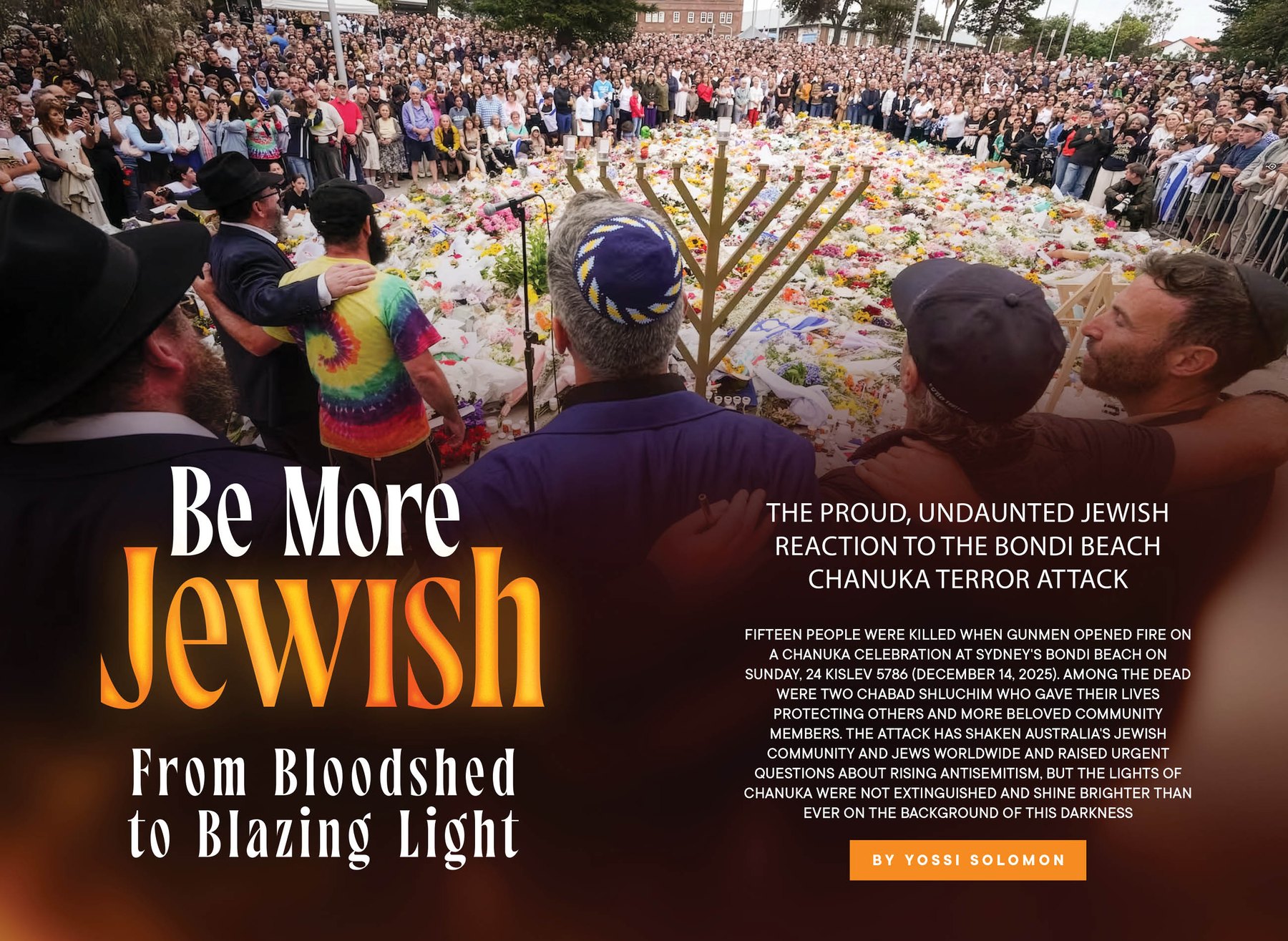
The Jewish world is reeling from shock and grief. On Sunday, the 24th of Kislev 5786 (December 14, 2025) – hours before the first night of Chanuka – what should have been a joyous public celebration became the scene of Australia’s deadliest mass shooting in nearly three decades.
At least 15 people were killed and more than 40 injured when two Arab gunmen, self-affiliated with the notorious terrorist organization ISIS, opened fire on the annual “Chanuka by the Sea” event at Bondi Beach in Sydney. Among the casualties were Rabbi Eli Schlanger, 41, who organized the event for Chabad of Bondi, and Rabbi Yaakov Levitan, 39, who served as the organization’s general manager. Also killed was Reuven Morrison, 62, a businessman and leading supporter of the Chabad House who heroically threw objects at the gunmen to help others escape.
The Attack
It was 5:30 p.m. when more than a thousand people – families with young children, elderly Holocaust survivors, tourists, and locals – gathered on the plaza near Bondi Beach. The Australian summer was at its peak. Children played in a petting zoo, volunteers distributed thousands of fresh sufganiyot, and Chassidic music filled the air. On stage stood a large menorah, ready for lighting the first candle of Chanuka.
Rabbi Eli Schlanger moved through the crowd with his characteristic smile, greeting families and ensuring everyone felt welcome. This annual event had become his passion project – a chance to bring Jewish pride and joy to one of Sydney’s most iconic locations.
At approximately 6:45 p.m., just as the ceremony was about to begin, the shooting started.
Two gunmen – later identified as 50-year-old Sajid Akram and his 24-year-old son Naveed yemach shemam – had positioned themselves on a pedestrian footbridge overlooking the plaza. Armed with automatic weapons, they opened fire on the crowd below. The elevated position gave them a clear line of sight and made escape difficult for those trapped in the open plaza.
Photographer Amir Glazer, who was at the event, recalled: “I heard the noise and saw a glass bottle shatter next to me. I immediately understood it was a bullet.”
For approximately ten minutes, the gunmen fired relentlessly into the crowd.
Heroes Amid the Horror
As chaos erupted, witnesses reported seeing extraordinary acts of courage.
Rabbi Schlanger, rather than seeking cover, remained exposed, directing parents and children toward safety. According to his uncle, Rabbi Yaakov Lider, who spoke with Beis Moshiach, “I’m certain Rabbi Eli tried to protect and guard as many as he could. I’ve known him personally for many years, and Rabbi Eli always put others before his own wellbeing.” Eyewitnesses reported he was shot in the back while shielding a group of children.
Reuven Morrison, a 62-year-old businessman and devoted member of the Chabad community, fought back with whatever he could find. Security footage shows him hurling bricks and heavy objects at the gunmen in a desperate attempt to distract them. His daughter Shayna later told reporters, “He fell while fighting.” Those precious seconds he bought allowed many others to escape.
Boris and Sofia Gurman, a Russian-Jewish couple in their late 60s, were captured on dashcam video attempting to disarm one of the gunmen. Both were killed in the attempt.
Alex Kleytman, an 87-year-old Holocaust survivor, died shielding his wife Larisa from the gunfire. “He was shot because he stood up to protect me,” she told reporters. Kleytman had survived World War II by fleeing to Siberia as a child. He immigrated to Australia seeking peace and safety.
Among the most remarkable acts of bravery came from 43-year-old Ahmad al-Ahmad, a Muslim bystander who rushed one of the gunmen and wrestled him to the ground with his bare hands. He was shot twice during the struggle but succeeded in disarming the attacker.
Police arrived on scene minutes later and engaged in a shootout with the suspects. Sajid Akram was killed by police at the scene. His son Naveed was critically wounded and arrested.
When the shooting stopped, 15 people lay dead. Among them was 10-year-old Matilda Britvan, the youngest victim. At least 42 others were wounded, with several remaining in critical condition days later.
A Rabbi Who Lived for Others
Rabbi Eli Schlanger had served the Bondi community for 18 years, since marrying Chaya Ulman, daughter of Rabbi Yehoram and Shternie Ulman, who founded F.R.E.E. and Chabad of Bondi decades ago.
Born in London and educated in Chabad yeshivos in France and New York, Rabbi Schlanger brought a unique combination of deep scholarship and practical outreach to his work. He was known for his approach to Jewish pride, captured in his personal motto: “Be more Jewish, act more Jewish, and appear more Jewish.”
“His smile and his intense desire to bring every person closer to the Rebbe were inseparable from who he was,” said his uncle, Rabbi Lider.
Rabbi Schlanger served not only his congregation but the broader community as chaplain for New South Wales Corrective Services and S. Vincent Hospital, traveling across the state at his own expense to visit Jewish prisoners and patients.
His crowning achievement was the completion of a magnificent new community center for Chabad of Bondi, a project that had been stalled for years by bureaucratic and financial obstacles. Through persistent, quiet determination, he saw it through to completion just 18 months before his death.
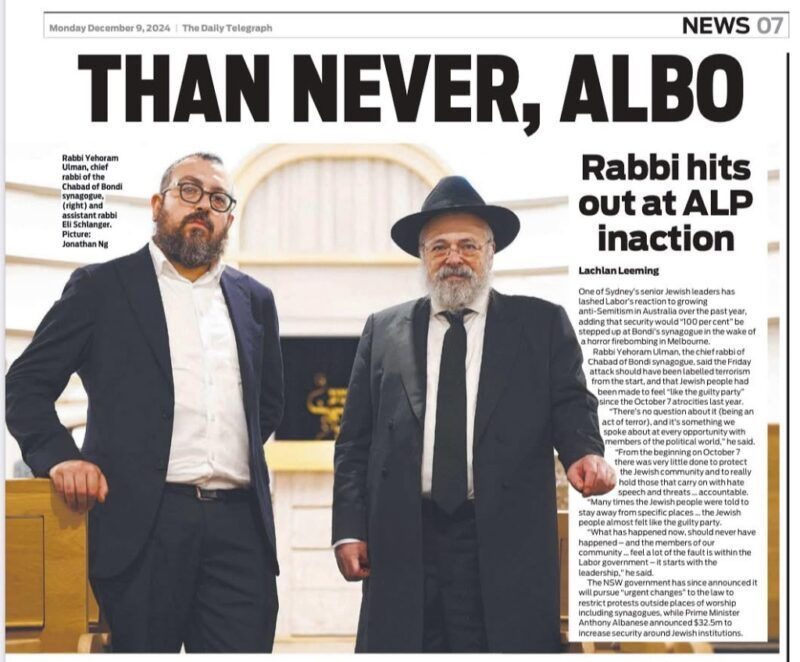
Just weeks before the attack, Rabbi Schlanger had written an open letter to Australian Prime Minister Anthony Albanese, warning that rising antisemitic rhetoric was creating a dangerous environment for Australian Jews. “The one-sided recognition [of Palestinian statehood] and rhetoric against Israel are removing the restraints,” he wrote. “You must act forcefully against terror and remove legitimacy from those spreading hatred.”
Last Chanuka, amid rising antisemitism in Australia, Rabbi Schlanger posted a video of himself dancing through the streets with a menorah on his car roof. “In the face of darkness,” he explained, “the answer was and remains: to be more Jewish, do more Judaism, and appear more Jewish.”
He leaves behind his wife and five children, the youngest a boy of two months old.
The Quiet Pillar
Rabbi Yaakov Levitan, 39, was born in South Africa and had served as general manager of Chabad of Bondi and secretary of the Sydney Beis Din.
While Rabbi Schlanger was the public face of the organization, Rabbi Levitan was the operational force that made everything work. Friends described him as devoted entirely to his shlichus.
Rabbi Levitan had run the “Tefillin Connection” project, distributing tefillin to Jewish men who committed to wearing them daily. He didn’t just hand them out – he followed up personally with each recipient, calling to encourage them and celebrate their commitment.
According to witnesses, when the shooting began, Rabbi Levitan was moving through the crowd with a pair of tefillin, looking for one more person who might want to put them on before shkiah.
He leaves behind his wife and four children.
Rising Antisemitism
The Bondi Beach attack did not occur in a vacuum. Australia has experienced a dramatic surge in antisemitic incidents since Simchas Torah 5784 (October 7, 2023), when Hamas attacked Israel.
According to the Executive Council of Australian Jewry, there were 1,654 anti-Jewish incidents across Australia between October 5785 and September 5786 – early five times the average annual number before the Israel-Hamas war began. These included arson attacks and defilement of shuls, schools, and Jewish businesses.
In August 5784 (2024), Australia’s Security Intelligence Organization raised the national terrorism threat level from “possible” to “probable,” citing community tensions related to the Gaza war.
Last summer, Prime Minister Albanese announced that Australia would officially recognize a fictitious “State of Palestine.” Israeli Prime Minister Benjamin Netanyahu warned at the time that the move would “pour oil on the fire of antisemitism.”
Australian authorities have now confirmed that the Bondi Beach attack was terrorism motivated by Islamic State ideology. Two homemade Islamic State flags were found in the younger suspect’s vehicle, along with improvised explosive devices that failed to detonate.
“They’re Asking Us to Continue”
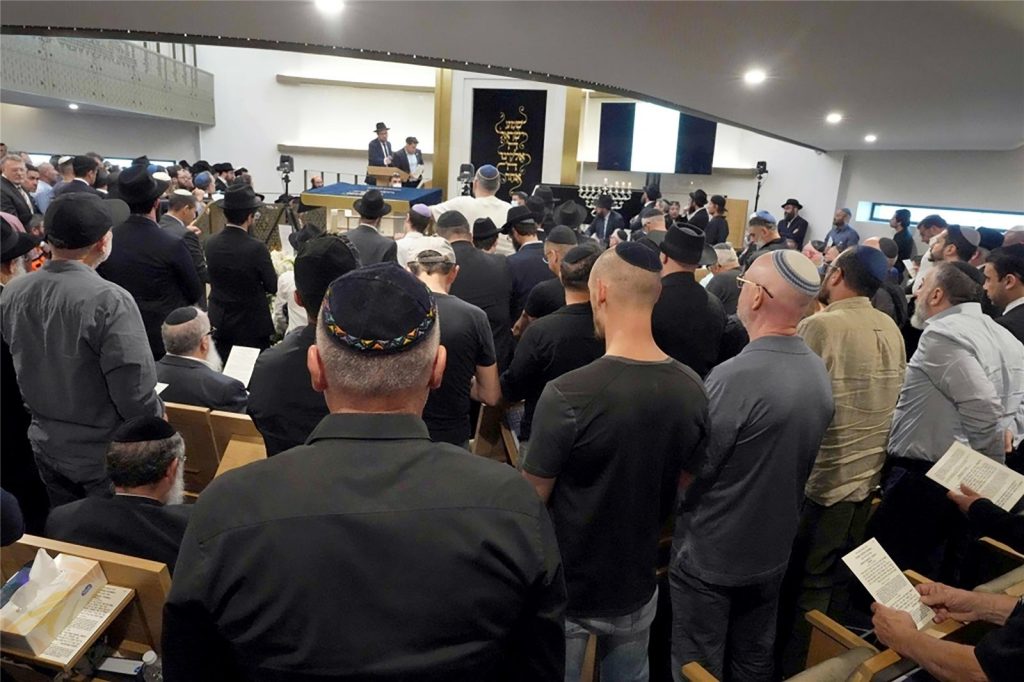
The day after the massacre, Shacharis was held at Chabad of Bondi’s shul. Rabbi Schlanger’s father-in-law, Rabbi Yehoram Ulman, addressed the grief-stricken community with words of emunah and determination.
“They were killed al kiddush Hashem,” he said, his voice choked with tears, “and now they’re asking us to continue and ensure that everything they worked for will continue to strengthen and grow stronger. We must not allow the terrorists to cause us to despair.”
The practical response came swiftly. The next evening, thousands gathered near the attack site for a mass menorah lighting under heavy security, holding signs with Rabbi Schlanger’s picture and his motto: “Be More Jewish.”
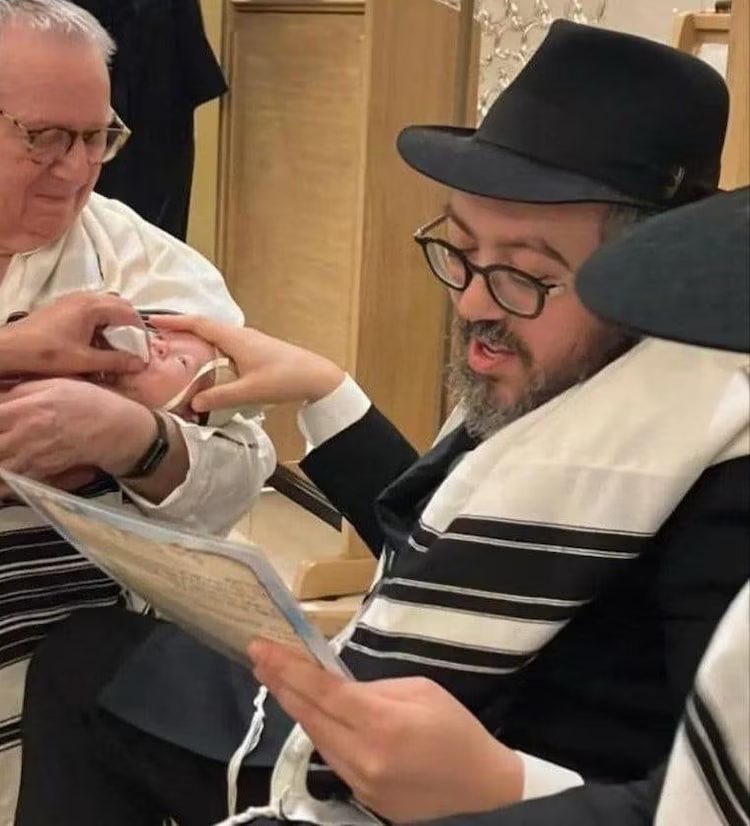
A Russian-born Jew named Yuri, 56, underwent a bris mila and chose the Hebrew name “Eliezer Feivel” in honor of the slain rabbi.
Around the world, Jewish communities held memorial services. In Crown Heights, Brooklyn – the global headquarters of Chabad-Lubavitch – thousands gathered to mourn and commit to intensifying their outreach work.
Eighth Night: Defiance and Light
On Sunday evening, Zos Chanuka – the eighth and final night of Chanuka – an estimated 20,0000 returned to Bondi Beach for a massive public menorah lighting. Despite the trauma of the previous week, the Jewish community came together in an extraordinary display of resilience and defiance.
Under heavy police presence and with security barriers in place, families, survivors of the attack, and community members from across Sydney gathered at the very spot where blood had been spilled just seven days earlier. The crowd was estimated to be even larger than the first night’s gathering.
Rabbi Ulman, despite his grief, led the lighting ceremony. “A week ago, they tried to extinguish our light,” he told the assembled crowd, his voice strong. “Tonight, we show them that Jewish light cannot be extinguished. We are here. We will always be here. And we will continue to shine brighter.”
After an emotional Shema by the thousands of participants, the menorah was kindled in memory of the 15 kedoshim, with each candle dedicated to one of the victims. As the flames were lit, the crowd sang “Haneiros Halalu” with particular intensity, many weeping openly.
Survivors of the attack participated in the ceremony. Several spoke briefly, sharing messages of strength and continuity. “They wanted to destroy us through fear,” said one survivor. “Instead, they’ve made us stronger and more committed to our heritage.”
State and federal officials attended, including Prime Minister Albanese and New South Wales Premier Chris Minns, who pledged increased security for Jewish institutions. “The resilience and courage shown by this community is an inspiration to all Australians,” he said. The Premier called on people to add in mitzvos and increase light in the face of darkness.
The event concluded with dancing and singing that continued for over an hour. Despite the pain, despite the loss, the message was clear: the Jewish community of Sydney would not be intimidated, would not hide, and would continue to celebrate their heritage publicly and proudly.
When asked what Rabbi Schlanger would say if he could speak now, his uncle Rabbi Lider didn’t hesitate: “Eli would say to search and find another thousand Jews who haven’t yet lit a Chanuka candle tonight, and light with them. If you don’t put on tefillin? Then put on tefillin. Eli’s motto was ‘one more step forward!’”
The Living Spirit of the Community
Rabbi Yaakov Lider, uncle of Rabbi Eli Schlanger:
His smile and his intense desire to bring every person closer to the Rebbe – these were his trademarks. After the Simchas Torah massacre in Eretz Yisrael, Eli traveled to Eretz Yisrael seven or eight times to bring simcha to soldiers.
He always made sure people can see he was a Chabadnik. Everyone Eli met, he started talking with them about the Rebbe and about mivtzaim.
Rabbi Eli was a talmid chochom. He gave deep Tanya shiurim to veteran Chassidim as well as basic shiurim to Russian Jews who were just discovering their Yiddishkeit. He knew how to convince them to have a bris mila even at age 80. He had a combination of everything.
Although I’m approaching double his age, if I could, I would take from him the energy that characterized him. Every morning he woke up thinking, ‘What does the Rebbe want from me today?’
Eli had a special chein. When he asked a Yid to do a mitzva, that person felt that Eli truly wanted what was good for him – he wasn’t just looking for numbers.
I remember him always smiling. In the last two decades, he met with all the chief rabbis in Eretz Yisrael. They all knew him well and felt affection for him. When he approached any person, within five minutes they felt he was their true friend.
Rabbi Eli was the living spirit in Chabad House and the entire community. He’s the one who ensured the magnificent center was built after 15 years of delays and difficulties.
Many People Owe Him Their Yiddishkeit
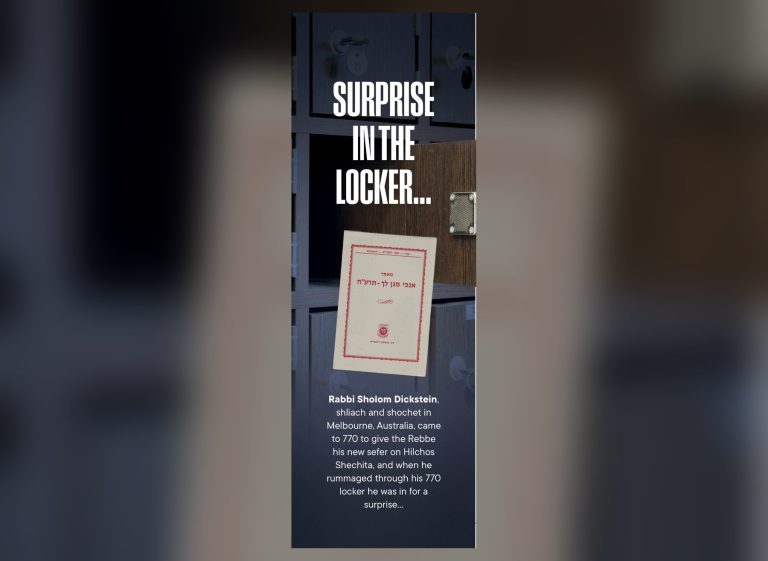
Rabbi Shalom Dickstein, Chabad shliach, Melbourne:
Rabbi Eli and I studied together at Tomchei Tmimim Yeshiva in Tzfas in 5761 (2001), where we became friends.
Shortly after I arrived for my shlichus in Melbourne, he came for shlichus in Sydney. Due to the distance between our cities and the demands of our separate communities, we didn’t have continuous contact, but we talked often.
Rabbi Eli was sociable, warm, and heartfelt – the kind of person it was pleasant to sit with and hear him explain Torah. He had the ability to influence every person according to their level. He knew how to speak with a Russian Yid who wasn’t very open, with youth who had drifted from observance, and with anyone else. He spoke to everyone at eye level. Everyone felt they were his friend.
Sydney is one of the most expensive cities in the world. When he took on the project of building a community center – his father-in-law Rabbi Ulman’s dream – it had been stuck for years due to various difficulties. Rabbi Eli got involved and quietly removed obstacle after obstacle, paving the way without publicity. Throughout the years, many obstacles stood in his path, but he never despaired. He continued methodically until his approach bore fruit.
Rabbi Eli sowed ruchniyus and reaped gashmiyus. Many people owe him their Torah and mitzva observance.
A year ago, shortly before Chanuka, there was an arson attack on a shul in Melbourne. A message went out from all the shluchim in Australia – with him responsible for distributing it – that darkness isn’t driven away with sticks but with light, and Chanuka is a chag of light. If terror’s goal is to impose fear and cause us to close ourselves in, then Chanuka teaches us to publicize our Yiddishkeit with pride.
Beis Moshiach #1490 • pp. 12-19
© 2026 Beis Moshiach Magazine. All rights reserved.
This article originally appeared in Beis Moshiach #1490. You are welcome to share it with friends and family by email or in print, provided that you do not change, add to or omit any part of it, you credit the author and Beis Moshiach, and you include a link to archive.bmoshiach.org (written out in full in printed copies).
To republish this article in a newspaper, magazine, book or website, please request permission in advance at [email protected].