The Kindness Came Back

It was an evening in Adar 5762 (2002), in Atzmona, a small Jewish community in Gush Katif, in the Azah (Gaza) part of Eretz Yisrael.
Atzmona was also home to Mechinat Otzem. A mechina is a program for boys who have finished high school and are preparing to enter the Israeli army. It wasn’t a plain military academy. Most of its students weren’t soldiers yet, just eighteen- and nineteen-year-olds spending a year or two getting ready for the responsibility ahead.
That preparation wasn’t only physical. They learned Torah for hours each day (Gemara, halacha, emuna and mussar), worked on their character, and trained in fitness and navigation.
That Thursday night, some of the students were sitting together studying Mishna. It should have been another peaceful night of learning.
Then, suddenly, the quiet was shattered by gunfire.
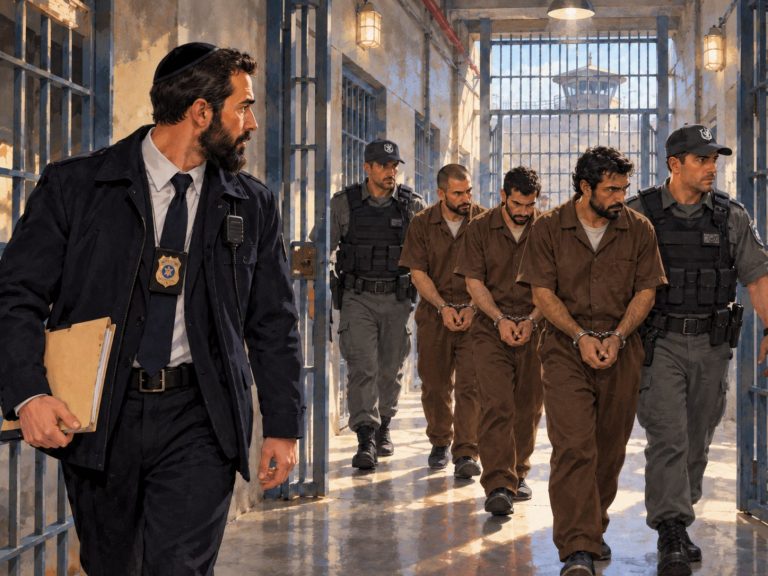
A terrorist had broken through the security fence surrounding Atzmona and made his way onto the Otzem campus. He was armed with a gun and grenades, and the students had almost no warning.
Gunfire erupted. A grenade was thrown. Students ran for safety. Some tried to hide while others desperately tried to help their friends.
An emergency alarm went out across Atzmona. One of the people who heard that alarm was Eyal Tam.
Eyal was an officer in the Israeli army and the commander of Atzmona’s local emergency response team. Unlike the students at Otzem, Eyal was already a trained soldier. When the alarm sounded, he understood immediately what it meant. There were young people in danger, and there was no time to waste.
Eyal grabbed his weapon and raced toward the academy with other members of the emergency team.
At almost the same time, another man heard what was happening. His name was Yonatan Rom.
Yonatan was a teacher at Otzem, and the young men under attack were his students.
Yonatan could have stayed somewhere safe and waited for soldiers and emergency forces to arrive. No one would have blamed him. He knew how dangerous it was to head toward an active terrorist attack.
But in Yonatan’s mind, staying put wasn’t an option.
His students were in danger.
He had to try to save them.
Yonatan jumped into his vehicle and headed straight toward the academy to see what he could do to help. As he approached, the terrorist spotted his vehicle.
The terrorist immediately turned his gun toward Yonatan and opened fire.
Bullets flew toward the vehicle. In those terrifying seconds, Yonatan’s life was in terrible danger.
And then, from another direction, Eyal arrived.
Eyal and the other emergency responders engaged the terrorist. Eyal ultimately shot and stopped him, ending his attack on Yonatan and preventing him from continuing his rampage.
The attack had lasted nearly twenty minutes. Five young men—five students who had come to Otzem to learn Torah and prepare themselves for lives of service—were murdered al kiddush Hashem. More than twenty others were wounded, many needing to be transported to hospitals.
It was a heartbreaking night that would never be forgotten. But the terrorist had finally been stopped, and many other lives had been saved.
One of those lives was Yonatan Rom’s.
Yonatan knew how close he had come to being killed. He also knew that while he had been racing toward danger to help his students, Eyal Tam had been racing toward that same danger to protect him and everyone else.
Yonatan would never forget that.
But there was something Yonatan could never possibly have known that night.
The story of what Eyal had just done for him wasn’t over.
It would take twenty-four years before another chapter would be written.
Now fast-forward twenty-four years.
By then, that terrible night in Atzmona belonged to the distant past. It had become one of the many painful terrorist attacks against Jews in Eretz Yisrael that, as the years went by, slowly blended into history and memory.
Life had continued.
One year passed, then five, then ten. Eventually, twenty-four years had gone by.
It was now 5786—2026. Yonatan was much older and in a completely different place in his life when he made an extraordinary decision.
He wanted to donate one of his kidneys to someone who desperately needed one.
Now, if you’re wondering how a person can possibly give away a kidney, you’re asking a very good question.
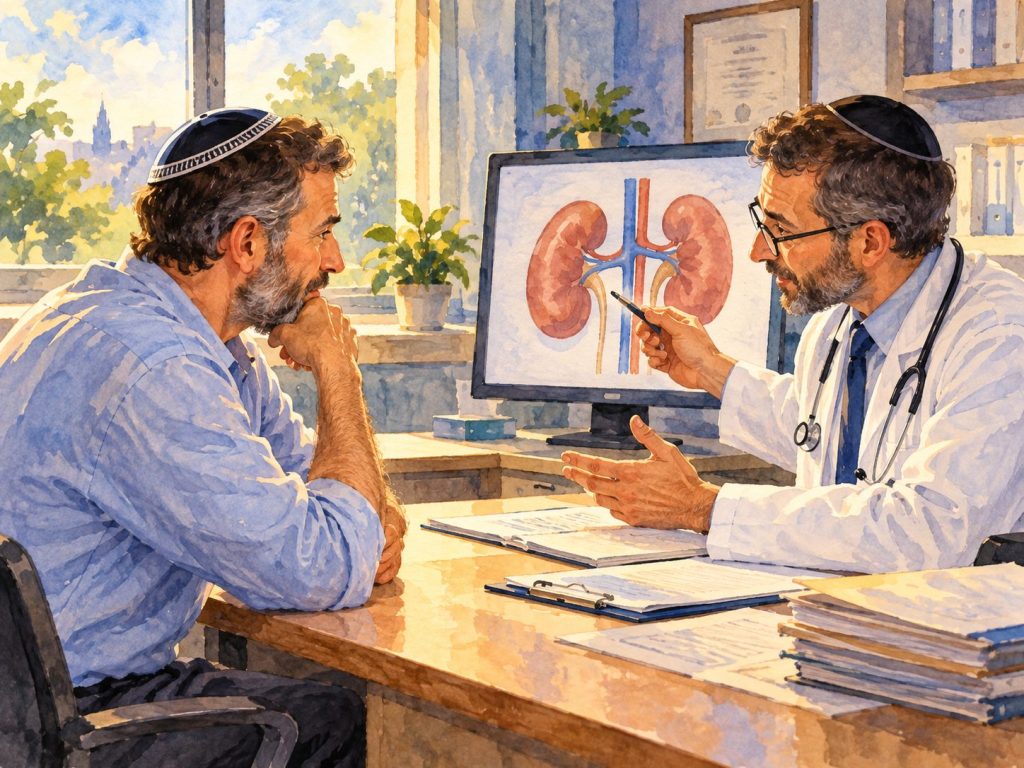
Most people are born with two kidneys. They are two small organs, shaped a little like beans, located toward the back of your body. Your kidneys have an incredibly important job: they continuously filter your blood, removing waste and extra water that your body doesn’t need.
You can almost think of them as your body’s cleaning system. Your blood passes through your kidneys again and again, and your kidneys help remove the things your body needs to get rid of.
Sometimes, though, a person’s kidneys become very sick and stop doing their job properly. This is called kidney failure. When someone’s kidneys fail, waste that the kidneys would normally remove can build up in the person’s body.
Some people with kidney failure need a special treatment called dialysis, in which a machine helps clean their blood because their kidneys can no longer do the job properly.
But for some patients, there is another possibility. Doctors may be able to give them a healthy kidney from another person.
That is called a kidney transplant.
And here is the amazing part: although most of us are born with two kidneys, a healthy person can generally live a normal life with just one. That means a healthy adult can sometimes choose to donate one kidney to someone whose kidneys are failing.
The healthy person who gives the kidney is called the donor. The person who receives the kidney is called the recipient.
During the transplant, doctors carefully remove one healthy kidney from the donor. Another surgical team then places that kidney inside the recipient’s body. If everything goes well, the donated kidney can begin filtering the recipient’s blood and doing the work that the person’s own kidneys can no longer do.
Think about how incredible that is. An organ that has been working inside one person’s body can be given to another human being—and continue working inside that person’s body.
But there’s another important part.
You can’t simply take a kidney from any healthy person and give it to anyone who needs one.
Doctors first have to perform many tests. They check blood types and other important medical information because Hashem made our bodies have an immune system. The immune system protects us from things that don’t belong inside our bodies.
Generally, that’s a very good thing. But after a transplant, the recipient’s immune system may recognize the new kidney as something that doesn’t belong there and try to attack it. Doctors therefore carefully look for donors and recipients who are medically suitable for each other, and transplant patients take special medicines to help their bodies accept and protect their new kidney.
When a donor and recipient are medically suitable for each other, we often say that they are a good match.
And that brings us back to Yonatan.
Yonatan had originally hoped to donate his kidney to a particular woman who desperately needed one. He began the long process of preparing for the donation.
There were appointments, medical examinations, blood tests and then more tests.
Donating a kidney isn’t like donating a bag of clothing or writing a check to tzedaka. Yonatan was volunteering to undergo a real operation. Doctors would put him to sleep, surgically remove one of his healthy organs and then carefully watch his recovery afterward.
Yonatan knew all of that.
And he still wanted to do it.
Finally, the test results came back.
There was a problem.
Yonatan wasn’t compatible with the woman.
His kidney couldn’t be donated directly to her.
Imagine how disappointing that must have been. After all the testing, appointments and preparation, Yonatan could easily have said, “Well, I tried.”
And nobody would have blamed him. He really had tried.
But Yonatan wasn’t finished.
“If I can’t give my kidney to her,” he decided, “then find somebody else who needs it.”
Somebody else?
Yes.
Someone he didn’t even know?
Yes.
Yonatan wasn’t doing this because he wanted a thank-you or an award. He didn’t need to know who would receive his kidney. If there was another person somewhere who desperately needed one, and Yonatan could safely give him his, that was enough.
So the search began.
In Eretz Yisrael, transplant teams and organizations help connect people willing to donate kidneys with patients who desperately need them. One organization that has helped facilitate an extraordinary number of living kidney donations is called Matnat Chaim, Hebrew for Gift of Life.
Doctors compared Yonatan’s medical information with that of patients waiting for kidneys. There were many patients, many possible donors and many different medical factors that had to line up correctly.
Eventually, they found a match.
There was a man whose kidneys were failing and who desperately needed a healthy kidney. The medical testing showed that Yonatan could donate to him.
Yonatan hadn’t chosen him. They weren’t friends or relatives. They hadn’t grown up together.
In fact, Yonatan didn’t even know him.
The man’s name was Reuven Tam.
It was summer of 5786 (2026), and the transplant would take place at Beilinson Hospital. Before the operation, Yonatan and Reuven had an opportunity to meet.
Imagine what that meeting must have felt like.
Two men who had been complete strangers were suddenly connected in one of the deepest ways imaginable. In a short time, doctors were going to remove a kidney from Yonatan’s body and place it inside Reuven’s.
Yonatan was giving Reuven something no amount of money could buy: a chance at a healthier life.
Naturally, the two men began talking and getting to know each other. They spoke about where they were from, their lives, their communities and their families.
Then Yonatan heard Reuven’s last name.
Tam.
Something about that name caught his attention.
“Tam?” Yonatan asked. “Where is your family from?”
“Atzmona,” Reuven answered.
Yonatan stopped.
Atzmona?
The same Atzmona where he had taught? The same tiny community where the attack had happened twenty-four years earlier?
Now Yonatan really wanted to know more.
They continued talking about their families, and then Reuven mentioned his brother.
His brother’s name was Eyal.
Yonatan could hardly believe what he was hearing.
“Eyal Tam?”
Yes.
The same Eyal Tam.
The man who, twenty-four years earlier, had raced toward the Otzem academy while everyone there was in danger.
The man who had confronted the terrorist.
The man whose bravery had helped save Yonatan’s life.
And now, twenty-four years later, completely without planning it, Yonatan was about to give one of his kidneys to Eyal Tam’s brother.
Just think about everything that had to happen for these two men to be sitting together in that hospital.
Yonatan hadn’t gone looking for the Tam family. He hadn’t called Eyal and asked, “Does anyone in your family happen to need a kidney?” He didn’t even know that Reuven was sick.
In fact, Reuven wasn’t even supposed to be Yonatan’s original recipient.
Yonatan had planned to donate his kidney to someone else.
That match hadn’t worked.
At the time, it must have seemed like a terrible disappointment. Yet instead of giving up, Yonatan had simply said, “Find somebody else.”
And that “somebody else” turned out to be the brother of the man who had helped save his life twenty-four years earlier.
Yonatan looked at Reuven.
Twenty-four years earlier, Reuven’s brother had helped give Yonatan the greatest gift imaginable: his life.
And now Yonatan was about to give Reuven a gift that could help save his.
Yonatan put into words what seemed almost impossible to believe:
“Your brother saved my life twenty-four years ago, and today I am saving yours with my kidney.”
On 29 Tammuz 5786 (July 14, 2026) the transplant took place.
Yonatan was taken into surgery, where doctors carefully removed one of his healthy kidneys. The kidney was then transplanted into Reuven.
The operation was successful.
The kidney that had spent all those years inside Yonatan’s body was now inside Reuven’s body, doing its job and helping to keep him alive and healthy.
Even members of the transplant team were amazed when they learned about the extraordinary connection between the two men.
Yonatan could have donated to his original recipient. When that didn’t work, he could have decided not to continue. He could have been matched with another patient. Reuven could have received a kidney from another donor.
Their paths never needed to cross.
Yet somehow, twenty-four years after Eyal Tam helped save Yonatan Rom’s life, Yonatan Rom had been matched with Eyal Tam’s brother.
* * *
There is one more beautiful piece to this story.
The Hebrew word *natan* means “gave.” It is written נתן: nun, taf, nun. Read it backward and it is exactly the same word.
We usually think giving travels in one direction. But the giver receives too.
Eyal wasn’t thinking about getting anything back when he raced toward Otzem that night. Yonatan wasn’t thinking about repaying anyone when he volunteered his kidney. He didn’t even know who would receive it.
Neither man expected a thing. They simply did what a Jew does when another person needs help.
They gave.
And twenty-four years later, Hashem let them see the giving come all the way around.
Natan. Forward and backward.
Beis Moshiach #1526 • ה׳ חשון תשפ״ז • pp. 55-59
© 2026 Beis Moshiach Magazine. All rights reserved.
This article originally appeared in Beis Moshiach #1526. You are welcome to share it with friends and family by email or in print, provided that you do not change, add to or omit any part of it, you credit the author and Beis Moshiach, and you include a link to archive.bmoshiach.org (written out in full in printed copies).
To republish this article in a newspaper, magazine, book or website, please request permission in advance at [email protected].