The Mayors of the Rebbe’s City
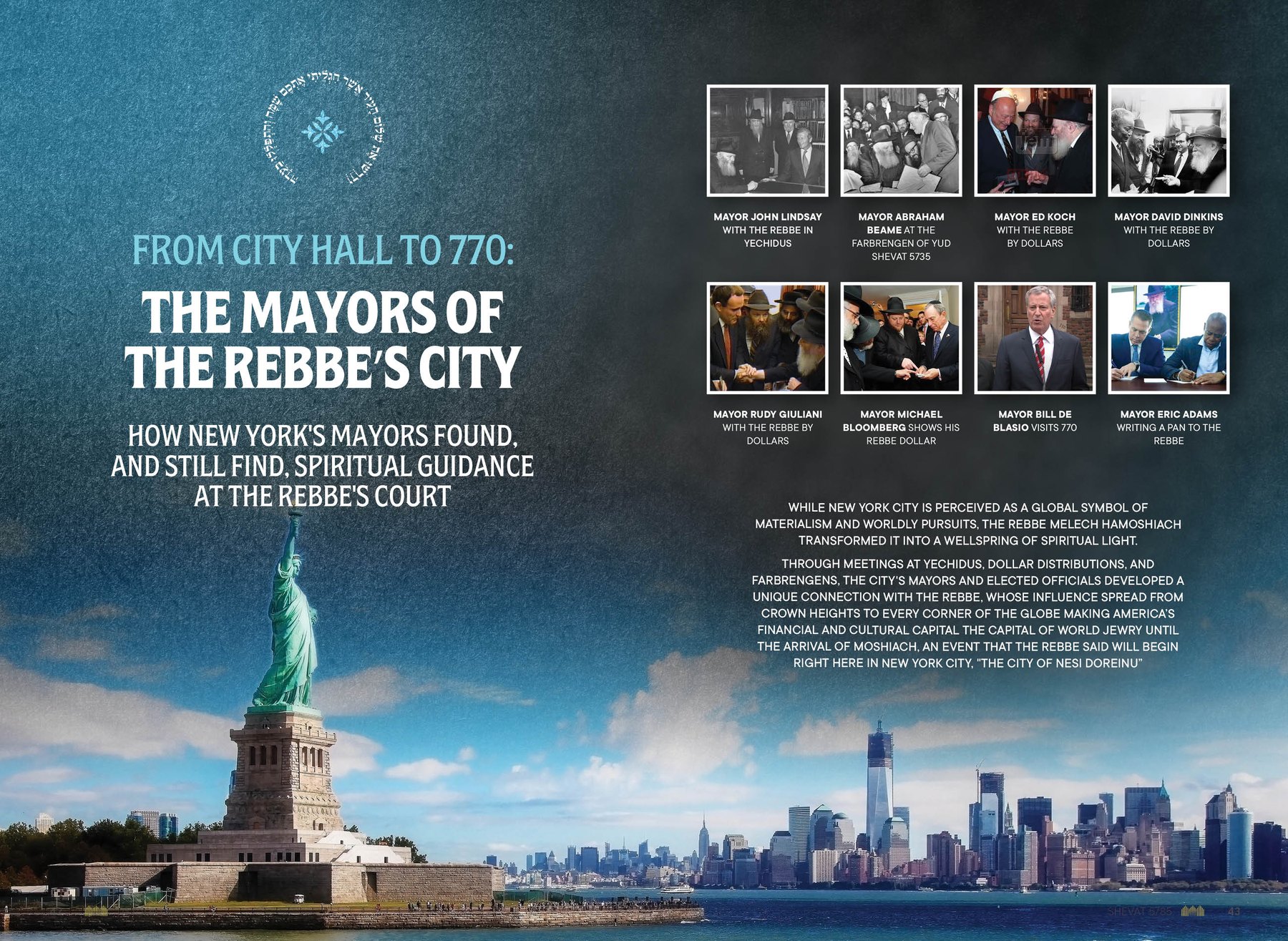
While New York City is perceived as a global symbol of materialism and worldly pursuits, the Rebbe Melech HaMoshiach transformed it into a wellspring of spiritual light. Through meetings at yechidus, dollar distributions, and farbrengens, the city’s mayors and elected officials developed a unique connection with the Rebbe, whose influence spread from Crown Heights to every corner of the globe, making America’s financial and cultural capital the capital of world Jewry until the arrival of Moshiach, an event that the Rebbe said will begin right here in New York City, “the city of Nesi Doreinu.”
On the final Erev Shabbos of Shevat 5752 (1992) as world leaders gathered along Manhattan’s East River, a profound event was unfolding in New York City. The scene at the United Nations headquarters—where President George Bush had traveled from Washington DC to meet with Russian Premier Boris Yeltsin about arms reduction—told only half the story.
The next day, seven miles away, at another iconic New York based Headquarters – 770 – the Rebbe offered a deeper perspective on why this historic summit was taking place in New York rather than the nation’s capital. The Rebbe explained that the President’s journey to New York was no coincidence: the city had been chosen for this moment precisely because it was the headquarters of Nesi Doreinu.
While conventional political wisdom pointed to New York’s neutral status as the reason for it being chosen to house the UN’s headquarters, the Rebbe revealed a more significant truth: the city’s role as the center of a worldwide spiritual movement had drawn these leaders here, culminating in a moment where former adversaries would choose cooperation over conflict, thus beginning to fulfill the prophecy of Yeshaya of “they shall beat their swords into plowshares” which is the work of Melech HaMoshiach, the Nasi HaDor.
In the following pages, we explore the remarkable relationship between the top brass of the political leadership of “the city of Nesi Doreinu” — New York City’s mayors, and Nesi Doreinu, the Rebbe MH’M, a connection that mirrors this city’s unique role in bridging the political and the spiritual in our modern era towards the Geula ha’amitis v’hashleima.
* * *
During a Purim farbrengen in 5729 (1969), the Rebbe addressed the topic of Jews holding public offices. “When one wants to go to a new place and accomplish something new, where there is great discord between 127 provinces… it’s better for this to be done by a non-Jew… When a Jew needs to do this – they begin to think that if they take a middle path and good way, they will be suspected of doing it because they are personally invested, and therefore, to prevent chillul Hashem and prevent wars, etc., they must compromise. This is not the case when it’s done by a non-Jew. However, the Jew who is in Shushan HaBirah (the capital) needs to stand behind the non-Jew and ensure their conduct will be proper.”
This sicha was directed at a Jew who attended that farbrengen, named James Scheuer. Mr. Scheuer was an active politician who was running for the Democratic Party nomination for Mayor of New York City. The Purim farbrengen took place during the primary campaign, almost a year before the actual elections. After the farbrengen, the Rebbe asked his secretary, Rabbi Leibel Groner whether Mr. Scheuer was present during the sicha directed at him.
In the week before the elections, three candidates came to the Rebbe for private audiences to receive blessings. Mr. Scheuer was indeed not elected, and Mr. John Lindsay, who had held the position since November 1965, continued in office.
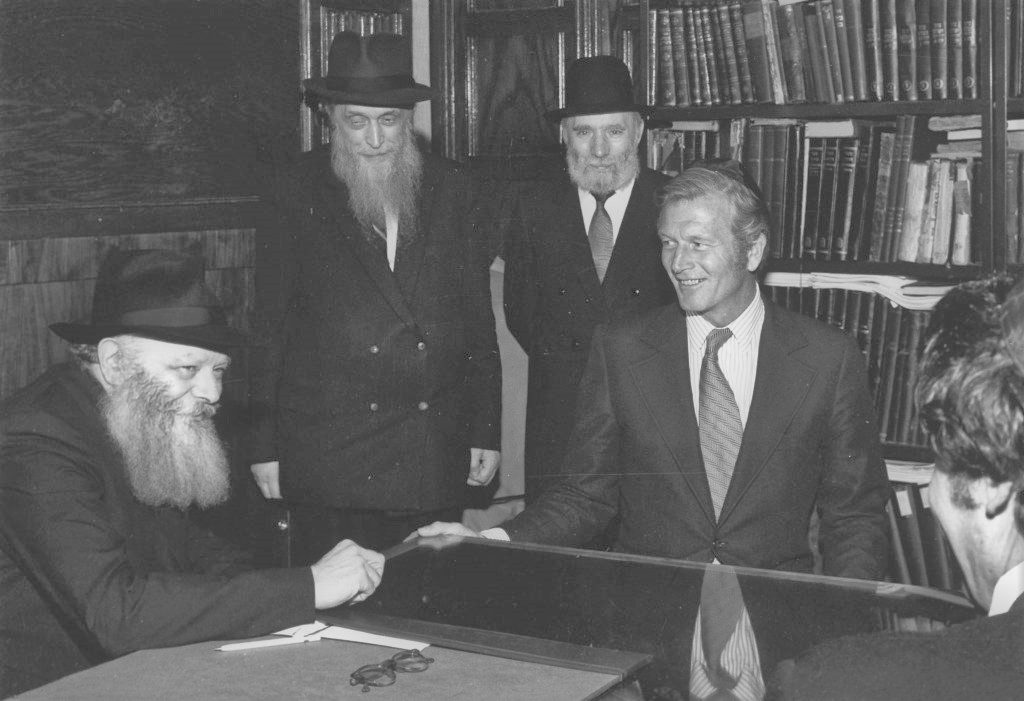
Mayor Lindsay had the privilege of having several yechidus’n with the Rebbe. Before his first campaign for mayor in 1965, he came for a yechidus but did not share anything about his conversation with the Rebbe. During his term, he had another audience in December 1968. This audience took place during a turbulent period of riots and vandalism by black New Yorkers. The Rebbe advised him about the need to protect Jewish neighborhood residents and business owners, and instructed him on how to handle the rioters and restore peace to New York’s streets.
Several weeks after his second election, on Shabbos Parshas Vayeishev 1969, the Rebbe revealed some of his conversation with the mayor from their meeting held several weeks prior.
This was at the height of the struggle over the character of the Crown Heights neighborhood, as the Rebbe fought against Jewish flight from the neighborhood. The Rebbe said he spoke with the mayor about the need to strengthen the neighborhood and demanded that he act to increase security in Crown Heights, Brooklyn, and New York City in general. The Rebbe also said that the mayor promised to provide money for the development of the Jewish neighborhood, construction of public buildings, halls, etc.
In The Capital City Of Lubavitch
Mayor Lindsay maintained strong connections with Chabad institutions in New York and even in Eretz Yisrael. The liaison between him and Chabad institutions was Rabbi Shlomo Maidanchik. The connection with Lindsay and subsequent mayors came to R’ Shlomo through his official role and title as mayor of Kfar Chabad.
During the month of Tishrei, while at the Rebbe’s court, R’ Shlomo was often sent to meet with mayors in the United States and Canada. He would also meet with New York City mayors. His warm personality and joyful nature made these connections particularly strong and friendly.
Beyond being a Chabad supporter, Mayor Lindsay was also a lover of Israel with a clear pro-Israel approach, supporting settlement in Eretz Yisrael through his numerous connections and financial resources. He visited Israel several times, and his visits always included tours of Kfar Chabad. During his yechidus in 1969, he brought pictures of the Chabad settlement in Israel to the Rebbe. He received these pictures from R’ Shlomo during his visit to Kfar Chabad, to deliver them to the Rebbe.
During Mayor Lindsay’s second term, in December 1972, he again visited Israel and Kfar Chabad. The visit was arranged in response to a request by the Rebbe’s secretariat, and R’ Shlomo executed it. The instructions received were special. R’ Shlomo was asked to give him a memorial gift – just as Lindsay himself had given to R’ Shlomo during his visit. It was emphasized that a reliable and professional translator should be brought, and that the proceedings during the visit should be recorded.
Mayor Lindsay walked through the village streets and even entered the central yeshiva hall. An elegant meal was served in his honor with the participation of Chabad activists in Israel. The secretariat requested that the meeting be documented and published.
Even after his term ended, he continued his connections with the Rebbe, and in the early 1980s he visited Kfar Chabad again to see his friend R’ Shlomo Maidanchik. Mayor Lindsay held his position until 1974. Then Abraham Beame replaced him.
Seek The Peace Of The City
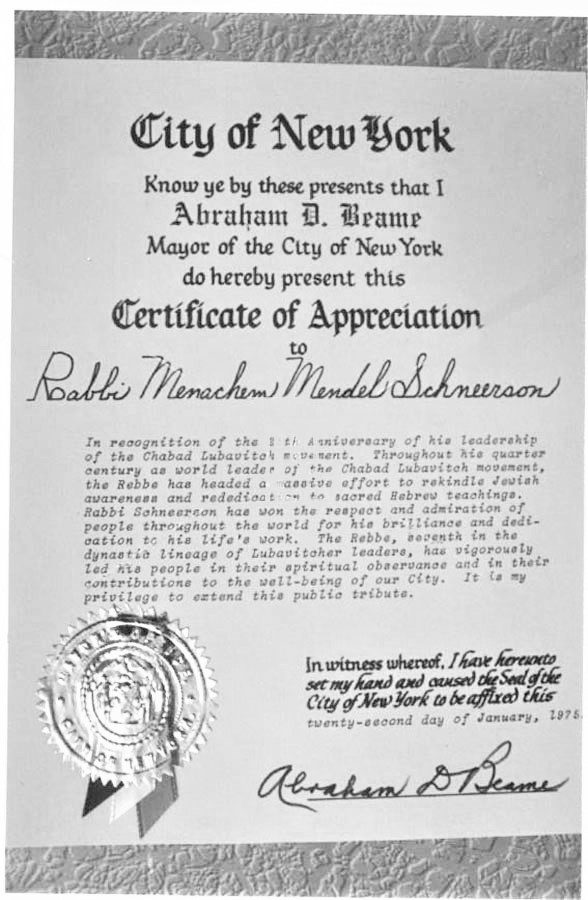
Mayor Beame, or as he was called, ‘Abe’ Beame, was born to a traditional family and in his childhood was called Abraham David Birnbaum. Mr. Beame had been close to Chabad Chassidim for years, and upon his election, the connection grew stronger. He attended many of the Rebbe’s farbrengens and was the guest of honor at many Chabad events.
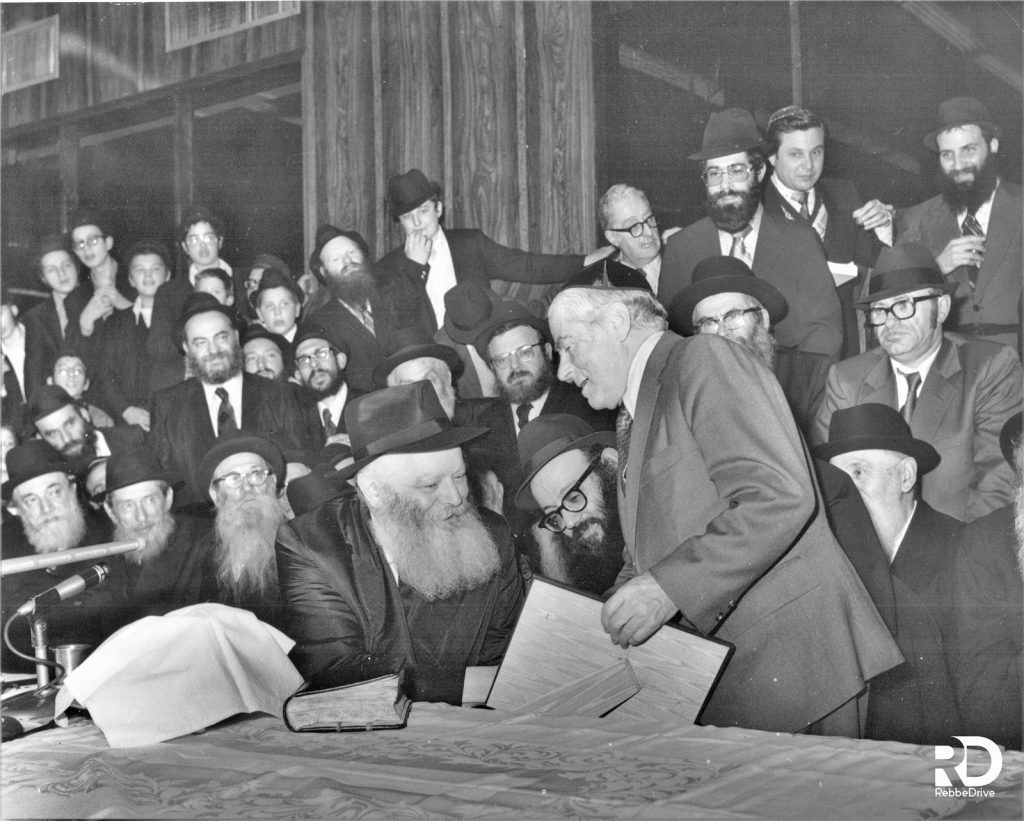
At the Yud Shevat 5735 farbrengen, marking twenty-five years of the Rebbe’s leadership, Mayor Beame attended. Along with a long line of American government officials and public figures, he too, stood on the Rebbe’s platform. When the Rebbe entered the farbrengen, he passed quickly with a smiling face past the row of public figures, nodding his head in greeting. When the Rebbe reached Mayor Beame’s place, the latter extended his hand, and the Rebbe warmly shook it. During the farbrengen, many dignitaries approached and presented various gifts to the Rebbe. Among them, the mayor approached and presented the Rebbe with a certificate of appreciation from New York City, and the Rebbe thanked him for it.
Additional government officials attended the farbrengen, and a special messenger even came to deliver the President’s congratulatory letter. After the presentations, the Rebbe gave a special talk thanking the U.S. government and New York City for their help in rescuing the Previous Rebbe from imprisonment, allowing him into the United States, and the ongoing support until that day:
“Regarding the instruction to ‘seek the welfare of the city… and pray for it’ – one must speak about (honoring) one’s host, particularly since this relates to my father-in-law, the Rebbe. As is known, during his imprisonment, the U.S. government took a major role in his release, and later, when he came to America, the U.S. government’s assistance and efforts regarding his rescue, his arrival here, and subsequently in his settlement here are well known.
“In other words, the matter of ‘seek the welfare of the city… and pray’ is not just about present and future matters, but as we’ve already seen in the past, the special connection and gratitude we have to them, as they were G-d’s emissaries – since ‘the heart of a king is in G-d’s hand’ – to accomplish the rescue of the Rebbe [Rayatz].”
Mr. Beame had the privilege of participating in many farbrengens during his tenure as mayor, which lasted until 1978. At the 11th of Nissan farbrengen in 1977, marking the Rebbe’s 75th year, he came and presented the Rebbe with an elegant silver goblet engraved with a dedication from the mayor. The Rebbe thanked him warmly and said “Thank you to you and all of New York City which is the headquarters of our movement.” The mayor responded, “We are very proud of that…” The Rebbe attached a note to the silver goblet on which he wrote in his holy handwriting “11 Nissan 5737”
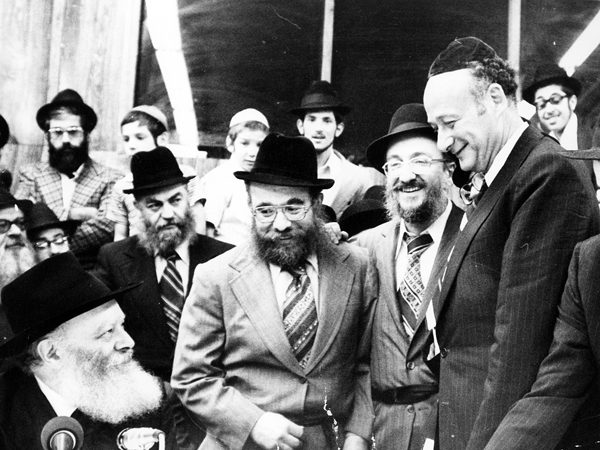
Mayor Beame also received annual visits from R’ Shlomo Maidanchik during Sukkos. R’ Shlomo would come leading a delegation of Chabad Chassidim, would help the mayor fulfill the mitzvos of the Yom Tov, and afterward would conduct a small farbrengen in his office. A description of such a visit was recorded in Rabbi Shimon Bekerman’s diary from Tishrei 1975. R’ Shimon joined the visit as a member of the Kfar Chabad committee:
“We visited the Mayor of New York. He made the blessing over the dalet minim. Shloimke gave him a kiss and also an esrog box made in the Kfar Chabad school, as well as a photo album of Kfar Chabad.
“The mayor gave him a golden key to the city. There were photographers and journalists, and the mayor shook his hand and took pictures with everyone. Shloimke introduced us as his deputies. He then shared one of the Rebbe’s sichos and then said: ‘Since you have financial problems, I have a suggestion. We also have such problems in our city, and we rely on G-d and He always helps us. We suggest you do the same.’ This really made a positive impression on the mayor and the journalists.”
R’ Shlomo himself reported about this in his report to the Rebbe:
“Today at 2:30 PM we visited New York City Mayor, Mr. Abraham David Beame. I blessed him (in Yiddish) in the name of Kfar Chabad of Lubavitch Chassidim – that he has the merit that in the city he leads lives a large Lubavitch community with the Rebbe at its head. Then I read him excerpts from the Rebbe’s sicha from erev Sukkos. Rabbi Yehuda Krinsky translated.
“I brought with me the dalet minim, which I received from the Rebbe, and made the bracha with him. He did this willingly and with kabbolas ol. He made both brachos (the photographers, including Mr. Freidin among them, were captivated by this and took many photos).
“Finally, I told him that I heard he has financial problems, I too, often have such worries – and with G-d’s help and the Rebbe’s koach, we get through it and we Chassidim are always happy; the same will be for him with G-d’s help. The meeting was cordial and organized, I didn’t forget to kiss him after he said the bracha over the esrog.”
“P.S. We exchanged gifts. I gave him the English Kfar Chabad album and also a wooden esrog box and told him that the children of the carpentry school made it.
“Mr. Beame gave me the key to the city, which I am forwarding to the Rebbe.”
Even after his term as mayor ended, Abe Beame continued to regularly attend the Rebbe’s farbrengens. He also continued attending various Chabad events, and for many years was the guest of honor at the annual dinner of the Central Tomchei Tmimim Yeshiva. Mr. Beame was also the first mayor to light the largest Chanuka menorah in the world – in Times Square, Manhattan. He arranged for permission to light at this location in 5738/1977, thus beginning a tradition that continues to this day.
A Jew Like Everyone Else
The connection between New York’s mayor and the Rebbe and Lubavitch only grew stronger with the entry of his successor, Mr. Edward “Ed” Koch – whose Jewish name was Yidel Yitzchok. Mr. Koch, who like his predecessor was a proud Jew, had an even more receptive heart toward Jewish tradition.
About a month before election day, at the farbrengen of 6 Tishrei 1977, Mr. Koch came to the Rebbe. At the end of the farbrengen, during the distribution of dollars to the “Tankistim” (those involved in mivtzaim, including on the Mitzvah Tanks), Mr. Koch approached the Rebbe and spoke with him. “I’m happy to see you,” the Rebbe told him, “may it be a good beginning.” The Rebbe asked for his full name, wished him a gemar chasima tova, and gave him two dollars, one for tzedaka and one to do with as he sees fit, adding with a smile “You are, after all, a Jew like everyone else.”
As mayor, Mr. Koch visited the Rebbe’s court several times and came to the dollar and lekach (honey cake) distributions.
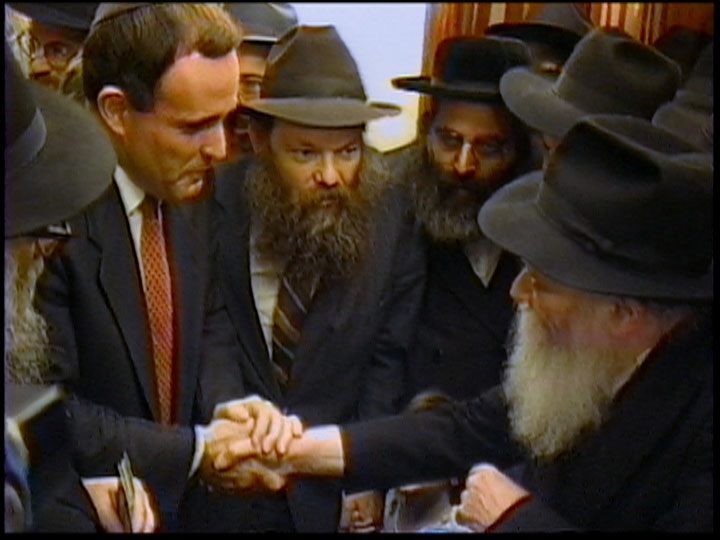
On the morning of erev Yom Kippur 1989, Mayor Koch came to receive ‘lekach’ from the Rebbe. He and his entourage waited in the lower Gan Eden for the distribution to begin, which took place at the entrance to the Rebbe’s room. When the door opened, Mr. Koch approached and extended his hand. The Rebbe extended his holy hand and shook Mayor Koch’s hand with a broad smile on his face and said “May you have a good year, may you have a sweet year.”
“Perhaps, we could sit and talk sometime, when the Rebbe has time – it would be my privilege. When there aren’t five thousand people waiting outside…” Koch said, and the Rebbe answered with a smile: “I don’t know what will happen in this new year, but I hope things will be in good order. May you have a sweet year and a year of peace. All people need this.”
At the end of that year, on the 26th of Menachem-Av 5749, Mayor Koch came again to the Rebbe, during an election campaign. “Hello, Rebbe,” he opened, “I’ve been looking forward to meeting you again, it’s always a privilege and pleasure for me.”
“Blessing and success,” the Rebbe said, “This is an appropriate time, the time of beginning preparations for the new year. If so, may it be G-d’s will that you merit a good year, a sweet year, and also all New York citizens, myself included.” Mayor Koch thanked him for the blessings and the Rebbe added, “I will check if you fulfill my blessings.”
Mayor Koch said: “I hope we mean the same blessing,” to which the Rebbe smiled and said, “Don’t suspect me of saying one thing and meaning another.”
The Rebbe gave him a dollar, and he began to praise the Rebbe: “Everyone knows you are an exceptional person. There are very few like you, because of your religiosity, your intelligence and there’s enormous affection for you and you lead the people who come to you every single day in a special way and I’m also an admirer of yours.”
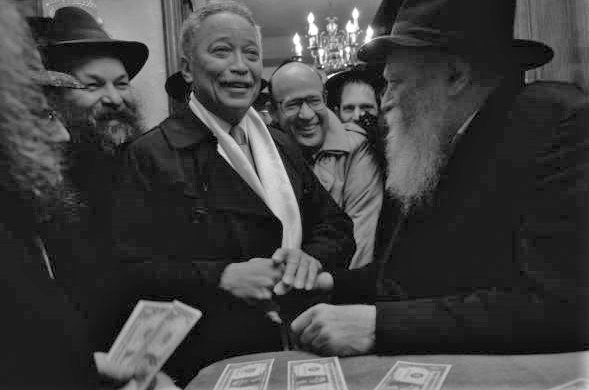
“Don’t try to bribe me…” the Rebbe said to him, and the mayor burst out in great laughter. The Rebbe continued to bless him, and he said “I will return here next year as mayor.” To this the Rebbe replied, “Regarding that, I am not a prophet. G-d doesn’t need prophets. And clearly He chooses the best mayor, and you are included.”
In those elections, Mr. Koch was defeated.
Even after his term ended, Mr. Koch continued to visit the Rebbe. In diaries from Simchas Torah night 5752, former mayor Koch’s arrival at the Rebbe’s farbrengen is mentioned. During the farbrengen, Rabbi Groner approached the Rebbe and said that former mayor Mr. Koch had arrived. The Rebbe instructed that he should say l’chaim. After he was brought a full cup, the Rebbe turned toward his location on the benches behind the Rebbe and made a welcoming gesture with his holy left hand while smiling. During the niggunim, the Rebbe even made strongly encouraging gestures in his direction several times.
And They Shall Stream To Him
Before the elections held in 1990, several candidates for the position came to the dollar distribution. The Rebbe spoke with them and gave his blessing. Here is a record of one candidate’s visit, named Mr. Jay Goldin:
The Rebbe pointed to a campaign button pinned to Mr. Goldin’s lapel and said: “I noticed that this…” Mr. Goldin said “Rebbe, if I had an extra button I would bring it to the Rebbe. But I don’t have extra…” To this the Rebbe replied: “But if you’re running for mayor, you must have at least two hundred thousand of these…”
Mr. Goldin’s father, who accompanied him on the visit, quickly removed an identical button that was pinned to his suit and said that if the Rebbe wishes to receive it – he’ll give it. The Rebbe took the button and said with a smile: “Thank you very much. But I’m not running for mayor.”
In those primary elections, and the subsequent mayoral election, the black candidate David Dinkins was elected. Mr. Dinkins had come to the Rebbe several times before the elections, and shortly after his election came once more.
During the riots in Elul 1991, Mayor Dinkins received much criticism for not doing enough to protect the neighborhood residents. During the riots, Mayor Dinkins came to the Rebbe during the dollar distribution, and the Rebbe spoke with him about the need for protection and defense of the neighborhood.
“G-D Is On Your Side”
Another mayoral-hopeful who came to see the Rebbe during that campaign season was the former district attorney Rudy Giuliani. He ran on promising tough security for New Yorkers. He came on 17 Elul 5749.
“May G-d almighty bless you” said the Rebbe to him, “to perform all your duties in good health and in the right way.”
The Rebbe continued with a smile: “Don’t be offended by me mentioning the right way. Everyone needs G-d Almighty’’s help to always go in the right way.”
“You certainly know that when someone is supposed to protect people, and someone says something against that protection, it only means that that protection would be even more appreciated.”
Mr. Guilliani responded: “I appreciate that very much and I will try very hard.”
The Rebbe once again responded with a smile: “G-d Almighty is on your side!”
Mr. Giuliani lost that election, but in 5754 (1994) was elected mayor and indeed in his tenure raised the level of security in New York City very significantly.
* * *
May we be zoche to see very soon, b’karov mamash, the first appearance of the Beis HaMikdash HaShlishi at Beis Rabbeinu She’b’Bavel in the center of New York City, from which we will all fly along with it al ananei shmaya to the true and eternal capital of Moshiach Tzidkenu – the holy city of Yerushalayim, teikef u’miyad mamash!
The Rebbe’s Battle Against “Local Law Number 2”
This unique relationship between New York’s leadership and the Rebbe was not always one of simple harmony, however. The Rebbe’s role as a moral compass for the city often required taking strong positions, even when they challenged those in power.
For example, in the mid-mems (1980s), when Mayor Koch pushed and promoted “Local Law Number 2” to normalize so-called “alternative lifestyles” that were antithetical to halacha and to Torah values, the Rebbe devoted a large part of the Purim farbrengen of 5746 (1986) in calling this out. He explained how these “rights,” as they tried to be promoted, were truly “ills” and those suffering from them need compassionate healing, not recognition and a right to engage in destructive behaviors. This sicha was mugah by the Rebbe in English (multiple times, in fact) as a pamphlet titled “Rights” or Ills? which was widely publicized at the time.
Mayor Koch continued to come to the Rebbe to ask for his advice and blessing, even after being publicly called out for such activities. He knew, like many others that were called out for their problematic policies, that the criticism from the Rebbe was not leveled against them on a personal level, but against their actions which the Rebbe, with tremendous Ahavas Yisrael, wished to rectify.
Some of the exchanges between the Rebbe and Mr. David Dinkins during the dollar distributions:
27 Tammuz 5749 (1989)
Mr. Dinkins: It’s a great honor to meet you, sir. Thank you very much.
The Rebbe shlita gave two dollars and said: This is for your personal activities, and this is for your activities for the city. And I am included in them.
Mr. Dinkins: That’s wonderful. Thank you very much. I ask for your blessing for my efforts, and I take this as a blessing. I am full of gratitude.
The Rebbe shlita: May the Holy One bless you with good news.
Mr. Dinkins: Thank you very much, sir. It’s an honor to meet you.
The Rebbe shlita: It’s an honor for me. I believe this will lead to additional actions from you, and from me as well.
Mr. Dinkins: That’s wonderful, together we can probably accomplish much.
The Rebbe shlita: Amen. Good tidings. Good news and much success.
Mr. Dinkins: Thank you very much.
The Rebbe shlita: You’re welcome.
24 Elul 5749 (1989)
The Rebbe shlita: We’ve met before.
Mr. Dinkins: Yes, indeed.
The Rebbe shlita: May G-d Almighty bless you with a double portion of all necessary benedictions, and especially for a good year – may it be a good year, beginning with charity.
Mr. Dinkins: I just want to let you know that the blessing I received previously worked very well.
The Rebbe shlita: I’m very happy to hear that.
Mr. Dinkins: Thank you so much. And I would ask for your continued blessing.
The Rebbe shlita: Then I will ask you to cash it in as soon as possible, and then I will have a possibility to add an additional portion to the additional benediction.
Mr. Dinkins: That sounds great to me.
The Rebbe shlita: May the G-d Almighty bless you.
Mr. Dinkins: So nice to see you again; thank you for seeing me.
The Rebbe shlita: This is for charity for all of New York.
Mr. Dinkins: For all New York, indeed, and for everyone in New York.
The Rebbe shlita: Including me and Mr. Dinkins.
Mr. Dinkins: Especially you, sir.
The Rebbe shlita: Thank you very much.
Mr. Dinkins; Thank you so much.
The Rebbe shlita: Good news and a happy year.
Mr. Dinkins: May I wish you a happy new year.
The Rebbe shlita: Same too you, in a double portion.
Mr. Dinkins: Thank you, sir.
Then the Rebbe shlita added: The G-d Almighty is our leader.
Mr. Dinkins: The leader of us all.
The Rebbe shlita: Even in New York. May G-d Almighty bless everyone with a happy year, and go from strength to strength in all things necessary, especially for the benefit of the multitude of nationalities in New York. It is a melting pot for many nations. May all these nations live in good peace and in harmony, and every one of them strengthen all the nations around them, especially in the realm of charity.
Mr. Dinkins: Amen.
HaTomim #15 • pp. 42-53, 63
© 2026 Beis Moshiach Magazine. All rights reserved.
This article originally appeared in Beis Moshiach #1446. You are welcome to share it with friends and family by email or in print, provided that you do not change, add to or omit any part of it, you credit the author and Beis Moshiach, and you include a link to archive.bmoshiach.org (written out in full in printed copies).
To republish this article in a newspaper, magazine, book or website, please request permission in advance at [email protected].