Still on the Mivtzoim Route
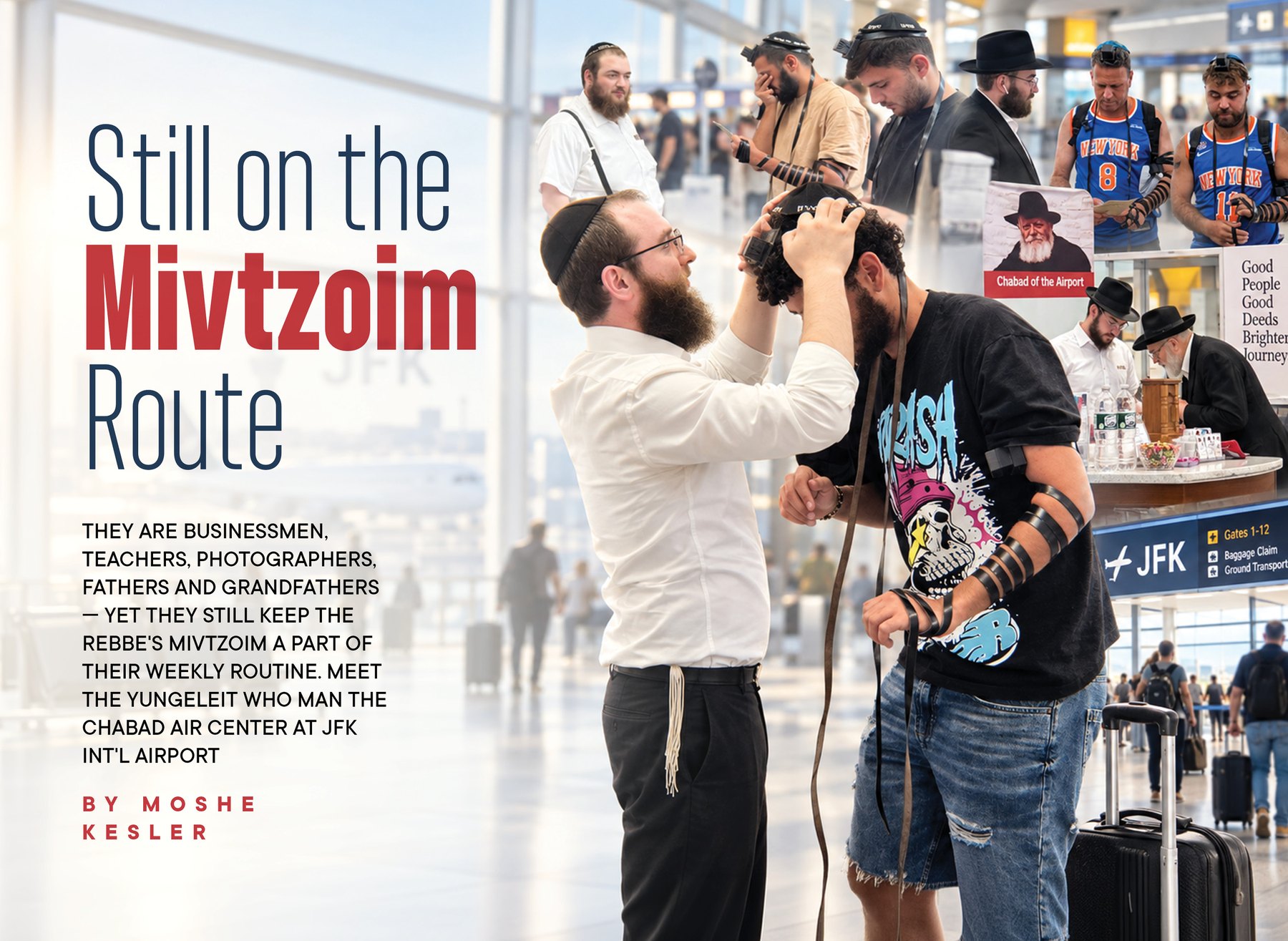
Meet the yungerleit manning Chabad at JFK
They are businessmen, teachers, photographers, fathers and grandfathers - yet they still keep the Rebbe’s Mivtzoim a part of their weekly routine. Meet the yungeleit who man the Chabad Air Center at JFK Int’l Airport.
For many Lubavitchers, mivtzaim is one of the defining experiences of bachurhood. Friday afternoon means grabbing a pair of tefillin, heading out on a route, and looking for another Yid with whom to do a mitzva.
Then life changes.
Marriage comes, followed by parnassa, children and the thousand responsibilities that fill an adult week. Without anyone ever deciding to stop, mivtzaim can slowly become something a person remembers doing rather than something he still does.
At JFK Airport, a growing group of yungeleit and balebatim are showing that it does not have to be that way.
They are businessmen, teachers, photographers, fathers and grandfathers. They do not have the free schedule of a bachur, and they do not pretend that they do.
But week after week, they still go.
We spoke to three of them about why.
* * *
It was two o’clock in the morning at JFK, and a yeshiva bachur had nowhere to go.
He had come from Monsey to catch an Arkia flight to Eretz Yisrael, only to discover that the flight had been canceled and pushed off until the following afternoon. He had no working phone, no SIM card, and no practical way to arrange somewhere to stay.
So he sat down on a bench in the airport.
Shmuly Butler was getting ready to leave when he noticed him.
“What are you doing here?”
The bachur explained the situation.
“Come to my house,” Butler told him.
He drove him back to Crown Heights and gave him a place to stay. The next day, Butler made sure he got to 770 and had a chance to see the Rebbe’s library and some of the other Lubavitch landmarks. Then, when the time came for his rescheduled flight, he arranged for the next group heading out on mivtzaim to bring him back to JFK.
For Chabad Air, stories like this are not especially unusual. A flight is canceled. Someone loses his luggage. A traveler runs into trouble with a visa. A Jew needs food, a place for Shabbos, or simply someone who knows what to do.
What is perhaps more surprising is who is increasingly there to help.
Butler is not a bachur with a weekly mivtzaim route. He is married, has two children, and teaches in several Crown Heights schools, reaching close to a thousand students each week. During the school year he nevertheless tries to get to JFK around three times a week, usually for the nighttime flights. In the summer, when his teaching schedule is lighter, he sometimes goes almost every day.
And he is far from the only one.
On different days at JFK, one can find Yitzchok Raskin, a married father who runs a STaM business; Levi Liberow, a photographer, father of seven and grandfather; and an expanding group of other yungeleit and balebatim who have made regular mivtzaim part of their weekly schedules.
They have jobs. They have wives and children. They have bills, appointments, weddings, school schedules and all the other demands that come with adult life.
And yet, once or several times a week, they get into a car and drive to JFK.
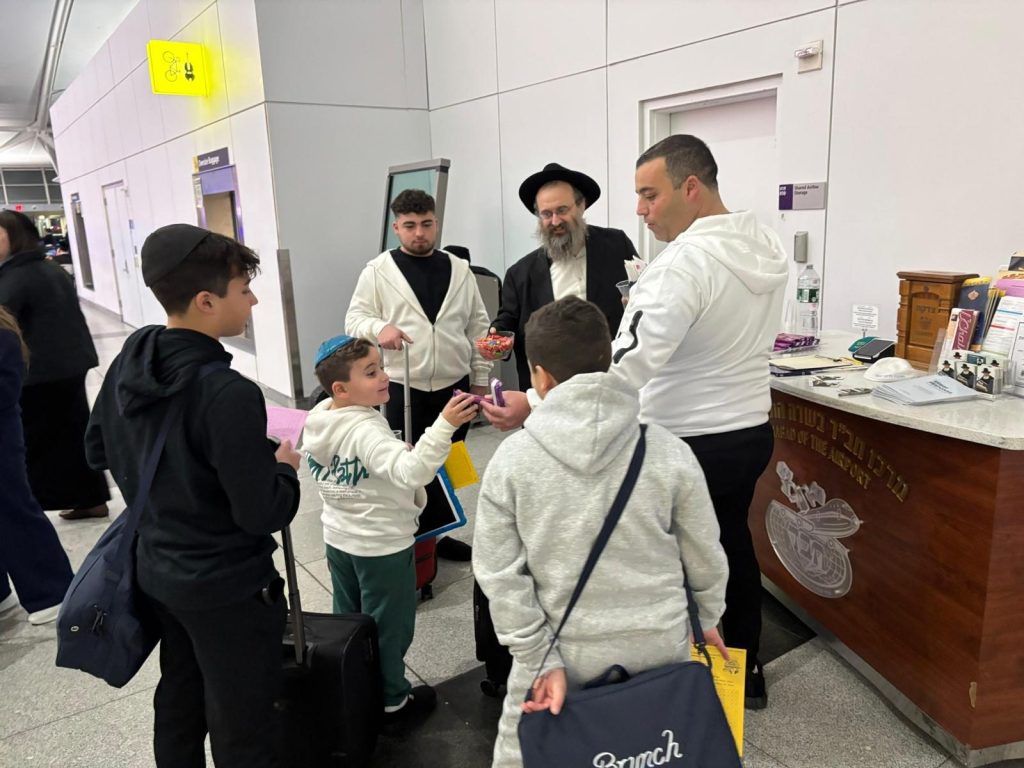
Some put tefillin on travelers. Others distribute neshek or sign people up for letters in a Sefer Torah. They help people with visas and luggage, bring food to stranded passengers, give travelers shliach-mitzva money, and sometimes bring complete strangers home for Shabbos.
For a Lubavitcher, there is nothing particularly novel about mivtzaim.
What is striking is something else.
For many bachurim, mivtzaim is simply part of the weekly schedule. Then comes marriage, parnassa and a growing family, and without anyone consciously deciding that it should happen, that regular involvement can slowly disappear.
These men decided that it did not have to.
Marriage changed their lives. It changed their schedules. In some ways, it even made going on mivtzaim harder.
But it did not mean graduating from mivtzaim.
The interesting thing is that for at least two of these men, regular mivtzaim had once disappeared from their lives.
Levi Liberow is quite open about it.
“For years, unfortunately, after the wedding I did not go.”
There was no dramatic decision. He got married, started working, raised a family, and somehow the regular mivtzaim of his bachur years became something that belonged to an earlier stage of life.
Yitzchok Raskin’s break came much later.
For years, he had a regular route and often took his children along. Then Covid came, the building he visited shut down, and the routine stopped.
Once it stopped, restarting proved harder than expected.
“It was always on my mind,” he says, “I always wanted to do it.”
What finally changed things was Menachem Gurevitch.
Around that time, Menachem Gurevitch, who was already going to JFK every week, suggested that Raskin join him.
Raskin was interested, but he wasn’t sure where he would find the time.
“I don’t have time. I have a lot on my plate. I’m busy.”
Still, he decided to try it.
He went once.
That was around two years ago. Today, Tuesday morning generally finds him driving out to JFK with Gurevitch and another member of the group. They arrive around ten, spend a couple of hours working the flights, and head back.
When I asked Raskin how he suddenly found those hours, he almost seemed puzzled by the question.
“When you want to do something, you find the time.”
His schedule had not suddenly emptied. He had simply stopped waiting for an empty schedule.
Liberow tells much the same story from a very different life.
He is a photographer, and his regular airport group includes Yossi Cohen, the musician, and Zalman Tevel, the videographer - three married men from the simcha world, where a supposedly free Thursday can disappear the moment a wedding gets booked.
So they work around it.
If Thursday is taken, Liberow goes Wednesday. If one member of the group cannot make it, they switch shifts. With flights leaving JFK throughout the morning, afternoon and night, there is usually another opening.
“A lot of people are not aware how easy it is to find a shift and go,” he says.
Coming from Liberow, the point is especially meaningful. He knows firsthand how easily regular mivtzaim can fall away after marriage - and how different it feels once it becomes part of life again.
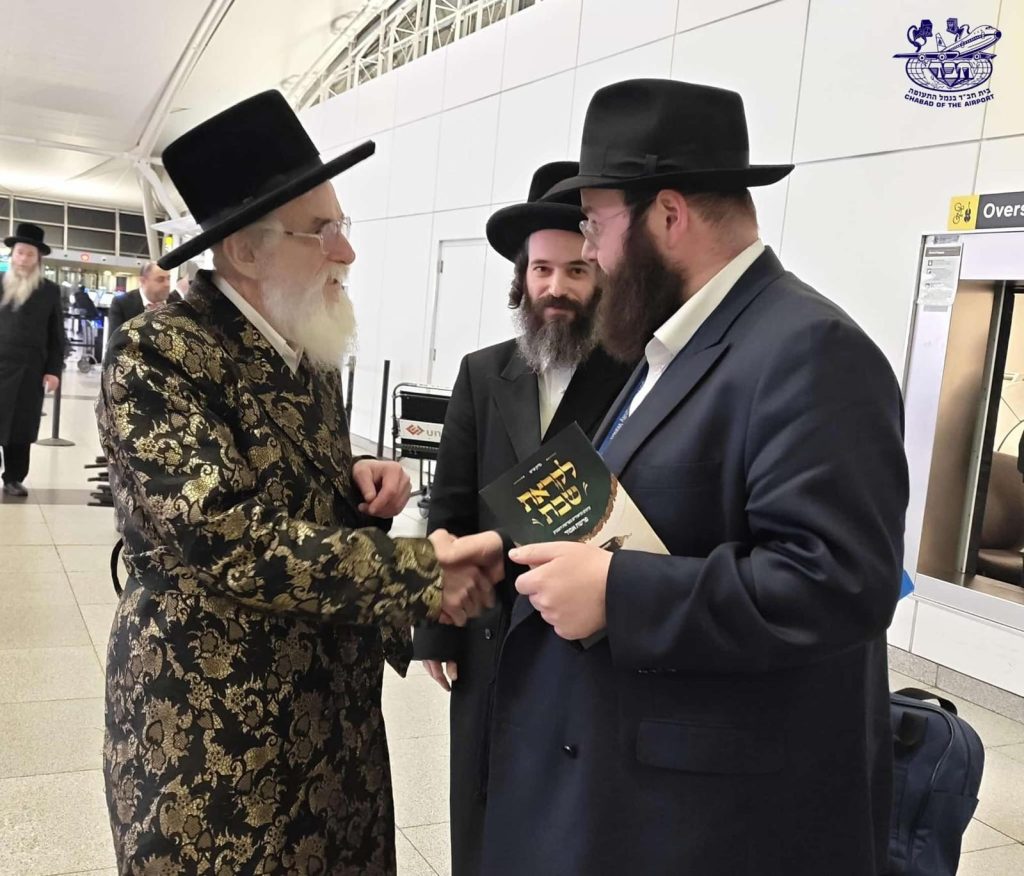
“Once I started, I became addicted,” Liberow says. “It’s not an option not to go. I’m enthusiastic. I’m looking forward to going on mivtzaim.” Shmuly Butler is the one who refuses to let the story become too neat.
When I suggested that perhaps being a balebos gives a person certain advantages on mivtzaim, he pushed back immediately.
“Honestly, I think you’re more limited when you’re a balebos.”
Then he added:
“It’s more of a sacrifice.”
Butler goes several times a week. He teaches, has two children, and knows perfectly well that an evening at JFK is an evening that cannot be spent somewhere else.
That tension never really disappears.
What changes is that, at some point, mivtzaim stops waiting for the free night.
It becomes one of the things the week is built around.
More Than Tefillin
Making the time is only half the story.
Once they are there, though, another difference begins to show. Being a balebos does not necessarily make a person better at approaching another Jew. None of the men I spoke to really claimed that. A bachur may have more energy, more boldness, and sometimes an easier time simply walking over to someone.
But a balebos brings other things with him.
A car. A home. A Shabbos table. And sometimes an entire life that can suddenly become part of the mivtzaim.
Butler saw that once with a young woman from a frum background who brushed him off when he approached her.
“I realized that when someone does that, usually they’re going through something,” he says. “There’s more under the surface.”
So instead of pushing, he changed direction and started talking to her.
At some point she asked whether he had a Chabad house.
“Every Chassid’s home is a Chabad house,” Butler told her.
“Do you have meals like a Chabad house?”
“Sure.”
The conversation eventually led to her spending Shabbos with Butler and his family.
A bachur could have had the same first conversation. What Butler could offer was what came next: a car, a home, a family and a Shabbos table.
And that comes up at JFK all the time.
A traveler is stuck with luggage. Someone needs help with a visa. A passenger has been delayed for hours and needs food. At JFK, mivtzaim can quickly move beyond the initial mitzva. Sometimes the first thing a Jew needs is simply help getting through the airport.
Butler remembers a group of Israeli teenagers from a very secular background whose trip had become a mess after a delayed connection. The volunteers went out and brought them kosher pizza.
The kids were surprised that a group of visibly frum Jews had gone out of their way for them. During the interaction, some of the boys put on tefillin, while the girls received neshek.
“Helping a Yid in gashmiyus,” Butler says, “gives them a whole other yachas.”
Raskin, meanwhile, found a different way to use the airport itself.
He kept seeing all these Jews getting on planes - going to Eretz Yisrael, going elsewhere - and began thinking about the Rebbe’s practice of giving travelers money for tzedaka, making them shluchei mitzva.
Why not do that here?
So Raskin paid to have a proper card designed, attached a coin to each one, and began handing them out to travelers with the request that they put the money in tzedaka when they arrived.
“You make him a shliach mitzva,” he says.
The effect is simple but powerful: the traveler is no longer merely passing through JFK; he is leaving with a mitzva to do at the other end.
Liberow sees yet another side of it.
As a photographer, he is constantly running into people at JFK whom he knows from weddings and simchos, often people from outside Lubavitch. They know him as the photographer. Then they see that same person standing in the airport doing mivtzaim.
That makes an impression.
“Wow,” they tell him. “Working people also do it, not just bachurim.”
And they remember it. Liberow says that months later, at another simcha, people will sometimes bring it up again.
The photographer they know from the simcha is the same man they now see standing at JFK, asking another Jew to do a mitzva.
The Children Are Watching
There is another consequence of going on mivtzaim as a balebos, and it begins before he ever reaches JFK.
His children know where he is going.
Raskin sees that very clearly.
When he first started going again, the question naturally came up: what does his family think about Tatty disappearing for several hours every Tuesday?
Raskin almost seemed surprised by the question.
“There’s no tension at all,” he says. “They’re very proud.”
More than that, his children often want to come along.
Raskin had already made a habit of taking them on mivtzaim when they were younger. For years, he would bring them with him on his regular route. Today, when school schedules allow, they still ask to join him at the airport.
“My kids love to come with me,” he says. “Whenever there’s an opportunity, they ask, ‘Could I come with you?’”
For Raskin, that is part of the point.
A father can talk endlessly about what a Chassid is supposed to value. But children are also watching what actually gets space in his week.
“You walk the walk,” he says. “You don’t just talk the talk.”
Butler has found much the same thing.
He sometimes brings his own children to JFK, particularly when the opportunity works out around Yom Tov. And he deliberately brings students on mivtzaim as well - even when, from a purely practical standpoint, it would be easier to leave them behind.
Some of the boys are slower. They may need encouragement. Butler could probably accomplish more in the same amount of time on his own.
That is not necessarily the point.
He spends much of his week teaching boys about the Rebbe. Going to JFK allows them to see that those lessons are not only something their teacher speaks about in a classroom. Liberow is already at a different stage of life. His children are grown, some are married, and there are grandchildren as well.
Yet he says the effect is still there.
They know that there is a time during the week when their father - or grandfather - is going on mivtzaim, and that other things have to work around it.
For a married man, family responsibilities can easily become the reason mivtzaim falls away.
For these men, the family has become part of the reason it stays.
What They Bring Home
There is another reason they keep coming back.
Ask these men why they return to the airport week after week, and eventually they begin talking about what happens to them there.
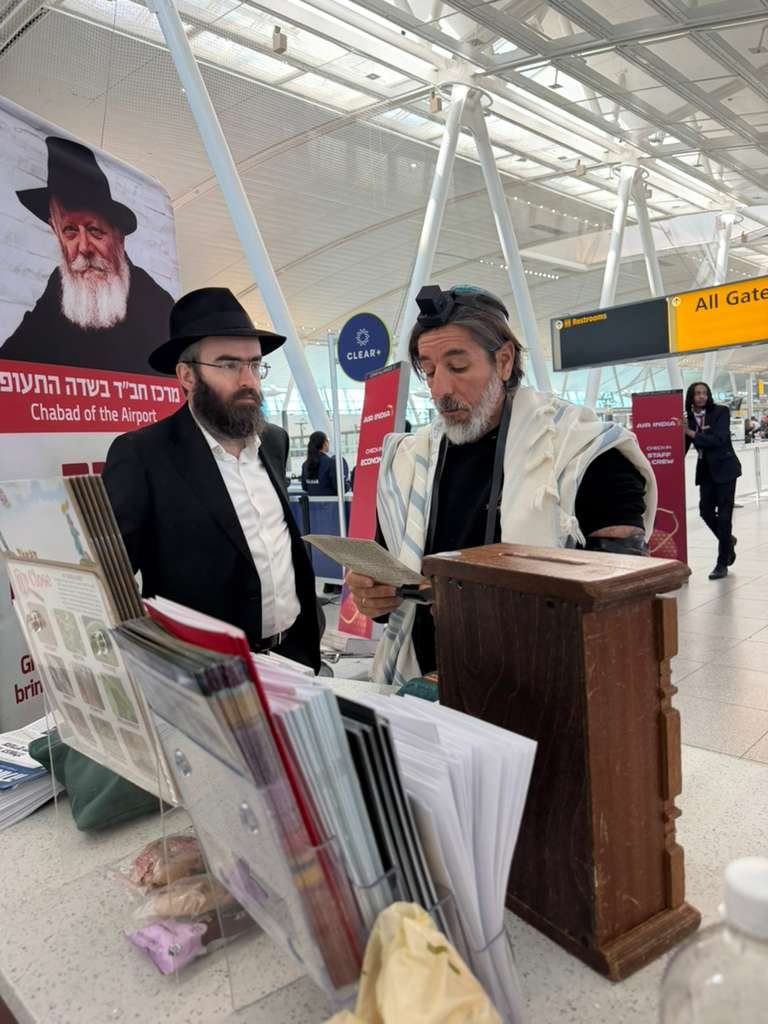
Liberow describes arriving with the idea that he is going to strengthen somebody else and discovering, repeatedly, that the opposite happens as well.
“You feel like you’re going out to be mechazek people,” he says, “but at the end you come back with a chizuk yourself.”
Travelers stop and tell them stories - about the Rebbe, about an answer they received years ago, about a bracha that stayed with them, or about some part of their own connection with the Rebbe. Sometimes people are willing to share the story but not their names; other times they simply begin talking because they see the Chabad stand and something comes back to them.
“You come back from mivtzaim on a high,” Liberow says.
Raskin describes the same phenomenon in his own way.
JFK brings every kind of Jew past the stand. Frum, not yet frum, Litvish - people from every background. Some stop for tefillin. Some only want a cup of water. Some come over simply because they are happy to see another frum Jew in the middle of an airport.
Raskin has also begun recording some of the more remarkable stories people tell, particularly about their connection with the Rebbe. He says that over the past number of years he has been struck by how many Jews speak openly about going to the Ohel and how proudly they describe those experiences.
“It’s very geshmak,” he says.
And that geshmak tends to spread.
Raskin himself started after Menachem Gurevitch asked him to come. Once he began going, he started encouraging other friends. Some were hesitant. They came once, discovered that they enjoyed it, and began showing up regularly themselves.
“It’s like a domino effect,” he says.
Liberow has seen the same thing. A yungerman comes once with someone more experienced, learns the rhythm of the airport, and then begins bringing somebody else.
That may explain why the group of married men at JFK has continued to grow.
Not everyone needs to begin with a grand commitment.
Sometimes it begins with nothing more complicated than a friend asking, “Do you want to come with me?”
For all three men, the point eventually comes back to something very basic.
Mivtzaim was never meant to be something a Chassid does only because it appears on a yeshiva schedule.
Raskin puts it most bluntly.
“This is in our DNA,” he says.
For him, going to JFK is not primarily about nostalgia for what he used to do as a bachur, and not even about the brachos he says he has seen from it.
“You want to be able to connect another Yid to the Rebbe,” he says. “The Rebbe is demanding it, but ultimately it should be your inyan.”
Butler says it in his own language. When I asked what drives him to keep spending evening after evening at the airport, his answer was short.
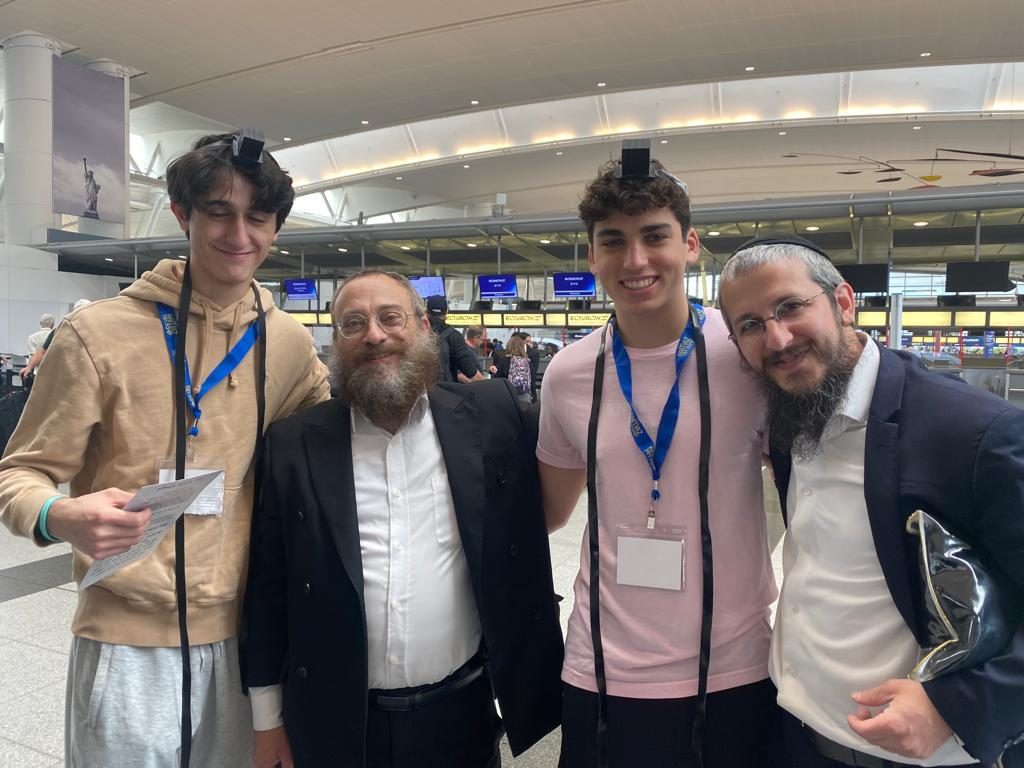
“To bring a Yid closer to the Rebbe.To prepare the world for Moshiach.”
And Liberow, perhaps because he spent years after marriage without regular mivtzaim, speaks less in slogans and more from experience.
“Once I started, I became addicted,” he says. “It’s not an option not to go.”
That may be the strongest answer to the question the article began with.
Marriage changes the schedule. Parnassa changes it further. Children make it fuller still. None of these men deny that.
But none of them see those changes as a reason for mivtzaim to belong to the past.
For them, mivtzaim has simply grown up with them.
The bachur may have gone out with a pair of tefillin and a route. The balebos may arrive with a car, a home, a family, a profession and a far more complicated calendar.
The mission itself has not changed.
And sometimes, as Raskin discovered, it begins again with something as simple as another yungerman asking:
“Do you want to come with me?”
Beis Moshiach #1524 • י״ד תשרי תשפ״ז • pp. 10-18
© 2026 Beis Moshiach Magazine. All rights reserved.
This article originally appeared in Beis Moshiach #1524. You are welcome to share it with friends and family by email or in print, provided that you do not change, add to or omit any part of it, you credit the author and Beis Moshiach, and you include a link to archive.bmoshiach.org (written out in full in printed copies).
To republish this article in a newspaper, magazine, book or website, please request permission in advance at [email protected].