The Stranger at the Door (1)
A New Mini Series
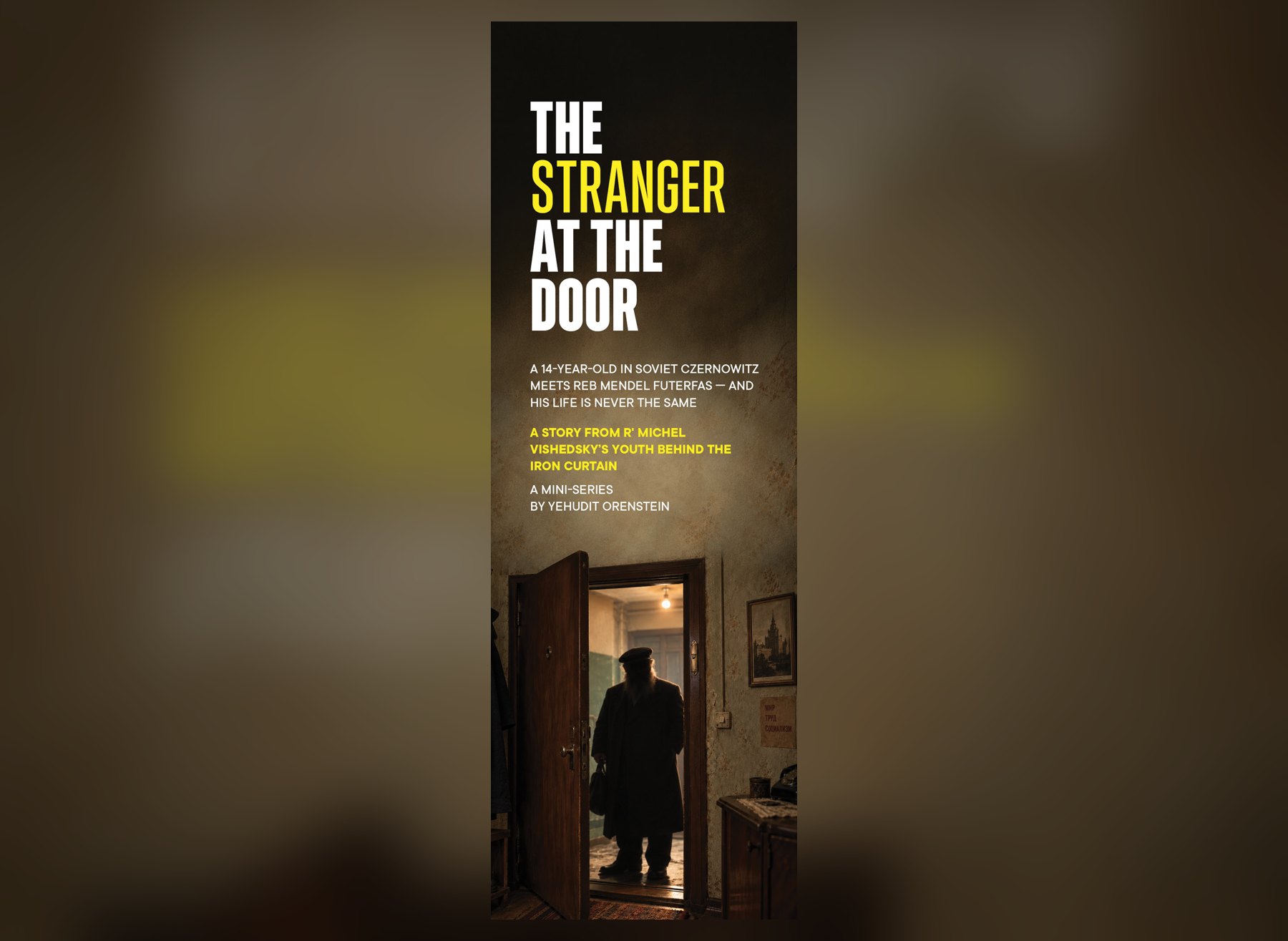
A 14-year-old in Soviet Czernowitz meets Reb Mendel Futerfas - and his life is never the same. A story from R’ Michel Vishedsky’s youth behind the Iron Curtain.
Czernowitz (a city in the Soviet Union). 5714 (1955). Age 14.
A man of modest stature, with a thick beard and piercing eyes, stands at the doorway of our home, a foot and a half away from me, his gaze moving slowly over my face.
I blink at him. The tiny curls of hair on his cheeks make me pause, and I study his face for a moment.
A beard. A beard!
Is there another bearded man in the Soviet Union, besides my father?
“Is this the home of R’ Meishe Vishedsky?” he asks in a distinctive, hopeful voice.
So he knows father! Who could this Chassidic stranger be?
I nod.
His face lights up suddenly.
“And is your father home?”
“May I know who you are? What should I say to father?”
“My name is Mendel Futerfas. I’m a friend of - ”
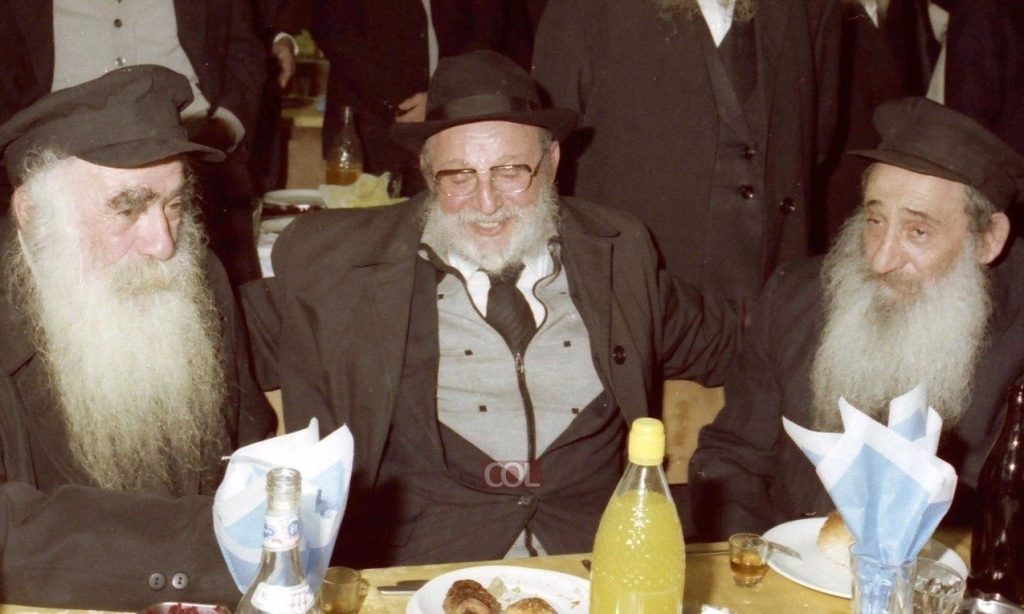
“Reb Mendel Futerfas?!” I gasp, louder than intended.
* * *
Maybe I’m dreaming. Or imagining it.
After all, even my history teacher wrote in my report card this year: “Possesses a vivid imagination that truly brings the material to life.” And she was right. For me, stories were facts. I always saw everything I read - more than saw it: I heard it, smelled it, touched it. I could even whisper instructions to the characters, now and then.
And there were no stories more thrilling than those told about Futerfas. They said he defeated the gypsies in the forest and rescued a kidnapped girl from their hands - in a battle that made the ground tremble.
They whispered that he once hung from a pole outside a train, his clothes flapping in the wind, traveling from Moscow to Kharkov to organize melamdim for a handful of bachurim. They also praised him for smuggling all of Chabad into Poland, and then staying behind to gather the last sparks of light.
Could this really be him?
* * *
“Mendel!” father shouts from behind me and is already running toward the door. The two men embrace, crying, then sit down. For five minutes they look at each other in silence, and then they begin to cry again.
Mother brings them black tea with trembling hands - the liquid nearly spilling over - and two small saucers of store-bought varenye [Russian jam], sweet cherries mixed with sugar.
And I am still standing there, frozen. This really is Reb Mendel Futerfas! It’s really him… who would have believed it?!
Since father was released from prison two months ago, he’s told the family about his meeting with Reb Mendel. But who could have imagined that Reb Mendel Futerfas would be released as well? And why did he come specifically to us? And how, Ribono Shel Olam, did he know the address?
I let my gaze linger a moment later. Reb Mendel is a legend - or at least, the stories about him were.
And legends don’t invite questions.
* * *
Father and Reb Mendel disappear from sight before I even have a chance to sit with them, shutting themselves away in the bedroom. I remain standing for a moment, staring at the closed door.
“Come, Michel, we’re making lunch,” mother calls, and I hurry over to help.
She hands me a bowl of potatoes, and I peel them so quickly that I nick my finger. Then I run to the store to buy ten eggs - “but the biggest ones they have” - for the tall torte cake she never makes on a weekday.
* * *
Two hours later, mashed potatoes, melted with butter, are served to the newly freed prisoners, and we sit down around the table.
They talk - mostly Reb Mendel talks - and I lean forward, captivated. Before I know it, I’m just staring at him, at the force of nature that is Reb Mendel. His spirit washes over me, quieting all the surrounding sounds: father’s words, the clink of forks on plates, the smell of the tall torte, the taste in my mouth, the air on my skin, the chair beneath me, the fabric against my body.
* * *
“Who’s the bachur?”
The wonder in Reb Mendel’s voice feels different from the warm, flowing, magnetic tone that had drawn me in just a minute ago.
He must be asking about a bachur who’s actually here in the room - not me; he’s already seen me. My brother Bentzeh isn’t supposed to be back at this hour, so which bachur -
Oh, how did I forget!
The bachur - Elya Volovik, my chavrusa today. How did I not notice him coming in?
“Sorry I didn’t greet you earlier…” I whisper to Elya, who’s now sitting beside me with a furrowed brow. “Reb Mendel… he’s just so…” I wave my hands, trying to capture the feeling. “A legend. You noticed, right?”
Elya nods slowly.
I’m about to add something else when Reb Mendel turns in our direction. “So, what else do you learn? What do you do all day?”
“To explain, I need to give a bit of background,” I say, standing and motioning for patience. “Seven years ago, there was a Talmid Chacham, a Vizhnitzer Chassid, named Reb Chaim Meir Kahane…” For a few minutes, I tell him about the Vizhnitzer who teaches us secretly every morning.
As I speak, Reb Mendel’s face changes. His eyes become sparkling stars, his cheeks soften to a rosy glow. A warm, gentle light seems to wash over him - like something I only ever imagined. When he speaks again, his voice rises an octave, as if announcing something extraordinary.
“And during the rest of the day?” he asks.
“Of course, I learn with father too.”
Reb Mendel nods.
“I also try to help mother - fixing little things, playing, reading a bit…” A picture of School No. 2 in Chernivtsi, where I study, flashes in my mind. “And I also, um - ” My voice falters, and my eyes drift toward father. A moment of silence passes, then he gives the slightest, slow nod. “I study at…” Reb Mendel’s eyebrows rise slightly. He clearly doesn’t understand why I’ve started pausing after every word. “Shkola [The general russian school, Russian.],” I finish.
Reb Mendel’s face drains of color. His eyes narrow, lips tighten. He lifts his head slightly, glancing sideways at father, who nods quickly. Reb Mendel nods too - but very slowly.
The silence could be cut with a spoon.
To be continued
Beis Moshiach #1524 • י״ד תשרי תשפ״ז • pp. 58-59, 63
© 2026 Beis Moshiach Magazine. All rights reserved.
This article originally appeared in Beis Moshiach #1524. You are welcome to share it with friends and family by email or in print, provided that you do not change, add to or omit any part of it, you credit the author and Beis Moshiach, and you include a link to archive.bmoshiach.org (written out in full in printed copies).
To republish this article in a newspaper, magazine, book or website, please request permission in advance at [email protected].