In Lubavitch There’s Only a “Mivtzaim Brigade”
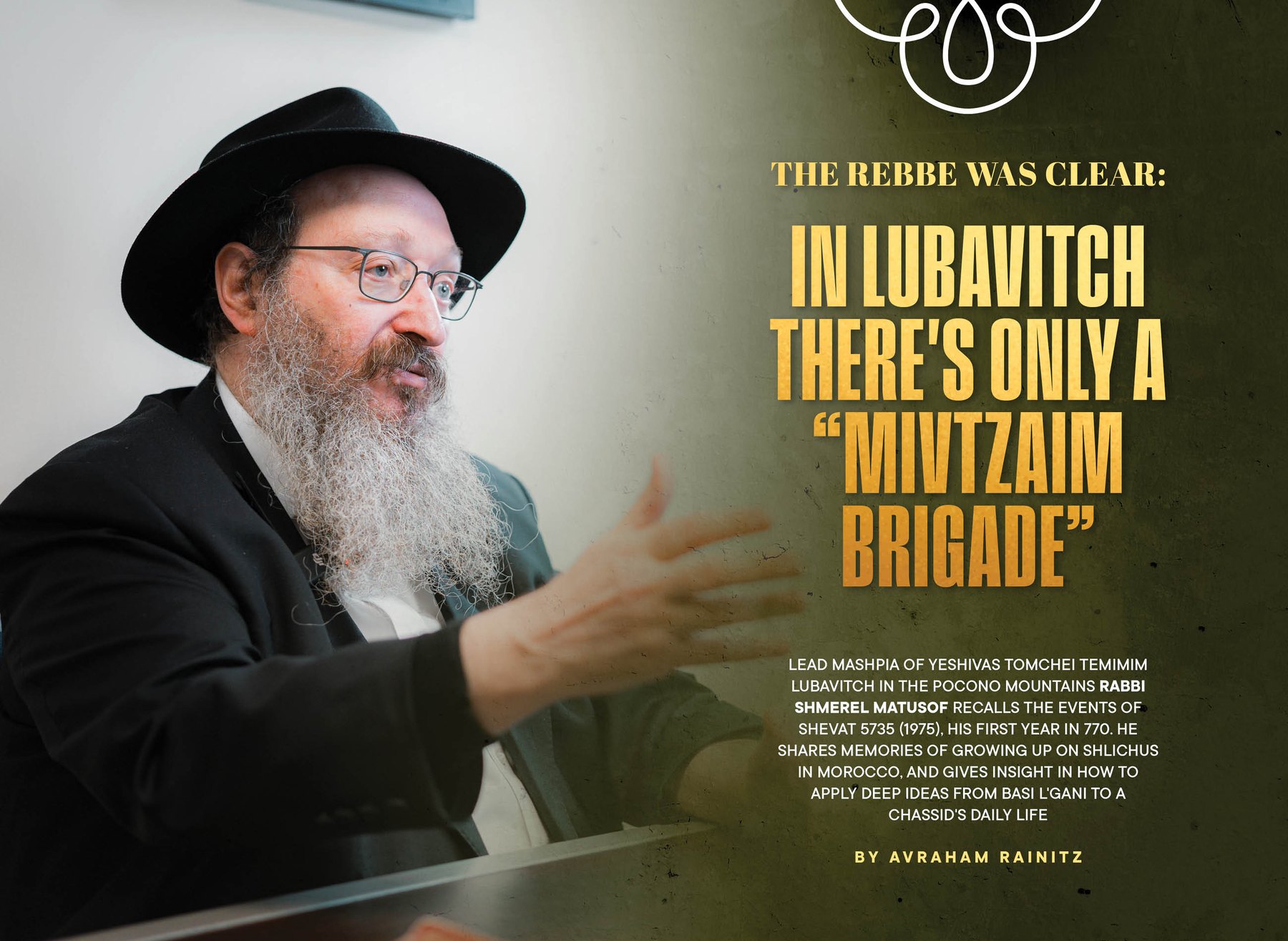
Lead mashpia of Yeshivas Tomchei Temimim Lubavitch in the Pocono Mountains Rabbi Shmerel Matusof recalls the events of Shevat 5735 (1975), his first year in 770. He shares memories of growing up on shlichus in Morocco, and gives insight into how to apply deep ideas from Basi L’Gani to a Chassid’s daily life.
On one of the preparation days for Yud Shevat 5785, I made my way to the snowy Pocono Mountains. There, among groves of snow-covered trees, the Tomchei Tmimim Yeshiva – Poconos branch – glows with warmth and light. I sat down for a farbrengen-conversation with the head mashpia of the yeshiva, Rabbi Shmarya (Shmerel) Matusof.
Rabbi Matusof had the privilege of nurturing his Chassidic roots in the home of his father, Rabbi Shlomo a’h, the Rebbe’s shliach to Casablanca, Morocco. For twenty years (5735-5756/1975-1996) he merited to be in and around 770 and to see and be seen on the great and holy day of Yud Shevat in the Rebbe’s presence.
Our conversation jumped between his memories from his father’s home, Yud Shevat 5735 – the first time he merited to be at Beis Chayeinu, including the affair that stirred up Lubavitch that year [see below], and of course the maamarim of Yud Shevat belonging to this year [5785] and the relevant messages arising from them. The sum total of the conversation naturally leads to the main shlichus today: accepting the malchus of the Rebbe MH’M and preparation for greeting him teikef u’miyad mamosh.
Hiskashrus From Home
Rabbi Shlomo Matusof was sent by the Rebbe to Casablanca, Morocco back in 5711, where he worked for about fifty years, establishing Chabad institutions in dozens of cities and villages throughout Morocco.
As a child, you were surely educated at home to hiskashrus to the Rebbe. How was this expressed in the relationship of other Moroccan Jews to the Rebbe? Did they speak with them about this?
Certainly! In my childhood, after the shluchim had already worked for many years in Morocco, one could say that for Moroccan Jews it was simply understood that the Rebbe is the Nasi and Tzaddik of the generation. As a child I saw the expression of this even in small things, like the children wanting a picture of the Rebbe. Reb Leibel Raskin would come from the Rebbe with a supply of small pictures, and to get one picture, we had to learn Mishnayos and be careful about good conduct. Of course, everyone who had a picture of the Rebbe treasured it.
Similarly, when Reb Binyamin Gorodetzky would arrive from the Rebbe and distribute Chanuka gelt or mashke from the Rebbe, everyone wanted to receive the coins or the mashke of the Tzaddik of the generation. They didn’t just hear about this from the shluchim, for their own rabbanim also spoke admiringly about the Rebbe, and this influenced everyone.
How did you mark Yud Shevat in Morocco?
Throughout the year, tefillos in the shul were conducted in the Moroccan nusach, but everyone knew that when Yud Shevat arrived – the day of the hilula of the Rebbe Rayatz – my father would lead the davening using the Chabad nusach. After davening they would study the perakim from the maamar “Basi L’Gani” exactly as is customary in all Chabad shuls. Afterward, they would study the Mishnayos of the letters of the name, and of course – hold a Chassidishe farbrengen.
These farbrengens were a special opportunity to speak about the fact that the Rebbe is the Nasi HaDor and cares for every Jew in everything they need. Moroccan Jews knew that when they needed a special bracha, the Rebbe is the address. Sometimes the Rebbe answered them directly and there were also times when the Rebbe conveyed the response through the shluchim, so they would explain things.
I’ll tell you a story I heard from my friend, R’ Yaakov Bitton, today a shliach of the Rebbe in Sarcelles, France, and in his childhood he was our neighbor in Casablanca. He told me that his father – Rabbi Shimon Bitton – would learn “Chok L’Yisrael” every day, and one day he noticed that at the end of his learning his father would take out an additional sefer from the bookcase, look at it briefly, and return it to the shelf. After asking his father about this, his father told him that many years ago, when his wife was pregnant, the doctors claimed that the fetus endangered the mother, and she should have an abortion. They already knew that in such matters one asks the Nasi HaDor, and after they sent a letter to the Rebbe – through my father – they received the Rebbe’s bracha that the pregnancy would be fine and easy, and the Rebbe instructed him to begin learning Chitas. He was already learning Chumash and Tehillim, and because of the Rebbe’s instruction, my father gave him a Tanya and he began learning Tanya every day.
When R’ Yaakov Bitton heard about this from his father, he was very curious to see the Tanya, and inside the sefer he saw a copy of the Rebbe’s letter. When he saw the date of the letter, he suddenly understood that he himself was the fetus that the doctors wanted to abort, and in fact the Rebbe saved his life! This discovery caused him to connect to the Rebbe with all his heart and soul, and he progressed tremendously in all aspects of Chassidus, until today he is a successful shliach in the city of Sarcelles, whose entire activity is infused with the main shlichus of greeting Moshiach.
The Episode that Stirred Up Lubavitch
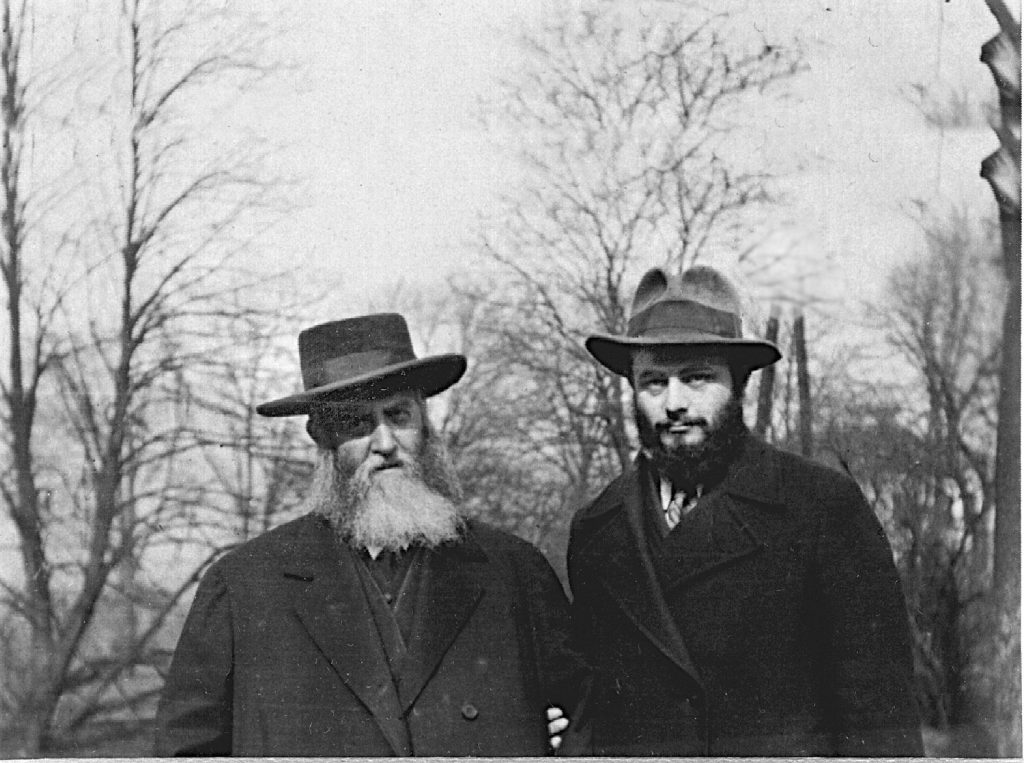
Rabbi Matusof merited to be in the heart of things for many years, from 5735 until 5756 (1975-1996). Besides the sichos and maamarim he merited to hear, he preserves in his mind a treasury of memories from what occurred at 770 in those years. We asked him to focus here on his first Yud Shevat at 770 in 5735.
Anyone who studies the sichos of winter 5735 cannot help but notice the affair that stirred up Lubavitch that year, and the Rebbe addresses it extensively in the sichos. However, in the sichos, naturally, only the Rebbe’s words appear, without the general background. Could you please share the details with us?
In the ‘lameds’ in general, one of the main topics the Rebbe dealt with was “Mihu Yehudi.” In sichos dealing with the subject, the Rebbe referred to the Mizrachi movement whose representatives sat in the government and did not act to amend the “Who is a Jew” law, which should establish that a Jew is one who was born to a Jewish mother or converted according to halacha. Their Knesset members found 150 reasons to permit this, and in practice sat in the government.
In winter 5735, one of their Knesset members spoke on the subject and said that the Mizrachi movement had fought in its time against the Chofetz Chaim, and thus they are fighting now against the Lubavitcher Rebbe. This was published in the newspaper, and the Rebbe addressed this at the Yud-Kislev farbrengen and said that on one hand it’s an honor for him to be compared to the Chofetz Chaim, and on the other hand he wonders how the talmidim of the Chofetz Chaim did not protest the disgrace to their rebbi’s honor.
The Rebbe then said, “it is my obligation, in order to separate from sinful behavior, to protest in any case,” and added that “if there are ‘his seed among the living’ – living talmidim of the ‘Chofetz Chaim’… surely they will fulfill what the Chofetz Chaim paskened in his sefarim how a Jew must conduct himself according to the Torah ‘and you shall not fear any man.’”
At the farbrengen the following Shabbos, the Rebbe added that in fact a meeting was held by talmidim of the Chofetz Chaim to defend his honor, but in practice they decided to keep the content of the meeting secret. The Rebbe clarified that when one speaks publicly against the Chofetz Chaim, there is no choice but to make a public protest.
After the farbrengen, Anash and the Tmimim organized to publish protest notices against the disgrace of the Chofetz Chaim, and of course also against the disgrace of the Rebbe himself. I remember how they collected a dollar from each person, and afterward published a large notice in the Algemeiner Journal newspaper. In addition, they also published a notice on behalf of Rabbanei Chabad, and since this was done because of what the Rebbe said at the farbrengen, they didn’t wait to inform each of the rabbis whose name would appear in the notice, but rather included the names of all Chabad rabbanim.
The son-in-law of one of the elder Chabad rabbis was one of the leaders of the Mizrachi party in the United States, who had a regular Yiddish column in the Forward newspaper. He asked his father-in-law whether they asked him before they published his name in the protest notice, and when his father-in-law responded that they didn’t ask him – he jumped on this and published a column against Chabad Chassidim while along the way attacking Chabad’s involvement in the Tefillin Campaign and Mezuza Campaign.
Here we saw how the Rebbe stood with full force to defend the Chassidim working in the holy mivtzaim, so that ch’v there would be no reducing them in the face of the sharp attack in the press. At the Yud Shevat farbrengen, the Rebbe spoke painfully about the attempt to renew the controversy against the Alter Rebbe, and that they are not ashamed to provoke yungeleit who are moser nefesh and bring merit to Jews with the mivtzaim.
The Rebbe then mentioned the story that once he gave tzedaka to a poor person at night, and a Chassid commented to him that according to the writings of the Arizal, the time for tzedaka is during the day and not at night. When he told the Rebbe Rayatz, the Rebbe said apparently the fellow doesn’t give tzedaka during the day, and so it bothers him that someone else gives tzedaka at night… And the Rebbe said, that similarly regarding that one who attacked the mivtzaim – presumably he wears tefillin that are pasul and therefore it bothers him that Jews are busy with the Tefillin Campaign. Later in the farbrengen the Rebbe added that perhaps his mezuzos are also pasul, since he also spoke against the Mezuza Campaign.
Later in the sicha, the Rebbe praised at length the bachurim and yungeleit engaged in the mivtzaim, that they should continue with joy and good heart, and fortunate is their portion and fortunate is their merit, and fortunate are all who support them. The Rebbe expressed that whoever provokes them – provokes the Almighty.
It was astonishing to see how important it was to the Rebbe that there not be even a trace of weakness regarding the mivtzaim, to the point that he went beyond his usual way and spoke very sharply, with frightening phraseology.
After all the sharp words, the Rebbe clarified that since this is a war against the Almighty, it is between him and the Almighty. The Rebbe expressed this in the clearest way by saying:
“I hereby warn with a severe warning, that no one should harm ch’v, so-and-so – not now, and not tomorrow or the day after, even though his hand is still extended… This is a matter and account between him and Hashem… but G-d forbid to harm him. This is something forbidden according to the Shulchan Aruch… and I mean explicitly for each and every man and woman etc.; and whoever conducts himself otherwise ch’v, has no portion or inheritance and has no connection with Lubavitch.”
The Rebbe Clarifies: There is No Terror in Lubavitch
Unfortunately, there were individuals who did not withstand the test, and tried to harm that individual and his family members. Of course, he exploited this to add fuel to the fire, and published a slanderous article under the headline “Terror and Hooliganism on the Jewish Street,” describing a ‘terror cell’ operating on behalf of the Lubavitch movement against anyone who doesn’t toe the line with the Rebbe’s words.
On Shabbos Parshas Beshalach, the Rebbe spoke sharply about this, and clarified that in Lubavitch there are no terror groups, and whoever accuses Lubavitch of terror is worse than Avigdor who arranged the informing against the Alter Rebbe, and even worse than Czar Nicholas himself. In very sharp words, the Rebbe compared this to the publication of the Protocols of the Elders of Zion, which were intended to make pogroms against Jews permissible. Except that, boruch Hashem, today he will not succeed in triggering pogroms, and b’ezras Hashem, he also will not succeed in arousing controversy against the Chassidim.
At that farbrengen, the Rebbe expressed himself in terms we had never heard the likes of… The Rebbe said that “in Lubavitch there is a brigade, but a brigade of mivtzaim, and I lead it. I am the baal ha’bayis of Lubavitch, and I say this with complete breitkeit, and I send them to work on Jews etc.”
This is only a small part of the sharp expressions said at that farbrengen, where we saw how the Rebbe stood with strength and force against ‘your enemies, O G-d, have disgraced, have disgraced the footsteps of Your anointed,’ and together with this clarifies again and again that this is Hashem’s war, and it is forbidden for anyone to respond to this contrary to the Shulchan Aruch.
Two days later, at the Tu B’Shevat farbrengen, the Rebbe again addressed the subject at great length. The Rebbe said that they turned to him with a question how can he say that in Lubavitch there is no terror, when it’s possible that there is one who is hot-tempered, and there is a second who is not a great chacham, and a third who simply doesn’t understand the issue… so that even in the Lubavitch there could be someone who committed an aveira, including also the aveira of terror. And if so, how did the Rebbe say with certainty that in the Lubavitch community there are no such matters?!
And here the Rebbe said things that cannot be understood in two ways: whoever does such deeds removes himself from the category of Lubavitch Chassidim, and therefore there cannot exist a Lubavitch Chassid who commits acts of terror! And in the Rebbe’s words: “If there is someone in Lubavitch who does something that is not appropriate according to the Shulchan Aruch, or contrary to the Shulchan Aruch – he has a war with Lubavitch, with me, with the Rebbe my father-in-law, with the Rebbe (the Rashab), with the Alter Rebbe, and up to, as it were, with the Almighty Himself!”
And the Rebbe added: “Even if they find someone who does such things, it has no connection to Lubavitch. It’s only that there was someone like him, who tempted and incited the Lubavitcher, telling him ‘do this’ and ‘do this,’ until he brought him to do something that destroys Lubavitch, but ch’v to say that he does this as a Lubavitcher!”
Later in the farbrengen, the Rebbe hinted that one cannot pass in silence over the blackening of the face of Chabad Chassidus. Both regarding the writer, and regarding the newspaper that published it, “that is not afraid that they might sue him for a sum of a million dollars,” and later in the sicha the Rebbe mentioned again that in order for the newspaper not to print such things again “it is sufficient that they need to fear what they already printed, knowing that according to the laws of the state they could literally be obligated in monetary payment.”
[At the time I heard that in accordance with the Rebbe’s words, the Rebbe’s secretariat contacted a large law firm which sent a claim letter for a million dollars against the newspaper, for defaming Chabad Chassidus. The newspaper’s managers understood that they could lose big, and therefore offered to fire the writer of the slanderous column, and to publish an apology on behalf of the newspaper toward Chabad Chassidus. The offer was accepted, and this part of the affair also ended.]
As a young bachur, two points were engraved in my memory from this episode:
First, how important it is to the Rebbe that Chassidim go on mivtzaim with a good feeling, and that ch’v there be nothing that would weaken them on the way to the goal – adding Torah and mitzvos to another Jew.
And second, how absurd and spurious the idea of terror in Lubavitch is. To such an extent, that whoever ch’v uses methods of terror, even if his intention is supposedly to defend the Rebbe’s honor and approach – this is not a side ‘offense,’ but something terrible and awful that removes him from the category of Lubavitch Chassidim, and places him in direct war with the Rebbe and the other Rebbes! It was terrible to hear this, but whoever heard it would never even think of taking such actions. Clear and simple!
And from all this we learned how much one must be in absolute bittul to the Rebbe, and even when it seems to someone that is supposedly acting for the Rebbe and for Lubavitch – if he doesn’t verify that his actions match 100% with the Shulchan Aruch and the Rebbe’s instructions, he can find himself in the category of “fighting against Lubavitch,” r’l.
Unfortunately, after Gimmel Tammuz, as a result of differences of opinion in Lubavitch, there are at the extremes people who believe they are permitted to do certain things to advance what they believe in. As long as we’re talking about arguments about the meaning of sichos etc., that’s fine. There are seventy facets to the Torah, and there can be differences of opinion in understanding. But when things descend to actions that don’t fit with the Shulchan Aruch, and all the more so when they contradict the Shulchan Aruch, here we must stop immediately!
I think that whoever listens to the Rebbe’s sicha from Tu B’Shevat 5735, will not even think of going in such ways. And whoever already transgressed, as the Rebbe expressed in that sicha, one must “rely on the fact that ultimately ‘no one cast off by Him will remain cast off,’ and since he grasped the door handle of the Rebbe my father-in-law, ultimately he will return in teshuva.”
An additional general lesson that can be learned from that painful affair, is that things that sometimes seem like ‘extremism’ supposedly for the Rebbe and in the Rebbe’s name – are revealed in the end to be exactly the opposite, i.e. a war against the Rebbe… Therefore, it is of utmost importance that when an idea arises to perform a certain action that is not written in the sichos and only comes from a supposedly Chassidic ‘hergesh’ – we should never rely on ourselves, but rather obey the Rebbe’s instructions and ask before acting, in accordance with the Rebbe’s guidelines – in matters that touch on halacha, with a Rav who issues halachic rulings; in matters that touch on avodas Hashem, with a mashpia and ‘asei lecha rav.’ And when it concerns a talmid yeshiva, of course he must first consult with the yeshiva administration. When one acts in this way, according to the Rebbe’s instructions, there will surely be siyata d’shmaya to aim for the ratzon ha’elyon, and not chalila the opposite.
From ‘Basi L’Gani’ – To Greeting Moshiach
As mentioned, Rabbi Matusof merited to be in proximity of the Rebbe for close to twenty years. In those years he was a member of the “Vaad Mimush Horaos HaRebbe,” and later also a member of “HaMatteh HaOlami L’Havoas Moshiach,” and was also involved with publishing the Rebbe’s sichos. In 5756, he moved to France where he also served as mashpia at the Tomchei Tmimim Yeshiva in Brunoy, and about a decade ago returned again to the United States, this time as head mashpia of Tomchei Tmimim Yeshiva in the Poconos.
As is known, since Yud Shevat 5711, the Rebbe has explained one ois in the series of maamarim Basi L’Gani that the Rebbe Rayatz published for the day of his passing on Yud Shevat 5710. Thus, this year [5785 – which pertains to this year’s as well] Anash study the 15th letter in the maamar, with the Rebbe’s explanations from 5725 and 5745. We asked Rabbi Matusof to share with us insights from the maamar that relate to daily life.
When one studies the maamar, which deals with explaining the words of the Zohar that the light of Ein Sof (Infinite) is “higher and higher without end and lower and lower without limit,” the matters seem abstract and spiritual. What can we learn from this in practice, in daily life?
First of all, it’s important to emphasize that if in all of Torah it is ‘Toras Chaim’ (Torah of Life) – meaning instruction in life, in the language commonly used by the Rebbe in his talks – then surely this is so in Chassidic maamarim, that we must learn from them practical instructions for daily life. This is especially true regarding the maamarim of ‘Basi L’Gani’ which are the foundation of the seventh generation, and surely they contain practical instructions for us.
The story is known about the venerable Reb Nissan Nemanov, whose daughter’s wedding was supposed to take place on the 11th of Adar 5710, and he deliberated greatly whether to hold the wedding during the mourning period over the passing of the Rebbe Rayatz. He asked the Rebbe about this, and the Rebbe answered him with an extraordinary response (Igros Kodesh vol. 3, letter 562), that certainly he will arrange the wedding and gladden the chassan and kalla with Chabad niggunim and the like. And the Rebbe added:
“It is known that by the Nesiim and particularly I heard that by the Rebbe Maharash of blessed memory, during the saying of the maamar he would say individual words that were relevant only to individuals among the listeners, and each and every one would hear only what was relevant to him. Except that the Rebbe [Rayatz] asked his father that he should also hear all the aforementioned words, and it was granted to him – so I heard from the Rebbe my father-in-law of blessed and holy memory, may his merit protect us, whose soul rests in Eden, the holy of holies.
“And behold, also in the maamar for the day of the passing there are several specific words, and the answer to his question in my humble opinion is the name [title] of Ois 5, and surely he will hear – derheren [Yiddish: truly hear/internalize] – what is written at the beginning of Ois 5 and will make it heard to the chassan and kalla and all those assembled.”
The Rebbe was referring to what is written at the beginning of Ois 5 of the maamar ‘Basi L’Gani,’ about that Tanna who would take a myrtle branch and dance before the bride. And from this the Rebbe derived a practical instruction regarding Reb Nissan’s question.
Regarding our matter, as you mentioned, in this year’s maamarim the Rebbe speaks about the light of Ein Sof, with emphasis on the part of “higher and higher without end.” The Rebbe innovates that even the tzimtzum (contraction) and concealment of the light is part of the Divine plan whose purpose is the revelation of G-dliness in the entire world, and in a certain sense this is a more Divine matter than when the light shines in revelation.
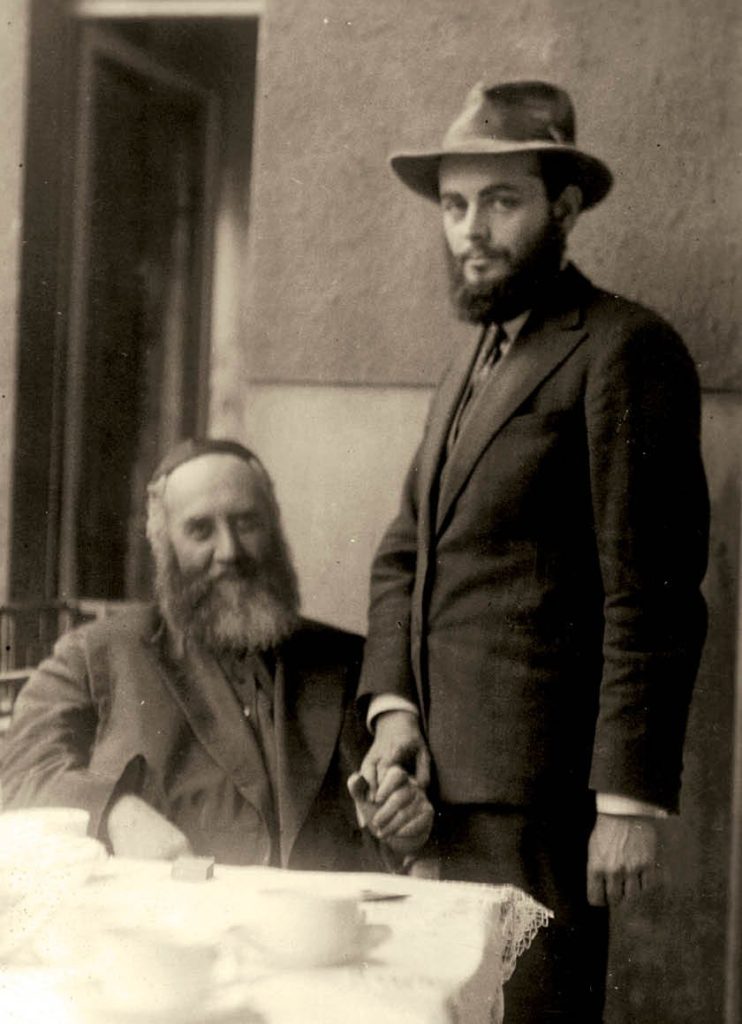
Every Jew has periods in life, including periods of ‘darkness,’ ‘concealment and hiding.’ Even if we are frustrated in general about our generation, in a superficial view it seems that we are living in the more ‘dark’ part of the seventh generation, when we do not see the Rebbe in a revealed manner. In this year’s maamarim, the Rebbe innovates for us that these times that seem to us like darkness are part of the Divine plan to illuminate the world and to illuminate our private lives!
And there is another general matter that I spoke about with the bachurim during the preparation days for Yud Shevat:
When the Rebbe explains that ‘higher and higher without end’ means concealment after concealment – whoever lives with inyanei Geula and Moshiach, this immediately reminds him of what is explained in Chassidus regarding kabbolas ha’malchus, that on Rosh Hashana the Malchus (Kingship) ascends in ascent after ascent, and in concealment after concealment, and our task is to arouse in the Almighty the desire for kingship.
So too in our generation, when we are in a period of concealment and hiding, concealment after concealment – we must effect the inyan of coronation, by arousing in the Rebbe the desire for kingship. And since tzaddikim are similar to their Creator, it is possible and necessary to learn the way to do this from what is explained in Chassidus that the way to effect the desire for kingship is through the bittul of the people toward the King.
Of course, before working on bittul, one must express the desire for kabbolas ha’malchus, to show the Rebbe that we want him to reign over us, as in the words of the Jewish people who stood at Sinai “our desire is to see our King.” After we contemplate this and arouse in ourselves the desire that the Rebbe should reign over us – we must set aside all our will and nullify ourselves completely to the will of the Rebbe, through fulfilling his instructions.
These two stages in accepting sovereignty were correct all the years; but in recent years, when the concealment and hiding are so great that we do not see the Rebbe Melech HaMoshiach physically – there is special emphasis in expressing our desire to see everything physically below ten handbreadths. And as above, our desire is to see our King!
Since the Rebbe’s instruction in 5752, that all matters in the avodas ha’shlichus must be infused with this point, how this leads to greeting Moshiach Tzidkeinu – it is clear that also accepting the Nesius on Yud Shevat must be infused with the point of kabbolas ha’malchus.
In practice, the Rebbe took the avoda of Yud Shevat and continued this avoda throughout the entire year – that every day one must be infused with ‘kabbolas Moshiach Tzidkeinu.’ That is to say, all our avoda must be with the goal of arousing the desire in Moshiach Tzidkeinu that he should want to reveal himself to us. All the more so when the day of accepting the Nesius arrives, surely all the preparations must express this matter – how this arouses in the Rebbe the desire to reveal himself as Moshiach Tzidkeinu.
How can one translate these lofty words into practical application?
First of all, one must express in speech our request from the Rebbe that he reign over us, and in the way of kabbolas ha’malchus on Rosh Hashana, that the Almighty requests from His creatures “say before Me malchuyos (kingship verses), so that you crown Me over you.” Just as we repeat and request in the Rosh Hashana tefillos “our G-d and G-d of our fathers, reign over the entire world in Your glory, and be exalted over all the earth in Your honor,” “and You alone, Hashem, shall reign over all Your works,” and more. And especially through blowing the shofar, which is “the mitzva of the day,” and its main point is the coronation of the King, that we crown the Creator over us, so must we express our desire for the Rebbe’s malchus in a way that will be revealed in all the worlds, through the proclamation “Yechi Adoneinu Moreinu V’Rabeinu Melech HaMoshiach L’olam Va’ed.”
Except that this proclamation must be expressed not only in speech, but also in thought and deed – in extra care in fulfilling all the Rebbe’s instructions.
For bachurim this is expressed in being particular in keeping the sedarim, in addition to the general things that apply to all Anash – Mivtzaim, Chitas and Rambam, conquering the world through Torah study (this year is 40 years from the ‘storm’ the Rebbe made about this in Tishrei-Cheshvan 5745), spreading the wellsprings and spreading the Besuras HaGeula with a koch in matters of Geula and Moshiach.
And in this, each person knows himself. A yungerman who has become lax in the matter of mivtzaim – will commit to go on mivtzaim at least once a week, and there will be kevius in time and kevius b’nefesh that he cannot let a week pass without going on mivtzaim.
Whoever does an accounting with himself and notices that he has been careless in studying the Chitas or Rambam – will begin to be careful about this, and likewise with all the Rebbe’s inyanim and directives.
So too in studying the Rebbe’s Torah, which is important not only to ‘know the deed that they shall do,’ but because “I myself, my soul, I wrote and gave,” the Rebbe put himself into his Torah, and through studying his Torah one connects to him in a pnimiyusdike way.
It’s important to emphasize that personal self-accounting alone is not enough since love covers all transgressions and self-love is liable to confuse us. Therefore one must go to one’s mashpia to discuss with him our state in avodas Hashem, and that he should guide us in what we need to focus on.
But beyond all the individual matters, there are two general matters that in my humble opinion every Chassid must advance in toward Yud Shevat:
A. Study of the maamar ‘Basi L’Gani’ from the years… [5726 and 5746], in accordance with the Rebbe’s custom to teach each year one ois from the twenty in the Hamshech Basi L’Gani of the Rebbe Rayatz.
These maamarim are the channel for this year; through them, the Rebbe is revealed to us on this Yud Shevat. Therefore it’s obvious that everyone must study these two maamarim, each according to his level – some with analysis and discussion, and some by heart. One must know the content of these maamarim and live them until at every meeting of Chassidim – this will be the topic of conversation.
B. To strengthen in studying inyanei Geula and Moshiach, especially in public. Whether by giving a shiur oneself, or participating in an existing shiur. One must know that just as the Rebbe said at the time that through Torah study one conquers the world, so the Rebbe said that Torah study in inyanei Geula and Moshiach is the direct way to bringing the Geula. And therefore this requires special emphasis.
This is what we must focus on especially in the preparation days for Yud Shevat – to nullify ourselves completely to the will of the Rebbe, and not spare any effort required to bring to fulfillment the Rebbe’s will, that every Jew should know about the Besuras HaGeula and prepare himself and his surroundings to greet Moshiach Tzidkeinu, immediately and literally now.
Beis Moshiach #1491B • pp. 12-22
© 2026 Beis Moshiach Magazine. All rights reserved.
This article originally appeared in Beis Moshiach #1491B. You are welcome to share it with friends and family by email or in print, provided that you do not change, add to or omit any part of it, you credit the author and Beis Moshiach, and you include a link to archive.bmoshiach.org (written out in full in printed copies).
To republish this article in a newspaper, magazine, book or website, please request permission in advance at [email protected].