10 Things to Know About Mashke
What They Drank to Celebrate Completing the He’aros
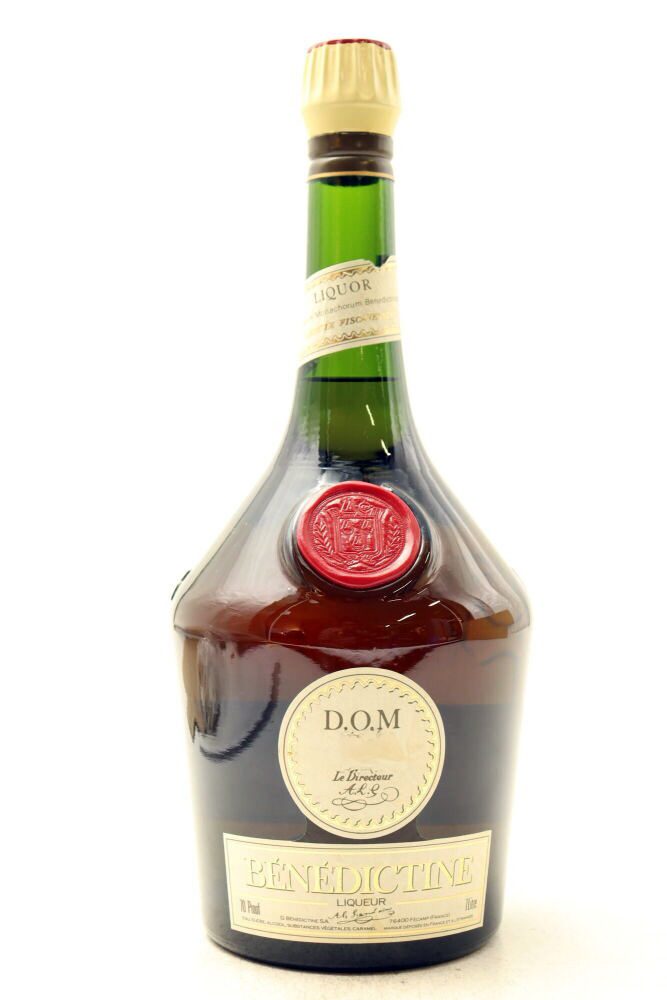
In the year 5633 (1873) and onwards, Bénédictine liqueur became extremely widespread and popular.
At that time, the Rebbe Maharash served as Nasi, and apparently the liqueur somehow reached Lubavitch as well. Such is the way of fine liqueur – it reaches fine places – and Lubavitch is certainly such a place…
On a certain occasion, the Rebbe Rayatz told his son-in-law, the Rebbe, that once, upon completing “the he’aros (annotations) to eleven maamarim,” his father the Rebbe Rashab “called me and ordered me to bring Bénédictine.”
And so the Rebbe Maharash drank Bénédictine, the Rebbe Rashab also drank from it – and so did the Rebbe Rayatz, as the Rebbe wrote: “It has been customary for several years with my revered father-in-law the Rebbe and also with his father to use Bénédictine…”
2
The Mashke in the Royal House
For many years, the mashke that reigned in the capital of the Lubavitch kingdom at 770 was Bénédictine. It was the drink of kings, and there was none other.
For many years, the Rebbe distributed Bénédictine liqueur at farbrengens, and even sent it to various events and individuals. In a letter the Rebbe sent in 5711, he updates the Chassid, Rabbi Shneur Zalman Gurevitz that “in due time the mishloach manos was received – a bottle full of Bénédictine – and thank you for this.”
3
An Unexpected Response
The Rebbe also customarily sent mishloach manos annually to the Rebbes of Boyan, Amshinov, and Kapischnitz – a bottle of Bénédictine and various mezonos.
One year, the tamim, Moshe Groner was sent to the Amshinover Rebbe to bring mishloach manos on the Rebbe’s behalf. One of those present raised a doubt about the kashrus of the Bénédictine. In response, the Rebbe immediately opened the bottle, poured himself a drink, and drank…
4
The End of the Bénédictine Era in Lubavitch
The later generations are more familiar with Smirnoff, the clear-white liquid that was distributed at farbrengens and was also distributed in small bottles by the Rebbe at ‘kos shel bracha.’ Not many remember the Bénédictine that was used for saying ‘l’chaim’ until, due to an incident that occurred, it was removed from the table of kings…
In the year 5727, one of the Chassidim got up and raised a concern before the Rebbe that there might be an issue of yayin nesech (non-kosher wine) with this liqueur, since it is produced by non-Jews. After repeating his words more than once, the Rebbe announced that for now he would stop drinking this beverage “in public.”
From then on, the Rebbe began distributing Smirnoff vodka.
5
Mashke, So That He Would Stop Being a Child…
At a farbrengen, the Rebbe Rashab said to his son the Rayatz:
“We must be careful about taking ‘mashke.’ I say ‘we’ as a successor for the seat upon which others sat. My father – the Rebbe Maharash – taught me to take ‘mashke.’
At my bar mitzva, my father gave me a full cup – a type of diluted whiskey – to say ‘l’chaim.’ Then those sitting at the table responded and said: ‘But he’s a child’ – and he replied: I am giving him mashke so that he will stop being a child…”
6
L’Chaim V’Livracha / L’Chaim Tovim U’L’Shalom
When saying ‘l’chaim,’ the common Chassidic expression among Chabad Chassidim who respond is ‘l’chaim v’livracha’ (to life and blessing).
The source for this is that this is how the Maggid of Mezeritch and the Alter Rebbe and all the Chassidim after them practiced. They also explained the meaning of the wording, that since when wine enters, secrets come out, which is the revelation of the middos, therefore a bracha is needed, and the formula is “l’chaim v’livracha” – the letters spell “lev-raka” (soft heart).
However, among other Chassidic communities, they customarily wish back “l’chaim tovim u’l’shalom” (to good life and peace), and this formula is also found among our Rebbes with explanations.
7
The Minister of Beverages
“Sar HaMashkim” is the Chassid appointed to distribute the mashke for saying ‘l’chaim’ at the farbrengen to all present.
From the beginning of the Rebbe’s leadership, the great Chassid, Rabbi Mordechai Mentlick began serving as the Rebbe’s “Sar HaMashkim.” At the beginning of every farbrengen, he would pour wine into the Rebbe’s cup and refill it during the farbrengen.
His bittul to the Rebbe could be seen in every detail, especially in the pouring of the wine. The manner in which he approached to pour the wine – with awe and reverence – was noticeable and felt anew each time.
Once, the Rebbe expressed at a farbrengen: “I am happy that Rabbi Mentlick serves me.”
Also at ‘kos shel bracha,’ Rabbi Mentlick would stand for long hours with a bottle in his hands, filling the Rebbe’s cup immediately when it was empty.
After he passed away, he was replaced by the mashbak, Rabbi Berel Junik.
8
An ‘Eis Ratzon’
The Purim farbrengen of 5726 (1966) lasted many hours and was filled with ‘giluyim.’
Towards the end of the farbrengen, the Rebbe announced “whoever extends his hand is given.” The meaning was clear to all present: now is an ‘eis ratzon’ to receive ‘l’chaim’ from the Rebbe and to be helped with whatever is needed. Immediately everyone began running toward the Rebbe’s place and a commotion ensued.
For long hours, masses of people crowded to receive ‘l’chaim’ from the Rebbe’s holy hand. It began in the large zal, continued by the Rebbe’s room, and then when he went out to his car (which was even crushed under the pressure) and even at the entrance to his home where several more Chassidim waited for the Rebbe’s arrival.
The next day too, there were those who waited by the Rebbe’s room when he returned…
9
The Mashke Decree
The mashke regulation is a takana that the Rebbe instituted to limit the amount of mashke drinking among Chabad Chassidim.
This happened on Shabbos Parshas Shemini 5723, when the Rebbe issued a takana for all Chassidim, particularly to those under forty years old, and especially to yeshiva bachurim, to reduce drinking mashke.
Some attribute this to an undesirable incident that occurred as a result of excessive mashke drinking at that time, and some claim that the gezeira came from an ‘awakening from above’ with no connection to any of the Chassidim.
Over the years, the Rebbe mentioned “the mashke restriction” again and again, and even sometimes spoke sharply about the caution required from excessive drinking.
10
There is a Substitute for Mashke
When R’ Yitzchak Holtzman had yechidus with the Rebbe in Adar 5736 and asked in writing about farbrengens with mashke in high school yeshivas, the Rebbe raised both his hands on the desk, banged forcefully on his desk and said there is no need for ‘mashke,’ not even for wine, and it’s possible to simply farbreng with soda…
When R’ Shaul Guvani had yechidus at the beginning of his Kevutza year, 5737, he told the Rebbe that his friends were pressuring him to drink mashke even though he doesn’t like its taste. The Rebbe asked him what beverage he likes, and when he answered ‘cola,’ the Rebbe told him to say l’chaim on ‘cola’ and to tell others that the Rebbe instructed him to do so…
In 5741, Erev Pesach fell on Shabbos. At the Rebbe’s farbrengen held at 1:30, it was already forbidden to drink mashke or wine, and the Rebbe said ‘l’chaim’ on a cup of water.
Beis Moshiach #1495B • pp. 28-31
© 2026 Beis Moshiach Magazine. All rights reserved.
This article originally appeared in Beis Moshiach #1495B. You are welcome to share it with friends and family by email or in print, provided that you do not change, add to or omit any part of it, you credit the author and Beis Moshiach, and you include a link to archive.bmoshiach.org (written out in full in printed copies).
To republish this article in a newspaper, magazine, book or website, please request permission in advance at [email protected].