Shorthand From The Rebbe’s Room
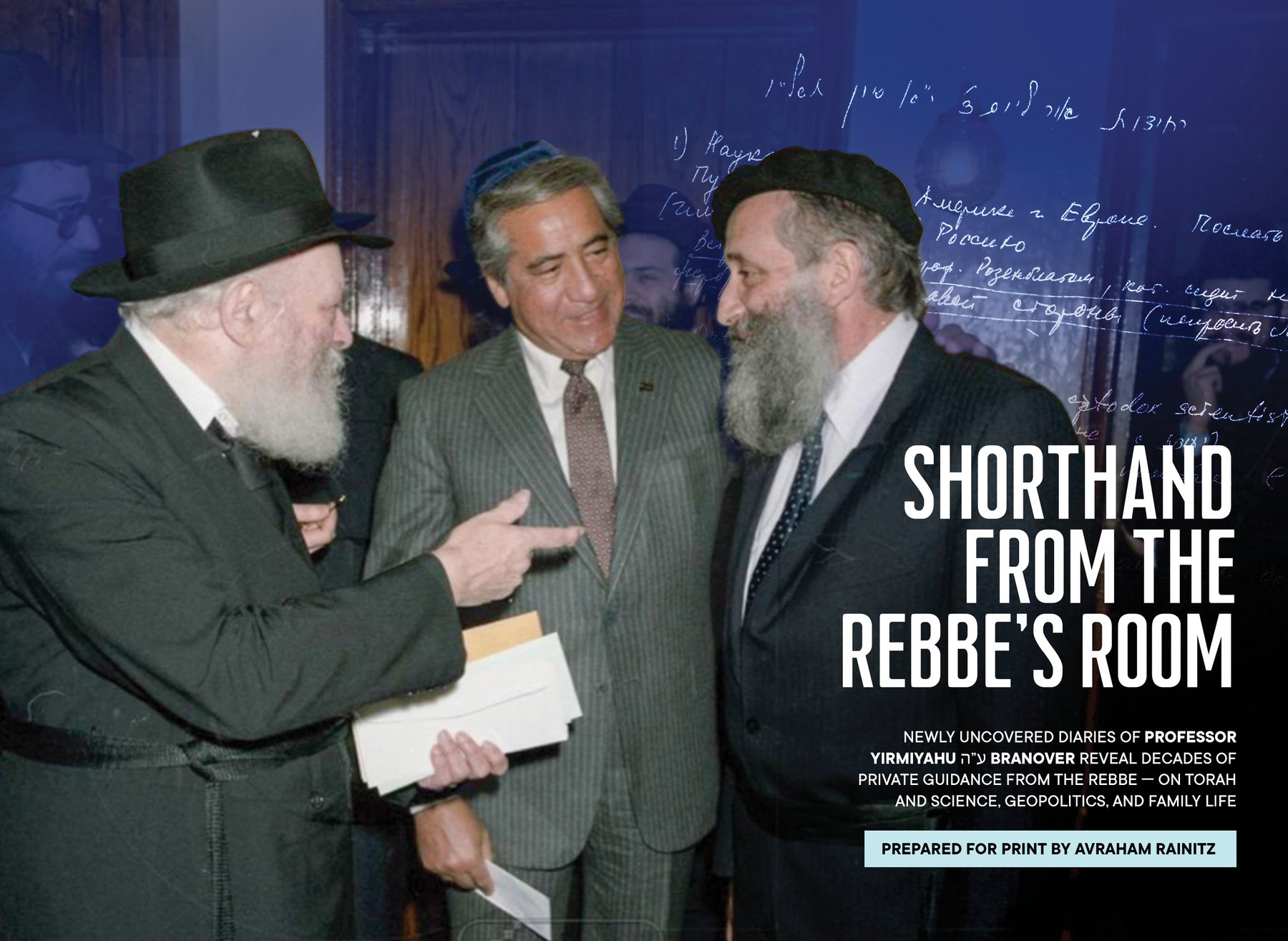
Newly uncovered diaries of Professor Yirmiyahu Branover a”h reveal decades of private guidance from the Rebbe – on Torah and science, geopolitics, and family life.
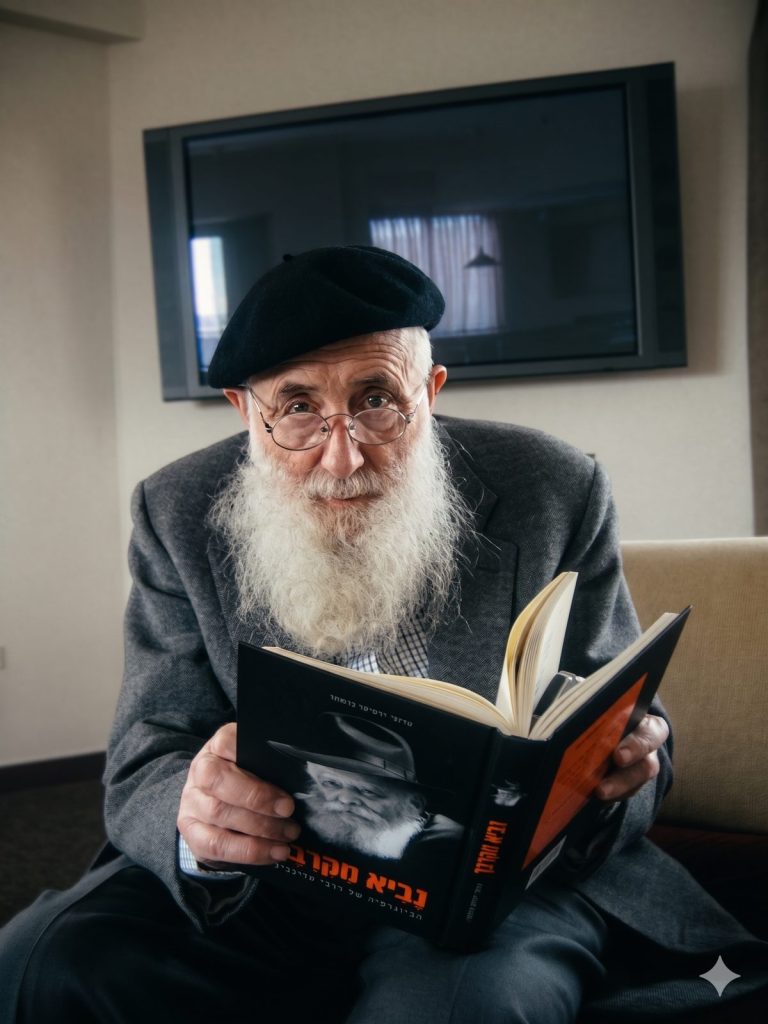
Following the passing of the Chassid R’ Yirmiyahu Branover a’h, we told the exciting life story of the Chassidic physicist. We told how he escaped the claws of the Russian KGB, and how, by instruction of the Rebbe MH’M, he harnessed his analytical mind and his senior academic standing to spark the revolution of return to Judaism among immigrants from the Soviet Union. He led the campaign to prove that there is no contradiction between modern science and pure faith.
We recently received a genuine historical treasure from the professor’s son, R’ Daniel Branover: his father’s personal diary notebooks, in which he documented, in his own handwriting, in Russian (combined with Hebrew and Yiddish terms), the topics that arose, the instructions and guidance he received within the Rebbe’s room during the countless private audiences he merited in the lameds and mems (the 1980s and 1990s).
It is important to emphasize that since these are personal notes that were written down after leaving yechidus, at times the material is only in outline form and in a foreign language, and it obviously did not undergo the Rebbe’s own editing. Therefore, they cannot be treated as precise word-for-word quotations. Nevertheless, the content and messages arising from these notes offer us a rare and authentic glimpse into the Rebbe’s outlook and conduct on a wide range of subjects.
From the pages of his fascinating diaries, a new world is revealed. We get to learn how the Nasi HaDor guided a senior scientist on questions of philosophy and science, how he advised him on public relations and international diplomacy, how the Rebbe waged a persistent struggle against the danger of cults, and how he even gave personal guidance concerning the professor’s family members.
The Torah Needs No Apologies
As a professor of applied physics who founded and led the organization “SHAMIR”—the Association of Academics Observant of Torah and Mitzvos from the Soviet Union—Professor Branover found himself constantly on the front line of outreach, facing the rigid Russian-scientific mindset of the new immigrants. Questions of religion and science, the age of the world, and halacha versus a changing reality were his daily fare.
The Rebbe equipped him with a clear ideological compass, while establishing an iron rule regarding the absolute truth of the Torah as opposed to scientific theories.
At a yechidus held in spring 1980, Professor Branover raised the need to write philosophical works suited to the mentality of the Russian intellectual. The Rebbe, as Branover writes, utterly rejected the notion that halacha could be subordinate to scientific discoveries. The Rebbe made clear that halacha cannot be based on natural and scientific data that is constantly changing, since halacha is a stable and absolute truth, Torah from Sinai.
The Rebbe explained that there is a series of conditions by which a given book is recognized as a halachic work (such as its acceptance by several generations of “gedolei Torah,” etc.). Once it becomes an accepted halachic text throughout the Jewish diaspora, everything written in it is beyond dispute.
From the notes it emerges that the Rebbe instructed him to make a fundamental and absolute distinction between binding halachic rulings and books of philosophical inquiry. To illustrate this, the Rebbe brought the most classic example: the teachings of Rambam. The Rebbe explained that there is an enormous difference between Rambam’s philosophical works, such as Guide for the Perplexed (or Rabbi Yehuda Halevi’s Kuzari), which one may accept or not accept, and Rambam’s halachic composition, the Mishneh Torah (Yad HaChazaka), where every detail ruled as halacha is an absolute truth beyond question.
This uncompromising approach came into even sharper focus when the question of theological apologetics arose. Over the years, there were those who tried to “convert” scientific theories, such as evolution and the development of the world, in an attempt to find favor in the eyes of educated youth. In his notes, Prof. Branover records the Rebbe’s response to the approach of the Tiferes Yisrael (Rabbi Yisroel Lipschitz), who in his commentary on the Mishna tried to interpret the six “days of creation” as long geological periods as an attempt to bridge Torah and science. The Rebbe explained that this theological compromise, even though it stemmed from the good intention of drawing youth closer and protecting them from the influences of the Haskala movement, was rejected because it created an opening for further compromises.
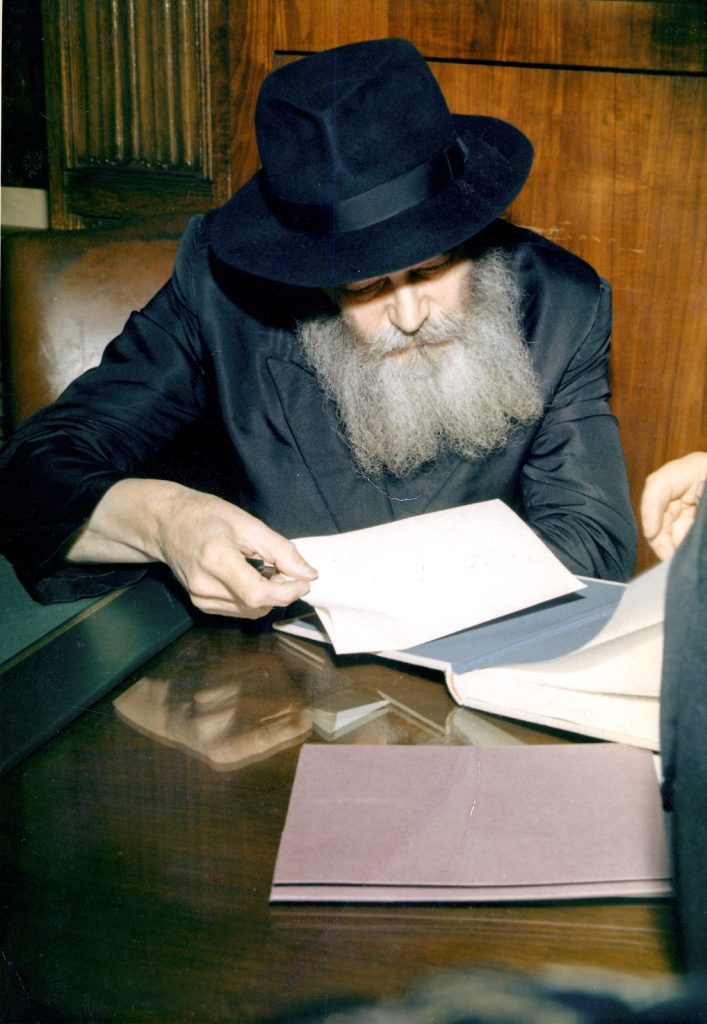
To explain the severity of such a compromising approach, the Rebbe used a vivid parable. The Rebbe recounted that in the past it was customary not to accept a shochet who wore modern galoshes. Seemingly this was merely an external detail, but experience proved that leniency in external matters often testified to leniency and negligence at the very heart of the practice, in the act of shechita itself.
From time to time, the ph professor had to grapple with practical questions: if every halachic ruling of Rambam is absolute scientific truth, how does one deal with Rambam’s descriptions in the Hilchos Yesodei HaTorah regarding celestial “spheres” (galgalim), a concept physics has long since abandoned?
From his personal diary it emerges that the Rebbe gave a fascinating explanation combining Rambam’s words with modern physics. First, the Rebbe clarified that since Rambam wrote about the “spheres” and the “four elements” in his halachic work, there is no doubt this must be understood literally.
At the same time, the Rebbe noted that Rambam himself knew the spheres were not made of solid earthly matter (like “reinforced concrete casting”), since such matter would have melted from the heat of the sun. Therefore, from a contemporary physical standpoint, one can certainly say that the halachic concept of a “sphere” corresponds to what science today calls an “electromagnetic field” rotating together with a celestial body. To reinforce this, he cited astronomical studies searching for magnetic fields around the sun, which were published in the press at that time.
Thus the “outdated” halachic concept became the most up-to-date scientific model.
The Rebbe Directs a Nobel Prize Campaign
In the academic and scientific world, the race for recognition, titles, and prestigious prizes is often seen as driven by personal ego and honor. However, from Prof. Branover’s notes, a completely opposite Chassidic approach is revealed. It turns out that over a long period, the Rebbe encouraged him and even actively and practically guided him, on how to advance his candidacy for the Nobel Prize and other prestigious international scientific awards.
From his notes a striking picture emerges: the Nasi HaDor functioning, as it were, as a visionary “campaign manager.” The reason for this, as emerges from the yechidus records, was not, chalila, a search for personal glory, but strategic and practical foresight. The Rebbe explained to him that a scientist bearing the title “Nobel laureate” could “leverage” his status in the world of philanthropy and raise donations on an enormous scale (the Rebbe used the term “a hundredfold”) for the “rescue campaign”—funding educational, rehabilitation, and spiritual-rescue projects for Russian Jewry.
The Rebbe did not settle for a general blessing but went into the finest details. At a yechidus in 1980, the Rebbe instructed Branover to compile his scientific achievements in the field of solar energy and hydrodynamics, and asked him to gather a list of existing Nobel laureates through whom the relevant nomination could be submitted. The notes mention figures such as Prof. Arno Penzias and Prof. Joshua Lederberg (both Jewish-American Nobel laureates), whom the Rebbe instructed him to contact and enlist in the effort.
Moreover, the Rebbe guided him in the secrets of American public relations and media, explaining that promoting a prize candidacy requires, above all, “publicity.” He even detailed the channels of action: he should secure favorable coverage in the émigré Russian press, in the Anglo-Jewish press in the U.S., and no less in the “major English-language press” in America’s central cities—New York, Philadelphia, Chicago, LA, and Washington. The Rebbe even mentioned to him, according to the personal diary, the names of Chabad activists who could help him gain access to influential circles.
At a certain point it seems the professor felt uneasy about this massive focus on himself. At one of the follow-up private audiences (in Tishrei 5741), he reported to the Rebbe on his efforts and the connections he had made with prize laureates, but admitted his conscience was troubling him, and that he was waking up at night worried about the race for the prize.
The Rebbe immediately recognized that his scientist had lost some of his focus, and said the reason he wasn’t sleeping at night was precisely because he had become too emotionally invested in the race itself. At that point, the Rebbe scaled back the publicity campaign and brought the professor back to basics: “Focus even more on the scientific results,” he instructed him.
The Rebbe added a sober and realistic comment on the nature of the academic world: it’s not possible that Nobel Prizes are based one hundred percent purely on scientific achievement, he explained. That’s simply not how “the human world” works. There are also many political and social motives involved in the selection and therefore he should make efforts in that direction, but certainly should not become psychologically consumed by it at the expense of his academic and research work.
Indeed, this balance between research activity and public activity comes up again in another yechidus, as recorded in the diary. The Rebbe remarked to him that he was being pulled too much into administrative matters of SHAMIR, at the expense of writing articles and research. He suggested hiring an assistant for the SHAMIR office to relieve him of the technical burden. The Rebbe said that in principle he should have forbidden him from managing SHAMIR at all, so as not to adversely affect his research but since this was a “rescue campaign” for Jewish neshamos from Russia, he permitted it on condition that the scientific achievements not be harmed at all.
Alongside encouraging scientific excellence, the Rebbe showed involvement in protecting the Chassidic scientist’s rights in commercial and proprietary matters as well. From the yechidus records it emerges that the Rebbe made sure Branover protected the intellectual property of his patents from exploitation. The Rebbe asked whether the Americans funding the research might take it over, instructed him to consult with patent experts in Eretz Yisrael regarding his financial rights, and even warned him not to reveal “trade secrets” in his academic publications that could undermine the commercial aspect of his inventions.
The Struggle Against Meditation From the East
In the 1970s, the phenomenon of gurus and meditation from the Far East (especially Transcendental Meditation—TM) swept the Western world. This phenomenon began penetrating Israel as well. Thousands of young Jews seeking peace of mind and meaning were drawn to these methods. In response, various elements within the religious public arose, some with good intentions of kiruv or psychiatric help, who tried to “convert” meditation, claiming it was purely a medical-psychological technique, and to offer it in a “kosher” version.
From Prof. Branover’s diaries, dated Elul 1982, the Rebbe’s uncompromising position on this matter is revealed. The notes, spanning several dense pages, document a long yechidus in which the professor laid before the Rebbe the actions of various researchers and rabbanim who tried to adopt the Eastern methods, replacing the Hindu “mantras” with Jewish words such as “Yisrael.” The Rebbe utterly rejected this cosmetic approach and made absolutely clear to the professor that the problem was not only the mantra spoken aloud, but the techniques themselves, which constitute avoda zara. The fact that an idol’s name is replaced with the name “Yisrael” does not render the act permissible.
The Rebbe went into the most precise halachic details of these relaxation techniques. For example, it was mentioned that sometimes during the treatment, a candlestick is placed and fragrant incense is burned in the room. The Rebbe emphasized that this is not merely creating a “relaxing atmosphere,” but is classic idol worship, since burning incense is one of the characteristic modes of avoda zara.
Another example recorded in the professor’s diary concerns the “calming head movements” practitioners were required to perform. The Rebbe explained there’s a difference: if the head movement is side to side (right and left)—that’s more acceptable; but if the rhythmic movement is up and down, that constitutes “bowing” (hishtachavaya), a characteristic form of prostration. Another technique, in which patients were asked to stare at their reflection in a mirror while making head movements, was also defined by the Rebbe as classic idol worship.
The Rebbe did not hide his deep concern about the phenomenon. He warned that an attempt to bring these methods in under a guise of “kosher” status could bring destruction upon thousands of young Jewish souls.
To illustrate the extent of the danger hidden in the brainwashing of these cults, the Rebbe told the professor about a tragic case that occurred in England where, at that time, thousands of “guru” devotees were active, in which a young Jewish girl who had been captivated by their spell burned herself to death. The case, the Rebbe noted, was completely suppressed in the British press, but it proves in a horrifying way that this idol worship is not only a spiritual danger to the soul, but a genuine physical danger to the body.
At that same yechidus, the Professor also mentioned a psychiatrist in Yerushalayim involved in kiruv, who followed Eastern methods and claimed that in the early stages of drawing closer to Judaism, it was better not to teach young people the laws of family purity, so as “not to frighten them.”
The Rebbe reacted sharply to this compromising approach, viewing it as deception and as leading penitents down a path of falsehood. The Rebbe even associatively linked this approach of blurring halacha with “consideration for the soul” to a movement in America that at that time had begun demanding “full freedom rights” for toeiva orientations. The Rebbe firmly rejected the claim of those who argued that this was an “innate” condition, and said a powerful statement: had this condition truly been innate and uncontrollable, the Torah would never have prescribed such a severe punishment for it, since the Torah does not punish a person for something over which he has no choice!
Chassidic Diplomacy: “So They Won’t Know It’s Connected to Chabad”
After the Rebbe made unequivocally clear to Prof. Branover the spiritual and physical danger inherent in Eastern meditation methods (“avoda zara”), a practical question arose: how does one stop the drift? How does one prevent those religious figures who had adopted these methods from continuing to spread them among young Jews under the guise of “kosher soul-healing”? At that same yechidus in Elul 5742, after the Rebbe determined it was essential to appoint a rav to examine these techniques and rule on them halachically, Branover asked the Rebbe: “Does the rav who examines these techniques need to be from Anash, a Chabad Chassid?”
The Rebbe’s response was decisive: absolutely not! The Rebbe gave two substantive reasons. First, Chabad rabbis, being immersed in the world of Chassidus, are not familiar with or don’t understand the language and nuances of Far Eastern methods. The second reason was that it must not become publicly known that the oversight and examination were connected to Chabad or to the Rebbe.
The Rebbe foresaw exactly how public opinion would react. If Chabad were to go out publicly against meditation, opposition would immediately arise. The public, and other religious circles, would accuse the Rebbe and Chabad of conservatism and extremism, and would dismiss the criticism simply because “Yet again, Chabad forbids everything.” He even mentioned with a certain bitterness, past cases in which struggles for the kedushas Yisrael (such as the demand for “halachic conversion”) were exploited by interested parties to attack him and accuse him of “causing polarization.” So who would be the right person for the task? Branover asked.
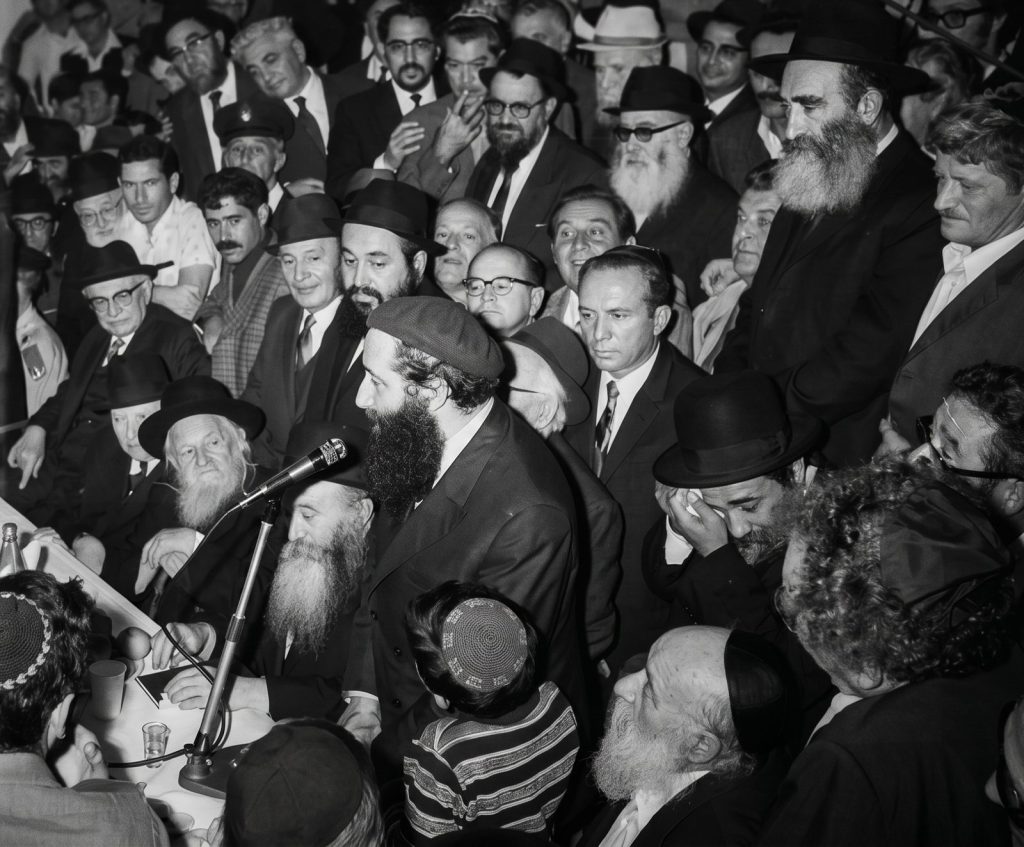
The Rebbe outlined a precise “profile” of the required rav for the professor: he should be among the younger rabbis, capable of understanding the nuances of the subject, fully Orthodox, influential and popular, and most importantly—someone not perceived as an “official Chabadnik.”
The Rebbe even named a specific person: “Do you know Rabbi Yisroel Meir Lau?” (then the rav of Netanya), he asked Branover. The latter answered affirmatively, and the Rebbe noted that Rabbi Lau was an active rav enjoying broad public authority and influence. The Rebbe even remarked with a smile that Rabbi Lau’s father-in-law (Rabbi Yitzchok Yedidya Frenkel a’h, rav of Tel Aviv) considered himself a Chabadnik, while Rabbi Lau himself considered himself “a half or a quarter Chabadnik”… In any case, the Rebbe clarified, an approach to him or to rabbanim like him (who seek to influence pressing public issues) to examine the question of meditation would be welcomed and not refused, and it was he who would bring about the right public solution.
To illustrate the difficulty of finding rabbinic figures capable of combining medical-scientific understanding with firm halachic rulings on such a modern issue, the Rebbe shared with him a disappointment he had experienced in the past.
The Rebbe recounted that he had tried to involve one of the most eminent rabbis, considered a leading world authority in medical ethics and halacha, in this matter. Seemingly, he was the perfect person to thoroughly investigate the psychiatric and halachic implications of meditation methods. But instead of conducting a thorough halachic inquiry, that rabbi chose to consult with an elderly psychiatrist who dismissed the entire meditation matter as “charlatanism” and “nonsense,” and determined there was no need to do anything about the phenomenon.
This story reveals how painful it was for the Rebbe to see men of Torah and science taking modern spiritual dangers lightly and dismissing them as “nonsense,” instead of getting to the root of the problem and saving Jewish souls from assimilation into idol worship.
Diplomacy: From Elie Wiesel to the Egyptian Ambassador
As a world-renowned professor heading an organization of academics, Prof. Branover regularly found himself at sensitive junctures of international diplomacy and politics. From his yechidus diaries, the Rebbe’s guidance on how to navigate this political tangle is revealed—not out of fear or isolationism, but out of pragmatic use of every possible connection for the benefit of Am Yisrael and Eretz Yisrael. At one yechidus, the professor consulted with the Rebbe about whether it was appropriate for him to participate in a major conference in Boston to which he had been invited. The reason for his hesitation was the expected presence of Egypt’s ambassador to the U.S. In those days (late 1970s–early 1980s), political and diplomatic relations were very tense, and Branover feared the implications of a joint appearance alongside an official Egyptian delegation.
The Rebbe’s response was surprising. The Rebbe completely rejected the idea of boycotting, and said there was no doubt he should participate, and moreover, there was nothing to fear from the Egyptian ambassador. The Rebbe noted that this ambassador was considered a decent person, who had in the past even saved hostages. From a strategic perspective, the Rebbe explained, forming a connection with the ambassador could even prove beneficial, for example in exerting influence and connections regarding political discussions about the future of Yehuda-Shomron. In addition, the Rebbe remarked with a smile that after all, it wasn’t the professor who had invited the ambassador, but the organizing university, so he should simply “take advantage of those present and the public relations opportunity” for his own goals.
This pragmatism toward public figures, even when their motives were not entirely pure, also came up in another yechidus, held on motzoei Shabbos, 22 Kislev, 5742. At that time, in parallel with the race for academic recognition, the professor was working vigorously in the diplomatic arena on behalf of Russian immigrants. Ahead of one of the international delegations (apparently involving appeals to the UN), it was proposed to involve and enlist the famous Jewish writer and Holocaust survivor Elie Wiesel in the struggle. Various activists advised staying away from Wiesel, claiming he was seeking (and dreaming of) winning the Nobel Prize himself.
The Rebbe’s response to this narrow-minded argument was sharp and filled with immense advocacy for a Jewish soul. The Rebbe wondered: “Why shouldn’t he be involved? On the contrary!” The Rebbe described Wiesel with the words “a friend of Lubavitch,” who had appeared and spoken at Chabad gatherings. And regarding the claim that Wiesel was chasing honor and seeking the prize—the Rebbe said a decisive line: “Kinas sofrim tarbeh chochma (jealousy among scholars increases wisdom), and especially since he cannot nominate himself, so it’s not a problem.”
Managing Chabad’s Secret Network in the Soviet Union
When Professor Branover arrived for yechidus with the Rebbe during the lameds and mems, he carried with him not only his academic titles, but also the fate of millions of Jews still trapped behind the Soviet Iron Curtain. The SHAMIR organization he founded did not limit itself to spreading Judaism among immigrants in Israel, but established a sophisticated printing operation that produced foundational Jewish books, translated into Russian, with the aim of smuggling them into the Soviet Union itself.
From the diaries, the Rebbe’s extraordinary involvement in the operational fine details of these smuggling operations is revealed. At the forefront of the Rebbe’s concerns was not merely the spreading of Torah, but first and foremost “pikuach nefesh” and the physical safety of the recipients of the books. At that time, the Russian KGB conducted a merciless hunt for anything Jewish and possessing printed materials of a religious or Zionist nature, certainly ones printed in the West, could result in long years of imprisonment in the Siberian Gulag.
Because of this, the Rebbe did not leave the printing to chance. From the diary records, strict security instructions emerge again and again. At one yechidus, when the professor presented plans for publishing and shipments, the Rebbe instructed in advance that the books be published in such a way that the title page could be torn out and sent to Russia. The Rebbe made clear that the covers and title pages needed to be deliberately and technically designed to be easily torn away, so that no trace would remain of either the year of publication or the name of the publisher. The goal was to make it difficult for the Soviet secret police to trace the origin and timing of the book’s printing, thereby protecting the activists.
But as the smugglers grew more resourceful, the authorities in Moscow tightened customs inspections accordingly. At a yechidus d in Tammuz 5742, the question arose of continuing to smuggle the sefarim into Russia. “Will this manage to get through to Russia?” the Rebbe inquired. According to the records, the professor replied that even when the cover was removed, as the Rebbe had previously instructed, customs was now beginning to confiscate it anyway. The creative solution that arose and was discussed at the yechidus was to print the Jewish texts on “cigarette paper,” extremely thin and light paper, in order to drastically reduce the volume and weight of the shipment, making it possible to smuggle it across the borders of the Red Empire.
Beyond the technical instructions, the Rebbe managed the entire secret Chabad network in the Soviet Union. From the yechidus notes (from 5740) it emerges that the professor reported on the development of Jewish activity among the underground refuseniks and the Rebbe responded with an instruction reflecting a quiet mode of operation: the Rebbe determined there was no point in establishing a formal framework in Russia. Instead, the instruction was: it’s better to simply give money to the activists in Russia.
When the professor hesitated on one occasion regarding the use of public funds for travel expenses for such activities, the Rebbe explained to him that when traveling on shlichus one should not be ashamed to take money for expenses. To illustrate this, the Rebbe told him about a wealthy Chassid named Gurary who, when once sent to Petersburg for the purpose of shtadlanus (intercession), was not ashamed to take 25 rubles from the fund for travel expenses, even though he himself would bring thousands of rubles to Lubavitch! The message was clear: shlichus shel mitzva and rescue is not personal philanthropy, but a holy public matter, and one must act with both professionalism and dedication.
Rare Concern — From Galaxies to the Microwave
When a senior scientist dealing with solar energy, quantum physics, and struggles against the Kremlin enters the room of the Nasi HaDor, one might expect the conversation to remain on a lofty plane. Yet reading Professor Branover’s yechidus diaries reveals the sharp, natural, and deeply human shift the Rebbe made from managing global strategic struggles to fatherly concern down to the most routine details of the Chassid’s life.
At a yechidus held in Elul 5742, at the conclusion of an intense discussion about the dangers of Eastern meditation, the Rebbe suddenly changed the direction of the conversation and asked Branover a simple question, the kind only a father could ask his son: Did you buy a gift for your wife? Branover, apparently surprised himself, recorded in his diary his brief and honest answer: I ordered a microwave.
The Rebbe went on to ask about his wife’s well-being, inquired whether she was occupied with housework (to which the professor answered: yes indeed, and the work is very hard), and even added a clear instruction that she should be kept busy with positive activity. The Rebbe showed familiarity with and appreciation for her work, noting that she did a great deal in her husband’s absence.
This warm interest also extended to their son Daniel, who at the time had begun growing a beard and wearing a Chassidic hat. The Rebbe asked, sensitively, about the mother’s attitude toward this. The professor replied that his wife was dealing with it with relative tolerance, but the Rebbe wanted to know more: had she not objected to the son remaining to learn in New York throughout the month of Tishrei? The professor admitted it had not been easy. In response, the Rebbe gave warm blessings, and asked exactly where the son was staying in Brooklyn.
Prof. Yirmiyahu Branover himself testified, in a talk he later gave at Heichal Menachem, about the secret of this remarkable division of attention by the Rebbe. He described how, as a scientist freed from behind the Iron Curtain, he had met heads of government, presidents, and senior ambassadors around the world. “When they speak with you,” the professor explained from his own sorry experience, “you feel that only 5 percent of their attention is given to you. 95 percent of the time they are thinking about their own affairs, their politics, and their position.”
“But with the Rebbe,” Prof. Branover described the overwhelming experience of the yechidus, “I saw that he would speak about an elderly Jew or a woman located somewhere 10,000 miles away, in far-off Siberia, and nothing else in the world existed at that moment! Only that Jew existed, and the Rebbe’s love. And that love was so powerful, you could actually feel its warmth filling the room.”
“Nature Itself Cries Out Moshiach” — Faith as Clear as the Sun
Throughout all the years of his connection with the Rebbe, one consistent ideological thread emerges: the Rebbe does not apologize to science, does not try to “soften” halacha to fit the spirit of the times, but establishes divine truth as the sole fact upon which the world rests. The Torah is reality; nature is merely its garment. This Rebbe’s outlook—that “He looked into the Torah and created the world,” and that the reality around us derives from the words of the Torah—accompanied Prof. Branover throughout all his years of scientific and public work. It was this that formed the basis of his immense confidence in the Rebbe’s prophecies, even when they seemed far-fetched to any Western commentator or scientist.
As he recounted in one of his talks, the moment he saw the power of this prophecy in action occurred in Nissan 5745. “The Rebbe instructed me to call the refuseniks in Russia and tell them that the situation would soon change and everyone would be able to leave,” he recalled. “This was just one week after Gorbachev came to power in the Kremlin. World newspapers were writing that he would be even worse than his predecessors. When I conveyed the Rebbe’s words to people there, some thought it was crazy… A KGB car stood by their door day and night.” The Rebbe, as is known, did not back down and instructed him to tell them it would take some time, but they should be completely confident. And indeed, historical reality confirmed every word of the Rebbe before the eyes of the entire world.
Out of this absolute faith in the Rebbe’s words, the physics professor became one of the most eloquent and passionate voices proclaiming the Besuras HaGeula. For him, belief in Moshiach was not a vague future thing, but a scientific and factual necessity for the world’s very existence.
Prof. Branover emphasized that not only does the Torah cry out “Moshiach,” but nature itself does too. With his analytical mind he analyzed the state of the world: “The inanimate world is in a condition where it cannot continue like this… global warming, the holes in the ozone layer—these are tangible dangers that never existed before in the natural order, and there is no way out of them. Even scientists and non-Jews already recognize that something has changed and that things cannot continue this way. Nature and the inanimate world are crying out: ‘Moshiach now!’”
In one of his talks, Prof. Branover addressed a question that troubled the peace of mind of every Chassid: if the world is already ready, and everything that has to happen has already occurred, why haven’t we yet merited the full revelation of the Rebbe MH’M?
The man of science’s answer was: the gap lies in our senses. It is human nature to believe what one sees and hears. But the Torah teaches us that physical senses can be deceptive. “Everyone believes with complete faith that the sun will rise tomorrow morning,” Branover declared, “but we say that the physical world we rely on is really only a product of ‘He looked into the Torah [and created the world].’ Truth can only be in the Torah. And if the Torah is the sole truth, and the Nasi HaDor says that Moshiach is already here, there can be no greater truth than that.”
He concluded his talk with: “Why shouldn’t we need to believe the words of the Torah a thousand and a million times more than something we saw or heard? At the very least, let us have that same confidence and that same emuna that Moshiach is already here, just as we have that the sun will rise tomorrow. And I think that if we reach that level, surely only a few seconds will pass before Moshiach actually comes!”
Beis Moshiach #1516 • י״ז מנחם אב תשפ״ו • pp. 20-31
© 2026 Beis Moshiach Magazine. All rights reserved.
This article originally appeared in Beis Moshiach #1516. You are welcome to share it with friends and family by email or in print, provided that you do not change, add to or omit any part of it, you credit the author and Beis Moshiach, and you include a link to archive.bmoshiach.org (written out in full in printed copies).
To republish this article in a newspaper, magazine, book or website, please request permission in advance at [email protected].