The Healer of Neshchiz
A tzaddik who cured the sick without medicine – until the Satan himself argued in the Heavenly Court that he had to stop.
I
“The situation is very bad, severe, whispered the tzaddik Rabbi Mordechai of Neshchiz [d. 1868] in the depths of terrible anguish. “Satan stands and prosecutes fiercely against Mordechai,” the tzaddik meant himself, “and Mordechai does not know what the accusation is or why it has come.”
The tzaddik’s close followers stood in the room, astonished and silent, their hearts frozen in dread, sensing that something terrible was coming. Even the tzaddik’s son, Rabbi Yitzchok of Neshchiz, stood bewildered, not knowing what to make of it.
II
The sick in body and spirit streamed in multitudes to Neshchiz, to the tzaddik, Rabbi Mordechai, so that he might give them relief and cure for their troubles. At first only a handful of sick people came to the tzaddik and he healed them. After that, word spread widely that the tzaddik healed the sick and removed every illness from them.
“With what remedies does the tzaddik heal?” the crowds asked those who had been cured. But they shrugged in confusion. “We don’t know either,” they said honestly.
Only a few knew the great and wondrous secret of how Rabbi Mordechai healed the sick.
For instance, when Berke the blacksmith had to stop working at his forge after being struck by rheumatism, he came to the tzaddik in tears. “Rebbe, save me!” he wept. “It’s been years since my illness began to torment and embitter my life, and since then I haven’t been able to work. I have, bli ayin hara, eight children, and I must support them and bring bread home. Oh, my livelihood is ruined and hunger presses unbearably…”
The tzaddik saw with his pure eyes the root of Berke’s soul, and perceived the cause of the illness that had struck him. The tzaddik went to the root of the soul, repaired the flaw there, and from there the cure trickled down to the limbs of the body and healed them as well.
Rabbi Mordechai took Berke’s rough hand in his own gentle hands. “Listen and hear me, Berke,” the tzaddik’s voice sang out, “do you believe that the Creator is one and only, and there is none besides Him?” Berke opened his eyes wide; he wanted to answer the tzaddik in the affirmative, but for some reason held himself back at the last moment. He closed his eyes again, pondered, opened them once more, and only then answered yes.
Everyone knew it was impossible to give the Rebbe an answer that wasn’t precise and true, because the tzaddik’s eyes pierced and penetrated the innermost chambers of the heart, knowing everything happening within the soul down to the last hair’s breadth.
Again the tzaddik turned to Berke. “If so, let us accept upon ourselves the ol malchus shomayim with a true heart and a pure spirit.” The tzaddik began to recite the first pasuk of the Shema, while Berke repeated after the Rebbe with tremendous hisorerus.
When Berke opened his eyes, he saw the tzaddik sitting across from him with a compassionate smile on his face. “Return home, Berke,” the tzaddik’s voice came gently. “The illness has passed and you can return to your work; may Hashem grant you health and abundant livelihood without end.” Tears of joy choked Berke; he murmured something and left the room, deeply moved.
And indeed, the illness passed and vanished as if it had never been, and from then on joy and gladness returned to Berke’s home and to his forge.
III
Thus the word spread that the tzaddik Rabbi Mordechai of Neshchiz was a healer of souls, and besides the multitudes of Jews who flowed to his home, gentiles also came seeking his advice and holy blessing for incurable diseases from which even the best physicians had given up hope. He would teach them too that the Creator, blessed be He, guides the world as He wills. And only when the tzaddik was certain that the gentile had truly internalized this in his heart would he send him home cured.
Because of this, a great uproar arose in the heavens. Satan came before the Heavenly Court with his complaint. “Is this possible?” the angry voice echoed through the heavens. “For thousands of years, since the creation of the world, I have been sent to human beings who transgress His mitzvos, in order to indict them and afflict them with various illnesses. A person who sins and falls ill must trouble himself to go to a doctor and spend great sums of money on physicians and medicines, and even then does not always succeed in finding relief and cure; he suffers and is tormented until he searches his deeds and finds the true cause of his illness and repents fully.
“But now, confusion and disorder has been wrought by Mordechai who sits in Neshchiz. I strike multitudes of sinners and transgressors among Israel who violate the mitzvos of the Torah, so that they will labor to seek relief and cure. But as soon as the sinner feels unwell, he rushes to Neshchiz, and within a short time Mordechai turns him into a complete baal teshuva. Shall I labor in vain?!”
Fear and dread gripped the supreme angels, the lovers and defenders of Israel, and they too stood before the Heavenly Court as they spoke words in Israel’s defense.
The Heavenly Court deliberated and decided to leave that wondrous power in the hands of Rabbi Mordechai of Neshchiz. “He shall be the ruler over the bodies of Israel, and whatever he decrees shall be and shall stand,” the voice was heard on high.
But Satan did not relent, and continued his accusation. “So be it, but it is not good that the Rabbi should perform his work with such heavenly openness and publicity. My request, therefore, is that the Heavenly Court decree that he clothe his salvations in the way of nature, and that every sick person who comes to be healed by him should receive medicinal remedies and various potions, so that mortal beings will have free choice to distinguish between a miraculous cure and a physical one. Whenever a person’s heart is aroused to teshuva, they will be diverted from the right path by attributing their healing to the potions rather than to the heavenly power of Rabbi Mordechai.”
The tzaddik sensed the accusation and was tormented in soul-anguish. All his hidden efforts to know and clarify the cause of the accusation came to nothing. So the tzaddik waited in dread to see what would come to pass.
Again the judges of the Heavenly Court deliberated and decided to accept the words of the prosecutor, to compel the tzaddik of Neshchiz to heal people only by means of medicinal remedies which he would give to every sick person.
The decree went forth and was proclaimed, and the decree could not be reversed…
IV
Dr. Pan Wagenstein paced angrily and furiously in his magnificent parlor in the city of Libavne, near Neshchiz. Wagenstein was a famous doctor; multitudes came to his home to receive advice and cures for their illnesses. His reputation for expertise had spread far and wide, and patients came to his clinic from every corner of the land.
Wagenstein, aware of his stature, dared to charge exorbitant prices for visits and for the remedies he sold to his patients.
It was no wonder he grew furious when he noticed that the patients flocking to his door had significantly dwindled. When he began to investigate the reason, he discovered that an elderly, dignified-looking Jew living in Neshchiz was receiving patients and healing them free of charge. Moreover, word reached him that even patients with incurable diseases who had come to him for diagnosis and treatment and he had given up on them, went to the house of the “Rabbin-doctor,” the Jew and recovered.
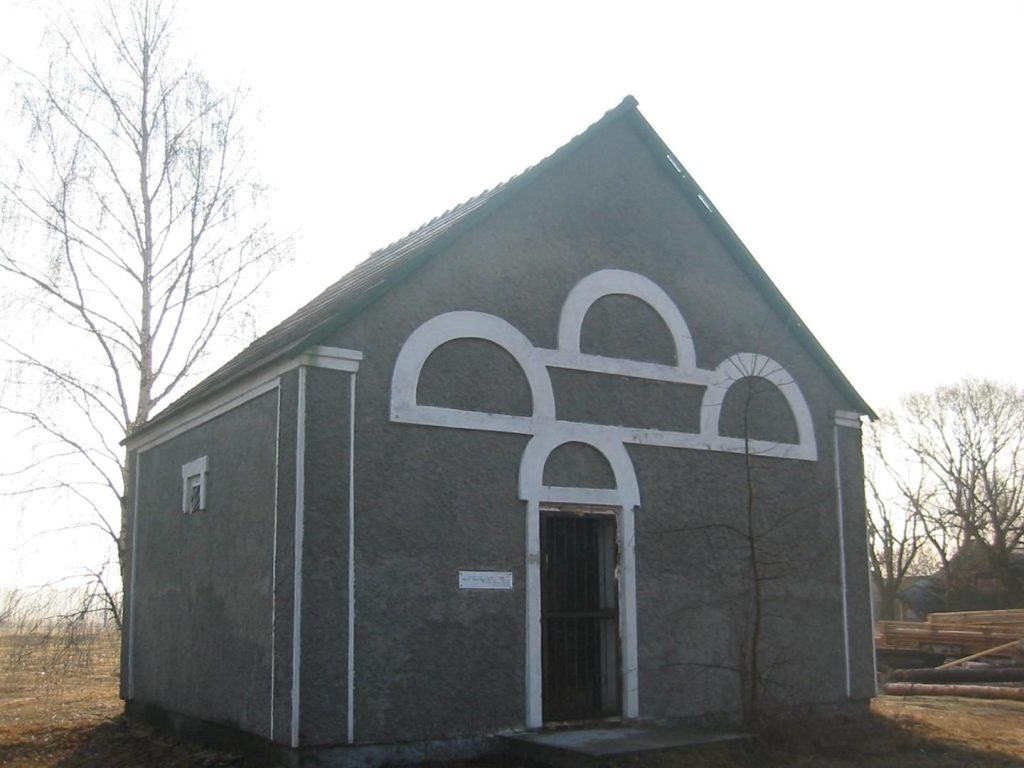
Wagenstein began investigating this doctor and his methods of treatment, and to his astonishment it soon became clear to him that the Jewish doctor gave none of his patients any medicine at all. Those in the know told him that the Jewish doctor only asked the patients to believe in the Creator of the world and His governance. And when the patient accepted this wholeheartedly and sincerely, he would send him home, and the person would recover.
Wagenstein was overcome by anger and astonishment. At first he did not know how to react to such strange “remedies”; he also did not understand the connection between them, but he knew only that day by day the crowd of patients flocking to his door was dwindling, while with the Jewish “Rabbin” the patients were multiplying.
The doctor did not hesitate, and wrote a slanderous letter to the Medical Academy in Vilna. In this academy sat the finest physicians and medical experts, where new remedies were invented, and from which medical innovations spread to the doctors in the country. “A Jewish sorcerer dwells in Neshchiz,” the doctor wrote with brazen sharpness. “He receives hundreds of patients and heals them through strange sorcery, and even robs the doctors of their livelihood.”
Not many days passed before an urgent letter went out to the count who governed the district of Neshchiz, telling of the rumor about the Jewish rabbi who healed through sorcery, and for the sake of the peace of the district’s citizens, requesting that he compel the Jewish healer to travel to Vilna to give an accounting before the heads of the Medical Academy regarding his deeds and the methods of healing he used.
The count knew well what the people of the academy were scheming against the tzaddik residing in his district. It was clear to him that the tzaddik’s sentence had been sealed even before the letter was sent. Who better than he knew the innocence of the Rebbe’s ways, that he was no sorcerer, and that a false accusation was being laid against him. On the contrary, the count knew of the Rebbe’s charitable deeds toward poor Jews and gentiles alike, of his love for humanity, of his extraordinary wisdom and superior understanding.
The count therefore devised a plan, and finally decided to reveal the terrible secret to the Rebbe, and to consult with him on how to avert the evil. In the dead of night a carriage was sent to the Rebbe’s home to bring him to the count’s palace. The two secluded themselves in an inner chamber, so that no strangers’ eyes would see them.
“I have known for many long years of the Rebbe’s greatness, and it is clear to me that you are precious and beloved before the G-d of the Jews and all your requests and supplications are accepted before Him. This is your power, and this is how you heal the sick,” the count summarized the story of the denunciation. “But in any case, it would be worthwhile to find a way to remove from them any argument or slander, for the Rebbe knows the power of those wicked men sitting in the ivory tower of the Medical Academy.”
The Rebbe’s face darkened. For long moments he sank into his thoughts. When he raised his head, it was evident that the Rebbe was exerting great effort trying to get to the root of the matter.
The Rebbe’s silence was taken by the count as agreement, and he continued speaking.
“Why should the Rebbe stir up the world with jealousy and hatred, if it is possible to heal the sick by other means as well? My advice, therefore, is that the Rebbe continue to bless all the sick who knock on his door, but give them some medicinal ingredients and various remedies so that people will think these are the cures healing the illness. And I, for my part, will write this very day to the people of the academy in Vilna that I have investigated the matter thoroughly, and that there is nothing whatsoever to it, and that the Rebbe’s methods of healing are simple medicinal remedies that benefit the body.”
Again the tzaddik fixed his eyes on the wall, and gazed at length at something. It was evident that his spirit and soul were hovering elsewhere.
Suddenly the tzaddik roused from his thoughts and struck the table with a snap of his finger, like a man who had reached the bottom of wondrous mysteries. “Now I understand,” the tzaddik murmured—“this is nothing but the work of Satan, so that His blessed Name should not be magnified and sanctified in the world”…
The tzaddik considered the suggestion and accepted it, and from then on began to give his patients remedies and medicinal ingredients.
* * *
The unfolding of these events was told by Rabbi Mordechai’s son, the wondrous tzaddik Rabbi Yitzchok of Neshchiz, who heard it from his great father.
(Adapted from Niflaos HaTzaddikim, page 17)
Beis Moshiach #1519 • ח׳ אלול תשפ״ו • pp. 24-28
© 2026 Beis Moshiach Magazine. All rights reserved.
This article originally appeared in Beis Moshiach #1519. You are welcome to share it with friends and family by email or in print, provided that you do not change, add to or omit any part of it, you credit the author and Beis Moshiach, and you include a link to archive.bmoshiach.org (written out in full in printed copies).
To republish this article in a newspaper, magazine, book or website, please request permission in advance at [email protected].