They Called Me the Meshugganeh of 770
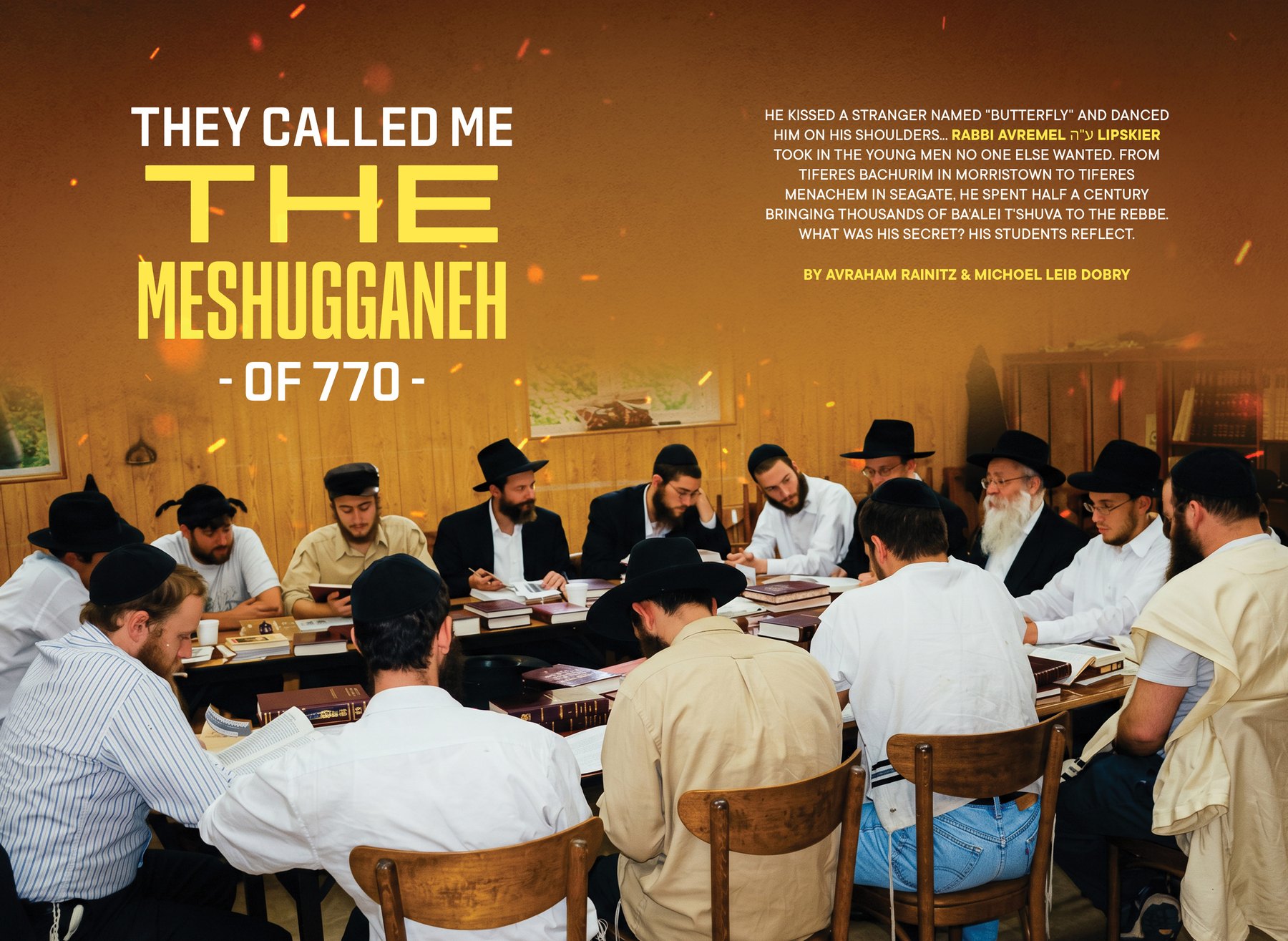
He kissed a stranger named “Butterfly” and danced him on his shoulders… Rabbi Avremel Lipskier a”h took in the young men no one else wanted. From Tiferes Bachurim in Morristown to Tiferes Menachem in Seagate, he spent half a century bringing thousands of ba’alei t’shuva to the Rebbe. What was his secret? His students reflect.
He called himself ‘Butterfly.’ On his shirt was sewn a butterly, his trousers were made of patchwork, and six thick dreadlocks were gathered under a purple hat. A young Jewish man from Morris Plains, New Jersey, who had been searching for the meaning of life in Buddhism and Hinduism, and for that purpose, he had been wandering all over America. The Reform Judaism where he celebrated his bar-mitzva didn’t interest him, and he kept his distance from the Lubavitcher Chassidim with the long beards. “They weren’t even on my radar. I was looking for monks and monasteries,” he recalled.
One evening, his uncle, who had become close to Chabad, drove him home after a family visit and made a stop at Yeshivas ‘Tiferes Bachurim’ in Morristown. “I just need to pick up a book for my daughter; the library’s about to close. Come inside with me.” The young man flatly refused. His uncle went in while the young man remained alone in the car.
“And then, through His Divine Kindness, my soul began to awaken within me: ‘Just go in! You’re a Jew!’ I opened the door and went inside. There set before me was a long table with about one hundred and fifty young men seated around it. Later, I discovered that this was a farbrengen in honor of Yud-Tes Kislev. The whole room turned around and looked at me. Everything was black and white, like a picture in tints of just one color, while I came in with flashy loud colors.
“Someone came over to me who looked like the leader of the group, and he asked me: ‘What’s your name?’
‘Butterfly.’
‘Do you have a Jewish name?’
‘Dov something…’
“He grabbed me by the face and kissed me. Thirty seconds earlier, I didn’t know who he was. He then said to me joyfully: ‘Welcome home!’”
Butterly-Dov refused to say ‘l’chaim’, however, the man he didn’t know would not relent. “Sit,” he said, and he gave me a seat at the head of the table. “He looked at me and said: ‘You’re so holy. You’re a total tzaddik. You have no idea how pure you are.’ No one had ever spoken to me that way before.” When the dancing started, the man picked me up on his shoulders and went around in circles with me. “He simply took me out of all my secular thoughts. In an instant, everything left me and I turned a new page in my life.”
Two days later, at home on Shabbos morning, he went down to the kitchen. His parents were sitting in front of glasses of orange juice, and the “New York Times” was laid out on the table. He pounded on the table and proclaimed: “From this day forward—no television, no turning on electrical appliances, and no traveling on Shabbos!”
Rabbi Dov Yona Korn told this story on the night of the ‘shloshim.’ The man who kissed him that night and danced with him was the Chassid, Rabbi Avrohom Levi Lipskier, of blessed memory, mashpia of Yeshivas ‘Tiferes Bachurim’ in Morristown, and later the rosh yeshiva of “Tiferes Menachem” in Seagate. His students simply called him “Avremel.”
When his son, Rabbi Mendel, asked him once what his method was, he replied: “I see myself as a shadchan. My only job was to connect them to the Rebbe, and all the rest flows from him.”
“He was transparent,” his student R’ Yehoshua Mirenfeld wrote in a social media group with a page of recollections set up by Rabbi Lipskier’s students in his memory. “He had enough presence to possess an exceptional magnetism and humble enough to let the light of Torah and the light of the Rebbe pass through him.”
“the Meshugena of 770”
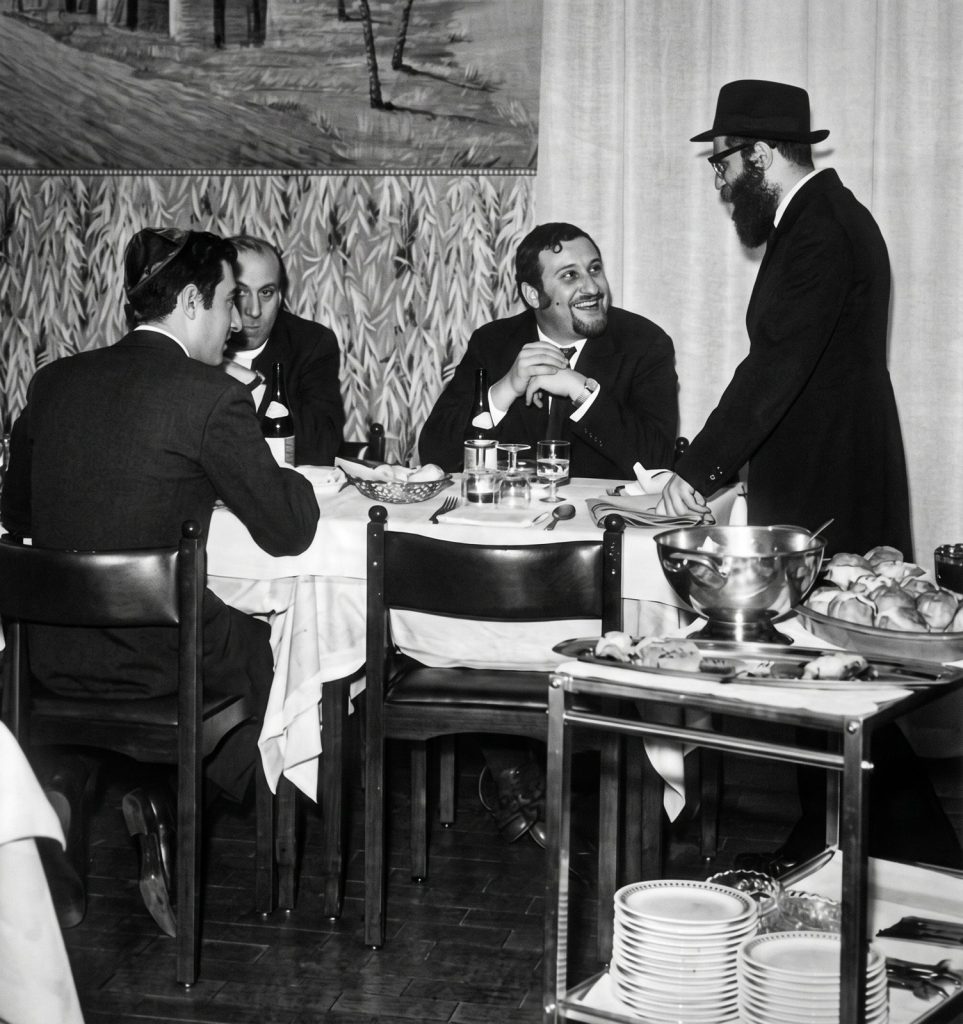
Rabbi Avrohom Levi Lipskier was born on Shushan Purim Katan 5700 to his father, Rabbi Yaakov (Yankel) Lipskier, and his mother, Mrs Liuba Alte Teibel. After the Second World War, with a mass exodus of Chabad Chassidim from the Soviet Union, the family crossed the border of the Iron Curtain. After living for a period in Paris, they successfully emigrated to the United States.
When he reached the age of bar-mitzva, he received a bracha in a congratulatory letter from the Rebbe MH’M, including a quote from the words of the Rebbe Rayatz that the Nesiim would begin the bar-mitzva maamar with “Naaseh Adam”, designed to teach that the bar-mitzva boy “has to know that he must attain the level of the title ‘Adam’ …and he has to work on this immediately and not leave it until later.”
During Adar 5722, he was sent with a group of rabbinical students on shlichus to Yeshivas ‘Tomchei Tmimim’ in Brunoy, France. A week later, when the Rebbe sent off ten students from Eretz HaKodesh and gave each of them a Tanya and a silver dollar, he also left the same for R’ Avrohom, instructing his secretary Rabbi Chodakov to inform him about this in a special correspondence.
In this general private letter sent to him on Yud-Alef Nissan, the Rebbe added in his own holy handwriting: “For fulfilling the shlichus successfully.”
After six months, when he returned to 770, young people started appearing there whom no one knew what to do with. “In Tishrei 5723, numerous students came as guests of the Crown Heights community,” he recalled years later in an interview to “Beis Moshiach.” “Each day, a new young Jewish man would enter 770, different in his attire and conduct, his very being saying this was someone searching for the truth. Yet, truth be told, back in those days, almost none of the tmimim wanted to get anywhere near them. The tmimim would say humorously that there was a magnet at the entrance to 770 drawing to it all the strange people among the world’s Jews…
“Therefore, I started learning with these young people, three or four of them. At first, this was done outside of the yeshiva sedarim, and as the days passed, more of them joined. I then saw up close their thirst to understand and to know.”
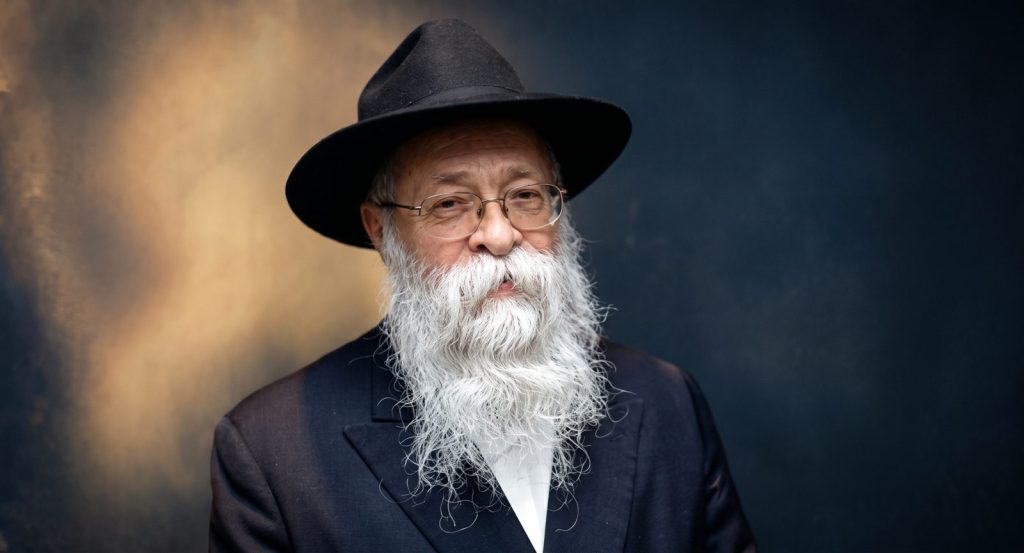
Many years later, he spoke about that period: “I heard then that everyone was whispering behind my back: ‘The meshugena of 770 brings all these crazies, and instead of getting rid of them, he starts a Torah class for them.’ This disrupted all the sedarim.
“To my good fortune, Rabbi Yisroel Jacobson liked my work with them very much.” He then added: “And he made certain that these young people had an orderly place to sleep and eat. When many young people gathered, he asked Rabbi Yaakov Yehuda Hecht to establish an institution befitting its name. Upon receiving the Rebbe’s permission, Yeshivas ‘Hadar Hatorah’ for baalei teshuva was founded.”
During this period, he happened to see the Rebbe’s ruach ha’kodesh. A young man who was a semester shy of completing his degree program spent a Shabbos in the Lipskier home. When as a result, he left his studies, he thereby lost his military deferment. Before being drafted, he went in for ‘yechidus’ with five pages of questions, and the Rebbe commented on one thing he didn’t write about: a shidduch. “The Rebbe told him: ‘Nu, you can get married before or during your army service.’
“About two weeks later, just before his induction, he informed me that he had become engaged to a girl who had been a guest in our house that Shabbos. I felt that this was a shidduch that the Rebbe had arranged himself. Today, this Jew is the father of a magnificent Chassidic family.”
“if She Agrees”
On Sunday, the seventh of Tishrei 5726, four days before their wedding, the chassan Avrohom Levi and his kallah Tzirel went in for yechidus.
After receiving the Rebbe’s bracha, the kallah left and the chassan remained alone with the Rebbe for another few minutes. Regarding the question he wrote in the kvittel on whether to wear to silk clothes on Shabbos, the Rebbe replied: “Tragen zeidens iz zeier a gleiche zach” [ = wearing silk is a very appropriate thing]. Then, regarding his question if he should wear a kapote on weekdays as well, the Rebbe said that he should seek his kallah’s advice: If she agrees, and he resolves to work in the field of education, it would be appropriate. His kallah gave her consent, and so, he customarily wore a kapote every day for the rest of his life. He met the condition of working in the field of education in the fullest sense.
During this period, the only kosher restaurant in Milan, Italy was closed down. Rabbi Gershon Mendel Garelik, the Rebbe’s shliach in Milan, recalled that the Rebbe wanted very much that the restaurant be reopened, and he instructed R’ Shlomo Yosef Zippel, one of the local community’s main benefactors, to make certain that this happens “immediately.” “When Mr. Zippel went in for ‘yechidus’ and asked who will accept responsibility for running the restaurant, the Rebbe replied that they should take the Chassid R’ Avrohom Lipskier to be the person in charge.
And so, on the day after Lag B’Omer 5727, the young Lipskier couple was sent to Milan. R’ Avrohom dealt with educational matters, and at the Rebbe’s instructions, he accepted responsibility for running the restaurant. [The name of the restaurant was given by the Rebbe. In a telephone conversation with Rabbi Chodakov, Rabbi Garelik said in a determined voice: “The restaurant will be called ‘Yisroel’, in memory of the Rebbe’s brother!” “I didn’t know that there was someone else listening on the line,” he recalled later. “And lo, to my great surprise, I heard the Rebbe’s holy voice. The Rebbe gave his consent, adding: “It should be called ‘Eshel Yisroel’…”]
In the summer of 5729, the Rebbe wrote to R’ Lipskier in the margins of a letter: “With a blessing for much success (including the restaurant, etc. – of course).”
As Tishrei 5729 approached, he asked if he could come to the Rebbe for the holiday season. The Rebbe noted on his words in his own handwriting: “It would be incorrect if you traveled to the Rebbe shlita’s court – and it was publicized – before at least two years.” During those years, the Rebbe started correcting the title at the opening of correspondences sent to R’ Lipskier, from “the venerable Chassid” to “HaRav HaChassid.”
“in Russia, They Called It ‘tiferes Bachurim’”
In 5732, R’ Lipskier returned from Milan to New York. “When I went in for ‘yechidus’,” he said, “I asked the Rebbe about the purpose of my shlichus, the Rebbe told me that I must work with baalei teshuva.”
Rabbi Moshe Herson, director of Yeshivas ‘Tomchei Tmimim’ in Morristown, suggested that he deal with student outreach, and the Rebbe instructed him to accept the offer. “I felt that I wasn’t using my strengths as I should,” R’ Avrohom recalled, “and I considered opening a special summer program for young men.
“One Friday, Rabbi Nosson Gurary from Buffalo called me. He informed me that he was in 770 with several Jewish students, and he asked me to come and take them to Morristown. ‘If they return home now, there’s little chance that they’ll come to you,’ he told me. I traveled with the boys in my private car and brought them to the yeshiva. This was the first group, before the breakthrough that was yet to come.”
Yet, not everyone was pleased by this initiative. The parents of the students in Tomchei Tmimim Morristown were concerned over the negative influence this would have on their sons. When R’ Lipskier went in for ‘yechidus’, he discovered that the Rebbe already knew about the initiative and the opposition. To his great surprise, the Rebbe actually began by justifying the parents’ assertions. However, he concluded: “Oib du vest bashlisen dos tohn, iz in Rusland azelche programs flegt men rufen Tiferes Bachurim” [ = If you decide to do this – in Russia, they used to call these programs “Tiferes Bachurim”]. It was decided to establish a separate Beis Medrash, a separate dormitory, and separate meal times. Thus, “Tiferes Bachurim” opened on a trial basis.
“We were five bachurim,” Rabbi Shlomo Greenberg, one of the first Tiferes students, recalled on the evening of the ‘shloshim.’ “Three of them were rather ‘interesting’, or to put it a bit more harshly, they were some strange and unusual young men, troubled and confused. I would have given up on them…”
During that first year, R’ Avrohom was the only teacher. He taught Tanya, maamarim, Mishnayos, and Gemara – the chapter of “HaMafkid.” When Rabbi Avrohom Osdoba joined the yeshiva staff to teach Gemara and asked what they know, R’ Shlomo Greenberg replied with a most complex answer: “He who deposits an animal or vessels with his friends, G-d deposits a soul within you, and you have a choice: whether to be an animal or a vessel…”
The success was great,” R’ Avrohom Lipskier said later. “During the first year, dozens of students came, and the number only grew larger. At the end of that year, R’ Herson sent a detailed report to the Rebbe, whose response expressing his tremendous pleasure was not long in coming: “Much thanks and appreciation for the good news. May the institution continue to grow and add light, the institution in every detail, etc.”
Both Soft and Tough at the Same Time
During the month following his passing, including at the ‘shloshim’ commemoration held in his memory, several dozens of his talmidim got up to speak about the fabric of life in the endless giving and outreach, alongside the cleverness and direction of R’ Lipskier towards them, a group of young men who somehow came to his yeshiva and never left it!
When Rabbi Yosef Yitzchok Greenberg started teaching at Tiferes Bachurim, he was warned again and again, “People told me: You have a knack for saying the wrong thing at the wrong time. You have to be very careful with baalei teshuva; you might drive them away.
“And then, a few days after I started teaching, I heard R’ Lipskier castigating someone. I went over to this bachur and asked: ‘Are you all right?’ He replied: ‘Yes! I love R’ Lipskier, because he loves us so much!”
“They called him ‘Avrohom Levi.’ In fact, he had the chesed of Avrohom and the gevura of Levi,” Rabbi Greenberg said on the evening of the shloshim. “However, he also had this warm smile that could melt anyone.”
“Sometimes, he was very definite,” recalled Rabbi Tuvia Teldon, the Rebbe’s shliach on Long Island, who had come to the yeshiva during its first months of operation. When he needed to shake us up, he would say: ‘Get out of here, you don’t deserve to be in a Lubavitcher yeshiva.’ But, he did this with love and enthusiasm, and it penetrated deep within us.”
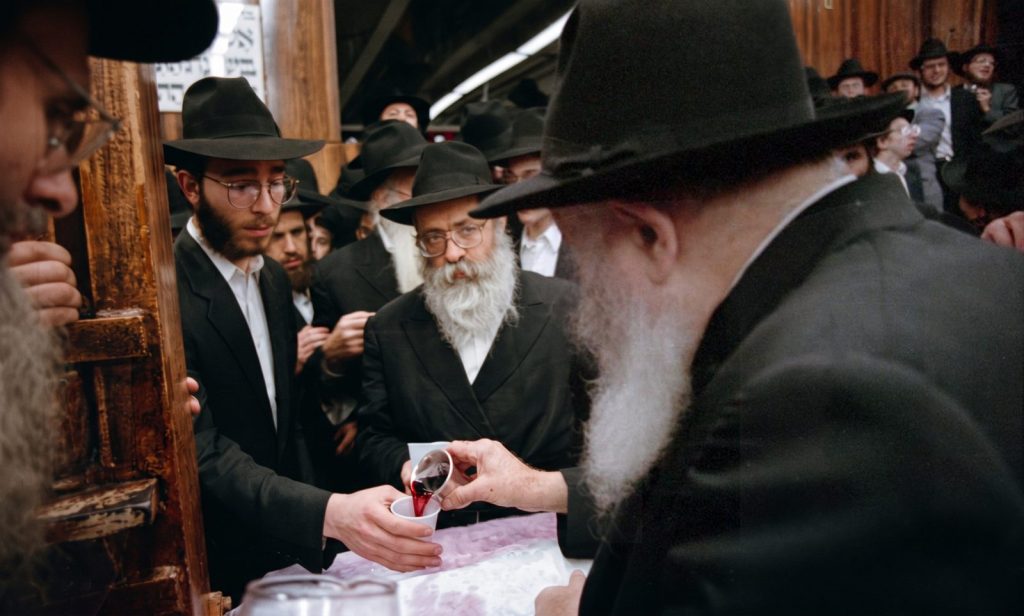
One of his students who learned from him in Seagate was once sitting in R’ Lipskier’s office when three bachurim came in, one after another within five minutes, with very similar questions. “With the first bachur, he spoke very calmly. He yelled at the second bachur, while with the third bachur, he was firm, although with a softer tone of voice. When the last bachur left, he looked at my surprised expression and said: ‘You see? You have to speak to each person in his own language. If I wouldn’t have yelled at that one, he simply wouldn’t have understood.’”
Dr. David Lazerson came to Morristown, with in his words, “a very healthy portion of self-confidence. I’m embarrassed to say it, but a month after my arrival, I wrote a letter to the Rebbe, saying (not verbatim): ‘Dear Rebbe, I think that the time has come for me to reveal myself to you…R’ Lipskier took care of that. While he never humiliated us, he did teach us the attribute of truth, and we felt that he personally was exemplifying it. He wanted p’nimiyus from us.”
One day, he informed Lazerson: “Dovid, you’re not leaving Tiferes until you know how to read from the Torah.” Lazerson protested: He didn’t know the words, and he certainly didn’t know the trop. “Don’t sell yourself short,” R’ Lipskier interrupted him, “and don’t be lazy. The time has come for you to overcome your yetzer hara. You’re wasting time. Get to work!” Since then, Lazerson wrote, he’s been reading the Torah for more than half a century. R’ Lipskier would remind his students again and again: “You have an earlier start than Rabi Akiva had. He only started when he was forty years old. So, what are you waiting for?”
His student, R’ Yehoshua Mirenfeld, remembers one telephone conversation. “Several months after I came to the yeshiva, I went home for Pesach, apparently with no intention of ever returning. However, R’ Lipskier called me at home and said that he was waiting on the line until I ordered a return ticket. It’s forbidden for me to remain at home any longer.”
To be continued
Beis Moshiach #1532 • pp. 20-27
© 2026 Beis Moshiach Magazine. All rights reserved.
This article originally appeared in Beis Moshiach #1532. You are welcome to share it with friends and family by email or in print, provided that you do not change, add to or omit any part of it, you credit the author and Beis Moshiach, and you include a link to archive.bmoshiach.org (written out in full in printed copies).
To republish this article in a newspaper, magazine, book or website, please request permission in advance at [email protected].