The “Balabos” Of Iraq
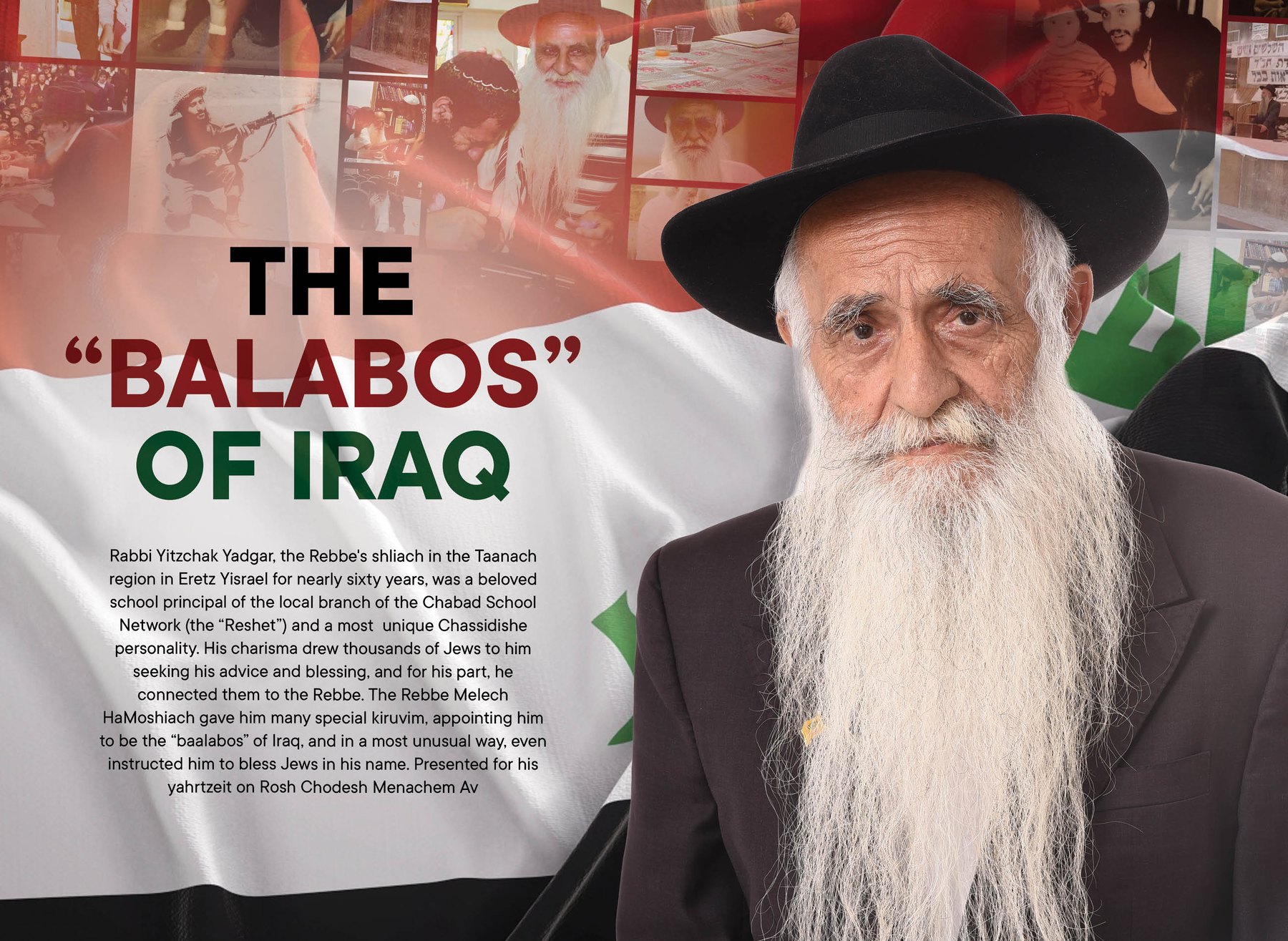
Rabbi Yitzchak Yadgar, the Rebbe’s shliach in the Taanach region in Eretz Yisrael for nearly sixty years, was a beloved school principal of the local branch of the Chabad School Network (the “Reshet”) and a most unique Chassidishe personality. His charisma drew thousands of Jews to him seeking his advice and blessing, and for his part, he connected them to the Rebbe. The Rebbe Melech HaMoshiach gave him many special kiruvim, appointing him to be the “baalabos” of Iraq, and in a most unusual way, even instructed him to bless Jews in his name. Presented for his yahrtzeit on Rosh Chodesh Menachem Av
“When I was in my first yechidus with the Rebbe in 5730, I turned to him with one single request: ‘Rebbe, the eyes of the entire Jewish People look to you to redeem Am Yisrael at the True and Complete Redemption. Not just Anash, but the entire House of Israel believes and asks that you should reveal yourself.’
“The Rebbe spoke with me about different topics, and then suddenly the Rebbe said: ‘Regarding the middle point in request of his bracha – and the Rebbe grabbed the pencil between his two holy fingers and placed it on the words ‘Melech HaMoshiach’ [in my letter and said:] May it be G-d’s Will that it should be very soon mamash.’”
That first yechidus, known to touch any Chassid for the rest of his life, is what set him on his feet in matters of faith. Those words of the Rebbe MH”M, accompanied HaRav HaChassid Yitzchak Yadgar, of blessed memory, throughout his life until the day of his passing on Rosh Chodesh Menachem Av 5783 (2023).
Among The First To Spread Yiddishkeit
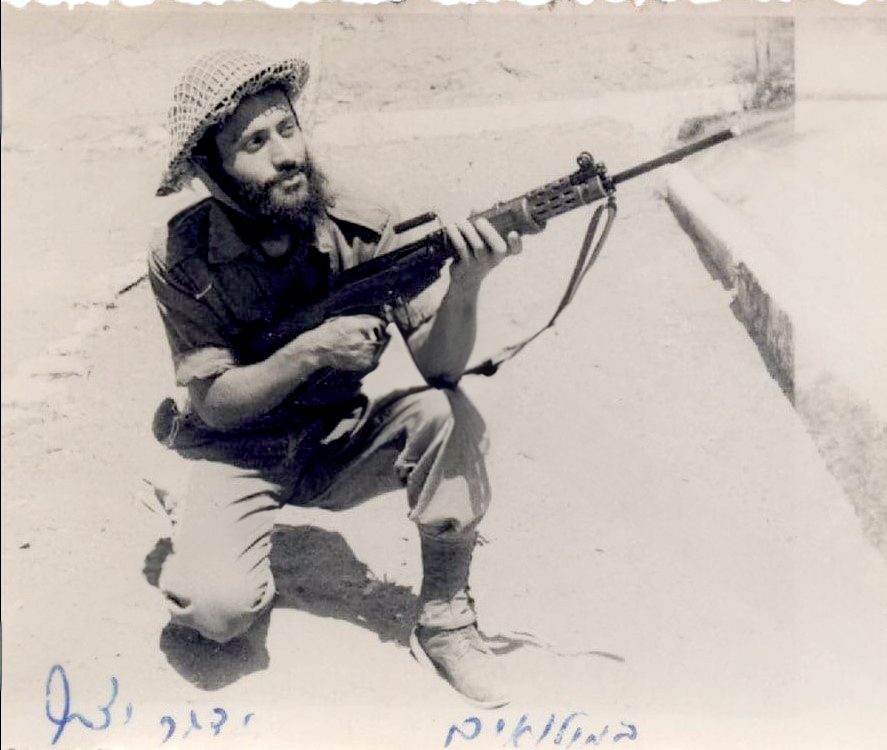
Every Chassid, whoever and wherever he is, has been graced with certain spiritual qualities of one kind or another. A few have been privileged to receive a flood of very unique spiritual qualities.
Such was Rabbi Yitzchak Yadgar, a rare and most unique individual, a man of extremely noble and distinguished middos with tremendous Ahavas Yisrael for every Jew, no matter who he may be. His personality was warmhearted; he was a Torah scholar and a brilliant speaker, whose words have literally aroused hundreds and thousands of Jews to become Torah observant.
The illustrious Chassid R’ Yitzchak Yadgar was born eighty-six years ago, on the twenty-second of Tishrei 5698, to his parents Kadouri and Ester Malka Leah, in a Yerushalmi family with roots in Iraq.
In his youth, he was already searching for the profound desire of his soul – honesty and inwardness. Thus, Divine Providence directed him along his journey to the light of Chabad Chassidus. His exceptional hiskashrus to the Rebbe began when he met Rabbi Shmuel Elazar Halperin, rosh yeshiva of “Toras Emes” and the rav of Yerushalayim’s “Beis Yisroel” neighborhood. He received strong foundations from him on the viewpoints of Chassidus and hiskashrus to the Rebbe.
The young Yitzchak Yadgar grew even closer to Lubavitch and at a much faster pace. With the passage of time, he was sent to learn at Yeshivas Tomchei Tmimim in Lod with the mashpia, R’ Shlomo Chaim Kesselman.
When he returned home to his parents, he conducted himself like a tamim in all respects. Among other things, he placed neggel vasser next to his bed. His father was alarmed by this “sorcery”, and he tried to dissuade his son from doing this. However, the more the father tried to convince him, the son refused to listen, a most unusual thing for him to do. It was only when Rabbi Shmuel Elazar Halperin came to the father with a volume of Shulchan Aruch and proved to him that this is the halacha, did the father relent.
He learned at the yeshiva in Lod from 5713 to 5717 (1953-1957). During his studies there, he was transformed into an enthusiastic Chassid of the Rebbe.
In his caring and passionate heart, he was one of the first young men to be a partner in the activities held for youngsters in Yerushalayim. During the years when he learned in Tomchei Tmimim in Pardes, he spent several Shabbosos in Ramat Gan, where he worked with children and also was a guest at the home of Rabbi Meir Blizhinsky, receiving much guidance from him.
After his marriage to his wife, Simcha, of blessed memory (nee Mizrachi), they moved up north to Moshav Avital, and the two joined the staff of the Reshet Chabad school in the Taanach region.
Since He’s One Of Them
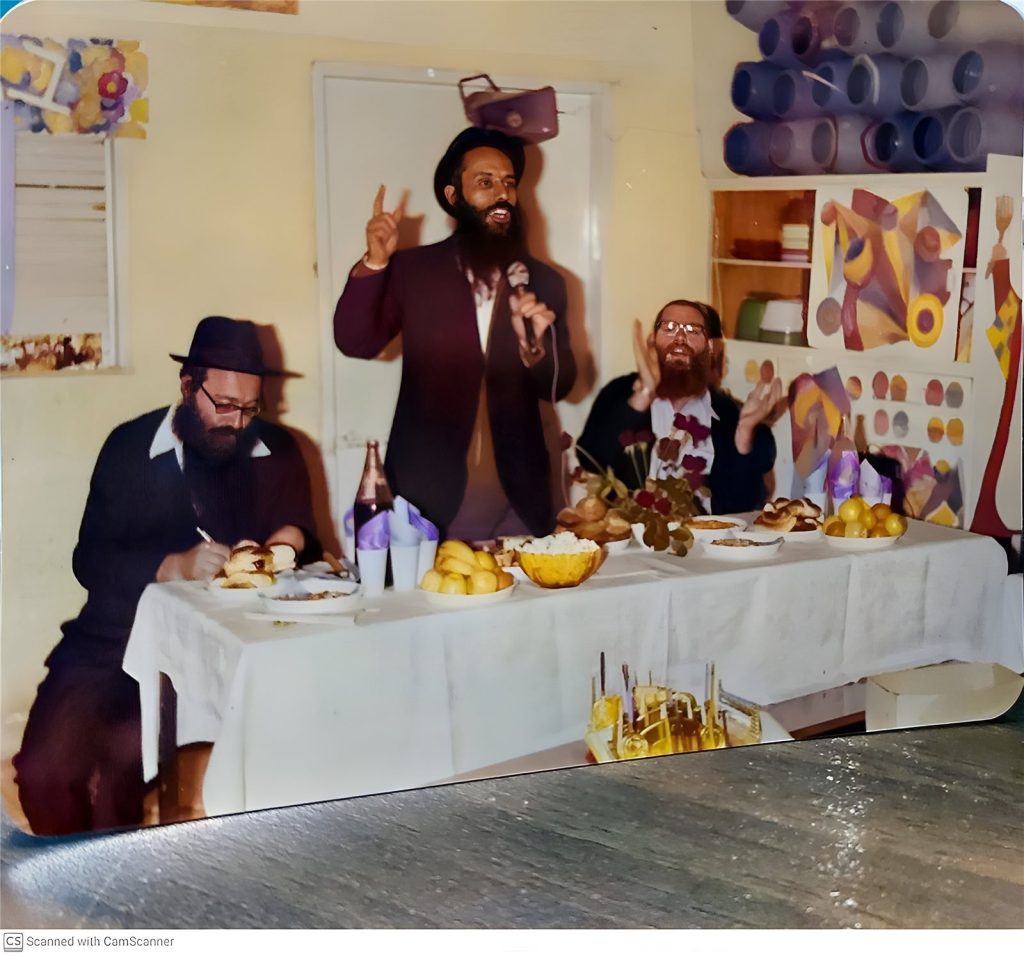
About two years after their wedding, R’ Yadgar and his wife asked if they could move to Kfar Chabad. They wanted to live in an organized Chabad community and give their children a proper Chassidishe education. When they requested the Rebbe’s consent and bracha, they were privileged to receive a clear and unambiguous answer: “In connection with registering for housing in Kfar Chabad, he and his friends do activities at their [current] location, etc., and he should not uproot his residence to any other place, and in particular, as he is a member of their ethnic group from long ago, and our Holy Torah has ruled: The poor of your city come first.’”
This answer was sufficient to keep the couple for seventy years in Moshav Avital in the Taanachim, where a large concentration of the Kurdish community lives, “a member of his ethnic group from long ago”, as the Rebbe stated in his letter. This was the place where his unique personality enraptured thousands of Jews, influencing them in matters of Torah, Chassidus, and hiskashrus to the Rebbe.
A Special ‘Yechidus’
“In my first yechidus with the Rebbe, I naturally said Shehechiyanu. In all the excitement, I forgot to give the Rebbe the note with my requests,” R’ Yadgar recalled as he shared his memories with “Beis Moshiach” a few years ago. “The Rebbe got up slightly and stretched out his holy hand, and only then did I remember that I had to give him the note. I handed the note to the Rebbe, and the Rebbe asked: ‘Du redst Yiddish?’ [=Do you speak Yiddish?] I replied: ‘Yeh, ober besser oif ivris.’ [=Yes, but better in Hebrew]. From then on, the Rebbe spoke with me only in Hebrew.
“The note had two sections. In the first section, I asked: Since many Anash have been coming recently to live in the region and are integrating within the school staff, and in the only synagogue in the area, they daven in Nusach Edot Ha’mizrach, the Sephardi nusach, should they establish a Chabad shul? The Rebbe responded to this: ‘It would be proper that they open a Chabad shul, and you should daven with them in Nusach Chabad.’ In the second section, I wrote about the hisgalus of the Rebbe as Melech HaMoshiach” (as mentioned at the opening of the article).
In fact, the Chabad shul is still active, serving for more than half a century as a center for classes in Torah and Chassidus, including activities of hafatzas ha’maayanos.
‘Ba’al Ha’bayis’ Over The Country Of Iraq
There was an incredible and Heavenly-inspired occurrence involving R’ Yadgar during Sukkos 5731 (1970). During that entire week, the United Nations General Assembly was in session – from the first day of Yom Tov until Simchas Torah. (the full story of this himeldiker event was featured in Hatomim #7, Tishrei 5783)
On the second day of Sukkos, the Rebbe delivered a maamar – “Halelu Es Hashem Kol Goyim”, and he spoke about how the vitality of the nations comes from holiness, emphasizing the connection to the Sukkos holiday, when we offer seventy bulls corresponding to the seventy nations of the world.
That year, on the night of Shemini Atzeres, during the fourth hakafa, the Rebbe established a spiritual “United Nations”, with the appointment of a representative from each country, who would serve as the “ba’al ha’bayis” of that country according to Torah. R’ Yadgar was privileged to have the Rebbe appoint him as “ba’al ha’bayis” of Iraq, his country of origin.
In a conversation with “Beis Moshiach”, R’ Yadgar a”h revealed the special feeling he experienced during that amazing and holy event: “I stood there facing the Rebbe, and Rabbi Groner pointed at me and said to the Rebbe, ‘This is Yitzchok Yadgar from Iraq.’ The Rebbe said to me, ‘You will be the ba’al ha’bayis over Iraq.’ Everyone then began to sing ‘Utzu Eitzah V’Sufar’ with tremendous joy and excitement, and the Rebbe said to give a hakafa with a sefer Torah to those proclaimed earlier as balabatim over certain countries. This was most unique.
“The following day, there was a farbrengen. I didn’t know that the farbrengen would start so soon, and I went to the home of my host to make Kiddush. When I returned to 770, the zal was already filled to capacity. I tried to push my way in, but bachurim and local residents everywhere blocked the passageways and wouldn’t let me enter any further.
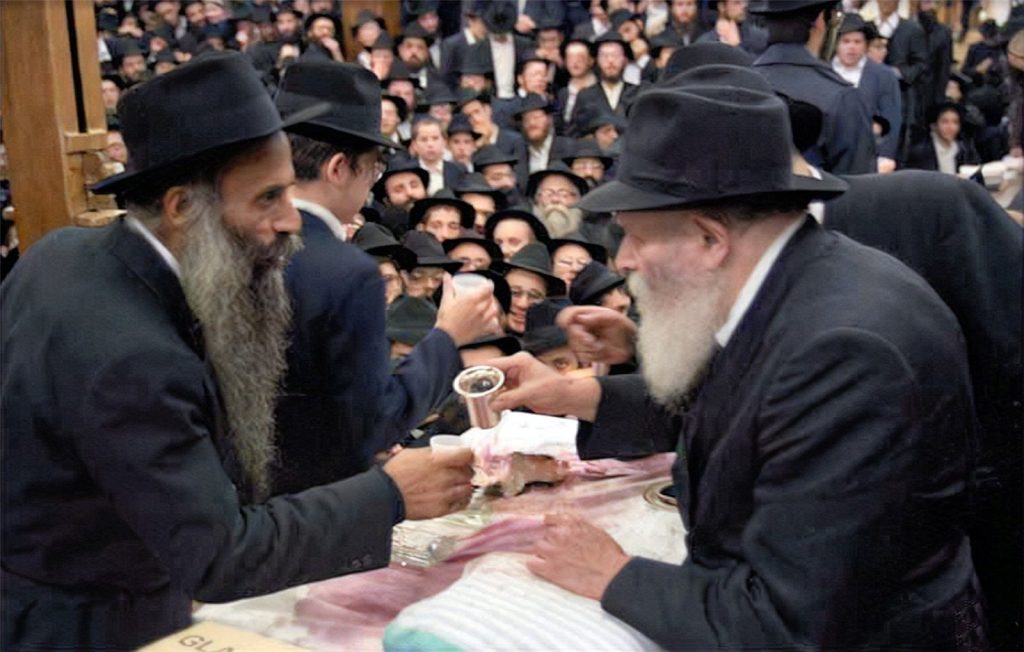
“I stood there near the door, next to a large trash bin, and I said in my heart: ‘Rebbe, tzaddikim are similar to their Creator, and it is written: ‘He raises up the needy from the trash.’ So, Rebbe, I ask that you lift me from this place and bring me to you.’ No sooner had I finished the sentence, the Rebbe proclaimed: ‘All the balabatim who received ‘ownership’ with the koach haTorah should come up here and say ‘L’Chaim.’ When I heard this, they quickly passed me over everyone’s heads, and very quickly, I literally found myself facing the Rebbe’s shining countenance.
“Rabbi Dovid Raskin poured a large cup of ‘l’chaim’ to each of the ‘balabatim.’ After I said l’chaim on a large cup, the Rebbe asked me: ‘Nu, did you say l’chaim?’ They immediately poured me another cup, I said l’chaim again, and the Rebbe asked me a third time: ‘Did you say l’chaim?’ Again, they poured me another cup… The fourth time, the Rebbe placed his hand on the table, and as I stood facing the Rebbe, he asked me, ‘Nu, what do you say?’
“I felt that this was an auspicious hour, and I said to the Rebbe: ‘Since I am a baal ha’bayis b’koach haTorah, I ask that the Jews of Iraq should go out min hametzar el hamerchav! The Rebbe made a fist with his holy hand, waved it forcefully, and said in a loud voice: ‘b’chesed ub’rachamim – With kindness and mercy.’ Afterwards, he motioned to me to say ‘l’chaim.’
“A few days after that Simchas Torah, I boarded a plane for my return flight to Eretz Yisrael. At the airport, I saw the headlines of an Israeli newspaper reporting on twenty-seven families from Iraq that had left the country clandestinely via Iran and had arrived in Eretz Yisrael.”
Al Daas The Rebbe
Chassidim talk about another wondrous occurrence that took place on that eventful Simchas Torah. During those years, the guests from Eretz Yisrael were in doubt whether residents of the Holy Land coming to the Rebbe were obligated to keep the second day of Yom Tov.
R’ Yadgar stood very close to the bima for the Torah reading. At a certain point, he dared to turn to the Rebbe and said privately: “I have a birthday today.” The Rebbe smiled and replied: “Why are you waiting for them to honor you? Go up for an aliya and someone else will make the bracha.” (In other words, another person will say the bracha in his place since he is not obligated to hear the Torah reading.) R’ Yadgar immediately said: “I am here al daas the Rebbe – with the Rebbe’s consent!” When the Rebbe heard this, he answered in clear Hebrew: “If so, go up and make the bracha – ub’chavod, with honor!”
The Rebbe’s reply caused shockwaves, and it was the topic of the day… because until then, anyone who asked the Rebbe whether to observe two days of Yom Tov, the Rebbe referred the person to speak with his local rav. From this story, R’ Yadgar drew the conclusion that “when you come to the Rebbe in ‘Beis Chayeinu’ – you act according to the custom the Rebbe observes.”
“HaMoreh Yitzchak”
As was mentioned previously, the Yadgars continued to live in the Taanach region, far from any Chabad center. However, he decided that the Taanachim would be an inexhaustible source of outreach activities.
He began his work as a teacher with the “Reshet Oholei Yosef Yitzchok” school in the Taanach region. The school was founded in 5718 (1958) by Rabbi Yitzchok Gansburg as part of the Reshet’s school alignment and eventually became its principal.
Despite the fact that he filled the senior position of “principal”, he was strongly connected to his students, and they had an equally heartfelt and intense connection to him. “His influence over the students and their parents was far more than anyone would expect,” one of his friends and supporters recalls, “until they stuck to him the nickname ‘HaMoreh Yitzchak – Teacher Yitzchak.’”
Rabbi Yosef Yitzchok Kratz was privileged to be counted among his students at the Taanach school. “When Rabbi Yadgar would walk around the school courtyard to watch the students during recess, there were students who would ask him to kick the ball. A normal principal might be expected to respond with a definite ‘no’, or he could even reprimand the student who showed disrespect to the school principal. However, Rabbi Yadgar was cut of a different cloth. The happiness of the children was more important to him than anything else, and he would respond to their requests by kicking the ball. Only then would all the students shout with enthusiasm. It was most important to Rabbi Yadgar that the children enjoyed themselves,” he recalled. “You saw this on their happy faces.”
He didn’t settle for an administrative position working in his office. Instead, he made certain to arrange house visits to the students’ homes to develop a stronger connection with the parents. “There were people who were afraid to register their children in an ultra-Orthodox school. However, in the merit of Rabbi Yadgar, they were convinced. ‘We are registering our children because of HaMoreh Yitzchak,’ they said.”
In 5765, R’ Yadgar retired, transferring the day-to-day administration of the school to his daughter, Mrs. Rachel Efrat Kiel. Since then, he dedicated most of his time to his devotees and his community. Nevertheless, he remained an integral part of the school’s existence and the community at-large.
Lover Of Peace, Pursuer Of Peace
R’ Yadgar was a charismatic figure who drew thousands of people after him. He knew how to find paths to the heart of each individual, say the right words, and quite simply and directly provide proper direction to his community of listeners in reaching the places best suited for them.
An acquaintance recalls: “During those years, there were many people who worked on Shabbos. Rabbi Yadgar would come to them for the purpose of convincing them to close their businesses on the holy day of rest, while there were those who claimed that it was hard for them to pass up the money they can earn on Shabbos.
“Rabbi Yadgar would close his eyes, raise his eyebrows, and say: ‘That’s not good, that won’t bring any brachos! If you close on Shabbos, I promise you that you’ll have much success in your store.’ His words were like magic. People found him most compelling, melting their hearts in a matter of a few moments. Many businesses started observing Shabbos in his merit…”
His home was simply magnificent – a Jewish address for all residents of the region who felt a deep sense of fondness and admiration towards him. Throughout all hours of the day, sometimes in the middle of the night, people would come to him to seek his advice on all matters of life, asking for his guidance and direction. He would usually write together with them to the Rebbe MH”M.
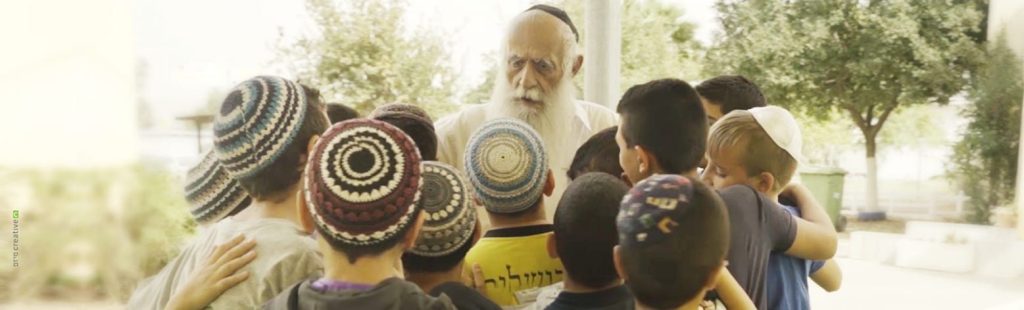
“If there’s a figure in the annals of Jewish history who fits Rabbi Yadgar perfectly, it’s Aharon HaKohen, who passed away on his hilula, Rosh Chodesh Av,” adds local resident Mordechai Malka, in relation to the tremendous influence he had over the regional community – as a lover of peace and a pursuer of peace. “Out of his constant devotion and kindness towards others, he would compel peace between quarreling forces and between a husband and his wife.”
The Chassid Who Became A Channel For The Rebbe’s Brachos
As a Chassid connected to the Rebbe with every fiber of his soul, he was always stringent about reporting to the Rebbe on all his activities, and he requested his advice and his bracha for those Jews with whom he met.
In the early years, before all the technological developments, the world of communication required a considerable amount of time. Many people whom R’ Yadgar had encouraged to write to the Rebbe and ask for his advice came with complaints that it takes so much time until they receive a positive or negative answer.
R’ Yadgar conveyed their complaints to the Rebbe, and he was privileged to receive an incredible answer from the Rebbe (from around 5734): “He should answer in my name to all those who turn to him. In addition, he should submit their names to me, and he will tell them that they should accept mitzvos upon themselves, etc., and he will become a channel for them, and an abundance of blessing in all that they require…”
This was an extremely unusual statement from the Rebbe. To put it simply, the Rebbe gave him the strength to be a channel for a profusion of brachos to bless other Jews in his name.
Since receiving that letter, R’ Yadgar customarily demanded from his mekuravim that they get stronger in their observance of Torah and mitzvos. In return, he would bless them with the strength of the Rebbe.
“People came to him to ask for a bracha, even from faraway places. Nevertheless, he always assisted people out of a sense of humility and absolute self-nullification. Everything was done simply and naturally,” says R’ Yosef Levy, another mekurav. “In all matters where I would seek his advice, whether regarding my work, my family, or when I had financial and spiritual difficulties, I saw how ‘a tzaddik decrees and G-d fulfills.’ The Rebbe bestowed upon him the ability to give brachos – and he did so, and his brachos were fulfilled to the letter!”
Living The Rebbe As Melech HaMoshiach
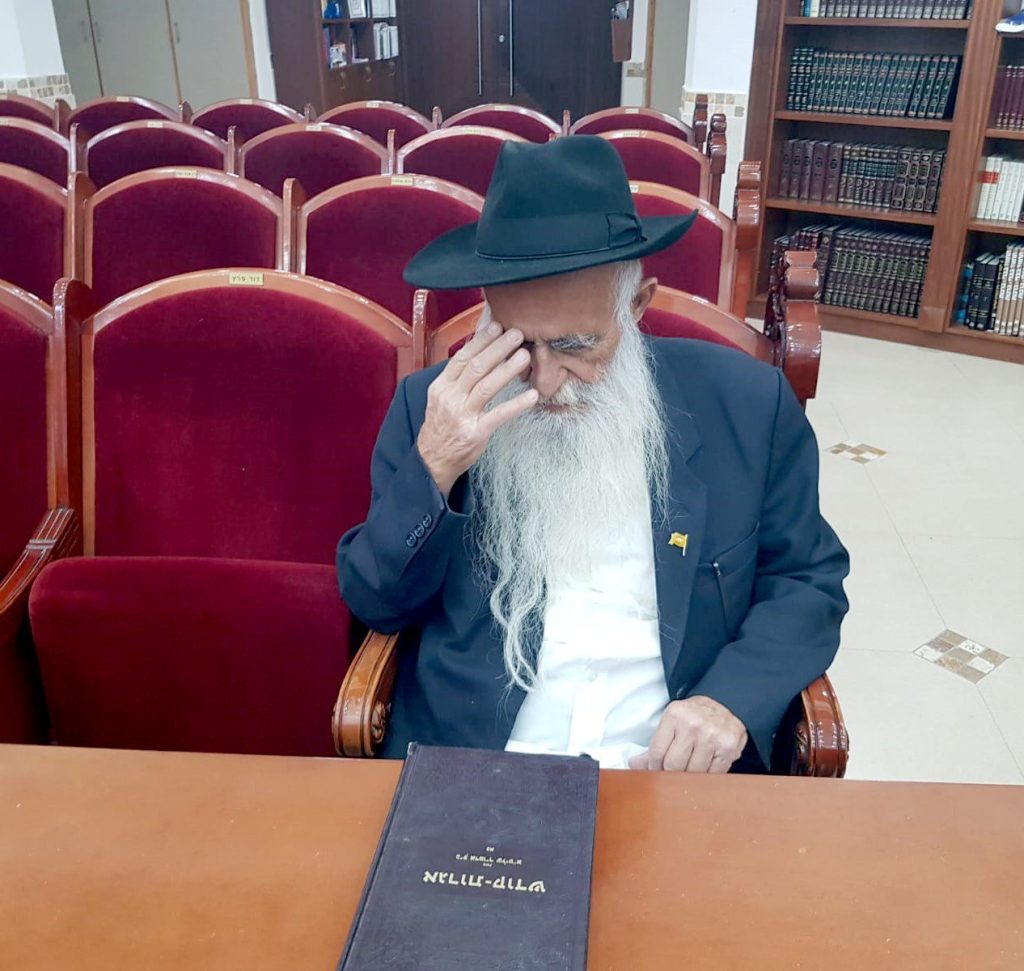
R’ Yitzchak Yadgar a”h was one of the first pioneers who asked the Rebbe to reveal himself openly as Melech HaMoshiach. Long before Chabad chassidim started relating to the Rebbe as Moshiach, R’ Yadgar would add and note in the letters and reports he regularly wrote to the Rebbe – the title ‘Kevod Kedushas Adoneinu Moreinu V’Rabbeinu Melech HaMoshiach shlita.’ In the notices that he publicized in Taanach, he would write ‘The Rebbe, Malkeinu Meshicheinu’, and whenever he met with someone, he always mentioned the word ‘Moshiach.’
R’ Yadgar ‘lived’, spread, and publicized Moshiach, not as a command or decree, he did it because he truly believed that the Rebbe is Melech HaMoshiach. Even after Gimmel Tammuz 5754, he had no doubts. From his vantage point, we haven’t turned back ch”v, and the Rebbe is chai v’kayam, and he will be revealed as Melech HaMoshiach.
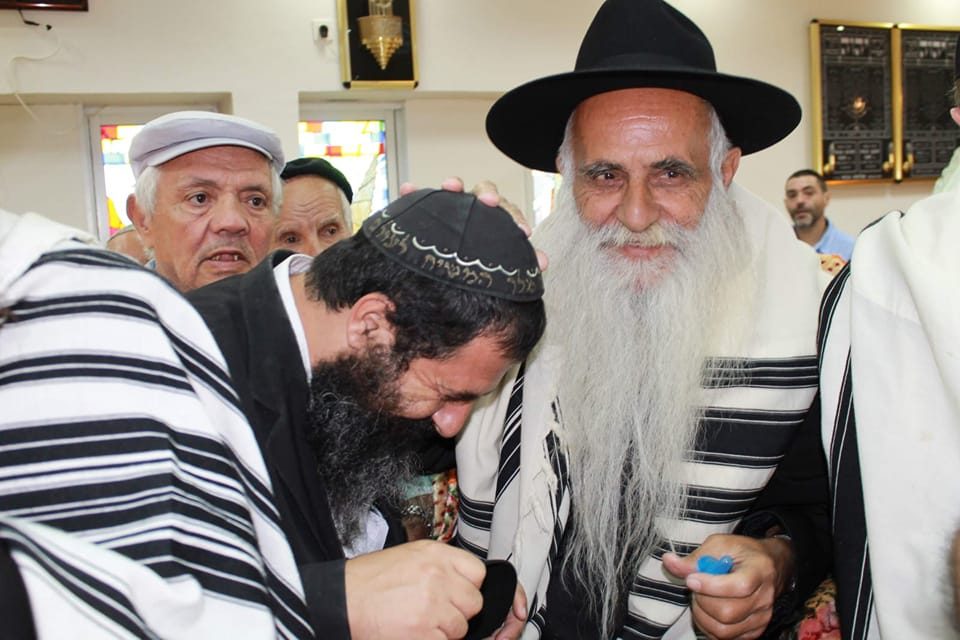
It was Tishrei 5741 (1980). Chassidim were farbrenging in 770 about how Dovid HaMelech gave his blessing to Yoav ben Tzruya to go and spread the announcement of his sovereignty over the entire nation of Israel in order that the people will accept him as their king. By the same token, the acceptance of the Rebbe’s sovereignty by the Jewish People will hasten his hisgalus.
Three Chassidim participating in that farbrengen decided to bring this into actual deed: Rabbi Yitzchak Yadgar and Rabbi Eliyahu Aryeh Friedman, of blessed memory, and —may he live many long and good years — Rabbi Shlomo Zalman Levkivker from Tzfas. The three composed a text for kabbolas ha’malchus and posted it in 770 for those interested to affix their signature.
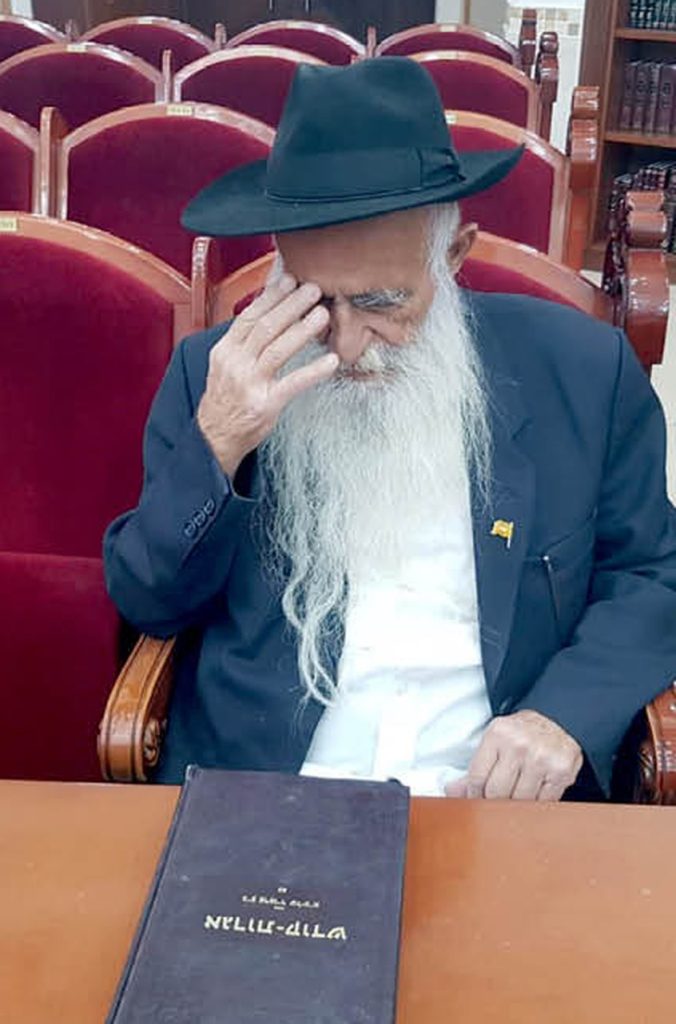
Most Anash members signed gladly and enthusiastically. The mashpia, R’ Mendel Futerfas, said about them: “If only my portion would be with them.”
When the shliach Rabbi Shlomo Cunin saw the forms, he took them and brought them into the Rebbe’s secretary, Rabbi Chodakov. He perused the forms for a moment, placed them on the side, and declared: “It’s written, ‘yaamod melech,’ i.e., he will arise on his own! Thus, there’s no need for kabbolas ha’malchus, since the kings of the House of Dovid are anointed and stand on their own.”
When R’ Yadgar returned to 770 and heard about this development, he went over to R’ Chodakov and argued: “We asked that the Rebbe should respond, not his honored secretary,” and he fervently asked that the forms be submitted to the Rebbe. After twenty minutes, an answer came out from the Rebbe, which Rabbi Chodakov read before them: “A. Their intention is desirable. B. It should not produce the opposite of Ahavas Yisrael. C. Involvement with mivtza’im.”
* * *
On Hoshana Rabba last year, his wife and lifelong companion, Rebbetzin Simcha Yadgar a”h, passed away. She had accompanied him faithfully and with dedication for decades in all his activities for the school and the community, and his prayers for Jews everywhere. He personally told how he would give her names of people in need of personal salvation, “and in the merit of her tefillos, everything would work out.”
Since then, the state of his health deteriorated, and on Rosh Chodesh Menachem Av, Rabbi Yadgar returned his soul to its Maker, at a ripe old age, ‘advanced in years’ – filled and overflowing in activities to bring the Redemption and the hisgalus of the Rebbe, Melech HaMoshiach.
Rabbi Yadgar is survived by eight children, dozens of grandchildren and great-grandchildren. Among them are his sons, Rabbi Shimon Yadgar, principal of the Chabad school in Yerushalayim’s Ir Ganim neighborhood, Rabbi Mordechai Yadgar, principal of the “Ohr Menachem” Chabad Talmud Torah in Tzfas, Rabbi Menachem Mendel Meir Yadgar – Crown Heights, and Rabbi Shmuel Yadgar – Beersheva. His sons-in-law, Rabbi Avshalom Kiel, the Rebbe’s shliach and rav of Yishuv Gan Ner, and Avi Levy – Migdal HaEmek.
May his memory be for a blessing.
Beis Moshiach #1421 • pp. 20-29, 28
© 2026 Beis Moshiach Magazine. All rights reserved.
This article originally appeared in Beis Moshiach #1421. You are welcome to share it with friends and family by email or in print, provided that you do not change, add to or omit any part of it, you credit the author and Beis Moshiach, and you include a link to archive.bmoshiach.org (written out in full in printed copies).
To republish this article in a newspaper, magazine, book or website, please request permission in advance at [email protected].