What Did The Rebbeim Think Of The Pre-State Jewish Undergrounds?
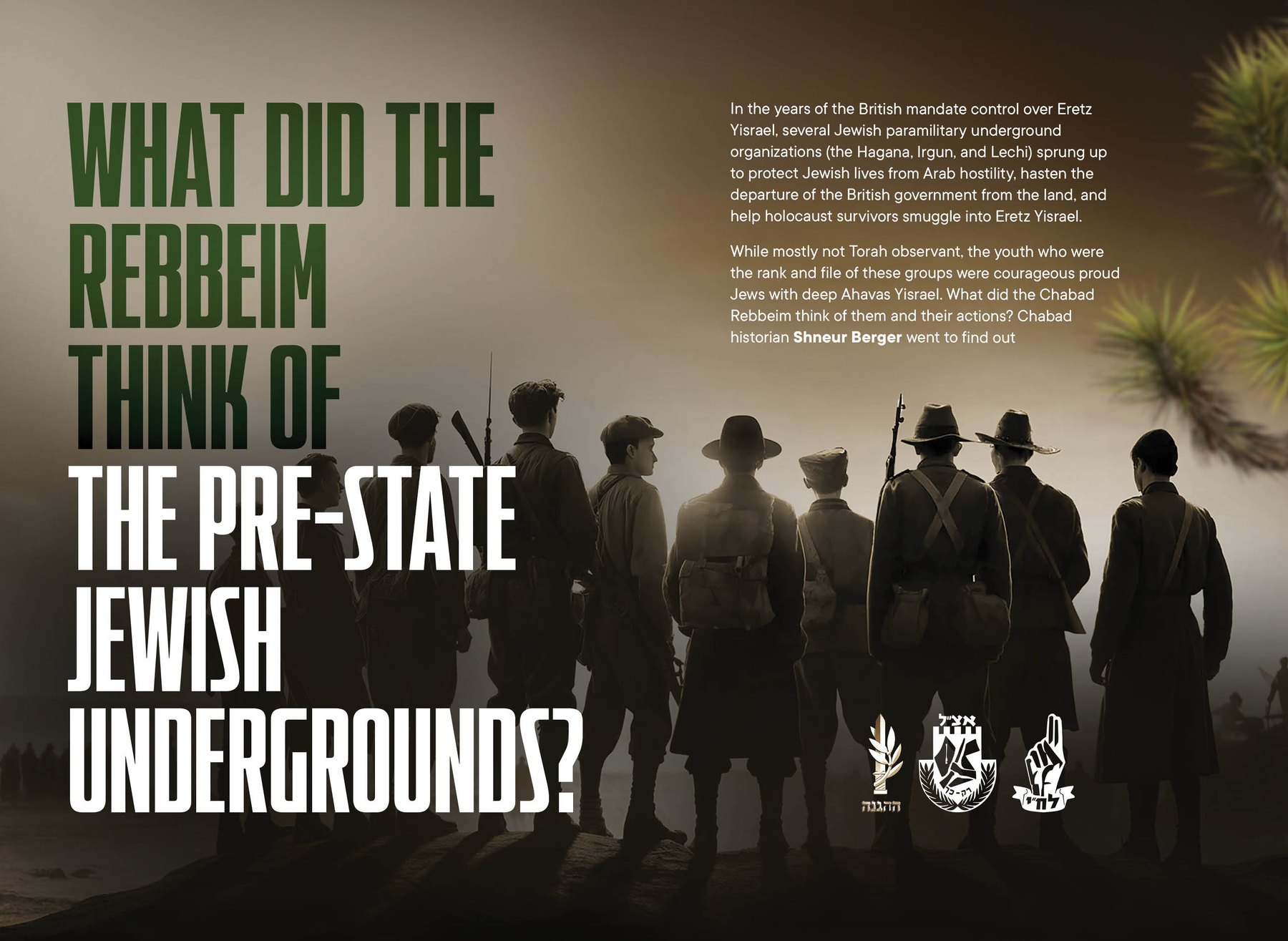
In the years of the British mandate control over Eretz Yisrael, several Jewish paramilitary underground organizations (the Hagana, Irgun, and Lechi) sprung up to protect Jewish lives from Arab hostility, hasten the departure of the British government from the land, and help holocaust survivors smuggle into Eretz Yisrael. While mostly not Torah observant, the youth who were the rank and file of these groups were courageous proud Jews with deep Ahavas Yisrael. What did the Chabad Rebbeim think of them and of their actions? Chabad historian Shneur Berger went to find out
For many years, there were underground, paramilitary organizations whose goal it was to protect the Jewish yishuv from the Arabs and to oppose the foreign government that ruled at the time. The government often discriminated between the Arabs and, l’havdil, the Jews, and did much to thwart the Jewish yishuv in Eretz Yisrael. First it was the Ottomans and then the British Mandate.
The para-militants were young Jews who operated persistently, cleverly and bravely to defend their fellow Jews. They endangered their lives in sensitive situations with faith and hope that the bloody battle would quickly lead to the end of British rule in Eretz Yisrael. The British limited Jewish life in the land and allowed very few Jews in, including after the Holocaust when survivors wanted to escape the bloody continent of Europe and find refuge.
The British government looked away when Arabs attacked Jews even though many times it resulted in the deaths of helpless Jews. It was only when the para-miliants retaliated that the British remembered to show up and separate “between the combatants.”
Youth with varying ideologies fought in Lechi, Etzel, and the Hagana as well as small and lesser known groups such as Brit HaChashmonaim, the Tenuat Ha’meri HaIvri (Hebrew Resistance Movement) and others.
Among the fighters were some Lubavitchers, though not many. They included R’ Moshe Segal and R’ Tzvi Greenwald. They dedicated their energy and strength to fight the British in order to end their oppressive reign.
What did our Rebbeim say about the underground? How did they regard these young people who endangered their lives?
“If I Had To Join Some Group, I Would Join The Revisionists.”
The Rebbe Rayatz and the Rebbe MH”M said some things in favor of the underground. I did research to find their position on this.
It was Rosh Hashana 5708/1947, half a year before the British left Eretz Yisrael when the Rebbe Rayatz expressed himself in rare fashion about the fighters in the underground, who were at the peak of their activities at this time:
“I am a Jew who was raised with Ahavas Yisrael and with mesirus nefesh for Judaism and Jews. In Eretz Yisrael there are young people who sacrifice their lives for Jews. They are doing very good work. May G-d strengthen their hands with success.”
The days of Rosh Hashana were very holy, spiritual days for the Rebbeim when they minimized talking to an extreme. Yet, the Rebbe Rayatz spoke in praise and blessing for the underground. He said this during a Yom Tov meal.
The Rebbe Rayatz differentiated between the underground’s mesirus nefesh and their personal lives:
“They need fixing of their practical mitzva observance, they need to keep Shabbos, to put on tefillin, kashrus, etc. but they are people, albeit with flaws. Great efforts need to be made to draw them toward practical mitzva observance. But regarding the good things they do with fiery, Jewish mesirus nefesh, all Jews, no matter their party, needs to say and bless: may your hands be strengthened.”
The Rebbe’s secretary, Rabbi Leibel Groner, recountd his memories of that Rosh Hashana meal with the Rebbe Rayatz when the latter spoke about the underground:
“The participants at the meal listened tensely to what the Rebbe said and the surprise could be seen on their faces. The Rebbe said at that moving occasion (a slightly different version than above):
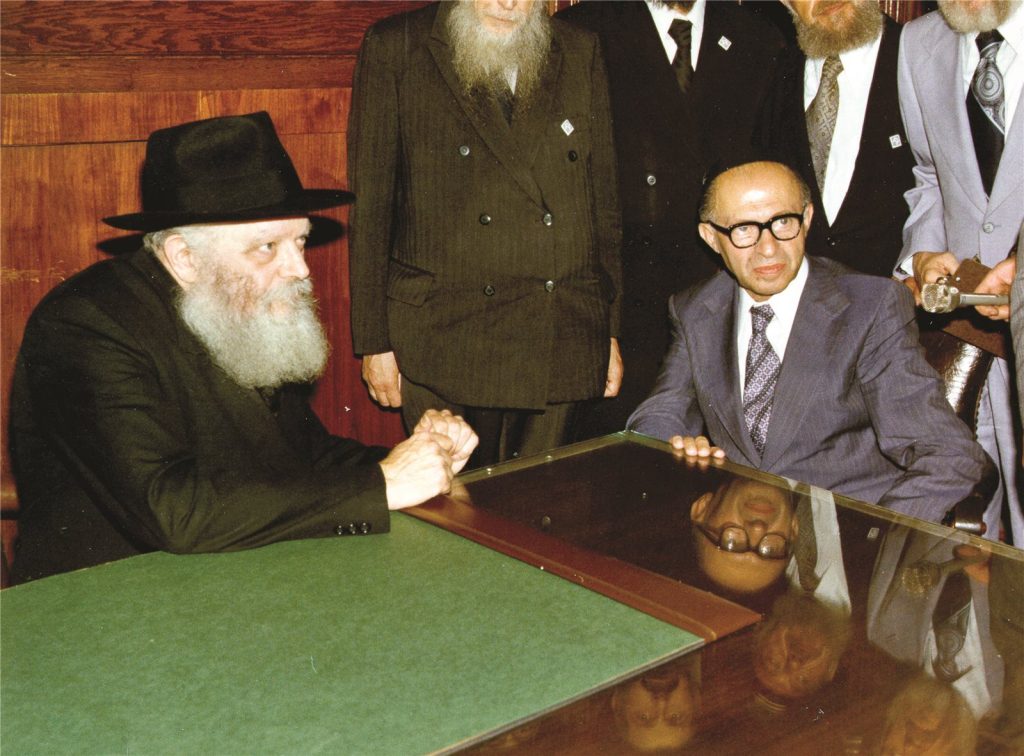
“I am not a Revisionist [the movement led by Jabotinsky out of which emerged Etzel and Lechi] and not even the grandson of a Revisionist; I was educated with Ahavas Yisrael, but I will say that we need to tell them, ‘may your hands be strengthened,’ and bless them that they succeed in their activities until they expel the English regime from the Holy Land.”
The Rebbe went on to say, “There may be among them people who are not religiously observant and everything should be done so they keep Torah and mitzvos; but what they are doing now to expel the English from the Holy Land, I say again, ‘may your hands be strengthened.’”
R’ Groner said that at the end of that meal, when the assembled went down together to 770, the Rebbe’s son-in-law, later the Rebbe, said in a rare expression, “If I had to join some group, I would join the Revisionists. Why? Because whatever they are doing is correct and based on halacha, according to Chassidus. Furthermore, it is based on common sense!”
At an event held in honor of Lechi member, Shlomo Paikovsky, R’ Groner expanded upon the Rebbe’s view of those underground fighters:
“In a way, the special status of the underground in the Rebbe eyes was because of the dedication of the fighters to the security of our holy land. The Rebbe, who was so concerned for the security of the Jewish people in Eretz Yisrael, saw in these daring fighters an example of the dedication demanded of every Jew, especially of the young, for Eretz Yisrael ha’shleima.”
To Shamir’s Credit
This supportive position in such a public way is not at all simple to understand because the fighters in the underground wanted to expel the British and form a Zionist state. While the first part was a mitzva, the Zionist perspective was anathema to the Rebbeim and they absolutely negated it. Still, the Rebbe Rayatz and then the Rebbe, differentiated between the fight on behalf of Jews in Eretz Yisrael and the fight for Zionism. They considered the underground as activists on behalf of Jews and Judaism.
When the Rebbe took over the Chabad leadership, the British had already been ousted and the underground groups broke up and banded together as the Israel Defense Forces. Nevertheless, the Rebbe occasionally bothered to remind the former underground fighters of the courageous spirit and inner fortitude they were blessed with in large measure, in order to continue working in this way to strengthen Judaism in the same way they worked to defend Jews, with mesirus nefesh.
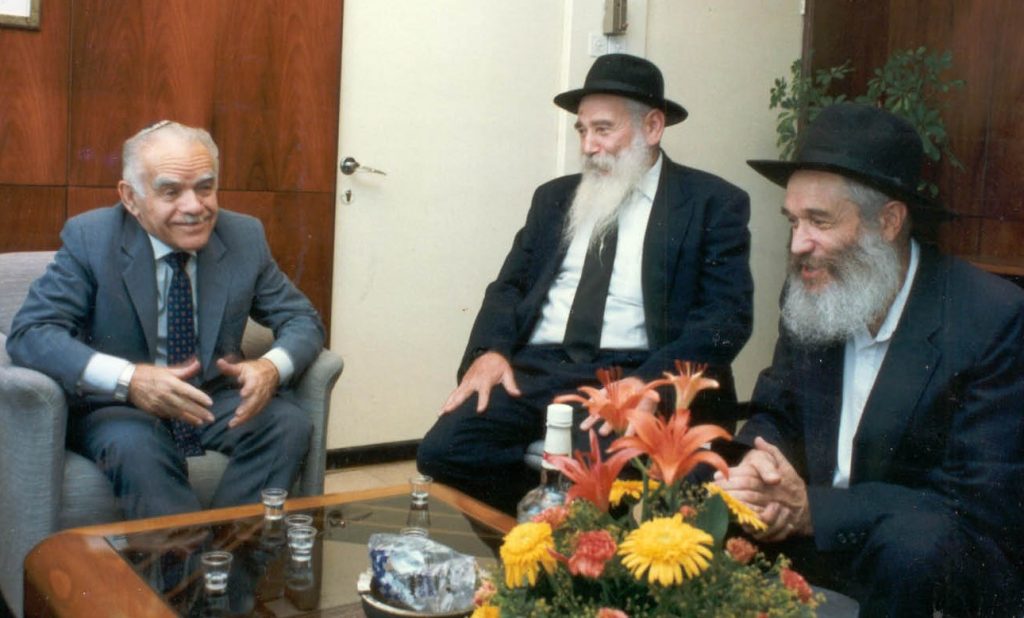
When Mr. Moshe Katzav visited the Rebbe on Yud Shevat 5752, the Rebbe spoke sharply against the possibility of giving autonomy to Arabs in Yehuda-Shomron-Gaza. The Rebbe mentioned the merits of the prime minister at the time, Yitzchok Shamir, for his time in the Irgun, which was the common name for Lechi, where Shamir was one of the outstanding commanders. The Rebbe connected his work in the Irgun decades earlier to his obligation to act firmly when it came to shleimus ha’aretz.
“Shamir has many merits regarding Eretz Yisrael, starting from the time of the Irgun, etc. when (according to our Torah) the nations had control over Eretz Yisrael, Shamir fought this, and now he is the one talking about giving away parts of Eretz Yisrael. Practically speaking, in my view – you need to see to it that Shamir immediately cancels the decision and talks about autonomy.”
Similarly, the Rebbe spoke with Menachem Begin who visited him in yechidus in the fifties. Begin had been a commander in Etzel and was one of the top wanted men by the British. The Rebbe began by speaking of his position in the underground and said “yashar koach,” emphasizing that his activities were in the category of a great mitzva. The Rebbe asked Begin to use these talents to have more of an influence on the youth.
The Rebbe, as usual, did not look at history as something of the past that is gone, but as a launching point for the present and future. The Rebbe urged the former fighters in the underground to continue to operate on a number of fronts with that same energy that burned in them years before.
Channel The Energy
The same was true with the writer, Nathan Yellin-Mor, who had been one of the leaders in Lechi. He later worked as a journalist and was a Knesset member for a short while.
In Tishrei 5737, he gave the Rebbe his book, Lochamei Cheirut Yisrael (Lechi) which documented the organization and its battle against the British. Some time later, the Rebbe sent him a letter in which he demanded that he and his former underground buddies continue to take action and not sit quietly:
“This is the first opportunity after the joy of the holiday [Simchas Torah] to affirm also in writing having received your book, Lochamei Cheirut Yisrael in addition to the few words we were able to exchange ‘on one foot’… The time is still not right for examining the book as much as requires, but I still cannot refrain – with an acknowledgment of receipt along with thanks, to add at least a few words, as per the ancient Jewish custom of making a comment and drawing conclusions, and please forgive me if you find this to be a sort of complaint.”
After this introduction, the Rebbe said, “The period about which you write required the most daring activities and in general it held the possibility of deciding the approach as far as the individual and the many.” The Rebbe went on to compare this to the situation in recent years in which some of the underground warriors found it hard to get back into the fray and operate like in the past for fear of disappointment. The Rebbe suggested that they mobilize for action in the framework of the fight for shleimus ha’aretz.
The Mesirus Nefesh Has Gone
The journalist Eliyahu Amikam, who had also fought for Lechi and Etzel, had yechidus with the Rebbe and when he came out, he wrote down his impressions which were published in the newspapers. He said that the Rebbe took great interest in the people of the underground and their current occupations and demanded that they work on behalf of Jews and Judaism. This is how he describes the conversation:
At first, he wanted to listen. He probed. He listened to answers with great interest. The underground interested him. He asked questions like someone who knows everything but wants to know the continuation of the story, which doesn’t actually exist. He asked about the fighters, citing names. “What is so-and-so [he] doing now?” “What is so-and-so [she] doing now?”
“What he’s doing?” I had trouble coming up with an answer. “What does that mean, what does he do? The anonymous soldiers became anonymous civilians, each one going his own way in life.” Then the Rebbe began to explain what he meant. “What is so-and-so doing?” – saying the name of a former female fighter. “What has she done in the past fourteen years?” What she did before the establishment of the state he did not ask; that was obvious to him and apparently satisfied him.
“She lives her life. What else can she do?”
“I sense in her a coal with a flame within and a flame on top,” said the Rebbe. “G-d gave her the power to excite people. What has she done with this power during the last fourteen years?”
“I cannot answer for her, Rebbe, but when you say ‘done,’ what do you mean exactly?”
The Rebbe seemed to turn inward: “If I say to do, I mean to bring Jews back to Judaism. You, people of the underground, displayed mesirus nefesh for Jews. You must continue with this.”
“In the underground, Rebbe, we were moser nefesh, literally. It seems that was easier. Now that there is no underground, the mesirus nefesh has also disappeared.”
The Rebbe expanded on his point: “Your mesirus nefesh needs to pull the nation forward also into the future. You still have the power. You yourselves don’t know how much power you have. You don’t know to appreciate it. With this power you can do more great things for the Jews. There is a very large population that still consider you heroes today. You can go to them and even command them. They will listen to you; they will obey you.’”
The yechidus lasted three and a half hours! When it came to its conclusion, Amikam left and conveyed a message to the Chassidim who waited outside and yearned to know what the Rebbe had said to him:
“What did he say? What’s more important is what he didn’t say, what he only hinted. What I heard in what he didn’t say is: Those who were moser nefesh to found the state, must now be moser nefesh for the continued existence of the nation that is in danger.”
As It Was Then, Today Too
Geula Cohen, later a Knesset member, was a member of the underground groups of Etzel and Lechi. Her cover name was Ilana. She was a radio announcer on the underground radio station Kol HaMachteret HaIvrit (Voics of the Jewish Underground) and then one day in the winter of 5706, she was caught in the middle of a broadcast by the forces of the British Mandate on Rechov HaShomer in Tel Aviv. She was sentenced to seven years imprisonment for weapons possession and two years imprisonment for broadcasting without a license, to be served concurrently.
At first, she was sent to the Kalisha prison in Yaffo and after she tried escaping and did not cooperate with the prison services, she was sent to a women’s prison in Beit Lechem where she was injured with a bullet in her leg during an unsuccessful escape attempt. One year later, she managed to escape in a daring operation in which she was disguised as an Arab.
After her escape, she courageously went back to her underground activities. Years later, as she served in the Knesset, she had yechidus and heard sharp words from the Rebbe about her ability to awaken passion in the youth to its Jewish heritage:
“When you were in the underground, whose voice did the youth hear? Who spoke to them? You! You gave the orders in the underground broadcasts, what and how to do things in order to get rid of the foreign rule of the Holy Land. You encouraged them and strengthened the hearts of the youth to devote themselves to public work without considering their personal situation. Now, where is your voice? The youth are waiting to hear instructions from you about what they need to do! Why aren’t they hearing your voice today too?”
On another occasion, the Rebbe sent a message to her through Rabbi Yosef Yitzchok Gutnick that she needed to stand strong in matters of shleimus ha’aretz as she stood strong during the era of the underground:
“In my opinion what cannot be conceded at all, are matters of danger to life of the nation that dwells in Zion, as I’ve proclaimed a number of times, and that is how she conducted herself while she was in the underground. May the enthusiasm of back then be felt now in her effect on her environment.”
Keep It Legal
The underground put in great effort to attack the British government while simultaneously carrying out many operations to bring Jews to Eretz Yisrael illegally by boat, after the British did not allow Jews in except for very few.
At the end of World War II, hundreds of Chabad Chassidim crossed the Russian border. After many stops, they arrived in DP camps where they spent a considerable amount of time with many wondering where to go from there. Some wanted to go to the United States and some wanted Eretz Yisrael, but the British had closed the gates of Palestine and gave out few certificates.
There were many illegal smuggling organizations which braved the dangers of approaching the shores of Eretz Yisrael under the noses of the British. Some of the passengers were arrested and sent to Cyprus.
The Rebbe Rayatz was asked about going to Eretz Yisrael in this way and the answer he sent in Iyar 5707 was clear: “To those who intend, with G-d’s help, to travel successfully to the Holy Land, inform them that they are to choose only a form of transportation that entails no danger chalila and may Hashem have mercy on them and protect them and help them.”
This was sent to Rabbi Binyamin Gorodetzky, the director of the refugee office in Europe.
Love For Their Fellow Jews
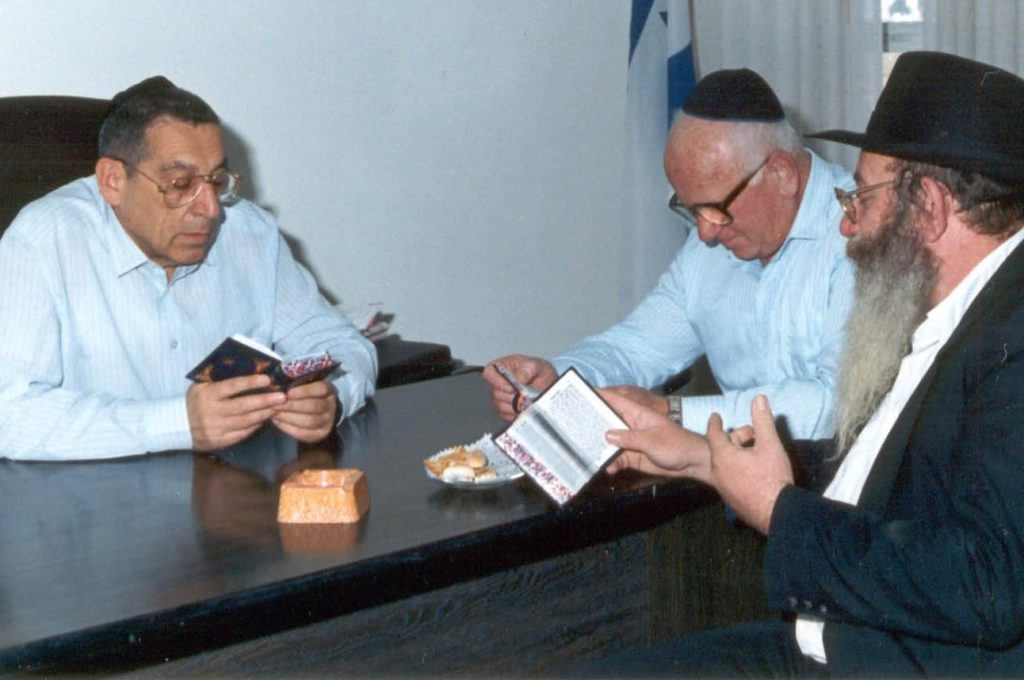
At the farbrengen held in memory of R’ Shlomo Paikovsky, R’ Groner said, “We need to learn from the members of Lechi who were bravely moser nefesh for the security of the Jewish people living in Zion. One cannot help but marvel in the face of the ‘unwarranted love’ that radiated from them. Before going on different operations, they didn’t think and worry about what would be, maybe this is the end, G-d forbid… All of them, with one heart, enthusiastically went out with true concern for the Jewish people and the Jewish yishuv in Eretz Yisrael.”
Beis Moshiach #1422 • pp. 20-27
© 2026 Beis Moshiach Magazine. All rights reserved.
This article originally appeared in Beis Moshiach #1422. You are welcome to share it with friends and family by email or in print, provided that you do not change, add to or omit any part of it, you credit the author and Beis Moshiach, and you include a link to archive.bmoshiach.org (written out in full in printed copies).
To republish this article in a newspaper, magazine, book or website, please request permission in advance at [email protected].