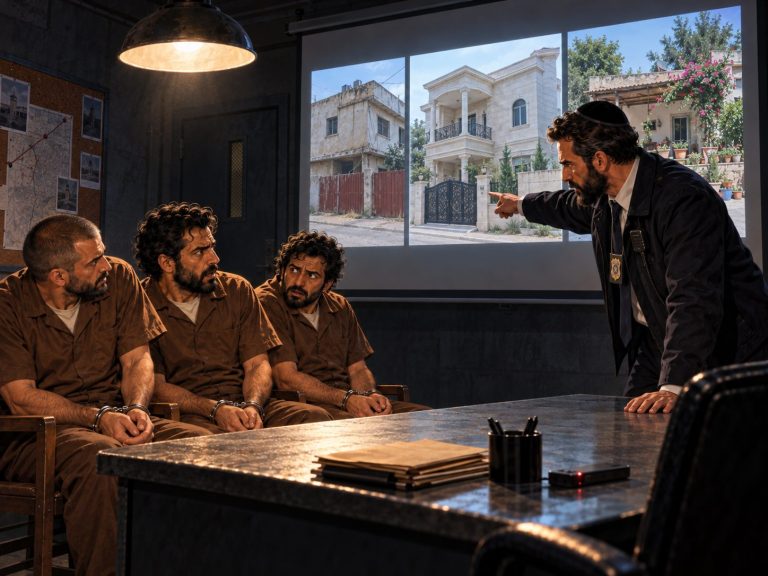
The Journey of Three Secrets
There was a young man living in the town of Brod that hadn’t seen his parents in three years. He was married, and lived with his wife near her father’s house. His wife’s father, his father-in-law, was wealthy, and he gladly paid for whatever they needed, so the young man had time to learn Torah. And learn he did! He spent many hours over his sefarim, day and night. It was a comfortable life, and he was glad and thankful to Hashem that he was free to strengthen his relationship with his Creator so easily. Still, he missed his own family, who lived far away, in the city of Posen.
At that time, the holy Baal Shem Tov was passing through town, and he happened to be staying in the same house. The young man’s father-in-law greatly respected the Rebbe and was happy to help him. One day, the Baal Shem Tov turned to the young man with an unexpected offer. “I’m about to travel to Posen,” he said. “Would you like to come along?”
The young man’s face lit up. “Rebbe, that’s where my parents live! I haven’t seen them in years! Let me check with my wife and father-in-law, and I’ll be ready!”
His wife and father-in-law were delighted. “Of course you should go!” they replied. “Aside from visiting your parents, you’ll also have a once-in-a-lifetime opportunity to spend time with a holy tzaddik. What a special zechus! This’ll surely be a journey you’ll never forget.”
The young man raced back to the Baal Shem Tov. “They said it sounded like a great idea, Rebbe,” he said happily. “I’m ready whenever you are!”
They left Brod on Thursday. Posen was hundreds of miles away. This wouldn’t be a quick ride over to the next town! In those days, there were no cars or airplanes, and a horse could only travel so far in a day. The young man expected to spend many days traveling by horse and wagon before reaching his parents. But he was in good company, and something wonderful waited for him at the end. He climbed into the wagon beside the Baal Shem Tov, and they set off.
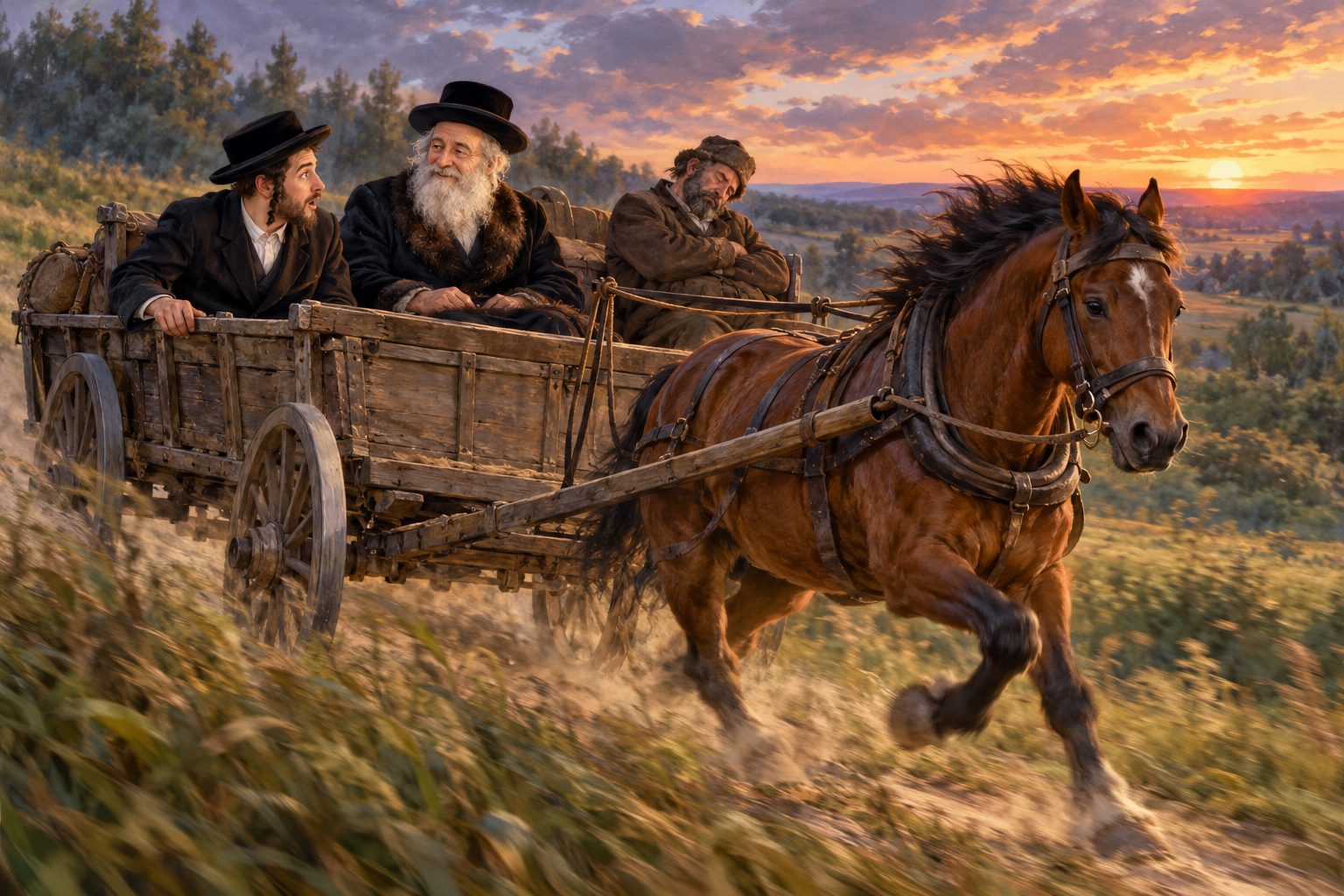
Once they’d passed the last houses of Brod, the driver, Alexi, did something strange. He tied the reins—the long straps used to guide the horse—to the wagon. The horse kept going without anyone telling it what to do or where to go! Then it turned away from the main road and began following a smaller path. The young man looked back at the road they’d left. “Rebbe, we’re going the wrong way!” he cried. “We’ll get lost!”
The Baal Shem Tov laughed gently. “We don’t need to tell the horse where to go,” he answered. “It knows the way.” The driver settled into his seat and fell asleep. Soon, the wagon was rolling off-road entirely; no smooth, well-used path under the wheels, pebbles and roots bouncing the carriage up and down as the horse sped through the wilderness. The young man gripped the side of the wagon as they moved faster and faster. No ordinary horse could move like this! Fields and trees blurred past them, and the sleeping driver never even stirred.
This was one of the Baal Shem Tov’s many miraculous journeys. It’s called kefitzas ha’derech, a miracle where Hashem allows someone to cross a great distance in much less time than usual. The young man had never been on a trip like this before. He could hardly believe what was happening, but the Baal Shem Tov just sat calmly beside him, as the wagon raced onward.
Late that afternoon, close to the time for Mincha, they reached a lonely place covered in tall grass. It had grown so high, the young man felt some of it brushing through his hair as the wagon rolled through it. It seemed no one had been here in a very long time. Suddenly, the horse stopped. The Baal Shem Tov was lost in holy thoughts, so completely focused on Hashem that the young man felt a little afraid to disturb him. At last, the Rebbe woke the driver. “Alexi, Take what you need, and search the tall grass,” he instructed him. “You’ll find a well. Bring us some water.”
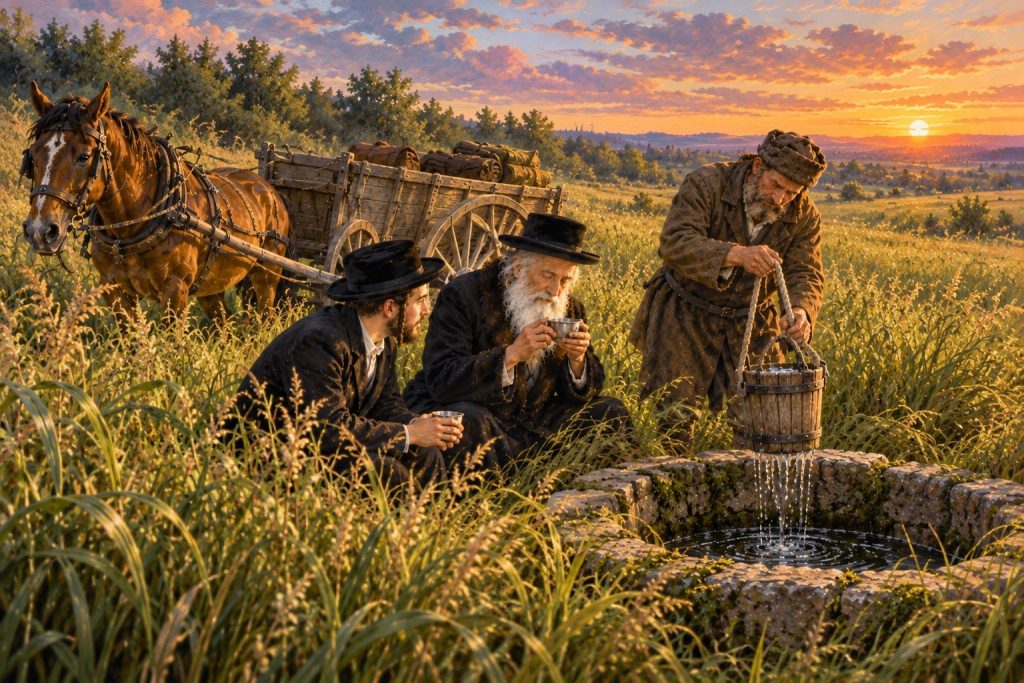
The driver climbed down and dug through the grass like he was exploring a jungle. It took him a while to find the well, but when he returned, he was carrying water. The Baal Shem Tov made a bracha and the three of them drank together, thinking deeply about the holy words he was saying. Then the Rebbe told the driver, “You may go back to sleep.” The man returned to his seat, dozed right off, and the horse began moving, carrying them onward.
By Thursday night, the young man was worried. He hadn’t seen a town, a village, or even a single house for a long time. He had no idea where they were. We’re nowhere near Posen, he thought. At this rate, we’ll spend Shabbos in the middle of a field! Finally, he turned to the Baal Shem Tov. “Rebbe, where will we stay for Shabbos?”
The answer came at once. “Don’t you remember we’re going to Posen? That’s where we’ll spend Shabbos.”
The young man couldn’t understand. He’d grown up in Posen. He knew all the roads leading in and out of the city, and all the towns and villages around it. Even places pretty far from Posen would have looked familiar to him. But he didn’t recognize anything! How could they possibly be going the right way? Still, the Baal Shem Tov had answered his question, and the young man tried to keep his worries to himself.
They traveled through the night. In the morning, the horse stopped while they davened Shacharis. Their driver wasn’t Jewish, so he didn’t need to join; he stayed asleep, just as the Baal Shem Tov preferred. Afterward, the wagon began moving again. By noon on Friday, the young man could no longer stay quiet. “Rebbe, we’re running out of time, Shabbos is almost here! Where will we stay?”
“Have I not already told you?” the Baal Shem Tov replied. “We’ll be in Posen for Shabbos.” The young man looked at the empty land around them. Was the Rebbe teasing him? How could he keep saying they’d reach Posen, when there wasn’t a single familiar place in sight? Soon, there were only two hours left before Shabbos. They couldn’t keep riding once Shabbos began, yet they still had nowhere to stay.
Then, he spotted something in the distance. A village! His heart lifted as the wagon drew closer. Maybe they’d stop here. Maybe a Jewish family would invite them in for Shabbos, and they would not have to sleep beneath the open sky after all. But the horse passed one house after another, without stopping. The young man watched the last few homes come closer, then slip behind them. His hope faded. They were leaving.
At the edge of the village stood a ruined house. Its walls were broken, and stones lay scattered around it. There, the horse finally stopped. The young man studied the building. It was hardly the nice, cozy place he had hoped for, but at least there was some shelter. Even this is better than a field, he thought. He climbed out and followed the Baal Shem Tov inside.
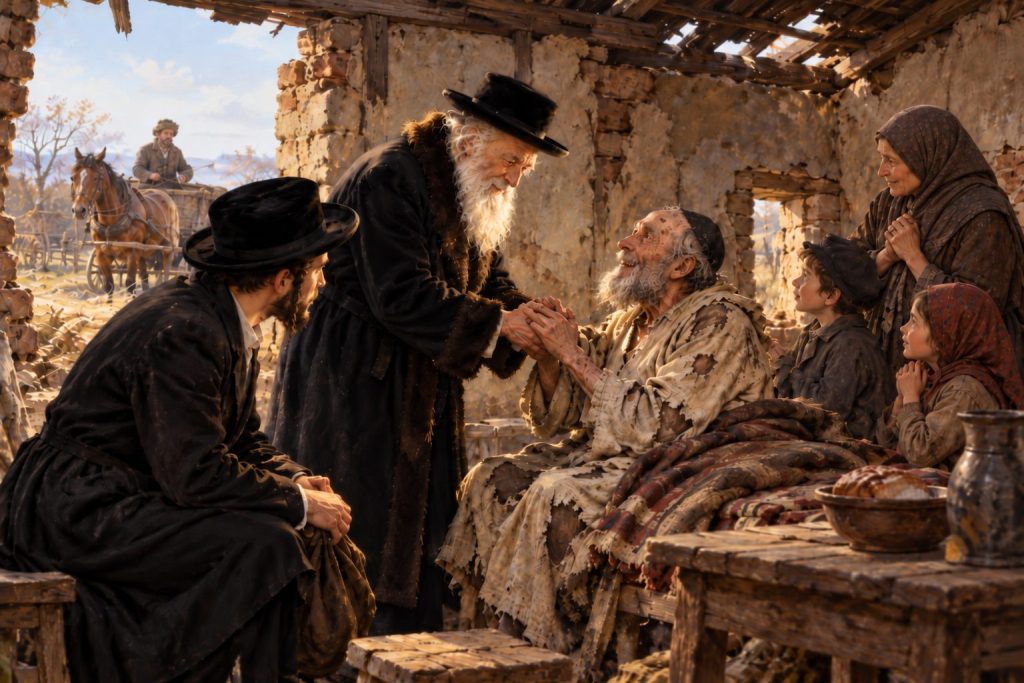
An elderly man was there, covered in painful sores from his head to his feet. He looked terribly sick. His wife and children wore torn, dirty clothes that had clearly been used for a very long time. The family was poor, hungry, and their home was falling apart. But when the elderly man saw the Baal Shem Tov, his face lit up with joy. “Shalom aleichem, Rebbe!” he cried, hurrying forward to welcome him in.
The young man watched in amazement. The man was so happy, it was hard to describe. Anyone who hadn’t seen that greeting with their own eyes could hardly imagine such joy! The Baal Shem Tov accepted him with a loving warmth. Then the two entered a separate room and spoke privately for about half an hour. The young man waited outside, wondering who this sick, poor man could be.
When they came out, they said goodbye like two very dear friends, close as Dovid and Yehonasan, whom we read about in Tanach. Then the Baal Shem Tov walked back to the wagon. The young man stared after him. They were leaving? Again?
There was only about an hour left now. The young man climbed into the wagon without asking another question. He had already asked, and the Rebbe had already answered. The driver slumbered as the horse carried them away. Once again, there were no houses or people in sight. The young man felt sure they’d spend Shabbos outside. Then, in what seemed like only a moment, everything changed.
He saw the walls of a city, suddenly looming in front of him, even though he could have sworn they hadn’t been there before—and he knew those walls! He leaned forward, hardly daring to believe his eyes. These were the familiar streets of Posen. And there, not far away, stood the house where he’d grown up. His parents’ house! All of his worry disappeared. He felt excited and full of strength again. He’d been so certain they would never arrive, and now, his family was almost within reach!
To be continued IY”H…
Beis Moshiach #1527 • י״ב חשון תשפ״ז • pp. 54-58
© 2026 Beis Moshiach Magazine. All rights reserved.
This article originally appeared in Beis Moshiach #1527. You are welcome to share it with friends and family by email or in print, provided that you do not change, add to or omit any part of it, you credit the author and Beis Moshiach, and you include a link to archive.bmoshiach.org (written out in full in printed copies).
To republish this article in a newspaper, magazine, book or website, please request permission in advance at [email protected].