The Shliach Who Had No Freedom of Choice…
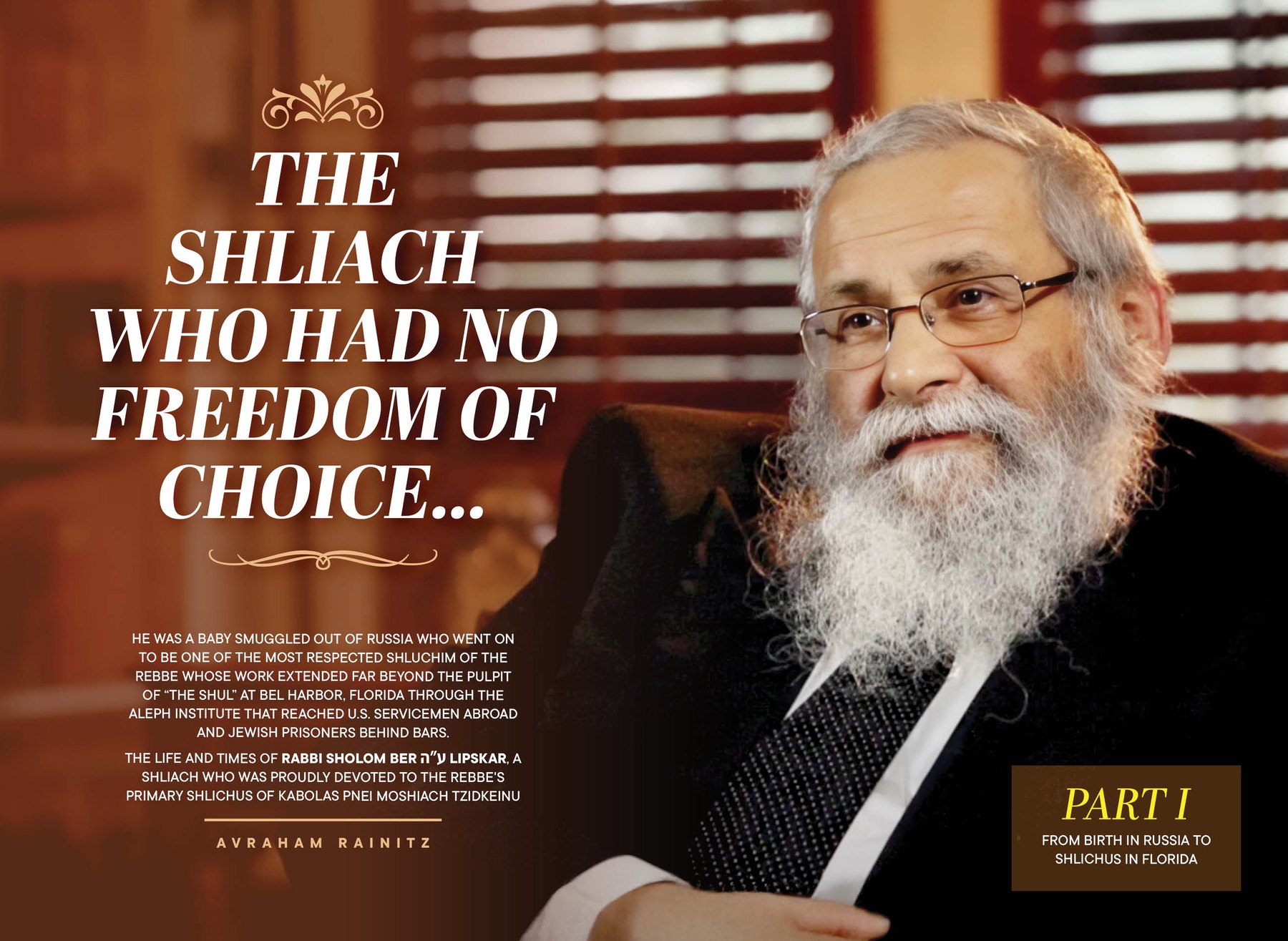
He was a baby smuggled out of Russia who went on to be one of the most respected shluchim of the Rebbe whose work extended far beyond the pulpit of “The Shul” at Bal Harbour, Florida through the Aleph Institute that reached U.S. servicemen abroad and Jewish prisoners behind bars. The life and times of Rabbi Sholom Ber a”h Lipskar: a shliach who was proudly devoted to the Rebbe’s primary shlichus of kabbolas pnei Moshiach Tzidkeinu
“I am traveling with you, but it should be b’simcha! Because if it’s not b’simcha, what purpose would there be in taking me with you?”
With these words, the Rebbe, Melech HaMoshiach accompanied the young couple, Rabbi Shalom Ber Lipskar, and his wife Chani, as they went out on shlichus to south Florida in 5729. These decisive words were transformed into the life’s compass of someone who eventually became one of the most influential and well-known shluchim in the Chabad world.
On numerous occasions, Rabbi Lipskar would review the Rebbe’s words and explain their meaning, and while the Rebbe would be with them whether they are b’simcha or not – he demands the simcha as a condition for the success of their shlichus.
On Shabbos Kodesh Parshas Tazria-Metzora, the fifth of Iyar 5785, Rabbi Shalom Ber Lipskar suddenly returned his soul to its Maker. His passing at the age of seventy-eight stunned and shocked his thousands of friends and supporters throughout the world. R’ Lipskar was a true Chassid and leader, the Rebbe’s shliach with all his heart and soul.
While he had close relationships with numerous affluent benefactors, he was never drawn to all the material temptations of this world, choosing to live a simple life. His Chassidic behavior and conduct, such as walking in the city streets wearing his kapota and tallis, even in the sweltering heat of south Florida in the summer, radiated a sense of yiras shamayim and had a powerful influence upon his immediate environment.
While in recent years, he was considered one of the most successful shluchim anywhere, when he administered an empire of educational institutions in one of the wealthiest places in the world, nevertheless, at the start of his shlichus, he was compelled to deal with the most difficult situations, both material and spiritual. Only with the strength of the Rebbe’s brachos, and in the merit of the inner negation of his personal will to the ultimate purpose of shlichus, was fulfilled the pasuk “And your beginning shall be small, but your end shall increase exceedingly.”
The Infant Who Escaped From Russia
The life story of R’ Shalom Ber Lipskar began in 5706, in the city of Tashkent, Uzbekistan. This was the period of the great escape of Chabad Chassidim from the Soviet Union. His father, R’ Eliyahu Akiva Lipskar, was one of the Chassidim who joined the getaway operation.
A few months after Shalom Ber’s birth, his parents took a serious risk and smuggled him with the rest of the family over the border. The young family secretly made its way to the DP (displaced persons) camps in post-war occupied Germany, when they dressed the baby in infant girl’s clothes, as he was recorded in the forged passports as a ‘female’…
At the conclusion of the harsh and difficult journey, the Lipskars arrived with their son in the free world.
In the early Yuds (fifties), the family settled in Toronto, Canada. In this new environment, far from the terror of the Communist regime, the parents built their lives anew, based on the tenets of Chassidic teachings. The couple dedicated themselves to Jewish education: the father served as a devoted teacher, while the mother was a beloved counselor and instructor. The two of them even did a great deal of work for the Chabad summer camps, providing young children with a little taste of a real Jewish experience.
Even in his youth, Shalom Ber stood out with his sharpness of mind and intense curiosity. When he reached yeshiva age, he was sent to learn at the local branch of Yeshivas “Tomchei Tmimim.” Later, he continued his studies at the Central Lubavitcher Yeshiva in 770, where they noticed the tremendous skills and vitality of the Russian-Canadian bochur, appointing him as one of those seven students chosen to give over an in-depth Talmudic pilpul once a week before the other talmidim.
In 5728, he received his rabbinical ordination and shortly thereafter, he married his wife Chani (nee Minkowicz), also a member of a Chabad Chassidic community from Canada.
From the very start of their joint spiritual journey, the young couple was prepared to go out on whatever shlichus mission was placed upon them.
The Strength To Go Out On Shlichus
Going out on shlichus was a major element in their formative private yechidus with the Rebbe, which left an indelible impression on the young couple.
After the Rebbe instructed R’ Lipskar to check into the field of education, he received three offers for shlichus in the field. One of them was to move to Miami.
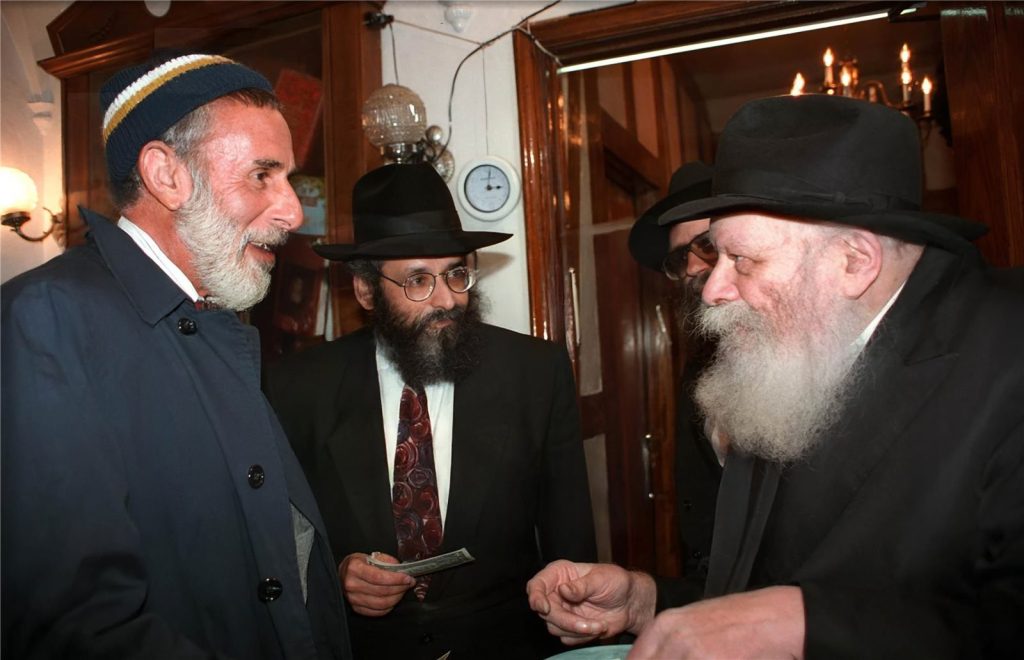
Rebbetzin Chani Lipskar later said that before the yechidus, they explained to her that during the private audience, you simply listen to the Rebbe’s words. Nevertheless, when the Rebbe chose the shlichus in Miami for them, she couldn’t restrain herself… “It just hit me suddenly, and I blurted it out without noticing what I was doing,” she recalled in an interview.
She turned to the Rebbe and said: “I want to fulfill the will of the Rebbe and carry out his shlichus. But it’s going to be very hard for me. First of all, I don’t know if I’ll be able to succeed on shlichus. Secondly, it will be most difficult for me to leave my current location.” In her interview, she added: “I loved living where I was residing at the time.” Her husband, R’ Lipskar, stood alongside her, facing the Rebbe with a pale expression on his face.
In response, the Rebbe raised himself slightly from his chair, reached out his broad hand and said with a wide grin filled with love: “Ich fahr doch mit eich” (I am traveling with you). He then added a vital condition: “Ober s’zahl zein b’simcha” (But this must be with joy). He continued: “Veil oib nisht b’simcha, vos darft ir mir mitnemen?” (Because if it’s not with joy, why do you need to take me with you?)
R’ Lipskar always emphasized that the Rebbe didn’t say that if they won’t be b’simcha, he won’t come with them, rather he asked why they would take him to such a place without simcha. The message was clear: Simcha is the tool for success on shlichus, and this is what will bring the Rebbe’s brachos.
“During the yechidus,” Mrs. Lipskar recalled, “the Rebbe asked me: ‘Do you help your husband?’”
“I try,” I replied. I was embarrassed to say, ‘Yes, I do.’
“The Rebbe then looked at me again, gave a pleasant smile that I remember to this day, and said: ‘Well then, if you are trying, then you need to do more.’ He then added something important: ‘However, you are his partner, you are his partner.’ I really feel that this is a partnership – a full-time partnership…”
A Life-Changing Meeting
Some time later, R’ Lipskar and his wife arrived at their destination: the sun and fun capital of the world, Miami Beach, Florida.
While those years in the Sunshine State were years of material plenty and demographic prosperity, in contrast, Florida also knew a spiritual downfall among many young Jewish people. South Florida was known as a “retirement home” for the elderly, not as a center of Torah. Although the local Jewish community was firmly established, it was mainly egalitarian or even assimilated. Torah-based educational institutions for young children were few in number.
With this background, the young couple, instilled with the fire of shlichus, landed in Miami. The reality of the situation was very difficult and challenging. The Miami of those days was a far cry from the Miami of today. Meat and dairy products had to be brought from very long distances, and in most cases, the dairy products spoiled before reaching their destination…
R’ Lipskar even encountered direct opposition from the local Jewish establishment. When he met with members of the Jewish Federation, he was received quite coldly. “We don’t need people like you here; you’re not wanted here,” they said, and escorted him out without letting him return. Yet, these tremendous difficulties did not discourage him, in fact, they actually hardened his determination to illuminate Miami’s spiritual darkness.
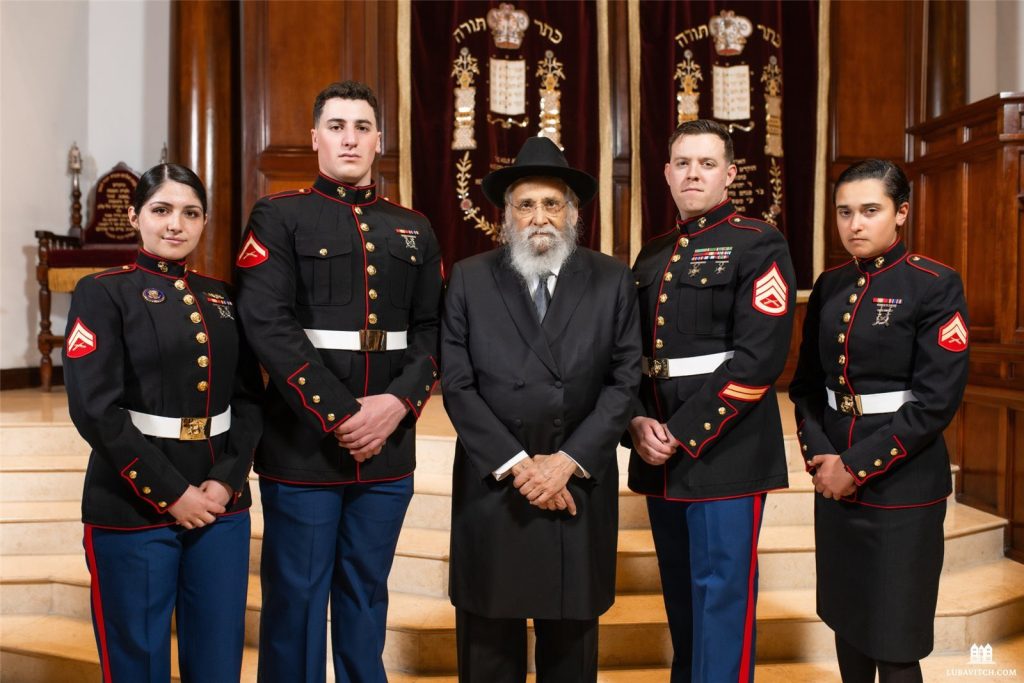
R’ Lipskar began his shlichus as a staff member with the yeshiva established in Miami Beach. He was soon appointed as principal of the city’s Chabad Talmud Torah – a very challenging position for a young married man still in his early twenties. He invested long days and nights in administering the educational institutions: advancing learning programs, convincing parents to register their children, while raising the necessary financial resources to maintain the institutions. Even then, his ability in speaking to people’s hearts became quite prominent. “Touching the soul,” in the words of his friends and acquaintances, whether he was facing a young student or a philanthropic tycoon.
The Rebbe Said: I Have Met A Jew Whom G-d Has Given Strengths That Even I Don’t Have…
One of the most influential stories of that period is connected to a seemingly chance meeting that became a historic milestone for Jewish education in Florida: Shortly after his arrival in Miami, R’ Lipskar began teaching a weekly Torah class. One of the participants was David Lifschitz. A local tennis champion, he mentioned that he plays regularly with Mr. Mel Landow, owner of a large wholesale sales network of electrical appliances.
Looking for an opportunity to put on tefillin with Mr. Landow, R’ Lipskar arrived at the tennis courts and proposed a deal: If David won the match, Mel would put on tefillin…Landow, who was an excellent tennis player in his own right, agreed to the deal – and lost. As soon as the match was over, Landow put on tefillin.
The spiritual experience touched Landow’s heart, and he started participating in weekly Torah classes dealing with the Rebbe’s sichos. Nevertheless, he refused to put on tefillin again, claiming that it was “not relevant” for him.
Two years later, in 5732, when the school was experiencing some serious financial difficulties, Landow invited R’ Lipskar to his home and informed him of his intention to make a donation of half a million dollars to build a new facility for the Jewish day school – an unprecedented amount at that time. R’ Lipskar quickly and happily reported these developments to the Rebbe.
A few days later, the Rebbe’s secretary, Rabbi Chodakov, called and suggested that R’ Lipskar should try again to put on tefillin with Landow. R’ Lipskar expressed doubts if he would agree. Suddenly, he heard the Rebbe’s voice on the line. The Rebbe noted that he was about to travel to the Ohel, and this would be an appropriate time for putting on tefillin… The Rebbe also recommended using a nice-looking pair of tefillin with attractive boxes.
R’ Lipskar came to Landow’s tennis court and explained to him that the Rebbe is going to the Ohel, and he will surely pray for him if he will put on tefillin. To his great surprise, Mr. Landow consented, and from that day forward, he began putting on tefillin every day.
Later, R’ Lipskar arranged a meeting between Landow and the Rebbe. Landow brought plans for the school in Miami to the meeting, together with plans for a big and most impressive project that he wanted to kick off in Eretz Yisrael, including golf courses, conference facilities, and a spa. In his meeting with the Rebbe, Landow displayed pride in his development plans for the Holy Land.
The Rebbe responded with a challenging question: When you host a guest in your home, what do you show him: the library and the living room – or the bathroom?… When Landow replied, “The library and the living room,” the Rebbe asked him: “Then why are you building a ‘bathroom’ in Eretz Yisrael?,” referring to the spa. The Rebbe reasoned that there are far more important things to do in Eretz HaKodesh.
The conversation deeply moved Landow’s soul. Instead of empty words of praise, the Rebbe gave him a loving sense of truth and a demand for responsibility. That nighttime meeting lasted well over an hour, and at its conclusion, Landow left the room filled with excitement, his mind churning away. “No one had ever spoken that way to me before,” he told R’ Lipskar, “but he was absolutely right.” The two spoke until the wee hours of the morning about the future of the Jewish People. R’ Lipskar felt that he was bearing witness to a moment of change – a Jew of considerable affluence suddenly directing his heart not to a contribution of a building of stone, but a spiritual construction of young neshamos.
The following day, Rabbi Chodakov gave over a message to Landow from the Rebbe, an extremely rare one in its significance: “I have met a Jew whom G-d has given strengths that even I don’t have… through which he will bring hundreds of thousands of Jews back to their roots. A person usually doesn’t see a building’s foundations, but here, I have seen strong and deep foundations.”
The day after, a letter arrived from the Rebbe in which he explained his “un-American” approach in the meeting – instead of showering Landow with accolades and compliments, he challenged him with new projects because he believed in his ability to accept the suggestions in the proper spirit.
In his letter, the Rebbe expressed his hope that Landow understood what he really meant – an invitation to join a tremendous educational shlichus.
Not only did Landow understand, he believed it and accepted it. He assumed this great new visionary mission with all his might, and within a short period of time, he announced that he would be making a contribution of $500,000 – an incredibly large sum of money back then – for the establishment of an additional Jewish educational center in Miami Beach.
The new institution, named “The Landow Yeshiva Center,” served as an all-purpose facility combining kindergartens, a Talmud Torah, elementary and yeshiva high schools, turning over the years into an infrastructure for thousands of growing Jewish students throughout south Florida.
Thus, from an unexpected beginning on a tennis court, a revolution in Jewish education was born when R’ Lipskar, as director of local Chabad institutions in constant contact with the philanthropist, skillfully navigated the fulfillment of the Rebbe’s vision.
At a Critical Moment In His Life, The Secretary Whispered In His Ear: You Have A Shlichus!
During the early years of R’ Lipskar’s shlichus, there were also some complex and difficult personal challenges, including those of an economic nature. There were days when they simply didn’t have what to eat, and when they returned home, they prayed to Hashem that they wouldn’t discover that their electricity had been cut off due to continual lack of payment…
In the mid-Lameds (seventies), Rabbi Lipskar was diagnosed with a heart murmur. At that time, a new modern medical procedure had been developed to treat this condition. The person selected to carry out this procedure was the chief cardiologist at Mount Sinai Hospital in Miami.
Once the operation had been completed under general anesthesia, R’ Lipskar was wheeled into the recovery room. In the meantime, his wife returned home to bring a few things. During that period, they lived on North Meridian Boulevard, a distance of just three city blocks from the hospital.
After enough time had passed, his wife called to ask about his condition, but there was no answer. She hung up and tried again. Another patient who shared the room with him woke up and answered the phone.
“How is my husband?” Mrs. Lipskar asked.
R’ Lipskar was right near him, sleeping quite soundly.
“Fine, please wake him.”
The man tried to call to R’ Lipskar by name, but he failed to respond. “Listen,” he said, “your husband isn’t waking up.”
“This doesn’t sound right. Please call a doctor or a nurse,” she urged him, and she quickly made her way back to the hospital.
After the staff tried unsuccessfully to wake him, an emergency was declared. The doctors and nurses started coming in with resuscitative equipment, and they asked his wife to leave the room. She ran to the nurses’ station and said that she needs to make an urgent telephone call. She dialed the number of the Rebbe’s mazkirus.
Rabbi Chodakov picked up the phone, and the shlucha expressed her fear to him over what was happening. “Please go urgently to the Rebbe. This is an emergency!”
“At which number can I reach you?” Rabbi Chodakov asked.
After a few minutes, the secretary called back. “I need to speak with your husband.”
“With my husband? Did you hear what I said? They’re still trying to revive him. You can’t speak with him!”
“Did you hear what I said? I have instructions from the Rebbe to speak with your husband,” he repeated. “The Rebbe has a mission for him…”
When she heard this, she calmed down a little. If the Rebbe has a mission for him, she thought, he’ll be all right…
Mrs. Lipskar, who knew how to act with determination in critical situations, decided to return to the room where they had just asked her to leave. She arranged for the telephone conversation with the Rebbe’s secretary to be transferred to her husband’s room, and she placed the receiver near his ear. The first thing that R’ Lipskar remembered hearing was Rabbi Chodakov’s voice…
Around this time, Professor Yirmiyahu Branover, a Nobel Prize candidate for his work in the field of magnetohydrodynamics, had just left the Soviet Union.
“The Rebbe said that you have to call the University of Winnipeg to organize a welcoming ceremony for Professor Branover when he comes to visit there,” Rabbi Chodakov said to him. R’ Lipskar could hear the Rebbe’s voice in the background, instructing Rabbi Chodakov what to say to him…
In addition to the initial difficulties the Lipskar couple experienced in those early years, a fire broke out in their home when the shlucha was still in the house. When they went in for yechidus shortly thereafter, the Rebbe inquired how she was, even asking if there were any remnants left from the fire. Only then did the Rebbe add by saying: “After a fire, one becomes wealthy…”
Rabbi Lipskar himself noted: “After that fire, we never again had a problem paying our electric bill…”
To be continued…
Beis Moshiach #1463 • pp. 10-17
© 2026 Beis Moshiach Magazine. All rights reserved.
This article originally appeared in Beis Moshiach #1463. You are welcome to share it with friends and family by email or in print, provided that you do not change, add to or omit any part of it, you credit the author and Beis Moshiach, and you include a link to archive.bmoshiach.org (written out in full in printed copies).
To republish this article in a newspaper, magazine, book or website, please request permission in advance at [email protected].