The Flute That Found Faith
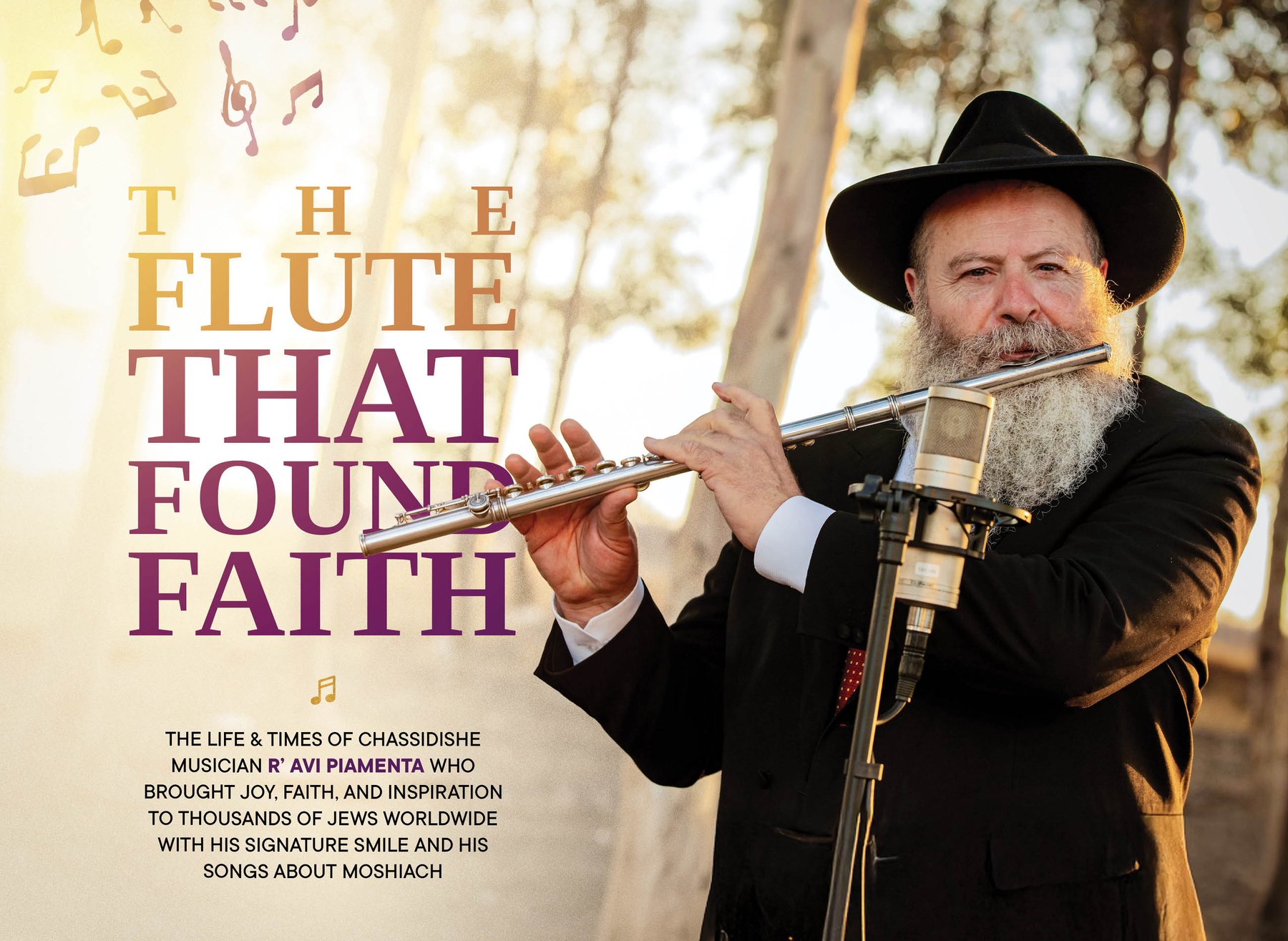
The life & times of Chassidishe musician R’ Avi Piamenta who brought joy, faith, and inspiration to thousands of Jews worldwide with his signature smile and his songs about Moshiach.
The news of the sudden passing of R’ Avrohom (Avi) Piamenta, one of the veteran musicians in Chabad who left a deep mark on Jewish and Israeli music for decades, shocked the Chabad community worldwide.
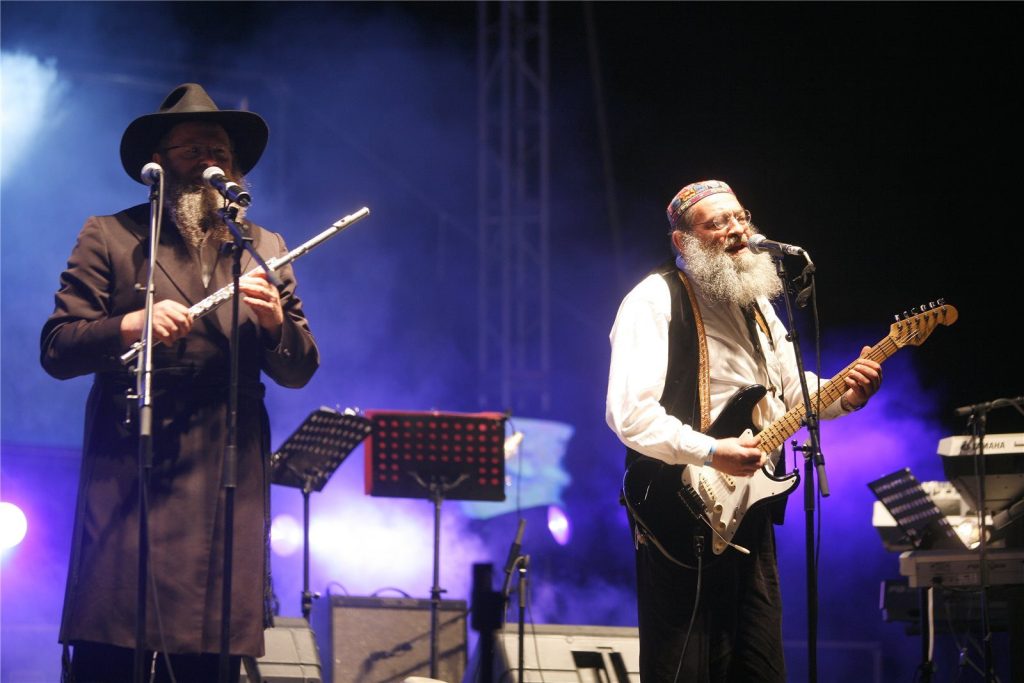
Together with his brother, guitarist Yossi z”l, he founded the “Piamenta Band” which pioneered the combining of rock, jazz, Middle Eastern music, and Chassidishe niggunim; a musical bridge between different worlds that brought joy to masses of Jews for decades, while maintaining spiritual depth and musical authenticity.
Beyond his artistic achievements, R’ Avi Piamenta was an ardent Chabad Chassid with a radiant soul, who used his talents to spread light and joy, and succeeded in drawing hearts closer through the sounds of flute and guitar.
It seems there is no Chassid today unfamiliar with the sight, whether at a wedding or any other event: R’ Avi Piamenta standing and bringing joy with his flute; like a young bachur, a truly sweet Chassid, dancing and bringing joy with his trademark energy. His fingers racing over the side flute keys, his smiling mouth connected to the instrument, and his bright blue eyes smiling with simple love. Until the end he would continue with total enthusiasm, energy, and inner joy, in a way that didn’t leave the observer indifferent, and got the celebrants jumping.
This was R’ Avi Piamenta – a super-talented, gifted musician, mentor and artist in his soul, as well as a ‘sweet’ Jew, ‘tmimusdik,’ with the eyes of a child, brimming with joy, holding nothing of himself.
A Musical Childhood
Avi Piamenta was born in Yerushalayim in Shevat 5716 to his parents Yehuda and Genia. His parents’ home was mesorati-traditional, but was not completely religious.
Already in his childhood he stood out for his musical talent. His mother purchased a piano early on in Tel Aviv (where the family moved when he was 4), and he learned to play piano, organ, and later also the side flute. “I grew up on piano playing, but after some time I discovered the magical sound of the flute, and it became my preferred instrument,” he later recounted. Over the years, the flute became the instrument most identified with him. Its special sound went hand in hand with his warm and special personality.
Already in his youth he performed before audiences, first in school in Kfar Hayarok, where he organized musical programs and played at local events.
In the early 1970’s, Avi joined his older brother Yossi, a talented musician and guitarist, for their first performances. In those days Yossi served in a military entertainment troupe, and 17-year-old Avi performed with him before IDF soldiers. They also performed during the height of the Yom Kippur War, when bombs exploded around them while they continued playing in order to lift the fighters’ spirits.
A year after the war, the brothers formed the “Piamenta Band” which began gaining great popularity. The band stood out with its rock and western fusion with touches of Middle Eastern music, with Avi amazing on the flute while Yossi blasted away on electric guitar. They were already incorporating messages from Jewish sources in their work, even when standing on the stages of Tel Aviv rock clubs where they performed. Seeds of spirituality were already planted in their early work, long before they officially returned to religious observance.
The great breakthrough came in 1977, when the brothers were invited to perform with jazz player Stan Getz, who came to Israel seeking new sounds. Getz – one of the world’s greatest saxophonists – was captivated by the flute and guitar sounds of the brothers, and invited them for a joint tour and recordings in the United States. This was a precedent that created a stir in Israeli media; for the first time an international musician of such renown collaborated with an Israeli ensemble. Following this success, and after completing a successful tour in the US and Canada, the Piamenta brothers moved.
The move to the US wasn’t just for professional reasons; it marked the beginning of a deep spiritual change process in Avi’s life.
From Rock Musicians to Chabad
Despite success on the big stage, an internal transformation was taking place in the souls of the Piamenta brothers. The seeds of faith that Avi received in his childhood began to sprout. “I am named after my maternal grandfather, Sabba Avrohom, who was a major jewelry merchant in Damascus. He became religiously observant at the age of twenty, and naturally tried to bring me closer too,” Avi Piamenta recounted in a past interview.
This grandfather used to bring Jews closer to their Father in Heaven even before the era of mivtzaim – “Whoever came to paint his house would leave with tefillin on his head,” Piamenta recalled with a smile.
When Avi reached bar mitzva age, his grandfather bought him a beautiful pair of tefillin and made sure to take him to shul at every opportunity. “I was perhaps one of twenty grandchildren, but closest to him,” Avi said about the special relationship with his grandfather. His grandfather also instilled in the young boy Torah sayings and concepts – like “mitzva goreres mitzva” (one good deed leads to another) and “shluchei mitzva einam nizokim” (messengers of mitzva are not harmed) – expressions that later became part of the lyrics of the young rock band’s songs.
Avi’s personal path to teshuva wasn’t smooth. In his early twenties, when immersed in the music world, he felt spiritual doubts: “I would put on tefillin even when I wasn’t shomer Shabbos,” he described, “and then I would stop – because I felt I was deceiving myself. But something kept drawing me back. It was a process.”
A significant turning point occurred when Piamenta met Dr. Tzvi Keren, an American musician who became a baal teshuva, and asked him in confusion: “Am I allowed to study Torah if I’m still not observing all the mitzvos?” Keren’s answer was: “If your intention is that one day you will observe – you not only can, you must study!” The words were like a brilliant revelation for Avi; at that moment he began a serious and consistent process of teshuva. Step by step he took on mitzvos; first he stopped being mechalel Shabbos at shows (for example, he recounted that he would no longer turn on the light in the stairwell on the way to a Shabbos performance, even if he still drove – “not all at once, but with a clear goal – not to go backward”), and gradually became observant of mitzvos in all areas of life.
While in New York in the late 1970’s, the Piamenta brothers gained not only professional experiences but also powerful spiritual impressions.
During the North American tour, the Piamenta family had the opportunity to visit Crown Heights for the first time. “We went to represent Israel in the US and Canada for the 30th anniversary celebrations of the state,” Avi recounted. “One day we passed through Crown Heights, and my mother said, here is where the Lubavitcher Rebbe is located. Thanks to that we entered for Mincha.”
It was a brief visit, but one that left an impression. A few months later, on their way to a business meeting with a producer in New York, Avi and Yossi again passed through Crown Heights, and again entered the Beis Medrash at 770 for a short tefilla. “It was already starting to burn inside me,” he described.
These encounters led to an initial connection between the Piamenta brothers and young Chabad Chassidim in New York. The bachurim invited Avi to participate in a special evening with an Israeli scout delegation that came to the Chabad House. Avi chose to cancel his plans for that evening and join the Chabad event – a decision that changed his life. “I found myself moved by the combination of strictness and openness; they keep everything – but accept everyone. It was incredible,” he recounted enthusiastically about that gathering.
The human warmth he encountered there touched Avi’s heart deeply.
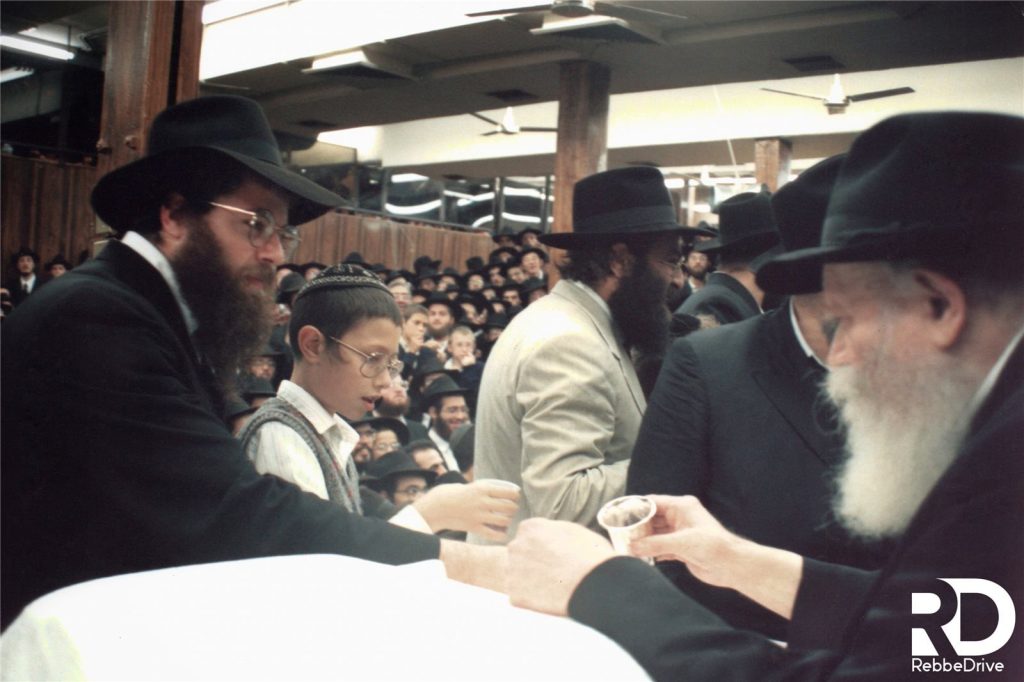
And then came the fateful moment when he met face to face with the Rebbe.
“When I came to Crown Heights, I saw the Rebbe – and suddenly I understood that Torah is not something heavy and dark, but the greatest light. I felt that I wanted to be a shliach myself.”
That brief experience of seeing the Rebbe at a farbrengen turned everything upside down for him. The young rock musician discovered the soul in Judaism and embraced it wholeheartedly. “From that moment,” he testified, “I became a Chassid with all my heart. Everything the Rebbe spoke about – I tried to be the first to implement…”
Avi’s connection to Chabad Chassidus was total. At that time his brother Yossi underwent a similar spiritual process. “Yossi discovered a booklet called ‘Confessions of a Mekubal,’” Avi recounted, “He read it and said: All the rest is nonsense. Only our Torah is true.” Yossi enthusiastically shared his discovery with his brother. “I was ignited by him – and we continued together.”
From that point on, the Piamenta band was no longer just a pair of talented musicians – but a pair of enthusiastic Chassidim using their talent to bring Jews closer to their Father in Heaven.
Music in Outreach
Becoming involved with Chabad changed Avi Piamenta’s life and the whole course of his creative work. After becoming full-fledged Chassidim, the Piamenta brothers began instilling a new spirit in the band.
“At a certain stage,” R’ Avi recounted, “I think it was in 5742, we decided to write to the Rebbe, to explain to him what we do, and to share with him our feeling that we can positively influence other Jews.
“In this letter, eight pages long, that Yossi wrote – to which he attached a photo album documenting the band’s history – he asked the Rebbe whether he was worthy to do what he wanted to do: to bring distant Jews closer to Judaism through music.
“In response, the Rebbe took the letter, drew a line over the word ‘whether,’ and what remained of the sentence was his answer to Yossi: ‘I am worthy to do what I want to do…’ The Rebbe also wrote a long, hand-written response to the other questions, something I learned later was quite rare for him.
“First, the Rebbe wrote that in general, our plan to use music as a means to spread Judaism is an excellent idea. He quoted the pasuk from Mishlei, ‘In all your ways know Him,’ indicating that a person should use all his talents for holy purposes.
“Then he analyzed the current situation of the music world. He noted that a successful band like ours was 1) capable of conquering hearts, 2) able to provide a good livelihood for those involved, 3) already captured the market – could make major inroads against the yetzer hara in the world.
“But the Rebbe warned: How can you guarantee that those your plan will bring into the music world won’t also join the great majority… that has no moral limitations at all? Indeed, its motto is: ‘Everything is permitted to you; it is ideal that you experience everything yourself… and only afterward decide for yourself how to relate to things, without any preconceptions.’
“Here exactly, said the Rebbe, lies our central role. He continued and explained that on one hand, ‘this is literally a matter of pikuach nefesh,’ and the type of music people listened to created a great need for our band. But on the other hand, the state of the music world means we would face great challenges.
“He warned that we would need to fight the status quo and distinguish ourselves from others in the field, ‘in order to dispel the concerns of observant educators and leaders, whose worries stem from the atmosphere prevailing in the music world.’
“He also gave us practical advice and recommended that we clarify through publicity that we had set out on a new path. (The photo album showed him how the band looked over the years, including before we became religiously observant). We needed to rebrand ourselves, so to speak, and this, he wrote, ‘in order to dispel the concerns… that essentially, the band, which has existed for many years, hasn’t really changed.’
“Finally, the Rebbe encouraged us to release additional albums with songs containing positive messages, and to continue collaborating with religious organizations to organize tours and concerts. At the same time, he discouraged us from opening a recording studio and radio station – something we had dreamed of – since Chazal teach us that ‘if you grasp for too much, you don’t grasp anything.’” (The full text of the Rebbe’s letter can be found in Igros Kodesh vol. 34 pp. 302-303).
And so, from the beginning of the 1980s, the Piamenta brothers became a sought-after Jewish band. They began incorporating Chassidic niggunim and soulful songs into their repertoire along with the rock pieces they composed. Thus they created an innovative style the likes of which had never been heard before. The combination of “electric guitar with soul” alongside “Chassidic side flute” became their trademark. For example, their hit that accompanied them all the years “Mitzva Goreres Mitzva,” and more.
The band became particularly sought after in the religious sector, and Avi and Yossi were invited to perform at events, weddings, farbrengens, and Torah gatherings, bringing with them their unique energy and talent.
In 5741, when the Rebbe instructed that “Simchas Beis HaShoeiva” events be held in public places, Yossi and Avi became an integral part of the event. Both came to play and dance for the crowd of thousands, night after night, until dawn.
“We had the privilege of playing for the Rebbe through Rabbi Yaakov Yehuda Hecht,” R’ Avi later recounted. “The performance for the Rebbe took place following a performance we held for a Chabad house in California (where we also first met Mordechai Ben David – Werdyger, when we performed on the same stage). Rabbi Hecht heard about us and he said. ‘You need to play for the Rebbe.’
“We were such an Israeli band, didn’t look like Chassidim to say the least… and yet, he invited us to play and it was something no one would believe – that musicians like us would come to play in a Chassidic place like 770. That’s how it all began. Later we also performed at children’s rallies with the Rebbe’s participation, at ‘kos shel bracha’ and also several times in Lag B’Omer parades with the Rebbe. Such a privilege cannot be described or assessed…”
At these events, the Rebbe encouraged them personally, thereby essentially confirming their musical life’s work as an integral part of the Chassidic world.
“I remember something that happened that has stayed with me throughout the years,” R’ Avi later recounted: “Once we played in front of the Rebbe, with the Rebbe encouraging us with his hands. From moment to moment the Rebbe encouraged faster and faster, and we had to ‘catch up’ to the rhythm. It reached a point where I simply couldn’t anymore… there’s a drummer, keyboardist, guitarist, and flutist and we all need to work in synchronization. I found myself focusing only on the Rebbe’s hands, without considering the other instruments, and playing according to the rhythm of the encouragement… This is one of the experiences in my hiskashrus to the Rebbe – to stay and be in his rhythm, not to miss the level of enthusiasm and speed that the Rebbe encourages. It may be symbolic, but I pray to be in the Rebbe’s rhythm in all matters and in the most essential thing, in kabbolas pnei Moshiach Tzidkeinu very soon.”
After nearly 15 years of extensive activity abroad, R’ Avi decided to return and live in Eretz Yisrael. He moved with his family and settled in Kfar Chabad in 5752, while his brother Yossi remained living in New York. From time to time the two continued to meet for joint performances, and recorded musical projects together.
In their performances the two were known for their exuberant joy of life on stage and their ability to sweep the audience into lively dancing. They elevated thousands with their music and love of people that burst forth from them.
Music Affects Tefillin Too
R’ Avi Piamenta was not just a singer, but a shliach with every fiber of his being. He utilized every opportunity to put tefillin on another Jew, to touch another soul. When he needed to use his musical popularity – he didn’t hesitate to do so.
And so he recounted himself: “I merited to be part of the group of regulars who do mivtzaim at the departure terminal at the airport. One day I met an Israeli who was flying, and I asked him if he had put on tefillin, but he refused. I tried to get into a conversation with him. ‘I never put them on and never will,’ he said decisively. When you hear that it’s about a karkafta, you feel it’s a fateful moment where you can make a difference for that Jew. I asked myself: ‘What can I do now.’ While I’m thinking, he suddenly says to me: ‘There’s someone I know in Kfar Chabad.’ I was surprised.
“‘Who is this friend of yours?’ I asked. ‘Avi Piamenta,’ he replied to me… I was stunned!
“‘How do you know Avi Piamenta?,’ I asked him before revealing my identity, and he said: ‘I was at his performance a few months ago at the Barby club in Tel Aviv…’
“I said to him: ‘If I told you that I am Avi Piamenta, would you put on tefillin?’ ‘No,’ he answered me, and added ‘there’s no connection between the two things.’
“I said to him: ‘You know what? I’ll offer you a deal. There’s a song I recorded that no one in the world has heard. I’m willing to send you this song and in exchange you’ll put on tefillin now.’ He looked at me, thought a bit, and finally said – ‘Deal!’
“He rolled up his sleeve and put on tefillin for the first time in his life.
“I sent him the song that I hadn’t yet played for anyone. Such incredible hashgacha pratis is indescribable… At the performance he referred to, in Tel Aviv, I mentioned on stage casually that I’m from Kfar Chabad, but I certainly didn’t imagine what could come from this statement. But when he said to me the words ‘I have a friend in Kfar Chabad, Avi Piamenta is his name,’ I felt how tremendous is the closeness created through music.”
And here is another amazing incident that happened to R’ Avi, just like in the stories of the Baal Shem Tov:
“I went to Mexico for an event to which I was invited. Before I left New York, I took fruits with me for the flight so I’d have something to eat. When I landed in New York I had some fruits left, which requires inspection at the airport. The officer directed me to the Agriculture Department inspection point, where they’re supposed to check me regarding the fruits in my possession. ‘Everything is hashgacha pratis,’ I thought to myself and went there. I was greeted by a dark-skinned officer with a broad smile, with his name displayed on his shirt – ‘Ahmad.’
“His broad smile melted the discomfort I had from the situation. The officer asked me politely, how are you and continued, ‘You’re Jewish, right, I have a Jewish friend, what do you think about talking to him?’ I responded positively and he immediately called his friend, a Jew from Boro Park. When he heard my name, he was excited and said that since childhood he listens to my songs. That Jew said that his friend the officer has an unusual love for Jews and looks for ways to help them…
“After we exchanged a few words, I returned the phone to the officer and started talking to him. It turned out he was from Egypt. I suggested we speak a little in Arabic, and exchanged a few words with him in Arabic. During the conversation I asked about his origin, his parents’ origin etc., and then, to my amazement, it turned out that his grandmother on his mother’s side was Jewish! Her daughter, meaning his mother, married a non-Jew and lived as a Muslim, but her mother was Jewish. I didn’t know how to digest this. I told him ‘If so, you’re Jewish!’
“I asked for his Jewish friend on the phone again, and asked him if he knows that his friend the officer is Jewish. ‘You’re mistaken, he’s not Jewish,’ he replied to me. I said to him, ‘Ask him a few questions and you’ll see that he’s Jewish.’ He indeed spoke with him a bit until he agreed with my opinion. Now I asked him to convince him to come with me to a side room so I could put tefillin on him for the first time in his life. Officer Ahmad agreed. I left the suitcases aside and we went to a side room, I rolled up his sleeve and put tefillin on him. During the tefillin laying, various people entered who were utterly surprised. The officer himself was tremendously excited.
“It was an unusual sight, a sight that belongs to Yemos HaMoshiach. In the end, he left me the phone number of his Jewish friend from Boro Park, to continue the connection with him. It was amazing hashgacha pratis of Yemos HaMoshiach with kibbutz nidchei Yisrael and ‘lo yidach mimenu nidach.’”
Throughout R’ Avi Piamenta’s life, countless stories and examples were generated illustrating how, with music, he reached people and places that would normally be difficult to reach:
“Once I performed at a bar mitzva in Vienna, Austria, for a distinguished family. These are modern people connected with high-ranking people. The event was also attended by the Prime Minister of Austria as a guest. He listened to our playing and was very impressed. Afterward, during the break, he approached us and expressed his excitement. By hashgacha pratis, I had with me a card in English about the seven Noahide laws with a picture of the Rebbe. I spoke with him about the seven Noahide laws. I explained that whoever studies, observes and spreads these ideas further, is assured that he will succeed in all he turns to and will always defeat his enemies. I gave him the card, he shook my hand and put the card in his pocket…
“In another case, hashgacha arranged for us an appearance at, of all places, the UN, and the story went like this: There is an artist named Stan Getz, a world-renowned saxophone player. When he was in Eretz Yisrael to play at a festival, we formed a connection. It reached the point where he postponed his other performances in Europe to stay with us and record a complete album together. We influenced him to put on tefillin, and from this connection also came a video that was published worldwide, in which he tells how the encounter with me awakened his Jewish spark.
“His wife held a very senior position at the UN. In 1991, during the Gulf War, she organized a huge show at the UN building and invited us to represent Israel. I brought with me several bachurim from 770, and we performed at the UN with the Rebbe’s blessing. We felt, of course, that we were fulfilling the Rebbe’s shlichus and that the Rebbe was acting through us. We played with the intention of doing what the Rebbe wanted.
“A year later, on Parashas Mishpatim 5752, the Rebbe spoke about how the UN building was established at the beginning of the Rebbe’s leadership – 5711, and that on the building is the pasuk that prophesies about the peace that will be in the time of the Geula – ‘and they shall beat their swords into plowshares,’ and explained how everything that happens in the world happens according to the rulings of the Torah.”
Albums – In the Spirit of Geula
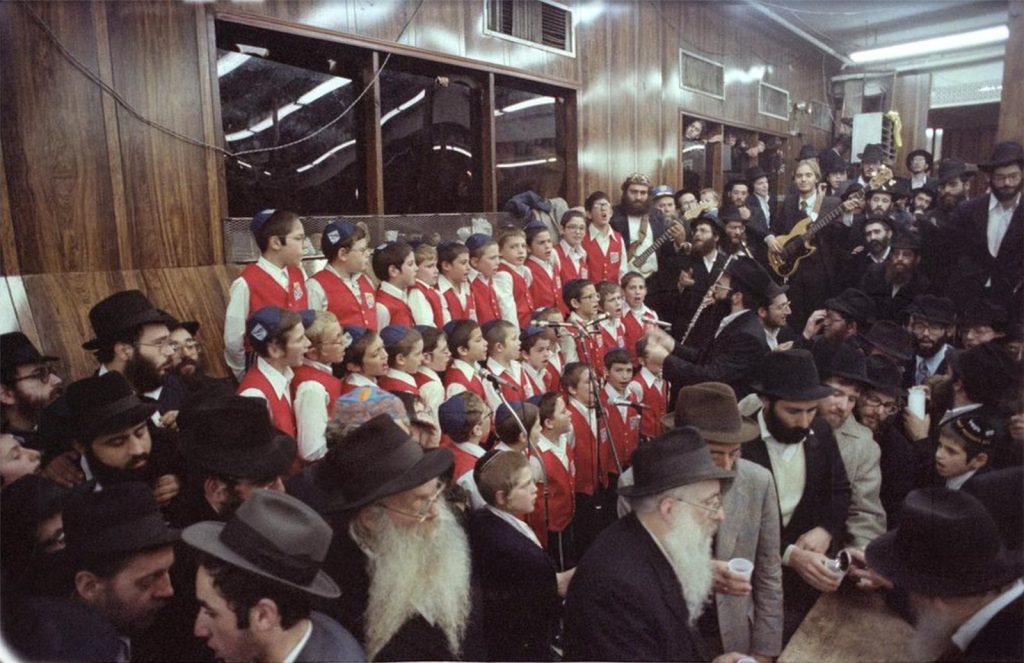
Even after his return to Eretz Yisrael, R’ Avi Piamenta’s career continued full steam ahead. He began performing throughout the country at weddings, concerts and farbrengens, and continued to maintain close contact with his fan base in the United States. Over the years, Piamenta collaborated with some of the greatest artists in the world of Chassidic and Jewish music; his joint performances with these singers strengthened his position as one of the musicians who bridges worlds: he brought the sound of his flute to Chassidic pop songs, and wove into them the unique rock and jazz tone that flowed in his veins.
During these years, the Piamenta brothers, and also Avi alone, released a series of albums that became milestones in Jewish music. Among the prominent band and solo albums, one can count “Bo’u Nirkod”; “Ezreini Keil Chai” and “Mitzvah”; “Only Hora” which included the hit “Asher Bara” that brought thousands to their feet. They also released the albums “Tismach,” “Piamenta 1990,” as well as albums of Chassidic niggunim.
Throughout his prolific career, Avi Piamenta composed dozens of new songs, many of which dealt with themes of the approaching Geula and the Moshiach. He often based the lyrics of his songs on the sichos of the Rebbe – those sichos that were said in the early 1990’s in which the Rebbe announced that Geula is imminent.
Under the influence of the Rebbe’s Geula message in the early 1990s, Avi began dedicating entire albums to the theme of Geula: “Shirei Moshiach u’Geula?” was a solo album with niggunei Moshiach, and in the following years “Peduseinu Satzmiach” was released – also a solo album by Avi. Some of his biggest hits are Geula songs like “Yalla Moshiach,” “Simchat HaGeula” and others. One of the songs most identified with Piamenta is “VeHu Yigalenu” – a song about the future Geula, which was sung and produced by him, and became a soundtrack at many farbrengens, kinusim and Chassidic celebrations.
Piamenta performed (sometimes also with his late brother) at massive kiruv and Geula events, such as the “Atzeres Moshiach and Geula” held at Cinerama in Tel Aviv, and at conventions organized by the “Agudah L’maan HaGeula Ha’amitis V’hashleima” – playing exuberantly and delivering inspiring words of emuna between songs.
He used to see every performance not only as a musical event, but also as a spiritual shlichus – an opportunity to make a Jew happy, to bring a heart closer to Hashem, or even simply to make someone smile.
A Man of Contagious Joy
R’ Avi’s personality radiated not only on stage, but also behind the stage. His friends and acquaintances describe R’ Avi as a radiant figure on whom the sweet joy of life was always evident. “R’ Avi is a man whose joy was always part of him; he always showed a radiant face to everyone,” all his acquaintances agreed after his passing.
Indeed, R’ Avi Piamenta’s most prominent trait was optimism, positivity and contagious joy. Many young people who were drawn to his Chassidic rock sounds, discovered in him a warm and heartfelt person who was easy to connect with and to his personality. While living in Kfar Chabad, R’ Avi was an address for struggling youth; they saw in him a loving father figure who did not judge them, a man with an open and loving heart.
R’ Avi, despite his many occupations, was a regular partner in the shifts of the Chabad house at Ben Gurion Airport, where he manned the tefillin stand and was available to help the many Jews passing through the airport. Wherever he could contribute from his strength and energy for the Rebbe and his holy inyanim – Avi was there with his usual enthusiasm.
Since his return to Eretz Yisrael, he devoted himself to spreading Chassidic teachings and the Besuras HaGeula. Among other things, he gave a weekly class on inyanei Moshiach and Geula, a class in “Dvar Malchus” (the Rebbe’s sichos from 5751-52) that took place regularly in Kfar Chabad, as he delved into the sichos and revealed wonderful mastery and expertise in the content of the sichos.
“In the years when I lived in Kfar Chabad, I was privileged to hear Avi Piamenta z’l every Shabbos in the shul in the basement of ‘Beis Menachem,’ analyzing the ‘Dvar Malchus’ sichos with hair-splitting precision,” said Rabbi Gilad Godes, the Rebbe’s shliach in the yishuv ‘Shavei Zion.’ “It was a pleasure to hear him summarize the weekly sicha with deep inward understanding and comprehension. He had a large ‘Dvar Malchus Pianuchim,’ full of notes and summaries he wrote.”
Final Years and Sudden Farewell
Throughout all the years, Avi Piamenta did not take his foot off the pedal of artistic creativity and shlichus. He continued to perform in Israel and around the world, while simultaneously working on new musical projects.
About two weeks ago he was interviewed for a radio music program, in what turned out to be his final interview. In this interview that was broadcast on “Kol Chai Music” station, R’ Avi shared his memories and excitement about a new project: special arrangements for classic Chabad niggunim. “In yeshivas, among Chassidim and Litvaks – everyone sings Chabad niggunim,” he told host Kobi Sela, “Chabad niggunim have become an essential part of Chassidic music.”
R’ Avi emphasized the spiritual shlichus behind his songs: “The Rebbe asked to bring the themes of Geula to expression and to prepare the world and people to be mekabel pnei Moshiach… Once upon a time, they didn’t study this, they just waited for it to happen. Today, as the Rebbe said, we are the last generation of exile and the first of redemption. We need to grab and publicize everything written about Geula – to know what’s happening and to prepare.” He connected the war with Iran to some of the signs of Geula.
At the end of the interview, R’ Avi was asked about his wish for the future, and his chilling answer became, in retrospect, prophetic farewell words: “Soon, b’ezras Hashem, my brother Yossi will come from above and I from below – we’ll enter the Beis HaMikdash and unite and play music…” He thus expressed his hope for the approaching Geula and for a reunion with his beloved brother Yossi, who passed away about ten years ago. No one imagined that a few days later, his words would take on such painful meaning.
A few days after the interview, R’ Avi participated in the events of Gimmel Tammuz in New York and even had the privilege of playing for the children and guests in Crown Heights at a children’s rally held at 770. As always, at this event too Avi was full of joyful energy, blessing the passersby as usual with a wide smile, hugging acquaintances, and not knowing that this was his last performance.
A few days later, on erev Shabbos, the 8th of Tammuz, he suddenly had a heart attack. On Friday afternoon, he returned his soul to his Creator at only 69 years old.

The bitter news struck his family members, friends and thousands of his ‘mushpaim’ in Chassidic music with shock.
For close to five decades, R’ Avi Piamenta succeeded in touching tens of thousands of hearts, in Eretz YIsrael and around the world. R’ Avi left behind a massive musical and spiritual legacy. But above all – he left behind a good name, and as it says in Koheles, “a good name is better than good oil.” He was a man of endless love, and of light and goodness that shone from his face.
Avi Piamenta’s legacy will continue to live and be heard through the rich music he left behind – songs and niggunim that remained relevant and moving even decades after they were created; many of them became classics. He will be remembered as a groundbreaking artist who influenced generations of musicians. No less than that, he will be remembered as a Chassid with heart and soul – a man who was all emuna and longing for Geula, with love for every Jew. He left behind his wife Yehudit, eight children, many grandchildren and countless ‘mushpaim’ and admirers throughout the world.
“I don’t stop thanking Hashem,” said R’ Avi of blessed memory in an interview he gave to Beis Moshiach several years ago, “The fact that I merited to find my way to the Rebbe and Chassidus is not something to be taken for granted. Boruch Hashem, I merited that my children are shluchim in various places around the world. My daughter Genia is on shlichus in Mexico with her husband Rabbi Amichai Sweid, my daughter Chana is on shlichus with her husband Rabbi Dudu Atar in Nicaragua.
“In the world it’s accepted that parents want their child to grow up and be a successful doctor or lawyer. With us, the prayer and request is that our children grow up and become shluchim of the Rebbe MH’M. Most of my grandchildren are scattered on shlichus in various places in the world. True, I don’t get to see them growing up, but boruch Hashem, I get to see them being raised on shlichus, and that’s the greatest joy for me.”
Beis Moshiach #1472 • pp. 14-25
© 2026 Beis Moshiach Magazine. All rights reserved.
This article originally appeared in Beis Moshiach #1472. You are welcome to share it with friends and family by email or in print, provided that you do not change, add to or omit any part of it, you credit the author and Beis Moshiach, and you include a link to archive.bmoshiach.org (written out in full in printed copies).
To republish this article in a newspaper, magazine, book or website, please request permission in advance at [email protected].