A Tanya’s Round Trip: From 770 to Mount Fuji & Back
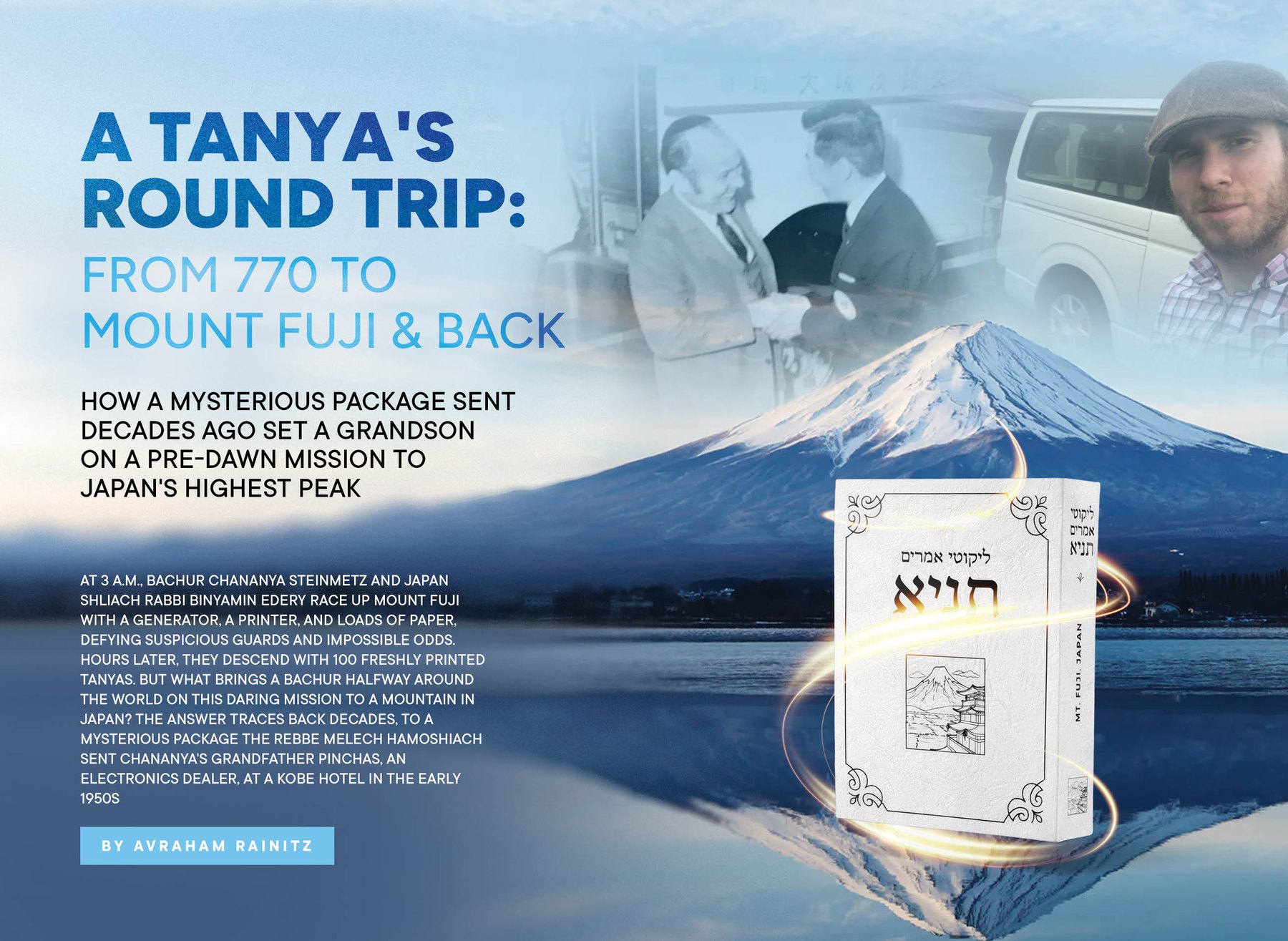
How a mysterious package sent decades ago set a grandson on a pre-dawn mission to Japan’s highest peak
At 3 a.m., bachur Chananya Steinmetz and Japan shliach Rabbi Binyamin Edery race up Mount Fuji with a generator, a printer, and loads of paper, defying suspicious guards and impossible odds. Hours later, they descend with 100 freshly printed Tanyas. But what brings a bachur halfway around the world on this daring mission to a mountain in Japan? The answer traces back decades, to a mysterious package the Rebbe Melech HaMoshiach sent Chananya’s grandfather Pinchas, an electronics dealer, at a Kobe hotel in the early 1950s.
It was three o’clock in the morning. In Japanese terms, this is an hour when the world is completely still. But in the lobby of a Tokyo hotel, a strange group was organizing for departure. These were not tourists going out to watch the sunrise that Ōtōtō was about to display, nor businesspeople hurrying to a morning flight. In truth, if anyone had observed the equipment being loaded into the vehicles, they would have struggled to guess the purpose of the trip: a heavy industrial generator, a large printing press, fuel containers, and stacks of smooth paper.
Inside the vehicle sat a bachur named Chananya Yom-Tov Lipa Steinmetz. Beside him sat the Rebbe’s shliach in Japan, Rabbi Binyamin Edery. Their destination was Mount Fuji, the tallest mountain in Japan. “From Fuji we conquer all of Japan,” Rabbi Edery had said when they conceived the idea of printing the Tanya on the mountain that had become Japan’s national symbol. That sentence echoed in Chananya’s head as the vehicle devoured the many kilometers in the darkness.
But his thoughts wandered further, beyond the passing landscapes out the window. They wandered backward in time, to his grandfather, R’ Ephraim Steinmetz z’l, who had passed away just months earlier. They wandered to a small Tanya that the Rebbe had sent to his grandfather decades ago from New York to Japan, and now they were returning to Mount Fuji to close the circle.
This is a story about a fascinating journey into the history of the Steinmetz family, beginning from pre-war Paris, through the Dominican Republic, and up to the heavenly prophecies that were fulfilled on the streets of Caracas, Venezuela. Joining us for this interview about this special journey into the depths of family history is Chananya’s father (and R’ Ephraim’s son), Rabbi Binyamin-Yoetz Steinmetz. Together, father and son, they reveal the behind-the-scenes details of a family shlichus spanning three generations and three continents.
A Barrier on the Way to the Summit
When they finally arrived at the foot of the mountain, the sun began to paint the sky in pale shades of gray and blue. But then Japanese reality slapped them in the face. The guards at the entrance to the national reserve looked suspiciously at the loaded vehicles. Entry with industrial equipment into the reserve? Impossible! In Japan, law is law, and procedure is procedure.
“You cannot enter with all this,” the guards declared, pointing at the equipment. Understanding that logical argument wouldn’t work against Japanese rigidity, they needed to provide an explanation the guards couldn’t refuse. “We have family waiting up there,” they told the guards with completely serious faces. “We’re just going up and down. There are people depending on us.”
The Japanese looked at each other, but the Chassidim’s determination prevailed. They pulled out a sheet, recorded the license plate number, and granted them a short, limited temporary permit: only one hour. “In one hour you must be down,” they warned.
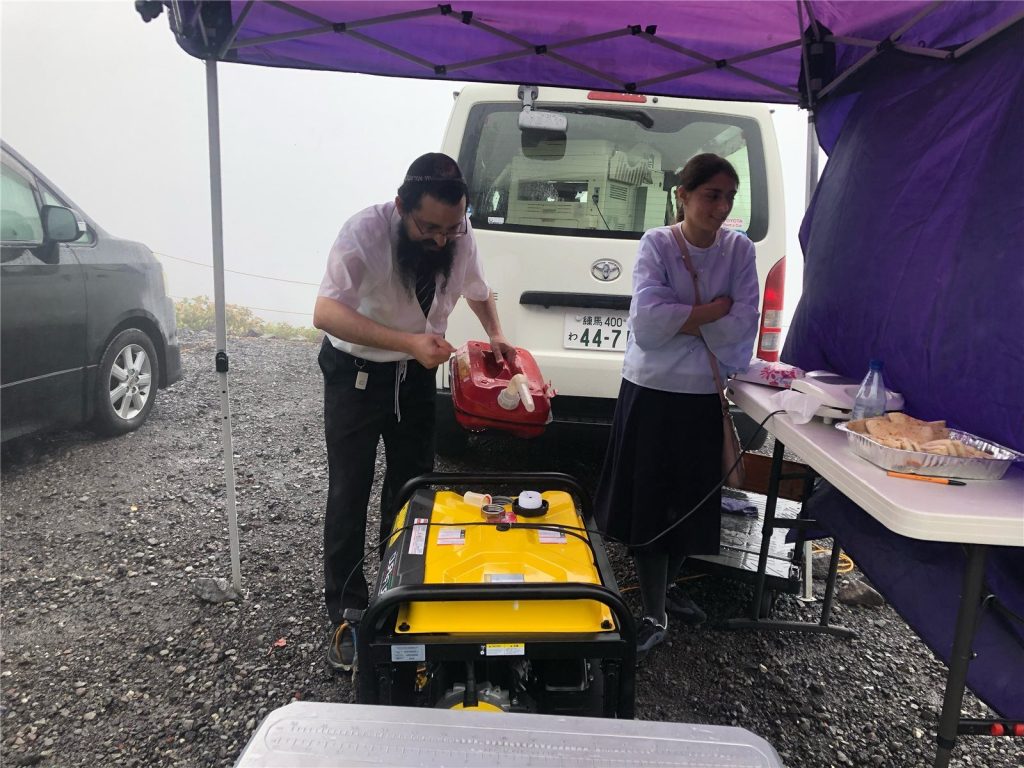
They raced upward. The road twisted, and the landscape became wilder and wilder. Rabbi Edery, who knew the mountain, directed them to a hidden, quiet spot, far from the eyes of tourists and inspectors, a place where they could unload the equipment and begin printing. At the summit, in the freezing silence, the activity became feverish. The generator activated with a loud noise, breaking the serenity. The printing press warmed up, and the first pages of Tanya began to emerge. The words “Likutei Amarim” were printed on the white paper, in the thin air of Japan’s peak.
And then, like in every good Chassidic story, there was some interference. They had managed to print about seventy books out of the hundred they had planned, when suddenly R’ Edery turned pale. He looked at the generator’s fuel gauge. The tank was empty. “Chananya, we have a problem,” he said quietly. “We’re out of fuel. We miscalculated.”
According to all laws of physics, the machine should have groaned and fallen silent within a few minutes. Going down to bring fuel was impossible – both because of the time and because of the limited permit from the guards.
They stood there, facing the machine, and began to pray. “It was really the miracle of the fuel can,” Chananya recalls with excitement. “We’re standing there, praying that the fuel won’t run out. And the miracle happens: the generator simply keeps working. Without fuel, without logic. It just works.”
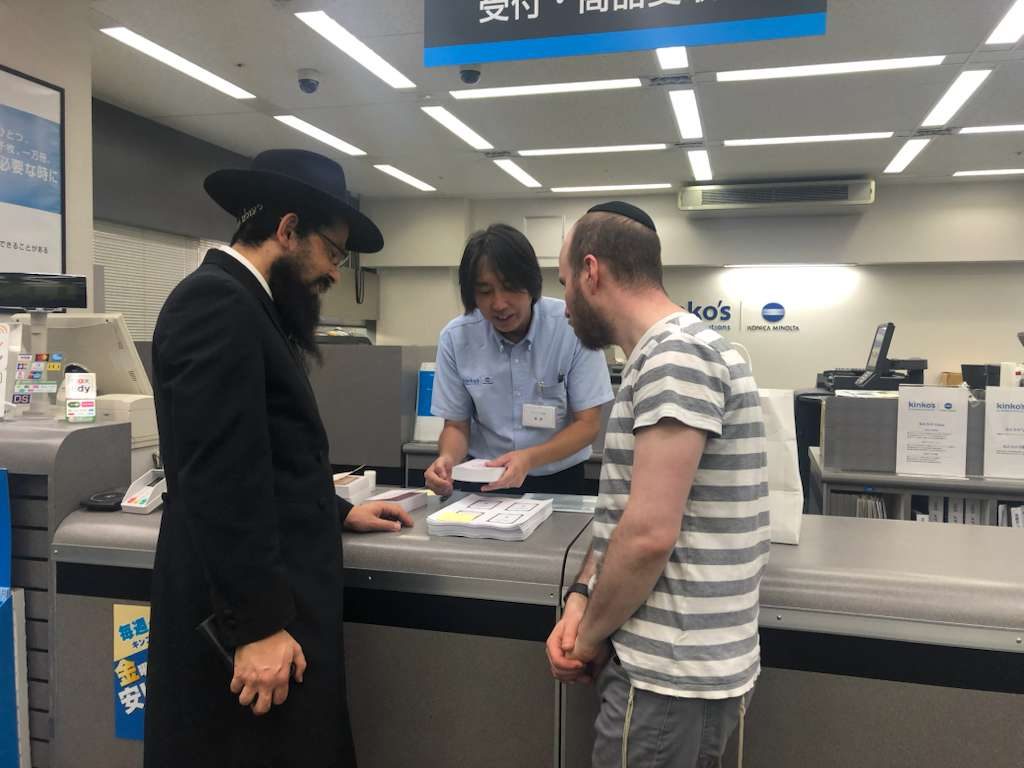
The hour allocated to them had long passed. The sun was already high in the sky, and the machine continued to spit out pages. Only at five in the afternoon, many hours after the fuel should have run out, was the work completed. The Tanya was printed at the summit of Fuji. The conquest was complete!
The Tanya the Rebbe Sent to Kobe
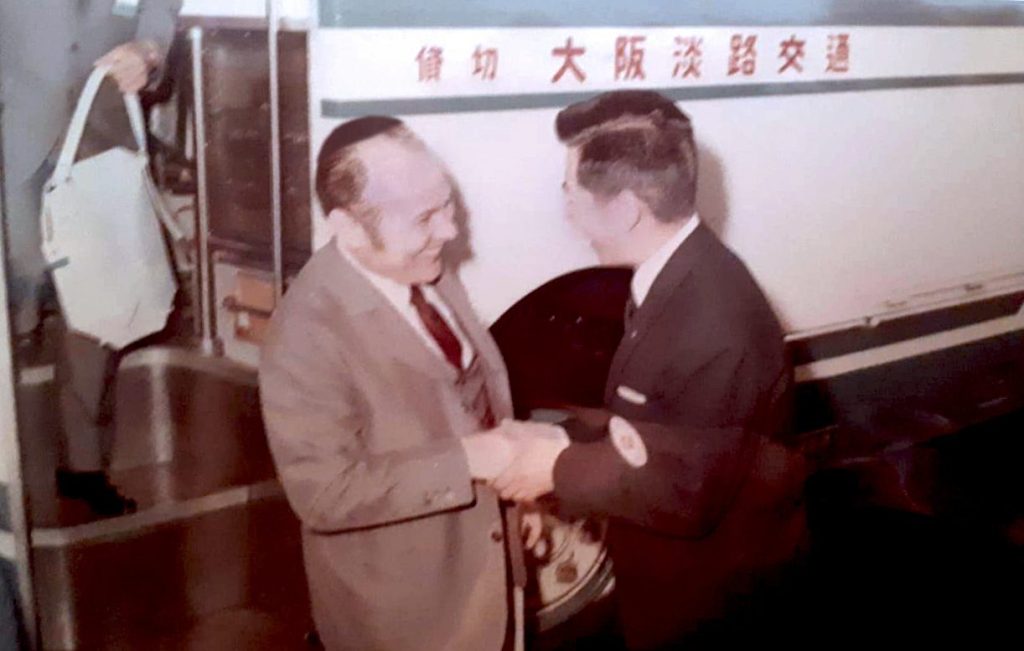
To understand Chananya Steinmetz’s excitement while on the mountain, one must go back in time to the 1950s. His grandfather, R’ Ephraim Steinmetz, was then a young and energetic businessman from Venezuela. He was involved in marketing electronic products, through the “Matsushita Electric Company,” which is the parent company that owns the well-known Panasonic brand. This business required him to travel to the Far East for extended periods of two and three consecutive months.
R’ Ephraim Steinmetz’s route was fixed: departure from Caracas, stop in New York, visiting parents in Chicago, and from there – to Japan. On one of the trips he made in the early 1950s, R’ Ephraim arrived in New York and asked to enter for yechidus with the Rebbe. The secretary, Rabbi Chodakov, apologized: “The Rebbe’s schedule is very full, it’s impossible to enter. But write a pidyon nefesh and I’ll bring it in to the Rebbe.”
R’ Ephraim wrote his requests, asked for a bracha for the trip and for business, and continued on his way. He flew to Chicago, spent Shabbos with his parents, and on Sunday took off for San Francisco, the stopover on the way to distant Tokyo. He sat at the boarding gate, his thoughts on the business meetings awaiting him, when suddenly he heard over the announcement system: “Mr. Steinmetz, Mr. Ephraim Steinmetz, please come immediately to the nearest information desk.”
Ephraim’s heart skipped a beat. Who knows he’s here? In an era before mobile phones such a call could only herald bad news. Had something happened to his family in Venezuela? Perhaps something had occurred to his parents in Chicago?
He approached the desk and with trembling hands took the telephone receiver. On the line was a familiar, calm voice. “Rabbi Chodakov? How did you find me?” R’ Ephraim was amazed. “How did you know I was here?” Rabbi Chodakov, with characteristic efficiency, explained: “I called your parents in Chicago. They said you’d left. I checked the airline, the flight route, and that’s how I located you at the airport…” “Wow,” R’ Ephraim breathed a sigh of relief. “I’m about to board a flight, how can I help? Did something happen?”
“Everything’s fine,” Rabbi Chodakov reassured him. “I just wanted to let you know that I brought your pidyon nefesh to the Rebbe. The Rebbe read it, blessed you with success, but then asked one question: What will be your address in Japan?”…
Ephraim was surprised. The Rebbe is interested in his hotel address? He explained: “During the week I’ll be in Tokyo for meetings, but on Shabbos I’ll stay in the city of Kobe. It’s a port city that serves as a center for the pearl trade. We’ll have a minyan there and kosher food.” Rabbi Chodakov carefully noted the hotel address in Kobe and wished him a good trip.
The flight passed peacefully, the meetings in Tokyo concluded, and on Friday morning R’ Ephraim boarded the train to Kobe. When he arrived at the hotel, the receptionist greeted him with a smile: “Mr. Steinmetz, we’ve been waiting for you. There’s a package for you.”
Ephraim took the package to his room and on the packaging appeared the familiar address: 770 Eastern Parkway, Brooklyn, New York. He opened the package carefully. Inside were two books: a ‘Tehillas Hashem’ Siddur and a Tanya. Attached to them was a letter with instructions and a bracha from the Rebbe: “May you have bracha and hatzlacha on the trip, and give this to whoever might need it.”
“My grandfather was perplexed,” his grandson Chananya recounts. “He stood in the hotel room in Japan, holding a Tanya and Siddur, wondering: Who will need this here? At some point he thought to himself, ‘We’re meeting for the Shabbos tefillos at one of the Jewish residents’ homes. Maybe I’ll leave it there, and someone will use it.’”
The Tears of the Jerusalem Pearl Merchant
On Friday afternoon, R’ Ephraim put on his Shabbos clothes and went to the businessmen’s meeting place. The place was quiet, but in the corner he recognized a familiar face. It was Mr. Ben-David, a veteran Jerusalem pearl dealer, a religious Sefardi who used to stay in Japan for months for his business (“pearl season”).
Ephraim knew him well from shared Shabbosos and knew that Ben-David was a man full of simchas ha’chaim. This time, he sat hunched, his face fallen and his eyes dim. Ephraim approached him warmly. “Mr. Ben-David, how are you? What happened? Business not going well? The pearl market declining?” Ben-David raised his head and smiled a sad smile. “No, no. Business is excellent, boruch Hashem. This is the best year I’ve had.” “So what happened?” Ephraim persisted. “You don’t look like your usual self. I see something is weighing on you.” Ben-David sighed deeply. “You won’t understand,” he said quietly. “It will sound foolish.” “Try me,” Ephraim encouraged him.
“Look,” he began to tell, “I’m a Sefardic Jew, I’m not a Chabadnik. But a few years ago I took upon myself a commitment to learn the daily Tanya. This study is my oxygen. When I’m here, in this foreign land, far from Yerushalayim, far from family – this daily study keeps me sane in my Judaism. It gives me strength. When I arrived here a week ago, I discovered I had forgotten my Tanya at home in Yerushalayim. I immediately called my son and asked him to urgently send me a copy by mail. It turns out it takes time. I’ve been without my daily study for several days now, and I feel like I’m simply not human. My soul is empty.”
A shiver seized R’ Ephraim. He immediately understood the meaning of the strange conversation with Rabbi Chodakov and the package that was sent to him at the hotel. Without saying a word, he pulled out the package and placed it before the man, took out the sefarim and the attached note from the Rebbe: “To give to whoever might need it.”
Mr. Ben-David looked at the sefarim, looked at Ephraim, and burst into tears. “The Lubavitcher Rebbe in Brooklyn,” he murmured through tears, “sits in his room, and feels the sorrow of a simple Jew in Kobe, Japan. He knew I was ‘suffocating’ without my Tanya”…
The Rebbe Rayatz’s Guidance
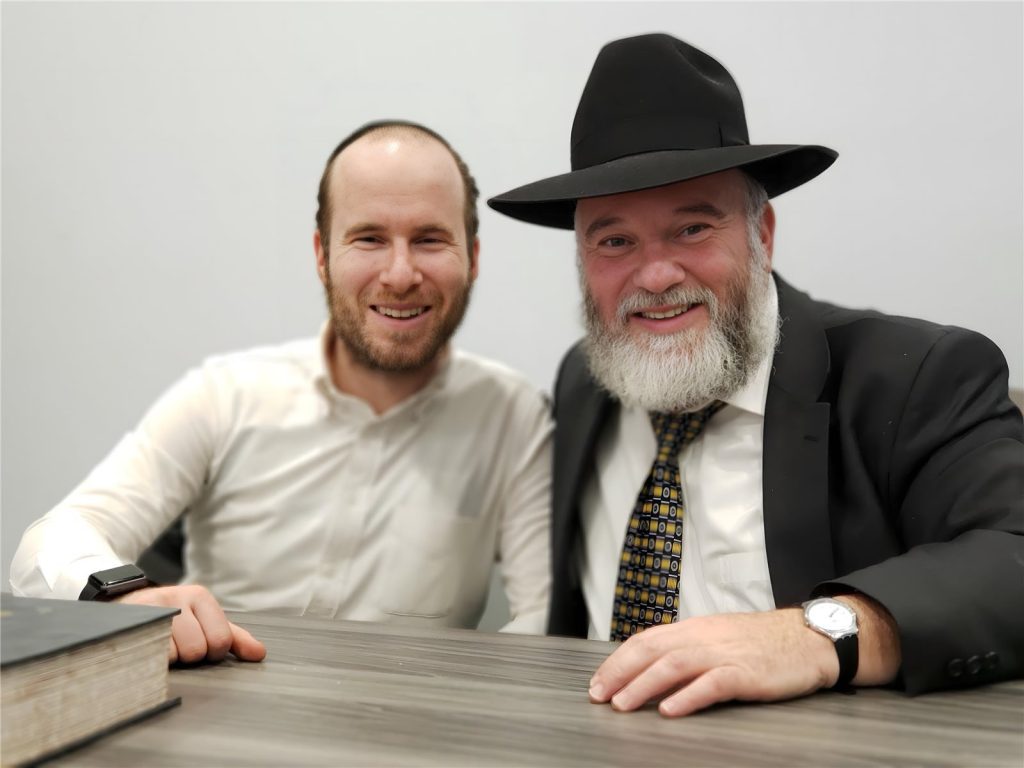
This amazing story is only one link in the chain of generations of the Steinmetz family. The connection with the Rebbe didn’t begin in Japan, but much earlier – in pre-war Paris, with the great-grandfather Rabbi Chananya Yom-Tov Lipa Steinmetz (after whom the great-grandson, with whom we are sitting for the interview, is named).
The great-grandfather, a Sighet Chassid, originally from Hungary, was a Jew who sought truth at any cost. In 1935, when evil winds began to blow in Europe, he decided to leave everything and emigrate to Eretz Yisrael, an unusual and unaccepted step in his community in those days. He wandered to England and Belgium in an attempt to obtain visas, and finally arrived in France. While in France, he met the Rebbe (to-be) for the first time, when the Rebbe was not yet famous. The Rebbe’s advice was sharp: “Bring your wife and children to Paris.” Reb Lipa Steinmetz obeyed. His son, Ephraim (then a ten-year-old boy), learned for half a year in the improvised cheder in Paris and was zoche to see the Rebbe up close. The Rebbe’s gaze was seared into him for life.
A few years later Europe was burning and the war closed in on them. The way to Eretz Yisrael was blocked and America’s gates were locked. The only option left was bizarre: the Dominican Republic (S Domingo), a distant Caribbean island, without an organized Jewish community.
The great-grandfather hesitated but the Rebbe decided for him: “Go there.” But then the Rebbe added an instruction that sounded strange at that moment: “Before you travel, learn shechita. You’ll need it there.” He was already a mohel, and now the Rebbe wanted him to also be a shochet.
When they arrived in S Domingo, R’ Lipa Steinmetz understood the extent of the Rebbe’s vision. He found himself in a spiritual wasteland. Having no choice, he became the mohel, shochet, and rabbi of the community. Already in the first week he had to deal with the death of a Jew, and discovered there was no Jewish section in the cemetery. From his meager funds he bought a plot within the general cemetery, and fenced it with his own hands.
The spiritual loneliness was immense. The only connection with the Jewish world was through letters. He already understood that he must stay in contact with the leader of the Jewish people, the Rebbe Rayatz, and wrote to him about what was happening to him and asked for his guidance. The Rebbe Rayatz’s response was published in his Igros Kodesh, and at the end of the letter of blessing and encouragement, the Rebbe Rayatz, who had already reached the USA, sent him a response as follows (printed in Igros Kodesh of the Rebbe Rayatz, volume 13 page 260):
“In response to his letter from last Erev Pesach, I would be interested to know in detail the number of families, may they increase, that are in their camp and the state of religious matters according to the questions mentioned herein, and when I receive a detailed response to all my questions then I will see with G-d’s help how I can be of assistance to them, G-d willing. May the Almighty strengthen his health, the health of his wife, may she live, and the health of their children, may they live, and may they raise them for Torah, chuppa, and good deeds with ample livelihood. Please extend my greetings to the members of their congregation, may they live, and convey my blessing that the Almighty be in their assistance in what they need materially and spiritually. Wishing them well and blessing them. a) How many families of G-d-fearing people, b) How many people, approximately, c) How many middle-aged, d) bachurim, young women, boys, girls, e) if there is a mikva, f) rav, g) shochet, h) teachers, i) chadarim, j) how many earn a living, k) what is the conduct of the youth, l) state of Shabbos observance, m) state of kashrus, n) name of the institution helping the refugees, o) if they turned to someone for help, p) what help they need.”
When R’ Lipa responded to the Rebbe and requested his help in building a mikva, the Rebbe Rayatz answered him: “In response to his letter along with responses to my questions, regarding the building of a mikva, they need to know first of all at least what sum is required for this and to detail each matter and its manner, and then it will be possible to start working on this, and may Hashem help them materially and spiritually.”
We have no further updates on their correspondence at that time. A few years later, on the 3 Cheshvan 5704, the Rebbe blessed him for the bar mitzva celebration of one of his sons, and afterward inquired “to know what is being done in their country, if religious matters have been arranged, and if the number of immigrants have increased, and how they conduct themselves in matters of mitzva observance, and may Hashem help them materially and spiritually.”
After the war, Rabbi Steinmetz wanted to continue his original journey and emigrate to the United States or Eretz Yisrael, but the gates were still closed and obtaining a visa was an almost impossible mission. The opportunity came through wondrous hashgacha pratis from an unexpected direction.
“One day he was invited to neighboring Venezuela to perform a bris mila,” his grandson Rabbi Binyamin-Yoetz Steinmetz recounts. “At the bris he met a Jewish man who worked at the American embassy there. When my grandfather told him about his desire to get to the USA, the man said to him: ‘Don’t worry. Come here, to Venezuela, and I’ll arrange the documents for you.’”
R’ Lipa didn’t hesitate. He packed his belongings and took his entire family from S Domingo to Venezuela. The move wasn’t easy for the small community left behind. “The Jews of S Domingo were very sorry to see him go,” the grandson describes, “he was their spiritual leader, the shochet and mohel, and suddenly they were left alone.”
Ultimately things went awry, and the Steinmetz family was delayed in Venezuela for several years until they managed to obtain the coveted visas to the USA. Only in 1953 did they move to Chicago, where they became close to the shliach, Rabbi Shalom Zalman Hecht. However, in the Divine plan, this move was intended for another purpose: R’ Lipa Steinmetz’s son, R’ Ephraim, remained in Venezuela, where he laid the foundations for an empire of spreading Yiddishkeit that would arise in the future.
The Rebbe in Yechidus Revealed a Personal Story
R’ Binyamin-Yoetz Steinmetz tells about the activities of R’ Ephraim Steinmetz in Venezuela: “My father met my mother, Laura, when he came from Venezuela to visit his parents who lived in Chicago. The shidduch developed in an interesting way: grandfather Reb Lipa, who was a mohel, traveled to Kansas City to perform a bris. Because of a snowstorm he got stuck there for Shabbos, and thus met the local Yakin family. When his son Ephraim came from Venezuela to visit the USA, his father told him about the family, Ephraim traveled there (to Kansas City), and thus the shidduch came to be. After their wedding, R’ Ephraim returned with his wife Laura to Venezuela.
Five years after the wedding, in 1959, they already had three children, with another on the way. Laura was in distress. She was American and the Spanish language was difficult for her. Beyond the difficulties of adjustment, their main concern was educating the children. They felt they had no way to properly educate the children in this environment, and wanted to move to the United States. They therefore entered for yechidus with the Rebbe to present their request.
Due to the mother’s pregnancy, the Rebbe was especially solicitous and requested that they bring her a chair so she could sit during the yechidus. R’ Ephraim stood close to the Rebbe’s desk, and his wife sat behind him, on the chair that was brought for her.
R’ Ephraim told the Rebbe about the situation: ‘We live in Venezuela but we’re worried there’s no chinuch for the children.’ The mother added: “My oldest child is already seven, and there’s no Jewish education in Caracas! No cheder, no yeshiva. How can we raise children like this? We’re thinking of moving to the United States, and we want to hear the Rebbe’s opinion.”
The Rebbe looked at her, and then told her a rare, personal story, which opened a window into his childhood in Russia: “When I was a small child, about five or six,” the Rebbe told, “my father said to my mother: ‘Mendel must travel from the city.’ My mother cried: ‘How can you send a small child away from home?’ But my father insisted: ‘He cannot stay here, he must go learn.’ My father sent me to another city, where I lived in a dormitory. Every morning I would get up at five-thirty, take my ‘lampterne’ (kerosene lamp), and walk to the yeshiva in the dark and cold to learn Torah.” The Rebbe concluded the story with a reassuring smile: “Believe me, the fact that my father sent me while I was a child to learn away from home didn’t harm me at all…”
The Rebbe said that for a Jew everything is hashgacha pratis, and if a Jew is somewhere, it’s not by chance that he’s there; rather it’s because he has a mission there. He has a task to fulfill. Ostensibly, since by hashgacha pratis you live in Caracas – you have a shlichus to fulfill there: to spread Judaism and establish schools for your children, and more…
But then a change occurred. As the son Rabbi Binyamin recounts: “During the yechidus, the Rebbe with his penetrating vision, looked at my mother and realized that she was not happy in Venezuela and was very worried.” “The tone in the room changed.. The Rebbe said to my father and said: ‘I see in your wife’s eyes that she’s not satisfied there. So okay, try it.’ Try moving to live in the United States and see how it goes.’”
However, the Rebbe added golden advice that accompanied them for life. “You want to move? Move, but there’s a saying in America: Don’t burn your bridges behind you.”
“My parents listened to the advice,” Rabbi Binyamin recounts. “They packed their belongings and moved to live in Chicago. They lived there for only 11 months. I was born during this period, and I’m the only sibling who was born in the United States.”
But the American dream didn’t smile upon them. Business in America didn’t go well. Then, the Rebbe’s prophetic vision became clear. “My father had listened to the Rebbe and didn’t ‘burn his bridges’; on the contrary, he maintained continuous contact with his business partners and with friends in Venezuela throughout those eleven months. And when he saw that in Chicago it wasn’t working out, he decided to return. Because of this, he didn’t have to start from zero, but rather immediately upon his return to Venezuela, he re-entered the business, and his ventures began to flourish again immediately.”
That point of return was also the turning point. “The moment they returned, they made a determined decision: we’re staying here, but we must ensure chinuch. From that moment began the great enterprise of building proper schools in Venezuela, alongside building the Jewish community.”
A Private Home Alongside a Spiritual Home
With the return to Venezuela and financial success, R’ Ephraim faced another dilemma. “He had a good contractor friend who said to him: ‘You already have four children, it’s time you build yourself a house,’” his son R’ Binyamin recounts. “Father hesitated to take the plunge, and wrote about it to the Rebbe. The Rebbe’s answer was surprising: ‘Build the house, but simultaneously build something in holiness.’
“My father didn’t understand exactly what was meant. He turned to the secretariat and received clarification from Rabbi Chodakov: the Rebbe asks whether there is a mikva in the ‘community center’? Father answered in the negative and the Rebbe instructed him to build a mikva.”
This wasn’t simple. R’ Ephraim approached the community leaders (“Union Israelita”), but they laughed at him: “We’re not in the desert, we don’t need a mikva here.” R’ Ephraim didn’t despair and sought a partner. He spoke to a man named Mr. Rosenblatt, made a partnership with him, and together they built the mikva inside the community center, against all odds.
“The result was amazing. Because the mikva was inside the Jewish center, it became an integral part of the community tradition. Thousands of weddings were held there, and all of them went through this mikva.”
The principle of partnership was his guiding light. In everything holy he would take a partner. This was also the case when he asked the Rebbe to send a permanent shliach to Venezuela. The Rebbe agreed on condition that R’ Ephraim would take care of the financial side. R’ Ephraim enlisted Mr. Ades, and together they went to the airport to greet the first shliach, Rabbi Moshe Perman, who arrived with his wife and a one-day-old baby, and would later revolutionize the country.
Closing the Circle at Shibuya Crossing
Now the time has come to return to present-day Japan. After they succeeded in printing the Tanya on Fuji against all odds, Chananya Steinmetz and Rabbi Edery descended from the mountain. They held the fresh pages, still smelling of ink. However, the task wasn’t completed. They wanted to bind the sefarim and here too they encountered difficulties. Printing houses in Tokyo couldn’t handle the special size of the pages. Finally, through hashgacha pratis, they found a printing house in Kyoto that agreed to do the work.
The peak moment wasn’t actually in the printing, but in the learning. Chananya took one copy of the Tanya and went to the busiest and most “Japanese” place there is: Shibuya Crossing in Tokyo. This is the busiest crossing in the world, where thousands of people cross simultaneously from all directions, under a blitz of neon lights and enormous urban noise. There, facing the rushing crowd, he opened the Tanya that was printed on the quiet mountain, and learned a perek.
“We sat there and learned,” he recounts. “We also went to the city of Kanazawa and learned there.” This was a perfect closing of the circle. The great-grandfather, who was sent with shechita tools to preserve Judaism. The grandfather, who was sent to Japan with a single Tanya to save the soul of one Jew. And the great-grandson, standing in the heart of Tokyo, after ‘conquering’ Fuji, elevating the Japanese street to holiness.
After Several Decades the Circle Was Completed
For the story’s circle to be truly complete, there’s also a happy ending to the S Domingo story. One of the questions that the Previous Rebbe asked in a letter he sent in 1940 – “Is there a mikva?” at the location – remained open and painful for decades.
“After my grandfather left the place before he could build the mikva, my father didn’t give up on the dream,” R’ Benjamin-Yoetz recounts. “Throughout all these years, since the Rebbe asked my father, he made many efforts for this to happen.”
In fact, the solution came only when the Rebbe’s shliach, Rabbi Shimon Pelman, arrived in the Dominican Republic, who is still there today. “Rabbi Pelman took on the project and he came to my parents and said ‘I want to build the mikva.’ My father, who was still alive then (90 years old, admittedly unable to fly but aware and lucid), was very happy that this was about to happen and donated the money.”
Alongside R’ Efraim’s contribution, additional partners joined the project: the Shragowitz family, a family from Miami who had businesses in the Dominican Republic. “So it turned out that ultimately, the mikva was built in financial partnership between the Steinmetz and Shragowitz families.”
In 5777/2017, the Rebbe Rayatz’s request was fulfilled, and a beautiful, strictly kosher mikva was built at the location. The shlichus was completed.
“A Quiet Life” in the Heart of the Venezuelan Revolution
One of the most remarkable anecdotes about R’ Ephraim’s equanimity, born from his absolute trust in the Rebbe, occurred in 1991. Venezuela was then on the brink of political turmoil. Rumors of a military coup filled the air and tension in the streets was palpable (similar to what is happening these days).
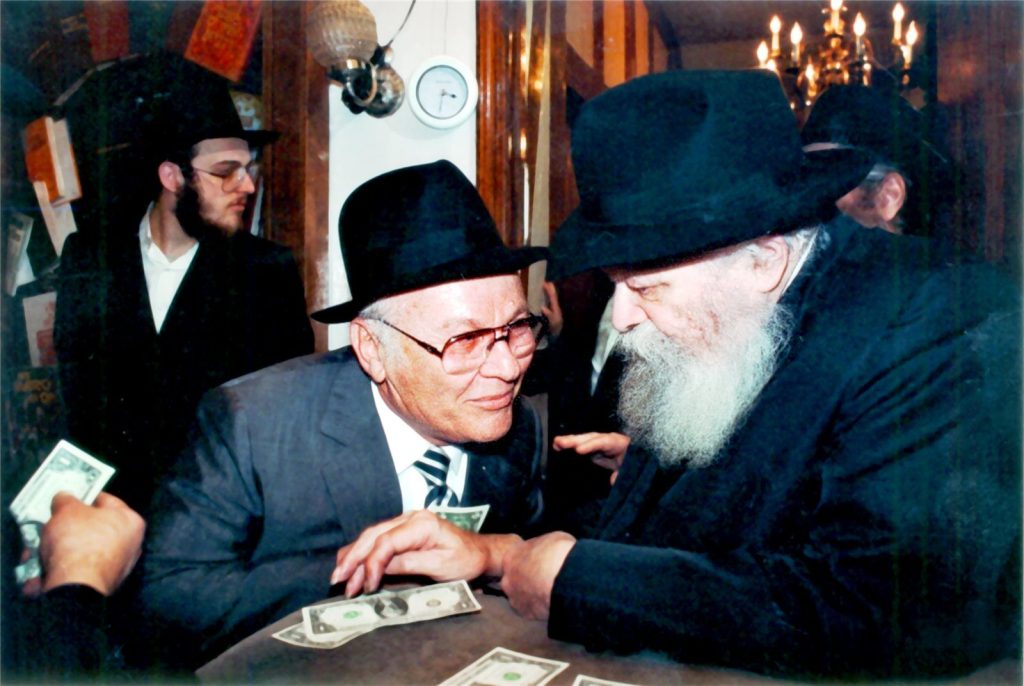
During those tense times, R’ Ephraim was in New York and passed by the Rebbe for dollars. He requested a bracha for the Jews of Venezuela. The Rebbe’s response was surprisingly calm. The Rebbe gave him an additional dollar: “This is for the Jews there, that they should have a quiet and peaceful life (a ruigen leben), a quiet life and good parnassa.”
R’ Ephraim left there confused. A quiet life? Venezuela? The country was practically in flames! “I thought to myself,” he later recounted, “why did the Rebbe say this? After all, there had been relative quiet all along, and now everything is falling apart.”
A few months later, the military revolution broke out. Tanks in the streets, gunfire, and uncertainty. The Jewish community was in a panic but R’ Ephraim remained completely calm. “The situation is indeed not good,” he would tell his worried friends, “but we are calm. The Rebbe foresaw that there would be a coup, and he promised that in the end there would be peace.” And he was right. The storm passed, and the community continued to thrive for many more years, exactly as the Rebbe had predicted.
It turns out that the Rebbe’s greatest prophecy regarding Venezuela is gaining renewed significance particularly these days against the backdrop of growing tensions between the US and Venezuela, and the danger hovering over the country. Rabbi Binyamin Yoetz reveals the full story of “the move to the east”:
“In one of the yechiduyos, the Rebbe asked my father to draw him a map of Caracas and explain in which area the Jews live. My father drew the center (S. Bernardino), where all the community institutions were concentrated. The Rebbe pointed to another area in the east of the city and asked what was happening there. My father answered that these were nice neighborhoods, but there were no Jews there. The Rebbe decisively ruled: ‘You need to build up the east, that’s where the future is.’
“In those days this sounded crazy,” R’ Binyamin recounts. “But my father, with his ‘l’chatchila ariber’ approach, bought a building there of an American school and turned it into a Chabad house, even though everyone thought he was crazy.”
And today? The reality is a stunning prophetic fulfillment. “Today it’s completely impossible to live in the city center,” R’ Binyamin explains sadly. “The place has become dangerous, with kidnappings and massive crime. Under the current regime, the situation in Venezuela is very difficult: there’s a lack of food in stores, there’s hatred toward Israel, and antisemitism is rising due to connections with hostile elements. Out of tens of thousands of Jews, only about 4,000 remain. And where does everyone live? Only in the east. The entire Jewish center, schools and community – everything moved to the place the Rebbe pointed to decades ago.”
Beis Moshiach #1490B • pp. 12-23
© 2026 Beis Moshiach Magazine. All rights reserved.
This article originally appeared in Beis Moshiach #1490B. You are welcome to share it with friends and family by email or in print, provided that you do not change, add to or omit any part of it, you credit the author and Beis Moshiach, and you include a link to archive.bmoshiach.org (written out in full in printed copies).
To republish this article in a newspaper, magazine, book or website, please request permission in advance at [email protected].