Treasures from the Rebbe’s Shtender:
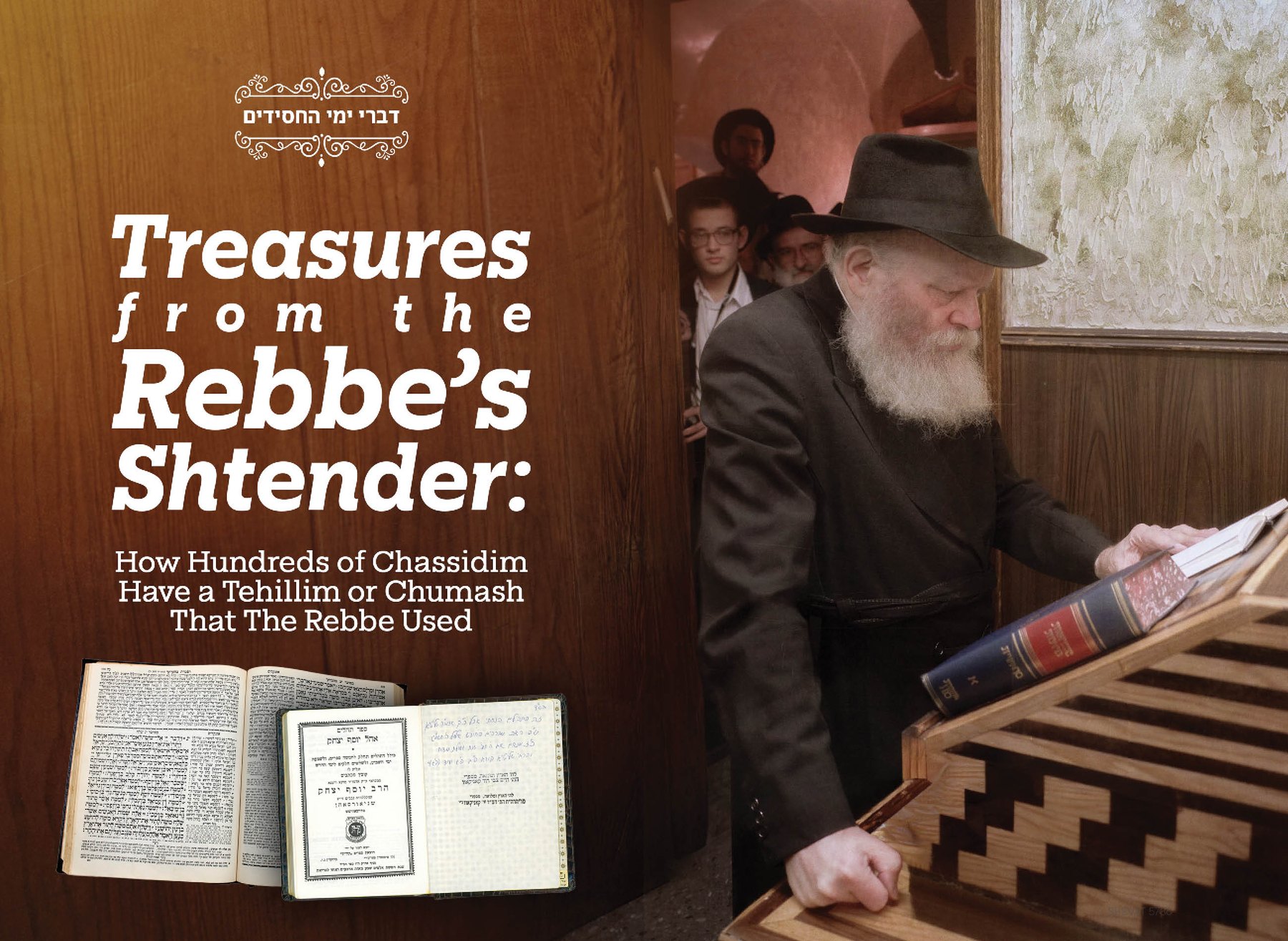
Picture someone offering you the opportunity to learn the daily Chitas in the Chumash or Tehillim that the Rebbe himself used. No question, it would be an exciting opportunity and a moving experience and the Chitas-learning would be very different that day.
Actually, in quite a few homes of Chassidim around the world, there is a Tehillim or volume of Chumash from which the Rebbe used to read or learn. This zechus is available to many because, for many years, when the Rebbe davened in private he would come out on days when the Torah is read to hear it read in the small zal. This provided bachurim and yungeleit with an opportunity to place on the Rebbe’s shtender a Chumash for the Rebbe to use during the Torah reading or a Tehillim from which the Rebbe would read after the Torah reading until the Torah was replaced in the aron kodesh. These were volumes that the person would buy in advance, in order to be able to keep them afterward.
“One year, when I was able to place a Tehillim for the Rebbe,” said Rabbi Shimon Eisenbach, shliach in Eilat, “I decided to send it to my grandmother, Mrs. Chana Rechel Eisenbach of Yerushalayim, who was known for her righteousness. After that, she began regularly using this Tehillim and not another Tehillim with larger print that she had used before. She thanked me repeatedly for “the Rebbe’s Tehillim,” which she would finish reading sometimes two or three times a day. It was always next to her, near the big armchair that she used.
“My grandmother passed away in 5752. During the shiva, we observed that she had lived until her eighty-third year, the number of the Rebbe’s kapitel the year he had read in that sefer Tehillim.
This story and many others like it illustrate the importance that Chabad Chassidim ascribe to Chumashim and sifrei Tehillim that the Rebbe used.
The Happy Winner
Throughout the years, the Rebbe did not daven Shacharis with the congregation except for Shabbos and holidays and special days (like yemei hilula). He davened in his room.
The only days of the week when the public could encounter the Rebbe at Shacharis were when the Torah was read, on Mondays and Thursdays and Rosh Chodesh. On these days, the Rebbe joined the Torah reading in the small zal in the minyan with the yeshiva bachurim which began at 9:30.
[On days when yechidus took place until early morning, they arranged a Torah reading for the Rebbe early in the morning. Alternatively, if the Rebbe arrived later than the Torah reading in the bachurim’s minyan they arranged the reading of the Torah for the Rebbe in gan eden ha’tachton (the hallway outside the Rebbe’s room).]
The routine was: a few minutes before ten, the Rebbe arrived from his home and went to his office for a few minutes. Then he went to the small zal to hear the Torah reading. A few minutes before the Rebbe entered the shul, one of the bachurim would place a Chumash on the Rebbe’s table that the Rebbe would use when the Torah was read, and a Tehillim in which the Rebbe would read his perek and the Rebbetzin’s perek while the congregation said Ashrei and Uva L’Tziyon until the Sefer Torah was placed in the aron kodesh.
Who had this privilege? The way it worked for many years was first come first served, i.e. right after Maariv Sunday night or Wednesday night (the days before the Torah is read) whoever was first to put the sefer on the table for the Rebbe was the one.
In the early years, there wasn’t a large crowd in 770. There were only a few dozen bachurim learning in 770 and since each bachur would make do with one, there were enough opportunities for whoever wanted it and everything worked out quite well.
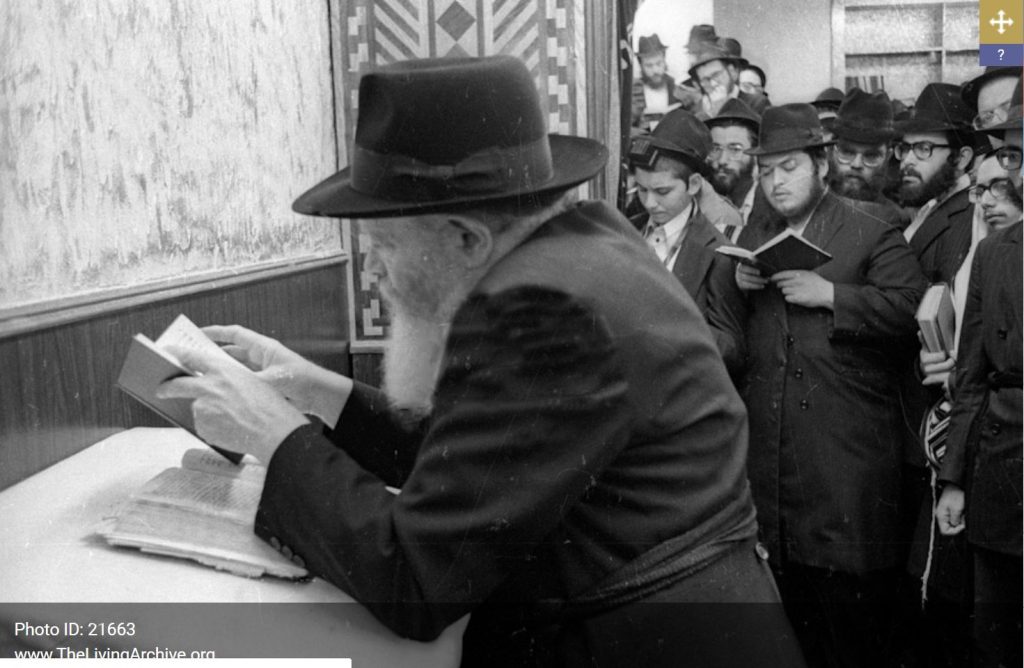
Rabbi Zalman Lipsker, who was in 770 in the sixties, often put a Tehillim down for the Rebbe. He was nice about these special sefarim and when chassanim would ask him for one for their new home, he would happily give it to them, “Until all my sefarim were gone and I was left with one Tehillim,” he says with a smile.
Rabbi Sholom Yaakov Chazan, who came to 770 in the mid-seventies, remembers those days in which he was able, over a year’s time to put down an entire set of Chumashim and a Tehillim too, for the Rebbe. In those days, it even happened a few times that nobody put a sefer on the shtender, and when the Rebbe came to the Torah reading, they put one of the shul Chumashim there for him.
By the end of the seventies, the number of people grew and since there was more competition, there were “incidents” concerning putting out a sefer for the Rebbe. For example, we heard from R’ Yisroel Noach Vogel that during a night of yechidus at the end of Tishrei 5737, the Rebbe stopped yechidus at 11:45 in order to daven Maariv. At the end of the tefilla, someone on the other side of the room wanted to be the one to place a sefer for the Rebbe. A second before the Rebbe left the room, he threw the sefer from where he was standing toward the table. The Rebbe made a hand gesture of surprise and protest and left.
Because of this incident and other such incidents, a change was made and a lottery was held at seven in the morning among the bachurim who were up on time for seder Chassidus.
The Lottery
Early Mondays and Thursdays or other days when the Torah is read, the first signs of life could be seen even before seven o’clock. These were bachurim who woke up early in order to be part of the lottery. There was one essential condition to be able to participate in the lottery: being in the zal at the exact time it took place. On the days of a Torah reading, it was at seven o’clock, half an hour before the start of Chassidus seder.
The bachurim insisted the participants be those who came on time so as to ensure that the number of participants would be fewer and each participant’s chance would be greater. When a bachur showed up just a minute late, he lost out on participating in the lottery.
The way the lottery worked was, the tmimim who wanted a chance wrote the names of those present and the first name that was picked got to put down a Tehillim for the Rebbe; the second name got to put down a Chumash.
Sometimes there were guests who came to the Rebbe for the first time and were unfamiliar with the routine. They saw how the Rebbe used the sefarim that the bachurim put on the shtender and they wanted a chance. Before the next Torah reading they would try to preempt the winners of the lottery and would have to be told that the zechus belongs to the lottery winner.
In the first years of the lottery, it was done in the “cheder sheini” of the small zal but as years passed, with a growing number of bachurim staying for an entire year, dozens of people took part in the bachurim’s lottery. This, of course, diminished the chances of winning which is why they decided to split the lottery. One lottery was done in the big zal and one in the small zal.
There were times that the lottery downstairs was already done while in the zal upstairs it hadn’t begun. Bachurim would run from one to the other to see whether they could participate in the second one too. Some were successful.
Most of those participating in these lotteries were bachurim, talmidim on Kevutza and Americans in 770. Many balebatim who had finished davening Shacharis would sometimes join.
There were chassanim who came to 770 to be with the Rebbe and everyone knew that this was their last chance before returning to where they came from and starting their new homes. There were times that they were given precedence to put down a Tehillim or Chumash. On those days, there was no lottery for the sefer that the chassan put down. Needless to say, the chassanim sent this precious sefer to their kallos as a Chassidishe gift.
The Winner
The lottery took place and one of the bachurim won. He would run to Rabbi Yitzchok Mishulovin’s sefarim store on Kingston and buy the sefer to put down for the Rebbe. Obviously, they weren’t going to take a sefer from the shul because the winner wanted to take the sefer after the Rebbe used it.
Usually, the store wouldn’t be open that early. In that case, the bachur would buy a sefer from another bachur who had already purchased a Chumash or Tehillim in the hopes of this helping him win.
Some bachurim preferred buying the “Chamisha Chumshei Torah” in one volume so that afterward, they would have a complete Torah that the Rebbe used in which they could learn Chitas all year long.
There were bachurim who didn’t buy just any Tehillim or Chumash but an expensive, leather-bound one. This would be nice for the Rebbe and nice, afterward, for the bachur. Not all the bachurim could afford it since it was expensive; most did not have the means.
When a tzaddik, even more so the Nasi HaDor, opens a Tehillim it’s an auspicious moment. There were those who took advantage of this and placed names for a bracha in the Tehillim at the chapters that would be read that day.
It once happened that a winner of the lottery wrote a name for a refuah on the inside cover. When he gave it to the Rebbe, the Rebbe opened the sefer directly to the inside cover which is not what he usually did. He looked at the note and then went to the chapters said that day.
Lottery On Shabbos
On a typical Shabbos, they would make a lottery for a Tehillim (and not for a siddur) because the Rebbe davened from a Torah Ohr siddur that does not have a Tehillim.
[They did not make a lottery for a Tehillim on Shabbos Mevorchim since the Rebbe entered the shul with a Yahel Ohr Tehillim. In later years, after they printed the Ohel Yosef Yitzchok Tehillim in a large format, the Rebbe started using this Tehillim. There were cases in the early years, when it happened that the Rebbe said Tehillim quickly and finished before the congregation and in the remaining time, until the congregation finished sefer Tehillim, they would give a siddur to the Rebbe and the Rebbe said korbonos from the siddur.]
Since on Shabbos it was not possible to hold a lottery in the usual way, it was done differently. The one in charge asked all the participants to say a number in turn and after they all said a number that they chose, the person would open a siddur and the number closest to that on the page he opened to, won.
On Shabbos, the lottery took place at the same time, seven in the morning. Of course, the bachur who won had to have a sefer from before Shabbos. Sometimes, he had to “buy” – in a way permissible on Shabbos – a sefer from another bachur who had one.
On Shabbos the lottery took place only for a Tehillim since the Rebbe brought a Torah Temimah Chumash with him.
[When the Rebbe gave the Chumashim to R’ Shneur Zalman Chanin to be rebound, he warned him not to cut any part of the Chumash (as sometimes happens when binding) since these Chumashim were given to him by the Rebbe Rayatz after the latter returned from visiting the United States in 5790/1930.]
The Order Of The Day
The yeshiva day began with a seder Chassidus that started at 7:30. Then the bachurim davening Shacharis at 9:30. As mentioned earlier, the lottery took place half an hour before seder Chassidus of that day. A few minutes before the Rebbe came in for the Torah reading, the winners approached the Rebbe’s place and placed the Chumash and Tehillim on the shtender and turned around in anticipation for the Rebbe’s entrance.
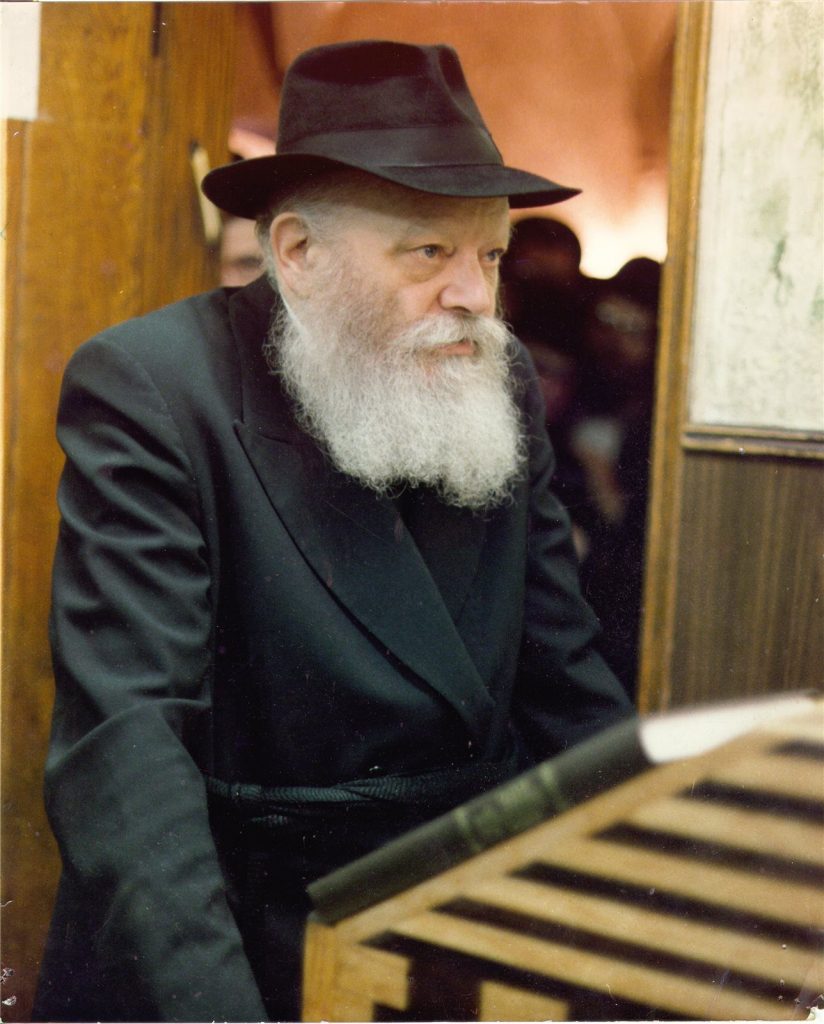
When the Rebbe came in, he put on his gartel and looked at the aron kodesh while saying, “Vayehi binsoa ha’aron” and “Brich Shemei.”
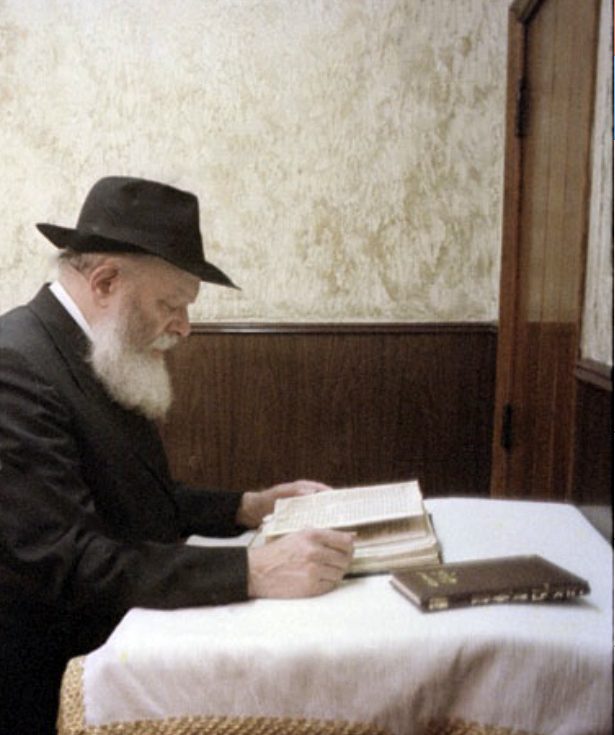
During the Torah reading, the Rebbe would look in the Chumash and sometimes, between aliyos, would study Rashi. Some would notice when the Rebbe spent time on a particular Rashi which was an indication that the Rebbe would talk about it at the next farbrengen.
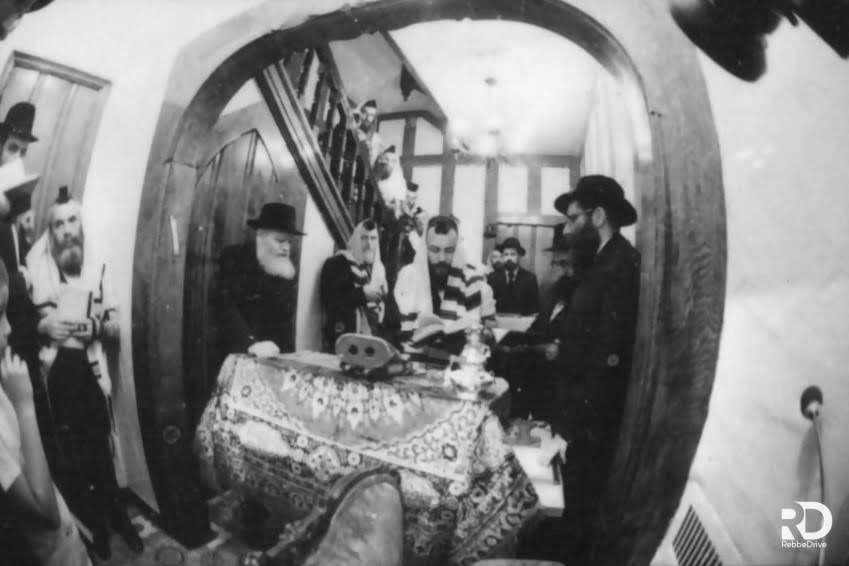
The Rebbe had shelishi and he remained standing near the bima until after hagbaha and only then went back to his place. He then opened the Tehillim and began saying his and the Rebbetzin’s chapters of Tehillim. If the chazan was still saying U’va l’Tziyon, the Rebbe said another chapter of Tehillim.
When they put the Sefer Torah in the aron, the Rebbe closed the Tehillim and in instant would be at the door of the (small) zal with his hand touching the mezuza, on his way back to his office. This was another opportunity to see the Rebbe’s characteristic swiftness in his holy work, with every second used to the fullest.
After he left, the winners of the lottery took the treasured items they had won, whether it be the Chumash the Rebbe looked into or the Tehillim that the Rebbe read from.
After the passing of the Rebbetzin a’h, the Rebbe began to daven every day with the public as the shliach tzibbur. The Rebbe came with his own siddur (including a Chumash) and Tehillim and the lotteries were discontinued.
HaTomim #18 • pp. 12-19
© 2026 Beis Moshiach Magazine. All rights reserved.
This article originally appeared in Beis Moshiach #1491B. You are welcome to share it with friends and family by email or in print, provided that you do not change, add to or omit any part of it, you credit the author and Beis Moshiach, and you include a link to archive.bmoshiach.org (written out in full in printed copies).
To republish this article in a newspaper, magazine, book or website, please request permission in advance at [email protected].