“Modern Day Zealots”
In this letter, dated the 25th of Tishrei, 5733 (1972), the Rebbe responds to a New York physician from Yonkers who had written criticizing the Torah-observant community in Eretz Yisrael, branding them “modern day zealots.”

י״ח תמוז תשפ״ו·July 3, 2026

In this letter, dated the 25th of Tishrei, 5733 (1972), the Rebbe responds to a New York physician from Yonkers who had written criticizing the Torah-observant community in Eretz Yisrael, branding them “modern day zealots.”

To someone troubled by confusing, disturbing thoughts, the Rebbe set out a practical regimen of counsel – beginning with the most effective remedy of all: not to wage war against the thoughts:
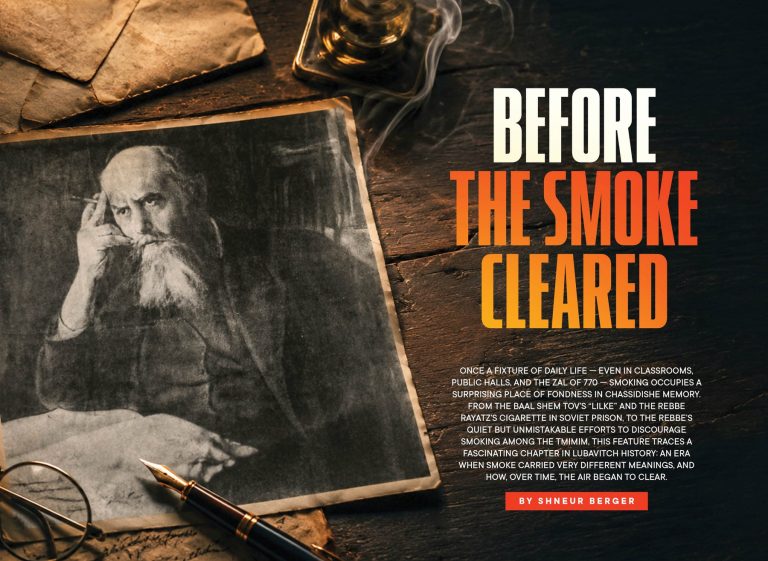
Once a fixture of daily life – even in classrooms, public halls, and the zal of 770 – smoking occupies a surprising place of fondness in Chassidishe memory. From the Baal Shem Tov’s “lilke” and the Rebbe Rayatz’s cigarette in Soviet prison, to the Rebbe’s quiet but unmistakable efforts to discourage smoking among the Tmimim, this feature traces a fascinating chapter in Lubavitch history: an era…
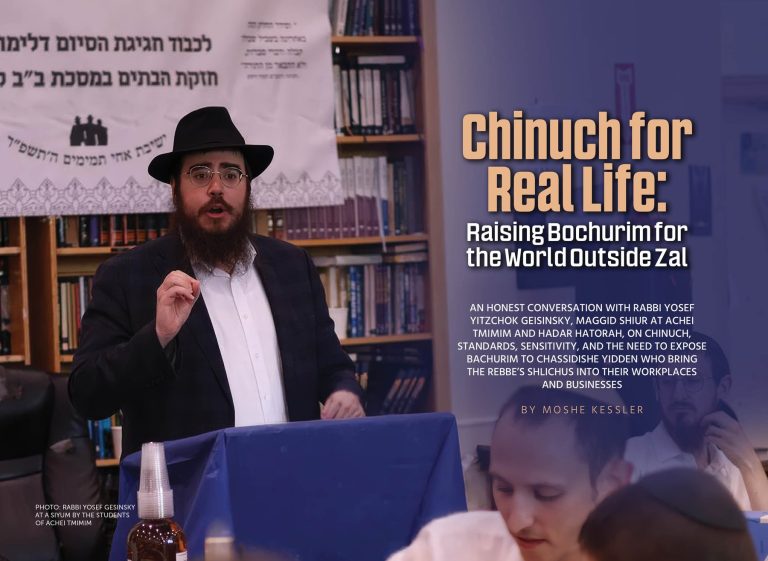
An honest conversation with Rabbi Yosef Yitzchok Geisinsky, maggid shiur at Achei Tmimim and Hadar HaTorah, on chinuch, standards, sensitivity, and the need to expose bachurim to Chassidishe Yidden who bring the Rebbe’s shlichus into their workplaces and businesses.
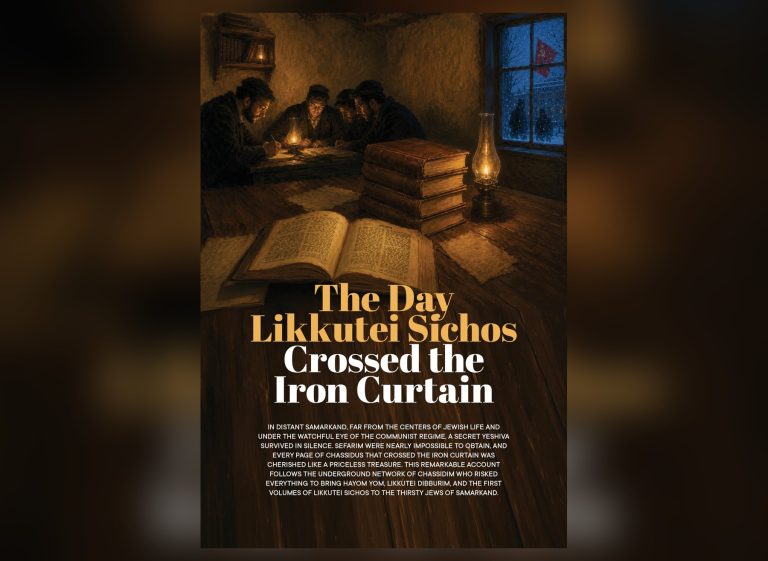
In distant Samarkand, far from the centers of Jewish life and under the watchful eye of the Communist regime, a secret yeshiva survived in silence. Sefarim were nearly impossible to obtain, and every page of Chassidus that crossed the Iron Curtain was cherished like a priceless treasure. This remarkable account follows the underground network of Chassidim who risked everything to bring HaYom Yom…

The Three Weeks – Bein Hametzarim – run from Shiva Asar B’Tammuz through Tisha B’Av, marking the period from the breaching of the walls of Yerushalayim to the destruction of the Beis HaMikdash. The name comes from Eichah (1:3), “all her pursuers overtook her bein ha’metzarim – within the straits.” During these days we take on practices of mourning, increasing in stringency as we approach Tisha B’Av…

I attend a lot of farbrengens and hear many speeches where people begin by saying that “if we would be able to hear the Rebbe talk, this is surely what he would be saying.” They are not living in fantasy; rather, based on the sichos that we did merit to hear, they have already internalized the Rebbe’s approach to certain events and circumstances.

What could possibly be complicated about a name as simple as Pinchas?! After all, it’s not some complicated name from the Tanach like Achimaatz, or some unpronounceable medieval name like Klonimus or Krashkash… Pinchas is, all in all, a fairly common name, short (two syllables…), and not particularly remarkable-sounding, right?

“I chose the name Geula as my pseudonym because it reflects exactly how I feel today. Everything we go through is from Hashem, and there is something good that comes out of it. You will see it, if not now, then later….” I can feel pain in Geula’s eyes as she begins to share her story.

A hundred and twenty-seven days of lists, tefillos, excitement, small tears in the middle of the day, and one heart trying to understand how time runs faster than thoughts.
From ninth-grade inspiration to twelfth-grade maturity, a girl discovers that true freedom is not escape, but the boundaries and commitments she chooses again and again.

Our story takes place in the kingdom of Yehuda during the reign of Yoshiyahu HaMelech. Yehosheva was sold as a handmaiden to pay her father’s debts after his business partner disappeared with everything they had. Athena cares for her with great devotion through a feverish night. Yehosheva opens the package her father sent with her and writes a personal tefilla – then the door to her room suddenly…

The class boarded the bus for their big trip up north. Rabbi Kleinman didn’t show up or answer the phone and Sholi insisted on holding the bewildered Sholom’s hand. Nobody on the bus realized that behind the bus was a caravan consisting of the commander in a van, the Boss’ computerized vehicle, and a white car belonging to the agents of the foreign embassy.
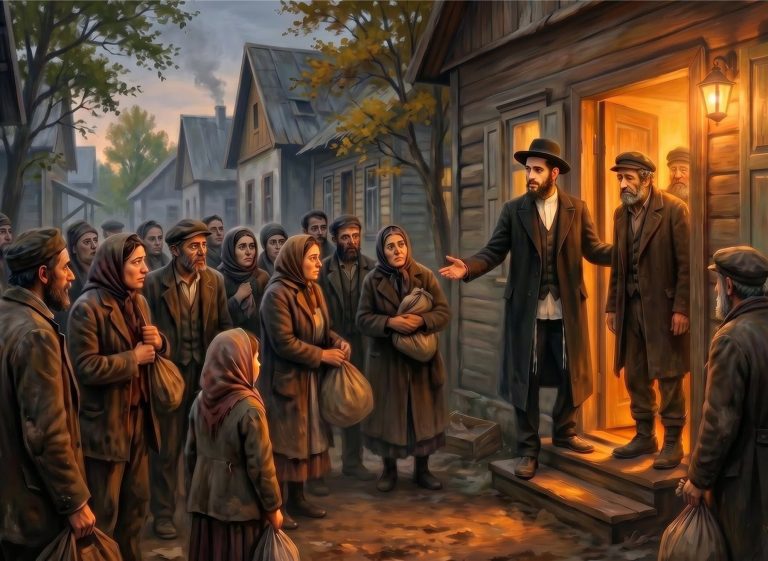
As heard from his son, Reb Pinchas Tevel
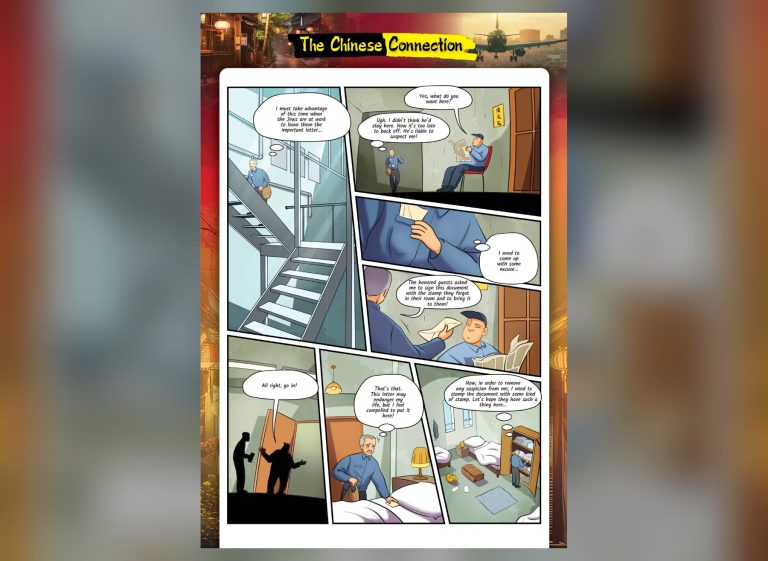
Chapter 36 of the The Chinese Connection comic.