This Week, Take a Year Off
A Michtav Klali for Rosh Hashana that falls out on Shabbos

כ״ט אלול תשפ״ז·September 11, 2026

A Michtav Klali for Rosh Hashana that falls out on Shabbos

At the conclusion of a Michtav Klali, a pastoral letter dated Erev 25 Elul 5749, released for Rosh Hashana of 5750 (1989/1990), before his signature, the Rebbe added the following words in his own hand to the printed blessing:
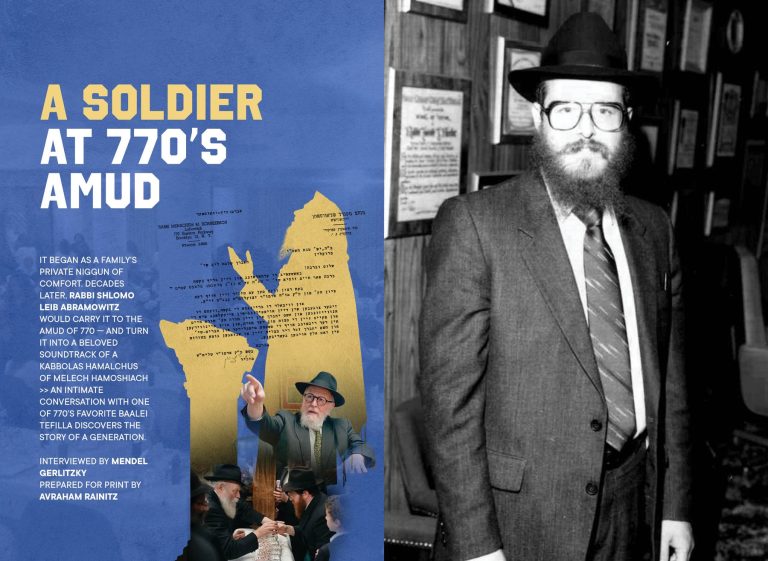
It began as a family’s private niggun of comfort. Decades later, Rabbi Shlomo Leib Abramowitz would carry it to the amud of 770 – and turn it into a beloved soundtrack of a Kabbolas Hamalchus of Melech Hamoshiach. An intimate conversation with one of 770’s favorite baalei tefilla discovers the story of a generation.

Nine hours, thirty kilometers, on the highest city on earth – a shliach and his sons climb La Paz’s mountainside streets so no Jew would miss the shofar.
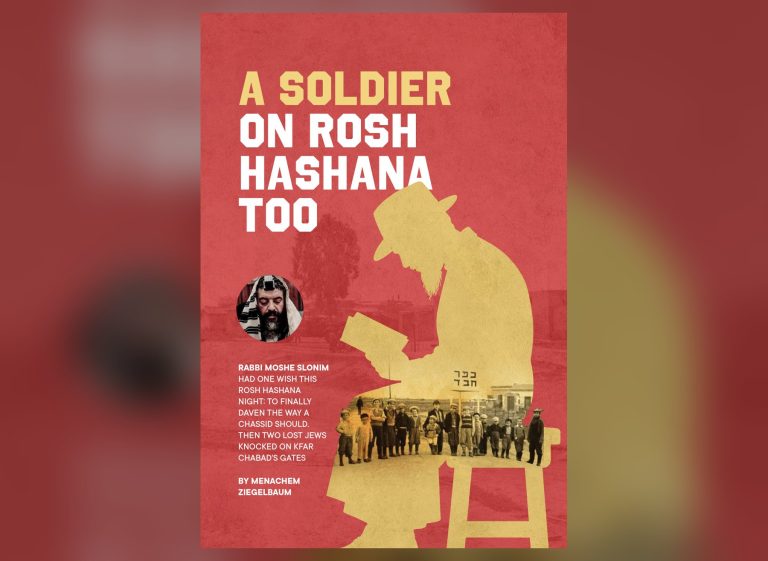
Rabbi Moshe Slonim had one wish this Rosh Hashana night: to finally daven the way a Chassid should. Then two lost Jews knocked on Kfar Chabad’s gates.

When Rosh Hashana falls out on Shabbos, the day takes on a distinct character. Its most recognizable mitzva – the sounding of the shofar – is set aside for the day, and the halachos that govern candle lighting, davening, the seuda, and the afternoon shift accordingly. What follows covers the practical laws and customs of a Shabbos Rosh Hashana excerpted from the “Day-to-Day Halachic Guide”, Tishrei…

Rosh Hashana falling on Shabbos is not an ordinary occurrence, as everyone knows. In Chassidus there are countless maamarim and explanations that come to explain the essence of this day and the uniqueness of Rosh Hashana falling out on Shabbos kodesh. In the following lines [based on the Rebbe’s general letter of 18 Elul 5749] we will focus on a simple, easy point – understandable even to a…
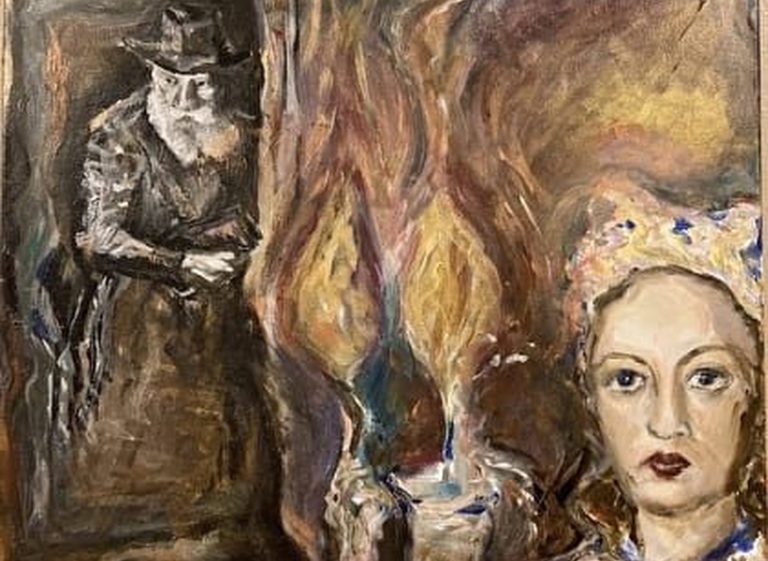
I met Miriam Karp through my Chassidus in Color WhatsApp chat. I was deeply touched by her expressive paintings, which are full of color, movement and soul. She explains, “I try to share intimate moments in Yiddishe life, the love of our holy land, and to make it very real and personal.”
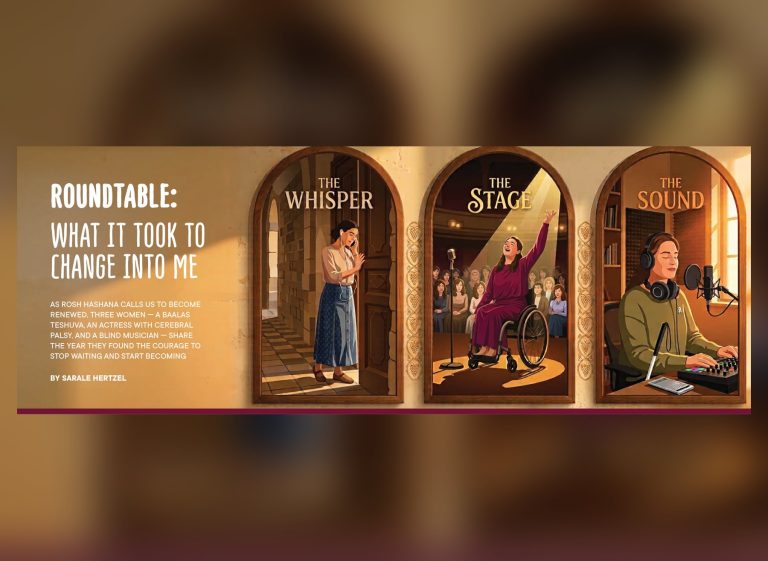
As Rosh Hashana calls us to become renewed, three women – a baalas teshuva, an actress with cerebral palsy, and a blind musician – share the year they found the courage to stop waiting and start becoming.

Sarale Hertzel on why the shopping list and the sicha aren’t in competition this Rosh Hashana – and how doing both, wholeheartedly, is exactly what being a Chassidishe wife and mother looks like.

Our story takes place in the kingdom of Yehuda during the reign of Yoshiyahu HaMelech. Yehosheva was sold as a handmaiden to pay her father’s debts after his business partner Pinchas vanished with all their capital. Athena, furious at Yehosheva’s recklessness in roaming into the library once again, withdrew her protection. Yehosheva was transferred to work under Zilpah the cook and made every…

Tzadok tells his son Zecharya that he is not guilty in the mass poisoning. Meir the detective, a Lubavitcher policeman, decides to go against his commander’s orders and he goes to the prison and questions Tzadok for the purpose of figuring out who perpetrated the mass poisoning. He knew that Tzadok was not guilty.
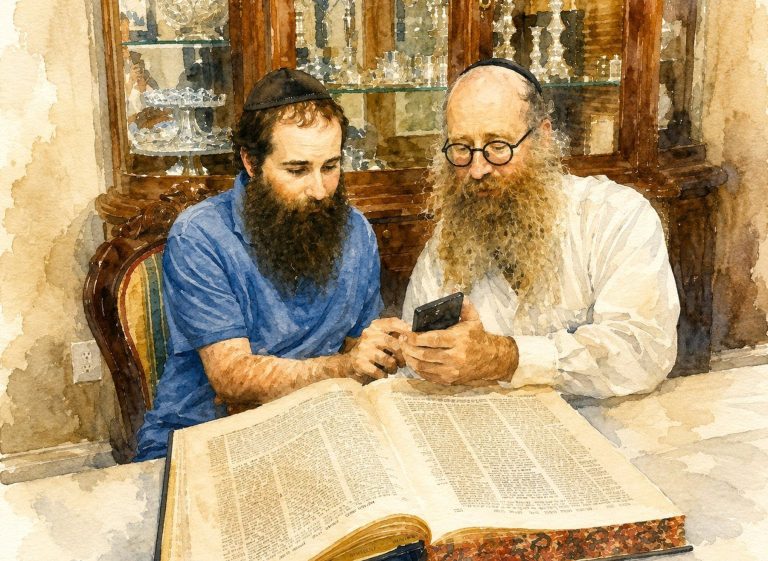
Late on Rosh Hashana afternoon 5786, the streets of New City, New York, had grown quiet.
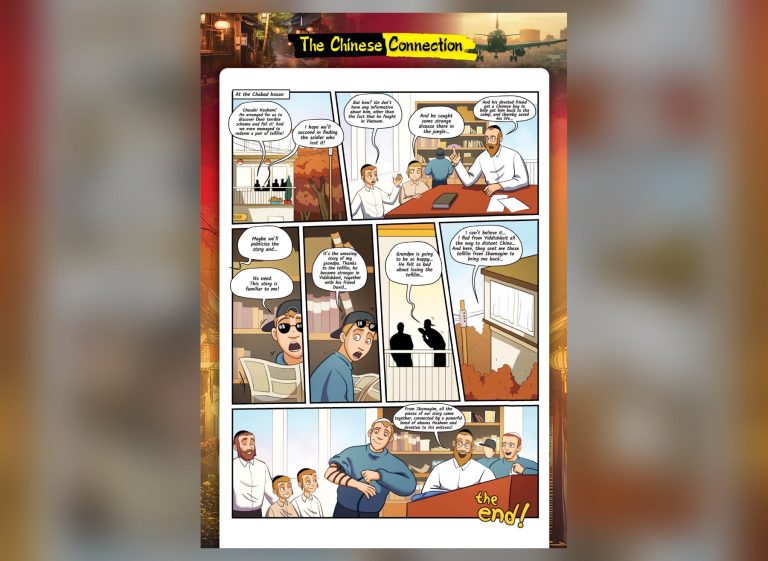
Chapter 46 of The Chinese Connection comic.