When You Travel To The Rebbe, It’s Not Just So You Can Look At Him – It’s So That He Should Look At You

Short stories about our Rebbeim and their great Chassidim that were related by the legendary mashpia Reb Mendel Futerfas. From a forthcoming book about his life and times being published by his family and edited by Rabbi Yisroel Elfenbein.
The Beis Yisroel Asked: “And What Else?”
Reb Mendel told me about a learned young man from London who was a Gerrer Chassid. This young man came to Reb Mendel and told him that when he was in Eretz Yisrael, he went to see his Rebbe, the Admor Beis Yisroel zt’l, and complained that he had doubts about emunas chachamim. The Beis Yisrael responded: “Un vos noch?” [=And what else?]…
The Chassid didn’t understand why his Rebbe didn’t address what he said, as if his words had no significance, and asked Reb Mendel for an explanation.
Reb Mendel told him: The simple meaning of your Rebbe’s words is this: If you have doubts about emunas chachamim, perhaps this proves that you also have doubts about faith in Hashem …
(From Rabbi Binyamin Cohen of Melbourne)
What News Did He Hear Which Made Him Come?
A common saying of Reb Mendel:
Regarding the pasuk, “And Yisro heard,” Chazal say: “What news did he hear [that led to] and he came? – The splitting of the Yam Suf and the war with Amalek.”
That is, when Yisro heard about the war with Amalek that occurred after the world saw all the great miracles that happened at the splitting of the Reed Sea, he said to himself: If after all this great revelation of Elokus, the forces of evil still dare to come and fight, this proves that one must come to Moshe Rabeinu.
This is the meaning of “What news did he hear and he came?” – what was the thing that made him understand that one must travel to the Rebbe? “The splitting of the Reed Sea – and the war with Amalek” – the occurrence of these two events in sequence, one after the other, proved to him that one must connect to the Rebbe, and without this, one could, G-d forbid, remain sunk in the depths of purgatory, even with all the most sublime divine revelations that one sees in the world.
That the Rebbe Should Look at You
Reb Mendel used to say that when one travels to the Rebbe, in addition to the purpose of the trip being that you want to see the Rebbe, an essential part of the purpose of the trip is – that the Rebbe should look at you.
As part of the chinuch about traveling to the Rebbe, Reb Mendel explained to his students the meaning of having yechidus with the Rebbe: “Don’t hide anything from the Rebbe. When entering yechidus, you must tell everything!” And he quoted what is told among Chassidim that before a bachur would enter yechidus with the Rebbe Rashab, the mashpia Rabbi Hendel a’h would tell him with tears in his eyes: “Don’t tell the Rebbe what you want to tell; tell him what you don’t want to tell…”
Reb Mendel would say about himself: When I enter to the Rebbe for yechidus, the Rebbe raises his holy eyes and looks at me. And I feel as if the Rebbe is saying to me: “Alter bluffer! [=old phony!], maybe you can tell me what other ‘bluffs’ you had this past year? I see you, and I know you. I know that you lied about this thing and that other thing…”
Such a Yechidus…
Reb Mendel told me that once he was standing in line to enter yechidus (usually he would enter among the last in line for that night). Before his turn came to enter, he heard a cry coming from within the Rebbe’s holy room: “Rabbi, I can’t!”
This intrigued him, and he decided to find out what happened there. What had happened? An American couple had entered to the Rebbe, and they wrote to the Rebbe that the husband was frequenting all sorts of questionable places to the extreme, and asked the Rebbe what to do in such a situation. The Rebbe said to the woman: “Wherever he goes – you will go with him.” When the man heard this, he burst out crying: “Rabbi, I can’t!”
Reb Mendel said that we see from this how much the Rebbe descends in yechidus to the lowest levels of the people who come to see him, as explained in the maamar, ‘Basi L’gani’ 5711 regarding what the Mitteler Rebbe said to one of the young men who entered to see him.
(From the mashpia Rabbi Dovid Abba Zalmanov, may he live long)
What’s the Difference Between a Communist and a Chassid?
Reb Mottel Kozliner a’h related: I once asked Reb Mendel what the difference is between a communist and a Chassid? (It seems the intent of the question was that both of them, l’havdil, seemingly speak about the same idea – negation of selfishness and private ownership, and absolute devotion for the collective – although certainly there is a great difference between them).
Reb Mendel answered me: The difference is small. The communist hates the rich and doesn’t love the poor (meaning, he mainly emphasizes the need to negate the expansion of others, but doesn’t deal with concern for those who suffer as a result of his idea). The Chassid loves the poor and doesn’t hate the rich (meaning, he mainly emphasizes the need to care for those who suffer; as for those who act based on a system opposed to his – he doesn’t hate them).
When Coming Down from Har Sinai…
Reb Mendel related: In one of the years, on the day after Shavuos, Rabbi Chatche Feigin a’h went to see the Rebbe Rayatz and noticed that he was in a state of happy contentment (“oifgelegt”), and this was surprising and wondrous to him due to the difficulty of the situation at that time. The Rebbe Rayatz sensed this and said to him: “Chatche, Chatche! Zogn az es iz gut – ken men nisht, ober aropkumendik fun barg Sinai iz furt freilecher” [=To say that the situation is good – one cannot, but when coming down from Mount Sinai, one is still joyous].
(From the shliach, Rabbi Yisroel Landau from Toronto)
The ‘Kelipa of Amalek’ and the Heretical Bundist
Reb Mendel related: When I was in exile in Siberia, I met a Jew who at first was a “Bundist” [=The Bundists in Russia were heretical Jews, complete atheists, who advocated for pure socialism, a certain type of economic and social justice and equality], and after some time became very disillusioned with the Bundist idea and became a communist. When communism took over Russia and everyone believed this was the great hope of the world, the communists suspected him of being a Bundist and threw him in prison. That Jew said to me: Now I am neither a Bundist nor a communist, but I am not religious and will never be religious. He said to me: I’ll tell you a story that will illustrate to you why I will never be religious:
One day the Rebbe of Radzin was walking down the street with a group of his talmidim, who appeared dressed like Polish Chassidim, with long coats and long peyos. On the other side of the street were us, a group of Bundist Jews, with our leader. Our leader said to us, the group of young people who walked with him, with crude mockery: “Look at the big horse, with the little horses beside him…” (This is how he referred to the Rebbe and his Chassidim, because of their long peyos). We all laughed with delight and began throwing stones at them from the other side of the street.
The Rebbe of Radzin looked at our leader and said to his Chassidim: “Look at him, it seems to me he wants to die a strange death [meesa meshuneh] …” We all heard his words and laughed at this old rabbi who spoke about a “strange death…”
We continued on our way until we reached the factory where we worked, a flour mill. There was a huge grinding machine there. Our leader operated the machine, and meanwhile laughed again at the Rebbe’s words: “Strange death, strange death…”
Suddenly the edge of his garment got caught in the machine and was pulled inside. He tried to free the garment but couldn’t, and his finger was dragged inside. Since the machine worked powerfully and spun fast, his hand was pulled inside and immediately his entire body was dragged inside. We all saw how he was ground up inside the machine!… We tried to run quickly and shut off the machine, but it was already in the middle of its tremendous acceleration, and from the enormous momentum and weight of the rotation it took the machine several more rotations to stop, and meanwhile his body was completely ground up very finely and his blood sprayed toward all corners of the factory.
Thus we saw with our own eyes how the words of the Rebbe of Radzin about a “strange death” for our leader were fulfilled completely.
And so, do you know what we did as a result? We cleaned the area of blood, and after a quarter hour we continued working as usual. Everything that happened didn’t affect us at all to change our worldviews. You ask why? Because the Bundist ideology had penetrated so strongly into our minds and hearts, that even such a blatant occurrence couldn’t influence us.
This story Reb Mendel told when he taught the young men a Chassidic maamar of the Rebbe Rayatz that describes the magnitude of the audacity and coldness of the kelipa of Amalek.
(From Rabbi Tuvia Bolton)
“And Hashem’s Counsel Shall Stand”
Reb Mottel Kozliner related that he once asked Reb Mendel if he had heard in the name of the Baal Shem Tov a ‘Torah’ on the saying of Chazal, “A mitzva that comes to a person – let him not make it chametz,” that this is from the root meaning ‘sourness’ – that if you already have the opportunity to fulfill a mitzva, don’t do it in a sour manner.
Reb Mendel answered him: Whether the Baal Shem Tov said this – I haven’t heard. But the vort itself is correct.
Reb Mendel added: Once the Rebbe Rayatz summoned a gathering of askanim in Russia, in the difficult days of communism, to discuss strengthening chinuch. When the askanim spoke about the importance of organization and order of the underground chadarim and branches of Tomchei Tmimim yeshivas, someone said that the communists are very organized in their institutions, and we should learn from them how to run institutions with order and organization.
The Rebbe Rayatz said: I heard it said in the name of the Baal Shem Tov on the passuk, “Many are the thoughts in a person’s heart, but Hashem’s counsel shall stand,” that the word “sakum” (shall stand) is an acronym for “tilmad kal v’chomer meihem.” That is, in order to decide what is Hashem’s counsel, sometimes one can learn a kal v’chomer from the kelipos. And the Rebbe Rayatz said: Whether the Baal Shem Tov said this – I’m not certain. “Ober der vort iz a richtiker” [=but the saying is correct].
(From the mashpia Rabbi Asher Farkash)
How to Fix a Broken Window
During my studies at the yeshiva in Kfar Chabad, my nature was that I wanted to accomplish many things together and therefore I would do one thing at the expense of another. When I spoke about this with the mashpia Reb Mendel, he always explained to me that one doesn’t make a new good hachlata in a way that its fulfillment comes at the expense of another activity that will be weakened because of it. And he would tell me thus: “Remember! You don’t break one window in order to fix another broken window with its fragments. When you do one good thing, do it by itself in a perfect manner, and not while harming another good thing.”
(From Rabbi Elazar Bakshi)
What Is the Advice Against Laziness?
Once, I asked Reb Mendel whether Chassidus includes any advice against the trait of laziness. He answered that it does not – and explained the reason why:
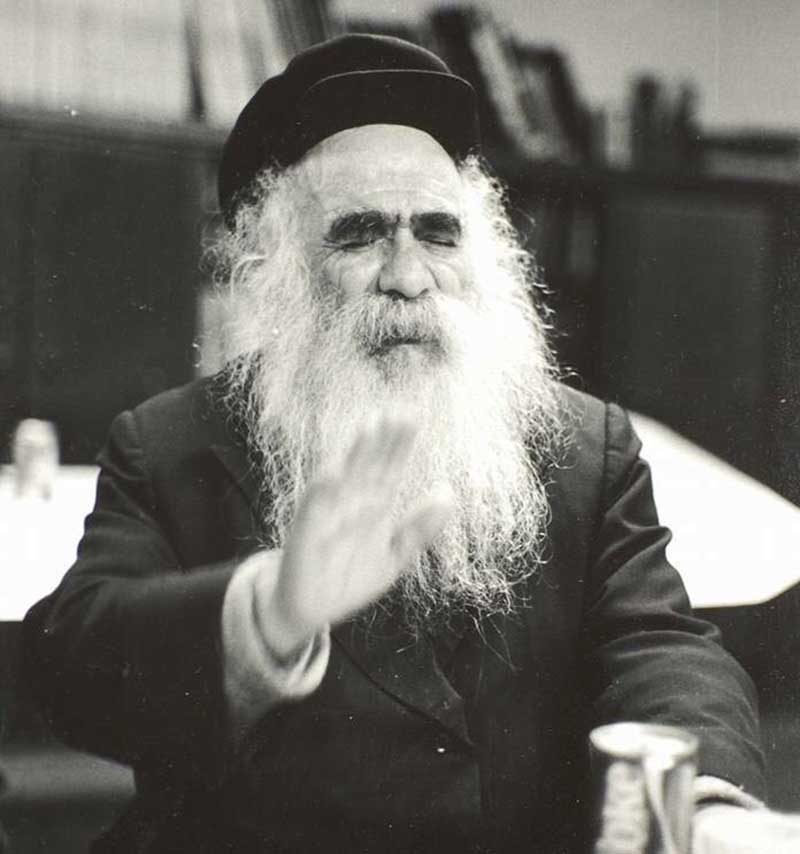
All other negative traits have some basis or justification. Anger and pride have logical sources. Even sadness has some rationale or excuse that can be addressed and dealt with. But laziness has no justification whatsoever.
Laziness means a person simply decides he doesn’t want to act. So the only advice is: Decide that you do want to act!
(From Rabbi Eliyahu Nosson Silverberg)
How Tzaddikim ‘Arrange’ the World
Reb Mendel once taught his students what Chassidus explains about the three blessings: children, health, and livelihood (בני, חיי, ומזוני). A story is told of a Jew who had been allotted only two of the three blessings – health and livelihood – and longed for children. The Baal Shem Tov suggested he trade his wealth for children. The man agreed – and indeed, he lost his fortune but was blessed with a son.
Reb Mendel continued with the following story: This wealthy Jew who wanted children had earned his money through the timber business. He owned forests, hired workers to chop and mark the logs, bundled them, and placed them on a frozen river. When summer came and the ice melted, the logs floated downstream to a far-off destination, where more workers would retrieve them and bring them to a furniture factory.
He went to the Baal Shem Tov and asked for a blessing for children. The Baal Shem Tov said it was possible – but only if he agreed to exchange his wealth for children. The man agreed. The Baal Shem Tov said: “Maybe go home first and ask your wife?” The man replied, “My wife agrees,” and the Baal Shem Tov blessed him.
The journey home took three days. Halfway through, he stopped at an inn and overheard two Jews talking: “Did you hear about that rich Jew? He placed all his timber on the frozen river and before he marked and tied them there was suddenly a warm day in the middle of the winter, the ice melted, and the logs were swept away!”
When he heard this, the man jumped up and danced with joy, realizing that the Baal Shem Tov’s bracha was beginning to take effect. The others were shocked: “How cruel! How can a man dance when he hears that someone lost everything?!”
He continued traveling until he was half a day away from home when he stopped at an inn. While there, he heard two men talking about the rich Jew who just two days before had lost all his timber and the day before a fire broke out in his furniture factory and everything went up in flames. Only a few metal machines remained but he certainly wouldn’t have the money to fix them after losing all his timber.
When the formerly rich man heard this, he realized that the Baal Shem Tov’s bracha was taking effect and once again, he got up and began to dance in great joy. The two men said to one another: What a wicked man he is! How can he dance and rejoice when hearing about another Jew’s great losses?
When he reached home, his wife received him with tears and sorrow but he came in with a joyful face. Astonished, she asked: “Don’t you know we lost everything?” He replied: “Yes, and it’s all due to the Baal Shem Tov’s blessing. He said we would lose our wealth and in exchange, we will now be blessed with a child.” She too rejoiced.
Eventually, they fell into severe poverty and fell into debt. Creditors seized their home. They moved to a small hut by the river, built from old wood they found. The man managed to tar the roof and to make a makeshift door.
Within a year, they had a son, to their great joy. Two years later, another. Then twins. Then another son. Whenever their shack became too crowded, the man brought some more old wood and made another room. After ten years, they had ten children. The Baal Shem Tov’s bracha had been fulfilled – they had lost all their wealth, and were now a large, poor family.
To support his family, the man was forced to go from place to place and beg. One day, he heard the Baal Shem Tov was in town. He wanted to see him, but was ashamed of his poverty. So he hid in the back of a crowded shul and covered his face with his hat. The man stood there and gazed at the Baal Shem Tov and the Baal Shem Tov called his name, asking for him to be brought forward.
He stood before the Baal Shem Tov, who asked: “How are your children?” He answered: “Baruch Hashem, we have ten children. I have no words to thank you for your bracha.”
The Baal Shem Tov asked if he had any other request. The man said he had no request and was content. The Baal Shem Tov said: “Listen, you already have the children and you won’t lose them. If you have any other request, I can help you. Tell me what you need.”
The man said: “It is very hard for me support my family. Sometimes, we don’t have what to eat in the middle of the week and sometimes we don’t even have food for Shabbos.”
The Baal Shem Tov asked: “What do you do for a living?” He replied: “I tried various jobs but failed. Now I only beg.” The Baal Shem Tov advised: “Leave some money with your wife and travel to Minsk, where no one knows you. Maybe there you will be blessed.”
The man thanked the Baal Shem Tov and followed his advice. He gave money to his wife and went to Minsk, arriving before Shabbos. He went to the mikva and joined the poor people at the shul. After the davening, a wealthy man invited him to his grand home. Everything radiated luxury – carpets, fine utensils, rich food – yet the host, his wife, and their daughter were clearly unhappy.
The guest tried to cheer them up, but nothing helped. After the meal, he asked: “Why are you so downcast?” The host said: “Leave me be. You can’t help me.” The poor man begged the host to tell him until finally, the rich man said: “Our only daughter is of marriageable age but is not successful in shidduchim. She was once engaged but the chassan was drafted, another died, a third went insane. Now, no one wants to marry her.”
The guest said: “I was once wealthy like you, and the Baal Shem Tov blessed me with children in exchange for my wealth and now I collect money. Go to him and ask for his bracha.” The host agreed. Sunday morning, they traveled together to the Baal Shem Tov. The wealthy man entered and told his tragic story.
The Baal Shem Tov asked the poor man to wait outside and then said to the rich man, “When you return home, your daughter will already have a chassan. But I ask that you give this poor man the shadchanus.” The wealthy man agreed. Upon returning, his wife greeted him with joy; the first chassan had returned from the army, released earlier than expected. He had remained frum and the wedding was quickly arranged. All the city’s Jews were invited, including the poor. The rich man circulated among them and poured out l’chaims to all.
At the wedding, the host suddenly saw the Baal Shem Tov in whose merit this simcha came to be and he warmly thanked him. The Baal Shem Tov asked: “Did you pay the poor man the shadchanus?” “Yes, of course. I gave him 1,000 rubles.” The Besht: “That’s not enough.” “Then 10,000.” “Still not enough.” “50,000.” “Still not.”
The rich man wiped the sweat off his forehead. “Fine! 100,000 rubles!” “No,” said the Baal Shem Tov. “I see you don’t understand me. Tell me – how much is your entire wealth worth?” “I don’t know.” “Calculate.” He did and answered: “Five million rubles.”
The Baal Shem Tov said: “Give him half.” Shocked, the man said, “That’s a fortune! I will have to sell many possessions.” The Baal Shem Tov asked: “Tell me, how did you become wealthy?”
He explained: “Years ago, I was a beggar. One day, I was unable to collect any money and I was depressed. I walked alongside the river to calm down. I saw an unmarked log floating in the river. I brought some goyim to take it out of the water and then I sold it for 100 rubles. The next day, I found two more logs. I took them out in the same way and sold them. Then another ten, then many. I sold them all and nobody tried competing with me. Then I heard about a factory owner whose equipment had survived a fire. I bought the machines, fixed them, and built a new factory. I reopened the factory and became very rich.”
The Baal Shem Tov concluded: “All that wealth came to you through this poor man’s loss. Now give him half – you’ll remain rich, and he will receive shadchanus for your daughter and he will become rich again.. Everything will be set right.”
“This is how the Tzaddikim arrange the world,” Reb Mendel concluded.
(From Rabbi Tuvia Bolton)
Like That Cruel Jewish Investigator
Throughout his teachings, Reb Mendel balanced two themes – maintaining the authentic “image” of a Chassid, and recognizing the tremendous powers the Rebbe gives to anyone truly connected to him.
Once at a wedding, Reb Mendel noticed yeshiva students eating the food served. He whispered with pain to a member of the ruchni staff of the yeshiva: “Ah! They all sit and eat calmly, and no one even asks about the food’s kashrus…”
That staff member, who often claimed that today’s students lacked the avoda of earlier generations in Tomchei Tmimim, took the opportunity to quip: “See? They’re missing any shaychus to matters of pnimiyus and eidelkeit.”
But Reb Mendel immediately countered: “Aber zei zaynen yekarim sheb’yekarim… zei zaynen dem Rebbin’s kinder… zei zaynen mekusharim.” (“But they are the most precious of the precious… they are the Rebbe’s children… they are mekusharim.”)
Reb Mendel added: “Your attitude reminds me of a cruel Jewish interrogator. After all the beatings and torture I endured in prison, he would end with a ‘friendly’ question: ‘Comrade Futerfas, you’re a realist – do you really believe that Moshe struck the sea with his staff and it split?’
“That question disturbed me more than the beatings. My body was already broken – they could hit me again. But when someone, especially a fellow Jew, speaks like a friend and tries to undermine the foundations of emuna – that hurts much more.
“…That’s exactly how I feel,” said Reb. Mendel, “when someone from among us claims that today’s bachurim lack pnimiyus and eidelkeit.”
Let the One Who Glories, Glory in This
At one point, a bachur was inspired and decided to strengthen himself in the ways of Chassidus and engage seriously in the avoda of davening. Some of his friends, who had known him from earlier periods, felt that he was pretending to rise to spiritual levels that didn’t truly belong to him. They said to him: “Drop all those delusions – just go back to being like the rest of us. Remain one of the chevra, without all these imagined spiritual levels!”
Their words caused him to lose heart. He began to wonder if they might be right. So the bachur decided to approach Reb Mendel and share with him all his doubts and internal struggles.
Reb Mendel responded with full force and conviction. “It is written: ‘Let not the wise man glory in his wisdom, nor the mighty man in his might, nor the rich man in his riches. But let the one who glories, glory in this: that he understands and knows Me.” (Yirmiya 9:22–23) What does this pasuk mean? Does it imply that wisdom, strength, and wealth are not good or worthy? Not at all!
But, if a person views these qualities as his own personal achievements, as if it’s his wisdom, his strength, or his wealth – then it’s inappropriate. (“Dos toig nisht” — that’s no good.)
However, if he approaches all this with the inner awareness that he received them as gifts from Hashem in order to “understand and know Me” – then of course, it’s a wonderful thing!
You must use all your talents for the true purpose. And when you do so not for your own honor or yeshus (ego), but as a path toward genuine growth in service of Hashem – then you are absolutely meant to use those gifts to their fullest capacity.
(See also the maamar “Ki Yedaativ,” Parshas Vayeira, 5736)
HaTomim #17 • pp. 54-63
© 2026 Beis Moshiach Magazine. All rights reserved.
This article originally appeared in Beis Moshiach #1477. You are welcome to share it with friends and family by email or in print, provided that you do not change, add to or omit any part of it, you credit the author and Beis Moshiach, and you include a link to archive.bmoshiach.org (written out in full in printed copies).
To republish this article in a newspaper, magazine, book or website, please request permission in advance at [email protected].